Poem – God and money

I saw a church sign that said
“Did you give back to Him this week?”

I’m pretty sure what they meant
was money.
But what God wants
is work.

God wants your service.
God wants you to use your talents
to help someone,
to feed someone,
to clothe someone,
to visit someone in prison.

Bono said
“The God I believe in isn’t short of cash, mister.”
I think he’s on to something.
If God wanted money,
God would make money.
Instead,
God made people.
God made us
to help each other.

God doesn’t want your money.
It isn’t as easy as that.

To give your money
to a church
or a charity
is to pay someone else
to do
your
good deeds.

What God wants
is for you
to help people
directly.
When you give money
to a charity
or a church
you’re letting someone else
get that good feeling
that comes
from helping someone
directly.

The map and the treasure

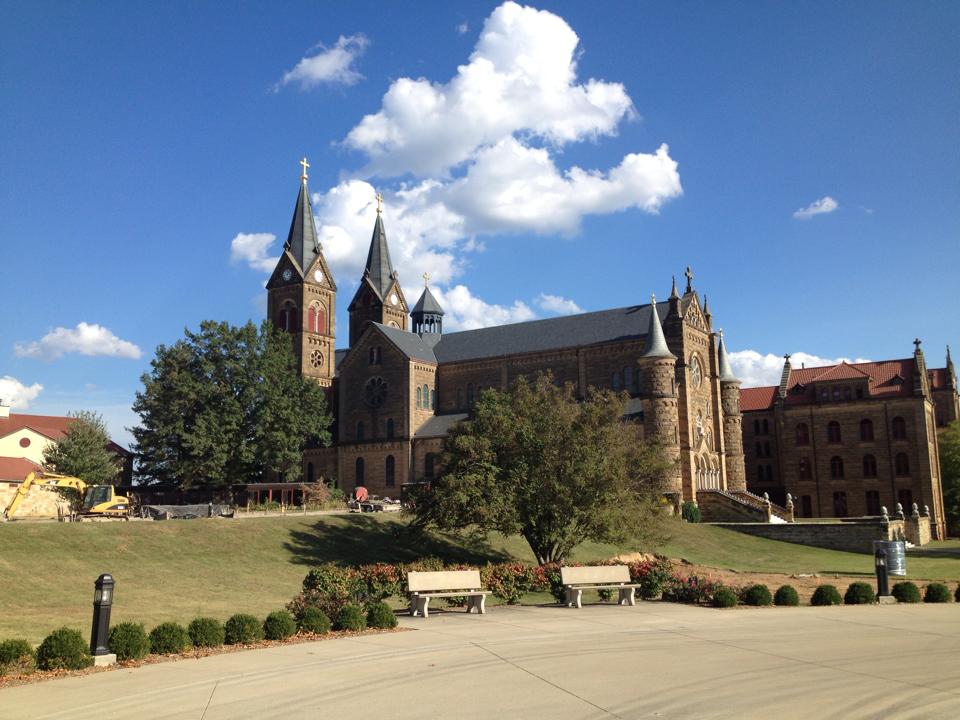
I recently went on retreat at a Benedictine monastery. Their website says that “You’re invited to join us any day for prayer or Mass in the Archabbey Church.” They pray five times every day, and have mass every day. They make a point of saying that the Rule of St. Benedict says “All guests who present themselves are to be welcomed as Christ.” They say that “Hospitality is a Benedictine tradition.”

Their guest house is impressive. They even build guest rooms into their seminary. The meals are generous and filling. There is dessert with lunch and supper every day.

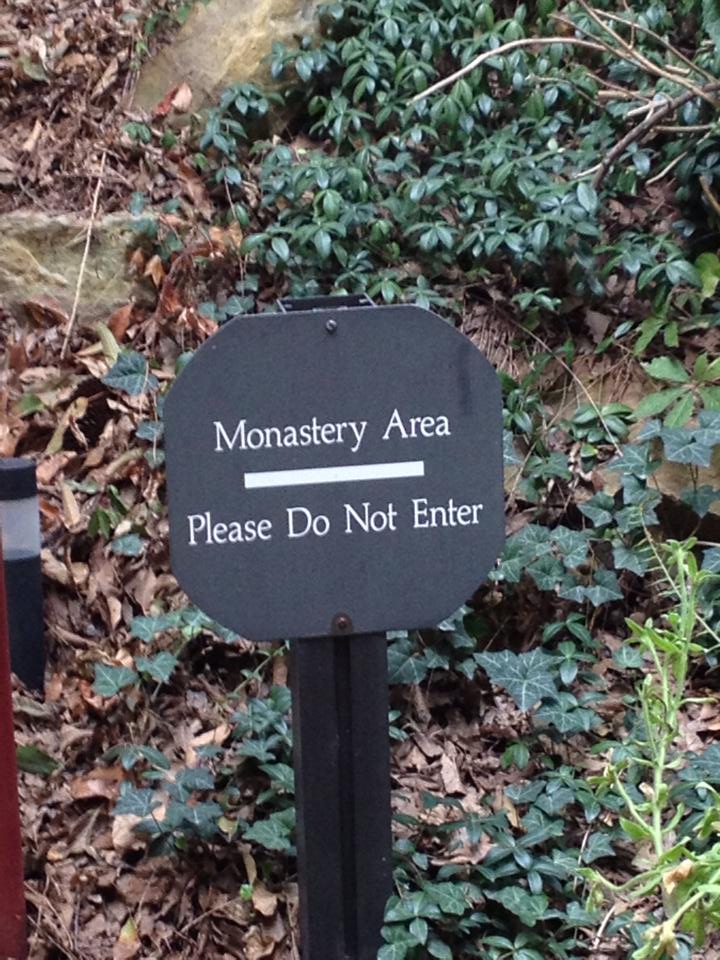
But the hospitality isn’t everywhere, and it doesn’t cover everything. There are quite a number of areas that are off limits. The signs are a bit distressing. And, you don’t get communion unless you are Catholic. Even though guests are to be welcomed as if they are Christ, even though they are welcomed to come pray with the monks, they can’t take communion. I made sure to ask the monk who was leading us (a Methodist group) on tour “Are we, or are we not allowed to receive communion?” and he said “I’m sorry, I’m not able to give you permission.”

He isn’t able to give me permission, because he is just a monk. Even the abbot, the monk in charge of the abbey, wouldn’t be allowed to give me permission. Only the Pope would. I’m working on a letter. I’m not kidding.

This is a Catholic rule, not a Benedictine rule. It is very painfully obvious to me that the Rule of St. Benedict is far more inclusive than the Rule of the Catholic Church. It would appear to me that they should offer communion to anyone who wants it, in the spirit of being welcoming and treating everyone as if they are Jesus. Following the rule of the Catholic Church, even Jesus wouldn’t be allowed to receive communion, because he is Jewish.

I’ve wrestled with this for years. This isn’t the first time I’ve written about this. Just look up “Communion” in the search field or in the tag cloud and you’ll see plenty of other of my musings on this subject. But this time was different. This time I invited Jesus into it. This time I started the weekend with the intention of meditating with Jesus about the goal of unity and inclusion for everyone. This time I was on a mission, and Jesus was my guide.

So how can the Church be inclusive and unified with contradictory policies? They say one thing, and yet do another. How can we welcome everyone as Christ if we put up signs or have policies that essentially say “You are welcome, but only so far, and only so much”?

There are plenty of signs throughout the grounds that say “off limits” in one way or another – –
34at garden

The tabernacles are all locked. These are the boxes in the chapels that hold the consecrated host. Catholics believe that Jesus is physically present in the communion wafers once they are blessed. Those that are not used at the mass are put into a tabernacle, locked away, and a candle left burning nearby.
aumbrey2

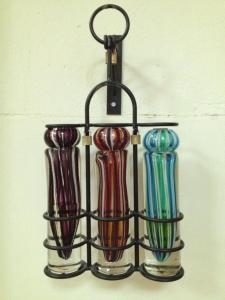
The vials for holy oil are in a special container with locks on it –
oil2

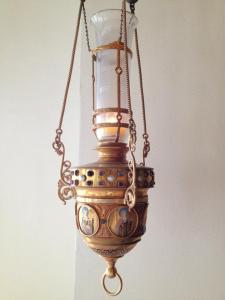
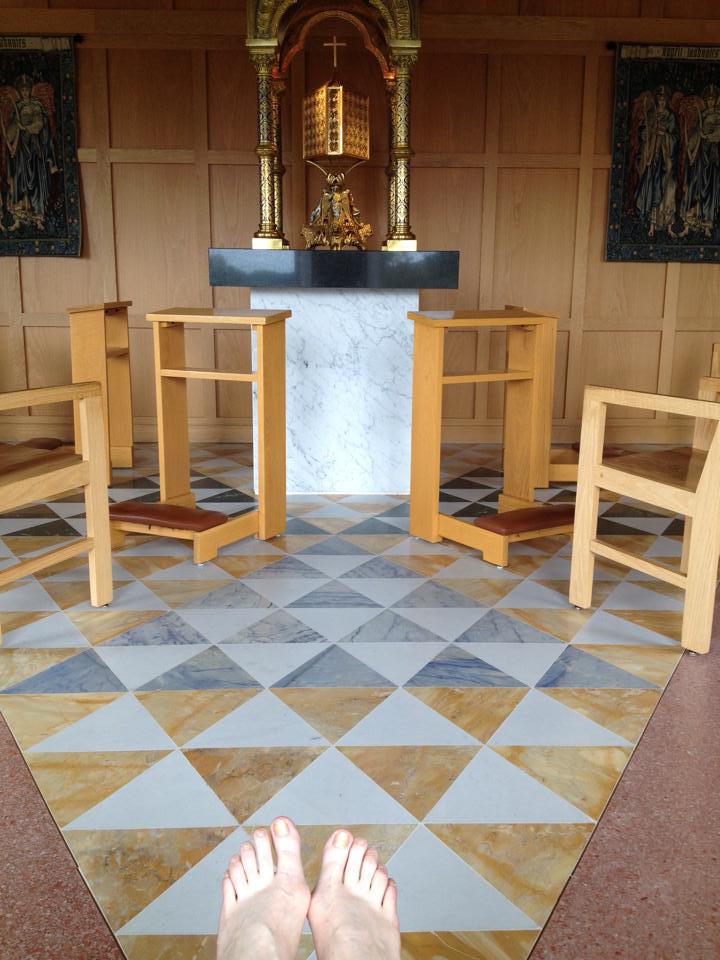
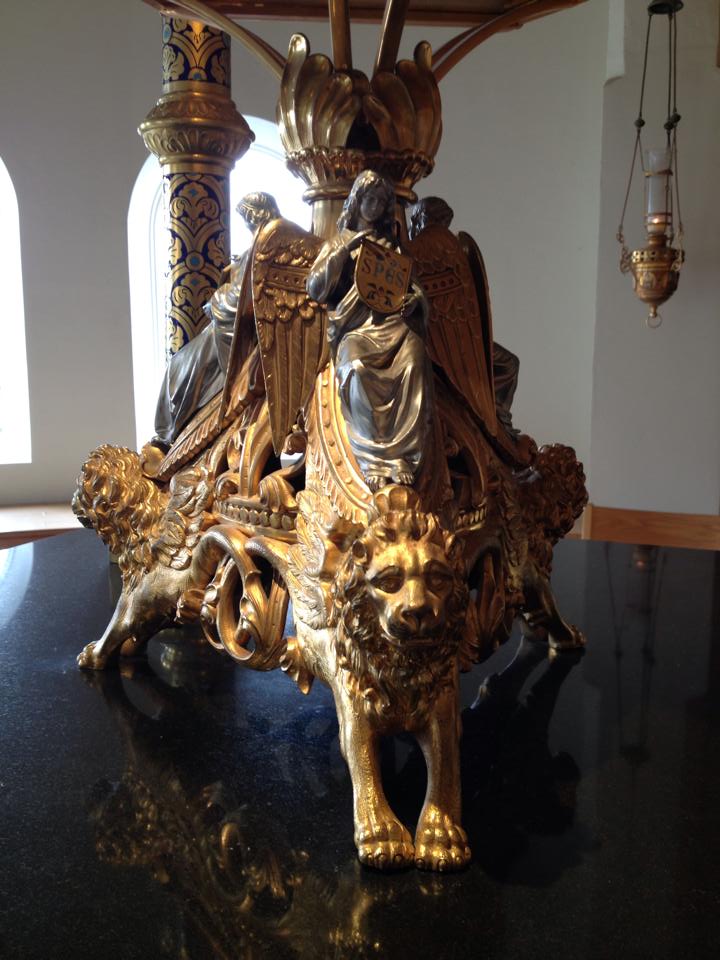
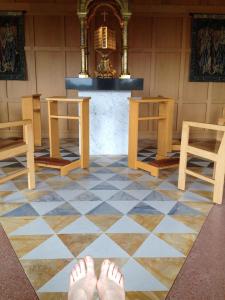
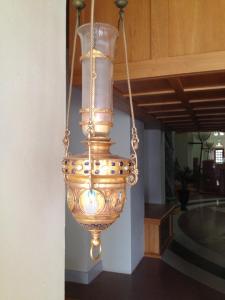
In spite of all these “off limits” signs, there is a place that is truly special and yet has no doors to block it, no barricades. I knew when I saw a picture of this place when researching the monastery that I had to spend time here. This is a shrine that holds the consecrated host, but it is far fancier than the ones in the other chapels. The “Blessed Sacrament Chapel” is in a special alcove behind the organ in the abbey.

Their website says that “The tabernacle and its tower were fashioned from the altar used in the Church from 1909 to 1968.” The tower over it is called a “baldachin”. There is a much larger one over the altar in St. Peter’s Basilica in Rome. It is used to indicate a holy place is underneath it.

host5
host9

Here I prayed, asking Jesus about this rule. Should I take Communion anyway? This was on Friday. I was still unsure if I should even go to mass on Sunday, knowing that I wouldn’t be officially allowed. Sure, the priest wouldn’t know that I wasn’t Catholic. But I know.

I prayed, barefoot on that cold marble floor.
host4

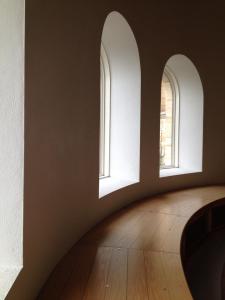
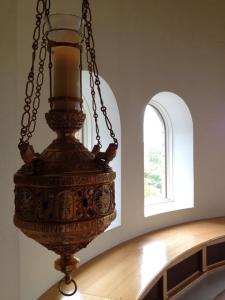
I sat near the windows, looking at the shrine, with all that gold, all those gems. I wandered around that little chapel, taking pictures of the windows and ornaments, wondering about how many hungry people could have been fed with the money spent on these things.
host6
host3host1
host8
host12

And then I heard Jesus say into my heart – “Why are you crying over the map, when you have the treasure?”

The “map” is the way you get there. The “treasure” is what you are seeking. The “map” is the communion wafer. The “treasure” is Communion with Christ. Why was I so upset over not being able to participate in a symbol, when I already had what the symbol represented? I have Jesus in my heart. That is the goal. That is the treasure. Once he has been welcomed in, there is no need to have the symbol of communion again. It points the way, while Jesus is the Way.

Yet I am still sad. I’m still sad over the painful exclusionary practices of an institution that represents Christ. I’m crying over the harm that their policies cause – and the hypocrisy of them. You can’t say you are welcoming of guests and yet put up signs saying that guests are not allowed. You can’t say you are hospitable and then not allow everyone to take communion.

The symbol matters. It matters because it shows that they still do not have Jesus in their hearts. If they did, they would understand that they can’t put up walls and barriers of any sort.

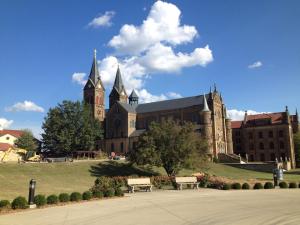
But then, let’s go deeper. This is about more than the symbol of communion or signs saying “off limits”. I say, not one more church building should be built until poverty is eradicated. When all people have food, clothing, and homes, then, and only then, can more churches can be built. People have to come first. Until then, these church buildings are empty shells, they are tombs. They are shrines to a dead faith that cares more about ritual and rules than reality. This applies to all denominations.

Think of how many people could have been housed with all the effort and money put into this place.
outside17

The roofs are made of stone or terra-cotta tile. Very durable. Very expensive
outside7

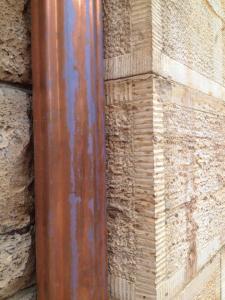
Even the downspouts are expensive – copper!
outside6

How many poor people could have been fed with all of that money and effort put into these buildings? The Church is missing the point of how to serve Jesus. He said “Feed my sheep”, not “Build a huge church and hide yourself away in it, separated from the world”.

The reality of the living Christ is too important to pass by. All too much, Christians are focusing on a Jesus who existed “back then” in the stories in the Bible, or in the future, in a time of glory when he will come again. They focus on his death and his coming again, without the middle bit. They miss out on being united with Jesus right now, not just when they die. They live their whole lives in hope of “eternal life” with Jesus, completely passing by the opportunity to have a full life now, with Jesus in their hearts.

This is why I’m sad. I’m sad because the truth of Jesus hasn’t entered into the hearts of the faithful and into the Church. I’m sad that their policies and rules prove that their hearts and souls are not in synch. They say they are welcoming and hospitable, and yet their actions, deep down, prove otherwise.

Did I go to mass? Yes. Did I take communion? No.

Up until the very last minute I prayed about it, asking God what I should do. I went to mass and got up when it was time to get communion. Two of my friends who were on the retreat with me remained in their seats. In the queue, I prayed, asking God to direct my actions. And in response, my arms went up and crossed over me, as if on their own. To cross your arms over your chest, hands holding your shoulders, is a sign that you cannot take communion. It is to ask for a blessing only. When my arms came up, I knew that was what God wanted for me to do. The tears began to form in the corners of my eyes, and I let them come. Misty-eyed, I stood before the abbot who was administering the communion wafers. I bowed to show reverence for Jesus. The abbot muttered some blessing that I could not hear, and I walked away, tears streaming down my face.

I want them to see me cry. I want these brothers to see how painful this rule is. I want them to know that it does not build up the Church. I want their hearts to open. Perhaps they could practice a bit of conscientious objection, and refuse to take communion until all people can take it?

While on retreat, I got another answer from Jesus in the form of the reading for the day. It was from Haggai 2:3-9. (HCSB)

3 Who is left among you who saw this house in its former glory? How does it look to you now? Doesn’t it seem like nothing to you? 4 Even so, be strong, Zerubbabel”—this is the LORD’s declaration. “Be strong, Joshua son of Jehozadak, high priest. Be strong, all you people of the land”—this is the LORD’s declaration. “Work! For I am with you”—the declaration of the LORD of Hosts.5 “This is the promise I made to you when you came out of Egypt, and My Spirit is present among you; don’t be afraid.” 6 For the LORD of Hosts says this: “Once more, in a little while, I am going to shake the heavens and the earth, the sea and the dry land. 7 I will shake all the nations so that the treasures of all the nations will come, and I will fill this house with glory,” says the LORD of Hosts. 8 “The silver and gold belong to Me”—this is the declaration of the LORD of Hosts. 9 “The final glory of this house will be greater than the first,” says the LORD of Hosts. “I will provide peace in this place”—this is the declaration of the LORD of Hosts.

What I got out of this was that the day is coming when the Lord will rebuild the House. Not the Temple, but the entire Church. It isn’t a building, after all, but a collection of people, united as the Body of Christ. Each believer that has Jesus as his or her guiding force inside is a stone that builds up this Church.

Also part of my intention for this weekend was this verse –

10 Be still, and know that I am God: I will be exalted among the nations, I will be exalted in the earth. (Psalm 46:10, ASV).

Yet when I looked it up in the translation I brought with me, it was rendered as –
“Stop your fighting—and know that I am God, exalted among the nations, exalted on the earth.”

What I got out of this was this – it isn’t for me to worry about. God’s got it.
host11

Wrestling with the angel

Jacob wrestled with the angel all night long. (Genesis 32:22-31) They were alone on an island together. The text doesn’t state whether Jacob even called out for help while he was wrestling. He didn’t get a chance to sleep that night because all night long he and the angel were wrestling. Towards the end of the night the angel touched him on his hip to make the fight stop. While this may seem like an unfair thing for the angel to do, I wonder why he touched him on the hip, and not somewhere else?

If the angel had touched him on the arm, the fight would’ve been over just as soon as touching him on his hip. You can’t pin someone to the ground with only one arm, or at least not very easily. It’s impossible or very difficult to throw them to the ground and hold them there. So he could have touched him on his shoulder and it would have been over just the same. Therefore it is very relevant that he touched him on his hip.

I propose that he touched him on the hip because Jacob was getting his strength from his roots. Jacob was relying on his ancestors and their faith (not his own, yet) in order to give him strength for this battle. The angel needed him to not rely on his own strength or on the faith of his forefathers. The angel needed him to trust in something so much bigger than him, something that he didn’t even know about yet. The angel needed him to trust in what AA would say is his “higher power”. And the Higher Power that the angel wanted him to rely on was God. He had to break his connection with his roots – his strength that he was getting from the past and from the present. He needed to make him learn how to rely on something bigger than himself, that very something that his ancestor Abraham relied on.

Jacob was very strong in many ways, but he hadn’t yet come to understand how much stronger he could be if he connected his power with God’s power.

Poem – 40 days

Noah spent 40 days in the water,
waiting for a new world.
He had in his ark one of each animal.
He was the savior of the world.
Every animal would have died
if Noah hadn’t saved them.

Noah listened to God.
God called him,
and asked him to do this crazy thing.
God said Hey, build me an ark – take in all the animals.
I’m ticked off at the filth
and the mess
and the pain
that people are causing each other,
and I’m going to wipe them out.
I need you to help me out here.

Then…

Jesus goes into the desert for 40 days,
just after being baptized.
He takes nothing with him
– no water, no food, no friends.
Alone, adrift,
he is in a strange land,
being tormented by the Devil.

God said to Jesus,
Hey, I need you to save this world.
I need you.
I need you to do this crazy thing.
I need you to die.
I need you to be the sacrificial lamb.
I need you to atone
for the sins of the world.

Job would pay for the sins of his children
even when
they didn’t know
they had sinned.
He’d pay extra, just in case.

The Jewish world
in the time of the Temple was
quid pro quo.
You sinned,
some animal had to die.
Some offering had to be made.
Some sacrifice had to happen.

40 days in the water to save the world.
40 days in the desert to save the world.

Poem – the two Josephs

Joseph (of Nazareth)
held Jesus the baby,
wrapped in swaddling cloths.
Just born,
fragile,
holy child.

Joseph (of Arimathea)
held Jesus the man,
wrapped in burial cloths.
Just crucified,
fragile,
holy man.

Two different Josephs
attended Jesus,
as he entered this world
and as he left it.
Two different Josephs
were with him
and tenderly
held him,
wrapped him in cloth.
Two different men
cared for this man
who cares for all of us.

Poem – Our daily bread

“Give us our daily bread”
isn’t really about food.
It refers to manna.
Heavenly bread, spiritual sustenance.
Just enough for today,
only one day at a time (Like AA).
It says
“Help me appreciate right now
– no worry about the future.
Help me trust that
You
have that under control.”

When we worry about our future
we are forgetting
the sovereignty
of God.
We are saying that
we
are in charge. We are making idols
of ourselves

God gave us the test
of the manna,
to see if we would gather
just enough
for this day,
to see if we would
walk in his ways
and trust him.

Eternal God, honor us
by giving us this day
our daily bread,
and may we
honor You
by gathering only enough
for today.

Amen.

Healing work

Sometimes you have to work to be healed. Sometimes it isn’t instant. Let us look at two stories – one from the Hebrew Bible, and one from the Gospels.

In John 9:1-7 we read about a man who was blind from birth. Jesus doesn’t just touch him or ask him if he believes that Jesus can heal him, like with other healings.

— As He was passing by, He saw a man blind from birth. 2 His disciples questioned Him: “Rabbi, who sinned, this man or his parents, that he was born blind?”3 “Neither this man nor his parents sinned,” Jesus answered. “This came about so that God’s works might be displayed in him. 4 We must do the works of Him who sent Me while it is day. Night is coming when no one can work. 5 As long as I am in the world, I am the light of the world.” 6 After He said these things He spit on the ground, made some mud from the saliva, and spread the mud on his eyes. 7 “Go,” He told him, “wash in the pool of Siloam” (which means “Sent”). So he left, washed, and came back seeing.

Jesus smeared mud made from nearby dirt and his own spit on the man’s eyes, and then the man has to go away to a specific pool to wash. One must assume that he had to have help to get to that pool because he was still blind at this point. He doesn’t question what he has to do, he just does it.

Then in the Hebrew Bible, we have this story. This is in 2 Kings 5:1-14

Naaman, commander of the army for the king of Aram, was a great man in his master’s sight and highly regarded because through him, the LORD had given victory to Aram. The man was a brave warrior, but he had a skin disease. 2 Aram had gone on raids and brought back from the land of Israel a young girl who served Naaman’s wife. 3 She said to her mistress, “If only my master would go to the prophet who is in Samaria, he would cure him of his skin disease.” 4 So Naaman went and told his master what the girl from the land of Israel had said.5 Therefore, the king of Aram said, “Go and I will send a letter with you to the king of Israel.” So he went and took with him 750 pounds of silver, 150 pounds of gold, and 10 changes of clothes. 6 He brought the letter to the king of Israel, and it read: When this letter comes to you, note that I have sent you my servant Naaman for you to cure him of his skin disease. 7 When the king of Israel read the letter, he tore his clothes and asked, “Am I God, killing and giving life that this man expects me to cure a man of his skin disease? Think it over and you will see that he is only picking a fight with me.” 8 When Elisha the man of God heard that the king of Israel tore his clothes, he sent a message to the king, “Why have you torn your clothes? Have him come to me, and he will know there is a prophet in Israel.” 9 So Naaman came with his horses and chariots and stood at the door of Elisha’s house. 10 Then Elisha sent him a messenger, who said, “Go wash seven times in the Jordan and your flesh will be restored and you will be clean.” 11 But Naaman got angry and left, saying, “I was telling myself: He will surely come out, stand and call on the name of Yahweh his God, and will wave his hand over the spot and cure the skin disease. 12 Aren’t Abana and Pharpar, the rivers of Damascus, better than all the waters of Israel? Could I not wash in them and be clean?” So he turned and left in a rage. 13 But his servants approached and said to him, “My father, if the prophet had told you to do some great thing, would you not have done it? How much more should you do it when he tells you, ‘Wash and be clean’?” 14 So Naaman went down and dipped himself in the Jordan seven times, according to the command of the man of God. Then his skin was restored and became like the skin of a small boy, and he was clean.

Naaman was indignant that he wasn’t going to be healed the way he expected. He wanted a show. He thought he knew more about how to be a prophet of God than Elisha did!

How many times do we think we know how God is going to work? How many times do we pass over the true healing that only God can provide because it seems too simple, too easy?

We want to be healed of our addictions, but we aren’t willing to do the work involved in quitting. We want to be free of unhealthy relationships, but we aren’t willing to leave. We want so much, and God offers the way out freely, and we just don’t take it because it seems like it should be either easier or harder. But when God shows us the way out, we have to get up and walk out the door, and then keep walking. God does part of the work, and we have to do the rest.

God’s ways aren’t our ways, and we always forget that. This is why it is so helpful to have the Scriptures to tell us what to expect. They are our road map for finding God here in the wilderness of our lives.

(All translations are HCSB)

Thomas the disciple

Most of us think of Jesus’ disciple Thomas as “Doubting” Thomas. His nickname in the Gospels is “Twin”, but he gets the nickname we know him by through his actions towards the end of the Gospels. He’s the one who didn’t believe it when the other disciples were saying that Jesus had resurrected. He had to see him and touch his wounds for himself.

JN 20:24-29 (HCSB)
24 But one of the Twelve, Thomas (called “Twin”), was not with them when Jesus came. 25 So the other disciples kept telling him, “We have seen the Lord!”But he said to them, “If I don’t see the mark of the nails in His hands, put my finger into the mark of the nails, and put my hand into His side, I will never believe!” 26 After eight days His disciples were indoors again, and Thomas was with them. Even though the doors were locked, Jesus came and stood among them. He said, “Peace to you!” 27 Then He said to Thomas, “Put your finger here and observe My hands. Reach out your hand and put it into My side. Don’t be an unbeliever, but a believer.” 28 Thomas responded to Him, “My Lord and my God!”29 Jesus said, “Because you have seen Me, you have believed. Those who believe without seeing are blessed.”

He’s usually seen in a less than favorable light because of his doubt. Jesus said that he would come back, and he did. The other disciples had no reason to lie to Thomas. Thomas has seen Jesus do some pretty amazing miracles before, so he has no reason to doubt. Surely he could accept their testimony?

Yet remember that the disciples didn’t believe Mary Magdalene and the other women when they saw Jesus. They had to see him for themselves. They weren’t called ‘Doubting” apostles.

Note that Jesus didn’t make fun of Thomas, but in fact accommodated his wishes. He offered himself as proof and didn’t try to hide anything.

Very little is written about Thomas, but his strength stands out in this verse that comes several chapters before. Jesus has been called to the village of Bethany, which is just a few miles away from Jerusalem. He knows that this is very dangerous because the Jewish leaders want to arrest him and put him to death. Yet, his friend Lazarus, the brother of Mary and Martha is near death. Not only does he have a chance to save him, but also to prove to his disciples that he is who he says he is. He wants to go, but the majority of the disciples are opposed to it, thinking it is too dangerous.

Yet Thomas says something amazing in JN 11:16 (HCSB)

16 Then Thomas (called “Twin”) said to his fellow disciples, “Let’s go so that we may die with Him.”

Instead of “Doubting” Thomas, perhaps he should be called “Brave” Thomas. He is willing to risk being killed, just for associating with Jesus. That is a faithful disciple!

Poem – the two trees.

Sin and shame came into the world
at the same time.
Adam and Eve ate fruit
from the tree
of the knowledge
of good and evil.

After that,
they were full of shame
about being naked,
about who they were,
about their very being,
and so they hid themselves
when God came around.

Before that,
they were
as they were created.
God saw them exactly
the way
God created them.
All was well.
They could be themselves
around God
without any
fear or embarrassment.

Thousands of years later,
Jesus
was placed on the cross,
a wooden pole
stuck in the ground
with a horizontal bar across it.
It was symbolically a tree,
and in fact,
it was symbolically
That tree,
that same tree
in the Garden.

Jesus tells us that
He is the fruit of that tree,
and that we are to eat it.
We are to consume
his flesh
and drink
his blood.

He is the antidote
for that first tree,
that first sin.
He is the cure
for what ails us.

When we eat the fruit
that is Jesus,
we are restored.
We have re-entered
the Garden.
He makes us able
to stand
before God,
as we are,
without sin or shame,
without fear or embarrassment.