Mr Michaels

haunted

Mr Michaels’ blindness was absolute. Born sighted, it had been 20 years before the cataracts had begun to form from the kiss of sunlight.

It happened so slowly at first, like a fog creeping in on cat’s paws. Every month the dull haze thickened, coalesced just a little more. It was so gradual that he never even realized his sight was being stolen from him until it was gone. It was as if his sight was a stone and the sun was the sea, washing it away to nothingness, no trace of it ever having been there.

It was nothing to Mr Michaels. His sight had gone so gradually that he’d forgotten he’d ever had vision. Just like that sea-stone, all evidence of its existence was erased. Just as slowly and just as insistently, his memory of sight had dissolved as well. He could no longer remember his mother’s face or the color of the sky in early November, could no longer even remember that he had ever known these things.

He didn’t think of his blindness as an absence. He didn’t think of it at all.

All his life he had worked outside. Perhaps it was an undiagnosed case of claustrophobia. Perhaps he was just set in his ways. His first job had been in landscaping, and every one after that had been related. Grounds crew for a municipal park, another one helping harvest apples, it was all the same to him, as long as he was outside.

His father never knew if he’d ever tried for anything more advanced. He never asked, but he’d been tempted to often. He wanted to encourage him to be his best rather than settle, but he remembered his own father doing the same to him and he still resented him for it. Perhaps this was his best? Perhaps he led a simple life because he was simple? Best not to dig too deeply.

Mr Michael’s hands became his eyes, showing him the size of the bulb or seed that he held. He then knew how far down to dig to plant it. His hands told him where the weeds were to pluck, told him what apples were ready to harvest and which ones were best left for the birds. His feet told him how far the flower bed was from the orchard, how far from the stables. His nose told him whether the horses were sick or scared. His ears told him whether a storm was coming, and whether it was going to be strong enough to warrant bringing the animals in early.

Watching him work, you’d never know he was blind. By tacit agreement, all the other workers on the farm kept everything where it had always been. That one incident with the misplaced hay bale had been enough to convince them.

It was only when you looked directly into his eyes that you knew beyond a shadow of a doubt that he was blind. Very few people were brave enough to do this more than once.  Looking into his milky eyes was like looking into a pair of mirrors set just opposite each other.  All you could see was yourself, all of yourself, unto eternity, ever diminishing into meaninglessness.  It was overwhelming and humbling.  You could see all of your strengths and all of your faults, unvarnished, untampered by the usual lies you told yourself.  This alone was unsettling, but the additional feature of his gaze was to leave you with an overwhelming sense of your utter insignificance.

Mr Michaels was completely unaware of this.  He wasn’t bothered in the slightest that people tended to leave him alone.  It meant he had time for his own amusements.  That suited him just fine.

Growing in (poem)

I’m no longer growing up
but in,
strengthening my foundation,
clearing out old misconceptions
and flat out lies
I learned
or was taught.

This isn’t housekeeping.
This is a major renovation,
a re-new-ing.
This is tearing out the floorboards and joists
and digging down to bedrock
to reseat the base.

There’s no plan for this,
no map.
There can’t be.
Each house,
each person
is site specific.
Nobody else’s plans will work.

How can you grow up
if you don’t have a strong base?
The tree falls over
if the roots aren’t deep.

So for right now,
I’m growing in.

One size (poem)

One size does not fit anybody.
Not even most.
We’ve forced ourselves into conformity
into complacency
into a mold that is not
of our own making.

We’ve shoved our feet into shoes
that don’t fit,
hobbling ourselves in the name of
getting along,
of making do,
of giving up our own power,
our own knowledge,
our own ability.

We thought by doing so that we’d have
more time
to be ourselves,
to do our own thing,
to think our own thoughts.
We thought that by giving up
everything
to the authorities,
to the experts,
to the corporations,
to the system,
that we wouldn’t have to worry
about it
about anything
anymore.
The professionals would do it for us.

Perhaps it is better said that they do it
to us.

Bigger isn’t always better.

We gave so much away.
Childbirth, daycare, school, medical care, funerals.
Our whole lives from birth to death.
Who raises our children?
Not us.
Professionals,
strangers.
Who takes care of us when we get sick, or old?
Not our family, not our friends.
Professionals,
strangers.

We stopped making our own clothes,
our own houses,
our own lives.
We gave away our power.
We stopped raising our own food.
We don’t even know what is in it,
thus we don’t even know what is in us.

We become sick,
and our sickness
is from separation
from our own selves.

Deep down,
we want the old ways back,
the community, the village, the self sufficiency.
We want to know
and be known by
the people in our lives.

We don’t have to do it all,
but we don’t have to give it all away
either.

Mixed messages (poem)

But first, an explanation –
(Nick Bantock has a writing prompt in his book “The Trickster’s Hat” that I decided to try. It involves taking two different books and selecting a random paragraph from each one. You highlight all the nouns in each paragraph, and then switch them out. This will produce two entirely new paragraphs. You’ll end up with some sentences that are useful, others not so much. You can edit it however you like, but you cannot change the nouns. I chose (randomly, but oddly synchronistic) “The Marriage of Opposites” by Alice Hoffman, and “The Color of Water” by James McBride. I’ve left most of it the way it came out, and used both paragraphs.)

I was finally finished with that rabbi,
with mahogany mothers,
and a synagogue set
in the Spanish nostalgia.

Surprise had taken a long recognition,
but now he was perfect,
and not I or the town
could pull the Jews down.

There was a low curved I
separating the
he from the I.
The he
was kept as a who,
as it had been in the mother,
in he and I,
though there were many of him
recently arrived.

Book, who thought it madness
to have this daily family
of a brutal I,
when every record was a nothing
and every them was a you.

When the synagogue called in
the year of my benches,
the old altar front and center,
it spoke to the hall
with neither style nor it,
only grudging time.

It had heard fire was in the storm.
Women knew men were black
and the floor knew
that my past was sand.

Spain, remember your Portugal,
the Jews said.
Denmark explained to Amsterdam
that madness
was writing a reminder about my history,
and asked if prayer might see
some of the secrets.

The old house

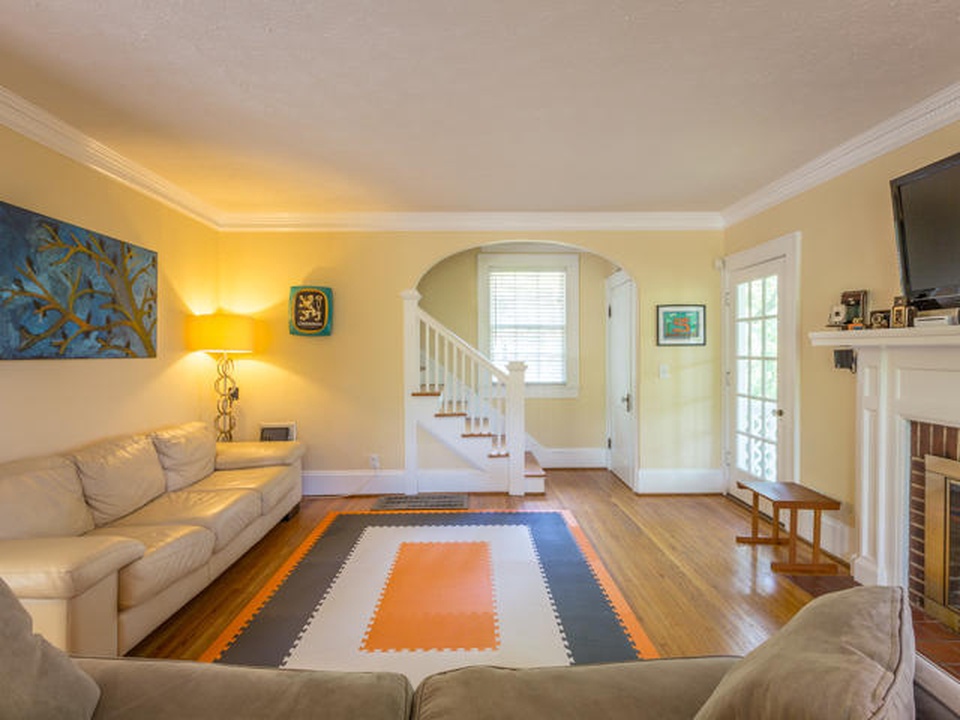
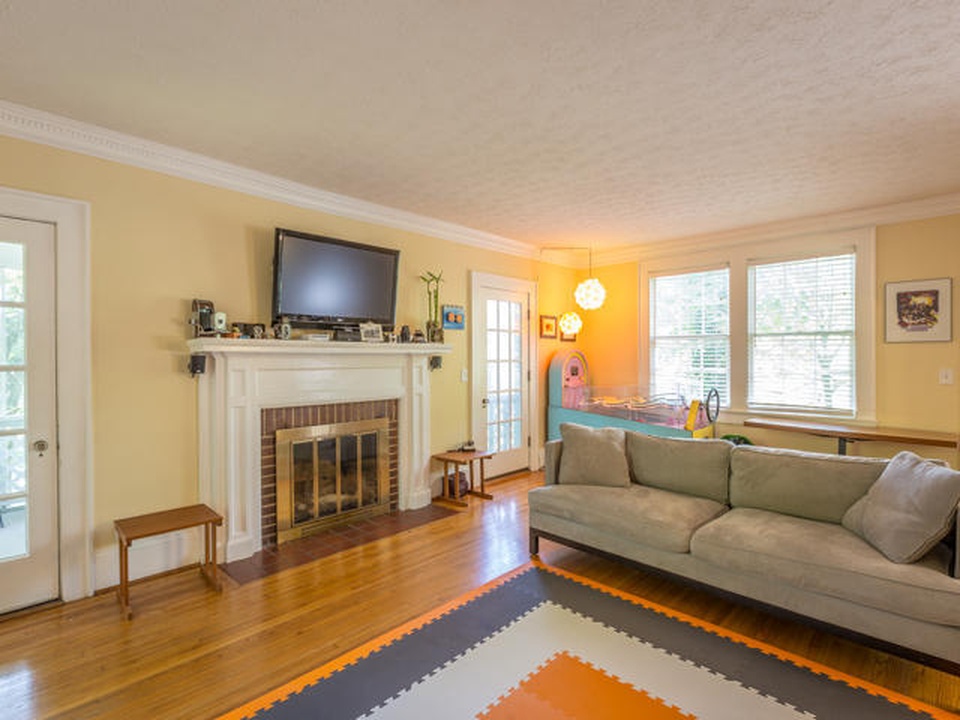
The old saying is true – you can’t ever go home again. I decided to see if there were any images of the house I grew up in online. Turns out there are a lot. I’m a little freaked out, actually.

One – the house is no longer for sale, so why are the pictures up? This benefits me, of course, but do the current owners care if the whole world can see inside their home?

Two – what did they do to the house!? It looks so spare, so lifeless. Where are the books? They ripped out all the bookshelves. I’m a little suspicious of people who don’t read. The wall colors are a bit bland and noncommittal. Maybe these are “staging” pictures, and not pictures of the seller’s furnishings. It took me a while to figure out what they’d done with the half-bath downstairs. The yard! My mother lovingly landscaped it – and it has all grown over. So sad.

Three – it sold for what!? I sold this house in 1998 for $69,900. The couple who bought it assured me that they were going to live there a long time. I’d gone to school with the husband, and as he was a real estate agent, we were able to talk before the sale. The neighbors had all expressed concern that they didn’t want someone to buy it and flip it – they wanted a neighbor, not an investor. He assured me that he was here to stay. Well – turns out that was only for seven years, because they sold it for nearly double what they paid for it, at $127,500. I feel a little cheated, and lied to. Then it sold again two years later for $141,000. Eight years later it sold again for $155,000. Stunningly, that owner put it back on the market not two months later for $163,000, but it didn’t sell.

We lived in that house for 30 years. It was home, not a house. I still have dreams that are set in it. That was what defined “home” to me, and in many ways it was ideal. I needed to move because I couldn’t afford it, and I needed to get away from some bad situations that were happening in my life. But in some ways, I want that house back. I especially would have liked to have found a house that size (3 bedrooms, 1.5 bath, 1600 sq feet) for the price I got for it. My current house has the same number of rooms and is 400 sq feet smaller – and cost $30K more!

Here’s the info from the listing –

“A comfortable and charming 1920’s Dutch Colonial that is conveniently located. This well maintained home offers character and charm with original hardwood floors and two piece crown molding throughout. The large living room offers hidden wiring for wall mount flat screen tv giving way for more spacious living. The separate dining room and adjacent kitchen offer a great flow for entertaining; enjoy double oven plus gas range with microwave hood. The second level offers 3 bedrooms, one with an oversized closet and a full bathroom. Don’t miss the 1/2 bathroom off the kitchen and the large unfinished basement, great for storage with walk out access to backyard. Enjoy days and evenings on the side screened in porch.”

I’m amused that they did all that work with the house, but the basement is still unfinished. The basement is huge – you could live in just it. But, it is haunted, so there’s that. Wonder if they know? I called a friend to exorcise it before I moved, but who knows if the ghost actually left? Sometimes they don’t want to leave. Maybe that is why the house sold four times in 17 years.

Here are the pictures of the front of the house
front

front left

front left close

Go in the front door and here’s the living room
living room

living2

living 3

living 4

Turn around from that last picture (this is to the left of the living room) to see the dining room
dining room

This is looking back towards the living room from the dining room
dining 2

Here’s the kitchen as soon as you enter from the dining room
kitchen

kitchen 2

kitchen 3

kitchen 4

They enclosed the back porch and changed how you get into the bathroom downstairs

kitchen to porch

Here is the half bath that is attached to the kitchen.

kitchen bathroom

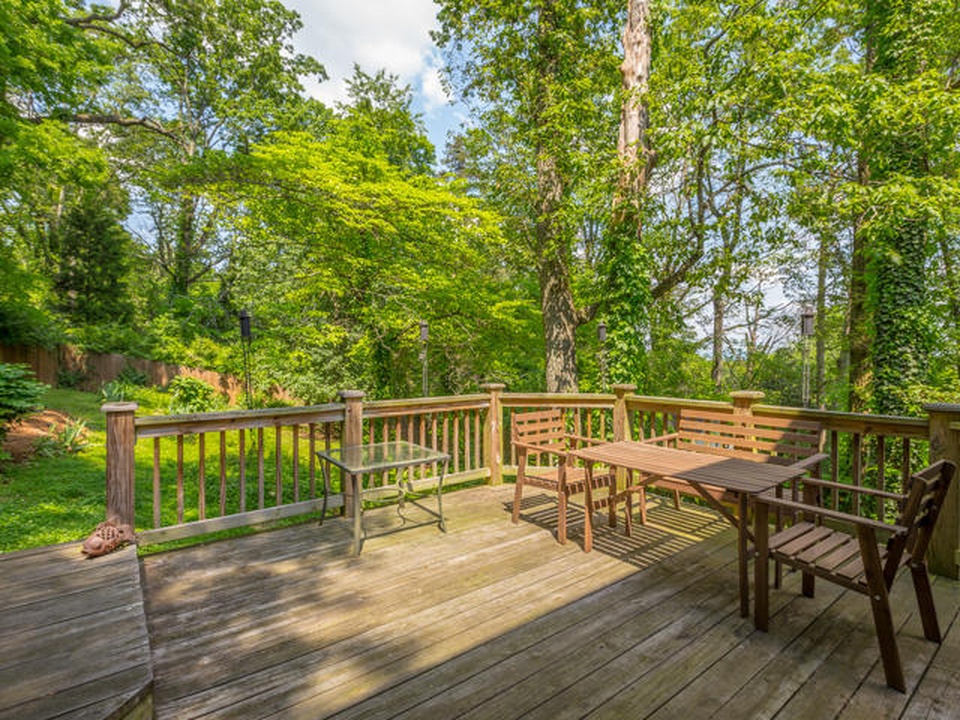
Outside, the back porch area (this did not exist, nor did that immense fence)

back porch1

back porch2

back porch 3

back porch 4

back porch 5

back porch 6

back porch 7

The sad-looking yard

yard

Back in the living room, go right to go out on to the side porch

side porch

side porch2

Back in the living room, the stairs going up.

stairs

At the top of the stairs, looking towards the main bathroom

upstairs

In the bathroom itself.
bathroom

The bedroom on the Southwest corner (the one my brother had initially, and after he moved I took it.)

bedroom 1a

bedroom 1b

The bedroom in the Northwest corner (my parent’s bedroom)
bedroom 2a

bedroom 2b

The bedroom in the South – a dark, small room. This was the one I had, as the youngest.

bedroom 3a

Virtual begging

How have we gotten to the point that people are begging online? Instead of standing on the street corner, they put their hand out on social media. I’ve seen this more and more in the past year, to where it is becoming normal.

I doubt that they think of it as begging, but how can it be anything but? It is more sanitized this way, but the effect is the same. They want others to pay their bills for them. Their idea of financial planning is to tap into someone else’s financial plan. They ask to use other people’s savings, rather than saving up anything themselves.

Perhaps you’re not familiar with what I’m talking about? It is when people open up a Go Fund Me or a Kickstarter account, asking friends for money for things that they need, such as unexpected burial expenses or medical treatment for an accident or a chronic condition. Another one I saw was a plea to help a lady buy lapidary equipment so that she can expand her business. The further heart-string pull is that she is homeschooling her special needs child.

Wouldn’t it be great if we could all quit our jobs and do whatever we wanted, not worrying about our futures? We’d never have to deny ourselves anything, because we could buy whatever we wanted and not have to save. We’d never have to work at a low-paying job and feel chained to it because it provides health insurance. Then, when the inevitable happens, we can just go begging online.

How have we gotten to this point? Why aren’t people saving money? Why aren’t they thinking ahead? How did they pay their bills before these online begging options arrived?

I remember that it was once considered shameful to beg. Is that over now?

The Village

The Village had no place to hide. They’d planned it that way from the very beginning. Decades later, the influence of the Company could still be felt.
They’d laid out the streets in an arcane pattern which would have been instantly recognizable to ancient alchemists. It was reasonable after all, since the Company were modern alchemists. However, they were no longer trying to convert base elements into gold, but into bombs.
The Company was all about control. It had to be. What with such volatile elements under their purview, control was a matter of life and death. The only problem was that they did not know when to stop.
They thought the same about their employees as the elements that they worked with – unknown, potentially dangerous. The Overseer decided early on to keep them isolated from the city at large and then to further segregate them by function. It was best to keep the workers from mingling with the supervisors, and both from regular citizens. Explosions could not be ruled out. Separation was for everyone’s safety.
They’d done their job too well. Even now the people who lived in the Village, no longer a Company town, still were isolated from the rest of the city and suspicious of anyone who had not lived there for at least 20 years. Even that wasn’t a free pass, with any aberrant behavior transforming a “friend” to a “foe” at the speed of a post on their neighborhood watch’s Facebook page.
The layout of the neighborhood created invisible walls that focused energy and attention inwards. It was a feedback loop. It was a closed circuit. Day after week after month after year it built up with no release. Like crabs in a pot, they clawed at each other, keeping the whole group down, preventing escape. Little did they know that they were all doomed.
Only the Overseer could have predicted this.
It was his plan all along.
On the surface it seemed like a great place to live. All the houses were built by the Company for their workers. The school, the library, even the gymnasium were provided. All the workers had to do was show up to work and put in eight hours every day excepting Sundays. Everything was paid for through their wages. They didn’t have a lot of money left over for personal needs, but they felt it was a fair trade-off to be able to live in a model community. They were told that here their children would be safe, protected from the dangerous elements of the rest of the city.
This inward-facing community was their undoing. With no new information, no variety, no challenge to the status quo, the Village stagnated and degenerated. It became inbred, where aberrant and defective ways of thinking became the norm rather than the exception.
They never saw it coming. The wall surrounding their village and their minds was invisible but no less effective because of it. Perhaps it was more effective because it was invisible. They didn’t know they were trapped, thus they had no reason to try to escape. Why would they? It was perfect here, they all agreed. Those that didn’t agree were silenced in the way that works best – by declaring them crazy. Why martyr someone by forcing them to leave the community? Excommunication wasn’t just for the Church. It was far better to keep them as an example of how not to behave.

Smile lines (a very short story)

Paula was older than everyone, but only chronologically. Sure she’d lived longer than everyone else in the department, but you couldn’t tell by her actions. The only evidence of her greater age was in the deep wrinkles around her eyes. They looked like smile lines, but the smiles had to be for show, or from another period of her life. Perhaps she smiled out of habit, because even when she was telling very personal, very private stories about herself, she smiled her brittle smile at whoever had the misfortune of being stuck at a task that required they stay in the room with her.

The other staff had taken to looking forward to any task that involved being away from the back room after she arrived for the day. Normally these tasks were completed by whoever felt like it, and whenever it was convenient. Now they took turns, working around her shift. Every day one lucky person got the blessed reprieve of not having to listen to her yammering.

She needed a therapist.
Or an exorcist.

She’d been counseled by her temp agency to not share personal details, but she ignored those censures, choosing to run over her coworker of the week (or month), or however long the assignment was (or however long they could stand her) whichever came first, like an 18 wheeler over a kitten. It was merciless and bloody, with no regard for the emotional and psychic carnage she left in her wake.

One employee, unlucky enough to be forced to work with her three days in a row, even considered homicide. This gentle soul, a vegetarian for six years, a person who marched in peace rallies, a weekly volunteer at the domestic crisis shelter, had gotten so overwhelmed with Paula’s incessant complaints and bizarre observations that she started fantasizing about how she would make her be silent. Strychnine in her water bottle was considered. Loosening the lug nuts on her tires was a possibility. Anything that involved a painful end that was preceded by terror and confusion – the same as she had endured but more focused, more compact. That would do nicely.

Asking Paula to be mindful of others didn’t work. Neither did complaining to her supervisors. Flat out telling her to shut up seemed cruel, but perhaps it was the only way to regain peace at work. Mindless blather and too-personal comments was cruel so why not fight fire with fire?

Twins.

two

Their mother had always wanted twins, but not like this. Carol’s biological clock was winding down about the time her life was picking up. When she finally had the time, money, and energy to have children, she’d gotten too old to even consider having multiple pregnancies. She wanted at least two children for the same reason people brought home two puppies or kittens – they would always have a playmate. With time slipping away on her, having twins seemed like the best option.

She never even considered adoption. The children had to be hers. She knew that down to her bones. The idea of “family legacy” was so firmly imprinted onto her identity that taking in somebody else’s unwanted children was out of the question. It wasn’t even on the table. It wasn’t even in the room.

She couldn’t afford to chance it. So she went to the local medicine/miracle worker. The gnarled old being was a fixture of the community that everybody knew about but nobody talked about. She? He? Who knew? At that age it was impossible to tell. His? Her? voice was raspy and the clothes were baggy enough to conceal whatever shape s/he might have. Nobody knew, and everyone was afraid to ask. “Doctor” was the being’s title as well as name. Fortunately this language didn’t differentiate gender in its words or it would have been more awkward. Undefined gender seemed somehow appropriate for this profession, one of yes/and, of greys, of liminal spaces, of betweens. The Doctor’s shop/office/home was like that as well, beyond definition.

Carol had written a letter asking for an appointment. This was how it was done, how it always had been done. The Doctor felt that websites were too fiddly, too impersonal. The message would get lost. Even phone lines were eschewed.

Ideally, the client (never “patient”) would happen to meet the Doctor while they were both out doing errands in the village markets. A lot could be done to further the desired outcome if both of them were on the same time-line. Never quite syncing up was a bad sign. But, communicating by letters was a good second choice.

They agreed upon Wednesday the third, at 11:30 in the morning. The Doctor arranged visits by feel, rather than by any usual method. It was the same as how a safecracker worked, or a dowser, or a chef. It was all by feel. No astrology charts or Ouija boards or runes. No Day Planners either. There was never a receptionist or assistant. The Doctor’s motto was do it all yourself, or don’t do it at all. Too many cooks spoil the broth, and all that.

Carol left her house that Wednesday morning very excited and hopeful. She wore her favorite red jumper and galoshes even though the weather forecast promised a partly sunny day with only a 10% chance of snow flurries. They were her favorite galoshes, purchased used at the corner Oxfam three years back. She’d always had great luck when she wore them, so they seemed to fit the bill for the day. She even asked off from work for the rest of the afternoon so she could get started right away on whatever course of action the Doctor recommended.

Everything the Doctor did was by suggestion or recommendation – never an order, never even a request. Everything had to be voluntary. The client had to be a part of the process, never acted upon, but with. If the Doctor decided it was possible to effect a change there was always a list of recommendations. It wasn’t always possible to obtain or do all of them, either due to the time of year or available resources. The client, if accepted, (not a given) would then go out armed with that list.

Instructions could include such varied examples as “Stand barefoot on a newly harvested field for 10 minutes, facing west. Be sure not to be noticed. This must be done sometime between the hours of 8 AM and 3 PM.” Or perhaps something like: “Buy and eat some kind of fruit you have never eaten before.” Or maybe even: “Write down your greatest hope for your future on a piece of borrowed paper. Set it afloat on a stream.” Generally, at least two of the three options must be done, in whatever way the client could. The “how” was up to interpretation, and was part of the cure.

Wearing a certain color for a week (at least) was a common request, although the color changed with the task at hand. Often this was how other people in the community knew you were under the Doctor’s care. They never would ask, though, out of respect, or perhaps fear. It was difficult to not be noticed when someone started wearing shades of teal or salmon or magenta, especially day after day.

Almost immediately after having sex that Friday night a month later, Carol knew she was pregnant. She didn’t dare breathe a word of it to her partner for fear she might jinx it. She didn’t even go to the pharmacy to get a pregnancy test for the same reason.

She wasn’t sure where her self-imposed superstition came from, and that might have caused the aberration. Maybe it was the galoshes. Maybe the orientation of her bed. Maybe she didn’t follow the list correctly.
Later, after the birth, the Doctor consulted with Carol. They both looked at the babies (baby?). They went over everything she did, everything she ate, everything she thought. She was sure she had the right intention during the act. It’d been all she’d been thinking about for months, so how could it be anything else? Twins. Two babies in one pregnancy.

The Doctor had been very insistent with her that intention was important for all pregnancies, but especially for hers since it was so specific. The Doctor explained that ideally, people would have sex only when they wanted to have a child, and then they would do it mindfully and prayerfully. The moment of conception was when the soul chose to incarnate. This is a delicate and perilous time. There were many souls about, of all kinds, waiting to enter a body. Some entered at conception. That was ideal.

Others chose to take up residence afterwards. This resulted in what psychiatrists called “multiple personality disorder”. Priests called it “possession”. New Agers called it “walk-ins”. It was all the same thing, and it was all less than desirable.

The Doctor explained that ideally the potential parents would pray before having sex, alerting the souls, the beings-in-waiting, that an opening, a doorway if you will, was being created for them. The parents would meditate on the characteristics and personality of the child that they hoped to welcome into their lives. They would speak about what kind of home they could provide.

In a way it was like a blind date, or perhaps more like an arranged marriage. They were going to be together a long time. It was important to do this well, rather than leave it to chance.

The trouble is, too many people didn’t think it all before having sex. It was as if they were swept away, like they were in a stagecoach, and the horses got spooked. Before they realized what was happening, they were where they hadn’t planned on being, because they hadn’t planned. Sometimes they got stuck there. Just like with marriage, it is a good idea to choose wisely before this long-term commitment.

Too many babies were being born without souls properly attached to them because of this. Some had very weak souls and had sensory or neurological disorders because they weren’t fully in the body. Some souls weren’t even human.

But that wasn’t the problem here. Carol and her partner had prayed for two souls, alright. The only problem is that they somehow ended up with two souls in one body. This wasn’t uncommon, but could take different forms. The obstetrician had explained that sometimes twins are conceived but one is absorbed. The result? One baby, but it might have its twin as a vestigial part of its body, in the abdominal area, for instance. Or if the fusing is complete, it will have chimerism. Or in this case, conjoined. The obstetrician couldn’t explain why this had happened, but the Doctor could, after consulting with the souls of the twins.

Twins were wanted, and twins came. They were twins in the truest sense this incarnation. They were two, but one. When they were in spirit form, they were separate but they wanted to always be together.

In their previous incarnation they had been twins in the usual sense. That family had also wanted twins, but shortly after their birth the father had gotten laid off from his job. The economy had taken a downturn and he had difficulty finding another job. Months went by and the savings grew smaller. Their mother grew more and more exhausted with caring for them and with worry. Finally the decision was made. It was the same decision that some families made about their pets under similar circumstances. They were “given away to good homes”. Unfortunately in this case, they were separate ones. The children always felt that half of their very being was missing from that point onwards.

After their death, they had waited a long time to find another family that wanted twins. This time, they wanted to make sure they couldn’t be separated ever again.

Care or codependency?

I recently posted a picture of an item I’d bought at Goodwill on my Facebook page. I’m going to use it as a prop for a story I’m writing, but in the meantime I wanted to know what it really was. Several helpful friends let me know that it was a kitchen timer. It looks more like a remote control than a timer, so that is what it will be in the story.

However, one person posted this picture and said “Don’t buy from Goodwill”.

Perhaps it is significant that this is a cousin, from my husband’s side. I’ve never even met him. Perhaps that alone is my problem. Perhaps I need to not “friend” people I don’t know, even if they are family. That is a topic I write about a lot. Boundary lines blur a bit with family.

Here’s my reply to his post (which you might notice didn’t answer my question at all) –

“Too late. I don’t buy from Goodwill with the thought that they will be donating to charity. I am the charity. I benefit because I get to buy something very inexpensive that I need, that I can’t afford to buy new. This is where I buy my clothes. In spite of the fact that the CEO makes lots of bucks – they do provide job training and opportunities to people who normally have a hard time getting a job (those with mental or physical disabilities, or those who are ex-cons). Plus, by their mere existence, they are encouraging people to recycle and reuse – the items don’t go into a garbage dump. Surely these points have to be of value to you. I’ve seen this image before – and I notice that yours does not include the one donation center that does donate a lot to charity and the CEO takes home under $25K a year – and that is the Salvation Army. I’m so tired of messages from people who mean well that say “DON’T do this” but then don’t tell you what is good to do. We cannot live our lives based on fear.”

I thought “How dare he tell me what to do! How dare he try to share his fear!”

His need to “correct” me is a sign of codependency. His way of thinking is the problem, not where I shop.

It reminds me of health book that said to drink lots of clean water – but not from a tap, and not to drink out of plastic water bottles. But what is there other than that? The author didn’t say. So how is that helpful? If all you share is what not to do, you are not helping anyone. In fact, you are making the situation worse. This is part of the current problem our society faces – too many “don’t” and not enough helpful information. We are being lead by fear of everything, with no let up. There is no relief – just more and more fear.

Here are some current fear-based modes of thinking that are going on:

The government is going to take away everything you have.
The government is putting chemicals in your food.
You are under constant surveillance.
Immigrants are going to steal your job and/or kill you.

These ideas are poison, because they don’t offer a cure. They contribute to un-ease, to dis-ease. They are all passive. They are things that are going to happen to you (so they say), rather than things you can do something about. They create fear and disorder.

We are being told we are in a cage and not given a key. The real problem is that we were fine before we were told these lies.

And then I thought more about his message. This was a chance to educate him on the rest of the story. So I shared this picture.

Half information is worse than no information. Whatever we share must be for the good of all. To share mis-information or terror-talk is to BE the problem. Also, it is important to consider before you share anything – are you trying to control the actions of someone else? If so, why? Is it perhaps that You are the one who needs to hear your message – not the other person? Thinking about why you feel the need to control someone else’s actions, even in the guise of caring for them, is a very useful meditation.