Hilda in the snow.

Hilda

Hilda was shivering. Cousin Tom insisted on taking her picture.  She protested, mildly. “You can’t take my picture – it can’t even be given away.” She mentioned an old tale she’d read in one of the many folktale books she’d found to while away the time in these cold winter months. “Some cultures say that taking pictures takes the soul, others say that it is making a graven image, and that’s a sin.”  When pressed, she couldn’t remember what culture said it, or if there were more than one that had this belief.

Tom was having none of it. “The sooner you let me take this picture, the sooner you can be inside,” he retorted. That was enough for Hilda. 10 feet away, stock still, she stood. The moment she heard the metallic click of the shutter release she was free. She trudged back inside, her duty done.

He said he was going to take a picture of all his relatives, save them up in an album. He’d include labels too, with history, birthdate, the lot. Maybe even accomplishments. She thought he should include that she’d won first prize in typing at the local career college.

Typing wasn’t her thing.  It was her parent’s idea. She’d always wanted to be a cellist for some big symphony in some city – anywhere away from here. The sound of the cello reached down to her bones with its warmth, all golden-honey smooth. Her parents thought this was poppycock, wasteful, a dreamer’s fantasy, and told her often, even if she hadn’t brought the subject up that week. She was going to be a secretary and that was that. They paid good money for those typing classes and weren’t going to have her waste it with some fool idea of playing an instrument they’d never even seen in real life.

They decided they had to do something to prepare for her future. That was the reason for the classes.  They had no ambitions she’d ever get married, so she’d have to support herself after they’d passed on.

They would never say she was ugly, at least not out loud. Homely. Plain, even. “She has a great personality,” they’d chirp to new acquaintances, in the off chance they might have a son in a similar predicament. Even if a date did come of it, there never was a second one. The boys all said “You think too much,” and that was that. The guy didn’t want her, and she didn’t want him.

“Like thinking too much is a bad thing,” she’d say to herself. She wasn’t one to dumb herself down to their level. They’d either have to rise to hers or she do without a man in her life. That suited her just fine.

Meanwhile, she was cold, and her party shoes were now ruined from that snow.


(Photo purchased October 2015, from the three-story antique mall on West King Street in Boone, NC. It was in the “adopt a relative” box and cost $0.50)

The bramble-bush baby

bramble 3

He found the feral child on Wednesday, under the bramble-bush. Hank had meant to cut that bush down six weeks ago, after that toad-strangling thunderstorm.  Said it would loosen up the roots, make it easier to get out, to do it then.  He forgot, or put it by, maybe hoping Ellie wouldn’t remember she’d asked.

She hadn’t. That was all he heard about.  She left him notes.  She asked him after he came home from work.  She suggested that today looked like a good day.  It started off once a week that she’d remind him, but then it was twice a week.  Then it was more. At 8 that Wednesday morning he finally got tired of her reminding him, so out he went, hoe in hand.

He thought he saw something odd the moment he stepped out the back door.  A bit of laundry blown over from Mrs. Whipple’s house? A piece of paper from a torn-open bag of trash? The wind was forever driving things into their yard.

The wind drove a baby into their yard this time.

The moment Hank saw it, dark-eyed and brooding, with a narrow-eyed stare that thinly hid years of malice and hate behind them, he knew this was a baby in size only.  Knew right then and there it wasn’t human, neither.  He ran back inside, more afraid of that child than of the ribbing he’d get from Ellie at bein’ a’feared of anything.  First off he’d have to explain how he wasn’t shirking the bramble-bush chore.  That alone was enough to make him think twice about going all the way back inside.

He stood a bit in the mud-room, on that peeling linoleum floor, trying to decide.  He’d known Ellie for 18 years.  He just met that baby, if a baby it really was.  He decided he was better off going back outside.  He knew how Ellie got when she was angry.  He’d take his chances with the baby.

(Photo purchased October 2015, from the three-story antique mall on West King Street in Boone, NC. It was in the “adopt a relative” box and cost $1.50)

She said no.

I just read a news story about an 11-year-old boy who killed an eight-year-old neighbor girl because she said no.

She didn’t say no about sex. It wasn’t over something so charged with emotion as sex.

It was over a puppy.

He wanted to see her new puppy and she refused. So he went inside his house and picked up a gun and shot her.

It is so easy to say that this is a matter of a parent not locking up their guns. He was easily able to open up the closet door, pull out a shotgun and shoot this girl in the chest, killing her instantly. That is certainly an issue. But more than gun-control, we need to have people control. How have we gotten to the point where young boys feel that the way to deal with rejection is to kill? How have we gotten to the point where being told “no” means someone has to die?

It is to the point where we really shouldn’t be afraid of Muslim men with guns. What we need to be afraid of are young white boys with guns. They are responsible for far more murders in America these days than anyone else.

This has nothing to do with “America being a Godless nation” as some commentators say. You don’t need religion to know you should not kill someone.

Perhaps violent videogames are to blame. Perhaps neglectful parenting is to blame. Perhaps this kid (and all the other ones, too many to name) were left alone for too long, ignored, left to fend for themselves, unguided, unwanted. Perhaps it is all of this, and more. Whatever the reason(s), we as a nation need to figure it out soon, because too many deaths have already occurred.

I feel the root of this particular murder is the word “no” – and how he handled it.

If he didn’t kill her over this, it is entirely possible that he would grow up to assault or rape a different woman who told him “no”. Is this what our society has come to, where women cannot say “no” for fear of being harmed? Is this what our society has come to, where men can’t hear the word “no” without causing harm?

There was no way to predict that this would have happened. He asked to see her puppy. She said no. So he killed her. Something doesn’t add up. This equation does not lead logically from one step to another. And that is the problem. We say we want to stop gun violence, but deep down if we are being honest we really just want to not be the victim of gun violence. It has become random, uncertain, chaotic. Anyone can be a victim.

Long gone are the days where attacks follow a logical pattern. Someone was abused for years and kills his abuser. Someone was in a “bad” part of town and got mugged. Someone got into a fight and got shot.

These days, just going to school can be dangerous. Just going to the movies can get you murdered. There is no logic to it. All the victims are innocent. Often they aren’t even known by their murderer.

Why are there too many guns and not enough parents teaching their children right from wrong? Sometimes it isn’t even as easy or simple as that. Sometimes the parents need a few lessons themselves. Often the parents are less than stable. Giving birth does not suddenly improve intelligence or aptitude. It isn’t a surprise when their kids go off the deep end.

Stronger gun laws will only result in a greater imbalance. More “bad” people will have guns. They don’t obey laws anyway, so gun laws will benefit them and harm everyone else. It is too late to regulate guns – there are too many out there. What we need is to regulate people.

We need to teach our children from an early age how to handle loss, rejection, and pain. We need to teach them how to deal with their feelings, good and bad. We need to teach them how to be with other people in healthy ways, ways that are life-affirming. We need to teach people how to have dialogue versus having debate. We need to teach people about many other cultures and ways of thinking, so they learn there are many ways of seeing and understanding.

The same, only different

This is the same tree, and yet not the same tree. We went to Grandfather Mountain from October 10th through 13th, and I happened to take pictures of the same tree over the course of the weekend. It looks different every time, in part because of the changing weather and light, and in part because it was approaching the end of fall, so the leaves were coming down. When I went through my pictures I noticed the dramatic changes this tree had over the course of just a few days. Just goes to show how much can happen over a short time. It is good to slow down to notice it.

Saturday the tenth, early morning. Misty and cold.
1

Sunday the 11th, late evening, the sun is going down.
2

Monday the twelfth, early morning. Wind the night before.
3

Tuesday the thirteenth, early morning, more wind the night before, bright sun.
5

Poem – God and money

I saw a church sign that said
“Did you give back to Him this week?”

I’m pretty sure what they meant
was money.
But what God wants
is work.

God wants your service.
God wants you to use your talents
to help someone,
to feed someone,
to clothe someone,
to visit someone in prison.

Bono said
“The God I believe in isn’t short of cash, mister.”
I think he’s on to something.
If God wanted money,
God would make money.
Instead,
God made people.
God made us
to help each other.

God doesn’t want your money.
It isn’t as easy as that.

To give your money
to a church
or a charity
is to pay someone else
to do
your
good deeds.

What God wants
is for you
to help people
directly.
When you give money
to a charity
or a church
you’re letting someone else
get that good feeling
that comes
from helping someone
directly.

Poem – experts try

Experts,
masters in their field
are only experts
after years of trying
and failing
but not failing
to try again.

Be an expert.
Make every day
a new day
to make something,
something better,
something new.

This includes,
but is not limited to
yourself.

Getting jealous
of another’s success
is your failure,
your choice to compare
their ten years of work
to your
ten weeks of
thinking about it.

Do. Just Do.
There is no thinking.
Try and try again
and fail
and learn
and become
your own expert,
your own master.

The map and the treasure

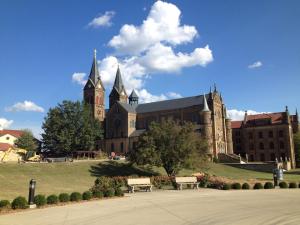
I recently went on retreat at a Benedictine monastery. Their website says that “You’re invited to join us any day for prayer or Mass in the Archabbey Church.” They pray five times every day, and have mass every day. They make a point of saying that the Rule of St. Benedict says “All guests who present themselves are to be welcomed as Christ.” They say that “Hospitality is a Benedictine tradition.”

Their guest house is impressive. They even build guest rooms into their seminary. The meals are generous and filling. There is dessert with lunch and supper every day.

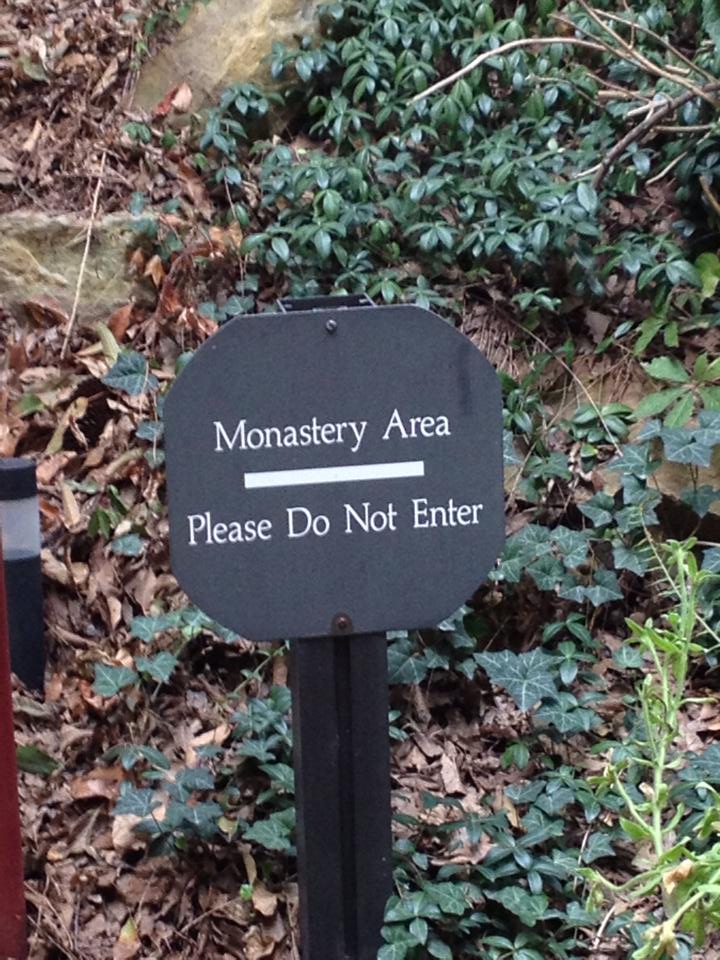
But the hospitality isn’t everywhere, and it doesn’t cover everything. There are quite a number of areas that are off limits. The signs are a bit distressing. And, you don’t get communion unless you are Catholic. Even though guests are to be welcomed as if they are Christ, even though they are welcomed to come pray with the monks, they can’t take communion. I made sure to ask the monk who was leading us (a Methodist group) on tour “Are we, or are we not allowed to receive communion?” and he said “I’m sorry, I’m not able to give you permission.”

He isn’t able to give me permission, because he is just a monk. Even the abbot, the monk in charge of the abbey, wouldn’t be allowed to give me permission. Only the Pope would. I’m working on a letter. I’m not kidding.

This is a Catholic rule, not a Benedictine rule. It is very painfully obvious to me that the Rule of St. Benedict is far more inclusive than the Rule of the Catholic Church. It would appear to me that they should offer communion to anyone who wants it, in the spirit of being welcoming and treating everyone as if they are Jesus. Following the rule of the Catholic Church, even Jesus wouldn’t be allowed to receive communion, because he is Jewish.

I’ve wrestled with this for years. This isn’t the first time I’ve written about this. Just look up “Communion” in the search field or in the tag cloud and you’ll see plenty of other of my musings on this subject. But this time was different. This time I invited Jesus into it. This time I started the weekend with the intention of meditating with Jesus about the goal of unity and inclusion for everyone. This time I was on a mission, and Jesus was my guide.

So how can the Church be inclusive and unified with contradictory policies? They say one thing, and yet do another. How can we welcome everyone as Christ if we put up signs or have policies that essentially say “You are welcome, but only so far, and only so much”?

There are plenty of signs throughout the grounds that say “off limits” in one way or another – –
34at garden

The tabernacles are all locked. These are the boxes in the chapels that hold the consecrated host. Catholics believe that Jesus is physically present in the communion wafers once they are blessed. Those that are not used at the mass are put into a tabernacle, locked away, and a candle left burning nearby.
aumbrey2

The vials for holy oil are in a special container with locks on it –

oil2

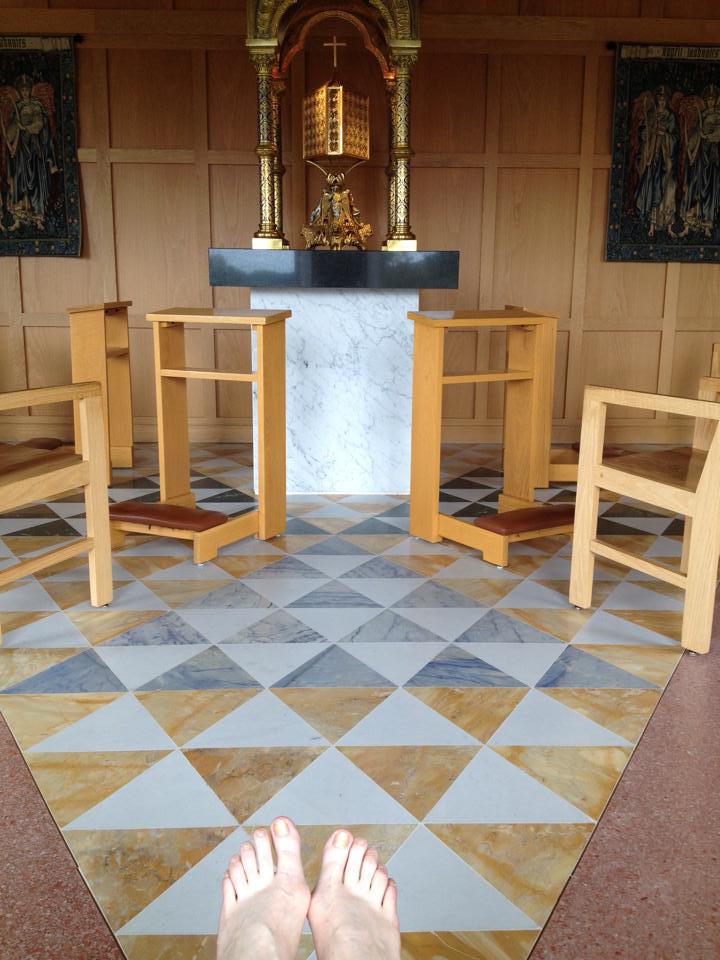
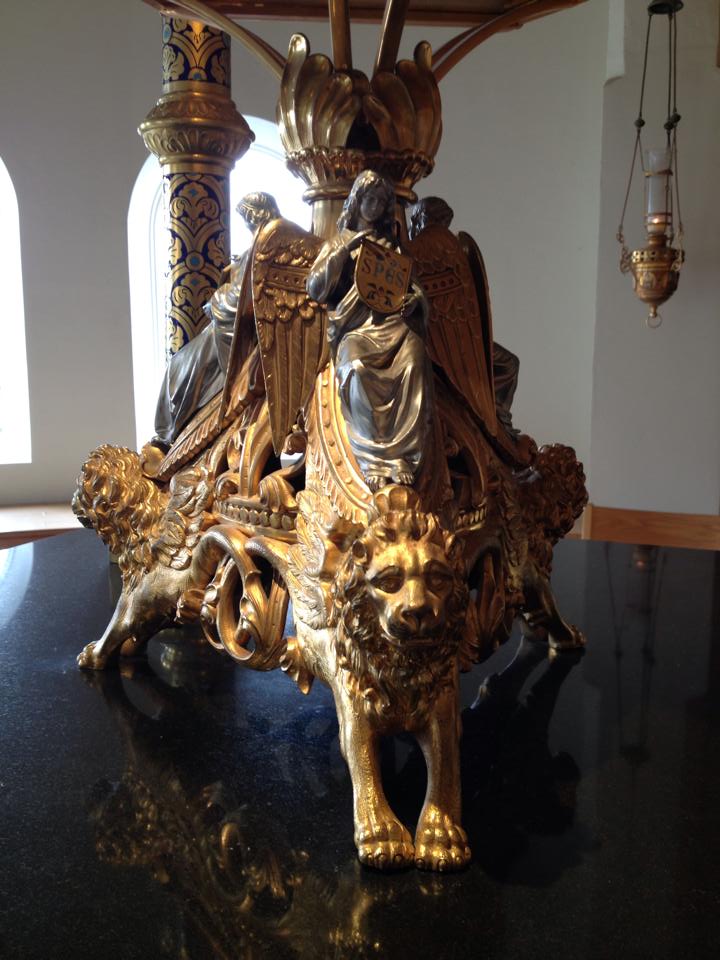
In spite of all these “off limits” signs, there is a place that is truly special and yet has no doors to block it, no barricades. I knew when I saw a picture of this place when researching the monastery that I had to spend time here. This is a shrine that holds the consecrated host, but it is far fancier than the ones in the other chapels. The “Blessed Sacrament Chapel” is in a special alcove behind the organ in the abbey.

Their website says that “The tabernacle and its tower were fashioned from the altar used in the Church from 1909 to 1968.” The tower over it is called a “baldachin”. There is a much larger one over the altar in St. Peter’s Basilica in Rome. It is used to indicate a holy place is underneath it.

host5
host9

Here I prayed, asking Jesus about this rule. Should I take Communion anyway? This was on Friday. I was still unsure if I should even go to mass on Sunday, knowing that I wouldn’t be officially allowed. Sure, the priest wouldn’t know that I wasn’t Catholic. But I know.

I prayed, barefoot on that cold marble floor.

host4

I sat near the windows, looking at the shrine, with all that gold, all those gems. I wandered around that little chapel, taking pictures of the windows and ornaments, wondering about how many hungry people could have been fed with the money spent on these things.


host6
host3host1
host8
host12

And then I heard Jesus say into my heart – “Why are you crying over the map, when you have the treasure?”

The “map” is the way you get there. The “treasure” is what you are seeking. The “map” is the communion wafer. The “treasure” is Communion with Christ. Why was I so upset over not being able to participate in a symbol, when I already had what the symbol represented? I have Jesus in my heart. That is the goal. That is the treasure. Once he has been welcomed in, there is no need to have the symbol of communion again. It points the way, while Jesus is the Way.

Yet I am still sad. I’m still sad over the painful exclusionary practices of an institution that represents Christ. I’m crying over the harm that their policies cause – and the hypocrisy of them. You can’t say you are welcoming of guests and yet put up signs saying that guests are not allowed. You can’t say you are hospitable and then not allow everyone to take communion.

The symbol matters. It matters because it shows that they still do not have Jesus in their hearts. If they did, they would understand that they can’t put up walls and barriers of any sort.

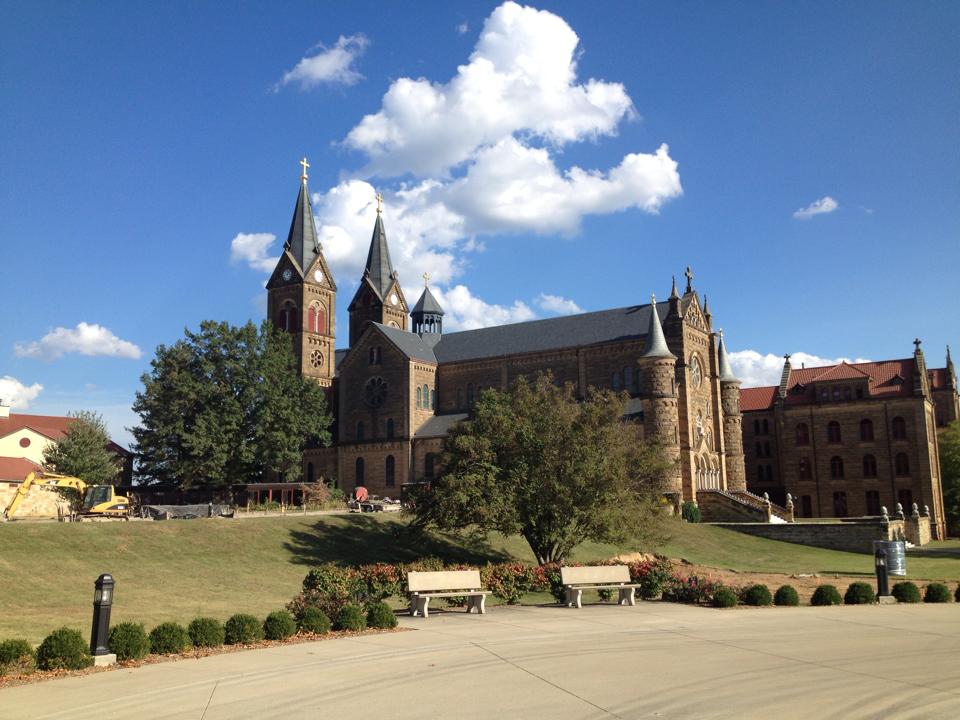
But then, let’s go deeper. This is about more than the symbol of communion or signs saying “off limits”. I say, not one more church building should be built until poverty is eradicated. When all people have food, clothing, and homes, then, and only then, can more churches can be built. People have to come first. Until then, these church buildings are empty shells, they are tombs. They are shrines to a dead faith that cares more about ritual and rules than reality. This applies to all denominations.

Think of how many people could have been housed with all the effort and money put into this place.
outside17

The roofs are made of stone or terra-cotta tile. Very durable. Very expensive
outside7

Even the downspouts are expensive – copper!

outside6

How many poor people could have been fed with all of that money and effort put into these buildings? The Church is missing the point of how to serve Jesus. He said “Feed my sheep”, not “Build a huge church and hide yourself away in it, separated from the world”.

The reality of the living Christ is too important to pass by. All too much, Christians are focusing on a Jesus who existed “back then” in the stories in the Bible, or in the future, in a time of glory when he will come again. They focus on his death and his coming again, without the middle bit. They miss out on being united with Jesus right now, not just when they die. They live their whole lives in hope of “eternal life” with Jesus, completely passing by the opportunity to have a full life now, with Jesus in their hearts.

This is why I’m sad. I’m sad because the truth of Jesus hasn’t entered into the hearts of the faithful and into the Church. I’m sad that their policies and rules prove that their hearts and souls are not in synch. They say they are welcoming and hospitable, and yet their actions, deep down, prove otherwise.

Did I go to mass? Yes. Did I take communion? No.

Up until the very last minute I prayed about it, asking God what I should do. I went to mass and got up when it was time to get communion. Two of my friends who were on the retreat with me remained in their seats. In the queue, I prayed, asking God to direct my actions. And in response, my arms went up and crossed over me, as if on their own. To cross your arms over your chest, hands holding your shoulders, is a sign that you cannot take communion. It is to ask for a blessing only. When my arms came up, I knew that was what God wanted for me to do. The tears began to form in the corners of my eyes, and I let them come. Misty-eyed, I stood before the abbot who was administering the communion wafers. I bowed to show reverence for Jesus. The abbot muttered some blessing that I could not hear, and I walked away, tears streaming down my face.

I want them to see me cry. I want these brothers to see how painful this rule is. I want them to know that it does not build up the Church. I want their hearts to open. Perhaps they could practice a bit of conscientious objection, and refuse to take communion until all people can take it?

While on retreat, I got another answer from Jesus in the form of the reading for the day. It was from Haggai 2:3-9. (HCSB)

3 Who is left among you who saw this house in its former glory? How does it look to you now? Doesn’t it seem like nothing to you? 4 Even so, be strong, Zerubbabel”—this is the LORD’s declaration. “Be strong, Joshua son of Jehozadak, high priest. Be strong, all you people of the land”—this is the LORD’s declaration. “Work! For I am with you”—the declaration of the LORD of Hosts.5 “This is the promise I made to you when you came out of Egypt, and My Spirit is present among you; don’t be afraid.” 6 For the LORD of Hosts says this: “Once more, in a little while, I am going to shake the heavens and the earth, the sea and the dry land. 7 I will shake all the nations so that the treasures of all the nations will come, and I will fill this house with glory,” says the LORD of Hosts. 8 “The silver and gold belong to Me”—this is the declaration of the LORD of Hosts. 9 “The final glory of this house will be greater than the first,” says the LORD of Hosts. “I will provide peace in this place”—this is the declaration of the LORD of Hosts.

What I got out of this was that the day is coming when the Lord will rebuild the House. Not the Temple, but the entire Church. It isn’t a building, after all, but a collection of people, united as the Body of Christ. Each believer that has Jesus as his or her guiding force inside is a stone that builds up this Church.

Also part of my intention for this weekend was this verse –

10 Be still, and know that I am God: I will be exalted among the nations, I will be exalted in the earth. (Psalm 46:10, ASV).

Yet when I looked it up in the translation I brought with me, it was rendered as –
“Stop your fighting—and know that I am God, exalted among the nations, exalted on the earth.”

What I got out of this was this – it isn’t for me to worry about. God’s got it.

host11

Conscientious objector

What your workplace does should be in accordance with your belief systems. Buddha speaks about this in his concept of “right livelihood.” It is a smart idea to get a job at a place that does things that are harmonious with what you practice. So what do you do if their policies change and are suddenly opposite to your values? Thus we enter the idea of the “conscientious objector”. You must not do anything that is in violation of your religious beliefs. Sure, you answer to your boss, but more so, you answer to your God.

So what do you do? Do you stay, do you quit, or do you find a middle ground?

There are people who were drafted into the army during the Vietnam War who were pacifists. Because of their religious beliefs, they could not kill anyone. So they trained to do something else other than being a soldier, such as being a medic or a radio technician. They did not apply for that job. They were drafted. So they couldn’t quit, but they found a way that appeased them and their commanding officers. They didn’t attempt to prevent other people from killing. It was simply important that they not kill.

You should never do anything that is against your belief system – but you must remember that others do not share your belief system and thus are not under the same rules you are.

I just read a news report about a mob of a hundred Hindus who killed a Muslim man they accused of eating beef. The man they killed does not share their belief system. He is under no obligation to avoid eating a cow. They accused him of doing something that is against their belief system. The crowd came to his house, broke down his door, and killed him by throwing bricks at him. There is evidence that he was eating mutton, not beef, so it is even more nonsensical. There was no trial, just mob rule.

It is perfectly acceptable to refrain from doing something that is against your beliefs. It is not acceptable at all to expect others to follow your belief system’s rules. They have made no such vows.

The Kentucky marriage license clerk who is in the news is not being asked to marry a woman. She herself will not have to engage in any homosexual acts. If she feels that homosexuality is in opposition to the teachings of Christ, then it is logical that she should not engage in homosexuality. However – there is nothing in those teachings about not allowing other people to be homosexual.

Consider this. There are plenty of Hindu sandwich-store owners who serve beef every day to their non-Hindu customers. There are plenty of people who are opposed to premarital sex for religious reasons who own hotels – yet they don’t check the marriage licenses of each couple that check in.

Your religious practice is yours. Theirs is theirs. You should police yourself, and nobody else. In exactly the same way you don’t want them to force their beliefs on you, you should not force yours on them.

Being a conscientious objector is about you not doing anything against your belief system – you, and only you. It has nothing to do with not allowing others to do things that are against your belief system. Being a conscientious objector does not mean that you have a right to tell other people how to live their lives. It does not mean that you have a right to expect them to live according to your religious beliefs.

Interestingly, according to that clerk’s own belief system, she is a sinner because she has married someone else while her ex-husband is still alive. In the very words of Jesus, this makes her an adulteress, and her current husband is an adulterer.

In the words of Jesus – “I tell you that any man who divorces his wife, except in a case of sexual immorality, causes her to commit adultery. And if a person divorces their spouse and marries another person, they commit adultery. Everyone who marries a divorced woman is also guilty of adultery.” LK 16:18, MT 19:9, MK 10:11 (combined)
She is simply not doing the job that she is required to do at this point. If you are paid to do a job, and you do not perform it (for any reason) it is reasonable to expect that you would be fired. Another option is that you can quit and find another job that is in line with your values. But you can’t be expected to continue to be employed if you choose to not do the job you were hired for.

I support the clerks’ right to not be forced to do anything that she thinks is wrong. However, she has taken it too far by expecting other people to follow her beliefs. She should quit and find another job.

What if an Amish person was employed by the DMV? Since he is not allowed to drive, should he have the right to deny other people driver’s licenses? He is not being forced by his job to drive. His beliefs are not being violated.

What if a Seventh-Day-Adventist was working as a waitress and a person ordered an alcoholic beverage? Since she is not allowed by her religion to drink, should she have the right to not serve alcoholic beverages to her customer? She is not being forced by her job to drink. Her beliefs are not being violated.

The only time when a workplace is allowed to tell other people what to do is when it directly affects the health and safety of others, as in the case of smoking or drinking. Secondhand smoke has been proven to be harmful to others, so it is reasonable for a business to not allow smoking in their building. Drunk driving has been proven to kill people, so it is reasonable for a restaurant to stop serving alcohol to someone if they appear inebriated.

But it is not reasonable for a person to deny other people’s legal rights because they feel that that person is going to break a rule that they have not agreed to. It is not the business of religion to police other people. In fact, Jesus says repeatedly that the individual must make sure that s/he is following the rules, and leave out everyone else. Other people’s business is not our business.

“Child-care provider”?

It is questionable when a patron says she is studying for an “early childhood education” degree so she can open a daycare, yet she shows no kindness to her four year old daughter.

Toddlers cannot sit still and entertain themselves for an hour (or more) while their parent uses the Internet at the library. The mother (who is young enough to be confused for her sister) does not bring anything for the child to do, and speaks through clenched teeth to her daughter if she does anything at all other than sit still. If she speaks to her child at all it is with angry tones.

Perhaps she is a single mother. Perhaps she has no family around to help out. Perhaps the only way she can attend school is to use the public computers at the library, with her daughter beside her. I’m glad she is trying to get an education so she can support herself and her child. But there are many different career options available. The one she has chosen does not fit her temperament. I highly question her capacity as a child-care provider when she does not show any capacity at providing care for her own child. If her future customers knew how she treats her own child, they would never trust her with theirs.

I’ve noticed that people are usually on their best behavior in public. If ignoring or growling at her child is her best, then I’d hate to see how she is at home.

The Wayfarer’s prayer

This is a Jewish prayer that is said when you go on a journey. The Hebrew name for it is Tefilas Haderech. This is a slightly modernized version with I believe better wording. You can look up about this prayer online for instructions on when exactly to say this or simply say it just as you are about to depart on your journey.

————————–

“May it be Your will, our God and God of our ancestors, that You lead us away in peace, guiding and directing our journey in peace. Bring us to our desired destination in health, joy, and peace.

Keep us from all the harm and misfortunes that roam this world. Bless our work. Let us find kindness and openness in those we encounter wherever we go, and before You as well.

Hear our prayer, God, for You are the One who listens to prayers. Praised are You, the One who hears prayers.”

————————-

When you return, the prayer of thanks for a safe journey is the Birkat Hagomel prayer – which is also said having narrowly escaped danger or having recovered from a serious illness.

That prayer is this :

“Blessed are You, Lord our God, King of the Universe, Who grants favors to the undeserving, Who has granted me all kindness.”