Just say “I don’t”

There are times when I have a couple signing up for library cards together and one introduces the other as the fiancé. Sometimes one will do all the talking, or fill out the forms for both of them. Or worse, will talk down to or belittle the other. I want to say to them to not get married to each other, that this is a train wreck waiting to happen.

I don’t, in part because of the unwritten rules of customer service. I don’t, because it is up to each person to live their own lives. I don’t, because people never listen anyway.

People don’t listen when their friends tell them not to marry someone. Why would they listen to a stranger?

Sometimes I’ll say “be nice” if someone is being rude to their partner. If nothing else, it tells the other person that what just happened to them isn’t normal.

Now, it isn’t just engaged couples that do this. Married couples will be hateful or condescending in front of me sometimes too. But they are already married. My hope with the engaged couple is that they still have a chance to back out.

It is a really bad sign if one member of a couple is talking down to or trying to embarrass their partner in front of a stranger. It means that it happens all the time when they are alone.

But, for me to say something is to get involved in a codependent kind of way. It is up to the hurt party to stand up and set boundaries. It is up to that person to say “You can’t talk to me like that.”

It is still hard to see. I feel kind of helpless when it happens.

How not to be a bad customer.

This may seem like a no brainer, but if you want good customer service, treat the clerk kindly. Don’t insult her. Don’t talk down to her. Don’t blame her for something that isn’t her fault. (Feel free to change the gender pronouns as appropriate.)

Basically, treat her as you would like to be treated.

I think everybody should work a customer service job for at least a year so that they develop some empathy and compassion.

The person behind the counter is a person, not your personal slave.

She didn’t make the rules, so yelling at her isn’t going to change them. It isn’t fair to her to attack her over something she has no control over. She feels just as frustrated as you do. Perhaps more so.

She isn’t allowed to defend herself either, so you just end up showing how much of a jerk you are if you attack her verbally. It isn’t an equal relationship.

She isn’t your friend. She has to be friendly to you. That is part of her job. If she isn’t friendly, she’ll get reprimanded. If she is your friend, she’ll give you her number or email address. Otherwise, don’t assume.

Don’t ask her out. Especially if she is married. If the only reason you know her name is because you read it on her name tag, don’t ask her out. Really. At least get to know her as a person first. Surely you aren’t asking her out just because she is female, right?

Don’t tell her your personal stories if they have nothing to do with what she is expected to do as part of her job. – unless she is actually your friend.

Don’t ask her to break the rules for you because you think you are her friend. She can get fired for breaking the rules. A real friend wouldn’t ask.

Communion words in Hebrew and English.

These are traditional Jewish blessings that I’ve incorporated into the Communion service. They seem logical to use, as Jesus would have known and used these prayers every week for Sabbath. I’ve included the Hebrew, the transliteration, and the English for all the blessings. Feel free to use both the Hebrew and/or the English. It is important to make the people you are celebrating Communion with feel special and included. Use what you feel would be most meaningful and inclusive.

Put out a nice cloth that has room for everything you need. You’ll need two candles, a plate, a goblet, an unbroken piece of matzo, and some grape juice (or wine).

Light the candles with these words –
——————————————————————————————————-
ברוך אתה ה’ א לוהינו, מלך העולם, אשר קדשנו במצותיו וצונו להדליק נר של שבת

Barukh atah Adonai Eloheinu melekh ha’olam asher kid’shanu b’mitzvotav v’tzivanu l’hadlik ner shel shabbat.

Blessed are You, Lord our God, Ruler of the Universe, who has sanctified us with commandments, and commanded us to light Shabbat candles.
————————————————————————————————————-
Then, touching the matzo lightly, bless it with these words –
———————————————————————————————————–
ברוך אתה ה’ א לוהינו, מלך העולם, המוציא לחם מן הארץ

Barukh ata Adonai Eloheinu melekh ha’olam hamotzi lehem min ha’aretz.

Blessed are You, Lord our God, Ruler of the universe, who brings forth bread from the earth.
—————————————————————————————————————
Break it into smaller pieces – enough for everybody there, and distribute it.

Then, holding up the goblet with the grape juice (or wine), say these words –
——————————————————————————————————————
ברוך אתה ה’ א לוהינו, מלך העולם, בורא פרי הגפן

Barukh ata Adonai Eloheinu melekh ha’olam borei p’ri hagafen.

Blessed are You, Lord our God, Ruler of the universe, who creates the fruit of the vine.
—————————————————————————————————————-
Pass around the goblet and let everyone drink from it. They can also choose to dip their matzo piece into the grape juice (or wine) and then eat it.

(If this has been of use to you, you might want to read “The Condensed Gospel” and “Free Range Faith”, both available in print and e-book from Amazon, by Betsy Nelson)

Praying using an image.

Praying using an icon or a statue is exactly the same as using Skype to talk to God. It is a way of communicating with God.

Statues or icons are like telephones. When you want to call someone, you can pick up your telephone and dial their number. Then you can communicate with them. The telephone is simply a tool that you can use to reach them. Praying using an icon or an image of a God is exactly the same thing.

When Hindus pray using an image of the deity, they don’t believe that the deity is that image. They aren’t worshipping the image. They are worshipping what is inside that image. The image is a way of receiving the divinity. They believe that when they pray, God sets up residence inside that statue during that time, and that they can see and be seen by God. When the prayers are over, God departs from the statue.

Icons, used in Catholic and Orthodox traditions, are simply “windows” to the divine. The divine isn’t there, but it can be used as an interface. It is an access point.

Now, God is always present. God can be accessed anytime, anyplace, and anywhere, by anyone. But we humans can’t really handle that. That is a little too much for us. So we can set aside time to be with God. This makes it more manageable for us, and more likely we will listen to the message.

God can speak to us through dreams or burning bushes like was done with people in the past, or in any number of other ways. God is constantly trying to get our attention. The problem is that we aren’t always ready to receive. We may brush it off as coincidence, or an accident, or just simply not meaningful. We aren’t ready to receive the message when it comes.

Using an icon or an image of an aspect of God puts it on our terms and on our time. We choose the time we approach, and how we would like to interact with God. This makes the infinite more human-sized. We can then enter into the mental space ready to receive whatever message we are given.

Paintings set 1(including acrylic and watercolor pencil)

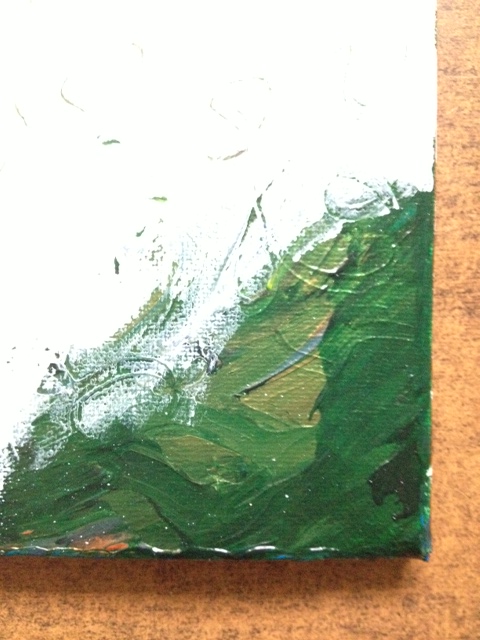
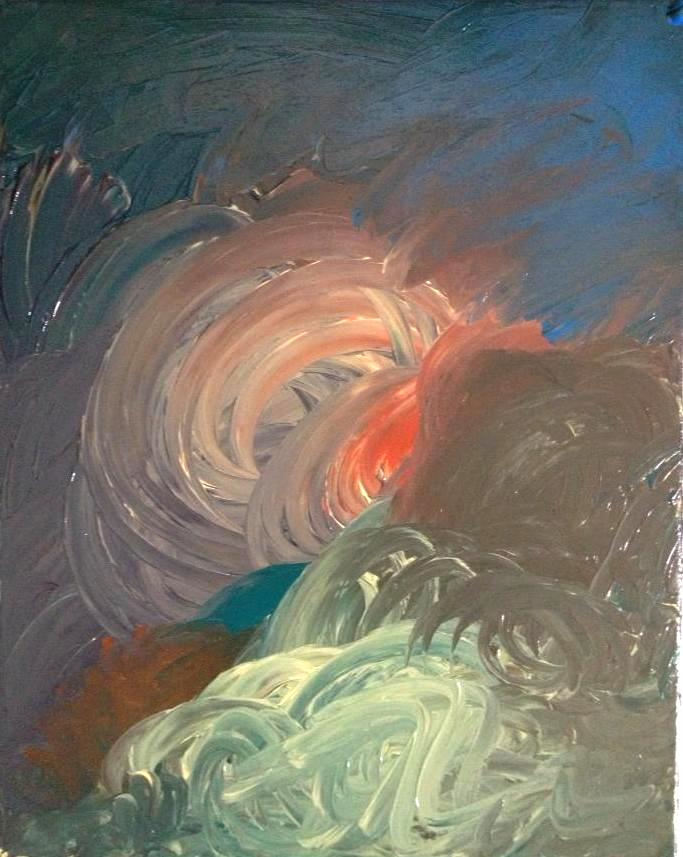
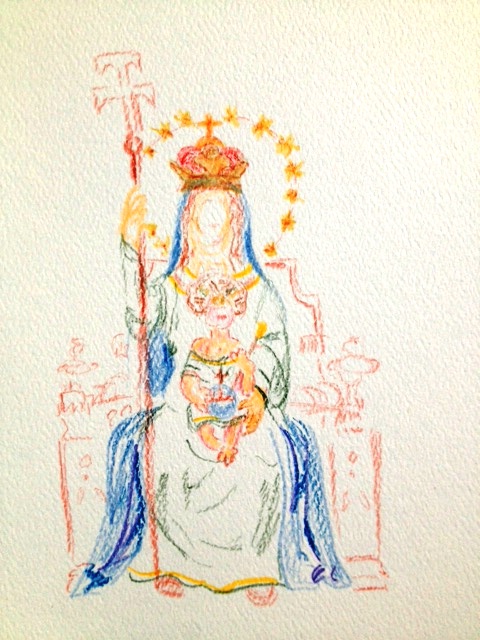
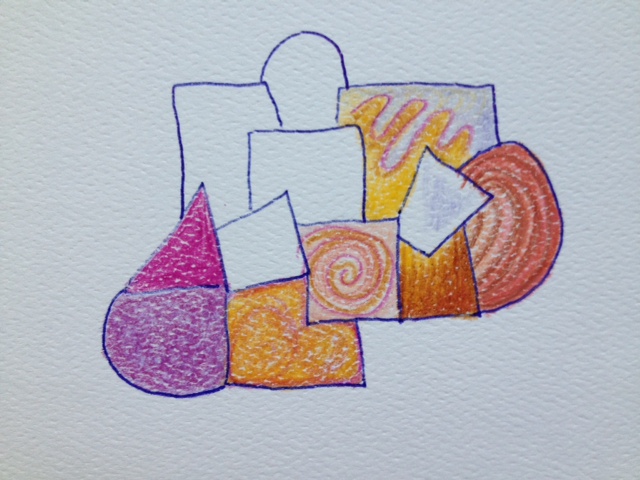
I was asked if I had some of my paintings on my blog, and I do, but they are in various posts. Here I’m going to put together some of the ones I’ve posted here and create a new category for my blog so if people want to look at my paintings / collages, they can go here.

For the 1000 word story, part 2 2-3-14

story2

A painting using light language, painted 2-1-14

light3

A close up.
light4

This is the first layer of that painting. It has light language on top of light language.

light1

From “Thousand Word story” part 1 1-24-14
waves

A watercolor pencil drawing of figs.

f4

Mary and Jesus at Mercy Convent 9-17-2013

Mary 4

Blue vase 7-24-13
7-24-13 sketch

Praying in color 10-29-13
praying in color 10-29-13

Communion as freedom

The Last Supper was a Passover meal, and like the Passover, is meant to be done as a remembrance. The Passover meal is observed once a year with the goal of reminding the Jewish people that God freed them from slavery from Egypt. Today’s Communion service is also done as a reminder of freedom from slavery, but it is the slavery of sin.

Just because people are freed from slavery doesn’t mean they are free.

Life didn’t easier after the Jews were freed from being slaves. They wandered for forty years in the desert trying to reach the Promised Land. There was hardship and pain. There were tests and perils. Not everybody made it. A lot died. Moses, the great leader, the one who intervened with God on behalf of the Jewish people, was one of them. Even Moses, handpicked by God, one of the few people to get to talk with God face to face, even Moses failed and wasn’t allowed to enter the Promised Land.

The same is true for following Jesus. It isn’t an express ticket. It isn’t a “get out of jail free” card. It is a transition. It is an end to your old life yet a beginning to a whole new life of work and hardship. It isn’t easy following Jesus.

Jesus instituted this ritual meal the night before he was captured. He knew what was about to happen, but his disciples didn’t. He knew that they would need a reminder of the life of Jesus and the prophecies that he fulfilled. He knew that they would need a reminder of the promises that he embodies.

Both ritual meals celebrate freedom, but Passover is only done once a year. Communion can be done every time that Jesus’ followers get together. In some churches this is once a week (Episcopal). In some it is every day, several times a day (Catholic). In some it is quarterly (Baptist). In some it is yearly (Jehovah’s Witness). In some it is almost never.

Every time I get together with friends to study the Scriptures, I celebrate Communion. It is a reminder of who we are there for. It is a reminder of who is at the center of our circle. It is a reminder that this isn’t just a social gathering.

I love ritual, and I really love the ritual of Communion. While anybody can celebrate Communion, I realize that not everybody is comfortable performing a ritual. So I provide this part of our gathering.

I try to make it interesting every time. I try to share the meaning and history of the ceremony. I don’t go from a script. There is no order of service as such. There isn’t much liturgy yet either. But I’m working on that. I think that it is important to have everybody participate in the ceremony, rather than just being part of the audience. Communion isn’t a passive thing.

It is a remembering in the truest sense. It is where Jesus joins us, not only joins with us, but joins us together. Jesus enters into our selves, our very beings, in a literal and spiritual way. Also, we are knit together with all other members of the Body of Christ, past, present, and future. We become one.

In the same way that separate grains of wheat become one loaf of bread, we become one in the Body of Christ when we celebrate Communion. Somehow, we stop being free, and yet we become free at the same time. We stop being individuals and we become part of something bigger. We give up our petty needs and join together for something greater. Together, we are stronger.

Communion thoughts. How to – part one.

communion

Anybody can celebrate communion. When Jesus celebrated what we now call the Last Supper with his disciples, they were told simply to do this every time they gathered in his name.

He didn’t say they had to be ordained. In fact, Jesus didn’t ordain anybody. He said that to call anybody teacher or Rabbi or Father is to take away from God’s authority.

Jesus came to level the playing field. Jesus makes us all equal.

When I celebrate Communion, I use matzo and kosher grape juice. Both can be purchased at your local grocery store, in the Jewish section.

Communion is a shortened version of the Passover meal, which is a bigger version of the weekly Sabbath meal.

At the Sabbath meal, Jews use challah, a braided egg bread. It is a yeast bread. During the Passover meal, they use matzo, “the bread of affliction”. It is flat and hard. It is a bit like a cracker. It does not have yeast in it, so it doesn’t rise. It is to remind them that their ancestors didn’t have time to let the bread rise when they escaped from Egypt. It is also to remind them of the manna from heaven that God provided for them while they were wandering in the desert for 40 years.

Matzo closely resembles the texture of communion wafers. Or rather, communion wafers are like matzo. It is supposed to be the same thing. Sadly, standard communion wafers don’t look like matzo at all, so Christians don’t see the connection. Nor are we taught it. None of this is a secret, but it isn’t advertised either.

I use kosher grape juice rather than wine because I might have someone there who is in recovery. It is really important for me to include everyone. If I use wine, then those people who cannot have wine are left out. That isn’t right.

I have been to a number of church services that used wine and the priest spelled it out. S/he would say that they used real wine, and that if you couldn’t have wine, to cross your arms over yourself so that the chalice bearer would pass you by. The priest said that you got the full benefit of communion without both elements.

I was a chalice bearer, and that is an awkward moment. Everybody gets wine, except one person. That makes that one person stick out. Their inability to have wine is now essentially public knowledge. It is shameful and embarrassing for them. Something that should be private now isn’t.

There was also a problem at my old church with young children drinking from the chalice. The rule in that denomination was that if you were baptized, you could take communion. They practiced infant baptism. You get the picture. Some children were sucking up the wine like it was Kool-aid.

It all made me think. To use wine is to exclude. To use wine is to cause problems.

I don’t know what makes kosher grape juice kosher, but it sure tastes good, and it comes in a glass bottle. I like that better than plastic. I’m sure I could use standard grape juice but this seems more appropriate.

I put out the matzo, unbroken, on top of a small dish. I pour the grape juice in a cup, half full. I want to make sure everybody has enough, but not make them feel overwhelmed. I pour it at the beginning of the service so that it has a chance to get to room temperature. It is important that people see there is enough for them, but it is also important to finish it off at the end. It can’t be poured back into the container, and it is impolite to pour it down the drain. More on that later.

To Do List

God gives us a to-do list. We are told quite clearly what is expected of us, as servants of God. Those of us who have chosen to follow God don’t have to wonder what our role is. And we most certainly have a role. We are to be a force for good in the world.

Micah 6:8
“Mankind, He has told you what is good and what it is the LORD requires of you: to act justly, to love faithfulness, and to walk humbly with your God.”

Then Jesus gives out very specific instructions to his disciples as they go out into the world. These are the very same instructions he gives to us as well. We are those disciples. There is no difference between them and us.

Matthew 10:7-20
“7 As you go, announce this: ‘The kingdom of heaven has come near.’ 8 Heal the sick, raise the dead, cleanse those with skin diseases, drive out demons. You have received free of charge; give free of charge. 9 Don’t take along gold, silver, or copper for your money-belts. 10 Don’t take a traveling bag for the road, or an extra shirt, sandals, or a walking stick, for the worker is worthy of his food. 11 “When you enter any town or village, find out who is worthy, and stay there until you leave.12 Greet a household when you enter it, 13 and if the household is worthy, let your peace be on it. But if it is unworthy, let your peace return to you. 14 If anyone will not welcome you or listen to your words, shake the dust off your feet when you leave that house or town. 15 I assure you: It will be more tolerable on the day of judgment for the land of Sodom and Gomorrah than for that town. 16 “Look, I’m sending you out like sheep among wolves. Therefore be as shrewd as serpents and as harmless as doves. 17 Because people will hand you over to sanhedrins and flog you in their synagogues, beware of them. 18 You will even be brought before governors and kings because of Me, to bear witness to them and to the nations. 19 But when they hand you over, don’t worry about how or what you should speak. For you will be given what to say at that hour, 20 because you are not speaking, but the Spirit of your Father is speaking through you.”

Matthew 22:34-40
34 When the Pharisees heard that He had silenced the Sadducees, they came together. 35 And one of them, an expert in the law, asked a question to test Him: 36 “Teacher, which command in the law is the greatest?”
37 He said to him, “Love the Lord your God with all your heart, with all your soul, and with all your mind. 38 This is the greatest and most important command. 39 The second is like it: Love your neighbor as yourself. 40 All the Law and the Prophets depend on these two commands.”

When Jesus says this, he is echoing this verse from the Torah-

Deuteronomy 6:4-9
4 “Listen, Israel: The LORD our God, the LORD is One. 5 Love the LORD your God with all your heart, with all your soul, and with all your strength. 6 These words that I am giving you today are to be in your heart. 7 Repeat them to your children. Talk about them when you sit in your house and when you walk along the road, when you lie down and when you get up. 8 Bind them as a sign on your hand and let them be a symbol on your forehead. 9 Write them on the doorposts of your house and on your gates.

Matthew 25:31-40
31 “When the Son of Man comes in His glory, and all the angels with Him, then He will sit on the throne of His glory. 32 All the nations will be gathered before Him, and He will separate them one from another, just as a shepherd separates the sheep from the goats. 33 He will put the sheep on His right and the goats on the left. 34 Then the King will say to those on His right, ‘Come, you who are blessed by My Father, inherit the kingdom prepared for you from the foundation of the world.
35 For I was hungry
and you gave Me something to eat;
I was thirsty
and you gave Me something to drink;
I was a stranger and you took Me in;
36 I was naked and you clothed Me;
I was sick and you took care of Me;
I was in prison and you visited Me.’
37 “Then the righteous will answer Him, ‘Lord, when did we see You hungry and feed You, or thirsty and give You something to drink? 38 When did we see You a stranger and take You in, or without clothes and clothe You? 39 When did we see You sick, or in prison, and visit You?’
40 “And the King will answer them, ‘I assure you: Whatever you did for one of the least of these brothers of Mine, you did for Me.’

Jesus tells us how to recognize someone who believes –

Mark 16:17-18
17 And these signs will accompany those who believe: In My name they will drive out demons; they will speak in new languages; 18 they will pick up snakes; if they should drink anything deadly, it will never harm them; they will lay hands on the sick, and they will get well.”

And what is the last thing that Jesus asks Peter, and thus by extension, the whole church to do?

John 21:15-19
15 When they had eaten breakfast, Jesus asked Simon Peter, “Simon, son of John, do you love Me more than these?”
“Yes, Lord,” he said to Him, “You know that I love You.”
“Feed My lambs,” He told him.
16 A second time He asked him, “Simon, son of John, do you love Me?”
“Yes, Lord,” he said to Him, “You know that I love You.”
“Shepherd My sheep,” He told him.
17 He asked him the third time, “Simon, son of John, do you love Me?”
Peter was grieved that He asked him the third time, “Do you love Me?” He said, “Lord, You know everything! You know that I love You.”
“Feed My sheep,” Jesus said. 18 “I assure you: When you were young, you would tie your belt and walk wherever you wanted. But when you grow old, you will stretch out your hands and someone else will tie you and carry you where you don’t want to go.” 19 He said this to signify by what kind of death he would glorify God.[j] After saying this, He told him, “Follow Me!”

(All translations are from the Holman Christian Standard Bible.)

God is in the darkness

dark1

I was painting the background for a space picture. This alone is a new thing for me. I’m trying to learn that it is OK to work on a project over the course of time. I’m trying to learn to do things in stages. I don’t have to do the whole thing at once.

I’m not sure where I got the idea that I had to finish a painting all at once. I have wirework projects that I can’t finish all at once. The work is too hard on my hands and wrists to complete it in one day. There are certainly beading projects that are sitting in plastic bags in bins right now, half finished. I may never finish them.

Perhaps part of it is that acrylic paint can’t be worked with once it is dry, and it dries very fast. Beads don’t care. With beads, I can take the whole thing apart and redo it as many times as I want. Paint isn’t forgiving like that.

But I keep reading about image transfer and collage, and I keep thinking it is cool. I’ve got all the materials I need (I think) and I’ve read quite a number of books about it. I still don’t think I know what I am doing, so I haven’t tried. But I’m trying to convince myself that if I don’t try, it is worse than trying and failing. Not using art supplies for fear that I’ll mess them up is worse than using them and not getting what I was aiming for. At least when I use them, I’m learning how to use them, and I’m learning what works and what doesn’t.

All the image transfer and collage techniques are multi-day projects. You have to paint the background, and let it dry a day. Then you paint a layer of clear glue on it. And let it dry a day. Then put something else on. And let it dry a day. You get the idea. Lots of waiting. Lots of days.

Part of my issue is that I want results now. I’m trying to get over that. I’m trying to use these kinds of projects to get over that. I always have “quick” projects to give me that “I made something” buzz, in the meantime.

So, back to the painting. I needed a black background, but I didn’t want to use black. That is too easy. So I used a really dark grey called Paynes Grey, and a really dark purple called Dioxazine Violet (Hue). I squirted some of each on the canvas and swirled them around and together. I really like the color I got. It isn’t traditionally black, but it is plenty dark. I figure space isn’t black, but more purple/grey, if it had to have a color.

In reality, I figure it is the absence of light, and that doesn’t have a color at all.

But then I didn’t like the lines in it. Because I use my fingers to paint, there were large lines in it. No matter how I swished and flicked my fingers, the lines were still there. I don’t want lines, because they will draw attention to themselves. This is a background. Backgrounds are supposed to stay in the back, right? They are the supporting role, not the main character.

So I started “writing”. I have a friend who does “light language”- which is really the gift of tongues. It can be done with the voice or with writing. Her coming out about it has reminded me of the fact that I’ve done this for years. I stopped doing it because it felt silly. I got really self conscious of it and stopped. I never showed anybody what I was doing. I guess there was some shame in it, because I felt like an oddball.

You aren’t weird if there are other people who do the same thing, though.

So I’ve started doing it again, intentionally. I’m letting the Holy Spirit work through me in this new/old way, and it is really freeing. I’m still really aware how unusual it is so I don’t do it all the time. I’m mindful of my audience.

I don’t think I’ll ever forget that a minister told me to stop talking about how God was talking to me, was waking me up at night to give me messages. A minister, telling me to stop talking about God. In church. To church members. Isn’t that the place where people who have those kinds of experiences go? Isn’t that the place where people seek to have those kinds of experiences? Isn’t that the place where people read about other people in the Bible having those experiences?

I’m glad I chose to leave that church rather than to be silent.

So when I started to write on this painting, I learned something. I didn’t write down or record my experience. I spoke the words out loud and “wrote” them in my light language shorthand. When I write this way, I write left to right, then right to left. I kind of make an S across the page, going back and forth, until I am done.

Here is what I remember of it:

Under the sea, and deep in space, it is very dark. The darkness is vast and silent.

There is potential in darkness.

Babies grow in darkness.

The seed is the same way, swelling, stretching.

And God is there in the darkness.

This reminds me of Jeremiah 1:5 “Before I formed you in the womb I knew you, before you were born I set you apart; I appointed you as a prophet to the nations.”

Which then leads to Psalm 139-12-16
…even the darkness is not dark to You.
The night shines like the day;
darkness and light are alike to You.
13 For it was You who created my inward parts;
You knit me together in my mother’s womb.
14 I will praise You
because I have been remarkably and wonderfully made.
Your works are wonderful,
and I know this very well.
15 My bones were not hidden from You
when I was made in secret,
when I was formed in the depths of the earth.
16 Your eyes saw me when I was formless;
all my days were written in Your book and planned
before a single one of them began.

I was afraid of darkness when I started this project, and now I am at peace. I’ve gotten the message that God is there, at work, even if I can’t see it. I’ve gotten the message that God has a plan for my life.

Then this leads me to Jeremiah 29:11-13
11 For I know the plans I have for you”—this is the LORD’s declaration—“plans for your welfare, not for disaster, to give you a future and a hope. 12 You will call to Me and come and pray to Me, and I will listen to you. 13 You will seek Me and find Me when you search for Me with all your heart.

What an amazing message to come from just painting the background to a piece that I don’t even know what it is going to be.

Thanks be to God.
seed

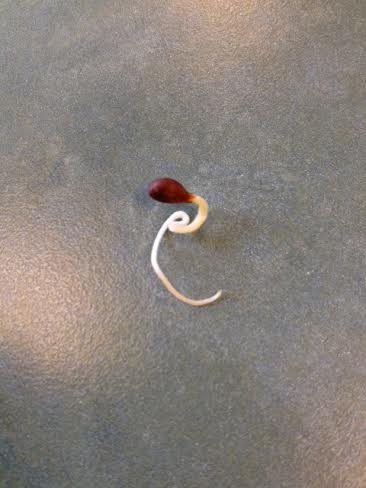
An apple seed, sprouting.

Once more with feeling…

I’ve finally gotten over the idea that I can’t repeat myself when I write. I found that I was bringing up the same examples, the same stories. I really wrestled with this, feeling that I should go back and rework what I had already written, to update it perhaps.

But sometimes it is good to just write, let it go, and move on. If I go back and rewrite pieces, I feel like I’m not moving forwards. And sometimes what I wrote wasn’t immature, necessarily. It was my viewpoint, from that day, at that time. On another day I’ll want to talk about the same topic, from a different perspective.

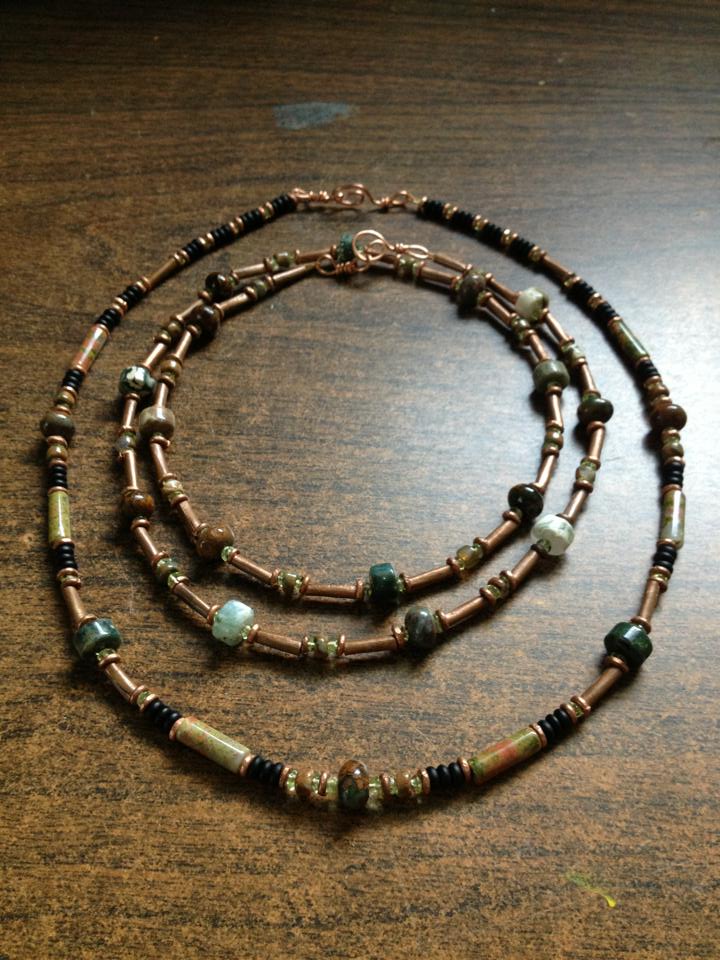
Beads have helped me with this. Here are two different necklaces, using the same main beads.

bead combo

themes

In neither was I able to “say” what I wanted to express when I got the beads. I’ve come to realize that is normal. When the beads are jumbled together in the store or in bins, they spark ideas in my head. But when they have to be put together in a line, such as when they are in a necklace, they just don’t come out the same way as they are in my head.

But here’s the thing – what came out looks good, and nobody knows what I had in my head anyway. The only unhappy person is me.

Now – what I do with that feeling is what matters. It could cause me to stop creating. Or, it can cause me to create more, to try to get across what I was trying to “say”. Or, it can cause me to totally reinvent how I use beads. That too might happen.

I’m looking at incorporating beads and paint and collage. Essentially going 3-D with 2-D stuff. While beads are three dimensional, they aren’t in a way. They lay flat on the body, and you only look at them from one side. Going multi-stranded helps – you have colors and textures “rubbing” up against each other from west and east, rather than just north and south. But wrapping around, and under, and through? That is 3-D, and engages the viewer. The viewer can’t see all that is there in one glance, and will never see the entire piece at once. It is constantly presenting new viewpoints and things to discover.

Is that where I am is going? Maybe. I currently don’t have the skills for that. Yet. But that is part of art too. I think part of what makes an artist is a constant low-level feeling of dissatisfaction. If you are happy with things as they are, you don’t need to create.

Necessity is the mother of invention.

But unhappiness is the mother of art.

It doesn’t mean that I’m depressed. How about unhappy, in the sense of dissatisfied? Or feeling like something is missing? That sense is what drives me to create.

It is funny that creating itself, whether music, painting, collage, writing, beading – can lead to unhappiness. I keep feeling like I almost have it, that it is close, but no cigar. But I’m learning how to be OK with that feeling, and use it to create more. I’m learning how to use my tools and get better at what I do. I’m learning to be patient with the process.

When I first started writing, it could take me five hours to get across what I felt I was trying to say. I feel like I’m much more efficient now. And I’ve learned that with anything I do, the “message” may not come across with the medium. No matter how much work I put into it, the audience may not get what I was trying to give them.

That is OK too. I’m learning that just creating is the goal. I’m learning to just let go, and let God work through me, and in me. I learn when I create. The creations aren’t the goal. It is what I learn while I’m making them. If I can sell them to get more materials to create more things, all the better.