Torn. Thoughts on #Yesallwomen

I’m really torn about the #Yesallwomen tag. It is starting to sound like an airing of grievances. I have my own list, trust me. I thought about posting it. But how will this heal us? Men and women are both feeling alienated and misunderstood and threatened. What can we do to teach boundaries and compassion and respect? How do we build a bridge? What can we as a community, as a culture, do to stop the psychic pain that causes these outbursts of random violence?

This isn’t about gun control.

It would be stupid to think that banning guns will do any good. The cat is already out of the bag. If we ban guns, then only the “bad guys” will have guns. That isn’t safer. That is actually more dangerous. I’m not saying everybody needs to have a gun either. I’m saying that it is too late to even talk about gun control. In the last two examples of mass murder a knife was used. It isn’t about guns. It is about violence. What pushes someone to the point that they kill?

We need people control. We need self respect, and respect for others. We need for everybody to learn how to establish and enforce and respect boundaries in themselves and in others.

This isn’t about mental illness either.

Involuntarily committing people just because they are odd or different is a very dangerous idea. There are reasons why people have to present a clear example of being a danger to themselves or others before they are involuntarily committed. It is to prevent someone being essentially imprisoned without cause.

If we committed every person who was different, fully half the population would be in a mental institution. Who would get to decide what is “normal”? Who would be in charge? If you vote differently, don’t make enough money, go to the “wrong” church or no church at all – you are different. In you go. Sure, the idea of committing all the “crazy” people seems like a good idea, until you are the “crazy” one, according to someone else’s standards. You haven’t done anything wrong, but they think you might.

See how this sounds?

Speaking from the perspective as someone who has voluntarily committed herself twice, mental hospitals aren’t a great idea. A mental institution is not a place to learn how to be healthy. It is not a place where you are taught good coping skills and how to deal with the “real world.”

It is more like a holding cell. It is a place where you get medicated to the point of being a zombie. Of course people stop taking their medications when they get out. They don’t see the point of them. They make them feel terrible. The medications often make it harder to be a human being, not easier.

It would be better if mental hospitals taught people how to prepare healthy food for themselves, how to choose an exercise routine they can stick with, and how to interact with other people in a healthy way. If you can’t handle life before, you certainly can’t handle it when you are on drugs that make your thinking processes fuzzy. It is better to teach people how to be people first.

We need to rethink everything.

We have failed our boys. We have failed our girls. We have failed as a culture. These no longer random acts of violence have taught us this.

How do we change? What can we do to heal this rift?

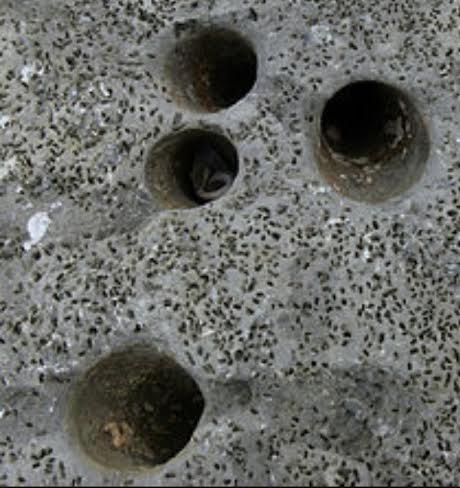
Rock with holes

I found this rock at a thrift store in Boone, NC.

rock2

It cost a dollar. I was on the lookout for something to use as a “talking piece” when I do a circle. That is the thing that you hold while you talk, and everybody has to listen. Then you hand it to the next person.

But I also like cool rocks. I have a collection of rocks from all over.

I was wondering what could have caused these holes. Erosion? Animals?

I Googled “rock with holes” and came up with the most likely option so far – pholad boring.

“Pholads are small bivalves that bore holes into shore rocks a few centimeters across, living their lives inside that shelter and sticking their siphuncles out to filter the seawater. If you’re at a rocky shore, or if you suspect that a rock has once been there, then look for these biological holes, a type of organic weathering. Other marine creatures make marks in rocks too, but the real holes generally belong to pholads.” (From the article “11 Types of Holes in Rocks” on the Geology section of About.com)

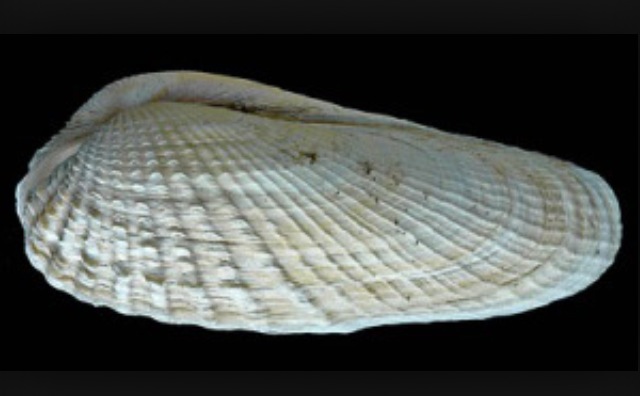
These pholads are known as “angelwings” because of the shape of their shell.

pholad4

Here are some pictures from that article.

pholad3pholad2pholad1

Then this started a whole line of thinking. The rocks themselves are made of limestone, which is, in itself, derived from other sea creatures’ shells. Many animals with shells lived and died, and their shells degraded and got compressed together and shaped into a rock. So these modern shelled creatures are actually living inside the remains of other shelled creatures, which are many many years distantly dead.

Also, I find it interesting that these creatures have a shelled body, but they feel the need to dig a hole into a rock for even more protection. They never leave this hole. They live their lives here. Reminds me of some people I know. They’ve traded in safety for boring.

But, back to the rock with holes.

This is known as “bioturbation.” It happens any time a living creature disturbs soil. Sea creatures do it, insects do it, animals do it – including humans.

Back to the About.com article – “One of the agents of organic weathering, bioturbation is the disturbance of the soil or sediment by living things. It may include displacing soil by plant roots, digging by burrowing animals (such as ants or rodents), pushing sediment aside (such as in animal tracks), or eating and excreting sediment, as earthworms do. Bioturbation aids the penetration of air and water and loosens sediment to promote winnowing or washing.”

Cool, right? And I just thought it looked like a potato with the “eyes” cut out. I’d seen rocks with these kinds of holes before but never knew how to look it up. I’m so glad that a search term as simple as “rock with holes” was enough to get me on the right track.

Later I was playing with it and found out that the holes can be used in a flute-like manner. Yes, this means I can play my rock. More importantly, it means that I tried to play it.

I’m glad I’ve gotten back to the state of being a child.

Edit 7-4-17:
I have learned that rocks with holes all the way through are sometimes known as “Hag stones”. From the Etsy shop “SeaMadeDesigns” – – “Hag stones, in folk magic systems, these are often believed to ward off the dead, curses, witches, sickness, and nightmares. They are also used as windows or doorways to see ‘otherworlds’, invisible spirits, or how a being ‘really’ looks beyond their physical image. They have always been deemed a rare and treasured stone.” The item description also refers to them as healing stone, Odin stone, adder stone, fairy stone, alter stone

Piety

I had a dream that I was at some church gathering where we all were going to get lunch. It was at a local restaurant, not at the church itself. Near the entrance of the restaurant were four beggars. Also near the entrance was the pastor, but hiding.

It was a test. Do the members stop to talk with the beggars? Do they give them money or food? At the very least do they give them a smile and treat them like they are human? Or do they ignore them?

There is a saying from Jesus to not let your piety be seen. It is rude to do something good so that you will get bonus points. Matthew 6:1 “Beware of practicing your piety before others in order to be seen by them; for then you have no reward from your Father in heaven.”

But it is also a bad idea to learn to love your neighbor in the abstract but not show it in the concrete.

But how loving is it to allow someone to be dependent? To give food or money to someone who has the capacity to earn it themselves is to undermine their basic humanity and dignity. It is to encourage them to continue to be a beggar.

And how is it loving of a pastor to try to trap people? The purpose of a pastor is to lead, to teach, to educate.

It is all very complicated. Sure, it was a dream, but it has a basis in reality.

It reminds me of the videos that Jon Quinones’ show “What Would You Do?” where they secretly films people in posed morally questionable situations. Instead of teaching people what are good ways of dealing with the situation, he basically mocks people who fail to rise to the occasion.

I think the goal of any leader, but especially of religious leaders, is to instruct and inform, rather than point out flaws. Instead of figuring out ways to catch people sinning, help them to know what is the right thing to do. If they fail in a “test” – it isn’t their fault. It is the leaders’ fault for not teaching them correctly.

The whole verse is here (Matthew 6:1-8) (NRSV)
1 “Beware of practicing your piety before others in order to be seen by them; for then you have no reward from your Father in heaven. 2 “So whenever you give alms, do not sound a trumpet before you, as the hypocrites do in the synagogues and in the streets, so that they may be praised by others. Truly I tell you, they have received their reward. 3 But when you give alms, do not let your left hand know what your right hand is doing, 4 so that your alms may be done in secret; and your Father who sees in secret will reward you. 5 “And whenever you pray, do not be like the hypocrites; for they love to stand and pray in the synagogues and at the street corners, so that they may be seen by others. Truly I tell you, they have received their reward. 6 But whenever you pray, go into your room and shut the door and pray to your Father who is in secret; and your Father who sees in secret will reward you. 7 “When you are praying, do not heap up empty phrases as the Gentiles do; for they think that they will be heard because of their many words. 8Do not be like them, for your Father knows what you need before you ask him.

Do you stay or do you go?

It is easy to stay in a job, a friendship, a marriage when things are good. But it isn’t always good. What do you do then? Do you stay or do you go?

There are different ways of going other than actually leaving. You can stop participating. You can “go along to get along”.

You can write out your rebuttal and then say at the end that no reply is expected, and even if there is a reply it won’t be read.

That too is leaving, that too is running away.

But how do you stay? Staying is hard. It is being willing to listen to the other person. It is being willing to engage in dialogue.

Nobody likes a fight. Nobody likes to disagree. I’ve heard some people say that they are “conflict adverse”. Of course they are. Normal people don’t seek out arguments.

But arguments happen all the time. We see things differently. We like to be right. When someone speaks their mind and it differs from your mind, what happens then?

That is “where the rubber meets the road”. That is where things get real.

Do you stay, or do you go?

In part, it depends on your investment in the situation. Can you afford to leave? How much time and energy have you put into this relationship?

It is ok to cut out. It is ok to leave. It isn’t ok to do that all the time. If you make a habit of leaving when things get hard, when things get real, then you’re making a habit of leaving.

A life filled with leaving isn’t really a life.

Stay. Stay with it when it gets hard. Stay with it, because staying with it is all that stands between you and anonymity. Stay with it because to always leave is to disappear, to dissolve.

Cemetery walls

Why do we wall off cemeteries? Even little ones, family ones? Ones that have only ten people in them?

Perhaps we wall them off to let people know that this land is different. Is it considered holy or sacred ground? Certainly there are taboos about walking over graves. Some people will not knowingly enter a graveyard, much less walk amongst the graves.

There was a graveyard next to the college that I went to. It was a Civil War cemetery. Once I realized what it was I spent time there writing and studying. It was like a park, nicely landscaped, with pleasing trees and shade, and of course graves. It was quiet there.

When people found out I was studying there they would get a little freaked out. To me, it is safer in a cemetery than elsewhere. All the people in here can’t harm me.

Perhaps the issue is death itself that people are afraid of. People think it is catching. We have to wall off the dead people, put them in a separate area, so we won’t get what they have.

That doesn’t work of course.

So perhaps we should be more open about death, and not wall it off. Perhaps we should bury our loved ones close to us, in our back yards. Or even our front yards. Why would it matter to them? They are dead. If they are buried in the front yard then we will remember them more often.

Does this sound sacrilegious? If so, why so?

Why do we even bury the dead at all, and put them in special places? The body is a shell. The part that mattered is gone. They aren’t coming back.

Some faith traditions say that the dead will rise again. If so, they are going to have a really hard time of it. Six feet under, in a lead lined coffin, which itself is in a concrete case. And this is not even talking about the embalming process. I hope that the dead don’t rise again. They’d have a bear of a time getting on the right side of the dirt, and being worthwhile after all that, what with their internal organs having been removed and their orifices sewn shut.

Sounds terrible, doesn’t it? The more I’ve read about modern embalming practices, the more I want my body to be cremated. Efficient. Takes up less space. Not icky.

So what is best? Have cemeteries visible, regularly viewable? This would remind people that death is a reality and not something to be afraid of. The more we are mindful of our death, the more we will pay attention to life and take it seriously. We won’t waste our life on things that don’t matter.

Or should we not have cemeteries at all because the body is not needed after death? Would it be better to “recycle” the body, to return it to the earth to let it provide nourishment to a tree? It isn’t really “ashes to ashes and dust to dust” going on the way that we have it now.

The Tattoo’d lady

I have a lot of tattoos. I don’t have one little tattoo like a flower or a butterfly on my ankle. Fully half of my left calf is inked. It is impossible to miss when I wear shorts or a short dress. Half of my right shoulder is inked too, but that is only visible when I am at water aerobics. I rarely wear short sleeve shirts, but that was true even before I got tattoos.

The most interesting thing to me is that people will often say that I don’t look like someone who has tattoos. Oddly, that is in part a reason why I have so many tattoos. Sure, I have the tattoos I have because they are meaningful to me, but I also have them because I think it is important to shake up people’s expectations.

So many people don’t really think about anything, it seems. They have their patterns and their expectations, and they are happy to live with them. When they apply “the usual” pattern to a situation or a person, they stop seeing things as they are.

They start seeing things as they think they are.

They stop seeing at all.

I have tattoos as reminders. I have tattoos as goals. They are milestones and markers, of achievements I have made, yet also of aspirations I have.

They function as a sort of Rorschach test too. If people are brave enough to ask me about them, then I ask them which one caught their eye. Then I tell them the story that goes along with that tattoo. It turns out that is the story that they need to hear that day to learn something.

I expose myself when I tell these stories. I may let people know that I am bipolar and have been in a mental hospital twice. I may let people know that God has revealed himself to me.

Are these two things connected? Perhaps.

Sometimes my tattoos create a bridge, and sometimes they create a wall. I’m ok with either. I’m ok with anything that gets people to engage, to wake up, to notice. I’m ok with anything that shakes people out of their complacency and makes them think.

Sometimes this means people are against me from the beginning, because I have marked myself as “other”. I am one of “those people”. But then they look at my smile, and how I am dressed, and where I am and they start to wonder. Their hard expectations of who I must be start to wobble a bit.

When people decide that I’m not like them because of how I am marked, it says more about them than it does about me. This too is useful for me.

In the most literal way I am “colored”. I do feel “other”, an outcast, a minority. I have chosen to highlight it rather than hide it. I have chosen to express on my outside how I feel on my inside.

I don’t show my tattoos all the time, however. There are some situations where it is important to keep a low profile. There are some situations where discretion and decorum are an advantage. But there are others where I have revealed myself to be “in” by showing my tattoos.

Small-town Southerners are generally not welcoming of tattoos. I often get open stares in rural areas, you know, the ones where everybody is the same color and a member of the same faith.

In college towns or towns where there is a diversity of cultures and views my tattoos are often admired.

So, in a way, my tattoos are also like a barometer or a thermometer. They tell me a lot about the local culture.

Handout, handbag

I was walking downtown and saw a black man cross my path. He was a bit shabbily dressed – worn t-shirt, baggy jeans. While I’ve been taught to be wary of strangers, I’ve been taught that message applies double to black men.

Is it fair? Is it fair that I have been taught to think that a black man wants something from me? My handbag. A handout. Or something more heinous.

How much have we created the very thing we expect, by expecting it? If the only interaction white people, white women especially, are able to have with black men is an adversarial one, it is all we will have.

People need to interact with each other. It is part of what makes us human. We live in community. It is our common life that sustains us.

We may think we live independently, but we don’t. We eat food that is grown and harvested by others. We use electricity and water that is harnessed and directed to us by others.

When we allow only a small kind of interaction, and a warped kind of interaction at that, to take place between entire groups all the time, then we are short-changing individuals of their basic humanity. We are seeing them as things and not as people.

Perhaps I was taught that black men are lesser are thieves and beggars because that is what was seen as the truth by my role models. Perhaps there were far more bad examples than good examples for them.

But perhaps there were far more bad examples because that is what they were looking for. Perhaps they created this reality.

In the child rearing books that I have read, you are supposed to ignore the bad behavior and praise the good. Children, like all people, crave attention. Even if it is negative attention, it is still attention. If we focus and give energy to bad behavior, we will get more of it.

If we tell black males that we will relate to them only in terms of being thieves or thugs or transients, we will get more of it.

Time to change the script.

Sacristy

In the faith tradition I come from there is a room known as a sacristy which is right near the main worship space. It is sometimes two different rooms. It is the room where you prepare for the worship service.

It is the name for the room where the priest puts on vestments to celebrate Mass. It is also the name for the room where the altar guild cleans and prepares the elements and the vessels for communion. These are separate rooms but they have a similar function. They are set aside to get ready for the service. These rooms are used just for these purposes and nothing else.

They are kind of like airlocks, or vestibules. They are in between places. They are thin places. They help those people (the minister or the altar guild) get ready to celebrate and encounter the divine.

How interesting that we can’t get in our heads that God is present unless we switch gears. How interesting that we have to have separate rooms for this.

Why don’t we have such rooms everywhere?

Every place is a sacristy. Every moment is divine.

Your own kitchen, bathroom and closet are all places to prepare. You are always in transition from the secular to the sacred. You are always there, and here, at the same time.

Preparing yourself for worship is as simple and as sublime as eating breakfast, taking a shower, and dressing. Starting your car to drive to your worship hall is a sacrament. Taking your coat off and hanging it on a hook is preparing to receive the gift of God’s presence.

Be here, in the moment. Your ministry has begun.

God awaits you to celebrate.

The artistic life

I’m on vacation, and I just haven’t written as much as I normally do. I’ve taken the time to draw, which is nice. It seems to take just as long to draw as to write. I’m not sure how I’d find the time to do both.
What is more important? Isn’t it just important that I’m engaging in art? Art of any sort is healing. The ideal is to have time to write, sketch, paint, drum… But then there is a job I have to go to.
I have a few friends who essentially have said that art is more important than a job. They have made art their job. They say things like “money is evil”. While I agree that loving money isn’t great, I do like the things that money can buy, like food, shelter, and clothing.
While I don’t live large, I do like to live comfortably. I have a small house. Most of my clothes come from thrift stores. I eat well, in part because I’ve learned how to cook. While I admire the gumption of people who have decided to strike out on their own, I feel a little like they are saying that my path isn’t valid, isn’t authentic. I feel a little like a meat eater versus a vegetarian.
Their way is seen as higher evolved or more mindful. My way is seen as hedging my bets and unwilling to cut loose from the shore. My way is seen as being a slave to “the man”, whoever that is.
They wonder why their friends and relatives don’t support their choice to follow their dreams. The only problem is that “support” means “pay for”. They expect their friends and relatives to buy what they’ve made or go to their seminars. Meanwhile they mock them on social media for staying with their secure job. You know, that job where they earn money to buy their art.
If we all quit our jobs and start making art, then how are we going to pay our bills? Because who is going to come to our our seminars and concerts? Who is going to buy our books and artwork? We will all be starving artists because we won’t have an audience to buy our stuff.
I feel it is very dangerous for an artist to mock her audience, or to make them feel like suckers. If everybody could draw or write or bead or dance then why would they need to see you do it? Why would they need to pay you to do it?
We need gas station attendants. We need janitors. We need garbage truck drivers. We need them the same as we need teachers, doctors, lawyers, and diplomats. Saying that someone is less evolved, less mindful, or is just plain less because they have a “real” job and haven’t cut loose and created a non-profit or live in a commune is thoughtless and cruel, and wrong. It is wrong in the sense of “mean”, but it is also wrong in the sense of “incorrect”.
You can be creative while working for “the man”. It just takes a little figuring out. And to knock down someone else’s lifestyle choice as being less enlightened than yours is, in itself, less enlightened.

Poem – water

The same water is in each container.
Tall, short
straight, bumpy, rippled
opaque, translucent,
they all hold water –

the water we need to live
together.

No container is better than another.

Some containers make it hard
to see
the water
but it is still there.

Perhaps if we start looking at the water
the essence, the life
the soul
if you will
and ignore the container
we’ll start
to see the humanity
and the divine
in each person.