From the East

James Hilsden, the lead singer of the Israeli band Miqedem, explained the meaning of their name at a recent concert at Kol Dodi Messianic Congregation, in Nashville TN. He explained that “Miqedem” means “from the East” – but it also means from ancient times. The Hebrew word for the East refers to the rising sun.

He then reminded us of the story of the Garden of Eden. When Adam and Eve were sent out from there, they were sent to the East of it. In Genesis 3:24, we learn “After he drove the man out, he placed on the east side of the Garden of Eden cherubim and a flaming sword flashing back and forth to guard the way to the tree of life”

The cherubim were large angelic-looking creatures with huge wings.

Now notice this –

behind the veil

This is a replica of the veil that separates the Holy of Holies – the innermost section of the Tabernacle (In Hebrew it is מִשְׁכַּן “mishkan”, meaning “dwelling place”).  God’s instructions for how to build the Tabernacle are in Exodus 25.  Instructions about the curtains begin at Exodus 26:1.

“Make the tabernacle with ten curtains of finely twisted linen and blue, purple and scarlet yarn, with cherubim woven into them by a skilled worker.”

This is for the inner part of the tabernacle, which is then covered with a tent made of the more durable fabric of goat hair.  The curtain for the Holy of Holies is described in Exodus 26:31-33

31 “Make a curtain of blue, purple and scarlet yarn and finely twisted linen, with cherubim woven into it by a skilled worker. 32 Hang it with gold hooks on four posts of acacia wood overlaid with gold and standing on four silver bases. 33 Hang the curtain from the clasps and place the ark of the covenant law behind the curtain. The curtain will separate the Holy Place from the Most Holy Place.”

Notice that the curtains are to be embroidered with cherubim!

Note that the entrance to the Tabernacle is from the East.

tabernacle-17

The Holy Temple – the building in Jerusalem designed to be a permanent version of the traveling Tabernacle – was also oriented with its opening to the East.

her_tem_plan

When you enter it, you are essentially returning to the Garden of Eden.  The cherubim, who were guarding the entrance to the Garden, part to allow you to enter.  You are once again allowed to be face-to-face with God.

This is, of course, if you are of the Priestly line.

This was true until Jesus died on the cross.  Before then, only people who were blood-kin to Aaron (Moses’ brother) were allowed into that inner sanctum, when they were serving as the High Priest.  But when Jesus died, the curtain was supernaturally torn in half, from top to bottom.

Matthew 27:51-53

51 At that moment the curtain of the temple was torn in two from top to bottom. The earth shook, the rocks split 52 and the tombs broke open. The bodies of many holy people who had died were raised to life. 53 They came out of the tombs after Jesus’ resurrection and went into the holy city and appeared to many people.

His death opened up direct access to God to all who follow him.  His death brought life to all the faithful.

Much thanks to James of Miqedem for providing the important pieces of this teaching. I had not noticed the connections before between Eden and the Tabernacle facing East.

(All Bible translations are NIV, all images are copyright their respective owners.)

Pay attention

I recently came across a book called “Spiritual Journaling: writing your way to independence”. It is by Julie Tallard Johnson, a licensed psychotherapist and the author of “Teen Psychic” and “I Ching for Teens”.

I came across a quote in it that amazed me.

“Walk in the light of your own fire, and in the flame which ye have kindled.”  (Isaiah 50:11)

I was amazed for two reasons – generally a “spiritual” book doesn’t have any Bible quotes in it.  Often they feel that it is more “spiritual” to quote Buddha, or Lao Tzu, or Rumi – anybody but Jesus or a Hebrew prophet.

But then I re-read the quote.  It didn’t feel right, especially from Isaiah.  This quote talks about relying upon yourself and your own powers.  I can see how a “spiritual” author would want to encourage that.

But if you want to know anything, you have to know it in context.  This one sentence is not a complete thought. This verse isn’t even all of verse 11.  It has been carefully edited to say what the author wants it to say, instead of the truth.

Here is Isaiah 50:10-11

10 Who among you fears the Lord
and obeys the word of his servant?
Let the one who walks in the dark,
who has no light,
trust in the name of the Lord
and rely on their God.
11 But now, all you who light fires
and provide yourselves with flaming torches,
go, walk in the light of your fires
and of the torches you have set ablaze.
This is what you shall receive from my hand:
You will lie down in torment.

So really, the message is to NOT walk in the light of your own fires, because you will get lost.  Being in darkness and trusting in the Lord is better.

This reminds me of the poem by Alexander Pope in “An Essay on Criticism”, which states-

“A little learning is a dangerous thing ;
Drink deep, or taste not the Pierian spring:
There shallow draughts intoxicate the brain,
And drinking largely sobers us again.”

We would do well to think critically at all times, and to examine everything. Don’t be misled by someone else.

Likewise, some wisdom from Proverbs 3:5-8
5 Trust in the LORD with all your heart
and lean not on your own understanding;
6 in all your ways submit to him,
and he will make your paths straight.
7 Do not be wise in your own eyes;
fear the LORD and shun evil.
8 This will bring health to your body
and nourishment to your bones.

I’m a little concerned that the author of the misleading book is a psychotherapist, and that she writes what appear to be witchcraft books for teenagers. What else is she telling them that will lead them away from the path of life?

We all must be sure to check everything we read, to make sure that it is true and healthy for us – in body, mind, and spirit.


In the last days

The last days are nothing to be afraid of. God will enter our hearts. Those who trust in God will all know God directly, and there will be peace.

Isaiah 2:1-4
The vision that Isaiah son of Amoz saw concerning Judah and Jerusalem:
2 In the last days the mountain of the Lord’s house will be established at the top of the mountains and will be raised above the hills. All nations will stream to it,
3 and many peoples will come and say, “Come, let us go up to the mountain of the Lord, to the house of the God of Jacob. He will teach us about His ways so that we may walk in His paths.” For instruction will go out of Zion and the word of the Lord from Jerusalem.
4 He will settle disputes among the nations and provide arbitration for many peoples. They will turn their swords into plows and their spears into pruning knives. Nations will not take up the sword against other nations, and they will never again train for war.

Joel 2:28-32
28 After this I will pour out My Spirit on all humanity; then your sons and your daughters will prophesy, your old men will have dreams, and your young men will see visions.
29 I will even pour out My Spirit on the male and female slaves in those days.
30 I will display wonders in the heavens and on the earth: blood, fire, and columns of smoke.
31 The sun will be turned to darkness and the moon to blood before the great and awe-inspiring Day of the Lord comes.
32 Then everyone who calls on the name of Yahweh will be saved, for there will be an escape for those on Mount Zion and in Jerusalem, as the Lord promised, among the survivors the Lord calls.

(All Bible translations are HCSB)

Eye contact

The parents never knew. To them, their children were kind. Sure, they were quiet around strangers, but that was to be expected, even desired. It kept them safe to be wary. They were sure their children were polite to any and all. Little did they know that their children’s eyes lit up only for them. Otherwise they were as cold as the grave, as dangerous as ice on a March pond.
It was easy for Jenny’s mother Stephanie to brush off concerns from her Mother’s-day-out program. They told her how little Jenny was hostile to the workers, that the other children stayed away from her. They were scared of her. Her eyes bored through, searching for hidden darkness. The children had never seen anything like this before. The adults had, those with sons who come back from the Army, scarred in body and soul. They made it back in body only. A part of them was still out there, searching for the enemy, always alert for danger. Some went one way, and jumped at every car backfire or firecracker blast. Some went the other – went dark. Kill or be killed. Do unto others before they do unto you.
Jenny’s eyes were like those folks, but she was only five. She had no reason to look that way. Both of her parents were loving and kind. There was no abuse of any sort. She was well provided for, wanted for nothing. Maybe if she’d had a sibling they would have noticed, the signs would have been heeded. Probably not, though. Siblings are always suspect. The petty rivalries and squabbles that naturally ensue guarantee that unfavorable reports were always seasoned with a handful of salt.
The boy named Arnold was the same. He first spoke on his fifth birthday, his eyes still dead. He was intelligible only to his grandmother, who translated his muttered birthday lunch plans as “a visit to McDonald’s” and not to “Aunt Dee” as he’d said. Even she didn’t understand why he said this, because the clerk’s name was Judy at the restaurant they frequented.

The problem was that he wasn’t here in this place. Neither child was. In bodies in this dimension, but otherwise elsewhere. Or else-when. Perhaps they weren’t defective, but inadvertent time travelers, unaware of their failure to truly be in one place at a time. How would their caregivers notice, after all, what with their own distractions? Perhaps these children were the newest iteration, designed by natural selection to never be truly anywhere. It was a good psychic defense against the insensitivity that was now endemic.


Corner

She sat there, alone, in the corner, until she cried it all out. Nobody had told her how to grieve. All she knew were two things – the rocking chair was where you sat to be soothed by your parents, and the corner was where you stood to reflect upon your sins. So she put the two ideas together. Her parents were no longer here to soothe her by rocking her back to sleep after a nightmare or to read her picture book filled with bunnies or bears.
The corner was where you stood facing inward, away from other people, a cheap form of solitary confinement. Bereft of company, you were stuck with your own thoughts. It was a foretaste of hell for those who feel guilty, felt wrong, felt broken. Never in her life had she voluntarily put herself there. This time was different. Everything was different now.
They died, both of them, not quite together, but a bit like dominoes anyway. People couldn’t quite grasp it, and assumed there’d been an accident. It wasn’t sudden. The signs were there all along. It was tragic only so much as it was preventable. It was sad that they’d squandered their lives, dissolved into nothingness, and for so long.
So now, not knowing what else to do, she sat, in the corner, in the chair. No need to face into the corner – nobody was there. Not just in the room, but the whole house. It was so quiet it was deafening. So here she sat, in the space of consoling isolation, to visit with the ghosts of her parents. They’d never left. Sure, their bodies were gone, buried in the cemetery on the other side of the city. Cemeteries and city dumps were always near each other, always in the low-rent part of town. The industrial waste recycling center was in the same block along the section 8 houses. It wasn’t an accident.
She noted she was getting distracted. Grief was like this, this veering away, then closer, like a moth to the flame at times. Dangerous to get too close. So usually we stay away. It hurts too much to look at it directly.
But after a while the phantom pains don’t fade. The anxiety stays long enough to pay rent. They both don’t have nameable causes, so when she finally notices her spirit is off-balance, she knows it is time to stop and face it.
How did she learn this, this inner healing? They certainly didn’t teach her. Death wasn’t something you talked about, just like politics or religion. It wasn’t nice to talk about in polite company. They acted like it was something that happened other people, less fortunate people, people who deserved it. They weren’t even in the same state when their own parents died. They skipped the funerals and cashed the inheritance checks. They wore black for about a month and told friends of their loss, but otherwise didn’t grieve. Maybe that is what killed them so young. If grief doesn’t get out by tears or wailing, it gets bottled up inside and starts eating you up from the inside out.
She was determined not to join them. So here she sat, in the corner, healing herself from the inside out.

Summer reading tips

There appears to be some confusion over getting books over the summer break that are assigned reading.  Here are some insights to make it easier.

Assume that you will not be able to renew a book that you have to have for summer reading. Three weeks is plenty of time if you actually dedicate yourself to it. This means you can’t play video games for three hours every day. It might mean you have to take it on vacation with you. Take the number of pages and divide them by the amount of time the book is checked out. That way you know how many pages you have to read every day. Go ahead and exert the discipline on yourself and read it.

There are other people who are waiting for it. There may be 500 kids who have to read that book for the summer but the library can only afford 200 copies. This means you have to share. Do not wait until two weeks before classes resume in the fall to request your book. You will not get it. When school lets out at the beginning of summer go ahead and request the book.

When you get it, take notes so that you can remember the book later when school starts. If you’re someone who likes to take notes in books, don’t do so in a library book. Consider buying a copy at a bookstore or online if you need to have it longer than three weeks or want to write in it.

Just getting the book and reading it is part of the assignment. This prepares you for the future when you have a job. You can’t say that you weren’t able to do your assignment. There are no excuses other than you have died. It is not fair to the other people who are waiting for the book for you to keep it longer than three weeks. It is not the library’s fault if you don’t have your book in time in order to read it. This too is part of the test.

The cuckoo

They studied the population carefully. Select only the isolated ones, the weak ones as hosts. Select the ones who have low self-esteem, who feel grateful for any attention, even if it was from an “other”, an alien, an outsider. Humans need attention from others like flowers need rain. Not enough and they fail to thrive.
They studied the native large wild cats too, saw how they would select the weakest of the herd, separate it from the pack. This was who they would use – not the strongest. No, that was dangerous. It was too much risk, too much effort. Playing this invasion on the quiet was the best course, they realized – no need to show your hand. You might get shown the door, and in this case it meant not just homeless but permanently without a planet.
This was a one-way trip for many of the Xohni, and they knew it from the beginning. Outnumbered and running low on resources, they left their besieged planet decades ago. The invaders let some go voluntarily into the transport ships, packed together like sardines, feet to head, barely room enough to scratch an itch. Some were given up by their own kinsman – the misfits, the outlaws, the ne’er-do-wells, to be sold at auction like so much cattle. No matter however they ended up on Earth – voluntarily or not, they had to adapt to their greatly reduced circumstances. They had to breed, and fast. They barely had enough resources to shelter and feed themselves, however. There was no room on the ships to bring more than the basics for even those who went willingly. Those who were given up by their kinsman had less than that.
There was no time to set up homes with nurseries, no time to raise their offspring. If they’d taken the time, they wouldn’t stand a chance of recovering their home world. Many held out hope that they could return, somehow, some when, and rebuild their smoking husks of cities, razed to the ground by the faceless invaders. They needed to breed, to create troops from their own flesh, to be able to do this.
So the men found the softhearted ones, the quiet ones. The ones who were a little or a lot overweight. The poor ones, the less than clever ones. The host wasn’t important. Their DNA would not contribute in the slightest to this process. They were unknowingly broodmares, surrogates only. They would carry a child in their bodies but it would not be theirs. The alien men would mate with one of their own women before this event, and like the seahorse, would carry the fertilized eggs within himself. Up to a year could go by before they had to find a cow, as they termed the unsuspecting human women. Meanwhile, the embryo waited, not dividing, not growing, in their father’s womb sacs.
Once a cow had been located, it was quick work to charm her just enough to take her to bed and deposit his precious cargo inside her. Pregnancy was guaranteed. It didn’t matter if she was ovulating or not, on the pill or not. Her fertility was not in question because her eggs never came into the equation. What was deposited in her womb was already fertilized, already alive, and already stronger than anything she might have provided. These alien offspring were engineered to grow faster and larger than any human baby ever did. They were more aggressive, louder, more belligerent too. There was no debate that they were different, for sure. Everyone knew it, but none were willing to talk about it openly.
Teachers and pediatricians chalked the differences up to the fact that they were raised by single mothers, because they all were. The alien fathers never stayed around to raise their children. That would slow them down, take up too much time, and require resources they didn’t have. They left town the same day they talked their hapless targets into going to bed with them. Once fertilization was over, they had no need of them. It was time to find another cow. The fathers only came back at the time of the child’s maturity.
In this way, it was all too easy to double their population just a few years after landfall. Sure, the offspring were young, but they were strong. Native Xohni customarily went into the army at age 12. It was their coming-of-age ritual. While some cultures would have a party or give the child a new name to mark the crossing of maturity’s threshold, the Xohni went to the battlefield, and did so joyfully. Violence was as much a part of them as hair or eye color. It wasn’t a choice. Those who tried to suppress their violence by attempting to continue their education or by choosing to marry a human were shamed by their family and peers.
The fathers came back years later to claim their children. The cows were grateful for any attention, even though it wasn’t positive. They gave the boys guns to play with, and gave the girls baby-dolls. They knew that whatever you give a child as a toy becomes who they are. They needed the boys to be soldiers and the girls to continue providing eggs. This was the only way there was any hope for the reconquest of their world.
But it took too long. The invaders were too good at their job. The world was decimated by the invaders – cities were destroyed, land was salted. The Xohni continued anyway. Their aberration became normal on Earth by sheer volume alone, and they blended in as well as they could. Why would they care that their children were so different from those of the natives? They were strange looking, violent, and unable (or unwilling) to speak the local language properly. They had to rethink their plan. Perhaps in a matter of years they might alter the fabric of society enough to make Earth their permanent home instead of just a temporary base. Perhaps by then their deficits would be seen as credits in a society that had come to praise the lowest common denominator in a perverse effort to shrug off elitism.

The red doors. Abandoned project #1

0789c696b346297d507b1bc4ab666764

And tomorrow I will go into the smaller door, the lesser door. Always and forever the grand door, the steps leading upwards, but not to the light, no, never that.

You’d think so, with the wide entrance, the columns and the arch. You’d think so, but you’d be wrong. That is the way that leads to the world.

This world is the world of doing, of broken promises and prom dates and first kisses and grandparents who die. The whole ball of wax is there for the taking.

But the other door? The plain one, the one you can’t see in until you’d reached the top step, the landing? It isn’t for nothing that you have to take eight steps to get there. Too high for anybody in the room to peer in. It is the best kept secret after all.

Door not locked, not even there, even. Not even any hinges for the door. Never were. And that light! Warm and low, like a late afternoon in September, when the skies are clear and the summer heat is a memory.

No, that doorway you only go through once, because there’s no coming back, no backtracking – not as far as anyone knew. There could be a mind wipe, a re-cycling, an up-cycling, but we’d never know.

Yes, tomorrow it shall be.


(Photo from Pinterest. Bramham House, England. Copyright belongs to the photographer.)

The Donor

Jane had no reason to suspect Craig was the reason she was always sick. He was her joy. He cheered her up when she was down. He bought her flowers and turned them towards her saying she was the sunshine that they fed on. He noticed when she paused over a piece of art and bought it months later as a surprise. She often thought to herself that she’d never had such a kind and considerate boyfriend her entire life.
He never minded that she was often cranky because of the pain. The chronic feeling of un-wellness kept her up at night, made it hard to spend time with friends. Often all she wanted at the end of the day was to curl up on the sofa with a book and let her mind escape into the pages. At least there she could forget the dull but ever-present pain that ruled her days.
She drank anti-inflammatory tea by the gallon, did everything her therapist suggested, and still she had no relief. She had come to believe that pain was part of who she was, just as much as her bunions and her curly hair. She could no longer remember a time when she wasn’t at least a little achy, since a little had been a lot for so long.
It had started when she was in college, the year she met Craig. Under hypnotism much later she realized it was the very night she’d first seen him at a frat party that the aches had begun. They were mild at first, like the ache from being hung over. Then it continued, like she was getting a summer cold. Then it never left.
She had been dating someone else then, but Craig caught her eye and they had chatted. It was a few months later before she ran into him again, and by then she was single. The last relationship had left her a little sour on the idea of dating again any time soon, and she had told Craig so when he inquired. He understood and respected her space. There had been no question about it – he honestly and sincerely accepted her feelings. There was no hidden agenda of pretending to wait just so he could date her later. It was the first time in her life she’d ever felt like a potential suitor actually cared about what she wanted.
She’d decided to date him after six months, after she’d had enough “me” time and wanted “we” time again. Maybe it was the lack of pressure. Maybe the pain was wearing her down. Or maybe the hex sign he’d sketched out between her shoulder blades had done it.
She’d never noticed at the time. How could she? That evening had been a little hazy, what with the kamikaze she’d consumed. It had tasted so good on that hot summer afternoon, sitting on the front porch of the frat house. Her friend Fish, a resident of the house, had mixed it for her and it was a little stronger than she liked. So when Craig offered to give her a back rub when she mentioned how her shoulders ached, she thought nothing about how he warmed up with some delicate tracery on the bare skin between her shoulder blades. She didn’t know he had traced a sigil. She didn’t know it was a sigil of marking, of ownership. She didn’t know that his attitude of indifference afterwards was just an act. In that moment, she was tied to him for as long as he desired, and that was for as long as she was useful to him.
He had been born normal, like any other child of the Midwest. Nothing exceptional had happened that would have raised any red flags. No one would have ever suspected a thing until Bebhinn saw them together years later. She was a friend of a friend, really, not connected to either one. This made her objective, like a reporter. She was a curious about them as a couple since she’d noticed them at the Yule party three years ago. Sure, they had been at other parties before then, but this was the one where she had finally seen them, seeing the energy between them, and it wasn’t good.
Electric blue lines streamed from Jane to Craig, but none the other way. Bebhinn had seen that only once before, and it was in her native Ireland. A man had drained his wife’s life from her, bit by bit at first and then more and more as he grew hungrier and she grew weaker. The less she was able to give, the more he wanted until there was nothing left.
The town priest was secretly an exorcist. This was in spite of the official church statement that such activities were not in keeping with the rites and canons of a post Vatican 2 faith. He named the cause of the poor woman’s death, having seen it many times before in other guises in his native Nigeria.
The dire priest shortage in Ireland had meant that he’d had to transfer to this backwoods village a long decade ago. Bebhinn wasn’t pleased with the change in accent most of all, finding his heavily accented sing-song voice at odds with the native lyricism of her people, but what other option was there? So many parishes had closed or merged when their priest had finally died and not been replaced. So few young men chose to be priests these days. She should be grateful her parish’s doors were still open, even if the doorkeeper was almost unintelligible. For a while she decided to pretend that the mass was in Latin again, and just let it wash over her. After a few months she started to make some headway in understanding him. She decided to try to befriend him, to help make him feel at home in this wild, wet land, so different from everything he knew.
It was during their weekly lunches together that he confided to her that he could see spirits. She was the only parishioner he’d told and the only one he would ever tell. He knew, with the same sort of knowing that had led him into this clandestine club, that she had the same ability. Over the years he taught her all that was safe to teach a layperson. It was these skills that Bebhinn used now.
Jane had stopped going to church when she entered college, the same as many young people. Unlike them, she still had an interest in God, but didn’t have the time. Most quit because they no longer had to go as a prerequisite for free room and board. If she had continued to attend, her pastor might have seen the biggest change in her – the light slowly leaving her eyes. There wasn’t a spring in her step or song in her heart anymore. The change had come on so gradually that it would have been impossible for anyone to notice if they’d seen her every day.
Craig had been draining Jane for years before Bebhinn noticed her at that party. He was sly about it, withdrawing only tiny bits of energy at a time. He had to be sly – otherwise she might notice and leave, and then he’d have to groom another donor. For that’s what she, and at least 60 other women before her were – donors. Unwilling, unwitting, certainly, but donors nonetheless. They’d not signed a card or registered with any agency, but a part of them was being removed nonetheless.

How many books?

A friend recently asked me how many more books I have in me – on a rough count 8 are already to be assembled / edited.

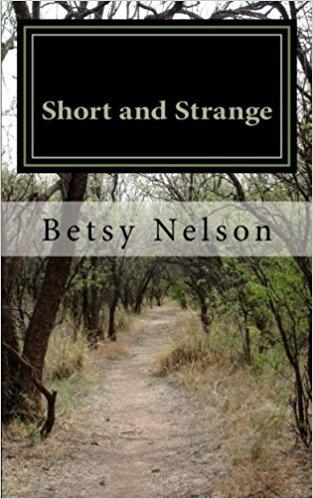
– the short stories “Short and Strange”

– secular poetry

– a novella called “The Visitors” – speculative fiction.

– a book on creativity, to inspire other people to create

– women’s issues/rights

– other short stories inspired by ephemera

– yet more short stories – no particular theme

– Bible study (yes, there is some in Free Range Faith, but other stuff, and just Bible study – no essays)

There are probably more. These are what I can think of right now, based on what is already written. I have written a lot of material in the five years since I started my blog. I have slowed down on creating and producing new material and am assembling books with what I wrote. I might assemble a book based on my “Invisible House” musings. This will include pictures.

I will also write a book using the pictures my husband and I have taken using the Doctor Who action figures as models – a story based on those characters. Just taking them has been fun.