Island adventure (with stamps)

My friend Kate and I decided that we wanted to go explore the Island across from us. We live on the mainland, and going to the Island has always been our dream. Nobody that we knew had been, so we wanted to be the first in our group of friends.

It isn’t something that is done casually, we discovered. It turns out that you have to apply for permission to go there. We didn’t know this and almost got into a lot of trouble.

We set sail on a sunny morning in September. We paid our fare to ride on a sailboat out to the Island. The captain must have thought that we had all of our papers in order because he didn’t ask us any questions. He could have saved us a lot of trouble.

2startsailboats

There were many different kinds of sailboats in the water between the mainland and the island. When we got closer, we noticed that there were actually two islands. From the mainland, it looked like there was only one. We sailed for about an hour, enjoying the salt air and the sound of seagulls. The captain offered us tea and cookies but we declined. Having never sailed before, we were a bit queasy. Also, we’d packed a lunch for later that we were looking forward to.

The captain expertly steered his sailboat right up to a dock and waves us off. We thanked him and started to look around. There wasn’t much activity going on here. This must not be the commercial area. Perhaps this side of the island was just for tourists like us. It looked like we were the only ones today. This was surprising, since it was such a beautiful day and school was out. Where were the families? Where were the young couples?

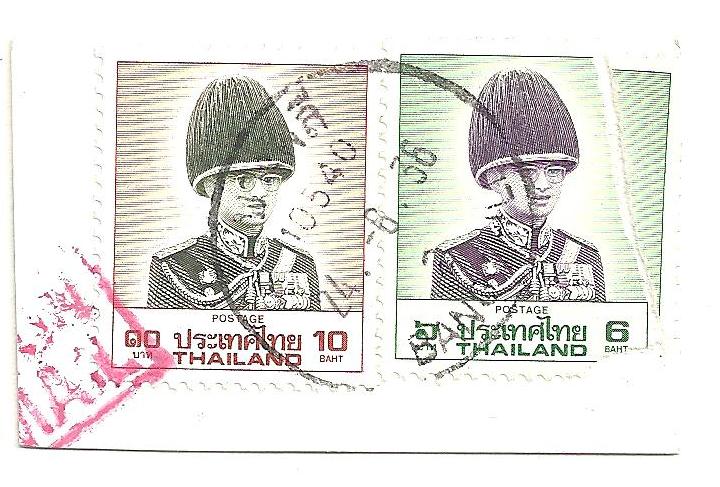
Then these guards came up to us.
2guards

It was hard to take them seriously with their huge coconut helmets. They must be twins too. Look at all those awards! They have to be wearing these for show. No real soldier who means business would wear all of that nonsense on duty. We relax. Maybe everything is going to be fine.

He takes us to the guard booth and makes us wait. We can’t go further on the island until he can confirm our story, and he can’t do that until he can get a translator. He picks up a phone and tries it.

2phone

No signal. He picks up an older one. He has the same result. He picks up the oldest style and it works.

After about ten minutes another guard comes.

2guard

He looks at us suspiciously and speaks to us in a language we’ve never heard. When he sees that we don’t understand it, he tries another. And yet another. It is just like with the phones – no connection. By the fourth try we have something that will work. It isn’t a first language for any of us, but it will do.

He interrogated us for about thirty minutes. Somehow we managed to say all the right things and we are free to wander the island without an escort. This is the best possible outcome. We were afraid we’d be sent back home. Maybe he thought we weren’t a security risk because we were school age. Whatever the reason, we were grateful that our adventure could continue.

They had a few rules we weren’t aware of. We weren’t allowed to take pictures. They took away our cameras while we were on the Island, only letting the captain of the ship give them back to us when we were back at sea. We weren’t even allowed to draw pictures of what we saw. They are sure secretive! They didn’t exactly swear us to secrecy, but they sure didn’t want us talking too much about what we saw. Maybe some of our friends had been here, but just had been too afraid to tell us.

I decided to write letters back to myself on the mainland, and use their stamps to illustrate what we saw. They are certainly different about keeping in touch here! They don’t use phones very often. Nobody has a computer. They communicate in person or by mail. They are really thrifty too – they use stamps from all over. They don’t make their own. There is probably something about security in this idea too, but I haven’t thought about it much.

There are no maps for this island. It isn’t very big so you can’t get lost for long. We decided that we wanted to see as much variety as possible, so we went wandering. We went walking into the forest first.

2bonsai forest

There certainly was no fear of getting lost in this forest. It was composed entirely of bonsai trees. These beautiful old trees only reached to our knees. After about ten minutes walk the trees started to get bigger, but still not so tall that we couldn’t see our way through. There were wide easy paths to walk on as well. It was beautifully laid out and made for an easy stroll.

While walking in the tiny forest, I noticed this huge blue dragonfly.

2dragonfly

He sat calmly on an immense fern and let me get really close to him. I marveled at how shiny he was and how he sparkled. He looked like he was made of gemstones, but he was alive. Maybe this was why this island is so well guarded.

Shortly afterwards I saw a lovely box turtle.

2turtle

He was walking away from an unusual orange flower. I think he was trying to eat it, but didn’t like the taste. The turtle reminded me when I was a child. I used to rescue turtles who were crossing the road. Sometimes they didn’t make it to the other side. Sometimes they made it to my house instead. Boy, were they surprised! I left this one where he was. If they didn’t want me taking pictures, I’m pretty sure they didn’t want me taking wildlife.

We came upon a hillside covered with castles.

2castles

Normally hillsides are covered with flowers. These weren’t anywhere near as welcoming as flowers. Maybe this is what they were trying to protect. There were five huge stone castles, stacked almost on top of each other. We turned away, sure that we’d not be welcome here.

By this point, we were getting very hungry. We sat on the hillside that had the castles, but not in view of them. I put down my poncho so Kate and I could have a sort of a picnic. She took out our peanut butter and jam sandwiches from her satchel and we quietly ate them, thinking about how unusual our trip had gone. Our lemonade had gotten warm, and it wasn’t that sweet anymore. We looked around and saw just over the hill a large field of strawberries –

2 strawberries

and blueberries.

2blueberries

We ate ourselves sick on them, and curled under a normal-sized tree for a nap.

When we woke, we were being stared at by a bunch of black birds.

2birds

They were all the same, and all chirping animatedly at us. They looked a little ominous, with their sharp beaks and shiny black feathers. More started coming so we left the area and kept on exploring. We were concerned that their cries would draw attention to us and we’d not be allowed to stay all day.

Soon we found another tree to sit under. This one had three birds sitting on the same branch.

2tree birds

We liked the fact that they were all different and all getting along. We thought maybe this was the nicer part of the island.

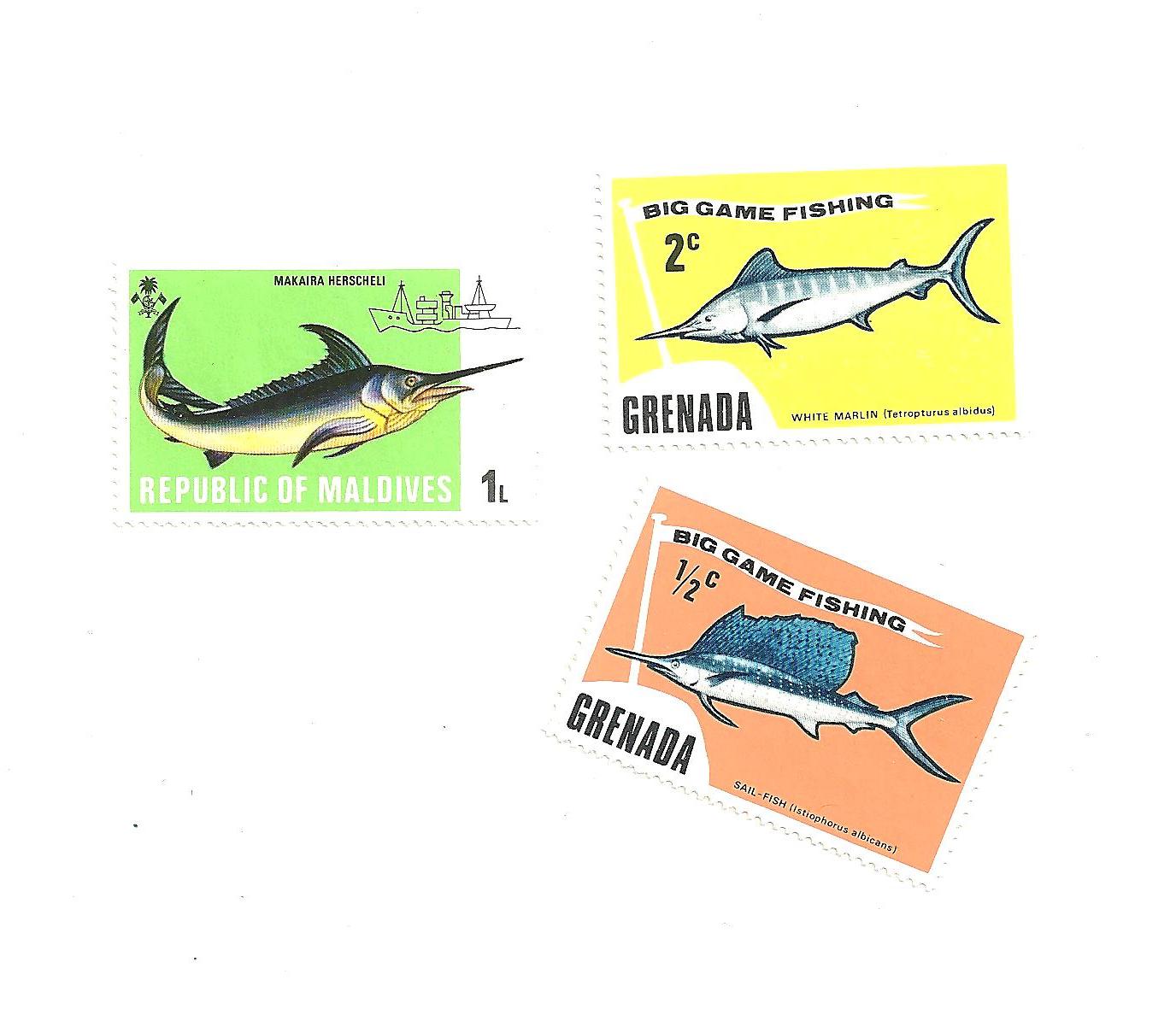
Then we went to the shoreline and looked at the fish. We saw some large fish that looked like they were fencing with each other. I wonder how they decide who won, with three of the fencing at the same time?
2sword fish

Then we saw a huge school of fish, all swimming in the same direction.

2peace fish

We wandered on a little further and found a cove with only pink sea life.

2pink fish

Well, they all looked pink. Maybe it was just the light at that time of day. The sun was starting to go down, so we knew it was time to leave. We were told when we arrived that we had to leave before the sun set – no exceptions. There were no hotels on the island, and they didn’t like the idea of putting us up in a private house. We wondered how (or why) anybody moved here.

As the sun’s light was fading, we sailed back to our home. We loved the fact that the island was so large that it took two stamps to illustrate it.

2endsailboats

One day wasn’t enough to explore all of this island. I’m sure there were more curious parts to it. If only we had more time. If only we were allowed to stay. If only never gets you anywhere, though. I’m just grateful there was a way to show you what we’d seen that honored their requests.

Unwritten rules

Just think about how hard life is if you don’t know the language. You’re always frustrated and you always feel that nobody understands you.

If you walk up to a food stand, you hope they have pictures so you can point at what you want. If what you want isn’t there, you are stuck because you don’t know how to ask for it. They also may have something really fabulous that you don’t even know you want. You’ll never know about it, because you can’t read that language.

We have ways to teach people language. For their first language, they learn by imitating their parents at the beginning. Then they go to school and learn more. They have to start with the basics of the alphabet and what sounds each letter makes. Once they can do that, they can then work on putting the letters together to make words. Then they can put the words together to make sentences. It is a long step-by-step process that hopefully, usually, results in us being able to communicate with each other.

But what if the language isn’t written down?

There are a lot of social rules that are just assumed, but if you “read” them wrong, you have failed at communication just as surely as if you read the book backwards. You don’t know what is happening or what to do next.

Everybody wants to be heard and understood. They want their feelings to matter.

We have a habit of assuming that everybody is like us and have had the same upbringing. We also have a habit of thinking that nobody is like us and we are all alone. Both have great fault to them. These ways of thinking cause the majority of communication issues. Often it doesn’t matter what you say, but what you don’t say that matters the most.

Speaking sentences

I didn’t start speaking sentences until I was two. I didn’t have to. I was the second child, so my parents had already been through most of what first-time parents have to deal with. They had some idea of what I needed. So most of the time I could just look at them and they would give me what I wanted.

I grew up thinking people could read my mind.

They eventually realized that this was causing me not to have to speak at all. They stopped second-guessing me and I had to start asking for what I needed. The feeling that people can read my mind and know what was going on in my head has persisted however.

It has even extended into my blog. When I write I express my thoughts. It isn’t exactly like when I was a child – I am communicating. And somehow I think that just because I’ve written something means that everybody has read it. I think these bits of insight and connections that I am sharing are useful to everyone. However, I always get surprised when someone doesn’t do something that I suggested that will help them. Of course, they haven’t read my blog. Maybe only 20 people a day read it, and I don’t see them.

The really frustrating thing comes when I have actually told someone something helpful and they still don’t do it. Of course they have free will. And of course I’m not their manager or their teacher or their parent. They are under no obligation to listen to me. But when they keep making the same mistake over and over again and I have a solution for their problem it would benefit them to listen to me. My solution will save them a lot of trouble. I have already been through it and figured it out. They don’t have to go to the trouble of solving the problem themselves. When they hit the wall again and again and they expect me to feel sorry for them, then I have to draw the line. It is very hard to deal with people who know the answer and refuse to use it.

Do unto others as they do unto you.

Sometimes the rule isn’t “Do unto others as you would have them do unto you.” Sometimes the best way to interact with a person is to imitate how they are interacting with you.

Imagine this – if they are working on the premise of “do unto others…” then how they are interacting with you is exactly how they would like to be treated. So if your way doesn’t work, try their way.

If they stand too close, try standing close to them when you initiate a conversation. If they only talk standing up, try that. It may make you feel uncomfortable, but it may help them feel comfortable. If you keep communicating with them your way and not their way, they may feel like something is wrong. These unwritten rules of social interaction are often what make or break a conversation.

Just like different cultures have different conversational styles, so do different people. To make someone feel comfortable, try doing things their way – not yours. Often, it isn’t what is said, so much as how it is said that makes the conversation work or not.

Focus – on management and praise

Oprah Winfrey says that what you focus on expands, and this is extremely important to appreciate when it comes to dealing with people. Whether you are a teacher or a manager, this approach can make all the difference.

One of the best things you can do is praise someone when they are doing something good. Even if what they are doing is their everyday task, praise them. If you are a manager, you could tell them you appreciate that they make it a priority to come in on time, use their time well, are polite to the customers. Don’t wait to praise them for extraordinary acts. If the only time you speak to them is to tell them what to do and when they have done it wrong, you won’t ever see exceptional work.

Praise costs nothing, and reaps huge dividends.

Consider dog training. If you only give attention and energy to the dog when it is making a mistake or performing an undesirable action, that is all you will see. Not just because that is where your attention is, but also because that is where he is getting your energy. Dogs, like people, want energy. If they can’t get it in a positive way, they will seek it in a negative way. Being yelled at for doing something wrong is still better than being ignored for doing something right.

You may think “Why should I praise someone for doing their job?” Because that is your job. That is what a manager is supposed to do. Managers aren’t just there to direct traffic – they are there to make sure things go smoothly. Praise is the grease that oils the wheels.

One of the worst things you can do is tell your staff you are going to send “mystery shoppers”. This makes them feel threatened. It encourages them to act better only out of fear. Fear is a terrible motivator. If you have to use mystery shoppers, have them only report when a staff member is doing a good job. It doesn’t have to be exceptional. It just has to be good. If you do that, it will encourage them to be good for the sake of getting caught being good. There will be a benefit, a payoff, a reward for doing good work.

Singling out one or two people for praise out of a large group is great for those few people and terrible for the rest of the team. If ten people out of three hundred get awards or recognition, then what does that do to the morale of the rest of the group? Consider what they do in Special Olympics. Everybody gets an award.

Make awards and recognition meaningful and specific. If everybody gets the same award, then it becomes meaningless. People like to be noticed for their differences and individuality. If you pay attention to how they are special, they will feel appreciated and noticed. They will cease being a cog in the machine.

Cornered – physical boundaries and confrontational conversation styles.

One of the worst things you can do is make someone feel threatened when you talk with them. It is important to be mindful of the physical space between you and another person. A safe rule is to put out your arm, fingers extended, at a 90 degree angle away from your body. Don’t stand any closer than that to a person you don’t know unless they have given you permission. If you want to make them feel even more comfortable, stand even further away.

Just because you work with someone doesn’t mean you have permission. The boundaries are even more important if you are a manager, or of the opposite gender. Physical space is the same as people’s homes. In the same way that you wouldn’t invite yourself over to someone’s home you don’t know, you shouldn’t stand right next to someone you don’t know.

Cornering is another thing to think about. You may not be close to them, but they may not be able to leave. Your conversation will go much more smoothly if you pay attention to their physical comfort. If you are mindful of their physical comfort, they will mentally feel more comfortable as well. A simple conversation can become a confrontation if someone feels physically threatened.

Consider whether they are literally up against the wall. Are they able to physically back away from where you are when you’re having a conversation? Even if they’re not up against the wall are you blocking their method of escape? They may not want to escape but if you physically block them then they will feel like they need too. If you are essentially trapping them in a room it is very threatening.

If you need to talk to a person who is sitting in a chair at a desk, be mindful of cornering them there. They are blocked on their front and back, and depending on the chair they are blocked on their sides as well. If you are within an arm’s length of them at the same time, you’ve just doubled their discomfort. If they have to look up into a light to talk to you, and at an angle, you’ve achieved the trifecta of terrible communication styles.

Having a conversation while standing up is also a bad idea. It will make the conversation more confrontational. Sit down if at all possible, and make sure you are both at eye level. Having a table between you can make the other person feel more comfortable. Be mindful though that it might establish a sense of hierarchy. If you are a manager and the conversation is at your desk, it will not be an equal conversation.

Also it is important for you to consider your body posture. Is it open or closed? Do you have your arms crossed in front of you? Do you have your legs crossed? Are you looking away from them? All of these are “closed” body postures and indicate to the listener that you aren’t listening to them. Do the opposite to let them know you are fully present.

If you want them to listen to you, then you have to make it look like you are listening to them by altering your body posture. But you have to get some sort of middle ground. It is important not to fling your arms around a lot. It is important not to open your legs up wide and scoot your pelvis towards them. Both of those are very aggressive moves. They are too open. Look for a balance and remain neutral, not too forward, not too far back.

Sobriety sucks

I hate being sober. The lights are too bright, the music is too loud. Everything is too much, too fast, too close. I feel too much.

When I’m sober, I feel everything without a filter. Perhaps I have Asperger’s. Perhaps I have sensory processing disorder. Perhaps I’m empathic. Perhaps I’m just human. Perhaps this is normal, and I’d spent so long being altered that I don’t know what normal feels like.

Being sober means that my normal coping mechanism is gone. It was my teddy bear and my security blanket. It was my shield against the onslaught of the world. It was my go-to-thing for everything. If I was happy, I was stoned. If I was sad, I was stoned. If I was with friends, I was stoned. If I was lonely, I was stoned.

I started using it to enhance life. If food tasted good while I was sober, it tasted even better stoned. If a movie was cool sober, it was even more interesting stoned. But then it got to the point that the average everyday wasn’t good enough, and I had to be stoned to do everything. Life was vanilla, and stoned was 31 flavors. Who wants to have vanilla when you’ve had it all?

I don’t like myself sober. I’ve discovered I’m a very angry person. I don’t like being angry. I don’t think it is very ladylike.

So I write, and exercise, and do yoga, and paint, and collage, and bead, and drum. I fill my time with different ways to process my feelings, because I’ve got a lot of processing that has backed up. Instead of having the normal process of feelings go in, get dealt with, and then they go out, I shoved them deep down. I shoved feelings into myself the same way that people shove broken and unwanted things into their basement or attic or storage unit. Eventually, the reckoning time comes and you have to do the work to get all that stuff out of there so you can have room to breathe. It is like poop – if poop doesn’t get out in a timely manner, it backs up and you get sick.

I’ve been sober for four years this time. I say “this time” because I was sober for about the same time, about fourteen years ago. Sobriety, like being messed up, comes in waves. You think the high is going to last forever and it doesn’t. You think being sober is going to last forever, and it might. I’ve given it up, and walked right back. Just like a person in an abusive relationship, I keep going back until I put enough value on myself to stay away, or I find someone new. With sobriety, “finding someone new” just means finding another high – trading alcohol for cigarettes, for instance.

Being sober longer is seen as better, but in a way it is worse. You forget why you left in the first place. You forget how bad it was. You’re tempted to go back, just for a taste. Except a taste is never good enough when you are an addict. One bite becomes a bunch. Next thing you know you are right back where you were, stoned, sick, and stupid.

I don’t want to find another addiction to fill this hole. I just don’t want it to be so big, or gaping. I can feel the wind whistling through me.

The bead poem at Bead Box in Boone, NC.

bead box

THE BEAD
alone and complete is a prayer.
A strand of beads or fringe is a reminder to pray.
The hole in the center, a negative space
is to make us aware.
It is a balance of positive and negative
that sustains our lives each day.
To know the bead
is to understand the apex of creation.
To wear the bead
is to acknowledge the gift of life.

(This poem was behind the cash register, painted as a huge mural, at a bead store in Boone, North Carolina on King Street. The store has changed hands and the mural is now gone. I’m grateful I took a picture of it when I did, so I could share it here. I do not know the author.)

Before and after

There is a Zen saying – “Before enlightenment, chopping wood and carrying water. After enlightenment, chopping wood and carrying water.”

Sobriety is much the same way. After you become sober, the problems are still there, but your coping mechanism isn’t. The troubles just trouble you more. You safe cocoon that you spun around yourself is gone. You realize that you got stuck in your own web of lies and avoidances. You realize that you were cramped by that cocoon, not comforted.

But those daily things are still there, those annoyances. You’ve spent years not learning how to deal with them in a healthy way. You are at least a decade behind the curve. Even though chronologically you are an adult, you are a child when it comes to dealing with life.

It sucks. It’s hard. It makes you want to start using again. Dependency groups seem to focus on the disease, not on how to live life. They seem to glorify the illness of addiction, rather than teach new and healthy ways of dealing with everyday and extraordinary stresses.

Sometimes just getting out of bed is a stressor. Sometimes coming home is one too. Sometimes the people you used to hang out with when you used were the only friends you had – and they still use.

So how do create this new life, this life without using? Plenty of people just trade one addiction for another. A lot of ex-drinkers become smokers. I remember one year I gave up smoking pot for Lent, and ended up drinking every day instead. I know a guy whose parents were recovering alcoholics. He loudly proclaimed that drinking was evil, but then every Tuesday when they would go to AA meetings, he would get stoned at home.

Addiction is addiction is addiction.

It isn’t about being a recovering former user. It isn’t about counting the number of days you’ve been without your intoxicant of choice. It is about every day forward and what now.

Back to chopping wood and carrying water.

Sometimes the only way to learn is to just do it, painful though it is. Nobody can tell you how to best live your life. They can tell you how they did it, how they got over the hump. They can offer suggestions. But for you, you just have to do it, step by fumbling step.

Stuck again. Maybe I never left.

I’m tired of being thankful. I’m tired of feeling like I’m stuck in the belly of the whale. I’m tired, and angry, and frustrated, and I want to quit. I want to quit it all. I want to retreat to a safe warm hole and curl up and wait until the winter of my own personal discontent passes or at least thaws. I envy bears.

I’m tired of the fact that I’ve taken all these classes to learn how to be compassionate to other people and they don’t seem to have taken the same time or effort to learn how to be compassionate towards me. Pastoral care, two series of Dialogues in Diversity, The Circle Process, and then Remo Health Rhythms drum circle facilitator – all of these are about peacemaking. All of them are about learning how to help people communicate in different ways. Even my tutoring that I do feeds into this. Yet nobody seems to take the time to learn how to communicate with me.

I feel betrayed by my job, which then leads me to remembering that I was betrayed by my church and my social group I was in, and my friends from high school. There have been too many changes in the past few years. Too many new things. Too many new rules that don’t make sense. Too many people trained and gone. Too much to keep up with. And now there is a new manager that has a communication and leadership style that I don’t know how to deal with. I can’t make sense of it. I feel lost.

My last performance review said that I was the reason the department held together for the year that we didn’t have a manager. A year, without a manager, and we were better organized than branches that had a manager. I’ve been there for 14 years, and I’ve got a pretty good idea of what we need to have done day by day to keep the place going well. I care about my job. I care, in part, because I’m there all the time it seems. This is my home in a way. I’m awake there more often than I am at my real home. I spend more time with these people than I do with the person I chose.

And that is part of the problem. I didn’t choose these people, and they didn’t choose me. We are a misfit family. We didn’t decide to be together. We learned how to work together. We learned how to adapt. And then it all changed. People moved, got transferred, died. People left, and I’m the only person in my department who was there from the very beginning. Even the upper administration is new. Everything that I knew to be true is up in the air now. Even basic rules – rules that formed the backbone of how we do our jobs – even those are up for grabs now.

I feel lost. I feel alone. I feel powerless. I feel unappreciated. I’m angry and sad and tired.

Perhaps I’ve been there too long. Perhaps I’ve grown out of it. Perhaps it is time to quit. But part of being at a place for a long time is that I’ve built up a lot of vacation time and sick time. If I start over at another place I start over at the bottom. I’ve built up a pension here. But the idea of staying another 13 years until I can retire makes me feel ill.

And after all that happened yesterday, I came home and that was the day that my hoarder husband decided to start cleaning out his room. Piles of stuff were all over the house. The mess that is my house got even worse. It was like a tornado had come to town and destroyed my job and my home.

In a way, I’ve hit rock bottom. In a way, I’ve killed myself. I asked Jesus into it, as far as I knew how. I said I can’t do this, and I need you to take over. I did this last night, trying to use the information one person has about “walk-ins”. I’m pretty sure she is talking about multiple personality disorder or possession, but I’m thinking that Jesus is a better guide than some random person from the ether like she means. I’d forgotten about this by the morning, and then both of the readings I did were about death and rebirth. So far I’ve remembered to say the prayers for everything I’m supposed to. So far I’m getting back into the groove of all the things that I can control, that make things work well. The worst thing I can do is try to deal with an unstable environment without my routine in the morning. It is the framework for my day, and thus my life.

I don’t know what to do – whether to stay or to go. I don’t know what my duties are at work anymore. So I’m waiting, and I’m open, and I’m listening. Perhaps stay in the system, but doing a different job? Perhaps stay where I am, but do more programs? I need to feel useful, that I’m not wasting my life and my skills. I need to feel that I matter, and I’m helping. I don’t just want to collect a paycheck, but make a living, a life. I’m very mindful of how short life is, and I don’t want to spend most of it doing something mindless and insignificant.

I’m tired of living this double life, where I take classes and create art, music, and writing on my own. It is like I have a second job that I don’t get paid for. It is as if I have to supplement my diet on my own because I’m not getting enough nutrition. If I was “fed” properly at my job, then I could actually enjoy my time away from it, rather than scrambling to make meaning in my off time.

Sobriety sucks sometimes.