The Visitors (part 12)

The company thought they were making improvements to the population. They created chemicals that created a strong psychic ability in lab monkeys. After that, it was simple to add the chemicals to breakfast cereals for kids. Sure, they had to cover up the taste by adding more sugar, but it seemed like a good trade-off. Clairvoyance for a few extra pounds, perhaps?

They didn’t imagine the kids would stop playing outside, stop exercising almost entirely. Their parents were terrified of strangers kidnapping and killing them, so they plopped them down in front of the TV and let Bugs Bunny do it instead. The effect was the same – their minds erased by hours of TV, their health gone from years of inactivity.

The children ate the colorful cereal, marketed to them with cartoon characters just like those on the TV that served as a surrogate parent. Their parents thought it was good for them because the cardboard box said it was fortified with vitamins and minerals. They just didn’t know what else it was fortified with. Over the course of a few years, the chemicals in the cereal altered the DNA of the children enough so that when they were old enough to have their own children, they had the trait the company was hoping for. The only problem was that society wasn’t ready for it.

The children were almost too sensitive. They knew far more than they should have at early ages, because their brains were closer to crystal radios than carbon-based structures. They received all sorts of signals, all the time. They were flooded with information, with no way of filtering it or turning it off. Everything was too much. All of their senses were working overtime.

Some went mad. Some had to be institutionalized. The company managed to get some of its researchers hired on as aides at the long-term care facilities across the nation wherever the cereal had been sold. The worst cases came from parents who had eaten four times the serving size of the cereal as children, or had continued eating it into adolescence and adulthood. They were beyond hope, of no use to anyone.

Some of the others were very sensitive, but without too many adverse effects. Regular doctors labeled some of the children as having autism, or Asperger’s, or simply sensory processing disorder. The children’s difference was seen by them as a disease rather than an enhancement. The medical professionals kept trying to medicate them or assign therapy to make them act like regular children. The company never said a word, never let it be known that they’d dreamed of this day.

The company began hiring these children once they reached 18. The public and the press were delighted. Finally there was a business that not only was willing to make accommodations for this new and unusual generation, but actually seemed to want them. Little did any outsider realize but the company wasn’t being enlightened. They actually sought them out, not to appear benevolent but to further their own secret project.

Under the guise of new employee orientation, these unusual workers were assessed for their psychic ability. Those that had the highest scores were given up to three hours of specialized training every day. The other employees simply thought it was because of their special needs. Like all other employees, these new hires were sworn to secrecy. They had no idea that what they were learning wasn’t normal.

It wasn’t normal at all. In fact, no one had even tried to tap into the psychic ability of a group before. Each employee was trained to link up with each other, in series, creating a synergistic effect. The net result was far greater than the sum of the parts. It turned out to be more than the Overseer could have ever imagined or dreamed. It turned out to be the worst nightmare ever.

Strong emotions concentrated the results. The teachers had the group focus on their parents, thinking that they would have nothing but love for them. They were wrong.

They had not accounted for years of suppressed rage of being ignored, discounted, and ridiculed. They hadn’t realized that the vast majority of those in this group were seen as a being a burden to their family, an embarrassment. It was worse for the boys.

They were expected to carry on the family name, to provide grandchildren to dote on. The latent feeling of grief that their parents felt, especially their fathers, was profound. It was never talked about to the children, of course. It didn’t matter. The parents never knew that their hidden resentments were being broadcast directly to the very people who would most feel hurt.

Unknown to the researchers, the boys as one force shaped their rage at their parents into a ball of hatred, and then reached inside, shaping it. Like how a potter expands a vessel on his wheel, it became ever larger until it surrounded all parents, not just their own.

In a blink of the eye, all the parents were gone.
The Visitors (part 11)

Rob had stopped writing actual maps in his notebook after the second time he’d gotten caught. The police had confiscated his satchel along with his notebook and figured out too much from it. If he’d just had the usual things in notebooks – poems, stories, a few sketches, then they might’ve let him go, thinking he was a student of a sort.

That alone could have spelled trouble because schools had ceased to be in the years after the Disappearances. But it wasn’t uncommon for people in their early 20s to cobble together some kind of curriculum for themselves. The police didn’t mind that, seeing it as a harmless way to spend their time. They knew it wouldn’t, it couldn’t, lead to anything. But if they suspected his notes were about Walks then the whole plan could have unraveled overnight.

The police couldn’t go on Walks, of course. If they could, they would. Who wouldn’t? The ability to travel from Room to Room, discovering new buildings from the inside was quite a feat. It was like having a master key to every house. “Open house” events took on a whole new meaning if you were a Visitor.

The problem was, some Visitors worked for the police. Not willingly, mind you. The only “pay” they got was being set free. They’d been caught on a Walk, often helping themselves to something in a member of the Quality’s house. Visitors didn’t think of it as stealing, but the Quality sure did, and the police were notified.

How can it be stealing when the items weren’t even bought by the Quality? The concept of “possession is 9/10 of the law” still held true even in this time, because the people who did all possessing had all the lawyers on their side. Hell, half of the Quality were lawyers, those that hadn’t had time to settle down and start a family.

Visitors who were caught had two choices if they wanted to go free. Pay a fine or rat out another Visitor, which sometimes meant decoding their maps so the police would know where to catch them. It wasn’t much of a choice because most Visitors didn’t have enough money to make the police happy. Too little and they couldn’t pay. Too much and they were liable to face yet more charges, including burglary or robbery. It was seemingly easier to be a snitch. But it also carried a penalty. Snitches didn’t tend to last long. Once word got out among the Visitors, a snitch would often get shoved into a Room whose closest Door was at least 100 miles away.

Those kinds of Rooms were why Visitors made maps. Some things were too unpleasant to want to have to do again. They’d exchange information whenever they could about Doors that were useful and ones that were less than. Someone else’s misfortune didn’t have to be yours.

Rob had decided on his own to transform his maps into sketches of leaves and flowers. This way it looked like he was going on nature walks rather than going on Walks.

A darkened bit of leaf here, an apparently inchworm chewed bit there, and nobody was the wiser. His marks made sense to him, and that was what mattered. He used actual plants as his basis for the sketches to have verisimilitude. He didn’t have a good enough imagination so he didn’t try to make them up. His Gran had taught him quite a bit about plants, albeit unintentionally. He was her garden helper and had to know what was weed and what was vegetable. He thought of it as slave labor at the time, but he was grateful for it now.

His leaf maps were starting to make more sense. Now that he’d had time to compare notes with Mickey and Julia, some of the missing areas were filling in nicely. There still were areas that didn’t appear to have any Doors at all. He compared these areas against a large topographic map of the state at the local library. He and Julia agreed that more and more evidence pointed towards the problem starting with all three areas called Rayon City, and it didn’t take long for the two of them to convince Mickey that they were on to something.

The three Rayon Cities were built hundreds of years ago by a chemical corporation to house their employees. The cities, more like large villages, were built in short order along with the plant. It was an added incentive to have a ready-made place to live for young impressionable potential employee.

The same people who were drafted to go overseas to fight the Germans were the same kinds of ones who took up jobs in that labyrinthine, windowless complex of a plant. Both groups barely out of high school and with no marketable skills other than day labor. Both groups were average (or worse) students. Both groups were from poor families. They didn’t have many choices.

The military or the plant was the same as far as a choice went. They both paid well, had good benefits, and were dangerous. People took their chances going to work for either of them. With the military, you could die or come back missing a limb or your mind. Death or dismemberment wasn’t a great risk with the plant, but mental illness couldn’t be ruled out. Cancer was a strong contender, too.

Both groups thought of themselves as lucky, as above average when it came to the odds. In short, they didn’t think the bad stuff could happen to them.

Something bad happened, but not what anyone could have expected. All those years of “not me” Pollyanna optimism, all that time being surprised when the bad stuff actually did happen, all those people who cheated themselves out of their own future by borrowing against it with wishful thinking – it all mixed together somehow with the secret experiments that were going on at the plant.

The three plants were privately run but government controlled. It was a weird sort of marriage that had happened before. It had begun with the post office and ended with the auto manufacturers. It was an experiment that resulted in an odd hybrid of the two – good benefits from the government side, better management from the private industry side.

It wasn’t perfect, however. Employees had to commit an actual crime to be fired. Plenty of people who would never have gotten hired in private industry got to not only keep their jobs but often got promoted. It seemed like the more inept you were, the more you got paid.

Another feature of this corporate chimera was the secrecy. Regular private businesses were supposed to be transparent. The government was as transparent as a brick wall. Even the Freedom of Information Act couldn’t be used to pry open the company’s files on its less-than-normal experiments. It wouldn’t have mattered anyway even if someone had tried. They didn’t write any of this experiment down. It was too important to risk being exposed.

The company had divided all of the workers into tiny groups that never spoke with each other. Sometimes the left hand didn’t even know the right hand existed. Each workgroup had its assigned task and were told nothing about how it related to the whole. At first they were told it was for the benefit of national security.

The company made a lot of material for the war effort. They were involved in anything that involved chemicals. Rayon, that miracle fiber that was invented in their laboratory, was used in making parachute cord. Chemicals normally used in fertilizer were instead used to make bombs. The workers understood the need for secrecy – the less they knew, the less chance of the wrong information getting into enemy hands.

The war was long over but the secrets continued. It had become habit to not ask questions, become a matter of fact that you just didn’t even think about what other groups did, even those that shared your area. The metaphorical cat wasn’t even curious, so he stayed alive and safe.

Until everything went wrong.

Rosie’s Adjustable Man

heads

Rosie knew what she wanted in a man. Trouble was, she wanted something different every day. The wealthier ladies could afford different models, but they had room to store them too.  She’d had to settle for a model with adjustable heads. The body stayed the same, but the personality changed. It wasn’t ideal, but it worked.  Currently she had six different versions, but over thirty were available. Whenever she could afford it, she got a new head for her Adjustable Man.

Rosie’s house wasn’t tiny by any means. It was the standard allotment for Zeta-class citizens – three bedrooms and one large common area with dining/ kitchen/ living room, with movable panels to divide up the areas when necessary. This was a far cry from Gamma-class, with only two bedrooms and a living room but no kitchen. That was shared, communal style, with ten other Gammas.

Gammas tended to eat together in the common dining room. Slinking off to eat in their private apartments, hunched over a coffee table while sitting on a stiff sofa, was possible but frowned upon. Nobody would say anything about it to the citizen who did it, but then they simply wouldn’t say anything at all to them for a few days afterwards.

It wasn’t planned that way. It wasn’t a rule. It was more like a habit, or tradition. Not sharing time with your fellow citizens meant you wanted to be alone, so they gave each other space at those times. But, if a citizen was absent more than about four times a month and wasn’t on a scheduled trip for their task-group, then subtle and not-so-subtle inquiries were made. Some were to the citizen’s family. Some were to the Overseers. Perhaps s/he was ill? Perhaps therapy needed to be assigned? Perhaps s/he needed to be reclassified? Sometimes that particular area’s citizen class wasn’t a good fit for that citizen’s style of life. Never would they ask a Gamma-class citizen themselves if anything was wrong. That wasn’t thinkable, not for that class. It was only once you were promoted to Zeta-class that you were even considered to have enough spirit to have an opinion.

Rosie had opinions all the time, and felt that everyone needed to hear them. The Overseer channeled this into encouraging her to write an online blog, where she felt that she was being heard for a change. She thought she was making a difference. She was wrong. Nobody read her writing. The numbers on the statistics were a ruse from the Overseer to get her to keep writing and thus keep her out of the way. The comments were supplied by workers in his office.  It kept her placated and maintained order. It didn’t do to have citizens thinking too much. It upset the social fabric.

She was so opinionated that no man wanted to spend time with her, and so insecure that she didn’t want to spend time with herself. Fortunately for her, she was not alone in this. Plenty of women had been told “You think too much” by men, and rather than stop thinking, or at least out loud, they decided to get an Adjustable Man. He could be modified in any way imaginable, providing you had the resources.

It was easy these days to pick up a used version, have the memory wiped, and start from scratch. Or, you could custom build one online and have it shipped to you, ready to cook, mow the yard, and be pleasant to take on a visit with your friends. No more awkward times like when your man suddenly started talking about less-than-polite topics around your best friends or coworkers. No more attitude about doing housework or it being “woman’s work”. No, the days of men thinking their contribution to the family ended as soon as they left their workplace ended around the time women realized they didn’t have to have children, and thus didn’t have to stay home to raise them.

Adjustable Women were in the works for those women who wanted to work outside of the home after having children. There were never enough reliable or affordable childcare providers – never had been. Come to think of it, the same was true for eldercare. Nobody wanted to take care of the very young or the very old for very long, even if they weren’t related to them. Those that did wanted a lot of money for it, or they had less than honorable reasons for seeking those jobs. But Adjustable Women were proving to be harder to make than Adjustable Men.

Rosie was trying to decide who she wanted as her partner to the dance tonight. It was almost as important as determining what dress to wear. Too formal? Too casual? She wished there was a guideline on the RSVP, like “black tie” or “blue jeans” but for partners. She’d hate to take a stuffy, know-it-all partner to a casual gathering, the same as she’d hate to take a sci-fi geek, able to name all Star Trek captains in order (and delineate their flaws and charms) to a company luncheon. How did early-century escorts do it?

She opted for the boring “Bob” version.  He was cute, but he didn’t talk much.  Her friends would understand, and the new people she was there to meet wouldn’t care.


Wander (short story)

He’d been walking a long time. Days? Weeks? Years? It no longer mattered what time it was. It was today, always today. He had nowhere particular he had to be. He wore no watch, carried no day planner. His calendar was free.
He walked away from it all some years back and had just kept walking. When would this walk be over? He’d not planned on starting it, so perhaps it would end the same way.
It started suddenly. Just like with spring tulips, it seemingly occurred all at once. Only a careful observer could have seen that change had been coming a long time.
It happened suddenly for him, that was for sure. One day he gathered up a duffel bag’s worth of possessions, put on his shoes and her all-weather coat, and walked outside. He never thought he’d make it past the yard, but he did. Then he thought for sure she’d stop him when he got to the end of the street, but she didn’t. Every step further from that house his fear grew smaller and his excitement grew larger.
The thought of leaving never crossed his mind all those years. Not like he was happy being there, mind you. It was just that he didn’t know he had a choice. It was just like Hagar and the well. She was suffering and all along what she needed was right there and she couldn’t see it.
He walked three blocks fueled on fear and excitement before he started to wonder where he was headed. It was strange to feel so much at the same time after a lifetime of not feeling at all. Perhaps once he had felt something? Surely he had. He couldn’t remember.
At the edge of the neighborhood he decided to try to feel, but not too much. Best to start with something simple, like a direction. Which way? Straight? Right? Left? Turning around and going back was right out, he knew that. Just thinking about that made his stomach get smaller and tighter and fluttery. That felt like “no” most emphatically. This was new to him, this learning that his body was a sense organ, tallying pros and cons and providing the result. It was like learning another language to figure out what it was saying. Why trust his brain to tell him what to do, when he could use his entire body? His stomach loosened when he faced right. Okay, that way.
He didn’t know where that way led, but that was true no matter which way he went. He’d never been allowed out of the house. Never been given a map of the city, or of anywhere for that matter. There was no television in the house either, and certainly not a computer. He had no idea that there was a whole world outside of the house, and that was how she planned it.
He was lucky she’d even spoken to him, or he’d never have picked up the language. She didn’t at first, but he overheard snippets of words and sentences when she’d have her boyfriend of the month over to spend the night. Sometimes one of them would try to talk to him, try to make friends with him as a way of placating her. Perhaps he thought he could stay longer if he turned out to be father material? The way to a woman’s heart is through her child, right? Those that tried could have saved themselves the trouble. Once she realized they just wanted free room and board she cut them loose and changed the locks again.
All these years later, his body told him more than just how he felt. The rain was coming soon. His nose told him this. The hairs on his arm said it was going to be a long quiet soak. His big toe told him the mist he was in would pick up, grow just enough to be annoying and cut down on visibility in about 20 minutes. That was enough time to find a restaurant to wait it out.
Another wanderer had taught him the tricks of the trade. Look for a restaurant that is a little busy, but not overly so. If it wasn’t busy enough he’d stick out. Then the employees or customers would notice. If he was lucky, one of them would gently wake him when he dozed. If not, a cop would be called to do that chore. Sometimes he’d simply be asked to leave. Sometimes he’d be told to never come back. On the other hand, if the restaurant was too busy, a customer might sit too close to him and spot that he didn’t quite fit. Perhaps they’d notice his less-than-fresh aroma, or notice that he only had a soda in front of him, or they’d spot his duffel bag. The goal was not to be noticed.
A soda bought you a table for at least an hour. Keep it refilled and it looked like you just got there. Plus, the sugar and caffeine didn’t hurt. It was great to get refills – you could have a two-liter’s worth of pop for pocket change. If you felt like it you could even take the cup with you for next time. If the restaurant was busy enough they’d never even notice you’d not bought anything from them.
Actual sleeping required some skill and a prop. Find a flip phone on the side of the road or at a local thrift store, hold it open in your hand, and you could slouch down and make it appear you were checking texts while you dozed. People rarely looked long enough to notice your fingers weren’t moving. Most folks had been taught it was rude to stare.
If you were homeless for longer than a month you started to become invisible. People just didn’t want to look at you, to see you. They were afraid you’d catch their eye and say something like “Excuse me sir? Can you spare some change?” They didn’t want to hear whatever story you made up to convince them (or yourself) of your worthiness. It was easier to pretend you didn’t exist. It was a little lie they told themselves.
He was through with lies. They were too hard to keep up with, too hard to justify. They grew and grew, one lie leading to another, becoming a tangle like weeds or rope. Before you knew it you were lost or tripped up. He decided it was best to tell the truth, but not too much of it. Too much talk spoils everything.
He carried as little money as possible, same as everything else. It all weighed him down. Everything took up space, either in his bag or in his head. Traveling light was about more than having an extra pair of socks or a small bottle of shampoo.
The rain was almost over. Time to go.

Tracy and Robin

two 2

Tracy and Robin had joked for years before they got married that people never knew who was “he” and who was “she” of the two of them. They decided that it was nobody’s business, so they never let on.

Their friends had hoped to learn the truth on their wedding day. Surely they would wear the traditional clothes? They were in for quite a surprise when they arrived at the event. They wore the traditional clothes, but not in the traditional way. This was in line with everything they stood for, so it made sense after all, but it still didn’t answer any questions.

Tracy and Robin were drawn to each other not out of a sense of finding their other half, but in finding another person who was whole. Both were perfectly comfortable repairing a car or knitting a shawl. Both could mow the lawn as well as cook. They felt lucky that their parents had taught them both how to be people first and foremost. Their gender was never used as a reason for or against learning anything.

They both hid their gender, not out of a sense of privacy or shame, but out of a sense of rightness. They wanted people to relate to them as people. The first item of prejudice was gender. Sure, you could add race, religion, creed, national origin and a host of other things up to and including what football team they rooted for. People used any excuse they could to pigeonhole you, to decide who you were before you even opened your mouth. Tracy and Robin figured that the more you can avoid those markers, the more people would have to make up their own minds for a change.

They were mindful to shop only where the bathrooms were genderless. Sometimes the buildings were old and only had one restroom with a single toilet. Sometimes they had family restrooms. They didn’t want to have to out themselves if they could avoid it.

They shopped at thrift stores, getting whatever clothing that struck their fancy and wasn’t too snug. Both were equally comfortable in pants or skirts. They were pleased when they could find clothing that was from immigrants because it was often loose and ambiguous. Comfort was the most important thing.

It was always assumed that one was female, but it wasn’t a given. Both could have been. Or neither. Or one or both could be intersex. Did it matter? Nobody separates by eye color or height, so why separate by something as equally meaningless and random as gender?

Mr Michaels

haunted

Mr Michaels’ blindness was absolute. Born sighted, it had been 20 years before the cataracts had begun to form from the kiss of sunlight.

It happened so slowly at first, like a fog creeping in on cat’s paws. Every month the dull haze thickened, coalesced just a little more. It was so gradual that he never even realized his sight was being stolen from him until it was gone. It was as if his sight was a stone and the sun was the sea, washing it away to nothingness, no trace of it ever having been there.

It was nothing to Mr Michaels. His sight had gone so gradually that he’d forgotten he’d ever had vision. Just like that sea-stone, all evidence of its existence was erased. Just as slowly and just as insistently, his memory of sight had dissolved as well. He could no longer remember his mother’s face or the color of the sky in early November, could no longer even remember that he had ever known these things.

He didn’t think of his blindness as an absence. He didn’t think of it at all.

All his life he had worked outside. Perhaps it was an undiagnosed case of claustrophobia. Perhaps he was just set in his ways. His first job had been in landscaping, and every one after that had been related. Grounds crew for a municipal park, another one helping harvest apples, it was all the same to him, as long as he was outside.

His father never knew if he’d ever tried for anything more advanced. He never asked, but he’d been tempted to often. He wanted to encourage him to be his best rather than settle, but he remembered his own father doing the same to him and he still resented him for it. Perhaps this was his best? Perhaps he led a simple life because he was simple? Best not to dig too deeply.

Mr Michael’s hands became his eyes, showing him the size of the bulb or seed that he held. He then knew how far down to dig to plant it. His hands told him where the weeds were to pluck, told him what apples were ready to harvest and which ones were best left for the birds. His feet told him how far the flower bed was from the orchard, how far from the stables. His nose told him whether the horses were sick or scared. His ears told him whether a storm was coming, and whether it was going to be strong enough to warrant bringing the animals in early.

Watching him work, you’d never know he was blind. By tacit agreement, all the other workers on the farm kept everything where it had always been. That one incident with the misplaced hay bale had been enough to convince them.

It was only when you looked directly into his eyes that you knew beyond a shadow of a doubt that he was blind. Very few people were brave enough to do this more than once.  Looking into his milky eyes was like looking into a pair of mirrors set just opposite each other.  All you could see was yourself, all of yourself, unto eternity, ever diminishing into meaninglessness.  It was overwhelming and humbling.  You could see all of your strengths and all of your faults, unvarnished, untampered by the usual lies you told yourself.  This alone was unsettling, but the additional feature of his gaze was to leave you with an overwhelming sense of your utter insignificance.

Mr Michaels was completely unaware of this.  He wasn’t bothered in the slightest that people tended to leave him alone.  It meant he had time for his own amusements.  That suited him just fine.

The Village

The Village had no place to hide. They’d planned it that way from the very beginning. Decades later, the influence of the Company could still be felt.
They’d laid out the streets in an arcane pattern which would have been instantly recognizable to ancient alchemists. It was reasonable after all, since the Company were modern alchemists. However, they were no longer trying to convert base elements into gold, but into bombs.
The Company was all about control. It had to be. What with such volatile elements under their purview, control was a matter of life and death. The only problem was that they did not know when to stop.
They thought the same about their employees as the elements that they worked with – unknown, potentially dangerous. The Overseer decided early on to keep them isolated from the city at large and then to further segregate them by function. It was best to keep the workers from mingling with the supervisors, and both from regular citizens. Explosions could not be ruled out. Separation was for everyone’s safety.
They’d done their job too well. Even now the people who lived in the Village, no longer a Company town, still were isolated from the rest of the city and suspicious of anyone who had not lived there for at least 20 years. Even that wasn’t a free pass, with any aberrant behavior transforming a “friend” to a “foe” at the speed of a post on their neighborhood watch’s Facebook page.
The layout of the neighborhood created invisible walls that focused energy and attention inwards. It was a feedback loop. It was a closed circuit. Day after week after month after year it built up with no release. Like crabs in a pot, they clawed at each other, keeping the whole group down, preventing escape. Little did they know that they were all doomed.
Only the Overseer could have predicted this.
It was his plan all along.
On the surface it seemed like a great place to live. All the houses were built by the Company for their workers. The school, the library, even the gymnasium were provided. All the workers had to do was show up to work and put in eight hours every day excepting Sundays. Everything was paid for through their wages. They didn’t have a lot of money left over for personal needs, but they felt it was a fair trade-off to be able to live in a model community. They were told that here their children would be safe, protected from the dangerous elements of the rest of the city.
This inward-facing community was their undoing. With no new information, no variety, no challenge to the status quo, the Village stagnated and degenerated. It became inbred, where aberrant and defective ways of thinking became the norm rather than the exception.
They never saw it coming. The wall surrounding their village and their minds was invisible but no less effective because of it. Perhaps it was more effective because it was invisible. They didn’t know they were trapped, thus they had no reason to try to escape. Why would they? It was perfect here, they all agreed. Those that didn’t agree were silenced in the way that works best – by declaring them crazy. Why martyr someone by forcing them to leave the community? Excommunication wasn’t just for the Church. It was far better to keep them as an example of how not to behave.

Smile lines (a very short story)

Paula was older than everyone, but only chronologically. Sure she’d lived longer than everyone else in the department, but you couldn’t tell by her actions. The only evidence of her greater age was in the deep wrinkles around her eyes. They looked like smile lines, but the smiles had to be for show, or from another period of her life. Perhaps she smiled out of habit, because even when she was telling very personal, very private stories about herself, she smiled her brittle smile at whoever had the misfortune of being stuck at a task that required they stay in the room with her.

The other staff had taken to looking forward to any task that involved being away from the back room after she arrived for the day. Normally these tasks were completed by whoever felt like it, and whenever it was convenient. Now they took turns, working around her shift. Every day one lucky person got the blessed reprieve of not having to listen to her yammering.

She needed a therapist.
Or an exorcist.

She’d been counseled by her temp agency to not share personal details, but she ignored those censures, choosing to run over her coworker of the week (or month), or however long the assignment was (or however long they could stand her) whichever came first, like an 18 wheeler over a kitten. It was merciless and bloody, with no regard for the emotional and psychic carnage she left in her wake.

One employee, unlucky enough to be forced to work with her three days in a row, even considered homicide. This gentle soul, a vegetarian for six years, a person who marched in peace rallies, a weekly volunteer at the domestic crisis shelter, had gotten so overwhelmed with Paula’s incessant complaints and bizarre observations that she started fantasizing about how she would make her be silent. Strychnine in her water bottle was considered. Loosening the lug nuts on her tires was a possibility. Anything that involved a painful end that was preceded by terror and confusion – the same as she had endured but more focused, more compact. That would do nicely.

Asking Paula to be mindful of others didn’t work. Neither did complaining to her supervisors. Flat out telling her to shut up seemed cruel, but perhaps it was the only way to regain peace at work. Mindless blather and too-personal comments was cruel so why not fight fire with fire?

Twins.

two

Their mother had always wanted twins, but not like this. Carol’s biological clock was winding down about the time her life was picking up. When she finally had the time, money, and energy to have children, she’d gotten too old to even consider having multiple pregnancies. She wanted at least two children for the same reason people brought home two puppies or kittens – they would always have a playmate. With time slipping away on her, having twins seemed like the best option.

She never even considered adoption. The children had to be hers. She knew that down to her bones. The idea of “family legacy” was so firmly imprinted onto her identity that taking in somebody else’s unwanted children was out of the question. It wasn’t even on the table. It wasn’t even in the room.

She couldn’t afford to chance it. So she went to the local medicine/miracle worker. The gnarled old being was a fixture of the community that everybody knew about but nobody talked about. She? He? Who knew? At that age it was impossible to tell. His? Her? voice was raspy and the clothes were baggy enough to conceal whatever shape s/he might have. Nobody knew, and everyone was afraid to ask. “Doctor” was the being’s title as well as name. Fortunately this language didn’t differentiate gender in its words or it would have been more awkward. Undefined gender seemed somehow appropriate for this profession, one of yes/and, of greys, of liminal spaces, of betweens. The Doctor’s shop/office/home was like that as well, beyond definition.

Carol had written a letter asking for an appointment. This was how it was done, how it always had been done. The Doctor felt that websites were too fiddly, too impersonal. The message would get lost. Even phone lines were eschewed.

Ideally, the client (never “patient”) would happen to meet the Doctor while they were both out doing errands in the village markets. A lot could be done to further the desired outcome if both of them were on the same time-line. Never quite syncing up was a bad sign. But, communicating by letters was a good second choice.

They agreed upon Wednesday the third, at 11:30 in the morning. The Doctor arranged visits by feel, rather than by any usual method. It was the same as how a safecracker worked, or a dowser, or a chef. It was all by feel. No astrology charts or Ouija boards or runes. No Day Planners either. There was never a receptionist or assistant. The Doctor’s motto was do it all yourself, or don’t do it at all. Too many cooks spoil the broth, and all that.

Carol left her house that Wednesday morning very excited and hopeful. She wore her favorite red jumper and galoshes even though the weather forecast promised a partly sunny day with only a 10% chance of snow flurries. They were her favorite galoshes, purchased used at the corner Oxfam three years back. She’d always had great luck when she wore them, so they seemed to fit the bill for the day. She even asked off from work for the rest of the afternoon so she could get started right away on whatever course of action the Doctor recommended.

Everything the Doctor did was by suggestion or recommendation – never an order, never even a request. Everything had to be voluntary. The client had to be a part of the process, never acted upon, but with. If the Doctor decided it was possible to effect a change there was always a list of recommendations. It wasn’t always possible to obtain or do all of them, either due to the time of year or available resources. The client, if accepted, (not a given) would then go out armed with that list.

Instructions could include such varied examples as “Stand barefoot on a newly harvested field for 10 minutes, facing west. Be sure not to be noticed. This must be done sometime between the hours of 8 AM and 3 PM.” Or perhaps something like: “Buy and eat some kind of fruit you have never eaten before.” Or maybe even: “Write down your greatest hope for your future on a piece of borrowed paper. Set it afloat on a stream.” Generally, at least two of the three options must be done, in whatever way the client could. The “how” was up to interpretation, and was part of the cure.

Wearing a certain color for a week (at least) was a common request, although the color changed with the task at hand. Often this was how other people in the community knew you were under the Doctor’s care. They never would ask, though, out of respect, or perhaps fear. It was difficult to not be noticed when someone started wearing shades of teal or salmon or magenta, especially day after day.

Almost immediately after having sex that Friday night a month later, Carol knew she was pregnant. She didn’t dare breathe a word of it to her partner for fear she might jinx it. She didn’t even go to the pharmacy to get a pregnancy test for the same reason.

She wasn’t sure where her self-imposed superstition came from, and that might have caused the aberration. Maybe it was the galoshes. Maybe the orientation of her bed. Maybe she didn’t follow the list correctly.
Later, after the birth, the Doctor consulted with Carol. They both looked at the babies (baby?). They went over everything she did, everything she ate, everything she thought. She was sure she had the right intention during the act. It’d been all she’d been thinking about for months, so how could it be anything else? Twins. Two babies in one pregnancy.

The Doctor had been very insistent with her that intention was important for all pregnancies, but especially for hers since it was so specific. The Doctor explained that ideally, people would have sex only when they wanted to have a child, and then they would do it mindfully and prayerfully. The moment of conception was when the soul chose to incarnate. This is a delicate and perilous time. There were many souls about, of all kinds, waiting to enter a body. Some entered at conception. That was ideal.

Others chose to take up residence afterwards. This resulted in what psychiatrists called “multiple personality disorder”. Priests called it “possession”. New Agers called it “walk-ins”. It was all the same thing, and it was all less than desirable.

The Doctor explained that ideally the potential parents would pray before having sex, alerting the souls, the beings-in-waiting, that an opening, a doorway if you will, was being created for them. The parents would meditate on the characteristics and personality of the child that they hoped to welcome into their lives. They would speak about what kind of home they could provide.

In a way it was like a blind date, or perhaps more like an arranged marriage. They were going to be together a long time. It was important to do this well, rather than leave it to chance.

The trouble is, too many people didn’t think it all before having sex. It was as if they were swept away, like they were in a stagecoach, and the horses got spooked. Before they realized what was happening, they were where they hadn’t planned on being, because they hadn’t planned. Sometimes they got stuck there. Just like with marriage, it is a good idea to choose wisely before this long-term commitment.

Too many babies were being born without souls properly attached to them because of this. Some had very weak souls and had sensory or neurological disorders because they weren’t fully in the body. Some souls weren’t even human.

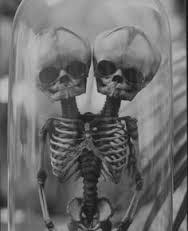
But that wasn’t the problem here. Carol and her partner had prayed for two souls, alright. The only problem is that they somehow ended up with two souls in one body. This wasn’t uncommon, but could take different forms. The obstetrician had explained that sometimes twins are conceived but one is absorbed. The result? One baby, but it might have its twin as a vestigial part of its body, in the abdominal area, for instance. Or if the fusing is complete, it will have chimerism. Or in this case, conjoined. The obstetrician couldn’t explain why this had happened, but the Doctor could, after consulting with the souls of the twins.

Twins were wanted, and twins came. They were twins in the truest sense this incarnation. They were two, but one. When they were in spirit form, they were separate but they wanted to always be together.

In their previous incarnation they had been twins in the usual sense. That family had also wanted twins, but shortly after their birth the father had gotten laid off from his job. The economy had taken a downturn and he had difficulty finding another job. Months went by and the savings grew smaller. Their mother grew more and more exhausted with caring for them and with worry. Finally the decision was made. It was the same decision that some families made about their pets under similar circumstances. They were “given away to good homes”. Unfortunately in this case, they were separate ones. The children always felt that half of their very being was missing from that point onwards.

After their death, they had waited a long time to find another family that wanted twins. This time, they wanted to make sure they couldn’t be separated ever again.

Felix’s last stand

4

Felix was having none of it. His parents had chased him around the house for an hour, trying to snatch him up. This was the day to get his hair cut for the first time.

They had braced him for it for a week – dropping hints as to what to expect, offering promises of treats if he behaved. He knew full well what they were planning to do to him. He knew that of all the things they had done to him in the name of his ‘best interest’, this was the last straw. He had to finally draw the line.

He was sick of being directed, ordered, bossed around. Nobody ever asked him what he wanted to wear. Nobody even cared to know what he wanted to eat. Every day of his three years of being alive was a battle of wills.

Every now and then they got it right and they gave him something that wasn’t tasteless to eat or scratchy to wear. Those days were rare, and on every other dull, grueling day, he felt that his very being was being washed away bit by bit until the rock that he was had worn away to nothingness.

Little Maxie was his only friend, the only one who understood. They’d gotten her when Felix was six months old after a particularly difficult trip to the doctor for booster shots. They hoped she would be a calming influence on him. It turned out that the two had developed a stronger bond than his parents could ever imagine. They both felt the same way.

Both were ordered around. Both were ignored, neglected, relegated to the ‘passive’ pile in their parent’s minds. Felix and Maxie developed a common bond out of their silent mutual suffering.

They forged a method of communication that worked perfectly for them, which his parents were oblivious to. Why wouldn’t they be? They never even thought to speak with either one of them – always at, or to, but never with.

It was funny in a not-so-funny kind of way. Both of his parents were all about communication, but they never thought to apply their skills at home. Mom spent her weekdays teaching dolphins how to communicate, getting them to mimic human speech or to point at symbol boards with their noses or flippers. All day she taught them how to tell her what they were feeling. She constantly modified her techniques to better understand their needs and wishes and thoughts. Never once did she think to learn their language.

These ‘animals’, these beings she and every other scientist thought were lesser than, purely by virtue of the fact they weren’t human, were expected to learn human language rather than the other way around. Who was less intelligent?

Felix’s Dad was equally culpable. He too had no excuse. They both knew better and they both didn’t act upon their knowledge. Ignorance was indeed bliss, but they didn’t have that luxury.

His Dad worked as a counselor with people who had learning disabilities. It had been his passion for a dozen years, far longer than his marriage, a third of his life. He’d even gotten professional recognition for his techniques to reach patients who were considered unreachable by conventional methods.

Neither of the parents thought to take their work home with them. Felix was a child, and that was that. It was unthinkable to them that he should be asked his opinion. Dolphins and profoundly autistic children were paid more heed than him, purely because he was theirs. The idea of trying to communicate with their child was something they never would have considered. Why would they ask him his opinion? They knew that their job as parents was to tell him what to think – not to ask.

Felix and Maxie had refused to budge from the settee. That stiff sofa was the ultimate symbol of all they were fighting against. It had been moved into Felix’s room last winter when the parents had bought a plush leather sofa for themselves. They had decided unequivocally that dogs and children were not allowed on it, out of fear of stains and rips. They were relegated to the board-stiff contraption of cloth and wood that had been in the family longer than anybody could remember. It had stains but no stuffing. In their minds it was perfect for a boy and his dog – they couldn’t wreck it any more than it was.

The boy and his dog thought otherwise. Here they were going to make their final stand. Here was going to be the epicenter of their future, the point where they were going to make their captors listen to them for the first time.

In unison they both peed on the couch.

Horrified, Felix’s parents and Maxie’s owner (or was it the other way around?) stared at them both as the warm pungent liquid seeped into the threadbare cloth. As a communication technique, it wasn’t the best. It got them to be noticed for sure, but not taken as seriously as they had hoped.