Brown house

living arch


Joan hated the house. Hated the wood floors, the bare walls, the sheer curtains. Who needed all this light pouring in when there was nothing to look at? How many different shades of brown could there be? Everything was neutral, just like the inhabitants.

She’d spent a week with her in-laws and now knew the shape of her life. That dull heavy feeling in her stomach let her know that her worst fears would come true. Not soon, certainly, but surely. Within a handful of decades her husband would grow into the same sort of people he’d been raised by. There was no argument over nature versus nurture. He’d gotten a double dose. She was done for.

They’d not had a chance to meet each other’s family before they got married. Well, perhaps that isn’t fair to say. They didn’t make time. Perhaps they were so enraptured with each other that they didn’t want to allow anything to trespass onto their self-made island. Perhaps they felt they were old enough to not have to seek parental approval. Perhaps they forgot that such meetings work both ways, just like with a job interview. With both, it isn’t just the potential new member that gets looked over. S/he too has a chance to see if these people will be agreeable (or at least reasonable) to spend a lot of time with. Spending 40 hours a week together was one thing, while spending every major and minor holiday together was another. When you married, you spoke vows to that person, but the unspoken vows were to their family. So much for the idea that “a man shall leave his family and be united to his wife”. You never really left your family of origin.

It was a very long trip to Birmingham, Alabama from where they married. But then again, everything was a long way from Arctus 3. The planet was so newly discovered by Earth that the settlers hadn’t agreed upon a name yet, so it had a holding name, comprised of the name of the sun it rotated and how many orbital bodies back it was. It was kind of like how the indigenous peoples of America named their children – a holding name for starters, and then a new one when they showed who they really were. Nobody is who they are at first. You wouldn’t try to identify a flowering plant until it bloomed, would you? People and planets were the same in that regard.

Joan and Clifford had first saved up money for their wedding and then their trip back to Earth to meet the folks. They agreed to not make that the honeymoon. Something seemed wrong doing it that way, like getting a dishwashing machine for Mother’s Day. Honeymoons, like birthday gifts, should be enjoyable, not obligatory. There should be no hint of work involved. Meeting the in-laws was most certainly work.

So here it was, not quite a year after they had exchanged vows in the 24/7 Chapel of All Faiths in Homestead, Arctus 3 that they had made time to show each other off to friends and family back home. They managed to save up enough vacation time to be away for a month  – a week at his folks, a week at hers, and two weeks between to travel all over the country by car and jet rail, letting their eyes soak in all the greens and blues of the Earth before making it back to their new home. It was going to have to be at least a decade before they could return so they decided to make it worth their while.

They had met at that little Chapel, having both come separately to Homestead to seek their fortune. Just like in the gold rush towns of the Wild West, everybody and everyone came, hoping to find their future in this forlorn frontier. There wasn’t gold here, of course. People had gotten over their fascination with that meaningless metal three centuries back. It was too soft to build anything with. Sure it was good for electronics, but almost nobody used those gadgets anymore. Well, not anybody worth admitting you knew. Cultured people didn’t fall into that sort of addiction these days. When schoolchildren today were told that kids as young as six had been given smart phones and unlimited access to online games back then, they shook their heads with amazement the same way kids many hundreds of generations back were amazed that cocaine had been in sodas and opium was in over-the-counter preparations for malaise.

The Chapel had been the first place of worship that was built in Homestead by the settlers. It was assumed that other such sites had existed for the indigenous population, but there was no trace now, so they couldn’t be sure. The entire planet resembled one huge abandoned house where everyone had suddenly left one Saturday afternoon just after lunch. Dishes were in the drying rack, food was in the pantry, and clothes and suitcases were still in the closet. It appeared that they had all just walked away for a stroll and simply never came back.

There was no majority faith tradition represented with the settlers, and in an effort to foster a harmony which had been elusive on Earth and other planets, they chose to pool their resources and create one building for those of all faith traditions. Sometimes they had group worship events, and sometimes they met separately such as the Muslims on Friday, the Jews on Saturdays, and most Christians on Sundays, for instance. The rest of the week the place was a hub of activity for all the faiths to practice the tenants they all held dear – a food kitchen for the hungry, a clothes bank for the needy, and a center of learning, sharing, and understanding for all. It was not uncommon to find children of every tradition playing together outside in the 40 acre park the Chapel had chosen when the settlers had agreed upon a building site. Only 1 acre was allowed for buildings – the rest was to be perpetually preserved as a nature sanctuary. The pagans, Wiccans, and atheists were especially pleased by this. There was also a farm on that one acre, where the Chapel grew its own food.

It had been difficult at first for the settlers. Nothing grew on Arctus 3 that they were used to. They had brought seeds and starter plants from Earth to produce their own food, but none of it would grow in the acidic soil or under the glare of the red giant star at the center of that solar system. Arctus made all plant life on its now third planet appear in reds, pinks, and oranges, with magentas and deep purples making an appearance in what passed for its autumn season. The settlers resorted to eating their travel rations a few weeks longer than they intended until the survey team’s scientists could analyze the local flora to determine if it would be safe for humans to consume. While it was safe, on the whole it wasn’t very palatable. Most vegetables had the taste and texture of cardboard or Styrofoam, at least for the first month of consumption. After then, either you got used to it, or enough of it was in you that it changed you so that it actually started to taste good. Nobody was really sure what was the truth.

The philosophers thought that it was a defense mechanism of the planet, to keep the local produce from being consumed. Who would want to stay in a place where the food was terrible? It was as if the planet was trying to keep travelers away, showing its inhospitable side. Perhaps it was like parents who downsized after children moved out, hoping that they’d never come back to stay, or even visit for very long.

But something changed after a month of eating the  indigenous food. It was as if the people themselves changed, transformed. Perhaps it was that they became part of the environment, so that it no longer seemed foreign, because they were no longer foreign. Return visits back to their home planets then became difficult. If away from Arctus 3 for more than a week they had to undergo the acclimatization process all over again.

Most settlers saw their trip to Arctus 3 as one way. Not just because of the food issue or the distance and cost to get there. It was a chance to start over with a clean slate. The majority had felt out of place on their home planets, so felt no need to go back. They’d shaken the dust off their feet from those who persisted with their perverse cravings for anything and everything that caused them to feel unwell in body, mind, and spirit.

Joan had come to help start up the postal system here, while Clifford was a language teacher. They’d met because of the natural overlap of their professions. Clifford often had his students practice their letter writing skills by sending letters to people within Homestead or in any of the other nearby settlements. With so many people moving here from all over the galaxy, they all had to work hard on learning three different languages so they could make themselves understood. The founders had modeled this after the state of Israel that overcame the polyglot cacophony it experienced upon the rapid settlement of so many Jews from all over Europe after the last World War by teaching everyone a language none of that generation had ever used for communication before. Hebrew had been an everyday language for thousands of years, but after the Diaspora, it had only been used for worship.

In a similar way, everyone who immigrated to Arctus 3 had to learn Latin, Hebrew, and Arabic. They were allowed (and in fact encouraged) to learn at least two other languages. It was very common to hear people speaking blends of these languages – words, syntax, or idioms – to get across their meaning. Sometimes one language simply doesn’t have enough words to express how you feel. Sometimes the other person hasn’t learned the word you want to use. There had been an attempt to create a whole separate language to fill the communication needs of so many people from so many different places. In the end it was decided that too much time would have been wasted trying to develop it. The need for communication was immediate, and this patchwork of languages actually had a sort of charm to it.

The postal system was a real necessity here, as it was how people communicated when not in person. The founders of the settlement had decided to forgo electronic technology of all sorts to create community. They learned from the collapse of society in 21st-century America. Everyone spent so much time interacting with electronic devices than each other that they forgot how to live as human beings. The devices no longer served, but enslaved. Their children preferred to text their conversations rather than talk with each other. Not only did conversation skills degenerate, literacy became nonexistent. Spelling was arbitrary, and nobody had the patience or desire to read anything that took longer than 30 seconds or didn’t have animations or sound effects.

There were telephones on Arctus 3, of course. They were voice only – no 3D hologram viddies here – and for emergency use only. If you wanted to meet up with someone, it involved making an appointment or waiting for a letter to get to them and their reply back.

It took a bit of adjusting to this vastly slower pace, but all the settlers knew what awaited them here. It wasn’t a surprise, but a welcome relief from the hullabaloo of what they were escaping from. Within a month, every settler’s blood pressure returned to normal and their stress dropped off to nothing, because there was no longer the need to keep pretending that life operated at such a frenetic pace.

There were no mental health facilities on Arctus 3. There was no need. After the initial disorienting acclimation, the planet’s pace coupled with the intentional and mindful choices of the settlers eased out any reason for stress.

Joan was still concerned. Stripping life down to the bare bones was part of the appeal of Homestead, but Clifford’s parents were at the extreme. Perhaps this was the draw for him. He was raised in an environment much like Homestead before anyone had even thought of it. It wasn’t a stretch for him to adjust to the vastly slower pace there, because “there” was a lot like his “then”. However, this was going too far. Perhaps he was going to become an extremist, refusing to buy anything other than the bare necessities. Those people existed on Homestead, but nobody really talked about it. Most figured it was a self-righting phase, where they careened from one extreme to another and eventually found equilibrium.

Sure, Clifford tolerated her dabbling with art now, but would that hold true a decade from now? She liked to do art-crafts which were seen by some as not suitable for a woman since the revolution in the mid 20th century. Women had risen up and declared themselves free from all feminine things, no longer relegated to playing with dolls and toy kitchen sets as children, no longer expected to be teachers or nurses and not inventors or doctors. No, all traditional female roles were abandoned and that supposed liberation. The only problem was that everything turned upside down. No longer would girls be mocked for playing with trucks. Instead they were mocked for wearing makeup and wanting to shave their legs. No longer were women discouraged from being engineers or architects. Instead they were discouraged from wanting to be housewives. The pendulum went too far, and it had never really come back.

Joan did her needlepoint in secret, just like her mother did, and just like her mother did. She painted openly, as that was one of the few arts still allowed to women, seen as non-gender specific. She even had half a dozen of her paintings on display for sale in the Homestead town hall. They were unofficially for sale, with no prices posted but given out upon request. On the surface it looked a bit like an art museum, but in reality it worked like a consignment shop. The fact that everything was for sale was one of the worst kept secrets there, but it amused everyone to keep up the façade.

But if things went the way she feared, she’d soon have to quit painting. Was her new husband just biding his time before he told her how he really felt? Was he already upset about her art? She suddenly realized that he would only allow three of her paintings on the walls of their small apartment. He said that any more would be clutter, so she’d taken to rotating them out. Some she sold. Some she gave away as presents. At one point when money was tight she even painted over a few of them because she had new ideas but no new canvases. She thought that one day when she was famous, someone could scan these canvases and recover the older work.

And then she thought more about it. Wasn’t that what she was doing now, with herself? Painting over who she was?

She had to figure something out, and soon, or otherwise she’d disappear, just like those paintings. She thought more about it and realized that she’d treated her paintings with the same attention and care she’d shown to herself, which sadly wasn’t much. Giving away her paintings was like giving away herself. Even selling them was bad because she always set the prices very low; sometimes it was just the cost of the materials. She’d always justified it to herself saying she was just a beginner even though she’d made art for at least a dozen years.

Then she thought more about it. There were plenty of people who commanded very high prices for art that she saw as less sophisticated, less skilled than hers. She remembered hearing about an artist in America in the 20th century who simply threw paint at the canvas and charged many thousands of dollars for it. It was time for her to start asking and expecting more.

Clifford wouldn’t like it, she was sure, but there was no reason she should always be the uncomfortable one. Ideally they’d both be happy, but happiness always comes with compromise. For too long, Joan felt she was always the one who had to move when push came to shove. She was forever making peace by letting others have their way.

This was why she started painting so many years ago. She could express herself without ruffling any feathers. It was as if everyone was speaking English and she decided to speak Welsh. They’d never know if she was agreeing with them or not. The sad part is that they never even noticed she wasn’t communicating either, not really. Once she had decided to be silent for a week as a test. Her family never even asked her if anything was wrong. They were so used to overlooking her that she was the only one who noticed that the week was different.

She’d hoped things would be different when she married, like starting fresh with a clean canvas. They could paint whatever picture they wanted together. The trouble was that she’d not realized that just because the other person is different, you are still the same. No matter where you go, there you are.

Divorce wasn’t an option on Arctus 3. When you married here, you married for life. This wasn’t a religious decree, because all religions had gotten out of the marriage business centuries back. Rather than being expected by law to marry couples whose values didn’t align with theirs, they all relinquished performing marriages to the government, who was happy to marry anyone over the age of 21 who had enough money for the fee.

To avoid the unpleasantness associated with divorce (sadly just as likely if you had married in a church) the government  insisted on a six month long premarital counseling course, which necessitated a psych evaluation, credit check, three letters of reference, criminal background check, and an extensive class on parenting skills. If the government and the couple agreed that marriage was a good option after all of this they sealed the deal in a simple no-fault ceremony that was a binding contract. Sure, some still got married in a religious building, for old time’s sake or to appease their more parents, but the former grand fetes were a thing of the past, now forbidden by sumptuary laws.

Rather than poor couples feeling left out, or middle-class couples going into debt to prove they weren’t poor, everybody’s wedding looked more or less the same. It made things saner.  Couples had more money to start their new lives with, rather than starting out in debt.

Even death was equalized. Once people saw how freeing it was to not have to keep up with the Jonesevitches when it came to paying for a wedding, they started to look at everything differently. Religion got out of the burying business shortly after they got out of the marrying business. The councils started to regulate the funeral industry and immediately started to question the wild and extravagant expenses that it had insisted upon. With the monopoly crushed, people finally had real choices.

Weddings and funerals are more closely connected than most people realize. Both services are about 20 minutes long. What you are in is inordinately more costly than the length of time it is seen. Why should a wedding dress or a coffin cost a year’s salary, when both are viewed for at most an hour, and then never seen again?

The ground was too hard for burial on Arctus 3 so nobody got buried there anyway. Some practiced Tibetan or Zoroastrian style “air burial”, leaving the body for the wild animals to consume. Some built funeral pyres and set their loved ones bodies ablaze. Nobody suffered under the delusion that the body was going to be used again. In most cases that would have been a horror beyond mentioning, what with how they died. Who wants to resurrect with a body eaten up by disease or decay, or one mutilated by accident or war?

Part of getting married here was filling out a will and writing down funeral plans and setting up a savings account. Nothing was left to chance. Far too many in the past had said they’ll “do it later” – and later came sooner than they’d realized. They thought that by postponing making funeral plans for themselves, they were postponing death itself. Making each partner fill out these forms was another method of weeding out those who were not quite ready to marry. What with the extreme difficulty in getting a divorce, it was important to do this right. Sometimes another year of waiting was enough to allow one or both partners to mature. Sometimes it allowed an opportunity to reflect upon the pairing and decide if it was really viable. Sometimes what seems like forever at 23 looks like “what was I thinking” at 43.


(Background information – I have a collection of pictures from my grandparent’s old house and from the house I grew up in. I have been going through them and using them as journal prompts to work on my past, to dig up the roots and examine them. This is a very hard but important process and essential to my healing. I do not post those writings, as they are too personal, too visceral, too intimate. I was going to do that with this picture, but I started to wonder why I felt it was OK for me to make up fictional stories about pictures that I had no information on, but I felt that I had to write truth about pictures of places or people I knew. So this time I started to write a story instead. This picture is the front door of my paternal grandparents’ house, seen from the inside. The photo was taken by a realtor many years after it had been sold by my family after my grandparents had died/gone to a nursing home).

I broke up the story into small parts. I started writing it on vacation and did not realize it was going to be so long. I had to skip ahead pages to keep writing, as I wanted to write down other things from the trip as well.

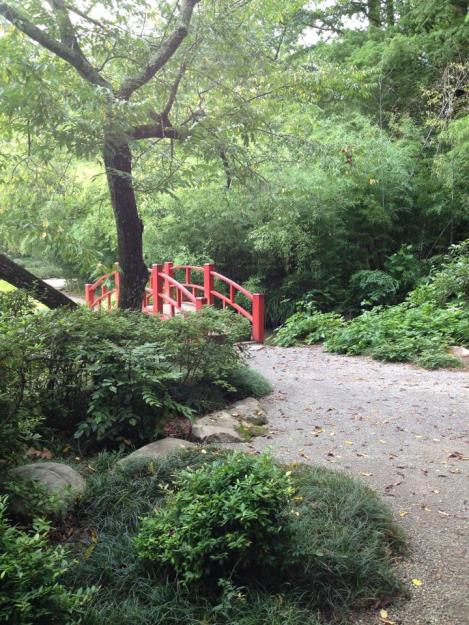
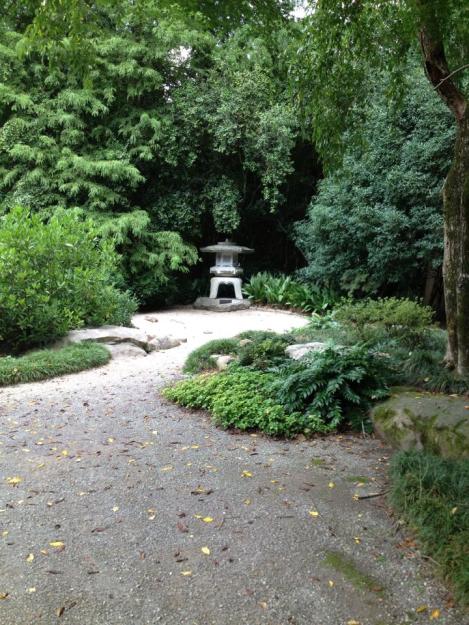
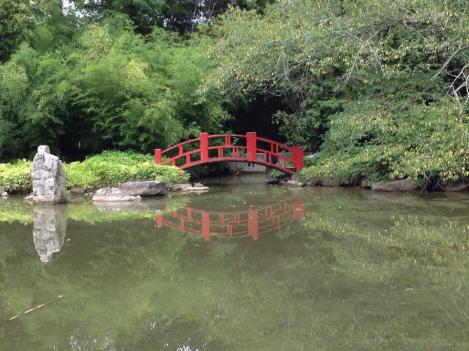
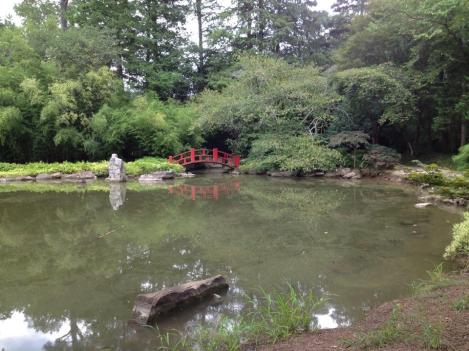
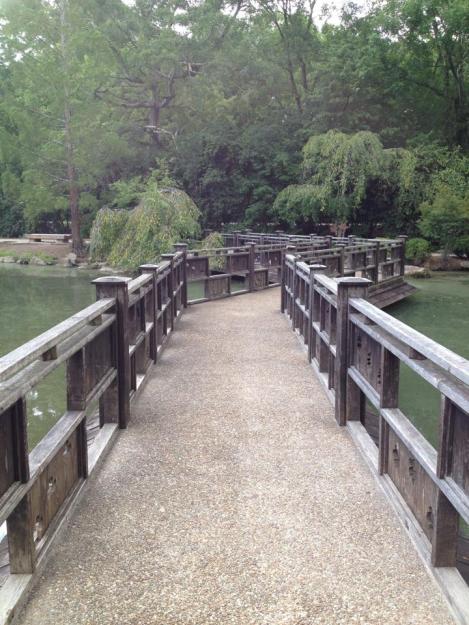
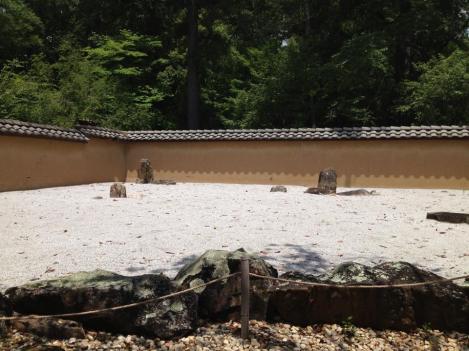
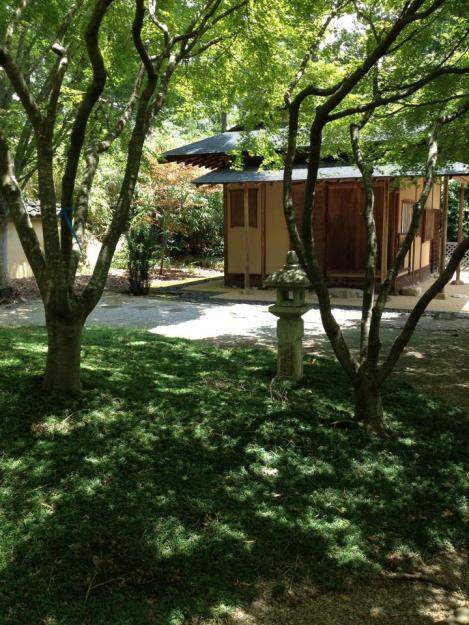
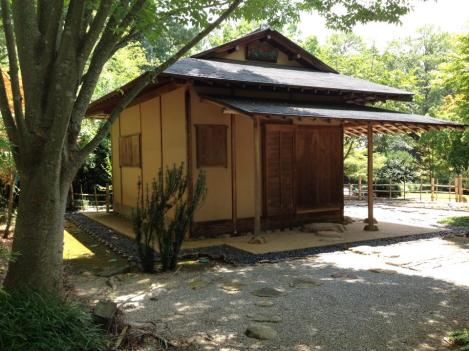
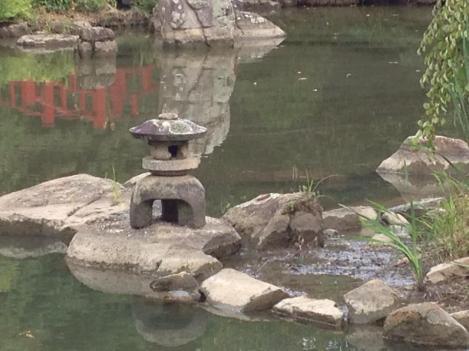
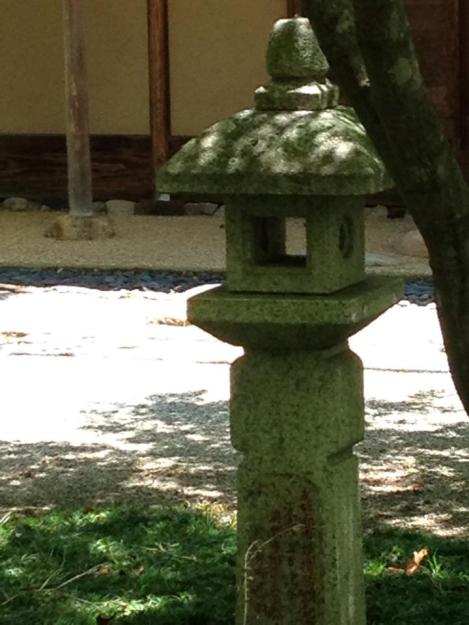
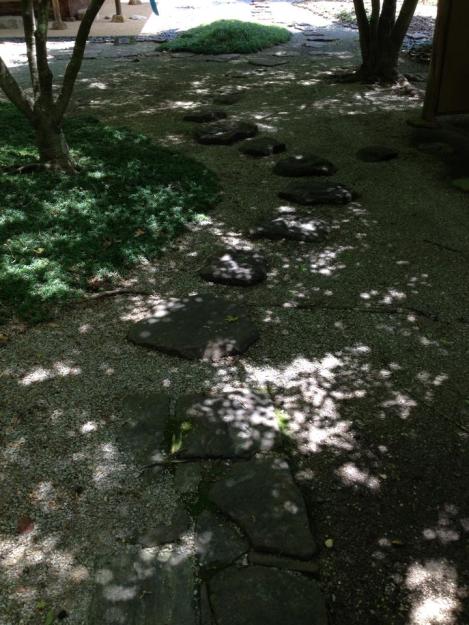
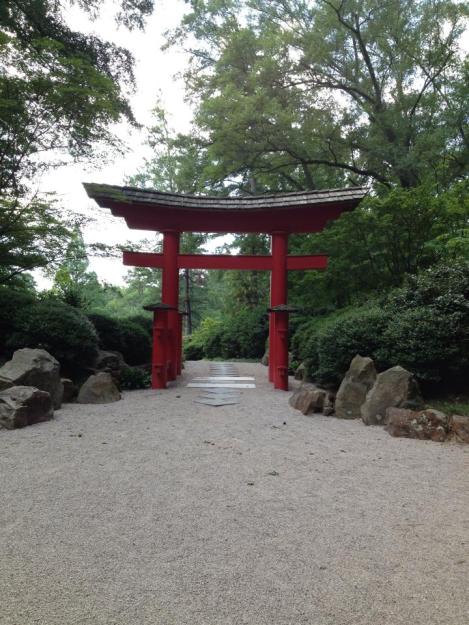
Japanese garden in Birmingham

The Birmingham Botanical Gardens is 67.5-acre botanical gardens located adjacent to Lane Park at the southern foot of Red Mountain in Birmingham, Alabama. It is located at 2612 Lane Park Rd, Birmingham, AL 35223 Admission and parking is free.  Check their website for hours   http://www.bbgardens.org/


I made a beeline for the Japanese Tea Garden section and ignored the rest.  Here are my pictures.

123456bridge1dry garden1hut with lantern2hut with lantern3hut1hut2hut4hut5islandlantern and pathlantern pondlantern with hutlantern3lantern4lantern5pond1pond2pond3stone pathtorii gate1torii gate2torii gate3waiting hut

Free pass

Many years ago I was in a group of friends who lived in Atlanta. One girl kept making snarky comments to me one day. She would say something rude or condescending about everything I said or did. Either she didn’t usually speak to me or I didn’t notice her comments, but that day I did.

I finally worked up the courage to speak up. I said this to her with our friends present. Bullies have a hard time when there are witnesses. “Are you a bitch all the time, or is today just a special day?” She was silent. I continued. “Because all you have done all day is cut me down and I can’t think of any reason for it. If I’ve done something wrong, let me know.” She never answered, and she has never spoken to me again.

It was very hard for me to do this, but I had to. I was shaking inside, but I knew I had to say something. Verbal abuse is exactly the same as physical abuse, and must be stopped as soon as it is noticed or it will get worse. If you ignore it, you are allowing it to happen.

I once had a coworker who thought it was acceptable to walk up behind me and hit the back of my head several times a day.

I have relatives – blood and in-laws – who think it is acceptable to slander me, steal from me, and lie to me.

I am here to tell you that nobody is ever allowed a free pass to abuse you. Nobody. This includes but is not limited to managers, bosses, spouses, parents, siblings, friends, ministers, and strangers on the street.

Nobody has permission to harm you in any way.

First, let them know how their actions make you feel. They may not realize that they are being a bully. If they sincerely apologize and never do it again, then let it go. If they do it one more time, walk away. You do not need people like this in your life. It does not matter who they are. Nobody gets a free pass at harming you.

You are valuable. You are a child of God. You are unique and precious. If they cannot recognize that, then that is their loss. You cannot make blind people see.

Rumi says in “The Way That Moves as You Move” (rendered by Coleman Barks)
“You have read about the inspired spring. Drink from there. Be companions with those whose lips are wet without water. Others, even though they may be your father or your mother, they are your enemies. Leave, before they kill you.”

Jesus says:
“You assume that I have come to bring peace on earth, and you are mistaken. I have come to set fire to the world, and how I wish it was already burning! I have a mission that I am called to, and it will overwhelm me until I have completed it. I’m not here to join people together but to divide them. Families will turn against each other in their households. I’ve come to bring a sword, cutting old family ties. I’ve come to turn sons against fathers, daughters against mothers, daughters-in-law against their mothers-in-law. Your worst enemies will be members of your household. Anyone who loves their family more than me cannot be my disciple.” (MT 10:34-37, LK 14:25-26, LK 12:49-53 – Condensed Gospel version)

We must follow the Truth,
regardless of others around us,
regardless of their authority
or connection to us.
If they are harmful to us,
we must walk away and cut all ties.

Only God is above us, not them.

It is better to be lonely than with someone who abuses you.

My art inspiration list

A random collection of artists and other creators that inspire my writing and art.

Maira Kalman
Dave Pilkey
David Shannon
Chris Van Allsburg
Matisse
Nick Bantock
Vivian Swift.

Handwritten, illustrated journals

Daily reading. Affirmations.

Sara Miles
Barbara Brown Taylor
Anne Lamott

Graffiti
Day of the Dead

Alice in wonderland
“Grover and the everything in the whole wide world museum”
Madeline L’Engle
Jesus

The Pern novels by Anne McCaffrey

Music – —
Punk and funk
Red hot chili peppers
Old Stevie Wonder
Soul Coughing
Michael Hedges

E E Cummings.

Sutton Hoo helmet
Celtic. Woad.

Rob Gonsalves
Escher
Bev Doolittle
(Hidden in plain sight, different perspective)

Stamps (tiny art)

Low

I read a post about how to help someone with depression. It said that you should encourage them to talk about it. That is insane. Sure, there are often things that need to get out. But there is no “cure” in just talking.

We must remember that our bodies are not separate from our minds and spirits. What affects one part affects the rest. We must stop thinking about depression as a mind issue, but a body issue that affects the mind.

My personal experience is that it is far healthier to take them for a walk outside with you while you talk. And feed them healthy food. Then show them how to take care of themselves.

I’ve hospitalized myself twice for bipolar disorder, so I’m not on the sidelines pontificating here. I’ve been diagnosed with a mental illness for since 1999, and in that time have learned how to take care of myself so well that my psychiatrist only sees me once a year. This means I do far more than just take my medicine (which I do, twice a day). I eat well, exercise, journal, and make art. I am a regular person with a regular 40 hour a week job. I do not rely on others to take care of me. I have learned to not blame others or situations for how I feel.

We must get back in touch with self-care. We do not have to ever experience depression. It requires a lot of work but it is worth it. No longer will we feel overwhelmed and controlled by our moods. This does not mean that we are “up” all the time. The point is not to just feel good all the time, but to feel everything with intention. We have control over how we feel.

Depression is a symptom of an imbalance – not enough sleep and exercise being part of it. Perhaps these examples will help give perspective –

When a tire is flat because it has a hole in it, you don’t put tape over it and drive on. We don’t say it is “depressed”. We look for the reason for the problem and fix it.

We don’t diagnose plants as “depressed” when their leaves droop or turn yellow. We find out what they are getting too much of or too little of and fix it. Too much or too little sun, water, or nutrients will make a plant droop and then die. The same is true for people.

When a car has run out of gas, we don’t say it is “depressed”. We put gas in it, and ideally we put in gas that doesn’t have additives in it. Better gas means that the car runs better. Food is the fuel that our bodies use. Better food, better results.

When we spend all of our money in our bank account and don’t put any in, we don’t say that the account is “depressed”. We either need to not waste our money or make more. Our energy levels are the same. We cannot continually expend energy without rest. However, too much rest is also bad. Our bodies are made to be used. Exercise builds up our “bank account”, but we also must take time to get enough sleep and schedule in times of inactivity in order to rebuild and refresh.

Talking about it is a waste of time. You wouldn’t expect a person with diabetes to “talk about it” to get over a low blood sugar episode. You wouldn’t expect a person with high blood pressure to “talk about it” to lower it. Certainly, they both might benefit from a little research into what they are doing or not doing for their health, but then they will only truly get better if they start acting on that realization.

Search for what you can do to help yourself. Start small. Keep doing it. It is easy to look at the big picture and feel overwhelmed. It is easy to come up with reasons why you can’t do it. Mental and physical health is not easy. Nobody else can do it for you. Your best source of medicine is to take care of yourself in any way you can.

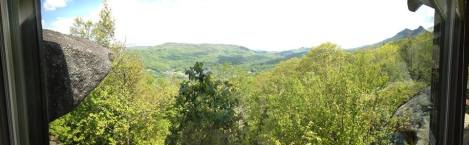
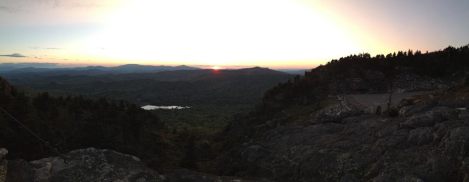
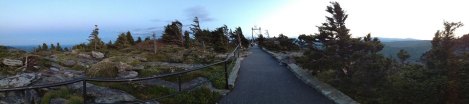
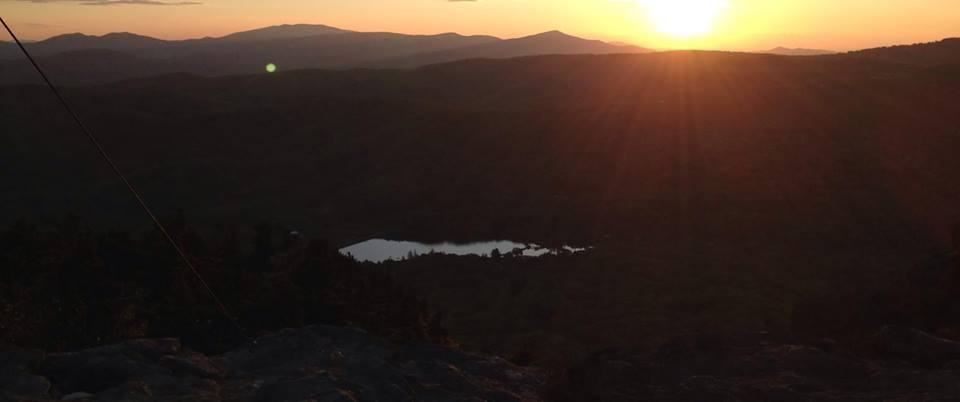
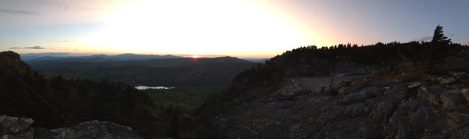
Panoramic pictures taken at Grandfather Mountain

Apparently my phone had a panorama feature all along and I didn’t know. I’d sort of created panoramas by taking several shots and putting them together, but this was so much better. I found this after accidently touching the wrong part of the screen.

These were taken late May in Grandfather Mountain, North Carolina.

From our cabin.

g1

g2

g3

g4


Sunset at the top of the mountain.

g5

g6

g8

g12

g11

The walkway to the swinging bridge.

g9

g10


Invisible house in Antioch

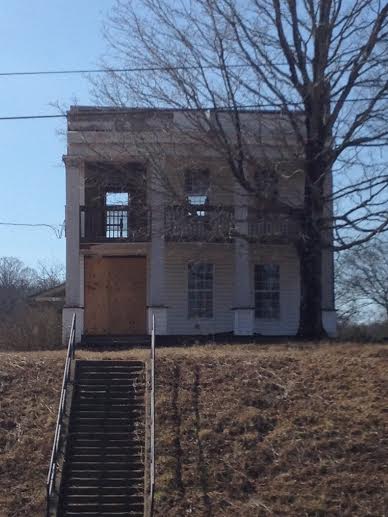
I appear to have a fascination with places that don’t exist. These are buildings that used to be there, but aren’t anymore. Nothing else has been built in that location. Often the mailbox and the steps are left, but otherwise there is no sign of it.

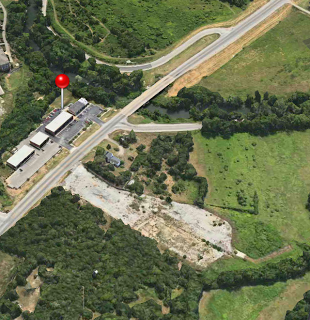
I noticed this forlorn house while eating at a restaurant called “Blu Fig”. That address is 6444 Nolensville Pike, Antioch, TN 37013. This is located across from it, to the south west.

front

Here it is a little closer.

front close

It was raining that day, so we didn’t wander around it. There is something weird/interesting/exciting about wandering around an abandoned house. I’d never think to go into someone else’s yard and look in the windows of their house if it was occupied. But once abandoned, the rules change. Is it still property if nobody lives there?

We suspect that the reason the house is abandoned is the construction/destruction right next to it – just to the north.

This is using the 3D GPS feature on my phone. The orientation is to the south.  The red pin is for Blu Fig (which is a very good restaurant if you like Middle-Eastern food.)

gps5

What is this destruction? Is it for a road, or a shopping center?

What would it have been like to be in this house, listening to the explosions as they blew up the rock to make this area level with the street?
gps6

Imagine how the plates would rattle when the explosions went off. It must have felt like being at war. It was war, in a way. Imagine owning this house free and clear – you’ve paid on your mortgage for 30 years, going to work every day to make enough money to have a nice place to live. You’ve raised your children here. Or perhaps this was an inheritance – you lived here with your parents, and their parents before that. Many generations of memories here. This is where all the family gathered for holidays and transitions – graduations, birthdays, weddings, deaths.

And then some developer comes in the name of progress, and takes all of that away. It is theft.

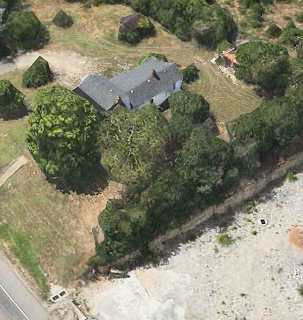
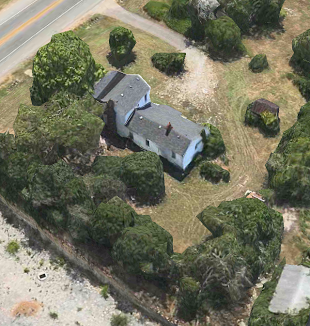
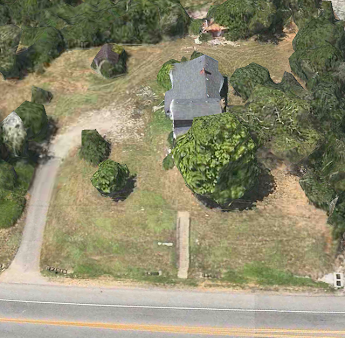
Here are more 3D pics of the house and yard, from different angles. Notice the wall of rock to the left of the house (north of it, but more south in these pics).  It is 12-20 feet high.

gps7gps4gps3gps2gps1

This is all gone now.

The bear story

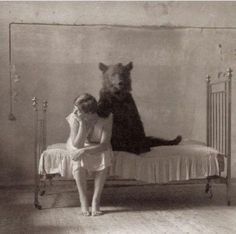
bear

The bear had moved in for good, and there wasn’t anything Alice could do about it. Not like she wanted to, not anymore. The first week had been more difficult than she had anticipated, but after that things had slowly improved. The bear agreed, in his sure, heavy way, that this was home, this sharing a space together.
Home was never about the building. Walls and a roof didn’t make a building into a home, any more than books made a library. Plenty of people have felt more at home at work in a warehouse then where they paid their mortgage. It’s the people that make the difference after all.

Alice always felt that animals were more human than those who claim to be. Perhaps the utter guilelessness of them was the difference. Animals never had to prove who they were, never had to bother with such arbitrary things as status and striving. They never wore clothes, never owned cars, never had jobs. Their lives were free from all the distractions that humans had. Like children, they were given all they needed from Mother Earth and Father God. Like children, they learned at their own pace and trusted their senses. They slept when they were tired, ate when they were hungry. They never had to wonder or worry about such arbitrary and nebulous things as retirement funds or investment accounts. And as for in-laws? They never married, so that wasn’t an issue.
Alice had wanted to marry the bear as soon as he moved in, but he convinced her otherwise. He reminded her that marriage is a human invention, and therefore subject to failure. If you never got married, you’ll never have a risk of divorce. You are free to come and go. Doesn’t it mean more if your partner stays out of love rather than obligation? Every day they stay is a gift rather than a duty.

The bear had no name as far as Alice knew. She had asked and he’d not said. He didn’t talk like humans did, of course. He made his thoughts known in the way all creatures did in the beginning, with the spirit. He spoke with his whole being, resorting to sounds only as a last resort. Then they were usually snuffles and sighs and grunts. Only once had he growled, and that was when Alice had mistakenly opened a door onto his paw. After that they’d agreed to remove all of the doors inside the house. Doors just fostered separation and exclusion anyway. Plus, the knobs were hard to work with paws. The house had to work for both of them or it wouldn’t work at all.

The bear didn’t need a name, not really. He knew who he was. He was the only one Alice would be calling. Names meant very little when the group was small. She rarely had to call him anyway. He always knew in his slow sure way when she needed him. The same was not true for Alice, not yet. The bear often wanted to call her to look at an especially beautiful flower or sunset, but she was often so distracted by chores that she couldn’t hear him call to her heart. She spent a lot of time cleaning because wanted to keep the house just so. She forgot (or never knew) that the bear didn’t need to be impressed and nobody else who would come by would care.

Few people visited their home. Most of her family thought she was crazy for wanting to live with a bear. Her mother even talked about having her committed, but since she was an adult and seemed sane in all other respects, she let it drop, choosing to hold her judgment. She was prepared to shake her head and say “I told you so” while bandaging her daughter’s arms from the inevitable claw marks that surely would come, but they never did. Months went by and the bear and Alice got along like peanut butter and jelly, always together, and always good. Her mother still wasn’t one to concede the battle. Decades could’ve gone by and she still would not admit that perhaps Alice had chosen correctly. Little did she realize that Alice hadn’t done the choosing. The bear had. He knew Alice needed him as much as he needed her, knew that it wouldn’t be long before she’d hear him in her heart the way he heard her.

Their first meeting was as you’d expect. Bears aren’t normally sought after. Normally they are run from. Alice had decided to spend a week camping by herself in the Smoky Mountains. Her job wasn’t fulfilling, and she was estranged from her family in part because they felt she was wasting her talents. She decided week away to really listen was what she needed to get back on track.

Her family had paid for her college education, where she had studied veterinary science. But when she graduated and found a job at a local vet’s office as an assistant, she quickly learned that what you learned in the textbooks often doesn’t match with reality. It was far more visceral than she ever could have imagined. In her first week she saw more of animal’s insides than their outsides.

It wasn’t all physical. She’d always been a little empathic, able to feel how others were feeling even before they had words to express them. She was often able to help people before they even knew they needed it. Her friends liked her because they always felt at ease around her. She just made life easier. Meanwhile they never knew how much work this was for her.

When she was at the vet’s office, she was overwhelmed with the messages of hurt and pain that she received from the animals. She had not factored in that all of them would be constantly broadcasting their hurt and confusion and pain. It was an unrelenting onslaught, since even the healthy animals that were brought in just for a check-up or a shot were anxious and confused as to what was happening to them.

When she quit after a month, her family felt she was throwing away everything she had worked for. Worse, they felt she was throwing away everything they had paid for. They refused to support her any further, so she took a job selling perfume and cosmetics at the local mall to pay her bills until she could figure out what to do next.

It was not long after that that she went on her trip. While praying for guidance late one night around the campfire, she distinctly thought she heard a voice say “Take me in”. Usually she had perceived God’s voice as more of a feeling than actual words, but this was crystal-clear. It was so clear that she thought that perhaps it was an actual voice, so she looked around. Just outside the glow of the fire, she saw the distinctive gleam of eyes in the shadows. They were three feet from the ground, so she knew that it wasn’t an adult. She didn’t realize it was a bear until he stepped forward into the firelight and stared at her, saying again “Take me in”.

She ran, stumbling over tree roots and tent stakes to get away. She spent that night sleeping in the fetal position under a rhododendron bush about a mile away from her camp rather than risk being near that bear. Little did she realize but he had followed her at a slow walk, and watched over her all night as she slept to make sure that no other creature could approach her. Not all forest creatures welcomed humans into their midst.

She awoke with the dawn, stiff from rocks and roots pressing into her side. Her first thought was to give up on her quest and walk back to her car, but her keys were in her tent. She hoped that the bear hadn’t savaged her camp, shredding everything in a quest for food. She’d heard stories of bears that tore through everything in a quest for sausage or Snicker’s bars. The idea of rummaging through her ripped-up belongings to find her keys was not appealing, but she had no other choice.

When she finally returned she saw that everything was just as she’d left it. She had to use a hammer to re-secure the ropes from the tent pegs she’d tripped over on her midnight flight, but other than that, everything was the same. She started a small fire to cook her breakfast, and while drinking bitter coffee and eating oatmeal with blueberries she’d picked the day before, she heard the voice again. “Take me in”. She looked up with a start and saw the bear, but this time he was sitting twenty feet away, staring at her. This was enough distance that she felt she didn’t have to run. If she’d studied bears in college, she’d have known that no distance is a safe distance with bears. They may seem amiable and too large to run quickly, but looks are deceiving.

Alice stared at him (she assumed he was a he based on the sound of his voice in her head) and creaked out a tremulous “What?”

The bear repeated his request. “Take me in”.

“What? Why? Who are you?” Alice rambled on, picking up courage. She hadn’t had time to question that she was speaking with a bear. If she had, she would most likely have been silently staring at him, wondering if maybe her mind had finally cracked.

Over the course of half an hour the bear explained who he was and why he was speaking with her. He said things about being her protector, her teacher, her friend. He said he was her great-great-grandfather reincarnated. He said he had always known her and watched over her. He said that he could teach her to be the best veterinarian there ever was, or ever could be. He said that he would work with her, but first she had to let him into her life and into her heart and home.

They talked more over the course of the week she was at her campsite and worked out a plan. It was difficult for Alice to fully understand him but her natural empathic abilities went a long way. At the end of the week she went home, leaving the bear there, but she promised to return.

She quit her meaningless job as soon as she returned, not even bothering to go in to turn in her notice. She called the assistant manager at 7 on a Tuesday morning, waking him from his hangover from his one-person-party the night before. She told him that she had quit, and that was that. She hung up as he stuttered his questions at her, not believing. He’d never listened anyway.

She sold everything she had to make enough money to move to the woods and build a small cabin there for her and the bear. It was fortunate that she didn’t need much, because she didn’t have much. She traded out for much of what she needed by going to the Goodwill. Her worldly possessions transformed from frilly dresses to sturdy cotton clothes, the better to work in. Her CD collection became an axe and a saw so she could cut down trees to make a home.

The bear worked with her, pushing trees down, dragging logs over, lifting them up. After a month they were both tired but there was a roof over their heads. They had no furniture but they didn’t care. The work was so exhausting that they didn’t need a fluffy bed to rest in. They both slept deeply, curled up on the earthen floor of their new home, the bear curled protectively around Alice. She loved the musky, earthy smell of his fur and how it was somehow soft yet bristly at the same time. At times she could smell pine sap and warm summer sun in his fur, traces of his adventures while away from her.

They spent much time working together, he teaching her about all the ways of the animals. He filled in all of the knowledge she’d missed in her classes. He introduced her to all the animals in the forest and taught her how to speak with them – but more importantly how to listen. He told her that she didn’t have to wonder what was wrong when they came to her – they would tell her if she asked.

Yet still there was a wall between them. She had learned the language of the birds and the deer, of all the animals that flew or walked or slithered. Yet she was never fully able to hear the bear, not as well as the other animals. Perhaps he was too different, too tame. Perhaps he’d given up part of his wildness for his ability to live with her. Perhaps there was still too much of his human spirit in him, buried deep down in his bear heart, for her to hear him like she could hear others. He wasn’t quite a bear, yet he wasn’t quite a person, but both, and neither, and something more.

The island and the storms

There once was a man who lived on an island. The island was a good size, and many other people lived there. When he moved there, old-timers told him about the storms that regularly assailed the island. Sometimes the storms were light and passed by quickly. Sometimes they were very violent and destroyed homes. They told him how to prepare his house so it would not get damaged or cause harm to him during one of the storms.

The storms were predictable only in that they were going to happen, only nobody knew when. Sometimes they were seen far off at sea and everyone had a chance to batten their hatches. Sometimes they would spring up, seemingly out of thin air, and everyone who did not regularly prepare was at risk of damage from it.

The first storm of the season came in and he chose to ignore the advice of the old-timers. He’d not even gone to the store to buy supplies. Fortunately for him, the storm was fairly mild and his home did not get very damaged. The roof leaked in a few places, but it was still on at least. He chose to ignore the leaks, deciding they weren’t big enough to warrant his attention. Slowly the water from the leaks ate away at the wood and insulation in his home. Because he couldn’t see it, it went untended to.

Over the years the storms continued, some larger, some smaller. The damage to his house increased bit by bit, but he put it off, that being his nature. He could only be bothered to do repairs when they were impossible to ignore. Of course by then they were very difficult and costly and beyond his ability or skill to attend to. He often complained to his neighbors about how hard it was to be him, how difficult the repairs were, how large. He would often complain to anyone nearby about how unfair it was that he had to do these repairs, and now he had so many other projects he needed to work on. Some took pity on him and came over to help, bringing nails and shingles or new insulation. Some refused, saying they had spent all their money and time on materials to prevent damage to their own homes. Their unspoken statements were that he should’ve done the same, but they were too kind to say so. He often would whine about how difficult he had it, but most would not listen because they were busy with their own homes.

Then one day a large storm was observed far out to sea. There was about a day to prepare for it. It could not be avoided – they couldn’t get off the island and go to the mainland because the waters were too choppy from the winds. If he had been fortifying his house all along as the old-timers and his neighbors recommended, he’d have a chance of weathering the storm, but as it was he would barely have enough time and materials to prevent the windows from being blown out.

The storm grew closer, and he grew more anxious. He could see that he was directly in line of the storm, and started to openly lament his fate, saying that God must hate him and he must’ve been a terrible person to deserve this impending doom. He’d either forgotten or chose to ignore that he was on an island where storms were a regular occurrence. Many of his neighbors all over the island had gone through similar storms and had to repair their homes or entirely rebuild. But he didn’t see that because it had happened before he got to the island. They were the ones who had taken the time to warn him the most about the storms, yet he thought they were exaggerating or that such destruction couldn’t happen to him.

When the storm finally came, his house and everything in it was destroyed. He had no money to rebuild or move back to the mainland. He applied to the government for aid, and they – after interviewing his neighbors and asking if he had ever shored up his house in the past or tried to protect it, arrested him for fraud.
———————–
The island is the human body. The storms are the usual misfortunes, problems, and troubles that happen in life. The old timers and neighbors are all those who advise us. We can choose to heed their advice or pay the consequences. We can choose to think that either we are above the normal storms of life, or that they are directly aimed at us by some twisted deity. Only those who accept the inevitability and prepare themselves for the storms will survive.