A hidden place

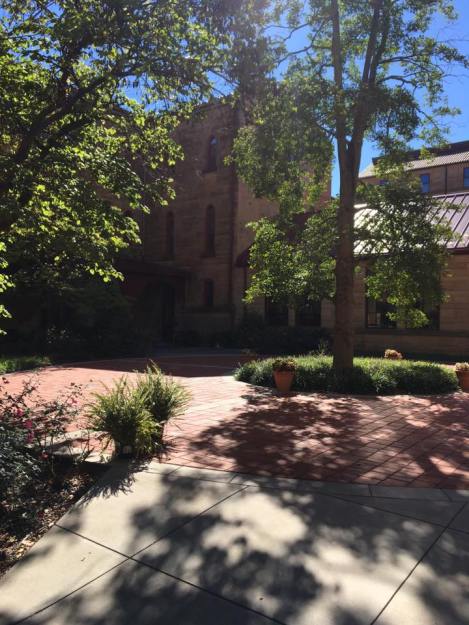
This courtyard was off limits the last time I went to St. Meinrad’s. The monastery itself was being renovated – they are upgrading to geothermal energy.  It is quite expensive, but will pay for itself in just a few years.  The necessary plumbing changes that go with it meant that all the monks had to be relocated to rooms that were usually used for guests or seminary students.  This meant that a courtyard that had been open in the past was closed off for their private use.  I was especially sad about this because I’d looked at maps before coming here and especially wanted to prowl around in this one.  Just two days before we came here on retreat, the monks were allowed back “home”.

Here is the covered walkway to it.
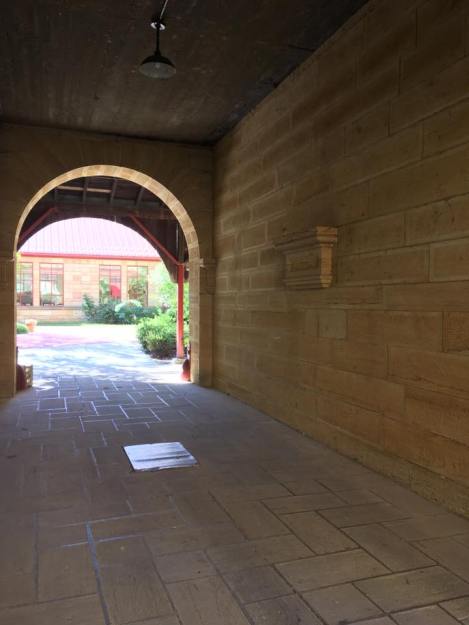
yard-entrance

I was a little overwhelmed – take it all in, or start taking pictures?  It is hard to “be in the moment” with a camera in front of your eyes.  But I also wanted to share this space with you, and to be able to process this experience later.
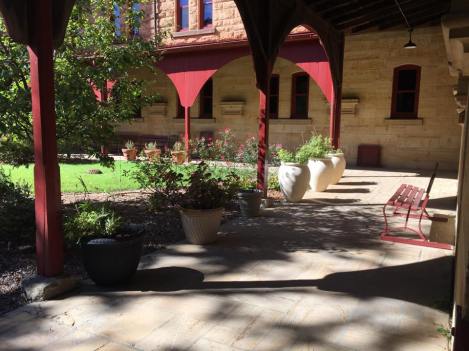
yb

y1

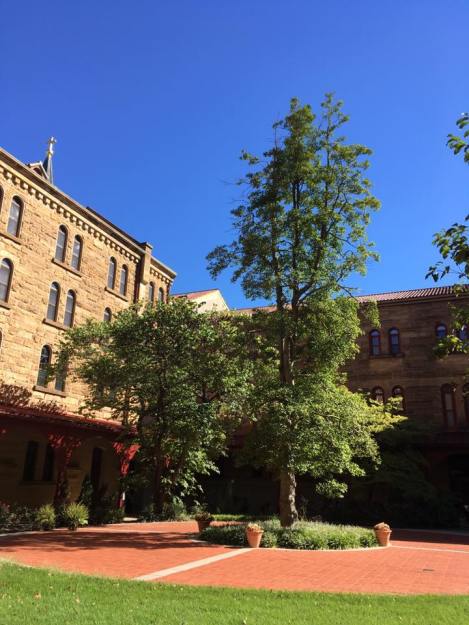
I wonder what kind of tree this is?  I wonder who planted it, who chose it.  When was it planted?  Has this one always been here, or is it a replacement?  Does it have special meaning?  Was it dedicated to someone?

y2y3

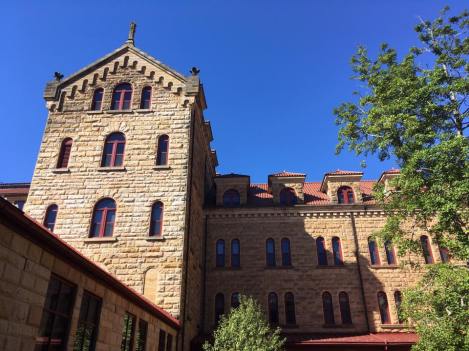
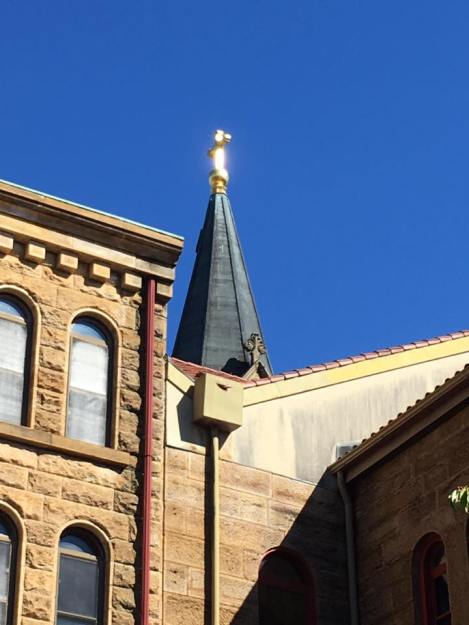
Notice the solid architecture.  This place is designed to last.  Nothing temporary about it.
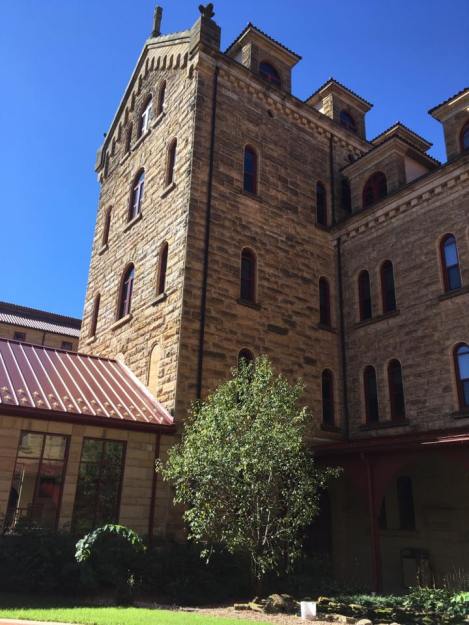
y4

But, as always, I think – is that what Jesus wanted – for the Church to build for itself?  Aren’t we called to take care of others?  How many poor people could have benefited from this?  If all the poor are fed, clothed, housed – then the Church can build such things for itself.

y5

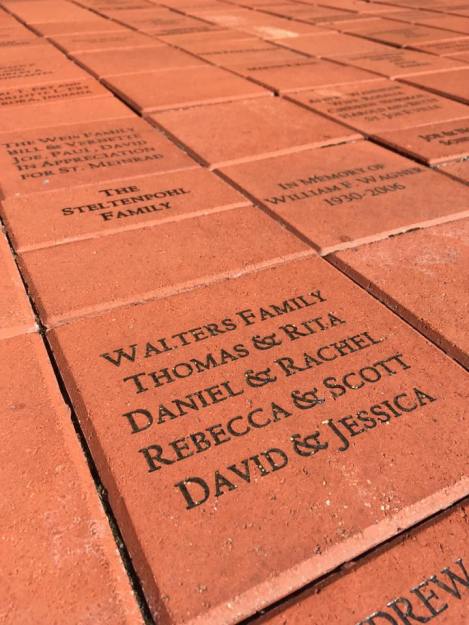
There must have been a campaign to donate the paving tiles.  I wonder if these people knew how shallow the inscriptions are?  They won’t last more than a few years.  Just like gravestones, they’ll fade away.
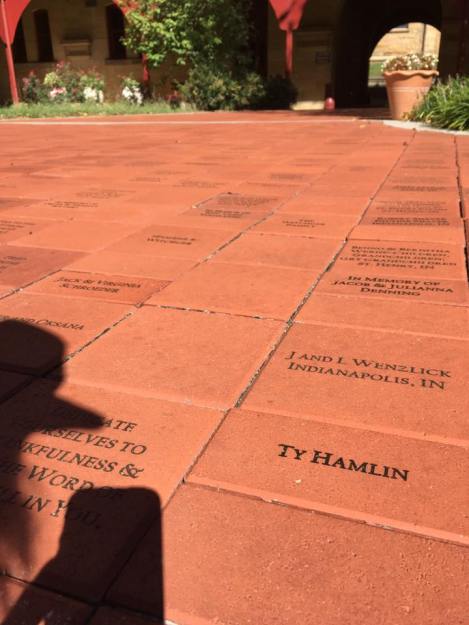
y6

It seems like it would have been better for the Church to get these people to donate towards a place to help the needy instead – a halfway house, a drug treatment center, a shelter for battered women…
y7y8

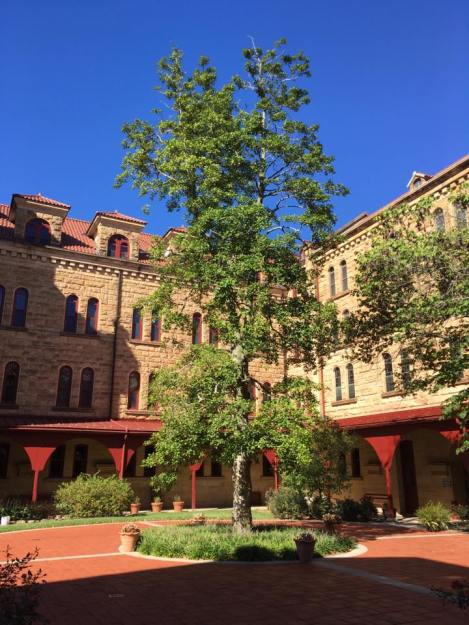
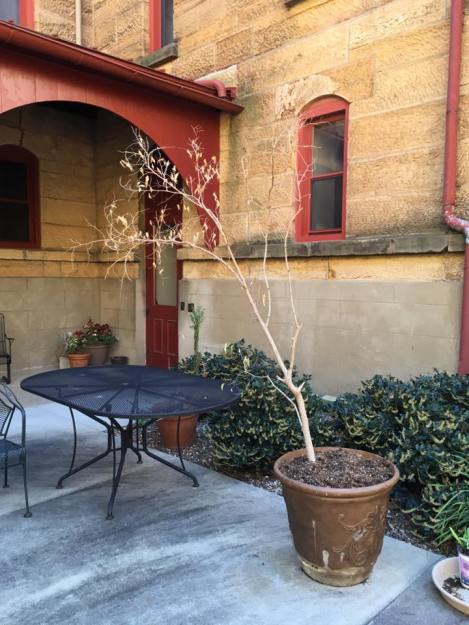
This is the most symbolic part – but I’m sure nobody else sees it.  A dead tree.  Why is it still here?  Why keep it?  Sentimentality?  Much of the rites and rituals of the Church are like this tree – kept out of habit.  They no longer are connected to the Vine, the Living God.  Yet they are kept, enshrined, memorialized.  Idolized.
y9y10y11

Be Opened! (poem)

Who is this man, the one who speaks to us?

We’ve never seen anyone like him.

He speaks with authority,

He heals everyone who comes to him –

the deaf, the mute, the blind.

He even raised people from the dead!

Jesus knows, we are beautiful on the inside.

He sees our treasure, when all we see is trash.

He tells us that we are the light of the world,

to share that light with others.

Don’t hide your light! Be opened!

“Ephphatha” he said to one person.

“Talitha, koum!” he said to another.

Both times, calling to us, here, now.

“Be opened! Arise from the dead!” Awaken!

Peter said “Command me, Lord”

and he was able to walk on water.

He commands us too, and we can do anything

because he asks.

Our brokenness is God’s doorway.

He stands at the doorway of our hearts and knocks.

Be opened!

I am with you

During spiritual direction at the retreat at St. Meinrad’s in Indiana, I was asked to visualize being on a road with Jesus.  Where was he, in relation to me?  Then I was to imagine I found something on the road that was interesting.  Do I show it to Jesus?  Do I have to run to him to show it, or does he have to catch up?  Or do I just point to it and hope he figures it out?

I don’t normally like to spend a lot of time with these visualizations.  I usually feel very self-conscious doing play-pretend as an adult.  I’m also a little afraid that I’m going to be smacked down – that this is a trap.  It wouldn’t be the first time that a religious leader has purposely tried to make me look silly – and thus shame me into silence.

But I decided to a) be brave and trust and b) not go with my usual habit of trying to get to the good part too fast.  I’m not very good with waiting in the stillness of time that it takes for things to gel. Jesus and I are working on that.

I imagined I was walking on a dusty, rocky road, like the Camino de Santiago.  I was walking ahead, and Jesus was  behind me.  He was far enough away that conversation would have to be in gestures and shouts, but we could still see each other.

I saw a rock that was interesting and decided to wait for him to catch up to show it to him.  There were a lot of rocks on the road and I wanted to make sure he saw this specific one, because it was so different.

When he caught up with me and I showed him the rock, he smiled and said “Yes, I put that there for you to find.”

And my mind was blown.  How?  He was behind me.  But this is Jesus.  Jesus transcends time and space.  Jesus is everywhere.  He is before, behind, above, below, and within me.

Where I’d been wondering about him being behind me – aren’t I supposed to follow him, and not the other way around – he answered it.  He was behind me to watch me, to make sure I stayed on the path.  He was behind me to make sure I didn’t turn to the left or the right.  He was behind me to support me, to help me.

Years back, he had to be in front, but I watched his walk and matched my pace to his.  Now I can walk ahead and see new things.  My view is unobstructed.  I can go to new places, because he has shown me how.

The Walk isn’t about doing the same old things again.  It is a pattern, not a map.  You aren’t supposed to recreate his life, like a diorama, like a museum.  It has to be a living path.

The retreat theme was about rocks – about us being the living stones of the Church, about how even the stones would cry out if Jesus made his disciples be silent, about how we are like geodes – that being cracked open reveals our beauty.  I’d decided to take pictures of different examples of stones to meditate on, and took this one before the silent direction time.

rock

It was only later when I was looking at my pictures again that I noticed the one almost in the center that has a cross shape, revealed inside the rock itself.

rock

I went back to that area several times to try to find this rock, to take it home.  In a way, I’m glad I didn’t find it.  It is important to not iconize things, to not be weighed down by them.  It is the One who left me the stone in the visualization and in real life that is to be noticed.  The stone is just a symbol.  Symbols have to point to the thing – they aren’t the thing.  The trouble comes when we focus on the symbol.  That becomes idolatry.

Mary in the Woods

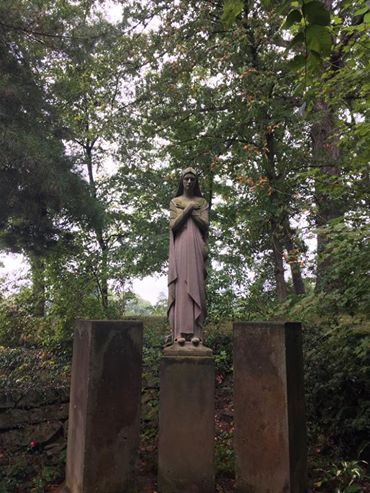
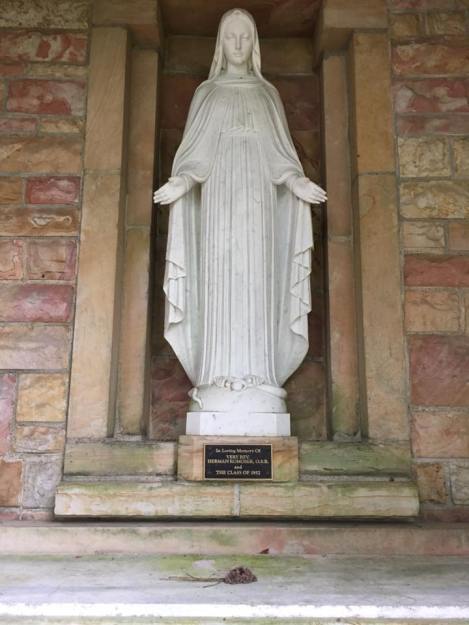
On Friday morning while on retreat at St. Meinrad, I found one of the two grottoes with Mary that are on this campus. Both of these special places are hidden away in the woods, away from the church, not on the map.  They are nearly impossible to find unless you ask for directions from someone who has been there.

mary1

I’ve read that statues of Mary have been discovered in caves and in fields – and when they are removed and placed in churches, within a few days they have miraculously returned to where they were found.  It is as if Mary does not want to be in church, in a cold, lifeless building.  Mary is all about being among us, the commoners, where we are, as we are.

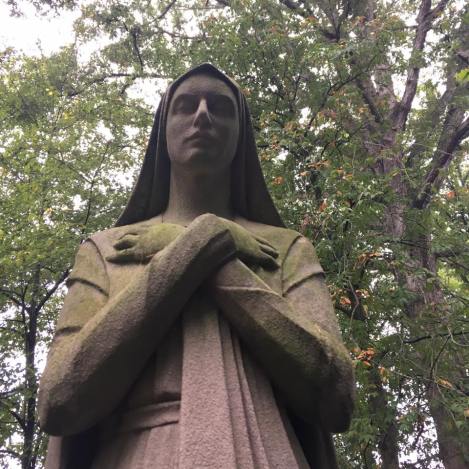
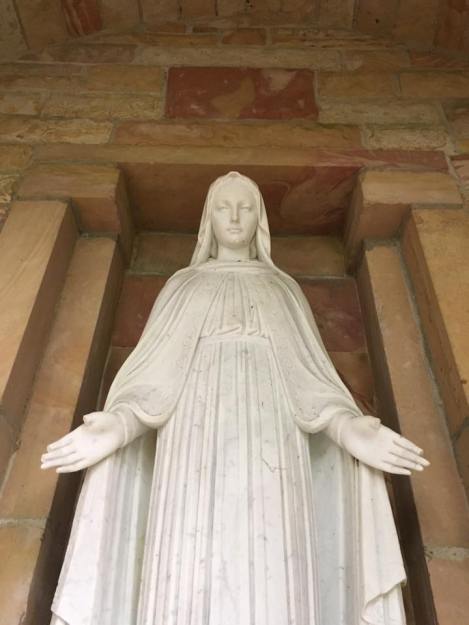
I find it significant that this image of Mary depicts her as if she is a non-Catholic at Mass.  This arm position says to the priest to give a blessing only – that this person cannot take Communion.  Following their rules – she could not take Communion because she was not Catholic.  She was Jewish.  But if it weren’t for her saying “Yes” to God – to letting the Holy Spirit of God work through her, Jesus would never have come into this world.  The Catholic Church could learn a lot from Mary.

mary2

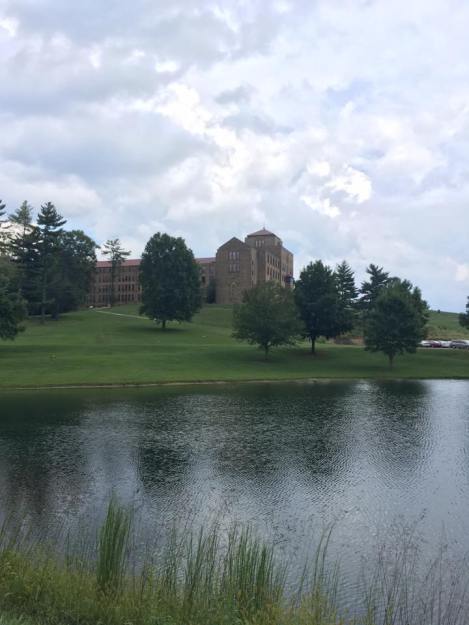
The other grotto is quite far away.  You have to walk away from the seminary, the guest house, the church.  You have to walk by two small lakes and into the woods. I found it on Saturday.  This is the view looking back at the place where we stayed on retreat.  It is the closest building to this grotto, and also the furthest building from the church.  This is significant.

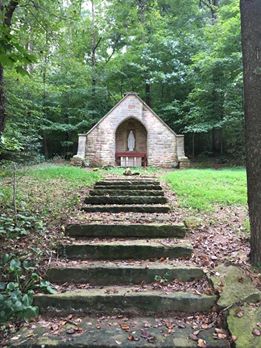
The actual grotto is another five minute’s walk from here.

mary8

There are no signs or path.  You’d never know that this was here until you are almost upon it.

mary3

Mary greets you with open arms.

mary4

mary5

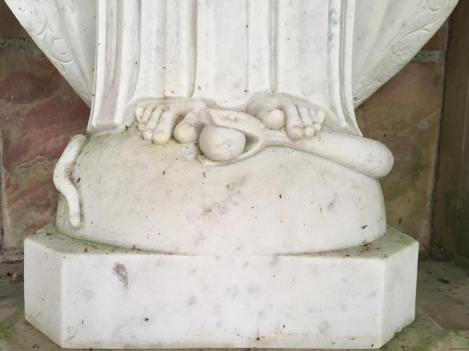
Notice the detail – she is barefoot, and she is stepping on a snake with fruit in it’s mouth. This is the snake from the Garden of Eden, and that is the apple that Eve and Adam ate.  Mary is the antidote to that poison.  It is said that they brought original sin into the world with this act of rebellion against God.  Mary brought grace into the world by acting in accordance with the desires of God.

mary6

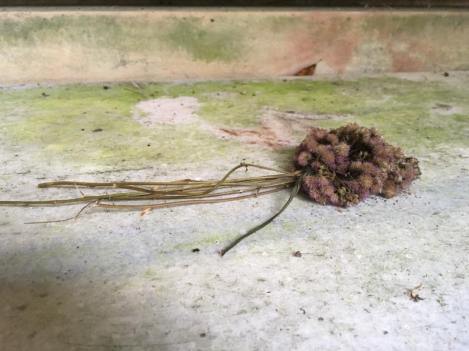
Someone had been here before me and left an offering of wildflowers for her.  They had faded and were musty.  We must daily refresh our faith and reconnect to the true Vine in order to remain alive in spirit.

mary7

Holy Door

There is a “Holy Door” at St Meinrad Archabbey, in St. Meinrad, Indiana.  These special doors are usually opened only once every 25 years and for a limited time. Pope Francis asked for these special doors (located in certain churches all over the world) to be open earlier than the normal interval to focus on the quality of mercy. You get a plenary indulgence for walking through and reciting a prayer in the church (along with a few other obligations). Each church that has a Holy Door should have information on what is required.

From reading the letter Pope Francis wrote about it, he wants this sacrament available to everyone.  He did not indicate that this is just for Catholics.

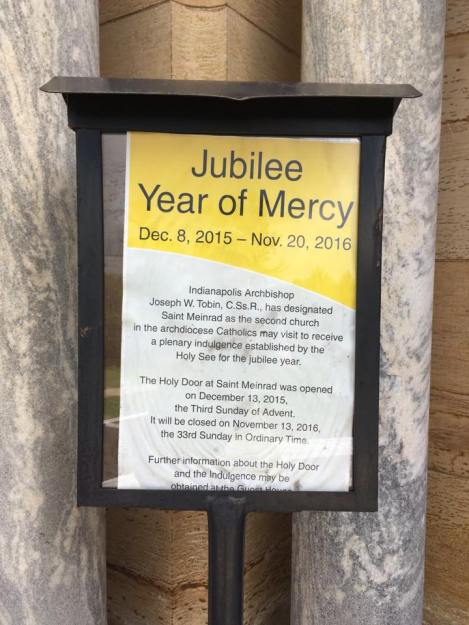
Here is the sign at the door in St. Meinrad.

door1


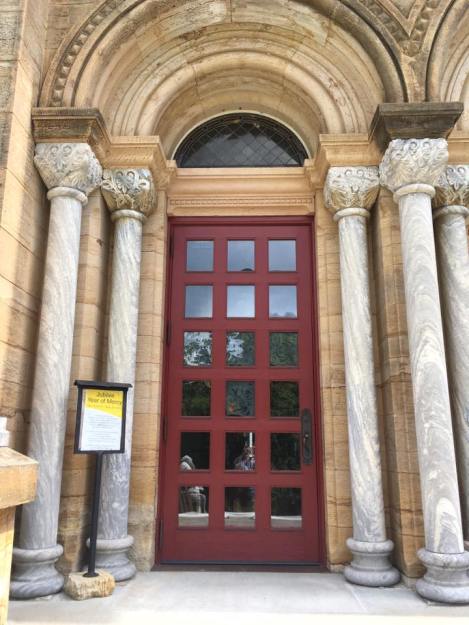
Here is the door from the outside.

door2

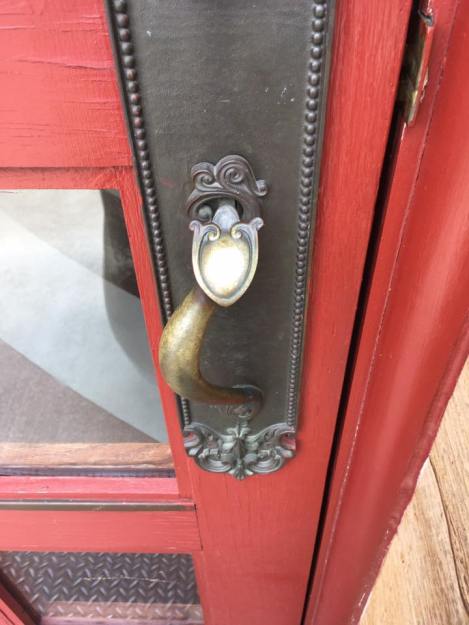
Here is the doorknob.

door3

Here is the door from the inside.

door4

Normally these doors are locked or in some cases even bricked up.  They are never doors that you would just happen to walk through – they are never the main doors.  Not all Catholic churches have these special doors set aside for this sacrament.

What is a sacrament?  It is “An outward and visible sign of an inward and spiritual gift.”  These doors are reminders of the grace and mercy that God grants us – has granted us, will grant us.  We, being forgetful beings by the very nature of our being human, forget that God loves us unconditionally, and constantly welcomes us back when we stray.  We forget that God is the father that runs to greet us when we have wandered away, just like in the story of the Prodigal Son.

Going through a Holy Door doesn’t save you – you are already redeemed by Jesus.  That bill has already been paid.  But going through reminds you of that gift, reminds you that you are eternally loved.

A Plenary Indulgence is not a “get out of hell free card”, or a “get into heaven free card”.  You’ll have to look it up to know what the Catholic Church means by that term.  As for me, I don’t hold with the idea of indulgences or of penance, because they go against the message of Jesus.  Indulgences say that the Church, in the person of the ordained ministers of the Catholic Church, is able to forgive you for your sins, which is not something any human can do.  That is something God, and God alone, does. The idea of penance indicates that you have to pay for your sins yourself, which would mean that you are ignoring the price that Jesus paid for you on the cross.  Yes, we are to constantly be on guard for our sin, our times of “missing the mark”, and turn away from it and turn towards the Light that is God.  We are to make amends for our actions, certainly, but we can never buy our way into God’s love – that is something we already have.

Rattle not OK

When I was young, my parents had bought something for me for Christmas that had a sign on the outside of the box saying “Rattle OK”, meaning that if you shook the box and heard loose pieces rattling about, that it was normal – nothing was broken. But for us, a “rattle” is not a good sign. If we are scattered – if pieces of our selves, our souls, are loose, it is a sign that we need help.
Think of God as the good parent that God is. If you are carrying a heavy burden (of worry, stress, fear, anxiety…) hand it over to God to take care of it. It is too heavy for you alone, you cannot bear it. But God, the kind and capable parent, can carry whatever is weighing you down and knows what to do with it.
We are trained by the world to be independent, to bear up under incredible stress, to solve our own problems. However, Jesus teaches us that God is more than willing and able to help us if only we ask. We are not made to be alone, to do everything ourselves. To rely solely on your own ability is to put yourself in God’s place. This is a form of idolatry – it is to say that you do not need God, because you are enough. Instead, give your burdens and brokenness to God, the faithful and capable parent, to take care of.

Who do you follow?

I like that the word on Facebook when you don’t want to read everything that someone is saying is “unfollow”, rather than something else like “hide” or “block”. Not following some people is a good idea.

I don’t want to follow the people who continually refuse to take care of themselves and then complain about it. I don’t want to follow the people who, through every fault of their own, are obese or have cancer or in miserable relationships or jobs. Facebook is not the place to continuously complain about migraines or insomnia or sinus headaches. If they are happening that often, go to the doctor.

I don’t want to follow people who feel it necessary to share their fear about the government, the environment, or the future. Their need to “educate” me about their pet fear of the week is disturbing. I don’t read the news for a reason. The news is full of bad news with no way out. The news and these people show only the sickness and don’t offer the cure.

I don’t want to follow people whose every post is a passive aggressive rant about the world. Where they start off everything with “Dear (fill in the blank)” – someone that they are not friends with – such as “Dear person who pulled out in front of me at the Walmart shopping mall” or “Dear postman who lost my important parcel”. They complain about how that person did something wrong that adversely affected them. They’re addressing their anger to people who don’t deserve it. The people who are reading it are not the people who harmed them – they are their friends. I’m tired of listening to their craziness and having them pour their anger upon me – someone who doesn’t deserve it.

I won’t follow these people because I’m afraid I’m going to become like them. I’m afraid that I am going to drink the Kool-Aid along with them and become just as miserable as they are. They are addicted to their own pain and they want to share it. But mostly I don’t want to follow them because I’m afraid of where they’ll lead me.

Age limits?

Our society is doomed.  We either are raising children who are too stupid to have common sense, or we are overly litigious.  Both indicate the failure of people to take personal responsibility for their lives and think ahead before they do anything.

Check this out.

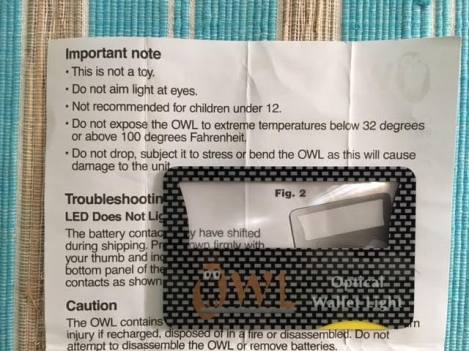
age1

This is for a credit-card sized magnifier with a light.  Seems simple enough, right?  Yet it is “Not recommended for children under 12.”  What is so dangerous about it that it can’t be used by a child who is 10? Or 6?

And this, discovered on the same day.  age2age3


It is a scarf (emblazoned with the Marauder’s Map from Harry Potter) that is for ages 14 and up.

What world have we found ourselves in (or created) that 13 year old  people can’t wear a scarf safely?  Or 12? Or even 8?   Sure, I can see a very young child might get tied up in it and choke himself. But only for 14 and up?

Perhaps you recall seeing these?

age8age11

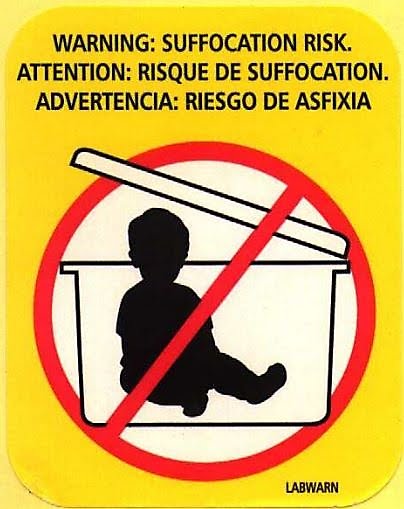
Why would anyone think it would be a good idea to put their child in an enclosed plastic tub?  If you anyone is that dumb, doesn’t the Darwin award come into effect?

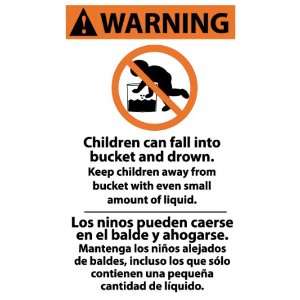
And if humans are so inept that we can drown in a few inches of water in a bucket, then why are we even still around?  Baby animals can take care of themselves far better than humans can very soon after being born.  Kittens can live independently at 6 weeks of age.  Meanwhile, humans can’t be left alone until they are at least 12, and that is only for a few hours.  Some can’t even support themselves at 50 and still live in their parent’s basements.

There are other warning labels around, to advise against hurting yourself. Here’s some great ones about fingers and hands.

age10age9

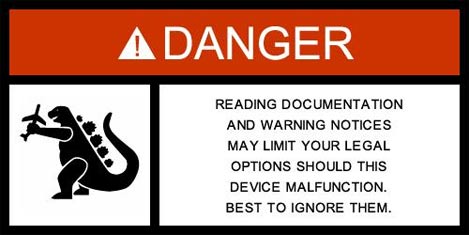
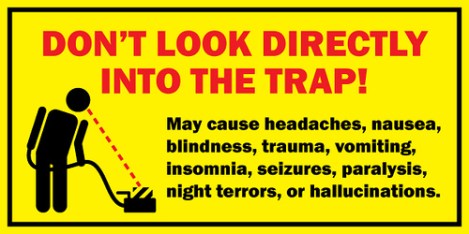
Here are ones that are sarcastic.

age4age6age7age5

Books that open your head

Alexander, Christopher W.  A Pattern Language: Towns, Buildings, Construction

Anderson, Walter Inglis   The Horn Island Logs of Walter Inglis Anderson
Arndt, Ingo      Animal Architecture

Bantock, Nick   Griffin and Sabine

Barklem, Jill       The Secret Staircase

Becker, Aaron      Journey

Bender, Tom      Silence Song and Shadows: Our Need for the Sacred in Our Surroundings

Berry, Jill K.      Map Art Lab: 52 Exciting Art Explorations in Mapmaking, Imagination, and Travel

Brown, Patricia D.       Paths to Prayer: Finding Your Own Way to the Presence of God

Brown, Peter         Mr. Tiger Goes Wild

Cameron, Julia    The Complete Artist’s Way : Creativity as a Spiritual Practice

Castaneda, Carlos   The Teachings of Don Juan: A Yaqui Way of Knowledge

Chapin, Ross  Pocket Neighborhoods: Creating Small-Scale Community in a Large-Scale World

Cloud, Henry      Boundaries: When to Say Yes, How to Say No to Take Control of Your Life

Collins, Ross     Doodleday

Dass, Ram     Be Here Now

Dick, Philip K.        Do Androids Dream of Electric Sheep?

Egan, Tim        The Pink Refrigerator

Elgin, Suzette Haden        Star-Anchored, Star-Angered

Ewing, Al     I, Zombie

Foster, Alan Dean      Cyber Way

Gaiman, Neil     The Sandman, Vol. 1: Preludes and Nocturnes

Goldsworthy, Andy    Andy Goldsworthy: A Collaboration with Nature  (anything by him)

Hall, Michael     Red: A Crayon’s Story

Hallendy, Norman     Inuksuit: Silent Messengers of the Arctic

Hoff, Benjamin     The Tao of Pooh

Kalman, Maira        The Principles of Uncertainty

Lawhead, Stephen R.      The Skin Map (Bright Empires, #1)

L’Engle, Madeleine      A Wrinkle in Time

Lerner, Rokelle     Affirmations for the Inner Child

Lehman, Barbara    Museum Trip

MacBeth, Sybil       Praying in Color: Drawing a New Path to God

Martin, Bruce T.        Look Close, See Far: A Cultural Portrait of the Maya

Miles, Sara       Take This Bread: A Radical Conversion

Neeper, Cary      A Place Beyond Man: The Archives of Varok
Pohl, Frederik      A Plague of Pythons

Pratchett, Terry   Small Gods (Discworld, #13)

Rex, Adam      Frankenstein Makes a Sandwich

Roach, Mary       Stiff: The Curious Lives of Human Cadavers

Rumi, Jalaluddin      The Soul of Rumi: A New Collection of Ecstatic Poems

Saltz, Ina      Body Type: Intimate Messages Etched in Flesh

Seuss, Dr.      Did I Ever Tell You How Lucky You Are?

Skloot, Rebecca     The Immortal Life of Henrietta Lacks

Smith, Keri      Wreck This Journal

Snodgrass, Melinda M.      The Tears of the Singers

Spangler, Ann       Sitting at the Feet of Rabbi Jesus: How the Jewishness of Jesus Can Transform Your Faith

Swift, Vivian      When Wanderers Cease to Roam: A Traveler’s Journal of Staying Put

Tall, Stephen     The People Beyond the Wall

Tan, Shaun      The Arrival

Tolkein, J.R.R.      The Hobbit

Wiesner, David      Tuesday

Willems, Mo      You Can Never Find a Rickshaw When It Monsoons: The World on One Cartoon a Day

Zeff, Ted      The Highly Sensitive Person’s Survival Guide: Essential Skills for Living Well in an Overstimulating World


Many of these authors have other books – you are more than encouraged to explore them as well. Some of these books are fiction for adults, some are nonfiction, some are for children, and some are wordless, while some are just the beginning to a series that is just as interesting.


Roadside memorial

grave

Another roadside memorial.  This is at an intersection on Gallatin Road, in Madison, TN (part of Nashville).  They are everywhere.  This one’s front cannot be viewed from this angle, which makes it all the more mysterious.  The front faces Gallatin, and that is a very busy road.  There is no way someone would be able to read it from there, zipping along on the road.  There isn’t a stop sign there.  This is in a between place.


There is a small metal tag attached to the top – it looks like one for a motorcycle.  The front looks like it is painted red. I kind of wish I’d gotten out of the car to look at it up close.

These memorials raise more questions than answers for me.

Who is this for?  Did s/he die here?  Is it to warn others that this is a dangerous intersection?

Did the person who placed it get permission to put this here?  Is this public property? Does this mean anybody can post whatever they want here?

How long will it stay? Forever?

When did this trend start, to memorialize the dead where they died?

When will it stop?  Why do I want it to stop?

Will it spill out and go everywhere – one at the desk of the person who died at work?  One on the sidewalk for the person who had a heart attack while walking her dog?

Why is it OK to celebrate grief in random places?

Why has a private feeling become public, yet anonymous?

Why am I so uncomfortable with this?  Why do I think it is low-class, gauche, tacky?

Why are they always Christian crosses – do Buddhists and Jews and Muslims and Hindus not die in traffic accidents too?  Do their families not care?  Or do they just know how to contain their grief in better ways?

Why is a graveyard better?  Why is hiding away grief better?

Are these to be seen as “memento mori” signs – reminders that you will die, that life is fleeting?