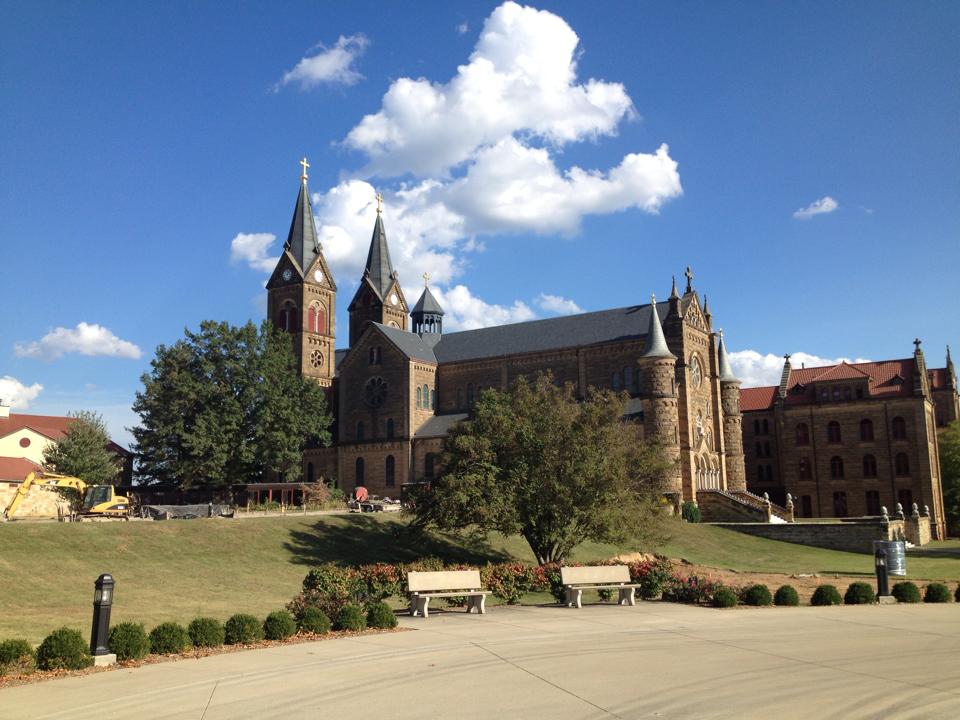
I recently went on retreat at a Benedictine monastery. Their website says that “You’re invited to join us any day for prayer or Mass in the Archabbey Church.” They pray five times every day, and have mass every day. They make a point of saying that the Rule of St. Benedict says “All guests who present themselves are to be welcomed as Christ.” They say that “Hospitality is a Benedictine tradition.”
Their guest house is impressive. They even build guest rooms into their seminary. The meals are generous and filling. There is dessert with lunch and supper every day.
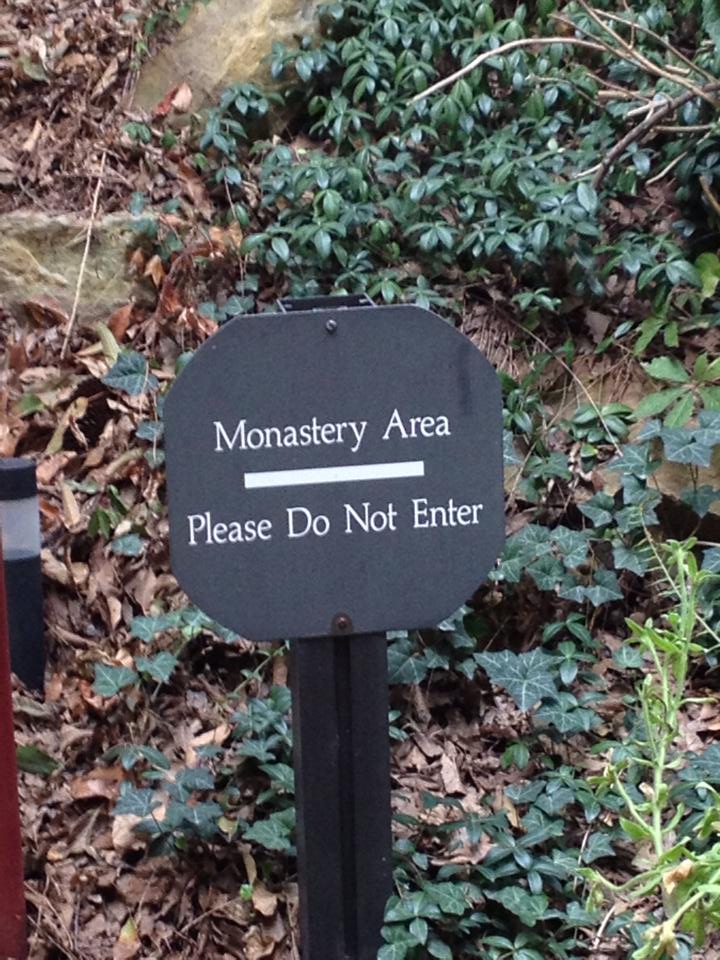
But the hospitality isn’t everywhere, and it doesn’t cover everything. There are quite a number of areas that are off limits. The signs are a bit distressing. And, you don’t get communion unless you are Catholic. Even though guests are to be welcomed as if they are Christ, even though they are welcomed to come pray with the monks, they can’t take communion. I made sure to ask the monk who was leading us (a Methodist group) on tour “Are we, or are we not allowed to receive communion?” and he said “I’m sorry, I’m not able to give you permission.”
He isn’t able to give me permission, because he is just a monk. Even the abbot, the monk in charge of the abbey, wouldn’t be allowed to give me permission. Only the Pope would. I’m working on a letter. I’m not kidding.
This is a Catholic rule, not a Benedictine rule. It is very painfully obvious to me that the Rule of St. Benedict is far more inclusive than the Rule of the Catholic Church. It would appear to me that they should offer communion to anyone who wants it, in the spirit of being welcoming and treating everyone as if they are Jesus. Following the rule of the Catholic Church, even Jesus wouldn’t be allowed to receive communion, because he is Jewish.
I’ve wrestled with this for years. This isn’t the first time I’ve written about this. Just look up “Communion” in the search field or in the tag cloud and you’ll see plenty of other of my musings on this subject. But this time was different. This time I invited Jesus into it. This time I started the weekend with the intention of meditating with Jesus about the goal of unity and inclusion for everyone. This time I was on a mission, and Jesus was my guide.
So how can the Church be inclusive and unified with contradictory policies? They say one thing, and yet do another. How can we welcome everyone as Christ if we put up signs or have policies that essentially say “You are welcome, but only so far, and only so much”?
There are plenty of signs throughout the grounds that say “off limits” in one way or another – –


The tabernacles are all locked. These are the boxes in the chapels that hold the consecrated host. Catholics believe that Jesus is physically present in the communion wafers once they are blessed. Those that are not used at the mass are put into a tabernacle, locked away, and a candle left burning nearby.

The vials for holy oil are in a special container with locks on it –

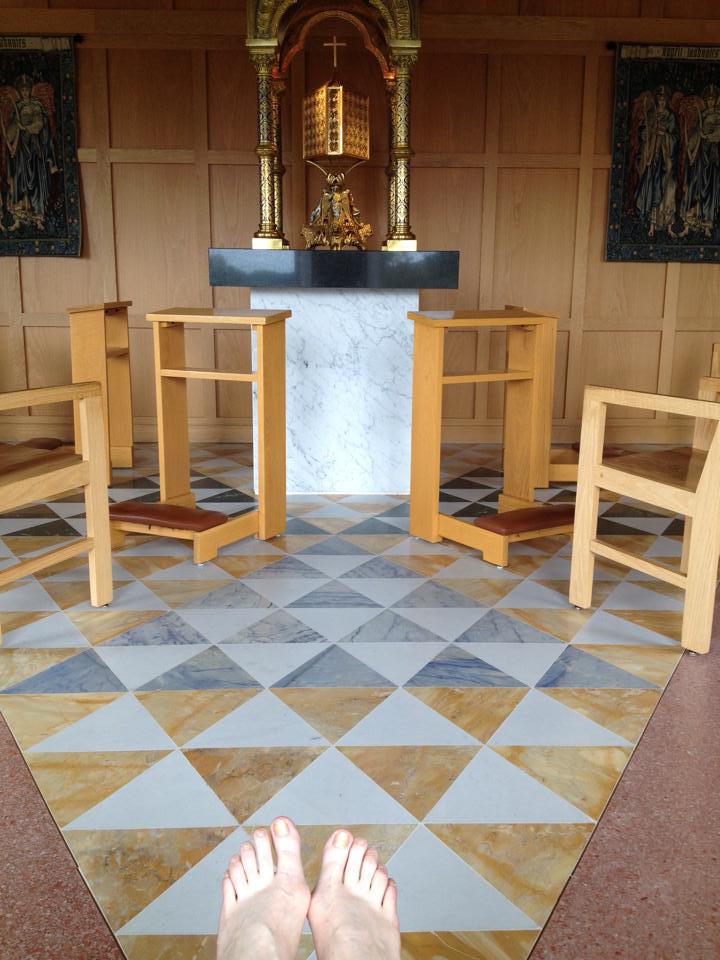
In spite of all these “off limits” signs, there is a place that is truly special and yet has no doors to block it, no barricades. I knew when I saw a picture of this place when researching the monastery that I had to spend time here. This is a shrine that holds the consecrated host, but it is far fancier than the ones in the other chapels. The “Blessed Sacrament Chapel” is in a special alcove behind the organ in the abbey.
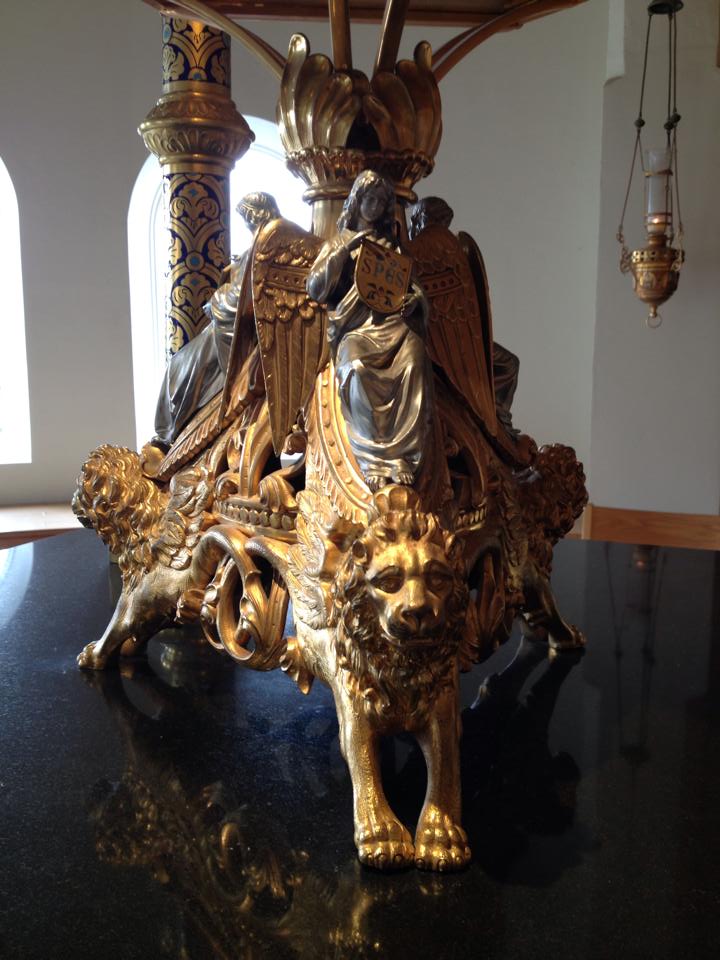
Their website says that “The tabernacle and its tower were fashioned from the altar used in the Church from 1909 to 1968.” The tower over it is called a “baldachin”. There is a much larger one over the altar in St. Peter’s Basilica in Rome. It is used to indicate a holy place is underneath it.


Here I prayed, asking Jesus about this rule. Should I take Communion anyway? This was on Friday. I was still unsure if I should even go to mass on Sunday, knowing that I wouldn’t be officially allowed. Sure, the priest wouldn’t know that I wasn’t Catholic. But I know.
I prayed, barefoot on that cold marble floor.
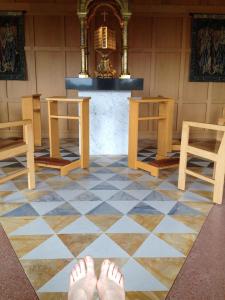
I sat near the windows, looking at the shrine, with all that gold, all those gems. I wandered around that little chapel, taking pictures of the windows and ornaments, wondering about how many hungry people could have been fed with the money spent on these things.
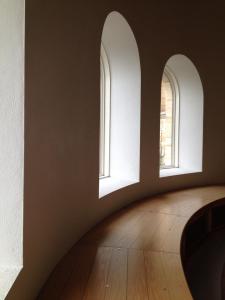




And then I heard Jesus say into my heart – “Why are you crying over the map, when you have the treasure?”
The “map” is the way you get there. The “treasure” is what you are seeking. The “map” is the communion wafer. The “treasure” is Communion with Christ. Why was I so upset over not being able to participate in a symbol, when I already had what the symbol represented? I have Jesus in my heart. That is the goal. That is the treasure. Once he has been welcomed in, there is no need to have the symbol of communion again. It points the way, while Jesus is the Way.
Yet I am still sad. I’m still sad over the painful exclusionary practices of an institution that represents Christ. I’m crying over the harm that their policies cause – and the hypocrisy of them. You can’t say you are welcoming of guests and yet put up signs saying that guests are not allowed. You can’t say you are hospitable and then not allow everyone to take communion.
The symbol matters. It matters because it shows that they still do not have Jesus in their hearts. If they did, they would understand that they can’t put up walls and barriers of any sort.
But then, let’s go deeper. This is about more than the symbol of communion or signs saying “off limits”. I say, not one more church building should be built until poverty is eradicated. When all people have food, clothing, and homes, then, and only then, can more churches can be built. People have to come first. Until then, these church buildings are empty shells, they are tombs. They are shrines to a dead faith that cares more about ritual and rules than reality. This applies to all denominations.
Think of how many people could have been housed with all the effort and money put into this place.
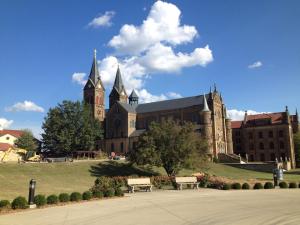
The roofs are made of stone or terra-cotta tile. Very durable. Very expensive

Even the downspouts are expensive – copper!
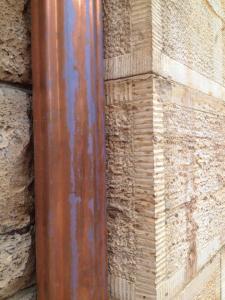
How many poor people could have been fed with all of that money and effort put into these buildings? The Church is missing the point of how to serve Jesus. He said “Feed my sheep”, not “Build a huge church and hide yourself away in it, separated from the world”.
The reality of the living Christ is too important to pass by. All too much, Christians are focusing on a Jesus who existed “back then” in the stories in the Bible, or in the future, in a time of glory when he will come again. They focus on his death and his coming again, without the middle bit. They miss out on being united with Jesus right now, not just when they die. They live their whole lives in hope of “eternal life” with Jesus, completely passing by the opportunity to have a full life now, with Jesus in their hearts.
This is why I’m sad. I’m sad because the truth of Jesus hasn’t entered into the hearts of the faithful and into the Church. I’m sad that their policies and rules prove that their hearts and souls are not in synch. They say they are welcoming and hospitable, and yet their actions, deep down, prove otherwise.
Did I go to mass? Yes. Did I take communion? No.
Up until the very last minute I prayed about it, asking God what I should do. I went to mass and got up when it was time to get communion. Two of my friends who were on the retreat with me remained in their seats. In the queue, I prayed, asking God to direct my actions. And in response, my arms went up and crossed over me, as if on their own. To cross your arms over your chest, hands holding your shoulders, is a sign that you cannot take communion. It is to ask for a blessing only. When my arms came up, I knew that was what God wanted for me to do. The tears began to form in the corners of my eyes, and I let them come. Misty-eyed, I stood before the abbot who was administering the communion wafers. I bowed to show reverence for Jesus. The abbot muttered some blessing that I could not hear, and I walked away, tears streaming down my face.
I want them to see me cry. I want these brothers to see how painful this rule is. I want them to know that it does not build up the Church. I want their hearts to open. Perhaps they could practice a bit of conscientious objection, and refuse to take communion until all people can take it?
While on retreat, I got another answer from Jesus in the form of the reading for the day. It was from Haggai 2:3-9. (HCSB)
3 Who is left among you who saw this house in its former glory? How does it look to you now? Doesn’t it seem like nothing to you? 4 Even so, be strong, Zerubbabel”—this is the LORD’s declaration. “Be strong, Joshua son of Jehozadak, high priest. Be strong, all you people of the land”—this is the LORD’s declaration. “Work! For I am with you”—the declaration of the LORD of Hosts.5 “This is the promise I made to you when you came out of Egypt, and My Spirit is present among you; don’t be afraid.” 6 For the LORD of Hosts says this: “Once more, in a little while, I am going to shake the heavens and the earth, the sea and the dry land. 7 I will shake all the nations so that the treasures of all the nations will come, and I will fill this house with glory,” says the LORD of Hosts. 8 “The silver and gold belong to Me”—this is the declaration of the LORD of Hosts. 9 “The final glory of this house will be greater than the first,” says the LORD of Hosts. “I will provide peace in this place”—this is the declaration of the LORD of Hosts.
What I got out of this was that the day is coming when the Lord will rebuild the House. Not the Temple, but the entire Church. It isn’t a building, after all, but a collection of people, united as the Body of Christ. Each believer that has Jesus as his or her guiding force inside is a stone that builds up this Church.
Also part of my intention for this weekend was this verse –
10 Be still, and know that I am God: I will be exalted among the nations, I will be exalted in the earth. (Psalm 46:10, ASV).
Yet when I looked it up in the translation I brought with me, it was rendered as –
“Stop your fighting—and know that I am God, exalted among the nations, exalted on the earth.”
What I got out of this was this – it isn’t for me to worry about. God’s got it.









 betsybeadhead
You must be logged in to post a comment.