Lost and found penguin

d9de1473d85db228f948183e7d905bdc

Sara thought Petey was her brother, and nobody had the heart to tell her otherwise. They’d grown up together, after all. Sarah and her mom had found him hopping on the shoreline near their home in Athenree, New Zealand. Rockhoppers were all over the coast, but it was rare for one to venture into Shelly Bay.

They left him where he was, and her mom promised that they would check on him the very next day. The toddler wanted to take him home right then but her mom said they didn’t have anything for him to eat. Sara didn’t think that was a good enough reason because she knew the Four Square market was open. Mama had to admit she was worried that he might be lost and looking for his family. She hadn’t wanted to say that, not knowing how Sara would take it. Would she feel for him, be sad that he was alone, and then insist on adopting him right away? This was not a situation she wanted to deal with on a Tuesday afternoon. She just wanted to go on a wander with her daughter and then come home to afternoon tea and a nap, preferably in that order.

Sara was concerned, but not overly so, and Mama again assured her they’d come back tomorrow and check on him. She hoped that he’d be gone and forgotten by then. Children have such short memories, and sometimes that was a blessing.

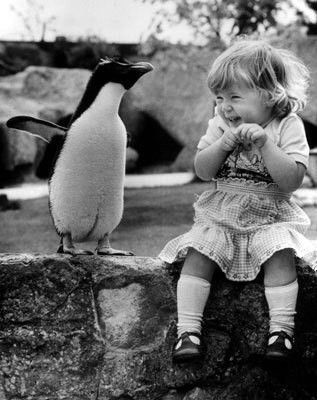
The rest of the day passed uneventfully. Mama had forgotten about the little lone penguin by the next afternoon. But he hadn’t forgotten about them. As soon as she opened the garage door to leave for their daily walk, he was standing there in the side yard. Sara shrieked with delight and started to run towards him. She hadn’t forgotten about him at all. Mama called to her to stay away but it was too late. She was already embracing him in a full-on hug as only a toddler can. It was a hug that was a bit like a tackle and a lot like a reunion after a wartime deployment. Fortunately the penguin seemed to be just as enthusiastic, flapping his stubby wings and chirruping in high-pitched squeals. You would have thought they were long-lost friends if they were of the same species.

Mama stood there in amazement, taking in the scene. Maybe he had followed them home? They lived not far from the shoreline, and there weren’t any roads he (Mama assumed it was a he – how do you to tell?) would have had to cross. How long had he been there? Sara’s voice broke through her musings.

“Mama he’s here! Our Petey!” she exclaimed in delight, her face lighting up like the sun.

“Sara, sweetheart, we can’t keep him, he’s a wild animal. There are laws about this.” She wasn’t certain about this but it sounded very parental to say. “And Petey? Is that his name?” – knowing that naming a pet meant it was harder to get rid of it. Name it and keep it. Anonymous animals came and went, but named ones stayed. How did she come up with Petey? They didn’t have any friends or relations named that. It wasn’t out of any picture book they’d gotten from the library to read at bedtime.

“He told me his name was Petey!” Sara beamed, and she hugged him all the more. He seemed a little overwhelmed and on the verge of being smothered by this point, but overall still quite happy to be found. Mama wondered if Sara could translate his squeaks and chitters. “How did he tell you, baby?” She used her most reasonable voice now. This wasn’t in her plans. Daniel would be upset when he came back from his business trip tomorrow to discover they had adopted a penguin. Or a penguin had adopted them. She wasn’t sure.

“He told me in my heart,” Sara said, and letting go of her newfound best friend with one hand, she placed it over her heart to show her mom. Sometimes she had to point things out to her mom to make sure she understood. Even toddlers know that parents can be a little dense sometimes.

Sara’s mom wasn’t sure how to take this. Was her daughter making things up again? Or was this a sign of a mental illness? It was hard to separate the two sometimes. Was this why so many artists and writers went off the deep end? This wasn’t going so well. She was supposed to be the adult, after all, supposed to be in charge. Toddlers weren’t supposed to run the show, although they often did. Adults just thought they were in control. Meanwhile, toddlers determined when and if they slept, and where and how they ate. The fact that Sara was an only child amplified her power over her parents.

It was not long before Petey became a member of the family. He lived outside, however, so he wasn’t a full member. Mama thought it was safer all around to not bring him inside, and the weather was always mild where they lived. She was concerned that if they brought him in they’d have to notify the animal control department. But if he lived outside, they could still think of him as “wild” and he could come and go as he wished. If they brought him in there might be shots and laws to be considered. Plus, there was always the thought that it wasn’t fair to keep him in. Daniel, once he got home and was consulted, remembered a roommate he’d had in college who’d kept a bird in a cage as a pet. He’d always thought there was something cruel and vain about that, because birds aren’t meant to live inside like dogs or cats. They are meant to be free. Penguins were birds too, after all.

Sara’s parents started to think of Petey as their second child, and while they never said that out loud to friends or coworkers, they were never so bizarre as to refer to him as their “featherbaby”. He was an animal, a quasi-pet. They loved him, but he wasn’t human.

Except to Sara. She remained the only child that Mr. and Mrs. Fullerton had, so she didn’t know any different. To her, Petey was her younger brother. It didn’t matter to her that he never learned how to speak English and never went to school. She understood that he was a little different than her friend’s siblings, and she was OK with that. All of her childhood she looked forward to going home after school and getting to see her best friend, who still waddled about in the back yard, still pleased as punch to see her.
Bone music

skelhorn

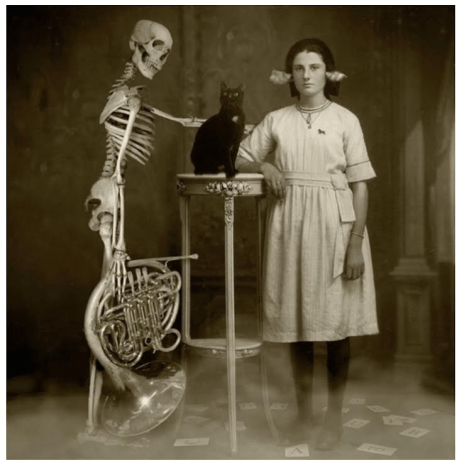
Harold loved playing the French horn. The tone was mellow and warm, inviting. He knew it would never be the lead instrument like the trumpet or guitar was, and he was fine with that. He wasn’t one for being in front, leading the way. No, that was for the peacocks in the world. He was more a pigeon, behind-the-scenes, anonymous. He never wanted to be a manager, bossing people around. He was happy being a team member, a cog in the wheel, someone who got things done without any fanfare.

And then he met Lydia. She loved him exactly the way he was, for who he was. She wasn’t put off by his meek nature or unassuming presence. She certainly wasn’t concerned that he was a skeleton, either. While most women were loathe to live with someone who looked like they escaped from an anatomy class, Lydia saw the advantages. Because he had no skin, he was never too hot or too cold. She could adjust the thermostat to whatever she liked and he’d never fuss. He never spent any money on clothes either, so they had plenty set aside to go on vacations.

And go on vacations they did! Every month they ventured to a new part the world, seeing a new place and meeting new people. They picked their destinations from their extensive list of pen-pals, strewn all over the globe like Easter eggs, each one a treasure to discover. Every year they had to get new passports made because they’d filled them up with stamps and visas. Lydia had a plan that the old pages could be used to re-wallpaper her art room one day.

Mr. Buttons, their cat, never got to go on a trip. He never left the house. The vet even came to him. He was terrified of the outside world. Trees sent him into a tizzy. Clouds? Forget about it. He’d run and hide under Lydia’s dress, cowering there until she picked him up and carried him back inside. Otherwise he’d stay there, trembling, paralyzed. It was kind of embarrassing really, but it did mean that they never had to worry about him sneaking out when they opened the door, or be bothered with him asking to go out and come back in every 15 minutes. No, all in all he was a good cat, and he seemed to enjoy Harold’s home recitals almost as much as Lydia did.

They met at one of his performances – that time in a mutual friend’s house. Jane had suspected they’d get along smashingly and set up the recital as an excuse for them to meet. It was the blindest of blind dates – neither one knew that they were being steered toward each other. Harold brought his French horn and Lydia brought her harmonica. While listening to the sousaphonist playing his solo, (a piece he wrote himself for the occasion) they began to talk.

Lydia was certain that she’d heard undertones in Harold’s playing – notes that she was uniquely capable of hearing because of her unusual ears. Nobody in her family talked about her ears, but she knew she was different. She assumed they didn’t want to talk about them out of kindness, to not make her feel different, or perhaps it was out of embarrassment. Nobody really was certain who her father was, after all. Sure there was a man who filled the role, who was married to her mother. Jack had raised her since she was a baby. Everybody knew he was Dad and not her Father.

The only person who knew for sure was Martha, Lydia’s Mom, and she wasn’t saying. She’d retired from the circus when she got pregnant and that was as far as the story went. Sure, there had been a mule act as part of the show, but nobody went so far as to suggest anything that questionable. Maybe it was the illusionist, spurned at the end, and he performed some real magic instead of those sleight-of-hand stunts that were his bread-and-butter. No matter, the family didn’t know and it wasn’t worth the bother of making up a story, so they just acted like everything was normal.

Harold said that yes, he regularly played more notes then were normally heard, basically playing two songs at once. If it was a depressing song, he simultaneously played a cheery one at a subsonic level to even it out. If it was a rousing march, he played a dirge for the same reason. He just felt it wasn’t right to bring people’s emotions too high or too low. Somewhere in the middle was best, and since he could, he did.

Nobody before had discovered the extra song weaving its way into and under the first, like how the framework of the house is hidden yet integral to the house itself. Nobody until now, he thought, and there and then he decided he would have to make her his bride. Partly it was out of admiration for her rare talent. But partly it was out of the desire to keep his actions a secret. No wife could testify against her husband – that was law. It was like testifying against yourself since “the two shall be of one flesh”. It stood to reason she wouldn’t tattle on him either, as a logical extension of that law.

She hadn’t told, and he never had reason to worry. She wouldn’t have anyway. Nobody ever believed her when she told them anything she’d learned from using her unusual talent. They had no way to check if it was true, and honestly they didn’t care. In some ways she was like a five-year-old boy, fascinated with trains or dinosaurs, telling everyone within earshot about the minutest details of her obsession. Even though what Lydia said was true it didn’t really concern them, so it wasn’t worth the bother. “Uh-huh!” and “Is that right?” they’d mumble to not appear rude, but they were already off thinking about their own interests. She never took it personally, knowing their actions said more about them than her, and learned to keep her own counsel early on.

The Clower twins

5

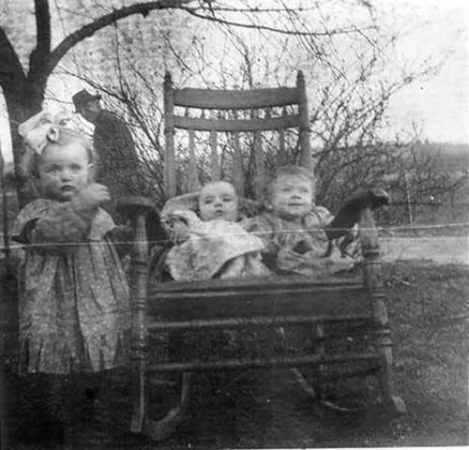
Emma hated her siblings. All day long she had to rock them back and forth. Even if they’d had arms and legs they were too small to do it themselves. Rocking was the only way to keep them content, but more importantly, to keep them quiet. Her shoulder was getting tired, but she kept at it. To stop meant noise either from them or from their parents. Or both. She wasn’t sure which was worse, but she was unwilling to learn the answer right now.
The twins were born three years ago but they looked half that age. They were so tiny, still. The doctor in Millersville was unable to tell Mr. and Mrs. Clower if they would always be this small, or if they would ever catch up. He also had no answer to why they had no arms or legs. He didn’t have a lot of answers for most of their questions, but he was all they had. They couldn’t afford to take the twins into Baltimore to get a second opinion. It was only 22 miles away, but that was forever when you didn’t have a car. Sure, it was only two hours by bicycle, but those babies couldn’t travel that way, no sir! How would they take them – in the basket like they were a package to be mailed or a bag of apples bought at the market? You can’t hold them and steer, either. Plus it would mean that Earl had no way to get to his job at the field, picking beans or tending the goats. No, one opinion would have to do, even though it wasn’t much. If the good Lord had wanted them to know more, He would’ve provided more. This was their burden, and they had to carry it.
Now, to be sure, Mr. and Mrs. Clower never said out loud that their newest children were a burden. They never intentionally sounded ungrateful for any gift the Lord gave them, no matter how odd it seemed. Their pastor had said years ago that nothing from the Lord was bad, only it might be bitter sometimes. Medicine was bitter, but it was good for you. And it took a while to see the effects. They remembered his words when the twins came, and thought about them often.
Why, the Lord Himself was born in a barn. That sure didn’t seem appropriate for God to make an appearance. Surely God would be born in a palace or at least a manor house. Never someplace so anonymous or dirty as a pen for animals. Imagine the noise! Imagine the smell! So if the Lord could be born in less than ideal circumstances, so could their babies. They’d just have to wait and see how things turned out, just like Mary did.
Emma didn’t have the patience to wait. She wanted these babies gone and she wanted them gone right now. They were getting on her nerves. She hadn’t asked to be a big sister. She had been fine being an only child. She sure didn’t want the limelight taken away from her, and even more she didn’t want to have to care for these interlopers.
Her parents never thought twice about making her tend them. It was part of her job as a member of the family. They didn’t charge her rent or expect her to pay for her food or clothing, so how else was she supposed to do her part? The same had been expected of them, both first-borns in large families. Of course you needed large families then. It was free labor. Having children was like printing money. Need more help? Have more babies. Of course you had to plan ahead a bit – look down the road a piece in order to see what you might have need for. It didn’t do to have a baby right when times got tight – then you were doubling your trouble. Best to have one who was at least five, so he was able to feed and clothe himself. It didn’t count as child labor if it was yours, you know.
But these babies weren’t going to be a help to anyone, seeing as how they were born without limbs. They sure were happy, though. That made it a little easier. All day long they laughed and smiled, eyes gleaming at everyone and everything. Some thought they were soft in the head, being so happy and all. It takes smarts to see the troubles in the world. But they really were smart and happy at the same time. It was weird. Maybe that was their gift. They’d been cursed physically, but blessed spiritually. They were happy no matter what was happening, which was good. Now, if only they could rub off some of that spirit onto Emma.

Ella

ele

Ella had been raised with humans since she was a wee calf, only two months old. She’d been abandoned by her mother, who simply walked away one afternoon while Ella was sleeping in the damp savannah heat under a baobab tree.

Perhaps the mother forgot her? Perhaps she walked off to check on a strange sound or find something to eat. Perhaps she didn’t want to be a mother anymore. Perhaps she was too young for the experience, or it was more than she’d anticipated.

Regardless of the reasons why, the “what” was that Ella was by herself for a day and a night before she was found by a safari full of New Zealand tourists. That area wasn’t on their tour, but her bellows aroused their curiosity so they rerouted.

Ella was fine for a few hours after she awoke. It wasn’t unusual for Mama to go away. Calves had to learn to be independent early on, so mothers didn’t coddle them. But when sunset came and Mama still wasn’t there she started to get a little anxious. That hungry feeling in her tummy got more insistent, which only worsened her anxiety. It was a terrible self-reinforcing loop.

Ella began to whine, quietly at first, feeling sad and alone. She didn’t want to call the wrong sort of attention to herself. There were plenty of animals in the Savannah who would love to make a meal of a young elephant left unguarded by her parents. But after a few hours alone under the stars, Ella started the bawl openly, no longer holding back. She no longer cared if some predatory animal was drawn to her cries. Death was better than this, this half-life of loneliness and fear.

What would she do? How would she care for herself? Her Mama had been her world, her constant companion. And now as far as she looked across the flat scrubland, she saw nothing but thorn bushes and trees stripped of their leaves by the giraffes. She was still awake, red-eyed and hoarse from her keening in the early morning when the safari group found her.

A young couple, Mr. and Mrs. Jacob Halverson, married just 6 1/2 months, decided to take her as their own. They’d agreed when they were engaged that they didn’t want children, both having been raised by abusive parents. They didn’t trust themselves to not repeat the pattern. It was as if they both chosen to be teetotalers after being raised by alcoholics. They decided it was safer for everyone all around if they didn’t even try. But an elephant was another matter entirely. And who couldn’t fail to fall in love with her? Her huge dark eyes with her long ashes locked into them like a tractor beam. There was no chance of escape.

However, there were a few obstacles to overcome. How to get her home? An airplane was out of the question. If airlines charge by the pound for luggage, there’s no way they can get her on board. Perhaps a combination of train and boat? It was the only way it seemed. However, the moment they put her on the train for the first time they knew there was going to be a problem. She began to bawl when Jake stepped out of the car. He and Margie quickly realized one of them would have to stay with her.

They hurried to get another ticket and had to pay extra for the “privilege” of riding in the animal car. It wasn’t meant for people, and Mr. Gruber, the engineer, had to pay off the station manager to keep him from grumbling. Fortunately the weather was good, because the animal cars weren’t air-conditioned. No use wasting heat and air on them, the company thought. But Jacob would have a hard time. Even though it was early summer, the speed of the train would mean it would be rather chilly while it was traveling. Margie gave him her mink coat that he’d given her as an engagement gift to soften the blow. The other animals kept away from him once they caught a whiff of it, unsure of what it, or he, was. It masked his aftershave, however, and that was good. He was grudgingly accepted as one of them at least long enough to get Ella to her new home.

Molly under cover

JlnkreP

The Eames children could not bear to be without their mother. Simply losing sight of her would set one, and then all of the children to wailing. Even after she returned to the room it took a good ten minutes to assuage them.
It was a worrisome thing. You’d expect it from babies. They are so helpless. Their every need has to be taken care of by an adult, and often that was their mother. It stood to reason they’d think she was God. Plenty of adults acted the same way, come to think of it. When everything started to go sideways they forgot themselves and made it worse with all their worrying.
Perhaps it was because the children were so close in age that it kept happening, the self-reinforcing feedback loop. The boys were only a year apart. For Molly Eames it felt like she was pregnant two years running. She had no intention to make it three so she simply told Mr. Eames that there would be no sex for year (at least) until she felt like going through that ordeal again.
She’d not expected marriage to be like this. Her mother, either out of modesty or meanness, never told her where babies came from, or more accurately how they got there in the first place. She was horrified to learn the secret and was incredulous at first. How was that even possible? Much of her life was a mystery to her. Her parents were conservative on many fronts and had homeschooled her to keep her from being “infected by the disease of the world” as they so often informed her. It was for her own good, they said. It was like she was a time capsule, a frozen moment in a fictional time when everything was safe. Their greatest hope was that she’d be a beacon of light in the dark times they knew were soon to come.
Her lack of education chafed at her once she realized it. If she could get pregnant from contact with a part of her husband’s body, then what else could happen? What else had been hidden from her? After her first check up at the obstetrician she went straight to the library and got every book they had on biology. Three weeks later she returned them all and decided to start at the beginning of the nonfiction section and work her way through the entire collection.
She told no one in her family what she was doing, least of whom her husband. She even made sure to confirm that her library record was private when she got her card. She figured if her family had hidden important knowledge from her then they must think she wasn’t worthy of it, or that it wasn’t worth their time to tell her. So she decided it wasn’t worth her time to tell them otherwise.
Molly Eames couldn’t hold off from sex indefinitely, however. Her husband was becoming insufferable, acting as if he was a prisoner of war in his own home. If he’d had to endure what she had – months of nausea, clothes not fitting, and even swelling in fingers and feet (not to mention the painful and embarrassing ordeal of actually giving birth) he might have thought differently about sex. Ten minutes of fun wasn’t worth nine months of feeling possessed by an alien being.
Giving birth was the most difficult thing Molly had ever been through. It wasn’t joyful at all. She simply didn’t understand the chittering from her neighbors and friends who gushed about how wonderful it all was. Maybe they were lying. Maybe they were insane. Maybe the whole experience had turned them permanently crazy with no hope of recovery. The worst part wasn’t even the pain, which was so bad it created a whole new category of suffering. It became her new ten on the pain chart, a place formerly occupied by having her arm set without anesthesia at 12 after she fell out of a tree.
She never climbed a tree again after that. Just like with sex, the risk wasn’t worth the fun. It’s not like her husband was any good at it anyway. He called it “making love”, never “having sex” but it wasn’t lovely at all. It was sweaty and awkward and strange. Perhaps other people were used to being naked in front of others, but Molly wasn’t. There was nothing exciting about it. She was always trying to cover up with the sheets. She wasn’t trying to hide how she looked so much as not be cold. Her husband wasn’t much to look at either, and he only took a bath once a week, and then only if she insisted.
The “being naked” part of being an adult was a great shock. Her parts most certainly weren’t private when she had to go for her checkups when she was pregnant but at least that was just the doctor who saw. When she gave birth, it seemed like the whole hospital was staring at her nether regions. She briefly considered selling tickets to offset the bill.
Even though her two children were very clingy, she had agreed to produce three when they had that discussion before marriage. It was important to work out such things. Children or not, standard of living expected, minimum expectations of signs of affection – all of these needed to be negotiated before you said “I do”. Too many folks didn’t see marriage as the legal contract that it was, hoping love would right all wrongs and mend all wounds. Without clear agreements it caused more trouble than it cured.
But she’d promised three, so three it must be. There was nothing to it except to do it, so she determined her most fertile time from some of the research she had done and had sex once more to provide her end of the contract. Better get it out of the way, like ripping a Band-Aid off. To prolong the suffering was pointless.
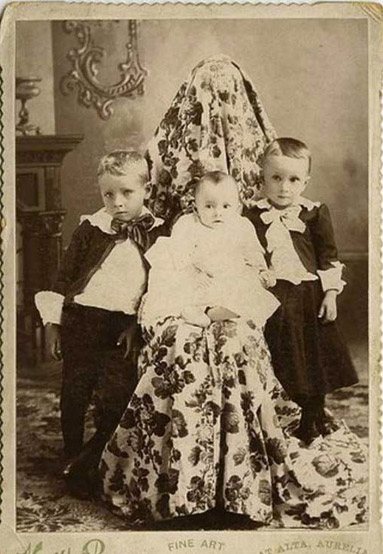
Walter Eames wanted a picture of the children, but not of his wife. He was sick of who she had become – no longer meek or mild. She seemed more confident, more aware. She certainly wasn’t the person he had married – someone he could push around all day long with nary a peep. Not like he thought he was pushy, no, never. Being assertive and decisive had gotten him to where he was at work, but it was getting him nowhere at home. Debate and compromise weren’t part of his repertoire.
But there was no way to photograph them without her. The moment she would walk away from them, they’d set up a wail worse than a tornado siren. It was ridiculous. She couldn’t even go to the bathroom without them pitching a fit. It was embarrassing to go out in public with his family, so he didn’t. Far from being a source of pride as he had expected before he got married, he now frequently left them at home and went out by himself. Even though he’d worked all day and she stayed home with the children (that one attempt at day care changed any plans they might have had of her working outside of the home), he was happy to spend even more time away. This was not turning out to be the life he’d planned as an adult.
So when it came time to get a portrait made, he had to get creative. His parents had asked to see the kids for years. He refused to make the six hour drive with her, and his parents were too frail to make the drive themselves. A portrait would have to do. He looked around the studio and his eyes landed on a backdrop. “That’ll do!” he exclaimed, and snatching it up, pushed his wife into the chair, dropped the fabric over her, arranged the kids around her, and ordered the photographer to snap away. Other than the sound of the shutter release, the room was silent. Nobody other than him could believe this was happening.

Dolly dearest

7e90470b-3f31-4b9e-9ef1-c2a0dafa78e1

After nearly 5 years, Sara’s dolly had started to talk. Sure, Sara talked to it, dressed it, gave it a name. She even pretended to feed it cookies and tea every Sunday afternoon. She’d even thought she’d heard it answer her before, but it was always in her head or her heart. It was never out loud.
The first time she heard it out loud she thought she was imagining it. The second time, just a moment later, she thought her older sister Janey was playing a trick on her, throwing her voice. It was just like her to torment her little sister in ways that she could easily deny later to their busy and no-nonsense parents. Sara had learned early on that if she brought up charges, there had better be proof or the punishment she expected Janey to get would fall on her. She’d also learned that it was best to settle matters herself right away.
Sara jumped up off the bed, scattering her coloring pages and crayons and scrambled to her bedroom door. She jerked back the door, expecting to see her sister’s back as she ran away. But nobody was there. The hall was empty – not even the sound of bare feet dashing away. Stunned, Sara went to find her sister. After a few minutes she found her outside on the hammock reading some book with dragons on the cover. There was no way Janey could have gotten there that fast. Sara slowly walked back to her room via the kitchen, helping herself to a piece of banana bread and a glass of lime Kool-Aid. She did all her best thinking when she had a snack.
As soon as she sat down on her bed, with her dolly nestled in her lap, she heard it speak again.
“Won’t you give me some of your snack?” The voice was so soft and so sad, so full of loss and longing. Sara held the doll out at arm’s length and stared at it, blinked her eyes. Then, with slow horror, she watched her doll blink her eyes too.
“You’re always pretending to feed me, but you never do. You’re such a tease. No wonder nobody plays with you.”
Sara was frozen with fear, yet managed to stammer out “How can you talk?”
Her dolly said “Silly! How do you think anybody learns how to talk? I listened. I listened to you blabbering on about how sad you are. I listened to your sister taunt you about being a scaredy-cat. I listened to your parents fight. I’ve listened to all of it. I’ve listened to the television announcers talk about pollution and war. I’ve heard the songs on the radio about getting even and how things were better back then. All I ever hear is sad sad sad, so that’s who I am. I’m everything you’ve ever cried about, because you’ve never shared your good days with me. My hair is matted from your tears. What did you expect? You made me this way.”
Sara threw her doll into the middle of the room and retreated to the furthest corner, curled up into a ball. It was nearly half an hour later before she realized her mistake – the doll was between her and the door. How could she escape? She put off the decision a little while longer, but soon she realized she had to pee and there was no ignoring that. It was either creep past that accursed doll or go here in the corner. Even though she was young, she knew that would be a bad idea. Even if her Mom didn’t find out soon and punish her for it, Sara would smell the sickly sweet smell of her dried urine whenever she was in her room. Going to sleep would be terrible. She had to risk it.
Keeping her eyes on the doll, she slowly got up so as not to startle it. As slow as a cat stalking a cricket, she moved around the edge of the room as far away from her former best friend and confidant as she could.
She had told it everything. All the things she couldn’t say out loud to her Mom, her sister, her friends, she told the doll. All her fears, all her failings. Every little sneaky thing she’d done to get back at her sister without her knowing. She’d poured all of her darkness into this doll, and none of her joy.
The slow realization of what this meant descended upon her like an evening fog, clouding her vision, narrowing it to a pinpoint. She knew with dreadful certainty what she had to do next. She must destroy the doll.
So far, there was no movement from the accursed thing, but she couldn’t be sure this would continue. She’d thought it would stay silent for all those years, but that had changed. What other horrible changes would happen? Just because it wasn’t moving now didn’t mean it wouldn’t start, and soon. She had to destroy it as quickly as possible before it ruined her life.
She closed the bedroom door behind her and dragged a chair from her sister’s room to jam up under the doorknob. That would buy her some time to think of her plan. She almost forgot her need to use the bathroom in her fright, but she took care of that now. While in the calm and quiet space of the hall bathroom, she considered her options.
Burial wasn’t good. Her Mama would get mad about the mess she’d make, and how could she be sure the doll would stay buried? It might dig itself out. Perhaps she should chop it up first. Then she realized if she did that she could put all the pieces in separate places around town. The head could go under the drainpipe of the neighbor’s house at the end of the block, an arm in the trashcan in her school’s bathroom. There’s no way it could reassemble itself then. But maybe the head could still talk, she realized with a cold shudder. She’d better bury it, at least, to be sure.
Burning it was right out. Her Mama would whip her if she caught her playing with matches again. She’d gotten in trouble for that when she was three, having set a flip-flop on fire, wanting to see how the rubber melted. It melted alright, and so did the carpet it was on, and the curtains, and the entire bedroom. The whole family had to stay in a motel room for nearly 4 months until the insurance company got the restoration work done. While it was an adventure for the girls, it was a headache for the parents, so they made sure that Sara understood they were not kidding about fire safety. Janey used it as yet another way to torment her little sister, who she never wanted in the first place. Anything she could do to get her to leave her alone, or even leave, was fair game.
This was proving to be the hardest thing Sara had had to contend with in all her tender years. Maybe she could preempt the doll and confess all her slights and sins to her mother before the doll did. Just thinking about that made her stomach go icy cold and wobbly. There were a lot of things to confess.
You or I would consider them trivial, but Sara, with her limited experience, thought them worthy of eternal damnation. The perspective that comes with time downgrades childhood sins to summer showers instead of the tornadoes that they seem to be at the time. She had plenty of time to learn what real sins were about, but as for now, she felt damned.
But she didn’t have plenty of time to figure out what to do about the doll. So she did what she was taught to do in Sunday school. Not like she did a lot, but she figured it couldn’t hurt to try.
“God?” She murmured, on her knees on the cold porcelain tile on the bathroom floor, “I could use some help right now, if you’re not too busy and all.”
Sara wasn’t sure she had a good connection, because she couldn’t hear God’s reply. Was praying like talking on the telephone? Sometimes when she was talking to her grandmother in Canada the connection wasn’t that good. Also, often Gram’s hearing wasn’t that good either. Her mother always told her to keep on talking anyway, that Gram could make it out. Maybe God was the same way? It was worth a try. It wasn’t like she had anybody else she could call. This was some big stuff. She needed to go straight to the top.
“God? I hope you can hear me because I sure need some help here.”
Sara heard a voice so quiet that she ignored it at first. It was centered in the middle of her chest, about heart high, and not in her ears. She didn’t hear it so much as feel it. The feeling-voice said to do nothing at all, to not destroy the doll, to not say anything at all to her parents about it. To act as if everything was normal. This seemed too easy, she thought, but precisely because it made no sense she decided it might actually be a message from God. She would never have come up with this on her own. And, if nothing else, it required almost no effort on her part. It was going to be difficult to pretend everything was fine when it most certainly wasn’t, but if God insisted, there must be a good reason. She decided to play along.
The doll said nothing the next day or the next one after that. It was nearly a full week later before it spoke again, and this time it was around Sara’s Mom. She was straightening up Sara’s room one morning and the doll suddenly started to talk, as clear as you please, staring straight at her. Sara’s Mom stopped making the bed and stood stock-still, refusing to turn and face the voice. It sounded just like her mother, who had been dead for 18 years, long before her children were born. In fact, she realized suddenly with a guilty shudder, the anniversary of her death had been two weeks ago and she had forgotten.
She usually remembered, usually dreaded that day. Her mother had been the model of motherhood in public – PTA chair, Girl Scout troop leader. She even had started her own nonprofit tutoring business to teach all the recent influx of immigrant children and their parents how to read and write in English. Three times in her life she had gotten the coveted “Citizen of Lewisburg” award given out at a huge gala once a year.
Only Laurie, Sarah’s mom, knew the truth. Only she knew the true evil that lay beneath the façade that everyone else saw. Only she knew how twisted and damaged her mother was, yet because everyone else saw her as a saint, nobody believed her when she asked for help. She tried to tell her teachers about the emotional and mental abuse she suffered from her but they never listened for long, thinking Laurie was making up a story. “You’re so creative!” they’d exclaim, and encourage her to write for the fiction column in the school newspaper. “But try to write something nicer next time, honey. Girls don’t write scary stories, do they?” they’d suggest.
After a while, Laurie chose to be silent about the abuse. Her mother was clever. It never was physical. There never were bruises or scrapes. Even if there had been nobody would have believed her anyway.
She didn’t dare look at the doll, but she didn’t dare turn her back to it either. It kept speaking, kept taunting her. It had chosen well. Nobody else was home. Nobody else could listen in. She could keep digging in, taking up where she left off 18 years ago. Laurie was deer in the headlights frozen, speechless. For the longest time the doll kept talking and Laurie listened, breathless, immobile. After an eternity, the shallow breaths she had been unconsciously taking caught up with her and she suddenly drew in a huge breath to make up. It was then that she recovered her power.
Without a word, she snatched up the doll by its arm from the corner chair it was in and carried it to the nearest trashcan. Without a word she swept up the handles of the brown plastic Kroger bag she used as a trashcan liner and tied them shut. Without a word she scooped up the rest of the trash in the house, put it all together in a huge black bag her husband kept for cleaning up after yardwork, snatched her car keys that were hanging from the hook by the front door and marched straight out to her car. Within 10 minutes she was at the city dump and the deed was done.
She was still shaking by the time she got back home. After a little internal debate, she decided to go for a quick walk around the neighborhood first and then have some linden tea. Yes. That order seemed best. Time to shake out some energy and then brush away the crumbs.
Sara got home from school and went straight to the kitchen for a snack. She took her gingersnaps and lemonade to the porch to enjoy. Normally she would go straight to her room to share it with her dolly, but after it had started to talk she had changed her ways. She spent as little time in her room as possible now. She couldn’t bear to think of it staring at her while she slept. She was sure her teddy bear and stuffed giraffe could protect her from it, but she didn’t want to risk them being harmed in the fight. Plus it wasn’t fair to ask a doll to fight against another doll. It was against their code, after all.
But then she soon remembered that she planned to color after school today, and her crayons were in her room. There was nothing for it except to do it, so she got up and went to her room. Waiting was only going to increase her dread and make it harder. Best to get it over with.
In the past week she had learned to not look in the corner chair where she had put her dolly after that terrible day. So she almost missed that it wasn’t there. A wave of terror like ice water poured over her when she noticed its absence. Where was it? Had it finally started to walk? Had it talked to her Mom and told her everything and she was now going to be interrogated?
Sara remembered the still small voice she’d heard when she prayed for guidance a week ago. Don’t worry about it, act like everything is fine, it said. So she pulled herself together and gathered up her crayons and coloring books and went back to the porch. By then her Mom was there sipping her tea. Their eyes met and both smiled awkward, guarded smiles. Something passed between them – a truce? An understanding? For the rest of their lives they never talked about the missing doll.

The bear story

bear

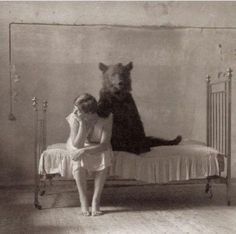
The bear had moved in for good, and there wasn’t anything Alice could do about it. Not like she wanted to, not anymore. The first week had been more difficult than she had anticipated, but after that things had slowly improved. The bear agreed, in his sure, heavy way, that this was home, this sharing a space together.
Home was never about the building. Walls and a roof didn’t make a building into a home, any more than books made a library. Plenty of people have felt more at home at work in a warehouse then where they paid their mortgage. It’s the people that make the difference after all.

Alice always felt that animals were more human than those who claim to be. Perhaps the utter guilelessness of them was the difference. Animals never had to prove who they were, never had to bother with such arbitrary things as status and striving. They never wore clothes, never owned cars, never had jobs. Their lives were free from all the distractions that humans had. Like children, they were given all they needed from Mother Earth and Father God. Like children, they learned at their own pace and trusted their senses. They slept when they were tired, ate when they were hungry. They never had to wonder or worry about such arbitrary and nebulous things as retirement funds or investment accounts. And as for in-laws? They never married, so that wasn’t an issue.

Alice had wanted to marry the bear as soon as he moved in, but he convinced her otherwise. He reminded her that marriage is a human invention, and therefore subject to failure. If you never got married, you’ll never have a risk of divorce. You are free to come and go. Doesn’t it mean more if your partner stays out of love rather than obligation? Every day they stay is a gift rather than a duty.

The bear had no name as far as Alice knew. She had asked and he’d not said. He didn’t talk like humans did, of course. He made his thoughts known in the way all creatures did in the beginning, with the spirit. He spoke with his whole being, resorting to sounds only as a last resort. Then they were usually snuffles and sighs and grunts. Only once had he growled, and that was when Alice had mistakenly opened a door onto his paw. After that they’d agreed to remove all of the doors inside the house. Doors just fostered separation and exclusion anyway. Plus, the knobs were hard to work with paws. The house had to work for both of them or it wouldn’t work at all.

The bear didn’t need a name, not really. He knew who he was. He was the only one Alice would be calling. Names meant very little when the group was small. She rarely had to call him anyway. He always knew in his slow sure way when she needed him. The same was not true for Alice, not yet. The bear often wanted to call her to look at an especially beautiful flower or sunset, but she was often so distracted by chores that she couldn’t hear him call to her heart. She spent a lot of time cleaning because wanted to keep the house just so. She forgot (or never knew) that the bear didn’t need to be impressed and nobody else who would come by would care.

Few people visited their home. Most of her family thought she was crazy for wanting to live with a bear. Her mother even talked about having her committed, but since she was an adult and seemed sane in all other respects, she let it drop, choosing to hold her judgment. She was prepared to shake her head and say “I told you so” while bandaging her daughter’s arms from the inevitable claw marks that surely would come, but they never did. Months went by and the bear and Alice got along like peanut butter and jelly, always together, and always good. Her mother still wasn’t one to concede the battle. Decades could’ve gone by and she still would not admit that perhaps Alice had chosen correctly. Little did she realize that Alice hadn’t done the choosing. The bear had. He knew Alice needed him as much as he needed her, knew that it wouldn’t be long before she’d hear him in her heart the way he heard her.

Their first meeting was as you’d expect. Bears aren’t normally sought after. Normally they are run from. Alice had decided to spend a week camping by herself in the Smoky Mountains. Her job wasn’t fulfilling, and she was estranged from her family in part because they felt she was wasting her talents. She decided week away to really listen was what she needed to get back on track.

Her family had paid for her college education, where she had studied veterinary science. But when she graduated and found a job at a local vet’s office as an assistant, she quickly learned that what you learned in the textbooks often doesn’t match with reality. It was far more visceral than she ever could have imagined. In her first week she saw more of animal’s insides than their outsides.

It wasn’t all physical. She’d always been a little empathic, able to feel how others were feeling even before they had words to express them. She was often able to help people before they even knew they needed it. Her friends liked her because they always felt at ease around her. She just made life easier. Meanwhile they never knew how much work this was for her.

When she was at the vet’s office, she was overwhelmed with the messages of hurt and pain that she received from the animals. She had not factored in that all of them would be constantly broadcasting their hurt and confusion and pain. It was an unrelenting onslaught, since even the healthy animals that were brought in just for a check-up or a shot were anxious and confused as to what was happening to them.

When she quit after a month, her family felt she was throwing away everything she had worked for. Worse, they felt she was throwing away everything they had paid for. They refused to support her any further, so she took a job selling perfume and cosmetics at the local mall to pay her bills until she could figure out what to do next.

It was not long after that that she went on her trip. While praying for guidance late one night around the campfire, she distinctly thought she heard a voice say “Take me in”. Usually she had perceived God’s voice as more of a feeling than actual words, but this was crystal-clear. It was so clear that she thought that perhaps it was an actual voice, so she looked around. Just outside the glow of the fire, she saw the distinctive gleam of eyes in the shadows. They were three feet from the ground, so she knew that it wasn’t an adult. She didn’t realize it was a bear until he stepped forward into the firelight and stared at her, saying again “Take me in”.

She ran, stumbling over tree roots and tent stakes to get away. She spent that night sleeping in the fetal position under a rhododendron bush about a mile away from her camp rather than risk being near that bear. Little did she realize but he had followed her at a slow walk, and watched over her all night as she slept to make sure that no other creature could approach her. Not all forest creatures welcomed humans into their midst.

She awoke with the dawn, stiff from rocks and roots pressing into her side. Her first thought was to give up on her quest and walk back to her car, but her keys were in her tent. She hoped that the bear hadn’t savaged her camp, shredding everything in a quest for food. She’d heard stories of bears that tore through everything in a quest for sausage or Snicker’s bars. The idea of rummaging through her ripped-up belongings to find her keys was not appealing, but she had no other choice.

When she finally returned she saw that everything was just as she’d left it. She had to use a hammer to re-secure the ropes from the tent pegs she’d tripped over on her midnight flight, but other than that, everything was the same. She started a small fire to cook her breakfast, and while drinking bitter coffee and eating oatmeal with blueberries she’d picked the day before, she heard the voice again. “Take me in”. She looked up with a start and saw the bear, but this time he was sitting twenty feet away, staring at her. This was enough distance that she felt she didn’t have to run. If she’d studied bears in college, she’d have known that no distance is a safe distance with bears. They may seem amiable and too large to run quickly, but looks are deceiving.

Alice stared at him (she assumed he was a he based on the sound of his voice in her head) and creaked out a tremulous “What?”

The bear repeated his request. “Take me in”.

“What? Why? Who are you?” Alice rambled on, picking up courage. She hadn’t had time to question that she was speaking with a bear. If she had, she would most likely have been silently staring at him, wondering if maybe her mind had finally cracked.

Over the course of half an hour the bear explained who he was and why he was speaking with her. He said things about being her protector, her teacher, her friend. He said he was her great-great-grandfather reincarnated. He said he had always known her and watched over her. He said that he could teach her to be the best veterinarian there ever was, or ever could be. He said that he would work with her, but first she had to let him into her life and into her heart and home.

They talked more over the course of the week she was at her campsite and worked out a plan. It was difficult for Alice to fully understand him but her natural empathic abilities went a long way. At the end of the week she went home, leaving the bear there, but she promised to return.

She quit her meaningless job as soon as she returned, not even bothering to go in to turn in her notice. She called the assistant manager at 7 on a Tuesday morning, waking him from his hangover from his one-person-party the night before. She told him that she had quit, and that was that. She hung up as he stuttered his questions at her, not believing. He’d never listened anyway.

She sold everything she had to make enough money to move to the woods and build a small cabin there for her and the bear. It was fortunate that she didn’t need much, because she didn’t have much. She traded out for much of what she needed by going to the Goodwill. Her worldly possessions transformed from frilly dresses to sturdy cotton clothes, the better to work in. Her CD collection became an axe and a saw so she could cut down trees to make a home.

The bear worked with her, pushing trees down, dragging logs over, lifting them up. After a month they were both tired but there was a roof over their heads. They had no furniture but they didn’t care. The work was so exhausting that they didn’t need a fluffy bed to rest in. They both slept deeply, curled up on the earthen floor of their new home, the bear curled protectively around Alice. She loved the musky, earthy smell of his fur and how it was somehow soft yet bristly at the same time. At times she could smell pine sap and warm summer sun in his fur, traces of his adventures while away from her.

They spent much time working together, he teaching her about all the ways of the animals. He filled in all of the knowledge she’d missed in her classes. He introduced her to all the animals in the forest and taught her how to speak with them – but more importantly how to listen. He told her that she didn’t have to wonder what was wrong when they came to her – they would tell her if she asked.

Yet still there was a wall between them. She had learned the language of the birds and the deer, of all the animals that flew or walked or slithered. Yet she was never fully able to hear the bear, not as well as the other animals. Perhaps he was too different, too tame. Perhaps he’d given up part of his wildness for his ability to live with her. Perhaps there was still too much of his human spirit in him, buried deep down in his bear heart, for her to hear him like she could hear others. He wasn’t quite a bear, yet he wasn’t quite a person, but both, and neither, and something more.

Sam and the camera

bench

Sam never felt comfortable looking people in the eye. He’d look away to the side or at his feet rather than make direct eye contact. It was too personal, too painful, like the mixing of a raw nerve in a tooth and a bit of soft bread. Out in public, his shoulders would curve inwards, trying to curl him into a ball like one of the hedgehogs he would see in his back yard. It was all about protecting the sensitive bits, for both of them. Sam wished he had spikes like they did for his first few years of life. Everything was too close, too loud, too much. It was only when he received a camera for his sixth birthday that he began to feel normal, or as normal as he thought he should.

How should he know that his senses were aberrant? It was all he knew. Abnormal was his normal, and that was all there was to it. He thought it was normal to feel like ice was in his stomach and fire in his throat every time he had to experience something different from his usual routine. He thought it was normal to feel faint from fear or anxiety for the majority of the day.

That all changed when he got the camera. The film was a 110 cartridge – easy enough for a child to install. The buttons were large and simple to use. Sam’s father thought it would help him express himself, but he had no idea how helpful it was truly was.

Sam was wary of it at first, as he was of all new things, but he liked the shiny brown case and all the accessories that came with it, so soon he was using it. The strap was fun to adjust and the flash cube was enticing with its shape and sparkle. He first took pictures by holding the camera out at arm’s length, not wanting to put this new thing so close to his face. After the first batch of pictures came back from the developer, his father strongly suggested he try holding the camera up to his eyes. There were simply too many wasted pictures the other way.

Something strange happened when Sam finally overcame his reluctance to put the camera to his face. Suddenly he realized he could see through the viewfinder, just as if it was a mask. He then realized that just like a mask, he was hidden from view. Suddenly his whole world opened up. Sam started taking pictures of everything and everyone. Suddenly he had a reason to go outside and be around other people. Family gatherings no longer overwhelmed him as much as before. Sure, there was still some awkwardness. That would always be there. But now he had a way to be around people that he never had before. It was like finally getting a key to unlock doors that had always been barred to him.

His father hoped that Sam would become a famous photographer, but Sam had no such ambitions. Fame was never something he wanted, at least the kind of fame he was aware of. If he could become famous without even knowing about it, then he was okay with that. He could barely handle normal human interactions. The idea of having random strangers coming up to him on the street or in the grocery store to get his autograph was enough to send him running to his room to grab his trusted teddy bear.

Fame was overrated, after all. It just meant that people were impressed that you were the best version of you there was. Meanwhile, they spent so much time focused on your achievements that they forgot to work on their own. They got jealous sometimes, forgetting that there was enough success to go around.

Shoeless nuns

defense

The Discalced Order of Carmelite nuns were barefoot, but not weak by any means. Their postulants, in addition to dressing in long plain black gowns and praying every three hours with the rest of the community, had to work out an hour every day. All that praying meant a lot of sitting, and stillness of that sort wasn’t good for the body.
They looked askance at the nuns in many of the other Orders. Some of them weren’t even 60 years old yet and they were obese, feeble, reduced to using a wheelchair. Worse – the wheelchairs were electric. They didn’t even have to exercise their arms to get around. Just push the knob on the armrest and off they went. A Discalced Carmelite would rather renounce her vows than to be seen in such a state of sloth.
For sloth it was – a deadly sin, a sign of spiritual or emotional apathy and being physically and emotionally inactive. It was a sin because it abused the gifts of God. It was what Jesus was speaking about when he told the parable of the talents. You must take what you are given and make more of it, just like with the loaves and fishes miracle. They took seriously the adage that idle hands are the devil’s playground. Inactivity invited the Accuser into the very core of the person, into the holy shrine of the soul.
The demon of sloth loved those lazy nuns especially, because he could slowly, over years, convince them to ease up on their prayers or service. He grew stronger with every forgotten prayer and every abandoned act of kindness. It would start with them thinking they could catch up later, but later never came. Only discipline kept the demon at bay. Discipline makes disciples after all. Sure, you were chosen, but you also have to choose the holy life every day, sometimes every minute. It didn’t just happen.
The Carmelites never really slept. There were certainly times of rest, between prayers and work, but not many. The prayers were every three hours, and all the sisters were required to be present. Only being laid up in the infirmary was an excuse to skip. Many postulants left after just a couple of weeks of this unusual schedule, either exhausted or insane. Those who lasted soon learned what army recruits did – sleep when you can, or learn to adapt to the changed mental state that results from too little rest. Some older nuns suspected that was the goal of the frequent prayer schedule. They achieved communion with God alright – it was just not the way that was expected.
Some kept their new revelations to themselves, out of concern for being asked to leave. The Order might not take kindly to sisters with potential mental health issues. Were they really hearing from God, or was it all in their heads? Some shared their revelations only with their confessors. Some could not contain themselves, the onslaught of visions and new understanding pouring forth like water over the dam after a flood.
Those who spoke up learned that The Order was kinder than many others, and examined every revelation with respect, measuring it against scripture, tradition, and reason, to see if it was valid. They were open to the idea that God still spoke to his people.

Abraham’s beard

beard

Abraham started growing a beard just like every other boy turning into a man. His Papa taught him to shave just like his own Papa taught him. Every few days the razor came out of its leather pouch ready to do its job. In winter, when he got older, he let it grow out to keep his face warm in those biting Wisconsin winters. It didn’t matter if he had an outside job that year or not, even ten minutes outside putting groceries in his car was too much cold for him. Abraham, never “Abe”, had thought about moving to warmer climes many times, but that all changed when he became a monk.
His first vow was of stability – to stay right where he was and make the world right around him better instead of traveling to some far-off place where they might not speak his language or even have flush toilets. He figured that the good Lord put him here for a reason, so here was where he’d stay.
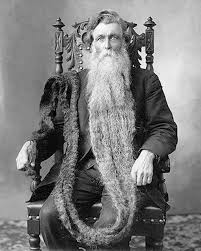
His second vow was to not cut any of his hair. Every day he washed and combed and oiled his beard and the hair in his head. This went fine until it all grew so long that he started sitting on it, or it got caught in dresser drawers. Then he started wrapping his hair up in a piece of linen, wound about and about until it was up out of the way. This worked for about a year.
After that, he started tucking his beard into his shirt pocket, just like it was a pocket watch or a handkerchief. A decade later he took to putting it over his shoulder. Sometimes he’d wear an old military jacket with a shoulder strap. It was never anything so fancy as an epaulette, just a plain piece of cloth the same color as the jacket with a button to open and close it. While the button was helpful, it had caused a snag a time or two.
The only odd thing was that Abraham was a monastery of one. Nobody else even knew he was a monk. He never dropped so much as a hint to his friends, who never would’ve suspected and wouldn’t have believed him if he had said anything. The day after his parents died he made his vows and never swerved from them.
His third vow was to not speak about his spirituality unless he was asked. He agreed with the Lord that it was rude to brag about your holy walk, yet he also was careful not to appear as if he was denying the Lord either. It was a tight spot to be in. He figured he could tell people about his faith only if he was asked. That to him was a sign from the Lord. It was only when the traveling photographer asked him about his beard that he told, and he was the first to ask in 20 years.
Sure, people wondered about his long hair and his refusal to travel even to the next town over, but they never asked him about it. They thought that was rude to ask. That didn’t prevent them from talking amongst themselves, however.
The vow of stability was a tough one. Abraham had a bear of a time getting good shoes until the Payless store opened up a franchise just three streets away from his house. His vow to stay in his town was not up for alteration. For nearly eight years he had to wear the same pair of brown Oxfords because there was no place to buy new ones – and he certainly wasn’t going to buy them used. Used shirts and pants, certainly, but shoes? Never. No amount of Lysol could convince him they were clean enough. Even a monk has standards.
The city of Two Creeks, Wisconsin had never seen a traveling photographer until that bitterly cold Thursday in May. Even if it hadn’t been so unusual for a photographer to appear almost overnight like a ring of mushrooms in the lawn, the cold snap would certainly have fixed the date in the minds of most of the nearly 450 people who lived there.
Abraham had walked down Zander road where his house was and turned right along Lakeshore to get to the county park. Even though it wasn’t officially legal to fish there, it wasn’t actually illegal either, and Abraham often took advantage of these gray areas in life. It saved him a lot of money to fish for his supper. He was just preparing his fishing lures when he heard a booming voice behind him. “Hello there, young man! Would you be interested in a free portrait of yourself this fine day?”
Abraham turned around and looked at the man for a full minute before he answered. The photographer thought that maybe he was deaf, so he began his spiel again, but Abraham held up a hand to stop him. He was trying to figure out how to answer. His first problem was being hailed as “young man” since it was as clear as the silvery hairs on his head that he was far from being a spring chicken. Either the man was trying to butter him up or he was crazy. Neither one was good.
“Why would you want to do something like that?” Abraham asked. He liked a deal, same as the next person, but he knew that “free” meant that there was a cost down the line somewhere. Nothing was ever really free, it just meant that you didn’t pay for it. Someone did. That meant you were beholden, and beholden was a string. He was opposed to strings. They ended up being nooses more often than not.
The photographer explained that he worked for a national film developer who wanted to get more customers. Every person got a free 8 x 10 color glossy and eight wallet size portraits. The company figured that once folks saw how good the quality was, they’d order more. Suddenly the photographer stopped, looked at Abraham, and said “I never told anyone that before. That’s the company policy, but I was given a script and trained to recite it word for word as if it were mine. Why ever did I tell you all that? Come to think of it, why am I telling you this right now? Who are you?”
And Abraham told him his story, all of it. Truth for truth, since he asked. Told him how he was a born confessor. People all over, those he knew and those he just met, told him nothing but the truth all the live long day. They felt relieved, all their guilt and shame off their chests.
It started early on, as soon as he entered kindergarten. The other children just knew and came up to him. The teachers did too. It was overwhelming at first but he got used to it – well, as much as you can get used to people telling you all their secrets. Abraham thought this was normal, because it was normal to him. He had nothing to compare it to so he never told his parents about it.
Funny thing was though, it was like a superpower. The fact that people told him all their business meant that he could handle it. It was like God gave him extra strength to be able to carry all those secrets. Maybe he didn’t even carry them. Maybe it was more like he was a telephone booth, and people used him to speak to God. He figured that some people chose to dial direct, praying in their own words on their own, but then there were some who needed a person to be with them when they did it. Something about praying in an empty room made them feel like they were talking to themselves, and that bordered on crazy. Abraham was just the sort of safe person they needed.
After he told his story to the photographer, Abraham moved the very next day and left no forwarding address. It wouldn’t do to let it get out that this is who he was. Soon everybody would be beating a path to his door to unburden themselves. It was enough that people did it anyway, without even knowing that was what they were doing. It seemed honest, even pure, that way. This knowledge would turn that inside out. He might even have to set up office hours, maybe even go so far as to charge. Just the shock of thinking about the mess that would start as soon as word got out decided his mind for him.
So he shaved his beard and his head so nobody could identify him, and he started walking west, taking nothing with him. His neighbors didn’t suspect a thing because he walked all the time and he never caused a fuss. It was a week later that the word of his abilities got to them, and by then his mailbox was full and the grass needed cutting. By then he had found a new life for himself and started to regrow his hair again.