Missing Rowley

He was one of the missing children, one of the many thousands who disappeared every year. But Rowley (if that was his real name) wasn’t like those children. Nobody was looking for him.

He’d disappeared that Wednesday afternoon, one of those wet and blustery days so common in January. The sun had been gone for so long that people simply forgot about it, simply forgot it was something to miss.

The same is true of Rowley, a boy who was shorter than average, surlier than average. If people didn’t overlook him unintentionally, they overlooked him on purpose. He wasn’t a pleasant child to deal with, and there was little hope he’d grow out of it.

He’d been a latchkey kid, a forgotten child. He could go missing for days and nobody noticed or cared. His parents (if that’s what they were) neither spoke to him or about him. He might as well have been a piece of furniture handed down from an eccentric aunt. He wasn’t wanted, and he knew it.

But then the circus came to town. It wasn’t like he ran away, so much as he was recognized. The high wire performers noticed him at the corner café, quietly pocketing leftovers from the tables about to be cleared away. It wasn’t like he was stealing, not exactly. The food had been paid for, just not eaten. It was headed for the garbage. He figured he was doing everybody a service, mostly himself.

The aerialists followed him out, not so close as to spook him, but not so far as to lose him. He knew they were behind him, how could he not? That sense was well honed in him. It kept him safe all these many years. If necessary he could make himself invisible without even leaving the area. It wasn’t running away. He knew that didn’t work – that just called more attention. It was more like he imagined himself invisible, made himself see-through to anybody who was looking. He’d had plenty of practice at the sad excuse of a home he had.

But turning invisible didn’t work this time, because the circus performers knew how to do that trick too. It was the opposite of performing. The bright light they shone from themselves when they were in the ring could be switched off just as easily. It was second nature to them. It was a skill that bonded them all into a strange sort of family, a wandering caravan of vagabonds and misfits, who somehow discovered how to jigsaw themselves together into this unexpected troupe.

The lack of a fixed address wasn’t a problem for them. They were traveling entertainers after all. It was expected, necessary even. Everybody in the circus was legitimately homeless. They’d discovered the one way it was socially acceptable. Perhaps it worked because they sang for their supper. They performed and sold tickets instead of begging. When they held a hand out, there was a top hat at the end of it. Somehow that made it OK. The public doesn’t like to think it has been deceived, but it does like to be entertained. And so they gratefully gave money to them, rather than grumbling about charity.

The two called out to Rowley, gently enough, to let him know they meant him no harm. They knew what was going through his mind. They knew because the same thing had happened to them all those years ago. This is how many of them came to the circus.

Many if not all had gone missing on purpose, because they were never noticed it home. Joining up with the other invisibles made sense. Together, they created a new sort of family, where all the rules went out of the window. Maybe it was because there were no windows in the circus. Trailers and tents were the order of the day, and even if they did have windows they were covered up with curtains or aluminum foil. This was one group that understood the value of privacy.

People of the Sand

Christopher and Lois Helfman loved their children more than they could express, but they understood that not everyone could accept them. They were fraternal triplets – two boys and a girl, born one bitter December morning five years ago while Papa was on maneuvers with the Royal Marines. He’d not even gotten to see his wife bloom into her pregnancy,having just one home visit a year at that point. His wife joked that he made the best of his time while he was at home, but she wasn’t laughing when she was told it was triplets she was expecting not long after he returned to the lines.

How would they ever manage three babies,  , and then corrected herself. Why ever did she think they would do anything? It would be all her doing, as it was for all the women in her time. Women had always done it all – all the cooking, all the cleaning, all the child raising. They did it because this is how it was. There weren’t other options as far as they knew.

Lois sent her husband a letter as soon as she was sure the pregnancy was viable. It wouldn’t do to get his hopes up for nothing. Because it was triplets, she waited an extra month just to be sure. So when the letter finally reached him he didn’t have a lot of time to adjust to the idea he was going to be a father.

Of course, they wanted children. They hadn’t planned exactly when, just leaving that particular to God. That was the best practice anyway, they finally realized after years of struggle. So many years of trying to do things their way and plans not working out. Why would they?Plans of mice and men never measured up to a hill of beans.

But the babies had been born early, too early for the happiness of the nurses at the village clinic. Doctors were in short supply, what with the war and all. They had been sent to the field to tend the soldiers. Civilians had to fend for themselves. Their needs were much less. It was quietly understood this was one of the many sacrifices they’d have to make to win the war.

And who was the war with? Desert dwellers, the People of the Sand. They’d finally ventured out of their domain and discovered the delights of temperate climates. No longer did they have to settle for the arid lands they’d been born in. No longer did they have to settle for a nomadic life of tents and beasts of burden. Now they knew there were choices, options other than a life of wandering from campsite to campsite, from bad pasture to only slightly better pasture. The herds were growing gaunt with all the work it took to forage for food, and so were they. So when they saw these new people, these fair skinned layabouts who didn’t have to fight the land for food, they knew they had to take over.

At first they sent sentries, spies, to move into and among these newfound neighbors. No weapons among them other than walking sticks and knives for butchering their supper meant diplomacy was the order of the day. They never had to fight anyone before and hoped not to now, but they weren’t above it. Their ancestor, the great Mahd had firmly said that violence was acceptable if peace failed. The survival of the People of the Sand was paramount. It would not do for them to be erased in the same way that footprints were in their landscape.

A life of shifting terrain shaped people into never settling down, never feeling stable. It made them suspicious of outsiders, of intermingling, so they clung to their traditions all the more.  It was the only thing holding them together. It was who they were as a people –not anything material but all in manner. How you acted was what marked you as a member of the People.

War finally came inch by inch and day by day, until suddenly there was fighting in the streets of the Helfman’s little village. Unrest had come to the town in dribs and drabs, two different cultures mixing like oil and water. There had been attempts to integrate. There were evening classes at the local library to teach both languages, but they were sparsely attended. If only they had asked the people what hours they were available – or even if they were interested. There were other barriers too -where there were misunderstandings and confusion. There were little arguments over use of the community center for worship services. The newcomers didn’t understand the denial wasn’t personal – they didn’t allow anybody to have services there of any sort.

When war came, Mr. Helfman had volunteered straight away, knowing that if he waited to be drafted he’d most likely get a less than desirable position. Not like any position in a war was desirable –but some were better than others. He became a captain in the Signal Corps because he had worked in the village radio station for over a decade and had a ham radio license. Sending messages back-and-forth across the battlefield without the other side listening was his forte, and he relished his role. It was important, essential even, and he didn’t have to worry about getting shot.Well, that wasn’t exactly true. He’d been trained the same as everyone else in the unit how to handle a gun. This was war, after all. The time for talking was over. Diplomacy had been exchanged for destruction, and may the best side win.

And yet he still held out hope that they could work something out. The good Lord didn’t put these people on the earth – and especially in his village – for nothing. But there were so many barriers! The culture was unusual, that was for sure, but the language – that was a real stumper. They didn’t even use the same alphabet, just a bunch of squiggles and dots. It didn’t make any sense. So he began to test the limits of his radio technology. Perhaps he could get it to translate the sounds it heard while he was intercepting their signals. If his phone could figure out what song was playing by listening, surely he could rig up a way to get some sense out of their language.

He’d always done well with the belief that if he could imagine it, it was possible. Surely the Lord wouldn’t have put such an idea in his head if he didn’t want him to try. Now, plenty of folks took that the wrong way and turn God’s dreams into nightmares. They focused the signal on themselves, not on others. Christopher Helfman had been raised to serve others,so his experiments always worked out for the best. It wasn’t long before he had worked out a translator, and within months every person in the battlefield had a portable version.

They’d left ones for the People of the Sand in conspicuous places, knowing that if they simply tried to give them away it would be met with suspicion. So they waited, and were wary. But the experiment worked – they started using the translators! A few brave souls talked with each other across the lines, sharing words and not bullets for a change. An agreement was reached and more of the devices were handed over. Before long, the war was over because they could finally, truly, understand each other. The devices didn’t just translate words but feelings and emotions as well. The full range of meaning was conveyed, and the two sides discovered they had more in common than not.They decided to share their resources, creating a whole new kind of community.

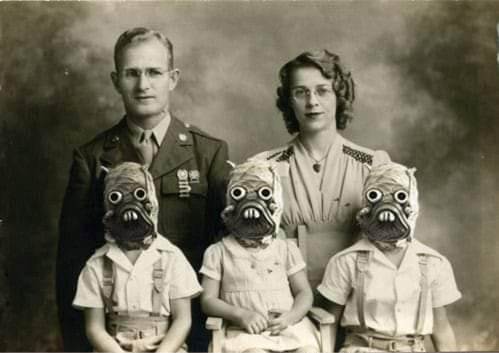
And that is how the masks came to be on the heads of the Helfman triplets. Born too soon, their lungs weren’t fully developed.They were prone to allergies and asthma, and nothing seemed to soothe them.That was, until the village got a People of the Sand doctor, who decided to try something new. These people had long relied on their unusual and somewhat intimidating face masks to survive in their arid desert home. Now that many had relocated to the village, they had no need for the cumbersome devices. Thankfully,many kept them out of nostalgia, so several were available to the doctor. He decided to try one on the children after the usual tricks had failed. Unusual was the order of the day in the village at that point, what with the two cultures openly blending and sharing, so the children didn’t stick out too much.

Hits the spot

A world bloomed in her mug. A forest emerged, complete with a circle of ravens to welcome the dawn. Perhaps this blend of tea was more magical than advertised?

Bergamot, hyssop, and a dash of hinoki oil were the listed ingredients, but she was sure there had to be some surprises. There always were. No cook gave away all her secrets. They were like magicians in that way. Revealing just enough but not too much … any more and the gig was up and you’d be out of a job.

People paid for secrets. They paid to be surprised. People paid to suspend their disbelief if only for an hour. It was how writers survived – this compulsive need for lies of all sizes and shades. White lies were still lies after all,still less than the truth. But the truth was too much for most people. Little white lies kept the wheels of society greased.

But this tea might take some serious adjusting to. Was she tall enough for this ride? She’d gone to this tea blender for several months now but this was the first time she’d considered that the mix wasn’t for her. Perhaps it was for another customer? Or perhaps the blender (more alchemist than anything else) had over estimated her needs this time.

For this was no ordinary tea shop that she found. The tea resided in dark brown glass jars, with handwritten labels. Some were blends, but most were raw ingredients, ready to be whisked together into the need of the day. Patrons didn’t even tell the clerk what they wanted. That wouldn’t do. They could not be expected to be objective enough to know what they really needed, after all.So they came in, waited their turn, and then sat before the clerk who observed them. Sometimes s/he would take their pulse. Sometimes s/he would ask the patron to stick out their tongue. But nothing more – no medical history, no list of prescriptions or supplements written down or spoken.

It was a simple affair, but one that required over a decade of training, and that was only after a rigorous testing just to be considered for the role of student. Students had to be impeccable in their words and actions,diplomatic, and able to raise all the funds for their training upfront. There were no scholarships. There were no loans. The entire tuition had to be fully funded from the start. The teacher wished for each student to be able to serve her whole-heartedly upon the completion of their apprenticeship (not graduation, for they would never cease to learn) so the patrons could be served without distraction or hesitation.

So this had to be what she needed, but was she ready for it? It tasted like no other tea she’d ever had. Was that a woodpecker call she heard from her mug? Did she see antlers? She’d never hallucinated before, college being at a private Christian school, but she suspected this was what it must feel like. And feel was the right word – she didn’t just see the trees and animals in her tea, she could hear and smell them too. They were there, but in miniature, in her mug.

Well, there was nothing to it but to do it, so she took a sip. The forest stayed horizontally oriented, the birds continued to fly, and the still hot tea tasted like earth and moss and stone as it slid down her throat.

Strangely, it was exactly what she needed.

The bones of the matter

She’d asked for a dog but they gave her an alligator instead.Or maybe it was a crocodile? She wasn’t sure and they weren’t telling. They never told her anything anyway. Just gave her chores to do and no instructions and there was hell to pay if she didn’t do it right – whatever that may be. She never knew because they never said.

And yet, somehow, at her tender age, she’d sussed it out.Without training or guidance or even an instruction book she knew how to do it,whatever it was, in spite of them. Were they trying to test her? Or were they simply evil, hoping for her downfall, wanting an excuse to yell at her for not doing well?

Was this how they were raised? Was this how they thought they should treat others? What goes around comes around, after all, and people can’t treat people like how they want to be treated if they don’t know any better.

So she suffered from these teachers, these guides, these “superiors”who left her a box of materials and not even a picture of it go by for what she was supposed to build. Sometime she built whatever she wanted. If they didn’t watch it, she might build a rocket launcher. It would serve them right.

Right now she was training her reptilian companion to fetch,but soon would start the real training. He had sharp teeth and a surprisingly strong tail. It would be easy to teach him to attack on command. It was part of this nature, after all, to grab a victim and pull it down under the water,thrashing and turning until he could bite down a few more times. Puncture wounds usually took the fight out of anything rather quickly.

She didn’t want to resort to that, having spent more time in Sunday school than she cared to consider. Perhaps that was their plan all along– make her docile, unwilling to fight for her rights, unwilling to follow her own nature. Humans were selfish creatures once you got down to the bare bones of the matter, and religion was nothing more than a way to civilize them, make it possible for them to live together in close quarters.

But that wasn’t who they really were, all that forgiveness and “turn the other cheek” hooey. What person in her right mind would give away her only coat, either? And yet they’d done it, mostly, had trained women to be passive, to apologize for speaking their minds, to forgive even when the other person hadn’t apologized. Maybe this was why women were majority of those who suffered depression and anxiety attacks. The dissonance was unbearable.

She started to wonder if maybe she wasn’t truly female, at least all the way. Maybe she was just female on the outside. She didn’t feel one way or the other on the inside, but she had nothing to compare it to so she didn’t know any better. But she did know she wasn’t swallowing what they were trying to feed her. She wondered how all her classmates and friends could stomach this madness, this meal of compliance and conformity. It tasted bitter to her, and bare. It tasted of bones and bile, nothing nutritious, and certainly nothing to benefit a growing girl.

Maybe that was their point – to stunt her, to slow her down.Maybe their treatment of her was for the same reason a horse was handicapped –to not give it an unfair advantage, to level the playing field. Maybe they were afraid the other children would feel low around her, so they brought her down to their level. But when ever has dimming a light helped those in darkness find their way?

It was time to shine.

But first, she was going to train her pet to do some tricks they didn’t see coming. They needed to know it wasn’t right to mess with nature.

Music for Monkeys

music for monkeys

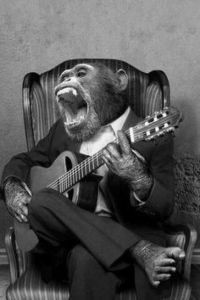
They gave up trying to teach a monkey to type the next Shakespeare play. But since music supposedly calms the savage, they taught him to play a tiny guitar instead. It made sense after all – he could play tunes to calm himself down, rather than a researcher having to do it. Once he had access to the guitar and finally understood that it was for making music and not for hitting people or other monkeys over the head, he calmed down dramatically. Just being able to express himself had the desired effect.

They’d tried to teach Abe how to sign but he wasn’t having it. It didn’t make sense to him – this gesture meant what? It was too abstract for him. Why make a sign with his hand, when he could grunt or scream at them? They eventually figured out what he wanted. Meanwhile, he enjoyed screaming. It was fun and made his keepers (his jailers) so anxious. It was funny to watch, to see how he could make them so upset and nervous.

But then they brought the guitar to him. The jailer played it at first and the tones were different, weren’t like their voices. The jailer even sang – and his voice was different, was kinder. If only they could always speak to him like that!

Abe thought  that maybe they could learn how to talk with music, so these dimwits could finally get him what he wanted faster. The amusement of their confusion was wearing off. He wanted to deal with them as little as possible. Even fighting was getting old.

Finally, after nearly a year of practice, he was ready for his first public performance. He was no longer in his cage – the audience would be shocked to think of how he been imprisoned. Most thought of it as a zoo, and either forgot or overlooked the fact that he didn’t choose to be there. He wasn’t asked when he was taken from his home. It wasn’t voluntary. He didn’t want to be an example of his kind.

Many thought of the zoo as an educational opportunity, a chance for people to learn about animals in a safe and clean environment. They also thought they were doing the animals a favor. The same “safe and clean environment” was so much better than a wilderness home, the people told themselves. They pointed out how the animals lived so much longer in captivity. They didn’t understand that quantity wasn’t the same as quality. Longer wasn’t necessarily better.

Abe was supposed to play a nursery song, one that was easy and would show off his talents. Nothing too complicated or he’d fumble and the audience would stare or laugh. It was important to get this right.

The audience wasn’t just any old audience. They were benefactors, donors, patrons of the arts. It was their generosity that made the “Music for Monkeys” program possible. If this failed, the whole program would end. It was all riding on Abe, but he had not been told this.

Yet he played better than expected, and more. He played flawlessly, with real feeling, for the first 20 minutes. Perhaps something took over then, some deep down part of him, because that feeling came up and out and over and suddenly he was playing a new song, a sad song. A song sadder than standing on the platform as the last train leaves for the evening. A song sadder than the end of summer break. A song so sad that the audience caught the feeling tied up inside it without words, and they understood the pain of imprisonment in the name of “education” or “rescue”. They heard within the notes his longing for a home he would never see again, a family he would never again embrace. It didn’t matter if they might no longer be alive because of disease or poachers. They had lived as monkeys, not as exhibits, as specimens, as one-off examples of their kind, meant to be on display to any and all, young and old, as the epitome of “monkey” to these rubes, these ticket holding members of this permanent circus that is a zoo (sometimes euphemistically termed a “wildlife park” for much the same reason cemeteries are now memorial gardens).

The audience felt through Abe’s new music the joy of waking up with the sunrise, embraced by the arms of a tree, with leaves as a blanket. It felt the joy of wandering every day to see new places and other animals, every night a new bed in a new tree. Every day was the first day for Abe’s kind – a new adventure and excuse to discover. No worries about a car or mortgage or clothes, so no worries about a job or reputation either.

The people thought they were safe because of all they owned but now they understood that it owned them. They had become chained themselves, slowly, but surely. They had put themselves into a zoo of their own making. They had forgotten their own wildness, their own true nature, in their striving to be civilized. Abe, with his monkey music, reminded them of who they really were, and who they could become again.

There wasn’t a dry eye in the audience. When the music finally stopped, when the guitar strings stilled, they all sat in silence for what seemed like forever. Finally a child spoke, and asked Abe what his real name was, the one before his capture. What was the sound his family, blood and otherwise, called him? And he didn’t know. It was lost to him, trained out of him for so many years. So the child gave him a new name, a snippet of that song that awoke them all, as a reminder of who he truly was.

Monkey boy

monkey boy

Phil loved his monkey mask. Maybe he loved it more than his big clunky shoes. It was hard to tell. Just to be sure he never wore them separately. Why ruin a good thing?

It didn’t take long for him to settle on this routine. Every day after school he put on his mask and boots and sat on the front stoop. It made the rest of the evening go better. Otherwise he was out of sorts and not really worth being around. If he forgot, his Mom reminded him. She was the one who was most affected by his behavior if he forgot.

All day long at school he thought about being able to wear the mask and the boots, and it made the day tolerable. Sometimes he would hold his hand up showing three fingers to his teacher, meaning “is it 3 o’clock yet?” – meaning “is it time to go home yet?”

Class was unbearable most days. It was too bright, or too noisy, or the food was too rich. Life was too much for Phil, but he didn’t know it. Every day at school his shoulders were tense and his head ached. Only by sitting on the steps with his mask and boots on could he begin to feel somewhat normal again.

He’d asked if he could wear them to school but the teacher said no, said that it would be too distracting to the other children. So the pain of one little boy wasn’t important, but the discomfort of 28 other kids was, apparently. It didn’t make sense. How did she know how they would feel?

Maybe they would like his mask. Maybe they would want one too. Maybe they all felt the same way and all were overwhelmed by the noise, the clutter, the all-too-much-ness of it all. Maybe they were being loud to compensate, to hide their terror.

In the meantime, Phil would continue to sit on the stoop staring at the cars that whizzed by. His Mom could tell what kind of day he’d had by how long he sat outside. Sometimes it was an hour. Rarely was it less than 20 minutes. One day he sat outside like that for nearly 3 hours. When it had become dark his Mom insisted he come in. Sometimes the day was so bad that no length of time outside would fix it. Then it was best to just come in and try again another day.

His mother was unsure if she should teach him better coping techniques since this one seemed to work so well. He was in seventh grade when she realized he’d stopped doing it, and assumed this meant he’d outgrown the need. She couldn’t be further from the truth.

A schoolmate had seen him in his mask on the front porch and told his friends. He’d been walking by on the way to the ballpark and noticed. Enough shrubbery was in the way that he’d not been spotted, but he had no reason to worry. Phil couldn’t see anything anyway in that mask, and that was part of its appeal. But the damage was done. The next day it seemed like the whole school was calling him “monkey boy” and that was it.

The dog-sitter

monkey baby

It was hard to get good help those days. The Brown family had a bear, a young one, mind you, to tend the children. The Nelsons, however, had a dog. You might say having a dog to keep the children company was to be expected, and it was, but not in this way.

Simon was a spaniel mix of some sort. They weren’t sure. It wasn’t like they got him from a kennel. He was found along with his littermates under their back shed one spring day, all mewling and trembling. All of them were cute, but only Simon was attuned to them.

They’d gone to check on the litter several times, admiring the way the mother was caring for them. This was probably her first litter, but she was doing great, like this was her favorite thing to do. The Nelsons had heard of animal mothers instinctually knowing what to do, and this one sure did. They wondered how it was possible that some “lesser” animal could know more about tending an infant than humans did. Maybe humans did know, they’d just forgotten in the race to be “civilized”. Maybe they still knew, very deep down.

They found homes for the rest of the puppies, but Simon they had to keep. He was too perfect to give away. They’d only briefly considered giving him a dog name like King or Spot, but no such name fit him. He really was like a human in dog form, so they gave him a human name. He was a full-fledged member of the family then, albeit one who slept in the garage.

That was until they had their third child. There was no time for taking off from work, no money for daycare. Mr. and Mrs. Nelson’s parents had died long before they got married, so there were no free babysitters to be had. So Simon would have to do.

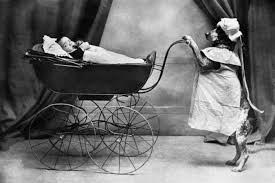
He was normally a very serious and sober dog, but he became even more so when they put his uniform on. It was as if he knew he was on duty once they dressed him in his apron and cap.

Simon was the best babysitter they could have ever hoped for. He was alert to every cry and always made sure the baby was warm enough. He’d either drag a blanket over her or just lay down next to her.

There was only one problem. The baby thought Simon was her mother, and refused to even recognize her real mother when she returned home from work. It was as if her own mother was a piece of furniture that moved. She didn’t hate her mother – she didn’t even know her to hate her. Simon was all she’d ever needed and not even known it.

Them Bones

How long was she supposed to wait? How long was long enough to know that she’d been cured of her phobia of death?

He could wait all day. He could wait forever, in fact. Well, forever meaning until his bones finally crumbled apart, became just calcium and not bones, in the way that boulders became pebbles over time. It all decays, after all – all that is physical – and that was exactly why she was here for this treatment.

Mary Frances’ fear of death was pervasive. She wasn’t simply afraid of her own death or of the deaths of her parents or spouse. She was afraid of all death, of all change. Any evidence of time passing rendered her inert, full-stop. She no longer could go to doctor’s appointments downtown because of all the change happening there. Too many new apartments! Too many new parking garages! All of her landmarks were gone, well, all save for the Krispy Kreme and Sitar, the Indian buffet. They thankfully never changed and still had actual parking lots right next to their buildings. She wondered how long it would be before some developer snatched them away.

Even the season’s change through her for a loop. She dressed for the weather she wanted and not what was forecast. Her friends were always listening to her complaints about how hot or cold it was, and their efforts to get her to dress more appropriately fell on deaf ears.

Her friend Theresa heard about a new treatment for people who were afraid of change. It was based on something that young Buddhist monks had to undergo as part of their novitiate. They had to spend several days with a corpse to learn non-attachment. She talked Mary Frances into the program by saying it was a fashion show. She was told she’d take all off her clothes and be measured as precisely as possible, and then bespoke clothes would be produced for her. Everything would finally fit perfectly for a change. This sound like a grand idea even though it involved an alteration of her rigid routine. Even though going to this appointment was a change, in the end it would mean no more change – no more having to go to the shop to buy clothes, then to the tailor to have them altered…it was a great trade-off.

But things hadn’t ended up as she had planned. She was welcomed into the office, with its stiff high-back old-fashioned sofa. Mary Frances finally identified it as a camelback and not a Chesterfield as she had first suspected. It was a bit drab but serviceable. She noted that the window was high over her head, like at the gynecologist’s office.

After she removed her clothes in the attached bathroom, she was instructed to return to the room with the sofa. She was disconcerted to notice that there was then someone else in the room – or at least the remains of someone else. By the time she recovered herself the door had been locked. She was stuck with the skeleton. She beat upon the door with her fists but to no avail. All the therapist would say was “It is for your own good”. Over and over she repeated this, regardless of the question from Mary Frances.

After an hour of pacing the room, Mary Frances needed to sit. However, the only option was that couch. There was no way she was sitting with a skeleton! And propriety also demanded she not sit on fabric while naked. That just wasn’t hygienic, and certainly not ladylike. It was two hours later when she finally sat, after a small tray of food was pushed through a low slot in the door. She’d not noticed that before. Why would she? She hadn’t suspected she’d be trapped here.

The therapist made sure she wanted for nothing. The temperature was a pleasant 74° and there was a half-bath attached to the room. Mary Frances considered hiding out in there initially but thought twice about that idea. The room was cold with its porcelain tile and really just too small for staying in very long.

She finally decided to sit on the sofa anyway. If they didn’t care enough about her to provide her with an alternative, they deserved what they got. But there was still the matter of the skeleton.

Something shifted in her after she finally got settled. The skeleton started to look less intimidating. Her years of making art became the way out of her fear. She started to observe the skeleton, not as a reminder of death but as a sculpture, a collection of lines and shadows. She started to look at it – really look at it – and see how beautiful it was. She became an observer, no longer possessed by her fears, but now able to be objective and present.

When the therapist finally opened the door she found her client contentedly gazing at the skeleton, instead of recoiled, huddling in the corner. The treatment was a success.

The Pickers

z 0c3dde05-6043-4f10-9207-640b3decc815

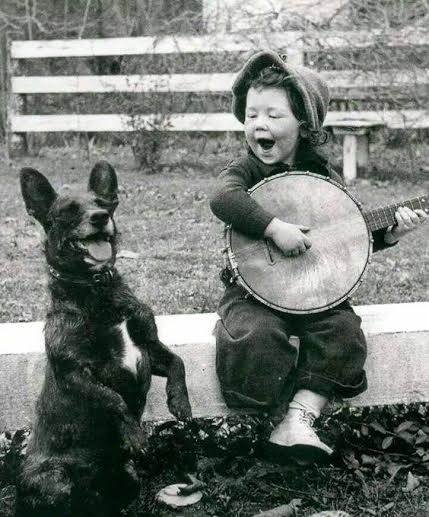
Charlie and Rex played together every day, but not like most. Little boys and mutts were usually fast friends, playing tag or chase or tug-of-war. But not these two. Charlie’s dad got him the banjo the same time he got him the dog. Sure, the banjo wasn’t child-sized. Mr. Jason Reinsch didn’t have enough money to buy something that Charlie would outgrow soon enough. So he got him an adult one at a used musical instrument store. He got Rex from what he liked to think of as the used dog store.

There were a lot of choices of instruments there – all castoffs from the hundreds of hopeful people who came to their city every month, trying to become the next big star. Trouble was that very few of them had much talent, and even fewer had the discipline to make anything of it. There were instruments in there that had been bought and sold a half-dozen times, all at a small profit to Zeke, the owner. He didn’t want to charge too much, but he had bills to pay the same as anybody else, so he did what he had to do.

Charlie had never met Zeke or anybody else in the music business before then, but things changed. Once word got out about his act with Rex, he met nearly everybody who was attached to the music business. It seemed like that was most of the town in one way or another. If they weren’t actual musicians, they were songwriters, or producers, or agents, or roadies, or fans. Everybody wanted to see Charlie and Rex play. It hadn’t been like that at the beginning.

Charlie first learned bluegrass songs because that was what his dad knew. Why try to pretend to be an expert in something you know nothing about? That was a sure path to ruin. No, best to stick with what you know and build up on that. It wasn’t long before he was picking out a passable rendition of such classics as “Muddy Road to Ducktown” and “Dream of a Miner’s Child”. The latter was especially well-received because he hammed it up with a little soot on his cheeks to play the part.

He wasn’t a miner’s child, of course, but there were some similarities. His dad, Jason, dug out precious gems in a way – he was a picker. He never could see a way to having a full-time job, even when he had a wife and five children to support. He was too independent for that. He wasn’t one to submit to a boss, especially one who thought he could tell Jason how to complete the task he’d never even personally tried. Why did so many businesses think it was a good idea to have a supervisor who was a stranger to the task at hand? He had bosses try to tell him what to do in his first couple of jobs, thought better of it, and decided that as soon as he could, he’d never have anybody above him

Times were sure lean when he was married with children. All those mouths to feed and backs to clothe! A few years ago his wife and the children had wanted a dog and he put his foot down. He couldn’t see clear to how that would even be possible. It was hard enough making do with the earnings he made from up-selling his finds to antique malls and consignment shops. Did they expect him to rent a booth at the flea market as well to pay for the dog’s needs? That was too much like what he was trying to avoid.

Spring left him and took four of the kids one afternoon to her sister’s house and never came back. Jason had taken Charlie to the hardware store to get some chicken wire. He had the idea that raising his own chickens would save a lot of money in the long run, what with not having to buy eggs or meat ever again. He didn’t know anything about raising chickens, but he hadn’t known anything about raising children either and hadn’t done too bad. Or so he thought.

Spring was fed up with his get-rich-quick schemes that always turned out to be get-poor-slow ones instead. He never gave up, which in some situations is an admirable trait. But sometimes it is good to know when the time has come to move on and let go.

Like now. Spring was through with his promises that never work fulfilled, his dreams that seemed more like nightmares. Without even leaving a note, she left. Sure, she missed Charlie, but four other children were plenty enough to keep up with, and Charlie had been Jason’s favorite after all.

Jason noticed the quiet first when he got home. It seemed so peaceful. He couldn’t ever remember a time when the house didn’t have at least some noise from some child banging on something or his wife complaining about something else. He then noticed why it was so quiet. It was just him and Charlie there. This was unusual for his wife to leave without saying anything.

He was so grateful for the quiet that he decided to take a nap right then and there in the middle of the day. The last time he’d done that he’d been in kindergarten. It was just as delicious and just as needed now. Jason decided he’d take a nap every day from now on out. This was yet another reason not having to work for “the man” was a great idea. He could nap anytime he felt like it.

What did Spring know anyway? Always whining at him about how he needed to grow up and be a man. What did she know about being a man? She wasn’t one. She had no idea how hard it was to carry all this responsibility. It was a miracle he hadn’t snapped like some guys did and started killing people. Mass murder and road rage came from the same root after all – unexpressed anger. Jason figured it was best to not get angry in the first place, so he avoided everything and everyone that made him angry. Well, except for his wife of course. He meant it when he said his vows. Divorce wasn’t an option in his mind, no matter how hard it got.

Things were easier now that it was just him and Charlie. Less to keep up with. Sure it was harder without Mary to keep on top of the household things, but he could manage. He did before he met her, didn’t he? If the dishes didn’t get washed for a week, who would it bother? It seemed a waste of time to have to do it so often. She was always nagging about every little thing. He was better off with her elsewhere. He kind of missed the other kids, but Charlie really was his favorite. This meant they got to spend more time together, undisturbed by everyone else.

Of course, with Mary gone, he had to keep up with Charlie all the time now. He was too young to leave alone at home, like you could with a dog. That was how Jason came up with the idea of getting a dog and teaching them both to sing for their supper. This way he could set them outside on the curb to perform while he was doing the grocery shopping. The home farm hadn’t yet taken off like he thought, so there were still carrots and broccoli and potatoes to buy. Even when his crop did come in, he’d still have to go get milk and fruit. No way was he going to raise a cow or fruit trees. Too much work, and Jason was all about putting in the least amount of effort. If he could get someone else to do the work for him, all the better.

Charlie took to the banjo like a duck takes to water, and Rex was happy to howl along. Jason hadn’t figured having him as part of the act but it was sure funny to see him crooning in more or less in the right pitch. His timing was a little off but practice would fix that. Plus, he soon realized, people weren’t as likely to call the authorities when they saw them together. It was as if they thought the dog was a suitable guardian for Charlie, little as he was. Alone, they thought he was abandoned or had wandered off and tended to call the police to check up on things. But the dog there? That was okay somehow and they let them be.

Jason was through trying to figure out why people thought and acted the way they did, so as long as things worked out in his favor. His wife leaving him was certainly working out, better than he’d ever expected. Not like he’d even imagine she’d leave. But he certainly wasn’t one to pass up a good thing that came his way. That was part of the picker mentality, after all.

The wooden dolly

doll2


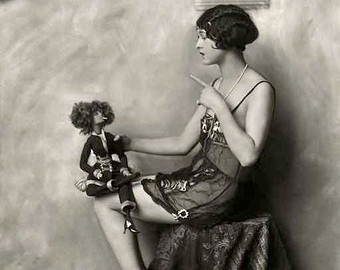
Maybelle was a bad doll, but she couldn’t help it. The wood that she’d been carved from was terribly damaged. Only one person knew that, and he wasn’t telling. He couldn’t. He was dead. The act of creating her had been the last thing he did. He hadn’t planned it that way.

Drogon was the village doctor – medical and otherwise. If you were out of sorts, you went to Drogon. Before that you’d have gone to Drogon’s father, and now you’d have to go to Drogon’s son, even though he was only seven. These kinds of doctors didn’t get trained in schools, or even by their parents. There was no apprenticeship. The moment the father breathed his last, his spirit and everything he’d learned traveled into the son. It had gone on so long that everybody in the village accepted it as normal, just like how flowers came out in the spring and leaves went away in the fall. The village was many miles from any other so the residents had no way of knowing this was unusual. It was only in the past decade that they’d even learned they weren’t the only people in this country, or even on the planet.

They’d never ventured any further than a few feet from “the edge of the world” as they called it. Why would they? Everything they needed was here. Exploration comes from want and need. If you have everything you want or need, you don’t tend to go exploring. Art was created for the same reason – out of a sense of lack and loss. Folks who felt content weren’t artists. Artists were forever plagued to create even more art, because what they made never felt quite right to them. The fact that they had a sense of something missing in the world caused them to make art – but then still feel incomplete.

Drogon was an artist as well as a doctor – never satisfied with his work. He was certain he could do better with his healing. This was unlikely, since he’d inherited 16 generations worth of healing knowledge when his father died. Everything his father had learned had passed on to him, as it had happened to himself when Drogon’s grandfather had died. It was an amazing process. One day you were yourself, the next you had all these voices in your head giving you unsolicited advice on what to do. It was a little like a family reunion but only one person heard the jokes, and thankfully nobody brought the green bean casserole.

Not many years after their first visit from the outside (as everything other than the village was called), Drogon had a visitor from very far away. He was told that everyone there spoke a different language than him and thought differently, acted differently, dressed differently. He was told that they weren’t as clever as the villagers, because they couldn’t make up stories to entertain themselves in the evenings. He was shocked to learn that hundreds of people would even pay to sit and listen to a person entertain them, to tell them stories, even hearing stories through the air on something called television, rather than in person.  Drogon thought that there must be a huge drought on stories there to have to go to that extreme.

This visitor wanted Drogon to make her a very special doll – one that could tell stories to her people. She’d had a successful career as a ventriloquist, but this would be different. This would be special. This would be so amazing that she could retire early, at the top of her game. She wouldn’t have to suffer the indignity of having to do ads for life insurance or hearing aids in her later years, as so many of her fellow performers did. She wouldn’t have to hawk (or hock) anything. She’d be set, if only he would make this new dummy with some of his magic. She told him nothing of her own needs – only that he would be helping her people with their story-sickness.

Drogon had assured her that he had no such skill, no ability to make wood talk, but she was persistent, and he soon felt sorry for these people so far away who had to pay someone to do something they could do for themselves. He promised nothing, but said he would try. That night, he did something he’d never done before – he called a family conference.

That night, he called together all 16 generations of healers from his family. Never before had Drogon even attempted to rouse them. Normally they were just there in his head when he needed them. But this was different. This was a sickness as sure as malaria, as certain as cholera. To be without stories was a sickness of the soul, a certain death. Sure, you could live without stories, but it would only be half-life, a sorry existence. He told his ancestors, all those healers before him, that they would be giving the greatest gift of healing they could ever give if they would do this one thing for him.

It took them eight days to agree to try, and another ten to figure out how. Three more days and the performer from the faraway country was leaving. Drogon had to act soon on their suggestion. He wasn’t sure if it would work but he had to try. Early the next morning, before the sun had risen but after the birds have begun to sing, he went to the center of the village to the story tree. This was the tree where they all met every evening for stories and at least once a week for council. It was the center of the village. As far as anyone knew, it was the reason the village was there.

The tree at the center of the village was older than memory and bigger than dreams. A dozen grown men could stand around it with arms outstretched and embrace it in a circle. Its branches stretched out 40 feet all around and were thick enough to provide shade on the hottest of days and protection on the wettest ones too. Drogon looked at it, this member of the village he’d known the longest, and told it his tale. He asked it for its permission to do what must be done to cure the people he’d never seen, would never see. He told the tree that they would sing songs about it for years in the future, to honor its sacrifice of itself. There was no answer back. He hadn’t expected one, but he had tried all the same. He’d tried because to not try would have meant the guilt of what he was about to do would be on him and his descendants forever.

He assumed all must be well with the tree’s silence. “In silence it went to the slaughter, a willing sacrifice, the cure for their disease.” The lines of a half-forgotten prophecy came to him then and he felt better. Surely it was about this time, and this event? He felt the odd tingle of power that always happened when a prophecy came true, when to be became now.

With spirit ghosts from all of his ancestors helping, he had the tree chopped down in less than an hour, and quietly enough that none of the villagers awoke.

He had selected one log to use for the doll.  It was from the heart of the tree, and was a warm sepia, the color of dry autumn leaves, the color of coffee with a hint of cream, the color of the people it had loved for so long.  He had planned to carve it himself afterwards to complete the ritual, but first he had to call the spirit of the tree into it.

Right now it was like any other spirit after a trauma – floating around in the air, hovering close to its body.  Car accident victims were the same. The spirit gets pushed out before it has a chance to realize that the body is no longer a safe vehicle for it. Meanwhile, it hasn’t prepared itself for the journey it must now embark upon to return to the All-spirit.

Many souls think they have years before them to prepare for that mapless and solitary trip. Some are surprised at a sudden death and they linger around the body longer than they ought. There was a danger to living humans in these places – the spirit might try to take over, to evict the living soul, or to try to double-up. This led to what the villagers called “possession”, and what Westerners called “mental illness”.  Some spirits stayed in the area of the accident for weeks afterwards, the body buried elsewhere. This meant that it was possible to cross paths with a homeless spirit without even realizing it. Perhaps this was why some people in America had started putting up roadside memorials at the site of a fatal car crash – to subtly warn others of the risk of contamination. Perhaps they knew this truth deep down, on a subconscious level.

Drogon meant to call the spirit into the wood but it was harder than he’d imagined. None of his ancestors had ever been through anything this immense, so they couldn’t offer anything useful in the way of advice or warning.  They were all winging it.  They knew it was in their best interest, as a group, to be as careful as possible.  This much energy in one place could possibly make all of them wink out of existence.

There was a reason that tree had been so big – it had held the hopes of the village for thousands of years. It had fed them with stories the same as a mother feeds her babies with milk from herself.  It had sheltered them as a mother hen shelters her chicks.  All of that spirit was too much to try to condense into one tiny log, but it tried.  Perhaps the tree wanted to help out those nameless people who were so far away. Perhaps it trusted the village doctor, who had sat under its branches in the cool of the evening, just like his father and his father on back into the mists of time. He wouldn’t bring harm, no, not him.  So the tree sacrificed itself, went easily, almost willingly.  And yet it still was too much spirit to distill down into one log meant for one little doll.  The energy poured in, but once the log was full (over-full, actually, in the same way you can cram more sugar into tea if you pour it in while it is hot), it spilled out, and up, and over Drogon, and in a flash of blue-violet light, embraced him, and erased him.

The sound that was created in that moment was like the sound of a waterfall swollen by spring rains, or that of a thousand bees swarming to find a new nest.  It was sudden and sure and scary, like a lion before it charges upon a hyena foolish enough to prey upon his family.  It was then that the rest of the villagers awoke to discover the remains of Drogon next to the felled tree.  They ran to find Drogon’s son, knowing that he would now be able to explain what happened. The only reason they knew it was Drogon was from his clothes and the beaded jewelry he always wore.  His body had been reduced to ash.

Drogon’s son, only seven years old but now the village doctor, took it upon himself to complete the doll.  It had to be done.  Otherwise, the death of the tree would have been in vain.  He also had to atone for the actions of his father, as well as the ancestors who had agreed to this disastrous plan.

Out of a sense of guilt, the lady from the faraway land offered the villagers ten times the amount of money for the doll than she had originally agreed to. They wanted nothing – no money, no school, no hospital.  Nothing could repay them for the loss of their tree.  To accept payment would be to cheapen its sacrifice.  They gave her the completed doll, hoping to never see it or her ever again.

The lady went on to become famous for her ventriloquist act, retiring earlier than she’d hoped. Her fans were amazed at how much better she had become. The skits were sharper, wittier, if a little edgy these days.  They marveled at how adept she had become at throwing her voice without apparently having her mouth open.

She kept the doll with her all the time to keep her secret.  She lived alone for the same reason.  When she had first returned from her trip, she was living in an apartment, but soon made enough to move to a large home, far away from people.  This was good, because otherwise they would have heard the wooden dolly arguing with her owner.

It all came to an end one humid summer night when the home went up in flames, reducing both the lady and the doll to ashes.  Arson investigators scoured the ruined property shaking their heads.   They agreed that the fire looked like it was set on purpose by the doll, but since this made no sense, they quietly agreed to officially state that the performer had dropped a cigarette while smoking in bed.