Don’t worry about it. You can’t do it wrong. Whatever you want to do is correct. This is an excuse to play and express yourself in a new way. Nobody has to see it, so you don’t have to worry about it looking “right”. You don’t have to be an artist to enjoy art journaling.
Remember “A picture is worth a thousand words”? You can often express yourself in ways you’d never have words for by doodling, scribbling, or splashing paint on the page.
Cut and paste is a totally legitimate form of expression. I use magazine cut-outs all the time.
This doesn’t have to be an expensive hobby. Often it is best to start out with a simple inexpensive journal that you don’t especially love. If it is too precious, you won’t feel free to cut into it or paint on it.
It is good to pick a journal that you enjoy holding and is portable if you are going to sketch away from home. I like one that has a spiral spine so I can work on just one side at a time. Good paper matters – you want something that will hold up to what materials you are using. If you are using wet mediums you’ll want to use thicker paper so it won’t warp.
If you are going to be gluing things into your journal, go ahead and cut out every 5th page before you even start. This gives the journal room to absorb the extra bulk without making it splay open or breaking the spine.
You can combine scrapbooking, journaling, and sketching. There are no limits to this art form. You can glue in concert tickets or menus from a memorable evening. You can take photos and print them out and glue them in.
If sketching people who are moving (like musicians or workers), watch them for about 5 minutes. They will have a ‘default” position they will return to. Roughly sketch that position. When they move out, sketch what is around them. When they return, add more to that part.
Most people won’t even realize you are sketching them because they are so distracted by what they are doing. But try to be polite and discrete about it anyway. People are best to sketch when they are being themselves.
Sketching isn’t about making a photograph. You’ll need to leave some things out. The goal is to capture an impression – not to make a perfect replica of what was there.
Leave space in your sketch to write in notes. Things I like to include – day, time, how long the sketch took, location, what was going on (why was I there – was there a special event?) and weather conditions if I am outside. Consider using an interesting ink color.
There are many different materials to sketch with. I like using watercolor pencils. They are portable and easy to work with in the field. I add water using a small brush later.
Charlie Jones was an extra on the set of a second-rate science-fiction
series, but he never took off his costume. He couldn’t. The other actors just
thought he was a method actor, that staying in his costume meant staying in
character. They didn’t know how he could possibly endure the heat in that suit,
or how he got the fake fur to be so lustrous and soft. The trick is that it wasn’t
a trick. He really was an alien. Sure, he wasn’t a “Graglethorp” or whatever
silly random assortment of letters the writers came up with. He was an Acthun,
of the planet Acthunis, in the Gamma quadrant. Of course, his people didn’t
call it the “Gamma” anything, seeing as they didn’t know Greek and they
certainly didn’t think of themselves as third in line. “Gamma” only makes sense
if you think of yourself as first (Alpha) and you’ve already found your first
neighboring quadrant with more planets. It was kind of how many indigenous cultures
simply called themselves “The People” since they had no reason to differentiate
between themselves and other humans. As far as they know they were the only
humans.
Charlie Jones had an Acthun name, but it wasn’t pronounceable
to humans. Their tongues would need to be bifurcated in order to get the right
trill. And even if he said it humans tended to cover up their ears because the
pitch was so high. So he came up with a “normal” name, one that wouldn’t mark
him as foreign. He really needed this job to work out and couldn’t afford to be
discriminated against, even unintentionally. He had a family at home that was
depending on him to send back money.
He couldn’t wire transfer it, or mail it. PayPal wouldn’t
work for off-world bank accounts (not yet). So once he got his check cashed,
he’d photograph half of the money, email the picture to the neighborhood
administrator (who had a Gmail account like everybody else) and then burn the
money so he couldn’t use it. The administrator would then credit his family’s
account with the appropriate amount (once the exchange rate was taken into
consideration) and then they could pay their bills.
There weren’t a lot of bills to pay, but even a little is too
much when you don’t have an income. Only Charlie was allowed to work, being the
only one in the family above 20 and below 50. And male, of course. Everyone
else was forbidden by law to work, it being seen as too much of a hardship.
Most Acthuns worked the same job nonstop for 30 years and then retired, some to
plenty and some to poverty. The jobs were chosen for them in high school. It
was believed that by then your personality and aptitude were locked. Everyone took
a series of tests and their appropriate career was computed for them. Some care
was taken to ensure that the job would be something they would like and be good
at it, but it wasn’t an exact science. Mistakes were sometimes made, but
usually the citizen just quietly endured, or took up drinking cactus wine to
cope.
But not Charlie. He’d been unhappy with his job since the
first week, after the (inadequate) apprenticeship was over. He was sure the
counselor had made a mistake, maybe swapped his test with someone else’s, or
transposed a number when typing in the data. S/he assured him that wasn’t
possible because s/he been doing this job for 20 years and there’d never been a
complaint.
S/he was an exception, a non-male who was allowed to work.
Not a female, and yet not a male, but something other, undefined. The Acthuns understood
that there were shades of reality, that rarely was anything 100% one way or
another. They understood the concept of “gray” and were amused that was the
term for extraterrestrial visitors used on Earth, along with “alien”. So they
had a third gender, and these citizens were allowed to work if they wanted to,
and could choose any job not already assigned to a male. But they were not
obliged to work and could collect the same communal salary that unattached females
and seniors were entitled to if they had no male to support them.
But Charlie had to work. It wasn’t optional. And he certainly
didn’t want to work in the factory he’d been assigned to. Not for even a year,
and certainly not for 30 years. He just couldn’t bear the idea of it. Why had
he chosen to be born male? All children were told us – told that they had made
a “soul contract” before being born as to who they be. This may or may not have
been true, but it was a good story to keep the citizens in line. This way, they
thought of their lot in life not as something done to them, but somehow their
own fault.
Charlie was a renegade as far as the Acthun way went. He
refused his assignment, rebelled against the convention that he chose his
unfulfilling and frankly unsuitable career, and even his gender. So he sweet-talked
a former classmate and stowed away inside the first transport ship to Earth.
The Acthuns regularly made trips to and from Earth to restock and refresh from
the vast breeding supply of cows there, who they used as mates. Their own gene
pool had gotten shallow over the decades-long war/famine on their planet and
they needed new blood. After enough survey teams had tested Earth’s nearest
analog to their biology and found it acceptable, the ships began removing cows
to use as broodmares. They never took bulls after that first unfortunate incident.
It was decided that Acthun males could mate with the cows, but the females
would only mate with other Acthuns. The cows were shipped back after five seasons,
out of concern some do-gooder would start expecting them to be granted
citizenship. Imagine that! A cow, a full citizen! It had been brought to
the planet as a servant, a slave, even.
It could not be thought of as even remotely equal to them. That would
upset the entire social system.
Charlie had no plans of being an Earth citizen. He was on the
planet illegally, a true alien. So he kept a low profile – as low as possible,
looking how he looks – and tried to make enough money to support his family and
hopefully enough more to pay to get a second (and hopefully better) career
assigned to him when he returned.
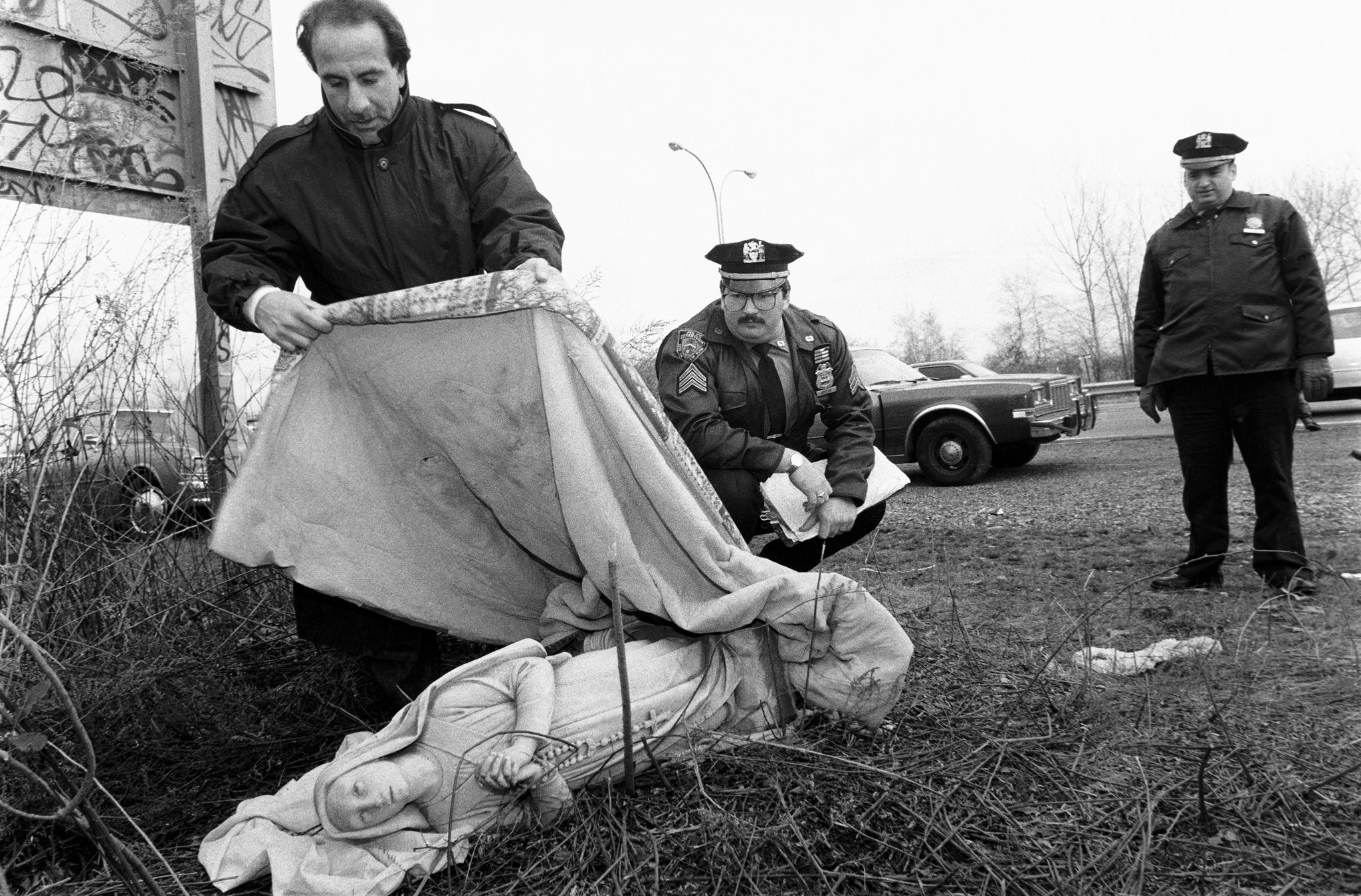
It looked like the death of the saints, all
over the town. One by one the saint figurines were found, toppled over. The
town authorities were sure it was teenagers, bored and unsupervised, but the
usual suspects had verifiable alibis. No, this was an event of a different
sort.
They decided to look with different eyes. All of
the saint figurines on the East side were female, and all were pointed in the
same direction. The seemed unusual. At first they thought maybe the perpetrator
was right handed, and had pushed the statues down going across himself. But
then when the detectives looked in other parts of the town, they realized that the
statues were oriented in slightly different ways. So some looked like they were
pushed forward, some backward, some to the right.
The lines were plotted on a map and all led to the
oldest funeral home in town. “Doc” Brown had run the place since his grandpa
died, having inherited the business since he failed out of medical school. His
grades weren’t good enough for living people, but his skills were plenty for the
dead.
His grandpa took him on as an apprentice all
those years back, getting him to drive the pick-up van to transport the bodies.
His Papa wasn’t too thrilled that his son wasn’t going to be a doctor. He
wanted his progeny to carry on his dreams, not understanding that each
generation has its own burdens to carry and doesn’t have time for the past. It
isn’t fair to expect somebody else to live your life for you, after all.
Was that the reason the saint statues were
pointed towards it? A dream deferred, an accidental career? Was that the
reason, or was it something darker? Psychics were called in after the
detectives drew a blank. The newspapers weren’t informed of the true nature of
these outside consultants, but they suspected. The police had no need to be so
cautious – the town was a lot more open-minded than they could have ever
suspected.
The psychics pulled out their cards and sticks
and crystals. They lit incense at sites. They dowsed, they chanted, and still they
had no idea what it all meant. It was only when Bessie Maguire had a dream about
the statues that anybody had any clue what it all meant.
Now Ms. Maguire was as quiet as a church mouse
most of the time. She kept to herself and never caused a fuss, as you might
expect of an elderly spinster. She’d taught kindergarten most of her life, and
if you can’t trust a kindergarten teacher I don’t know who you can trust. She
didn’t want to share about her dream, but it was so vivid she knew she had to tell
somebody. So she went to talk with her pastor. He said she’d have to tell the
police, and who was she to go against the pastor’s orders? So down she went to
Central and told them all about her dream.
The statues were pointed to the funeral home not
because of what it is, but because of what it was. Long ago, way
past living memory, that part of town was an oak grove. Not maple, or even
chestnut, but oak. That was important. The trees had all been tall and thick,
creating a sanctuary of stillness. No pagans worshiped there, but that didn’t
matter to the oaks. This was long before the old religions had been
rediscovered, or invented, by New Age folks. Nobody in these parts knew the old
ways, divorced as they were from the old country. But the oaks still knew. They
knew the same way all the cherry trees across the world knew when it was time
to bloom and when it was time to drop their petals like some kind of spring
snowfall.
But what the oaks knew was darker stuff that
spoke of more than just impermanence, but transcendence. The oaks spoke of
living on in the next generation, not just as an ancestor or as a memory, but
in actuality. The oaks knew that they could hide themselves within every acorn,
not as a half but as a whole. It was parthenogenesis. The whole grove was a
shrine to Athena, goddess of wisdom and it was filled with owls.
So it was fitting that this Ms. Maguire, this maiden,
had a vision about this place, as Athena was not only a maiden but born from
the head of her father Zeus, the God of the gods. There was no coupling in her
creation. She was fully made, complete, not half of her parent, but whole. She
was Zeus, but in a different arrangement of elements, in the same way a lump of
coal is also a diamond. One wasn’t better than the other, in spite of the
dollar amount. A diamond won’t keep you warm or cook your food, after all.
And then the strangest thing started happening.
The bodies in that morgue didn’t stay dead. But only the female ones. It didn’t
matter if they were maidens or not, they woke up, completely healed of whatever
had ailed them. Maybe this is why it was only the female saints who were affected.
But even stranger, the newly reanimated acted differently. They looked the same
as long as they been in the cooler when the Event happened, but they were
different somehow.
Nobody knew what triggered the Event. All they
knew was that there had been a strange advance notice that something was up
when the saints all toppled over. Had it begun then? Or long ago? When does a
person begin – when they are born, when they are conceived, when their parents
meet for the first time? Or even before that?
Does it matter? Because now was all the town
could handle. They didn’t have the energy for philosophy. Now they had to deal
with people coming back to life. The relatives had already moved into their old
homes. The estate process had already begun. The casseroles that had been
brought over by kind neighbors and dutiful church members weren’t finished, but
that was to be expected.
Here’s one of the ways that the second-lifers
acted differently – they could talk with owls. I don’t mean that they could imitate
their calls, but that they could actually understand what the owls were saying.
It turned out that the myth was true – the owls were indeed speaking about upcoming
deaths. They didn’t cause the deaths. They just knew, somehow, and talked about
it in the same way that some people talked about the weather. But the second-lifers
didn’t share this information with the regular people. They couldn’t handle the
truth anyway.
Simon was a simian, but that’s not all. He had a pet human.
Sure, he was careful about it. He made the human use a leash on him to make it
look kosher. It wouldn’t do to have the authorities figure him out before he
was ready to show his paw.
Sure, the human would hit him every now and then for show, to
make it look like he was in charge. And Simon would snarl at him or cower,
depending on the audience. It was all for show. The human knew the right force
to use and how to pull back the stick just in time. He knew how to sell the
blow so the punters would think he was in charge. But they both knew better.
Simon called all the shots, always had.
Ever since he found his human alone and penniless in the side
alley down the way from the tobacco shop, he knew his luck had changed. Now he
could actually be in show business instead of begging in the streets. A monkey
without a human was a nuisance. Everybody knew that. But a monkey with a human
– now that was an act. People virtually lined up to put money in his little tin
cup. Together they made a pretty penny with their hustle.
Sometimes he got the human to put strings on him to make it
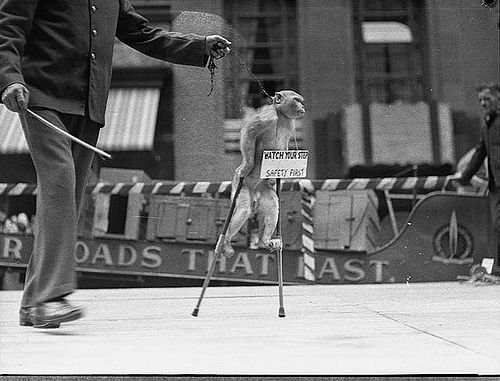
look like he was a marionette. Sometimes he’d walk around on stilts with a
sign, some public service announcement. They’d do that on days when the cops
were extra anxious to pop somebody for something. On those days they didn’t
beg, but they still needed to go out to build their audience. Familiarity was
important. Most people didn’t put money in the cup the first time they saw the
pair.
The punters needed to see them several times, see others put
money in first, to know what to do. It was a true hustle. It took a lot more
finesse than you’d think. But they never did it too much. Just enough to afford
a two bedroom walk-up on the East side, with enough left over to sponsor
experiments in brain transfers.
Simon couldn’t wait to be done with his body. Nobody ever
took him seriously. Who would? He was thankful that taboo in this culture kept
him from being seen as food. The performing pigs and chickens didn’t have a
chance once their skills started to wane. Their humans turned them straight into
supper without so much as a “by your leave”, not like they would have gotten it
anyway. Simon hoped to avoid that unpleasant experience long before it was a
possibility.
That’s why he was sponsoring research to transfer his
consciousness into his human. It seemed simple enough on the surface. The brain
was basically an electromagnetic medium. It seemed like it should be possible
to re-record over what was there, laying down a new recording. His recording.
Of his mind.
He didn’t want anything as messy as an actual brain
transplant, and he knew it wasn’t possible anyway, the differing sizes of the
brains being the first issue. But also there was the matter of wiring of the
nerves. Maybe he’d be able to think, but not able to talk or move. And if the
transplant didn’t work, it might not be reversible. No, Simon wanted a sure
thing, and he wanted it soon. But he was prepared to wait long enough to make
sure it worked. In the meantime he’d continue the hustle and keep his human in
the dark as to his plans.
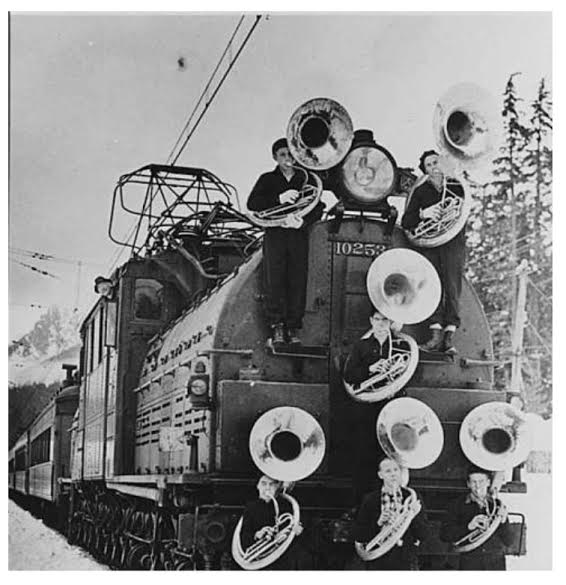
The tuba train came to town this year. We’d wanted the circus, but somebody objected, saying it was cruel to the animals. How was it cruel? They got fed lots better than they would in the wild, and were safe from predators. All they had to do for these gifts was to do a few tricks. They should be grateful – the animals and the bleeding hearts. But they weren’t – surly and snappish, and this was both groups! It was hard to tell who was more upset at this arrangement – the panthers or the protesters. But the city couldn’t afford another lawsuit so we went with the Tuba Train instead. Lord knows, it didn’t feel any different. Instead of tigers we had tuba players. Both had to perform, both were away from their homes. Perhaps the tuba players were fed better, and perhaps their enclosures were better – windows instead of bars, and they had the ability to open and close the door to their cabins. But was it the fault of the people that they had opposable thumbs and better self-control? The tigers would do better if they could, I’m sure.
Who am I? Just your faithful council person, Lee McGee. I’ve held this office for nigh on a dozen years by now, and I can’t think of anything else I’d rather do. That’s good, because I can’t think of anybody else in this one stoplight town who would rather do this job for me.
Its lonely work, being a council person. There’s a lot to keep up with and not a lot of training. You have to figure it out as you go most of the time. Some of it is common sense, but maybe I think that because it makes sense to me. Some people don’t have common sense at all, so maybe it isn’t that common. Maybe it needs to be taught in schools alongside the home ec. classes. Better to teach it twice and be safe than not at all.
You see, this little town has all sorts of classes that everybody has to take and when I say everybody, I mean everybody. Of course, all the children have to take the curriculum – no homeschooling here, no high school dropouts here, but also the adults if they moved here after the classes started. No exceptions. It wouldn’t do to have the kiddos learning something that wasn’t reinforced at home.
We even have fines and penalties for not going along with the curriculum. Who cares if you take the class if you don’t follow it? It was just like getting a driver’s license. Sure, you could say you were going to follow the rules of the road, but none of that mattered until you actually got out behind the wheel.
So we have no illiteracy here in our little town. Not only can everybody read, everybody does read. Our library is well stocked and well used. Everybody reads whatever they wants, as long as it is at their reading level. If someone was consistently getting easy books, they’d get a visit from a literacy mentor to figure out what sort of assistance or incentive they needed. Sometimes they needed audiobooks because they had a visual processing issue. Sometimes they needed time management help, to make sure they had enough time to read. A minimum of an hour a day was expected. But sometimes they were just bored and understimulated. Then they’d get a list of books custom-made for them, like how a physical therapist would create an exercise regime for a patient with a bum leg.
We have no divorce here either. Don’t need to. People don’t just up and marry here. They understand that forever is forever. There are tests and trainings everybody goes through, and lots of counseling. The whole community has to agree that it’s a good match, and then agree to help a couple when, not if, they hit a snag.
Yes, we’re like one big family here. Not necessarily happy all the time, but not miserable neither. We work together to make it through the thick and thin times and we all get by tolerably.
This is one of the thick times, when we get to import a little entertainment to our fair burg. We don’t usually splurge like this, seeing as how it’s better to save than spend so we have spare when times get tight. But you can’t take it all with you, as many of our older (and presumably wiser) citizens are fond of saying, so we splash out for a treat when we’ve saved up enough to cover everybody’s expenses for a year. We all decided to do this in case of a fire or flood, where some (but not all) would have to rebuild. It would be a real hardship if the whole town were involved in some sort of natural disaster, but the law of averages being what it is, we don’t worry about that much. Maybe we’ll change our mind on that by the next census, but for now, for this decade, this is how we operate. We don’t pay insurance premiums though, and that’s nice. We all take care of each other.
Well, as I was saying, we chose the Tuba Train for the special celebration this year. Of course, all our entertainment that comes from out of town comes by train. We don’t have paved roads leading out, and we don’t have an airfield. We just couldn’t justify the expense – not only in money but also in trees. Many people across the world think of trees as filler, as packing material, as something that takes up space. They feel that space should be filled with houses made from the very trees that had been there, not understanding that oxygen wasn’t optional.
There was a lot of debate about bringing in entertainment at all. People who come here sometimes want to stay here, and we can’t have just anybody living here. And those who don’t want to stay might tell others where we are, and that won’t do neither.
Sometimes, even if we have a lot of money left over, we just throw big party or put on a play that involves the whole town and we call it good. That usually is enough to shake out the cobwebs of the older folk and use up some of the gumption of the younger ones.
But sometimes we have outsiders come, and sometimes some of them will stay. I should know. I was one of them, nearly 50 years back. I came here as part of a traveling circus with my parents on those very same train tracks. Yes, I know, most kids run away from home to join the circus. I ran away from the circus to find a home. It was a home that I never knew I needed, never even knew I could ask for or dream about. My parents were a little shocked to learn their only child didn’t want to follow in their eccentric footsteps. They thought they’d provided an ideal home for me, one where I didn’t have to go to school or wear normal clothes. They’d dreamed of such freedom as children, assumed I wanted it too. Maybe it’s human nature to want the opposite of what your parents want, even if it is countercultural.
The tuba train didn’t just have tubas, but it did have only brass instruments. Nothing electronic either. It was all live, all human powered. We like things like that here. All natural. Not extra or amplified. We all use tools, of course, but we’ve taken a page from the Amish book and learned the value of slow and simple. Faster isn’t always better, they proved. Sometimes going fast is just going nowhere. Better to walk at a human pace in everything you do. It gives you a chance to make sure you’re headed in the right direction.
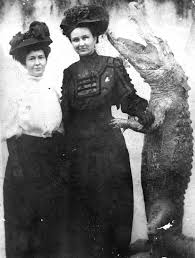
He was her alligator, fair and square. She’d won him at the county fair
some ten years back. It was just a little thing then, of course, but it was the
only prize she’d ever won, so she kept him. Most of the kids at that ball toss
game on the midway simply took their prize (if that’s what you could call it)
to the lake which ran beside the fairgrounds and let it go free. Most had been
talked into this by their mothers who quickly saw the impracticality of such a
pet. The barkers took advantage of this and simply re-captured the little
terrors at a bend further down the lake so as not to be noticed by the punters.
This is why this particular game wasn’t rigged like the rest of the tests of
skill on the midway. Nearly everybody won at this stall. It didn’t cost them
anything in prizes and they made plenty in tokens to play.
But Rosalee didn’t know anything about this. All she knew was
that she’d won something for the first time in her life and it felt good. She
didn’t care that it was an alligator. All she cared about was that her luck had
finally turned and she was going to ride that train for as long as possible.
She made a little wood and wire cage for her alligator so she could take him
with her wherever she went. Her second grade teacher was amused that first day
and decided to incorporate it into the science module of the day. The whole
class learned the difference between alligators and crocodiles, learned what
kind of food they preferred, learned how to take care of them. The second day
her teacher wasn’t as amused. By the end of the week she politely asked Rosalee
to leave him at home from now on, the lesson was over and the joke had worn
thin. But Rosalee wasn’t budging. He was her good luck charm and she had no intention
of ever being more than a few feet away from him. They reached a compromise and
put her in a desk next to the window. Her father was somehow roped into
cobbling together a pen for the ever-growing beast that was situated just
outside. They could both see each other, and she could even reach out her hand
and stroke its rough scales.
Rosalee was the only person who could pet the alligator.
Everybody else he snapped at – especially the vet. She took him to her family
vet for the first check up and all the cats and dogs in the waiting room
huddled under their owner’s chairs while Rosalee was filling out the forms.
When she got to the part on the form for the “name” for the alligator, she
stopped. She didn’t know his name. He’d never told her, but then again she’d
not thought to ask. She didn’t think now was a good time, a name being such a
private thing and this being such a public place, so she wrote “None Yet.”
20 minutes later the nurse called out “Nunyette”. Rosalee
looked around, noticed nobody else got up, looked at the nurse holding her
clipboard, noticed her hand waiving her into the hallway where the exam rooms
were. The nurse was all smiles until she noticed it was an alligator in tow. He
was on a leash, as per office policy, but she was still apprehensive.
The alligator was well behaved up until the vet tried to take
his temperature. They never went back. It was either that or be sued.
It turned out the alligator was a better prize than Rosalee
could’ve ever expected. He was a good protector, didn’t need any entertaining,
and caught all his own food. She didn’t think of him as a pet, but she sure
didn’t think of him as her “baby” like some did about their animal companions.
Ten years later she took him to the town‘s grand coming-out fête as her date.
She knew it would mean she’d never get an invitation to join the Junior League,
but she was OK with that.
She’d always wanted to be an astronaut, ever since she
discovered that plastic helmet in her grandparent’s attic. It had a green visor
that turned the world a magical, alien color when she put it on her head. It
was so much more than wearing tinted sunglasses. Everywhere she looked was
altered. There was no “normal” sneaking in her peripheral vision. That was
covered with the helmet. Sounds were different too – more muffled, more
distant. It made her feel safer, more peaceful, more powerful to wear it.
She was born in a time before there were words for what she
was. “Gifted” they knew for sure, but there was more. She was sensitive,
perhaps overly so. Now she would say it was a gift to feel in an unfeeling
world, but then she thought it a challenge, if not a curse. It was hard to keep
friends. She made them like anyone else. It was easy in the jumble that was
public school. People became friends easily, often for no other reason than
survival. They joined up out of some instinct that said it was dangerous to go
alone into that minefield of strange rules and stranger adults. Best to connect
with others who are equally lost or oppressed. This is why cliques formed after
all. Once the obvious groups were created by hobby or skill, what was often
left were the oddballs, the misfits, the loners. They connected as a way of
self-protection, an unspoken union with no dues or representatives
She’d fit in these groups for about a month or so, just long
enough for her or them to quietly decide that there wasn’t a fit after all and
one side or the other would quit spending time with each other. Thankfully this
was before the era of social media, or as she thought of it now, anti-social
media.
She was 50 now – far past the age of recruits to astronaut
school. She was in good shape and probably could have endured the training, but
it wasn’t even an option. Or so she thought. She looked it up. There were no
age restrictions. The oldest so far was 46. She’d been telling herself “no”
without even asking the question. She just assumed it wasn’t possible, so for
her, it wasn’t. Maybe deep down her former friends knew this about her – knew
her lonely fear of failure, her feckless worry. Perhaps they were afraid of
catching her secret disease of failing before she even began.
But she was a different person now. There had been growth on
her part. It was a blend of self-help books and counseling that finally pushed
her over the edge of her fear. It was like she’d been forever standing at the
cliffside, afraid of falling to her death – all the while not realizing she had
wings.
How could birds know they were birds after all? Their wings
were behind them. Their mothers appeared as if by magic. How could they know
they too had that same magic, waiting to be revealed?
Perhaps her fair-weather friends had done her a favor after
all, without even realizing it. By quietly abandoning her, she’d learned to
value her own company. She’d learned how to be her own friend and how to take
care of things herself. These turned out to be valuable traits in an astronaut.
Because now that is exactly what she was determined to
become. She applied to the program, confident and beaming. She saved up her
money and quit her job so she could commit all her energy to this. There was no
backing out. There was no Plan B. It was A for Astronaut all the way. The moon (at
least) or bust. No glass ceiling for her – she was going to smash through it
with her rocketship.
The program had changed a lot since she had first looked into
it. Every few years she’d read about astronauts or space and think of it as a
loss love, or perhaps a lost dream. Now it was far less physically demanding
and far more mental and emotional – and perhaps even spiritual. Now they didn’t
have to endure many G-Forces, being spun about in centrifuges to ensure they
could survive the ordeal of acceleration and reentry. No, being an astronaut
was a lot easier since the invention of the Hop. Just strap the Hop onto your
wrist, set the dials, and away you went. Within a matter of the blink of an eye
you were there instead of here. Scientist’s weren’t sure how it
worked, but they’d said the same about prescription drugs for years and that
never stopped them. All they knew was that they got the results they were
looking for.
All she was looking for was a chance, so they gave it to her.
Training now was about how to interact with aliens on other planets. Of course,
they weren’t “aliens” while on their home planet. She was. She was the odd one
out, the anomaly when she was there. She was the one who had to adapt
well enough to observe them and be able to return home in one piece. You never
knew what might happen. Just judging how earth people treated their alien
visitors, she knew anything was possible, so it was important to be as
nonthreatening as possible.
It wasn’t possible to assume that the environment would be
hospitable. She’d have to wear a spacesuit to protect against air that wasn’t
of the right balance of gases for human, or ultraviolet rays that were too
harsh, or gravity that was too high or too low. The spaceship had to become the
spacesuit – able to provide a protective shell around the person to make it
possible to explore in safety.
The government had long ago given up the idea of a space
program, so it was handled by other private investors. They were generally in
the tourist trade or in real estate, looking for a place for humans to go when
they got bored.
So now she was testing out the suit in New York City. It
wasn’t New New York – that was in Proxima Centauri 4, of course. But she had to
practice somewhere, and you couldn’t get more alien than a big city that was
populated with all sorts of people. So she’d Hop to New York or Nashville, or
Mumbai or Mongolia, walking around and trying to interact with people. Part of
it was getting used to being stared at and not reacting.
The suits had built-in translators, thankfully, but that only
went so far. She had to understand the meaning beneath the words – the true
message that was being conveyed. That would prove to be the most useful trait
of any astronaut, and that was the one skill that couldn’t be taught. But it
was hard to test for too. You couldn’t just ask someone if they could get along
with anyone. Of course they’d say yes. It had to be proven, time and again,
through various experiments, like what she was doing now.
Long ago, the space program gave precedence to ex-military
for their astronauts. These days, they discovered that ex-retail was the best
way to go. Those people had to know how to be diplomatic at all times, and how
to keep the peace without a weapon. Not true with military folk, who were used
to solving problems with their weapons instead of their words. Peaceful
coexistence was the goal – not colonizing. They learned long ago that it was
best to work and live together with a variety of beings. Too much homogeneity
led to stagnation, an endless loop that would spiral back in on itself
eventually, strangling ideas.
We had a “Commit to Fit” challenge at work recently. Here is the list of all the different activities. We were to do one a day. All of these are good options for getting and staying healthy.


 betsybeadhead
You must be logged in to post a comment.