The little children shall

It had to happen. The children needed to lead. The time of decision was approaching. The time of no turning back. The final test.

Ragnarok wasn’t a precise term, but it was sufficient enough to make people take notice.  Armageddon, the Second coming – the Rapture. Whatever, as long as they took it seriously. As long as they remembered, passed it down from generation to generation, so the idea was set in them, like DNA. It wouldn’t do for them to forget.

But the children – they were the ones we had been waiting for. Not us. That message that came through the Hopi nation wasn’t for us. It was for our children.

But not all of them.

Conservation of matter works with intelligence and ability too. It turns out there is only so much to be handed out. So instead of it being averaged out like it had in the past, it was sharply skewed now.

They  first noticed all the children with autism, with Asperger’s, those on the spectrum. How could they not?

But the others. They are only now appearing. They were among us all along. The bright-eyed ones. The awake ones. The leaders, the visionaries, the inventors.

They were created out of the same stuff as the loners, the suicides, the school shooters. They had the same chance to pass over into the darkness, the danger. Both had the same level of aspiration and anxiety. Both had the same level of craving and desire that are standard issue with all humans.

But the heroes, the saviors, were the ones who had learned to delay their appetites – not to do without, but to shave up. they learned that the best indeed came to those who chose to wait.

They were not born with this ability. They did not have any more “will power” or “discipline” that the other children, the lost children.  They did not have greater IQs either. But somehow they chose the correct path, the slow but sure one, the one that leads to hope, and more importantly, they stayed on it.

The fast way, the quick way, the instant gratification way was the easy love, but the slow quiet death.

They weren’t especially unloved or ignored, these shadow children, these suicides, these school shooters. Some of the saviors were also from broken homes, homes with just a mother, or even just a grandmother. Some of them were equally bullied at school, equally lost and confused.

In many ways they were the same, made up of all the same ramshackle, tumbledown stuff of any normal childhood, the same despair and grief we all experience in isolation, all feeling uniquely alone, unfairly overlooked.

The bright ones, the awake ones, were different in that they chose to not idolize their lack and loss.  They didn’t identify with it. They didn’t name themselves “divorce” or “ignored” or “poor”. They worked with what they had, no matter what it was. They made a torch out of a spark, and used that flame to light the path.

The others fed on their pain, growing it in secret, nursing their injury (the same thing the others used as a stepping stone) and growing it day by day, into a pearl as large as an ocean, a chasm as vast as a canyon.

They grew their pain (the same pain) into a weapon, a feeling of frustration, of being-owed, of an account balance fallen short. They forgot (or never knew) that their pain wasn’t special, wasn’t personal.  Or rather, it was personal, because it was part of being a person.

But they took it as a special unspecialness, an intentional slight, a deliberate attack, instead of as a challenge, a choice.  They could have chosen to rise above, to fly clear of the debris and dirt of the world. They could have chosen to ignore the noise of all kinds that swirl around, but instead chose to allow it to infect them, chose to see it as an attack instead of an opportunity.

The ones who will lead us now, the little children, they will be our healing, if only we will listen to them.

We too have a choice.

Music for Monkeys

music for monkeys

They gave up trying to teach a monkey to type the next Shakespeare play. But since music supposedly calms the savage, they taught him to play a tiny guitar instead. It made sense after all – he could play tunes to calm himself down, rather than a researcher having to do it. Once he had access to the guitar and finally understood that it was for making music and not for hitting people or other monkeys over the head, he calmed down dramatically. Just being able to express himself had the desired effect.

They’d tried to teach Abe how to sign but he wasn’t having it. It didn’t make sense to him – this gesture meant what? It was too abstract for him. Why make a sign with his hand, when he could grunt or scream at them? They eventually figured out what he wanted. Meanwhile, he enjoyed screaming. It was fun and made his keepers (his jailers) so anxious. It was funny to watch, to see how he could make them so upset and nervous.

But then they brought the guitar to him. The jailer played it at first and the tones were different, weren’t like their voices. The jailer even sang – and his voice was different, was kinder. If only they could always speak to him like that!

Abe thought  that maybe they could learn how to talk with music, so these dimwits could finally get him what he wanted faster. The amusement of their confusion was wearing off. He wanted to deal with them as little as possible. Even fighting was getting old.

Finally, after nearly a year of practice, he was ready for his first public performance. He was no longer in his cage – the audience would be shocked to think of how he been imprisoned. Most thought of it as a zoo, and either forgot or overlooked the fact that he didn’t choose to be there. He wasn’t asked when he was taken from his home. It wasn’t voluntary. He didn’t want to be an example of his kind.

Many thought of the zoo as an educational opportunity, a chance for people to learn about animals in a safe and clean environment. They also thought they were doing the animals a favor. The same “safe and clean environment” was so much better than a wilderness home, the people told themselves. They pointed out how the animals lived so much longer in captivity. They didn’t understand that quantity wasn’t the same as quality. Longer wasn’t necessarily better.

Abe was supposed to play a nursery song, one that was easy and would show off his talents. Nothing too complicated or he’d fumble and the audience would stare or laugh. It was important to get this right.

The audience wasn’t just any old audience. They were benefactors, donors, patrons of the arts. It was their generosity that made the “Music for Monkeys” program possible. If this failed, the whole program would end. It was all riding on Abe, but he had not been told this.

Yet he played better than expected, and more. He played flawlessly, with real feeling, for the first 20 minutes. Perhaps something took over then, some deep down part of him, because that feeling came up and out and over and suddenly he was playing a new song, a sad song. A song sadder than standing on the platform as the last train leaves for the evening. A song sadder than the end of summer break. A song so sad that the audience caught the feeling tied up inside it without words, and they understood the pain of imprisonment in the name of “education” or “rescue”. They heard within the notes his longing for a home he would never see again, a family he would never again embrace. It didn’t matter if they might no longer be alive because of disease or poachers. They had lived as monkeys, not as exhibits, as specimens, as one-off examples of their kind, meant to be on display to any and all, young and old, as the epitome of “monkey” to these rubes, these ticket holding members of this permanent circus that is a zoo (sometimes euphemistically termed a “wildlife park” for much the same reason cemeteries are now memorial gardens).

The audience felt through Abe’s new music the joy of waking up with the sunrise, embraced by the arms of a tree, with leaves as a blanket. It felt the joy of wandering every day to see new places and other animals, every night a new bed in a new tree. Every day was the first day for Abe’s kind – a new adventure and excuse to discover. No worries about a car or mortgage or clothes, so no worries about a job or reputation either.

The people thought they were safe because of all they owned but now they understood that it owned them. They had become chained themselves, slowly, but surely. They had put themselves into a zoo of their own making. They had forgotten their own wildness, their own true nature, in their striving to be civilized. Abe, with his monkey music, reminded them of who they really were, and who they could become again.

There wasn’t a dry eye in the audience. When the music finally stopped, when the guitar strings stilled, they all sat in silence for what seemed like forever. Finally a child spoke, and asked Abe what his real name was, the one before his capture. What was the sound his family, blood and otherwise, called him? And he didn’t know. It was lost to him, trained out of him for so many years. So the child gave him a new name, a snippet of that song that awoke them all, as a reminder of who he truly was.

Spring path

spring path

The path was small here, but sure.

Spring had come quickly to this small wood.

I had passed the brook some few hours ago.

There lay those who had meant to waylay me.

Their stories would lie with them now.

Now no-one knew the paths I took.

Now I could change my face, my garb for the last time.


Long had I roamed the world away from men.

They brought me no peace those past times.

Never again would I let down my guard.

Never again would I show them my true face.


In peace I came to this land, and in peace I would leave.

Long had I hoped to find my true home, but it was not to be.

Not yet.


Not until I would see the moon rise over the desert lands again.

The inselbergs I had long ago abandoned lay before me now.

My path has come full circle.

In my heart I am home already.


________

This prose-poem was inspired by a picture I am using as a screen saver. I found it online doing a search for “spring”. The format and length of this piece were determined by the physicality of the journal that I wrote this in.  I chose to make the sentences not wrap around – they had to end when the page ended on the right.  The poem had to be completed on that one page, so I had to plan the finish early. I am also reading an Andre Norton book right now, and that influenced the tone.

The silence of sound

He was seven years old when he learned he was deaf. Born deaf, to Deaf parents, he never knew anything was different about him. His first language was Sign, and it was the only language he needed until it was time to go to school. The only problem was that the school was not within the town. When the town began, there was no need for a school of its own, and the citizens who lived there now all wanted as little taxation as possible. So they sent their children to the nearest town over to go to school.

Haverford was a small town, and a quarter it off it were deaf. Some families were entirely deaf, like how other families all had brown hair or green eyes. It was just the way it was. Some deaf couples had moved here, to join their lives with this unusual community.

You see, everyone here learned Sign from infancy on. It was a way for the babies to talk to their parents before they could use their voices. It was a way for everybody to communicate in crowded bars. It was a way to check if your friend wanted to have a hotdog or a hamburger from 30 yards away in a noisy football arena. It was a good language for everyone to know, whether they could hear or not. More languages meant more brain cells firing, more neurons developing.

It also made the town more welcoming for deaf people, except when it came to schooling. Strangely nobody really thought twice about it, how the school in the next town over separated the hearing kids from the deaf ones. While all classes were taught in English and Sign, the classes with the deaf were different, were lesser than.

It took an outsider to see how. Sometimes an outside perspective can make all the difference. Sometimes “normal” is just what you get used to. Just because you’ve always done it that way, doesn’t mean that is the way it should be.

The deaf children were taught the same subjects, but not in the same way. There wasn’t the depth. The teachers (all hearing) felt they were just biding time, babysitting, not teaching. They had no expectations of their young charges, no hopes for their future. So they didn’t challenge them, didn’t prepare them for life outside of their home town.

In order to graduate every student had to successfully interview for a job, but the advisors did all the work. They would set up the interview, provide an interpreter, and arrange for a taxi. They didn’t show the students how to do any of those things. They might as well have told the students that they were babies and would never grow up. They had never tapped the potential of their students.
It was the outsider who began to question this, to say this was wrong. She had been raised by a deaf mother and hearing father, and knew first-hand how strong the deaf can be if appropriately encouraged. Flowers don’t bloom in gardens that don’t get sun or rain, after all – and people were just the same. She encouraged the town to build its own school, where the students could learn together, regardless of hearing ability. This became what saved the citizens, and knit them into a tighter community, one that was an oasis.

How had this started, this deaf town? The town was founded a century earlier by Benedictine monks, who had all taken a vow of silence. They had all learned Sign to communicate, both with each other and the few lay people they had hired to help them. Everyone had to know the language whether they were there for religious or secular reasons. This ensured the monks didn’t have to break their vow when they had to interact with the workers.

The town had slowly grown up around the monastery. More and more people came – not a lot, mind you, but enough.

But that was before the Soft Revolution, the one that slowly took over the society as a whole, over the course of several decades. It was so subtle, so sly, that people didn’t even realize it was happening.

How did it start? Was it with the “Christians” aligning themselves more with the righteous than with the poor? Was it when they started making church more like a social club than about social justice? Was it when “churches” started protesting at funerals of gay people? Perhaps the push to say “Merry Christmas” instead of the more inclusive and welcoming “happy holidays” was the final blow?

Christians were seen not only as “behind the times” but also as rigid, intolerant, and worst of all, unkind. People left the church, or never joined, because they felt it was irrelevant, or even infantile. “Freethinkers” cried against the pointlessness of the faithful – that they were sheep mindlessly following their master, who sadly was often wanted for tax evasion or sexual immorality.

The church had done it to itself. Nobody had closed the institutions like had occured in the French Revolution. No law had made it happen. But the effect was the same – church was irrelevant, in part because it was irreverent. People hadn’t left church. The church had left the people.

But this little town, this vestige of a silent religious community, remained. Everyone here still used Sign, regardless of whether they could hear or not. It became a tiny oasis in a world of too much noise.

Strangely, surprisingly, it became the center of a new form of faith, one where people listened to God in their hearts instead of from a “leader”. They began to put their faith in an invisible master instead of a visible one. They turned away from following people or institutions or rites or creeds, and started following the One who speaks to us all. This silent community became the new seed of hope in a world all too often distracted and divided.

The oddball

He heard colors.

He saw voices.

People told him he’d gotten it wrong when he said it like this, but he knew better. It took so much effort to tell anybody the truth of what he experienced that it didn’t matter if he told the whole truth, so help him, God.

God was the only one who could help him now, anyway.

The people recoiled when he told them about the voices. What little they knew about mental health warily shuffled to the fore at the word. Everyone knew that test, said quickly, almost as an aside, an afterthought.

“Do you hear voices”, as if that made sense.

“Of course I hear voices”, he wanted to scream. “How do you think I can hear you now? How does anybody hear voices? Don’t we all?”

But they never said the rest. It was assumed, unspoken, perhaps out of fear of raising the spirits. What they meant was “Do you hear voices of people who aren’t here?”

Ghosts perhaps.

Or demons.

They didn’t care. All they knew was it was bad.

But they conveniently forgot about the prophets, the real ones. They heard voices too. Well, to be precise they heard a Voice, the Voice. The prophets were respected. Sometimes ostracized, but respected.

He didn’t want to admit it wasn’t one, though. There were hundreds. He listened to audiobooks to drown them out. Sometimes the voices joined in. Sometimes he couldn’t tell which characters were real, but he didn’t let on about this. It was best not to alarm people more than they already were.

He was an oddball. Everybody knew. There was no denying he stuck out, and yet he was invisible too. He was so unusual in his manner and looks that everybody walked around him, not engaging him, in case he was wild, or dangerous, or both.

They didn’t know why he felt so odd to them. It was the kind of oddness that you didn’t even notice, like bad feng shui, or the house that is always abandoned, or the business that always fails on that one particular corner.

He was like that, ill-fated, no blame to it, but there you go. It doesn’t matter whether there is blame or not to a car accident, either. The damage is the same.

They didn’t realize that their abandonment only worsened the symptoms, only made him sicker and stranger. It was a snake eating its own tail. It was a feedback loop producing only more and more noise.

Perhaps this was why psychiatrists used to be called “alienists” not very long ago. That sense of otherness, of being alone and lonely, of not fitting in, reinforced over the years by unthinking others, made him feel like he was an alien from another country, or planet. Never welcomed, never included, never brought in from the cold to warm by the fire, he drifted, cold, heartless and loveless.

Dog walker

Richard had been dead three days before his wife even noticed his dog was missing. It was an expected death, to be sure. He was 92, after all. They had made most of the arrangements years ago when they left that church, the one they had always gone to, once it started having modern music instead of the good old-fashioned hymns they had grown up with. If they changed something as big as that, no telling what they’d change next. They might say it was okay for men to start wearing dresses. You never knew.

But since they’d always planned on being buried in the churchyard they had to make other plans now. They considered burial in the backyard but thought twice when they remembered trying to put in the garden years ago. Too many rocks! Emma would have a hard time digging it, and they might not be able to count on the children to help. They were always busy – too busy it seemed to notice when their family needed help.

Jack was Richard’s dog through and through. Sure, he’d answer when Emma called him to dinner, but Richard was the one who pampered him, who slipped him treats underneath the table at dinner. Jack was a Jack Russell, feisty and friendly, and loyal as the day was long. Richard thought it was a clever thing to name him after his breed. It didn’t matter what he was named, it turned out. Jack would’ve followed Richard no matter what he had named him.

They had buried Richard in the grand old Catholic cemetery on the hill overlooking downtown Nashville. That location had been the outskirts of the city when it had been consecrated, but that was a century ago. Sure, he wasn’t Catholic, but it turned out some of his family was buried there and since they were Catholic, that was good enough for the keepers of the cemetery. Emma had found this information out when she was doing genealogy research as a favor to the kids. It was a simple matter of asking at the cemetery (and a donation of course) and space was reserved in the family plot for the two of them.

The house had finally cleared out from all of the visitors and Emma finally had time to breathe. She noticed little Jack wasn’t around. She called, but he didn’t come. He didn’t even bark. Oh well, he’ll have to fend for himself. She can’t be tending to everyone she thought. Who was going to look after her, she thought mournfully? She was so tired after all the hullabaloo of the funeral, and putting up the family that had come to pay respects. They were underfoot for a week! She meant to put Jack out of her mind. But then again he was her last connection to Richard. Where was that dog?

Jack had followed Richard. It was as simple as that. Not his body, of course. That wasn’t who Richard really was. That was just a shell after all. Jack had followed the real part of Richard, the only part that mattered. Jack, like all dogs, could see souls. Dogs knew the soul of the person, could see how it was, and more importantly in this case, where it was.

The moment Richard left his body, he walked silently through the walls of his bedroom right to the corner of the barn where Jack was. The family had gathered by that time, awaiting the inevitable. But they, those somewhat interlopers, had banished poor Jack to his summertime lair in the barn, where he liked to keep an eye on the chickens. He would have rather been by Richard’s side in that time of transition.  Jack was the one who had been by him every other day, unlike his children and grandchildren. Who were they to send him off? He was more family than they were. Family has little to do with blood and a lot to do with behavior.

Richard hadn’t been in a state to argue at the time, but now he could do something about it. He’d taken three days to die, to slide out of his body like one would slip out of work clothes. It wasn’t easy at such an age. He’d gotten used to wearing it, and taking his leave of it was harder than he had expected. Being in a body was a habit he’d had all his life and now he had to give it up, like smoking or drinking. It was for the same reason, of course to be free, to be unencumbered, but just the same it was hard to make the change.

But now he was free of the weight of his body, free to go wherever he wanted, however he wanted, and what he wanted most right now was to go on a wander with his best pal, Jack.  He found him in the barn, and it took some effort to get Jack to notice Richard.  He couldn’t whistle or call to his friend like he wanted – one of the disadvantages of an otherwise perfectly pleasant experience, to his mind.  He wondered what all the fuss was about being dead that he’d heard all his life.  Of course, the people who were complaining about it hadn’t ever experienced it.  It was like complaining about going to visit France before you’d even gotten on the plane.  You had no business having an opinion about a place until you’d gone there. But death, unlike France, was a one-way ticket, and all the residents of that unknown land weren’t the ones saying disparaging things about it.  No, that was the living doing that, and what did they know?

Richard had to learn to use new ways of interacting with his old friend now, but fortunately Jack had been waiting for him.  He was surprised to hear Richard call to him, speaking heart to heart, but not see him.  And then he understood that the change had happened, that it was time.  Jack wiggled and shivered over all his body, not just wagging his tail but his whole self. He was overjoyed to be with his master once again, glad to know that he was free of his failing body. They walked out of the barn together, and towards the setting sun.  They had many mountains to climb together.

The missile alert

The missile alert wasn’t a mistake. The island had been targeted. It was real. A missile had been launched. And then it was gone, instantly.

There had been a blip on the radar, an object coming fast. And then there wasn’t. The radar tech had to look again to be sure. He tapped the side of the machine. He hit refresh. And it still wasn’t there. Had it gone into stealth mode? Was there technology they didn’t know about? Was it still coming but they couldn’t see it, had no way of seeing it?

There wasn’t time to send up a pilot to check it out. The initial estimate said 15 minutes. If it was still there, then there was only 12 left.

Should he turn the computer off and back on to reboot? He’d lose a precious two minutes that way. He had already sent the alert out to everyone. Everyone on the island who had a cell phone had been notified. The sirens had gone off. There wasn’t a distinctive wail for “missile” so the usual one for any and every imminent natural disaster was used. Tsunami, volcano, hurricane – it didn’t matter. The same sound was used because it all meant the same thing.

Stop what you were doing right now.
Grab your go bag and seek cover.
Nothing else matters.

But now he wasn’t so sure. He called the nearest radar site and asked to speak to the tech. Email wouldn’t do. He needed to hear it in the other tech’s voice, see what was happening through his eyes.

But that radar too was clear, and that tech too was confused. They ran back the recording. Yes. There had been a bogey. And then there wasn’t.

They decided to say it was a mistake, a bumped switch, human error. Nothing to see here. The truth wasn’t something they could have handled anyway.

Every town had one. Every town, village, city, named and unnamed had one, and only one. One was enough. Not all were needed – only a dozen were required at any one time. In a pinch, only one was truly necessary, but that required a great deal of focus on their part.

When the sirens went off
(for none of them had cell phones, having long ago given up that tech)
– like the Amish who waited 50 years to see if ballpoint pens were safe,
-the rest of society being their coalmine canaries,
they stopped what they were doing, the same as everyone else.

It wouldn’t do to call attention to their sacred work, their holy mission. They could never speak of what they did, never claim credit, never get fame or money for their work. It would cheapen it, tarnish it, make it less like love and more like a one night stand.

They used the only tool they had at hand, but it was the only one they needed. They prayed. They didn’t pray for anything specific, because they would never presume to tell the creator what to do.
They simply prayed to.
They prayed to the One who knew all to do what was best.

They never became anxious or upset during such emergencies, because they knew those reactions were fruitless. They put their faith in God, and God alone.

And God sent the angels,
Elohim, the Lord of hosts,
the commander of the heavenly army of angels,
the One who fights our battles for us,
yes, that God,
the God who defeated enemy armies
with hornets,
with fear,
with walls of water.

That God sent his angels who surrounded the missile, who made it cease to be, who reminded the metal Who created it, and then rendered it
into a thousand billion atoms,
a google’s worth of yes and no,
of positive and negative
and quarks
and up and down
and sideways
and that was enough.

It simply ceased to be, because they reminded it of its true nature, not as a singular weapon of war, made by men, but as many elements of nature made by God, and God alone.

What God has created,
let no man re-create,
or break apart
or make in his own image,
impressing his own will,
his own hardened, angry, violent nature upon.

Nature is not a mirror, not a plastic thing for us to mold to our will, to shape to fit our plans, and ownership is a form of slavery. These people knew this, and knew it well.
And the missile simply wasn’t there anymore.

Monkey boy

monkey boy

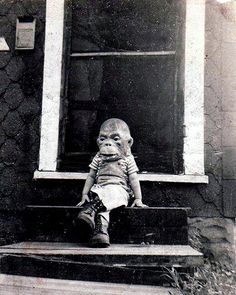
Phil loved his monkey mask. Maybe he loved it more than his big clunky shoes. It was hard to tell. Just to be sure he never wore them separately. Why ruin a good thing?

It didn’t take long for him to settle on this routine. Every day after school he put on his mask and boots and sat on the front stoop. It made the rest of the evening go better. Otherwise he was out of sorts and not really worth being around. If he forgot, his Mom reminded him. She was the one who was most affected by his behavior if he forgot.

All day long at school he thought about being able to wear the mask and the boots, and it made the day tolerable. Sometimes he would hold his hand up showing three fingers to his teacher, meaning “is it 3 o’clock yet?” – meaning “is it time to go home yet?”

Class was unbearable most days. It was too bright, or too noisy, or the food was too rich. Life was too much for Phil, but he didn’t know it. Every day at school his shoulders were tense and his head ached. Only by sitting on the steps with his mask and boots on could he begin to feel somewhat normal again.

He’d asked if he could wear them to school but the teacher said no, said that it would be too distracting to the other children. So the pain of one little boy wasn’t important, but the discomfort of 28 other kids was, apparently. It didn’t make sense. How did she know how they would feel?

Maybe they would like his mask. Maybe they would want one too. Maybe they all felt the same way and all were overwhelmed by the noise, the clutter, the all-too-much-ness of it all. Maybe they were being loud to compensate, to hide their terror.

In the meantime, Phil would continue to sit on the stoop staring at the cars that whizzed by. His Mom could tell what kind of day he’d had by how long he sat outside. Sometimes it was an hour. Rarely was it less than 20 minutes. One day he sat outside like that for nearly 3 hours. When it had become dark his Mom insisted he come in. Sometimes the day was so bad that no length of time outside would fix it. Then it was best to just come in and try again another day.

His mother was unsure if she should teach him better coping techniques since this one seemed to work so well. He was in seventh grade when she realized he’d stopped doing it, and assumed this meant he’d outgrown the need. She couldn’t be further from the truth.

A schoolmate had seen him in his mask on the front porch and told his friends. He’d been walking by on the way to the ballpark and noticed. Enough shrubbery was in the way that he’d not been spotted, but he had no reason to worry. Phil couldn’t see anything anyway in that mask, and that was part of its appeal. But the damage was done. The next day it seemed like the whole school was calling him “monkey boy” and that was it.

The dog-sitter

monkey baby

It was hard to get good help those days. The Brown family had a bear, a young one, mind you, to tend the children. The Nelsons, however, had a dog. You might say having a dog to keep the children company was to be expected, and it was, but not in this way.

Simon was a spaniel mix of some sort. They weren’t sure. It wasn’t like they got him from a kennel. He was found along with his littermates under their back shed one spring day, all mewling and trembling. All of them were cute, but only Simon was attuned to them.

They’d gone to check on the litter several times, admiring the way the mother was caring for them. This was probably her first litter, but she was doing great, like this was her favorite thing to do. The Nelsons had heard of animal mothers instinctually knowing what to do, and this one sure did. They wondered how it was possible that some “lesser” animal could know more about tending an infant than humans did. Maybe humans did know, they’d just forgotten in the race to be “civilized”. Maybe they still knew, very deep down.

They found homes for the rest of the puppies, but Simon they had to keep. He was too perfect to give away. They’d only briefly considered giving him a dog name like King or Spot, but no such name fit him. He really was like a human in dog form, so they gave him a human name. He was a full-fledged member of the family then, albeit one who slept in the garage.

That was until they had their third child. There was no time for taking off from work, no money for daycare. Mr. and Mrs. Nelson’s parents had died long before they got married, so there were no free babysitters to be had. So Simon would have to do.

He was normally a very serious and sober dog, but he became even more so when they put his uniform on. It was as if he knew he was on duty once they dressed him in his apron and cap.

Simon was the best babysitter they could have ever hoped for. He was alert to every cry and always made sure the baby was warm enough. He’d either drag a blanket over her or just lay down next to her.

There was only one problem. The baby thought Simon was her mother, and refused to even recognize her real mother when she returned home from work. It was as if her own mother was a piece of furniture that moved. She didn’t hate her mother – she didn’t even know her to hate her. Simon was all she’d ever needed and not even known it.

Spirit jump

He was fine, and then he wasn’t. It started as a cold, or maybe the flu. A sore throat and weakness in his hands and feet, the afternoon after work. He thought he was just tired after a long week but it was only Tuesday. Brian felt well enough to go to his job on Wednesday only because that was the end of his work week. If he’d not been off from Thursday on, there would be no way he could have pulled himself together.

Brian owed it to his patients to be at the top of his game every day, to be alert and attentive. Machines couldn’t do it all, shouldn’t do it all. You needed a person to notice the subtle signs of a person regaining consciousness too soon, of them experiencing pain and unable to do anything about it. That was part of his job as an anesthetist, to safely ferry them across the dark waters of that chemical sleep during their operation.

He’d done his job well for seven years. He’d never lost a patient due to his error. Sure, some had died, but it wasn’t his fault. The surgeon made a mistake, an accident happened, a hidden deficit in the constitution of the patient made itself visible. Things happened that were beyond his control.

Some people were barely held together. Some people were sicker than even they realized. A shell, a façade, a thin veneer was all that stood between them and utter collapse. It wasn’t his fault when they died. He just happened to be there, like a bystander at an accident.

It was a little like that on that Tuesday, that meaningless day, that between day. Nothing happens on a Tuesday. The only problem is that sometimes nothing is something. Without noticing, without thought, he was infected by something worse than a virus, more insidious than a disease. It wasn’t even something that would show up on a blood test or an MRI.

It happened like this:

The patient was infected, possessed if you will, by a spirit. It had caught him and was riding him, like how the fleas rode on mice during the bubonic plague. The mice weren’t infected – the fleas were. The mice were just vehicles, taxis if you will. They shuttled the fleas around faster than they could have on gone on their own. In return, the fleas left the mice pretty much alone. They didn’t even know they were being used.

The same was happening here. The patient was the mouse, the evil spirit was the flea. It hadn’t badly affected the patient – that wouldn’t do. You can’t use them up too soon, they’d wear out. Then you’d have to find another one, sooner than you might want.

This was a spirit of complacency, of smugness, of self-satisfaction. It was a belief in a job well done in spite of evidence to the contrary. It was insidious, spawning vanity and a total lack of hubris. It said “all I have accomplished has been by my own hand, and mine alone”. It invited no disagreement and produced no diligence. There was no need to double check your results if you were convinced they were perfect. There was no need to try harder if you knew you were better than everyone else.

It produced vision problems, but the vision was of the heart, not the eye. It made the “mouse” see everyone and everything as lesser than. Instead of being better, it made everyone else appear worse. It made its victim feel higher by making others appear lower. Average was suddenly an accomplishment.

It caused alienation, of course. Nobody wanted to be around a goody-goody and “I Told You So”. And that led to stress, to dis-ease. The problem wasn’t a virus but a victimhood, a sense of lesser than, of isolation. People separated from others became sicker more often, and for longer. Humans were made to live in community, after all.

The patient suffered from stomach problems – losing weight, loose stools, frequent vomiting. It was part of the stress of the dis-ease, the particular form of illness his spirit assumed. The same spirit could cause cancers, or heart disease, or anemia for instance. It didn’t matter. Genetic tendencies were just indications of possible failure, weak spots in the wall of immunity. The disease was just a manifestation of an excess or lack, an imbalance of nutrition, movement, or something more nebulous. “Failure to thrive” isn’t just about infants. A soul lack, an empty yearning, a hole, these wore away at any possible wall a person might have. Aimless, loveless – a life without meaning was a death sentence.

None of this mattered when the last transfer happened. Brian was strong in body and soul, regularly walking on the track and with the Lord. He took care of himself and of his spirit. This is why it was such a surprise when he got sick.
The spirit hadn’t been listening when plans were made for exploratory surgery of its “mouse”. That was part of the specific character of that spirit – an unwillingness to listen to anyone or anything. So it came as a huge surprise to it when the patient began to go unconscious as the anesthesia took over, paralyzing his body so the surgeon could work. It bolted, like a startled colt, unsure, unaware, suddenly stronger than it already was because of fear.
It was afraid, not of dying, because that was impossible. It wasn’t corporeal, so there was no body to die, to decay. No, its fear was of a deeper sort. It was of ceasing to be, of existence itself. The spirit had to be in a body – any body, to exist. This is why spirits resisted being cast out. So when the fog of anesthesia began to cloud its victim’s eyes, it panicked.

Spirits need skin to skin contact for transference. That is how sexual disease spirits infect new people. That is why lepers are segregated. So when the panic gripped it, choking, struggling, it jumped to the one person who was touching its previous vehicle.

This was Brian, the anesthetist, who was holding the gas mask to the patient. The transfer was sudden and sure. Normally Brian would have been immune to such a spirit, but this was not a normal situation. The fear of having its existence snuffed out as instantly as a candle flame, spurred it on, made it more violent. Brian had no chance against this force.
In the same way that mothers gain incredible powers when their children are in danger, the spirit became unstoppable, irresistible. It barreled into Brian the same way a linebacker runs into his opponent.

Brian was very spiritually strong, so the force of the unexpected attack was not enough to knock him down. He felt something shift, slide sideways, and lock. The feeling was a lot like what Obi-Wan Kenobi felt when Alderaan was destroyed – a great disturbance in the force. This was what Brian first thought it was – some outside event, some terrible, horrible occurrence, a victory of dark over light.

It was a month before he admitted he was the one who had been defeated. By then he was unable to work. His gait was slower, his reaction time tripled. He couldn’t respond to sudden changes quickly enough to prevent disaster. A missed a step lead to a fall instead of a minor correction. While inconvenient for everyday life, this inattention could be deadly at work, where patient’s lives were in his hands.

His speech was slower too. He used to be garrulous and outgoing, but now he was unsure if he could remember how to say what he wanted to say. Words were slippery or sluggish or not there at all.

It took him six months of struggle to admit he needed help, even though the doctor still couldn’t tell him what his disease was. He felt a little like the woman in the Bible who had bled for over a dozen years and doctors hadn’t be able to heal her. If only he could be like her and touch Jesus’ robe! In the meantime he’d have to settle for the leash of his therapy dog.