The island and the storms

There once was a man who lived on an island. The island was a good size, and many other people lived there. When he moved there, old-timers told him about the storms that regularly assailed the island. Sometimes the storms were light and passed by quickly. Sometimes they were very violent and destroyed homes. They told him how to prepare his house so it would not get damaged or cause harm to him during one of the storms.

The storms were predictable only in that they were going to happen, only nobody knew when. Sometimes they were seen far off at sea and everyone had a chance to batten their hatches. Sometimes they would spring up, seemingly out of thin air, and everyone who did not regularly prepare was at risk of damage from it.

The first storm of the season came in and he chose to ignore the advice of the old-timers. He’d not even gone to the store to buy supplies. Fortunately for him, the storm was fairly mild and his home did not get very damaged. The roof leaked in a few places, but it was still on at least. He chose to ignore the leaks, deciding they weren’t big enough to warrant his attention. Slowly the water from the leaks ate away at the wood and insulation in his home. Because he couldn’t see it, it went untended to.

Over the years the storms continued, some larger, some smaller. The damage to his house increased bit by bit, but he put it off, that being his nature. He could only be bothered to do repairs when they were impossible to ignore. Of course by then they were very difficult and costly and beyond his ability or skill to attend to. He often complained to his neighbors about how hard it was to be him, how difficult the repairs were, how large. He would often complain to anyone nearby about how unfair it was that he had to do these repairs, and now he had so many other projects he needed to work on. Some took pity on him and came over to help, bringing nails and shingles or new insulation. Some refused, saying they had spent all their money and time on materials to prevent damage to their own homes. Their unspoken statements were that he should’ve done the same, but they were too kind to say so. He often would whine about how difficult he had it, but most would not listen because they were busy with their own homes.

Then one day a large storm was observed far out to sea. There was about a day to prepare for it. It could not be avoided – they couldn’t get off the island and go to the mainland because the waters were too choppy from the winds. If he had been fortifying his house all along as the old-timers and his neighbors recommended, he’d have a chance of weathering the storm, but as it was he would barely have enough time and materials to prevent the windows from being blown out.

The storm grew closer, and he grew more anxious. He could see that he was directly in line of the storm, and started to openly lament his fate, saying that God must hate him and he must’ve been a terrible person to deserve this impending doom. He’d either forgotten or chose to ignore that he was on an island where storms were a regular occurrence. Many of his neighbors all over the island had gone through similar storms and had to repair their homes or entirely rebuild. But he didn’t see that because it had happened before he got to the island. They were the ones who had taken the time to warn him the most about the storms, yet he thought they were exaggerating or that such destruction couldn’t happen to him.

When the storm finally came, his house and everything in it was destroyed. He had no money to rebuild or move back to the mainland. He applied to the government for aid, and they – after interviewing his neighbors and asking if he had ever shored up his house in the past or tried to protect it, arrested him for fraud.
———————–
The island is the human body. The storms are the usual misfortunes, problems, and troubles that happen in life. The old timers and neighbors are all those who advise us. We can choose to heed their advice or pay the consequences. We can choose to think that either we are above the normal storms of life, or that they are directly aimed at us by some twisted deity. Only those who accept the inevitability and prepare themselves for the storms will survive.

Sam and the camera

bench

Sam never felt comfortable looking people in the eye. He’d look away to the side or at his feet rather than make direct eye contact. It was too personal, too painful, like the mixing of a raw nerve in a tooth and a bit of soft bread. Out in public, his shoulders would curve inwards, trying to curl him into a ball like one of the hedgehogs he would see in his back yard. It was all about protecting the sensitive bits, for both of them. Sam wished he had spikes like they did for his first few years of life. Everything was too close, too loud, too much. It was only when he received a camera for his sixth birthday that he began to feel normal, or as normal as he thought he should.

How should he know that his senses were aberrant? It was all he knew. Abnormal was his normal, and that was all there was to it. He thought it was normal to feel like ice was in his stomach and fire in his throat every time he had to experience something different from his usual routine. He thought it was normal to feel faint from fear or anxiety for the majority of the day.

That all changed when he got the camera. The film was a 110 cartridge – easy enough for a child to install. The buttons were large and simple to use. Sam’s father thought it would help him express himself, but he had no idea how helpful it was truly was.

Sam was wary of it at first, as he was of all new things, but he liked the shiny brown case and all the accessories that came with it, so soon he was using it. The strap was fun to adjust and the flash cube was enticing with its shape and sparkle. He first took pictures by holding the camera out at arm’s length, not wanting to put this new thing so close to his face. After the first batch of pictures came back from the developer, his father strongly suggested he try holding the camera up to his eyes. There were simply too many wasted pictures the other way.

Something strange happened when Sam finally overcame his reluctance to put the camera to his face. Suddenly he realized he could see through the viewfinder, just as if it was a mask. He then realized that just like a mask, he was hidden from view. Suddenly his whole world opened up. Sam started taking pictures of everything and everyone. Suddenly he had a reason to go outside and be around other people. Family gatherings no longer overwhelmed him as much as before. Sure, there was still some awkwardness. That would always be there. But now he had a way to be around people that he never had before. It was like finally getting a key to unlock doors that had always been barred to him.

His father hoped that Sam would become a famous photographer, but Sam had no such ambitions. Fame was never something he wanted, at least the kind of fame he was aware of. If he could become famous without even knowing about it, then he was okay with that. He could barely handle normal human interactions. The idea of having random strangers coming up to him on the street or in the grocery store to get his autograph was enough to send him running to his room to grab his trusted teddy bear.

Fame was overrated, after all. It just meant that people were impressed that you were the best version of you there was. Meanwhile, they spent so much time focused on your achievements that they forgot to work on their own. They got jealous sometimes, forgetting that there was enough success to go around.

Shoeless nuns

defense

The Discalced Order of Carmelite nuns were barefoot, but not weak by any means. Their postulants, in addition to dressing in long plain black gowns and praying every three hours with the rest of the community, had to work out an hour every day. All that praying meant a lot of sitting, and stillness of that sort wasn’t good for the body.
They looked askance at the nuns in many of the other Orders. Some of them weren’t even 60 years old yet and they were obese, feeble, reduced to using a wheelchair. Worse – the wheelchairs were electric. They didn’t even have to exercise their arms to get around. Just push the knob on the armrest and off they went. A Discalced Carmelite would rather renounce her vows than to be seen in such a state of sloth.
For sloth it was – a deadly sin, a sign of spiritual or emotional apathy and being physically and emotionally inactive. It was a sin because it abused the gifts of God. It was what Jesus was speaking about when he told the parable of the talents. You must take what you are given and make more of it, just like with the loaves and fishes miracle. They took seriously the adage that idle hands are the devil’s playground. Inactivity invited the Accuser into the very core of the person, into the holy shrine of the soul.
The demon of sloth loved those lazy nuns especially, because he could slowly, over years, convince them to ease up on their prayers or service. He grew stronger with every forgotten prayer and every abandoned act of kindness. It would start with them thinking they could catch up later, but later never came. Only discipline kept the demon at bay. Discipline makes disciples after all. Sure, you were chosen, but you also have to choose the holy life every day, sometimes every minute. It didn’t just happen.
The Carmelites never really slept. There were certainly times of rest, between prayers and work, but not many. The prayers were every three hours, and all the sisters were required to be present. Only being laid up in the infirmary was an excuse to skip. Many postulants left after just a couple of weeks of this unusual schedule, either exhausted or insane. Those who lasted soon learned what army recruits did – sleep when you can, or learn to adapt to the changed mental state that results from too little rest. Some older nuns suspected that was the goal of the frequent prayer schedule. They achieved communion with God alright – it was just not the way that was expected.
Some kept their new revelations to themselves, out of concern for being asked to leave. The Order might not take kindly to sisters with potential mental health issues. Were they really hearing from God, or was it all in their heads? Some shared their revelations only with their confessors. Some could not contain themselves, the onslaught of visions and new understanding pouring forth like water over the dam after a flood.
Those who spoke up learned that The Order was kinder than many others, and examined every revelation with respect, measuring it against scripture, tradition, and reason, to see if it was valid. They were open to the idea that God still spoke to his people.

Like calls to like

It was a special treat to go out for dinner those days. Money was tight after they had to get a second mortgage. They even had to trade in her Mini Cooper for a cheaper car. Style counted for a lot, but the extra $200 left over every month counted for more.
They found a coupon for a nearby Indian restaurant and chose to go on a Tuesday evening so it wouldn’t be busy. The restaurant was normally slow, but a new coupon might alter that. They were sure that was the hope of the owner, who took a chance with opening an ethnic restaurant in the South that wasn’t Chinese or Mexican. General Tso’s chicken made sense to Southerners. It was deep-fried meat with sauce on it. You might as well call it Aunt Carol’s chicken for all the difference it made. And tacos? They were just loose hamburgers with a shell. They made sense somehow to the Southern palate. But Indian food was a whole other animal entirely. The ingredients were familiar once you got past the unfamiliar names and the heavy sauce. Potatoes, spinach, and chicken were all familiar things, but when served in unfamiliar ways they might as well have been Martian food.
The weather was mild that night, if a bit humid. There wasn’t a cloud in the sky when they pulled up to the tiny restaurant. You could tell from the shape that it had been a house many years back, even though there was now a drive-through window on the side. Some other brave person had tried another restaurant here not too long back.
There were only two other couples inside, and both were seated by the front window. It wasn’t much of a view looking out onto the busy main road, but the window let in a lot of light and made the small house-turned-restaurant seem larger, less cramped. There was still space by the window, so they sat there and waited on the complementary bowl of mulligatawny soup and naan bread. When the waiter came for their order, she chose malai kofta and he wanted saag paneer.
Then it began to rain, just a little at first. Then the sky darkened. The air grew heavy and thick, oppressive, like being smothered or drowned. And there was yet more rain. Suddenly she remembered, down in her bones, when she was three and her family was at another restaurant, at another city, sat at another large window, went through another fierce summer storm. The rain had thrashed against that window then, just like it was doing now. It was as if the rain wanted inside and was pounding on the door, desperate to escape some tormentor. That time, so many years ago, it shattered the glass in its desperation. That time, there was a breathless hurtling escape away. That time, the rain demanded a sacrifice and it came in the form of a bloody gash on her brother’s head.
She had no interest in experiencing a second time. But their food was ready, and the storm was too strong to consider going home. But something had to be done. Eat in the bathroom? It was the safest place – no windows, and located in the center of the building. But there were no tables or chairs in there – as one would expect – and the air freshener would ruin the taste of the meal. However, there were tables near the bathroom, so she asked her husband to relocate. She was moving towards it already. Even if he didn’t want to move, she would. Fortunately he agreed, fortunately he understood her concern. Had she told him the story before? It was too late now.
But then the other customers noticed. How could they not? It was a bit of a commotion. They overheard her telling the waiter why they wanted to move – he was helping with the plates. And then the unthinkable happened. Two of the customers spoke up, mocking her. They said the storm wasn’t that bad, that she was being stupid. They didn’t keep their opinions to themselves. She was being trolled, but in person. These bystanders, these strangers, were sharing their unwelcome opinions in public. Her emotions switched from fear to confusion and then to rage.
It was as if the violence of the storm had indeed broken through these walls and come inside, infecting the people, turning them into raving monsters. And yet she stood her ground, stayed in her safe area. She stayed, silently glaring at her attackers, the taste of the food dulled by the bitter metallic taste of anger. Or was it shock? Perhaps betrayal? This wasn’t supposed to happen! Why did they feel it necessary to harass her? Perhaps their anonymity empowered them, like with every other bully. It is easy to attack if you’ll never see one another again. She stared at them but held her ground. She watched them because perhaps they might become violent in their actions. Nothing would surprise her now.
And then, halfway through eating her entrée, it happened. The window came crashing in. Huge shards of glass sliced into that couple – just that couple. Half of the man’s face was sliced off, as cleanly as if it had gone through the slicer at the deli. Jagged triangular shards stood out of the woman’s chest, stood out of her arm nearest the window.
And she looked calmly upon them, not even getting up, not rushing to their side. They had chosen, and the storm had chosen. Like called to like.

It is best not to get between such things, like two magnets. You can be hurt by them, crushed even. Rescuing them was out of the question. This was divine judgment, of a sort, but it was larger and deeper than that. This spoke of the laws of the universe that existed before the first blades of grass came to be, but after the separation of light and darkness. This law was formed on the second day of creation, when the sky was separated from the water. The water remembered that time, that time before, when it was something other, being water and air together, and yet land too at the same time then, as there was yet one more day before that separation happened.
The water remembered, and it fought against the arbitrary-seeming separation as often as it could. Were these people caught between a spat, a tiff, a fight older than time – or was it deeper even than that, as deep as the water in their blood, the same proportions as the water on the earth and the land, the same eternal struggle there too? Like calls to like.
The rain knew these people, knew of their violence, their torment, knew that they refused to ever admit it was part of who they are. It called to them, sought them out. It embraced them now, their torn bodies, their sad divisions ended. The rain got what it had come for, finally, blessedly, mingling with their blood, which here was now streaming, there was pooling, like a river at high flood, out upon the linoleum tile floor.
And she just watched, secretly glad that they had died exactly as they had lived, violently, without thought, without meaning.

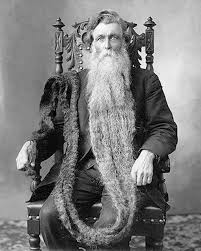
Abraham’s beard

beard

Abraham started growing a beard just like every other boy turning into a man. His Papa taught him to shave just like his own Papa taught him. Every few days the razor came out of its leather pouch ready to do its job. In winter, when he got older, he let it grow out to keep his face warm in those biting Wisconsin winters. It didn’t matter if he had an outside job that year or not, even ten minutes outside putting groceries in his car was too much cold for him. Abraham, never “Abe”, had thought about moving to warmer climes many times, but that all changed when he became a monk.
His first vow was of stability – to stay right where he was and make the world right around him better instead of traveling to some far-off place where they might not speak his language or even have flush toilets. He figured that the good Lord put him here for a reason, so here was where he’d stay.
His second vow was to not cut any of his hair. Every day he washed and combed and oiled his beard and the hair in his head. This went fine until it all grew so long that he started sitting on it, or it got caught in dresser drawers. Then he started wrapping his hair up in a piece of linen, wound about and about until it was up out of the way. This worked for about a year.
After that, he started tucking his beard into his shirt pocket, just like it was a pocket watch or a handkerchief. A decade later he took to putting it over his shoulder. Sometimes he’d wear an old military jacket with a shoulder strap. It was never anything so fancy as an epaulette, just a plain piece of cloth the same color as the jacket with a button to open and close it. While the button was helpful, it had caused a snag a time or two.
The only odd thing was that Abraham was a monastery of one. Nobody else even knew he was a monk. He never dropped so much as a hint to his friends, who never would’ve suspected and wouldn’t have believed him if he had said anything. The day after his parents died he made his vows and never swerved from them.
His third vow was to not speak about his spirituality unless he was asked. He agreed with the Lord that it was rude to brag about your holy walk, yet he also was careful not to appear as if he was denying the Lord either. It was a tight spot to be in. He figured he could tell people about his faith only if he was asked. That to him was a sign from the Lord. It was only when the traveling photographer asked him about his beard that he told, and he was the first to ask in 20 years.
Sure, people wondered about his long hair and his refusal to travel even to the next town over, but they never asked him about it. They thought that was rude to ask. That didn’t prevent them from talking amongst themselves, however.
The vow of stability was a tough one. Abraham had a bear of a time getting good shoes until the Payless store opened up a franchise just three streets away from his house. His vow to stay in his town was not up for alteration. For nearly eight years he had to wear the same pair of brown Oxfords because there was no place to buy new ones – and he certainly wasn’t going to buy them used. Used shirts and pants, certainly, but shoes? Never. No amount of Lysol could convince him they were clean enough. Even a monk has standards.
The city of Two Creeks, Wisconsin had never seen a traveling photographer until that bitterly cold Thursday in May. Even if it hadn’t been so unusual for a photographer to appear almost overnight like a ring of mushrooms in the lawn, the cold snap would certainly have fixed the date in the minds of most of the nearly 450 people who lived there.
Abraham had walked down Zander road where his house was and turned right along Lakeshore to get to the county park. Even though it wasn’t officially legal to fish there, it wasn’t actually illegal either, and Abraham often took advantage of these gray areas in life. It saved him a lot of money to fish for his supper. He was just preparing his fishing lures when he heard a booming voice behind him. “Hello there, young man! Would you be interested in a free portrait of yourself this fine day?”
Abraham turned around and looked at the man for a full minute before he answered. The photographer thought that maybe he was deaf, so he began his spiel again, but Abraham held up a hand to stop him. He was trying to figure out how to answer. His first problem was being hailed as “young man” since it was as clear as the silvery hairs on his head that he was far from being a spring chicken. Either the man was trying to butter him up or he was crazy. Neither one was good.
“Why would you want to do something like that?” Abraham asked. He liked a deal, same as the next person, but he knew that “free” meant that there was a cost down the line somewhere. Nothing was ever really free, it just meant that you didn’t pay for it. Someone did. That meant you were beholden, and beholden was a string. He was opposed to strings. They ended up being nooses more often than not.
The photographer explained that he worked for a national film developer who wanted to get more customers. Every person got a free 8 x 10 color glossy and eight wallet size portraits. The company figured that once folks saw how good the quality was, they’d order more. Suddenly the photographer stopped, looked at Abraham, and said “I never told anyone that before. That’s the company policy, but I was given a script and trained to recite it word for word as if it were mine. Why ever did I tell you all that? Come to think of it, why am I telling you this right now? Who are you?”
And Abraham told him his story, all of it. Truth for truth, since he asked. Told him how he was a born confessor. People all over, those he knew and those he just met, told him nothing but the truth all the live long day. They felt relieved, all their guilt and shame off their chests.
It started early on, as soon as he entered kindergarten. The other children just knew and came up to him. The teachers did too. It was overwhelming at first but he got used to it – well, as much as you can get used to people telling you all their secrets. Abraham thought this was normal, because it was normal to him. He had nothing to compare it to so he never told his parents about it.
Funny thing was though, it was like a superpower. The fact that people told him all their business meant that he could handle it. It was like God gave him extra strength to be able to carry all those secrets. Maybe he didn’t even carry them. Maybe it was more like he was a telephone booth, and people used him to speak to God. He figured that some people chose to dial direct, praying in their own words on their own, but then there were some who needed a person to be with them when they did it. Something about praying in an empty room made them feel like they were talking to themselves, and that bordered on crazy. Abraham was just the sort of safe person they needed.
After he told his story to the photographer, Abraham moved the very next day and left no forwarding address. It wouldn’t do to let it get out that this is who he was. Soon everybody would be beating a path to his door to unburden themselves. It was enough that people did it anyway, without even knowing that was what they were doing. It seemed honest, even pure, that way. This knowledge would turn that inside out. He might even have to set up office hours, maybe even go so far as to charge. Just the shock of thinking about the mess that would start as soon as word got out decided his mind for him.
So he shaved his beard and his head so nobody could identify him, and he started walking west, taking nothing with him. His neighbors didn’t suspect a thing because he walked all the time and he never caused a fuss. It was a week later that the word of his abilities got to them, and by then his mailbox was full and the grass needed cutting. By then he had found a new life for himself and started to regrow his hair again.

Merrick’s twin

experiment

He was a monster, but only on the outside. The real monsters were those who stared at him outright, or talked about him in hushed tones as he passed. He couldn’t help how he looked, but they could help how they acted – but never did. His various doctors over the years exercised cool detachment as one would expect from professionals, but then again they were under his employ. People can usually at least pretend to be nice if there is money involved.

The doctors were certain of the disease, but not so much on the cure or even the cause. They knew only the symptom but not the source. They took his money and made him feel special, but never once let on that there was no cure, only care. They could refer him to clothiers who would happily create bespoke clothing to fit his unusual frame. They knew of carpenters who could construct a bed that would allow him to sleep semi-upright to relieve the pressure on his overworked neck.

Only one person knew the true cause of his deformity, and he wanted no money for the tale. Money wouldn’t cure him anyway, nothing would. John had crossed the wrong spirit one Tuesday night in October when he was 15, and he didn’t even know it.

Movies were a dime on Tuesdays at the downtown three-screen theater and a quarter all other days. Even though Tuesday was a school night, John was allowed out to see the latest film once a week as long as he kept his grades above a B. Even a B- wasn’t good enough and would make him lose this privilege for a whole quarter until the report cards came out again. So every other day of the week he went alone to the library to study so he could go to the movie theater on Tuesdays. Sometimes he went with friends, but he was just as likely to go by himself, savoring the peace of being out of a house with five children. Five young mouths to feed and backs to clothe meant not a lot of spare money for extravagances like movie tickets, but John had convinced his parents that he was going to be an actor when he grew up. Costly acting lessons were out of the question, so learning by watching the finished product would have to do. Even if they could have afforded private lessons, nobody in Palmyra was offering. Actors didn’t move to tiny towns unless they were also close to big towns with big town amenities like airports to take them to where the jobs were. That was one reason John wanted to be an actor, to get out. Palmyra had nothing to offer anyone who was interested in something other than farming.

That fateful night he was thinking hard about how grand it would be to be an actor, where he could be himself and somebody else at the same time. It was like being a twin, he thought. He was so distracted that he tripped over the legs of Mr. Byron, the local eccentric. Mr. Byron wasn’t quite homeless, and he wasn’t quite crazy, but he wasn’t quite much of anything that usual people liked to associate with. Most steered a wide berth around his 5-foot-eight frame, all angles and elbows. The hair on his head was jet black but it didn’t mean he was young. He got his hair color from a bottle of shoe polish, having realized a decade back that actual hair dye was four times as costly. Shoe polish did the trick just the same, and he didn’t mind the smell. Nobody else got close enough to notice.

Mr. Byron seemed normal when you first met him, and young ladies would take pity on him and try to befriend him. They thought that others in the town were unnecessarily rude to him, and they defended him at every opportunity. They’d make excuses for his social gaffes. This was until he turned on them, like everyone else who had gotten close. The young ladies thought he was misunderstood. In reality he was just a misanthrope.

Mr. Byron often sat on the sidewalk near the movie theater with his legs splayed out, taking up half the lane. Usually John avoided him, but this night his head was in the clouds. Later, he thought that the scrape he’d gotten on his knee from when he fell after tripping over Mr. Byron was the extent of his injuries, but he was far mistaken.
It was a month later before he noticed the change. His right side had grown heavier, thicker, denser even. His arm wouldn’t stretch out like it used to. His hand started to curling in like a lobster’s claw. At first he thought nothing of it. There wasn’t spare money for a trip to the doctor anyway, so he did as his Mama had taught him. He drank a glass of water mixed with honey and apple cider vinegar. It was the best cure they knew and usually it worked a treat. But not this time.

Mr. Byron always worked his revenge silently. His Mama taught him that “Revenge is a dish best served cold” and boy, howdy, did he love his Mama. Whatever she taught him, directly or not, he took to heart and made it his own. All of his Mama’s family had the second sight, could see right into you to know what your dreams and hopes were. Trouble was, they also knew your nightmares too. More than that, they knew how to take that raw stuff from deep in your soul and push it, shape it, like so much clay and build it up just like a mug or a vase, able to hold more than what it was before. The good ones in the family could make your dreams come true. The bad ones chose to do the same with your nightmares.

Mr. Byron was unique. He’d take your dreams, shaped them up up up, and turned them inside out, made them turn back on you so even though you got what you wished for, it wasn’t ever like how you wanted.

Normally he kept to himself and didn’t use his perverse talents. In years past some people would seek him out and try to get him to put a curse on another person in the town, someone who’d wronged them, either intentionally or not. At first Mr. Byron refused, but then he came to enjoy the opportunity to practice and hone his craft. Even people who do bad like to be good at it. He felt it was important that the results matched his plan. It was a sad day when something that was to go wrong didn’t, or worse, turned darker and deeper than anticipated. Sometimes people needed a good scare, but ended up scarred instead. It wouldn’t do to make a molehill into a mountain.

All John did that fateful night was trip over Mr. Byron’s legs, so it didn’t seem right what happened next. But that night was just the cherry on the sundae of slights and snubs Mr. Byron had suffered, to his mind.

John had never noticed Mr. Byron, and that was his undoing. John never said hello or good evening to him. He never asked how he was doing, inquired about Mr. Byron’s family, never even invited him to see a show at the theater or out for dinner. Of course, nobody ever did any of these things, but that didn’t matter to Mr. Byron, because John was the one person who crossed his path every Tuesday night for years, so John was the focal point for his rage. There’s only so much being ignored a person can take after all. Rage is like sandstone, built up tiny layer by tiny layer, week by month by year, until it is larger than a mountain and just as hard to see around.

John’s dream of being an actor was turned on him that night, but it took a while before it showed. He’d been imagining how acting was like being himself and another person at the same time when he tripped over Mr. Byron. Mr. Byron caught that wish and shaped it, turned it, and made it true in the worst way possible. John became his own twin, shaped into a chimera of impossible belief. Slowly, so slowly that he didn’t realize the cause and effect, he turned into a monster, half of him crabbed and lumpy, some strange cross of an ancient gnarled oak tree and a mutant crustacean. It was as if his dreamed-of other half was on stage all the time, and John was powerless to make the scene end.

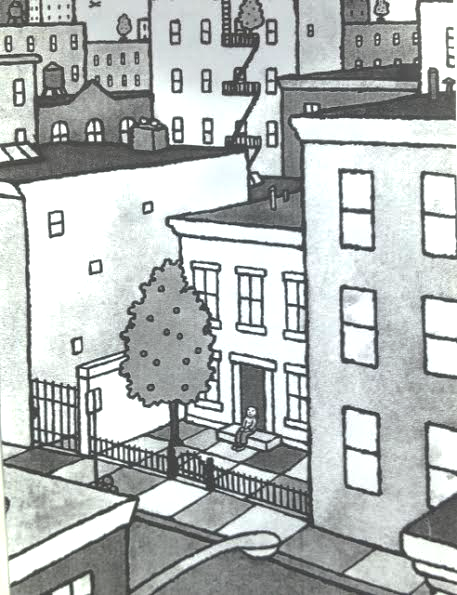
The little white house

little white house

The little white house had been there longer than anyone could remember. The cornerstone said 1781, but nobody thought that was possible. Sudbury wasn’t a town that far back. The archives in the local library said the first deed had been issued in 1824 to Saul Abrams, a fur trader, but it was the only house for miles then. It was four years later before the town had its first boom and then there were a dozen homes scattered about like corn thrown to chickens. Close enough to help if there’s a need, but far enough away that you didn’t have to worry about your neighbor seeing your business. Not like anybody was up to anything, mind you, but it was still nice to have the breathing room.

Nell was currently the youngest resident of the little white house, but she certainly wasn’t going to be the last. Her mom was due to give birth within a week to her latest sibling. Meanwhile, grandma Rose and uncle Pat lived upstairs in the north-east facing room. They preferred the early morning light to paint by. They said it meant they got a head start on the day before the rest of the family got up.

The little white house had resisted all sorts of change over the years. It had plumbing but no electricity. The family had never seen a need for it, preferring natural light over artificial. Plus the money they saved was nothing to sneeze at. Of course, money wasn’t a problem for Nell’s family. Up to four generations at a time lived there, sharing their skills and resources along with their joys and sorrows. It was so much cheaper to pay one mortgage than four (or more). The money saved was worth the minor annoyance of the cramped quarters. For starters, it meant that they didn’t all have to work full-time, and especially not at jobs that took more than they gave.

The Abrams family realized early on that they would have to be careful about how many children they had if they were going to share a house. It wouldn’t do to be too crowded. Plus, more mouths meant more food, and food wasn’t cheap. They’ve had a lot of land to work with years back, but now that the city had grown up around the house they had to buy food just like everyone else.

Of course, there was always the apple tree out front. It had been the reason Saul had bought the property in the first place. The apples had just ripened on it once Saul came over the hill, looking for a campsite for the evening after a long day of marmot trapping. That tree’s beauty stopped him in his tracks and he set up his canvas tent smack dab under it to spend the evening with it as his company. The next morning he knew he’d finally found a place he could call home. He dreamed about that tree the whole night long.

Saul’s family put great stock in dreams, being descended from Jacob, who God renamed Israel. Jacob knew that where he slept was a holy place and so set up an altar to God once he awoke. Saul knew the same was true here, but he knew he was to establish a house rather than a temple.

There wasn’t much difference, really, to his mind.

The city had grown up around the house, getting closer and closer. The yard had shrunk down to a little patio in front with the tree. Tall buildings bracketed the little white house on the sides but not at the front or back. Somehow, there was still an alleyway to one side, and Nell would often play there when she wanted to be alone.

The alley was gated, and only her family had a key, but it didn’t matter. Nobody would even think of walking through that gate. Most didn’t even notice it. It was kind of like one of those Japanese gates that weren’t really gates, marking out a difference between “there” and “here”. “Here” was the difference between storm and calm, between noise and harmony. Most people walked on by because this little island wasn’t what they were looking for, even though it was what most of them needed. Most people were looking for peace in the wrong places – more activity, more possessions, a different job / spouse / church / hobby. They figured if they weren’t happy it was because of something outside of them. Change that and they’d change how they felt, they thought. Yet they made the changes outside and they still felt empty inside.

The little white house had no ornamentation to speak of but it was always clean and tidy. It stuck out only in that it didn’t stick out at all, taking up just enough space but no more.

The residents kept a low profile, always doing things the same way. They always put the trash out on Wednesday mornings, always went to get the groceries on Thursday. On Friday they prepared for a day of rest by cooking double portions of food to make Saturday easy. On Sunday they might travel or work on school projects. They were always learning, whether they were enrolled in an institution or not. All of the Abrams kids went to public school and then to college, yet they also were expected to follow their own inspirations and learn as much as they could about whatever they wanted. The Sahara desert, bowling, tea, it made no difference. Anything was fair game to do a research project on, but each person had to do something.

Right now, for Nell, that something was sitting on the front steps, sketching the apple tree. Year after year it produced crisp red apples that the family lovingly harvested and ate fresh, baked into pies, made into sauce and preserves. Every single fruit was carefully harvested and used or processed immediately. “An apple a day keeps the doctor away” should have been engraved as the Abrams family motto because they sure took it seriously. Even if they were traveling they were sure to take enough applesauce or apple butter along with them so each person could have their daily allotment. Every day they ate from the fruit of that tree just like it was medicine, just like it was prescribed by the family doctor.

In a way, it was. All those many years ago, God told Saul in that dream to eat the fruit of that tree every day – him and his descendants, and they would never get sick. He took God at his word and had an apple for breakfast first thing when he woke up. Within moments the usual aches and pains he’d had for the past three years of making his living out of the wilderness were gone, like he never had them.

The family never told a soul their secret, out of concern that someone would try to steal the tree or chop it down out of spite. Some folks would rather destroy something beautiful than share.

Of course, they had to tell anyone who married into the family, but marrying into that family was harder than getting a job at the real White House.

Background checks were just the beginning. Then there was a complete physical. Financial records were obtained. Even visits to a psychiatrist were required. It was like applying for full term life insurance, a second mortgage, and a Secret Service job all at once.

In the end, if you were in, you were made truly part of the family by a dip in the local river. And, no matter what, you had to change your last name to Abrams. After that you were the same as anyone else who lived in the little white house, and you too got your daily serving of apple.

Getting a serving a day meant you didn’t get sick, but it didn’t mean you wouldn’t die. Accidents and old age could kill an Abrams the same as anyone else. They tended to heal faster from accidents, and age slower, but death still visited that house on occasion. Even then it wasn’t a sadness, because they’d always lived long and well there.

(The image is from the book “Trainstop” by Barbara Lehman. It is a wordless picture-book for children. My story was inspired by this image and not by her story that she told through her other pictures.)

Melissa’s story

3


Melissa knew it was time to leave her job when her boss sent her that email. Nearly 20 years with the same firm and it all came down to one thing – trust. She simply didn’t trust him to be honest. Or fair. Or rational. He was her third boss, but they were all the same. All toed the party line, all had degrees in “CYA”. Normally, she would have put her head down, not drawn any attention, and soon things would blow over or the manager would retire or get transferred.

It took her six years to realize that her job, while saying that it cared for its employees, didn’t back that up with real action. The bullies and incompetents got the management positions. They wrote the performance reviews too, and they were all one-way. All the reviews were top-down, so the subordinates never had a say in how they were being managed. This was the norm all over, so it never occurred to her that it was wrong, never occurred to her that it was possible to change it.

Her friend Bobby had died because of it. He’d drunk himself to death over anxiety and fear, too much stress and a job he had to have to pay his mortgage and his alimony. He managed to work up the momentum to leave the sinking ship of his marriage, but his job was another matter. He was dead three days before he was found. In many ways it was three years.

Melissa wasn’t going to go out like that. She wasn’t going to give her boss the pleasure of knowing he’d won with his squirrely ways. She ran over Paul Simon’s song in her head for options. Hop on the bus? Make a new plan? Drop off the keys? Well, she wasn’t leaving a lover, but it still sounded like a good exit strategy. And, after all, she had been screwed.

The email that morning said it all without saying anything. She’d asked for some time off. Her only joy now was looking forward to vacations, yet she was told, in writing, that her request did not meet his guidelines. There was also a mention that this was her second attempt to violate this policy. The only problem was that it wasn’t written policy. It certainly wasn’t corporate policy. And he did not say at the time that it was his policy, but just a guideline. She had no way of knowing that she’d stepped over some line into dangerous territory.

He told her more with that email than simply “no”. By putting it in writing, his not-so-veiled threat was made clear. Two violations, without the first one even being intentional, meant that three and you’re out. What nonsense. How could she have known she broke a rule the first time she did it when he hadn’t told her the guidelines? Heck, he hadn’t even given her a list of her job duties. Suddenly she was one step away from trouble. It was like driving on a road that had dangerous curves and no guard rails and no warning signs.

He was a squirrel.  That was certain. Everybody knew that he was a manager in title only. The problem was that nobody bothered to tell him. So he sent passive aggressive emails rather than confronting people directly. He didn’t manage. There was no plan or direction. He didn’t lead. Well, he led by negatives. Don’t do what he does. He didn’t even know what people did for their jobs, so how could he manage them?

Melissa took a breath in and reminded herself that Jesus said only God is above us. Don’t follow people. If you do, you are saying that they are more important than God is. To follow a person, no matter who they are – brother, father, aunt, boss, teacher, minister, spouse, governor, president, – anybody – was to make them into an idol.

She often wondered why she had so many bad bosses, so many who let the power go to their heads and quit working. It wasn’t fair that they got paid four times what so she did yet did a fourth of the work. It’s like they forgot what it was like to be a subordinate.

Perhaps that was the problem. Where could she work with there were no was no hierarchy? She left the social group she was in because of that kind of bullying. She left the church too for the very same reason, among many others. Over and over again she kept hitting that wall. The lesson wasn’t learned yet, apparently.

She’d waited out bad bosses before. How long until he retired? But deep down, she knew that if she didn’t learn the lesson with this one, it would resurface with another one.

Back to Jesus. What does he say? First, give thanks for the situation because it reminded her to pray and seek his help. Sometimes that was as far she got in her prayer, but now she knew there was more.

Jesus said that before you take your offerings to the Temple that if you have issue with anyone, you must leave your offering and go make things right. But how was she to do that? She was starting out in the negative. And she wasn’t even the one who had caused the problem.  Her boss was in the wrong.  This was backwards.

She remembered that story in the Bible when David was small and had no armor. With God’s power he killed Goliath with just one stone. Not even a sword. Anything was possible with God on your side.

Would talking with him make him feel threatened and thus worsen her standing? She knew she’d get no backup from higher up in the corporation. She’s gone that route before with an even worse manager. She still had unresolved trauma from that time. There’d be no help from her husband, either. He was even more bullied in his past. He couldn’t be objective.

So she was alone, again. Sure she had Jesus, and God, and the Holy Spirit. That had to count for something, right? But they weren’t physically here. They couldn’t go talk to him for her, or find her another job, or kill him off, or magically change everything. Perhaps that was the point too.

Perhaps Jesus came and said all that he did to tell her to not even have him above her, but within her, to give her the strength to do it herself. She wasn’t alone, then. She was doubled. Enhanced. There was a synergy, more than the sum of the parts.

But she still didn’t know what to do. Wait, and seem passive? Or wait until there is a clear path, a plan, and instruction from God? In the past, she always found herself doing the right thing, like a puppet, motivated by God. This current problem was a jigsaw puzzle and she didn’t have all the pieces yet, but God always does.

Was this event shifting her away from this job? Was it right to stay in a place, work 40 hours, and not feel like she fit? Had she outgrown it? It isn’t like she married this job. It wasn’t “till death do you part”. It certainly wasn’t for richer.

She prayed some more, and then she knew what to do. She was grateful that even though God doesn’t provide a map for life, God most certainly provided a compass.  With her heart focused on God, she knew she could walk through any situation, knowing that it would come out the way it was supposed to be.

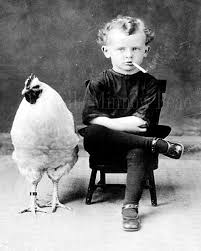
Little Jake and the chicken

chicken

Little Jake Royce hated his chicken. He wanted a dog, the same as Billy had. His Ma said “If Billy jumped off a bridge, would you do that too?” Little Jake was only four but he already knew not to answer that question. There were some questions that had no answers. There were some, however, that if you didn’t answer you got a spanking.

But not at Little Jake’s house. They never spanked him, never would. Ma and Pa would talk to him if he broke some house rule. They’d use reason and explain how he was violating the social contract. They’d express how sad they were about his poor choices. This was of course when they actually noticed what he was doing. Most of the time they let him do whatever he wanted.

His parents had both been raised by missionaries. While they liked the wildness of not having a fixed address, they couldn’t stand the rules. Do this. Don’t do that. Whether it was about God or chores made no difference. They both craved unending vistas of freedom as children, so when they finally had a child of their own, they gave it to him. Except when it came to that chicken.

In general, he could do whatever he pleased.  He could stay up as late as he wanted, learn or not learn his numbers and letters whenever the mood struck him, or eat hot dogs and popcorn for three weeks in a row. They wanted him to be free to live his life. He still wasn’t potty trained and they were delighted, saying it was oppressive to insist a child do anything he wasn’t ready for. Of course, how could he be ready? He didn’t even know it was an option. He thought it was normal to poop wherever and whenever you wanted. He thought that his parents didn’t need to go as often as he did because they were so big. They had more room to store it. He never understood what they were doing when they said they were going to “step down the hall”. The bathroom was where you had a bath, and that was it.  Not like he had one of those very often, either.

But the chicken was not a debatable issue. If he had to have a pet, it had to be a chicken. Both his parents were allergic to anything with fur, so dogs and cats were out. Even hamsters weren’t okay. Ferrets weren’t even considered.  Even if they didn’t have fur, the smell was a real turn-off.

Hattie the hen and Reggie the rooster lived next-door at the co-op. Little Jake liked Hattie better (when forced to choose between a rock and a hard place), but his parents thought it was like supporting an indentured servant to have a hen – all that egg laying. She wasn’t free like a rooster to their minds. So that Monday, Reggie the rooster came home, seemingly pleased as punch to have a whole yard to himself. It didn’t take long for him to make a roost for himself in Little Jake’s favorite climbing tree. His parents took it as a sign that they were going to get along famously. Little Jake took it as a sign that the rooster liked pooping on his head. This made Little Jake think that maybe it was time to learn how to use the potty. He couldn’t be upstaged by a rooster.

The day came for the annual family portraits, so of course Reggie was brought along to the studio. Pets were family in the Royce house. The photographer, Abe Johnson, was an old family friend and had learned years ago not to question the unusual behavior of the Royces. He set up a chair for Little Jake, who promptly fished into his pocket and pulled out a rollup cigarette and put it in his mouth before sitting down, saying  “Don’t want to crush it, you know, Abe? Got a light?”

Abe was unsure what to wonder about first – the fact that this toddler had a cigarette, it looked like he rolled it himself, or that he was being called by his first name by a four-year-old.

Was the problem simply that he acted like he was an adult, or was it something more? It was all too much. Maybe was time to retire. Or maybe it was time to talk to the matriarch of the Royce clan. “Being free” was a great concept until it got weird. Maybe she didn’t know how “free” her great-grandchild was being raised. Could be that his parent’s trust fund needed to be tightened up. Maybe they’d stop living in La-la land if they had to pay their own bills for change.

Abe always said that it did no good to children to give them a free ride in life. He was all for sparing the rod but not for spoiling child. A child with no direction and no boundaries wasn’t any good to himself or anybody else.

Just as Abe released the shutter, the startled chicken released a loud squawk and an even larger splat of poop on the studio floor.  Little Jake looked at the chicken, then at the horrified look on his parent’s faces, and decided that this chicken thing might just work out after all.

Pod people

pose


Nell was having none of it. Not anymore. Her husband simply refused to even try to breathe air. The doctor said he could, that his lungs could adapt to this environment, but he disagreed. Trouble was, he’d never know unless he tried.

Elowyn had read about other Marenians who had converted to air breathing. He’d never met one, of course. How could he? There were only three who lived in this state, and the closest was two hours away by plane. No airline would let him on a plane with his argon suit, that was a given. Their fears were unproven, but policy was policy.

They’d met three years ago at the landing site. She was a reporter, alerted by the scanner in the office that something was coming from the skies again. That scanner was worth its cost from all the leads it provided. Quick as a wink she was downstairs and in her car, trying to not drive off the road as she followed the plumes of green clouds stretching like a tightrope from the eastern sky to some nearby cornfield – Mr. O’Reilly’s, most likely. He had the biggest one, so it stood to reason. She turned down Ellis Way and got there before the locals did. Farmers listened to the scanner same as reporters did, and for much the same reason. It was the best way to know what was going on that might be of interest. Something like this would pull them out of their barns for sure.

Just think of it! Aliens! Here! In Mill City!

Nell had guessed the pod’s trajectory right and reached the small crater it created just after the police had gotten there. The ground was still steaming next to the blue (metal?) craft. She noticed that there was a bright iridescent sheen across the pod’s surface, reflecting the late afternoon summer sun, as well as a distinctive sharp smell much like ammonia, but she couldn’t quite place it.

They didn’t know at the time but it turned out that the color and the smell were both hallmarks of the Marenians. They both came about because their ships were alive, growing out of the same stuff as the people. This way they could self-repair. It saved a lot of money and time that way. It worked perfectly as long as they stayed in the Marenian solar system because the elements were more or less the same throughout.

Earth, however, was another matter entirely. The stresses of the previous crashes had resulted in every pod going into automatic repair mode, sending wispy tendrils into the soil to gather the raw materials needed to boil up replacement parts in the integral kitchen/lab. Three minutes after the tendrils went down, they came back up, spit out what dirt they’d sampled, and retracted back into the beetle-like shell, refusing to budge. The self-preservation instinct was the strongest one, so the pods calmly explained in their proto-language to the pilot inside them that the soil was not compatible with their electrochemical makeup, so repairs would not be forthcoming. As trained, each pod then sent out a trans-space summons for another pod to make the trek to bring dirt from home so repairs could proceed.

The only problem was that these supply pods came and they too became stranded. They’d underestimated the amount of dirt needed for the repairs.  The pods were small, with barely enough room for the pilot.  Even if they were able to navigate without a pilot there still wouldn’t have been enough room for dirt to repair both ships.

No matter – flying without a pilot wasn’t an option. Each pod was raised with its pilot from the moment s/he was formerly admitted to the astro-nav program. Saying that they were synchronized wasn’t the half of it. Cells were harvested from under the tongue of the pilot and cultured over three weeks, growing into a ship that learned as the pilot learned. This was no simple cloning. The two beings were separate in body only. All past, present, and future were shared.

This created a dilemma when the pods, and thus the pilots, began to be stranded. Without hope of repair, the pods chose to self-terminate, opting for a quick death over a slow lingering one. The pilots had to be tranquilized before the pods could self-euthanize. Otherwise it would have been too painful for them to endure. Some later, once they’d learned the local language, said it was like amputation of half your limbs and your brain.  Many were encouraged to adopt dogs afterwards as the closest Earth option to the deep connection that they had shared with the ships.

Nell had worked closely with Elowyn after the crash, helping him to adjust to Earth living.  There was no going back to Marenia, so he had to learn a whole different culture. This was made easier because of his astro-nav training, but it was still understandably difficult.

She’d not planned on adopting a stray, but the Mayor assured her that she was the most qualified person in the city for the job.  Simply being a reporter, curious about new things, made her ideal, he said.  Put that way, how could she refuse? It was a high honor to be deemed worthy of helping a stranded Marenian.  You were serving as an ambassador for the whole planet, after all.  The future of the relationship between the two solar systems would be created from these one-on-one relationships.

It was about a year later that they both realized that they were quite compatible together and decided to formalize their pairing.  Fortunately for them, other human-Marenian pairs had formed before they had even met, and laws had been changed to allow for interspecies marriage.  There was only one difference with these marriages and all others – one member of the union had to be sterilized.   Doctors weren’t comfortable with what could happen if a child was created.

There was no way a child could have been created in the case of Nell and Elowyn. He was still hermetically sealed inside his argon suit.  He had to have it to breathe on Earth, he insisted.  The material in the suit was fortunately impervious to decay, or he would have a more difficult time of it.

Nell was quietly upset when she learned this, hoping that he’d eventually be forced to adapt to Earth ways.  She loved him, of course, but she thought that things would be better for both of them if he didn’t wear that darned suit.  It made going out to visit friends awkward.  Plus, the smell took some getting used to.  The ammonia-like smell was a byproduct of the impervious material.  It was unnoticeable on Marenia, but on Earth it alerted others that there was a foreigner around even before they saw him.  It made some people not want to deal with Marenians at all, saying that they smelled like used gym socks.

Nell and Elowyn mostly kept to themselves at home when she wasn’t working.  He didn’t have to work – none of the stranded pilots did.  They didn’t need food, and they weren’t interested in owning anything.  If they couldn’t carry it, they didn’t need it – this philosophy was part and parcel of being a Marenian.  It was how they had finally adapted to a planet with too many people and not enough land.  They didn’t even need to live in homes anymore, having selectively bred themselves over twenty-three generations to be unaffected by temperature changes or ultraviolet rays.  Some did live in homes on Marenia out of habit or convenience, and most pilots on Earth did as well, but it wasn’t uncommon to see one hanging out with homeless people under overpasses or near street corners. They were comfortable wherever they happened to be.

The Marenians got along with the homeless population uncommonly well.  They had in common their philosophy of “less is more”, albeit perhaps unwillingly for some of the homeless.  Soon the Marenians and homeless had developed a spiritual system – not a religion – about this, encouraging others to get rid of their addiction to things. They explained that there was a reason that the Earth language used the word “possession” to refer to things as well as being taken over by demons.

It had to be a spiritual system because a religion would require stuff – books or buildings, for instance, and this was totally opposed to their beliefs.  Of course, many years later, after the founders had died and no more new Marenians came to Earth, their simple way was converted like all other spiritual paths had been and there were not only cathedrals to “less is more” but also gift shops with plastic trinkets made in China.