












Home » Encouragement
Timothy Snyder’s On Tyranny: Twenty Lessons from the Twentieth Century
1. Do not obey in advance. Authoritarians thrive on passive complicity; don’t preemptively conform to expected behavior.
2. Defend institutions. Institutions don’t protect themselves—citizens must actively support and strengthen them.
3. Beware the one-party state. Democracy depends on pluralism; monopolizing power erodes freedom.
4. Take responsibility for the face of the world. Symbols and slogans shape culture—reject hate and extremism in public life.
5. Remember professional ethics. Professionals (lawyers, doctors, civil servants) must uphold ethical standards, even under pressure.
6. Be wary of paramilitaries. Private militias signal a breakdown of lawful order and a drift toward violence.
7. Be reflective if you must be armed. Members of the police and military must question the legality and morality of their actions.
8. Stand out. Courage is contagious—small acts of defiance inspire broader resistance.
9. Be kind to our language. Clear, truthful language guards against manipulation and propaganda.
10. Believe in truth. Without truth, facts and reality become meaningless, enabling tyranny.
11. Investigate. Don’t rely on official narratives—seek out independent, verifiable information.
12. Make eye contact and small talk. Human connection builds solidarity and mutual support against isolation.
13. Practice corporeal politics. Show up physically—protests and gatherings matter.
14. Establish a private life. Protect your privacy from surveillance and manipulation.
15. Contribute to good causes. Support organizations and causes that uphold democratic values.
16. Learn from peers in other countries. Look beyond borders for inspiration and warning signs.
17. Listen for dangerous words. Terms like “extremism,” “terrorism,” and “emergency” are often used to justify repressive measures.
18. Be calm when the unthinkable arrives. Authoritarians exploit chaos; stay grounded and deliberate in crisis.
19. Be a patriot. True patriotism means standing up for your country’s principles, not just its leaders.
20. Be as courageous as you can. Democracy requires bravery; be ready to defend freedom, even when it’s difficult
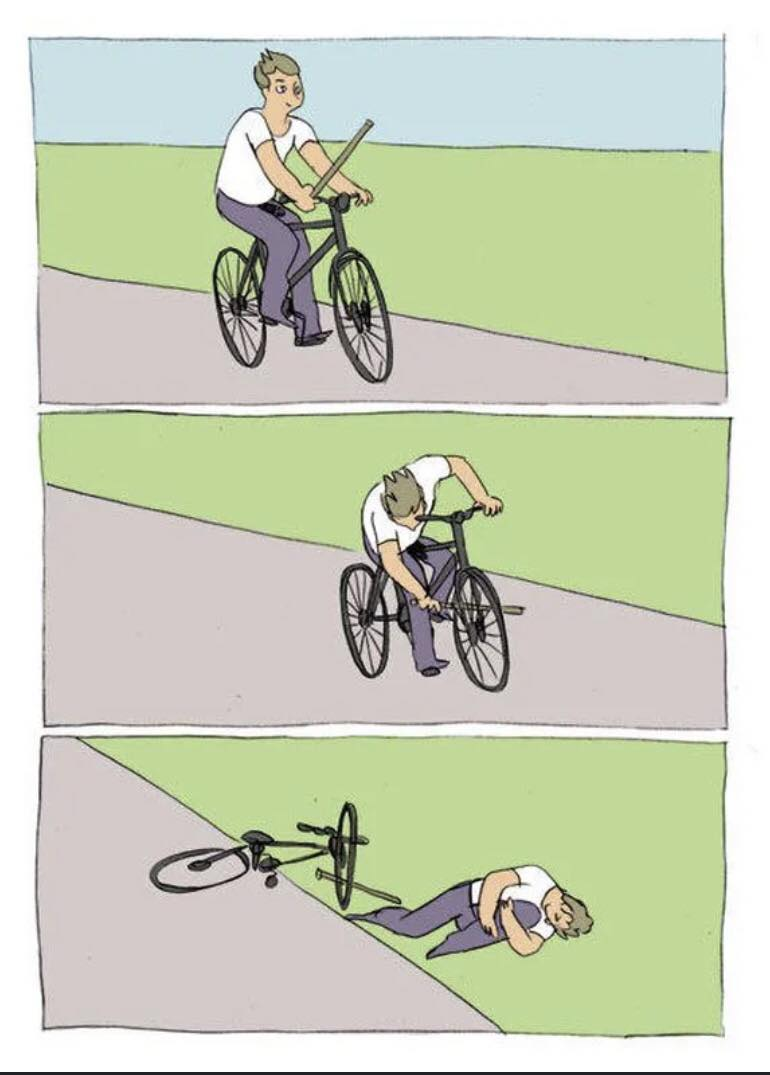
So much of my life right now feels like I’m weeding out people who act like a victim in situations they caused.
Maybe it is unique to American culture right now. Or maybe it is bigger than that. Maybe the disease of creating your own problems and then whining about it is worldwide.
One of the most common situations is obesity.
While we shouldn’t shame someone for being obese, neither are we doing them any favors by celebrating it. The recent trend of “body positivity” has resulted in social media “influencers” who are morbidly obese, complaining about how they can’t fit into an airplane seat or on amusement rides. Those limits are for safety reasons for themselves and for other passengers.
The actor and director Kevin Smith went that route, even though he wasn’t his plan to be a fat-fluencer. He was kicked off a flight in 2010 because he couldn’t fit into his seat. Reports indicate that he was over 330 pounds at that point.
But that incident made him rethink his choices and he decided to put in the work and lost 65 pounds. But it wasn’t enough to restore him to full health.
In 2018, at age 47, he had a heart attack. It was a “widowmaker” with 100% blockage in one of his arteries. He survived the surgery and decided to change his ways. He adopted a vegan diet and is now at a healthy weight.
But he’s the rare example of someone who decided to do something about their health rather than pretend everything is fine and blame everyone else for their problems.
It is hard to watch people I know get larger and larger, and be unable to walk for more than five minutes without needing to sit down. Or they complain that their clothes don’t fit. Or that their feet hurt, so they think they need special shoes.
No – your feet aren’t designed to hold that much weight. Your body isn’t designed to operate like this.
There are sumo wrestlers who are very large – but it is mostly muscle. They train every day for hours so they are exercising along with eating large amounts of food. But people don’t realize that they live on average 10 years less than the average Japanese citizen. Many also have weight -related problems such as diabetes and knee damage that decrease their quality of life.
Many people make up excuses – they don’t have the time, or the money, or the energy. But one thing is true – if you don’t make time for your body, your body will force you to take the time by causing disease.
I know someone who is deathly allergic to cats. Yet – knowing this – she adopted a cat. And – predictably – she had to go to the ER – twice – because she was having difficulty breathing. She eventually realized she’d have to give up the cat. It wasn’t a surprise. She knew it would happen. Yet she did it anyway.
“Stupidity is doing the same thing over and over again and expecting different results” – quote attributed to Einstein.
I knew someone who was obese and sedentary who had to have a quadruple bypass – and friends acted like it was a shock that he was so ill. They were calling for prayers for him, while I said that this was not a situation to pray about. Prayer implies that there is nothing YOU can do about the situation, so you ask for divine intervention. But being obese and sedentary isn’t an accident. It is a choice – and it is disingenuous to act like the resulting health problems are a surprise.
Thankfully he chose to eat better and exercise, and has lost a lot of weight. But the friends who were asking for prayers haven’t followed suit (they too are obese), and act surprised when their body fails them.
I don’t understand this way of thinking.
And I don’t want to be around people who act like this.
But this means I spend a lot of time alone.
I simply can’t pretend and say “Oh, that’s so sad!” when people complain after causing their own problems.
Maybe my lack of sympathy comes from the fact that my mother died from lung cancer at 53, after smoking two packs of cigarettes daily for decades. It was sad that she was sick, but not a tragedy. She had dug her own grave every single time she chose to smoke a cigarette. 40 times a day she made that choice. And because of her choosing death, I didn’t have a mother to see me graduate, or get married, or publish my first book, or learn how to do all the many things that I’ve learned since she died.
And I’m a little angry about that. And I don’t want to watch it happen again and again to people I care about.
Should you stay or should you go? Don’t fall for the “sunk cost fallacy”. I saw this list online that offered many different ways to think about your relationship and if it is worth staying for. I’m sharing it here because it might be helpful.
Don’t set yourself on fire to keep someone else warm (and don’t let them set you on fire to warm themselves)
We accept the love we think we deserve
At the end of the day, what does this person add to your life vs what they take away
There are people out there who will treat you how you allow them to, not how you treat them.
You can’t date the past or the future, when everything was/will be great when ______ happens. The relationship you have NOW is the one you have to live with.
Don’t keep drinking after you’ve found out your well has been poisoned.
You will never find the right person if you don’t let go of the wrong one.
It’s better to have a relationship end now with pain than have a painful relationship without end.
Never confuse what you’re offered with what you’re worth.
When they rob you of solitude but provide no companionship, it’s time to go.
The axe forgets but the tree remembers
Let go or be dragged
Smooth seas never made a skilled sailor
The portal to every next level is through the parts of yourself you avoid
“The chains of habit are too light to be felt, until they are too heavy to be broken.”
The well that gives too much becomes a hole.
“When the map and the terrain differ, trust the terrain”
Accept what IS, not what you’d like it to be.
You can’t pour from an empty cup
Don’t lose sleep over cutting ties with someone who handed you the scissors.
Do you want to play life on hard mode?
You can’t grow in earth that poisons you.
Our successes don’t have meaning without our struggles.
Trying to archive this. The original is at https://bidenwhitehouse.archives.gov/wp-content/uploads/2025/01/National-Resilience-Strategy.pdf
NATIONAL
RESILIENCE
STRATEGY
JANUARY 2025
2 NATIONAL RESILIENCE STRATEGY
NATIONAL RESILIENCE STRATEGY 3
National Resilience Strategy:
A Vision for a More Resilient Nation
“[W]e’re writing the next chapter in the great American story — a story of progress and
resilience. When world leaders ask me to define America…I define it in one
word…Possibilities.” —President Biden, 2023 State of the Union
“The future of America’s success in the world depends upon our strength and resilience at
home…Our success at home requires robust and strategic engagement in the world in line with
our interests and values to make life better, safer, and fairer for the American people. That is
why we must make far-reaching investments in the sources of our natural strength while building
our resilience.” —National Security Strategy, October 2022
The Need for Collective Action toward National Resilience
The United States faces an increasingly dynamic risk landscape for which we must build
resilience to anticipate and respond. The challenges facing our communities — including, but
not limited to climate change, emerging technologies, strategic competition, global pandemics,
and the disproportionate effects of wealth inequality — have never been greater, and this is
precisely why even stronger national resilience is needed.
Meeting these challenges will require communities to work together to find solutions that
protect, enhance, and invest in four pillars of resilience: Governance, Social and Community,
Economic, and Infrastructure. Achieving greater resilience demands a unified, whole-of-society
approach that includes all levels of government, diverse community leadership, international
institutions and partners, the private sector, and individuals.
We need to proactively build community capacity and capabilities to benefit, protect, and
provide means for recovery for all Americans, including those who are most vulnerable, while
also creating solutions that comprehensively address shocks and stressors today and for future
generations. Moreover, systems must be adaptable, and able to withstand whatever humancaused and natural shocks and stressors the nation may face and recover from the consequences
of disruptions that cannot be successfully managed. We must proactively prioritize activities and
investments that account for complex risks, like cascading impacts and concurrent events, as
well as approaches that account for differences in vulnerability and response capabilities within
and across communities. As we focus on the four pillars laid out in the Strategy, we must
intentionally invest in resilience initiatives that honor the social, ecological, cultural, and equitybased contexts of our communities. Through this approach, the population will be dynamic,
adaptive, informed, and able to effectively address the threats and hazards that pose the greatest
risks and recover from disruptions.
4 NATIONAL RESILIENCE STRATEGY
Defining Resilience
Resilience is defined as “the ability to prepare for threats and hazards, adapt to changing
conditions, and withstand and recover rapidly from adverse conditions and disruptions.”
The following principles reflect the values and priorities the U.S. Government will use to guide
the implementation of our vision for national resilience:
Adaptive: Maintain awareness of and a willingness to apply and implement innovative thinking,
tools, and methods to quickly realign or take advantage of evolving circumstances.
Protective: Identify, reduce risk of, prepare for, resist, and respond to threats, shocks and
stressors, prioritizing those that represent the greatest risks.
Collaborative: Seek input that engages and empowers the public, private, academic, and
nonprofit sectors, and all community members; reflects a commitment to collective deliberation;
and utilizes transparent processes, metrics, and goals for data-driven decision making.
Fair and Just: Pursue solutions that account for, and do not exacerbate, disparities between and
within communities. Ensure strategies respond to the needs of all Americans, including those in
underserved and marginalized communities that have historically borne the disproportionate
burden of impacts and costs incurred through decisions made by both public and private actors.
Human-Centered: Position the well-being of individuals, families, communities, and society at
the center of resilience goals, taking into consideration the needs of all community members.
Interdependent: Apply risk-informed approaches and integrated processes that account for the
complexity and interdependencies of systems, prioritizing solutions and investments for the
threats and hazards that pose the greatest risk and that can result in multiple benefits and enhance
resilience over the long-term.
Sustainable and Durable: Implement solutions that serve current and future needs by
considering the entire lifecycle of solutions. Seek to ensure that there is continuity of technical
expertise and leadership as needed.
Understanding the Resilience Landscape
The United States and the rest of the world have entered an era characterized by a complex and
increasing number of health, climate, economic, infrastructure, and national security challenges.
In addition to multi-dimensional physical threats, the United States and its allies are increasingly
challenged by the speed of change and vulnerabilities created by new technology and methods of
communication, where information is regularly weaponized to undermine trust in public
institutions.
As new and disruptive threats and hazards continue to emerge, it is more important than ever to
improve national resilience. Disruptions from a range of acute shocks are becoming more
frequent and intense, and the risk of physical and cyber attacks continues to rise. Chronic
stressors such as deteriorating infrastructure, environmental degradation, climate change, social
injustice, and persistent poverty negatively impact quality of life and intensify the effects of
acute shocks, undermining our nation’s prosperity and well-being. Climate-induced migration,
in particular, will impose further pressures on communities and exacerbate challenges.
NATIONAL RESILIENCE STRATEGY 5
The compounding effects of stressors that create community vulnerabilities and shocks that
occur simultaneously or in quick succession have the potential to undermine national resilience
and our ability to respond and recover.
Increasingly, shocks and stressors span across national boundaries, increasing the imperative for
all nations to cooperate and confront shared challenges and threats from myriad sources ranging
from natural hazards and pandemics to state and non-state actors aiming to destabilize
governments, economies, and institutions.
Strategic Approach to Build Attributes of a Resilient Nation
The United States is advancing a strategic vision of resilience through four interconnected
pillars: Governance, Social and Community, Economic, and Infrastructure. Individually, these
essential elements of resilience provide unique and critical capabilities, and their benefits are
maximized in combination with one another.
In the face of multi-dimensional threats and challenges, the United States and its international
partners must act in partnership and leverage policies and tools that protect our shared values and
economic and national security interests. The United States will cooperate with like-minded
partners, through international institutions such as the North Atlantic Treaty Organization, to
address systemic challenges and tackle the escalating and expanding risks resulting from a
changing threat environment.
For the first time, the United States is outlining its vision and related priorities for increasing the
nation’s resilience which will have global impact/reverberation. The following are the
foundational characteristics of a resilient nation, which span across all four pillars:
Yes, this one is older, but it is still relevant.
Message from White Eagle, Hopi indigenous on 03/16/2020:
“This moment humanity is going through can now be seen as a portal and as a hole. The decision to fall into the hole or go through the portal is up to you. If you consume the news 24 hours a day, with little energy, nervous all the time, with pessimism, you will fall into the hole. If you take this opportunity to look at yourself, rethink life and death, take care of yourself and others, you will cross the portal. Do not lose the spiritual dimension of this crisis, have the aspect of the eagle, which from above, sees the whole, sees more widely. You were prepared to go through this crisis. Take your toolbox and use all the tools at your disposal. Learn about resistance with indigenous and African peoples: we have always been and continue to be exterminated. But we still haven’t stopped singing, dancing, lighting a fire and having fun. You don’t help at all by being sad and without energy. It helps if good things emanate from the Universe now. It is through joy that one resists. Also, when the storm passes, you will be very important in the reconstruction of this new world. You need to be well and strong. And, for that, there is no other way than to maintain a beautiful, happy and bright vibration. This is a resistance strategy. In shamanism, there is a rite of passage called the quest for vision. You spend a few days alone in the forest, without water, without food, without protection. When you go through this portal, you get a new vision of the world, because you have faced your fears, your difficulties … This is what is asked of you. What world do you want to build for yourself? For now, this is what you can do: serenity in the storm. Calm down and pray. Everyday. Establish a routine to meet the sacred every day. Good things emanate, what you emanate now is the most important thing. And sing, dance, resist through art, joy, faith and love.”

A meditation by one of Martin Luther King, Jr.’s spiritual mentors, Howard Thurman:
“Life Goes On”
During these turbulent times we must remind ourselves repeatedly that life goes on.
This we are apt to forget.
The wisdom of life transcends our wisdoms;
the purpose of life outlasts our purposes;
the process of life cushions our processes.
The mass attack of disillusion and despair,
distilled out of the collapse of hope,
has so invaded our thoughts that what we know to be true and valid seems unreal and ephemeral.
There seems to be little energy left for aught but futility.
This is the great deception.
By it whole peoples have gone down to oblivion
without the will to affirm the great and permanent strength of the clean and the commonplace.
Let us not be deceived.
It is just as important as ever to attend to the little graces
by which the dignity of our lives is maintained and sustained.
Birds still sing;
the stars continue to cast their gentle gleam over the desolation of the battlefields,
and the heart is still inspired by the kind word and the gracious deed.
There is no need to fear evil.
There is every need to understand what it does,
how it operates in the world,
what it draws upon to sustain itself.
We must not shrink from the knowledge of the evilness of evil.
Over and over we must know that the real target of evil is not destruction of the body,
the reduction to rubble of cities;
the real target of evil is to corrupt the spirit of man
and to give his soul the contagion of inner disintegration.
When this happens,
there is nothing left,
the very citadel of man is captured and laid waste.
Therefore the evil in the world around us must not be allowed to move from without to within.
This would be to be overcome by evil.
To drink in the beauty that is within reach,
to clothe one’s life with simple deeds of kindness,
to keep alive a sensitiveness to the movement of the spirit of God
in the quietness of the human heart and in the workings of the human mind—
this is as always the ultimate answer to the great deception.
-Excerpted from Meditations of the Heart by Howard Thurman, published by Beacon Press, 1953.

“Oh do you have time
to linger
for just a little while
out of your busy
and very important day
that have gathered
in a field of thistles
for a musical battle,
to see who can sing
the highest note,
or the lowest,
or the most expressive of mirth,
or the most tender?
Their strong, blunt beaks
drink the air
as they strive
melodiously
not for your sake
and not for mine
and not for the sake of winning
but for sheer delight and gratitude –
believe us, they say,
it is a serious thing
just to be alive
on this fresh morning
in the broken world.
I beg of you,
do not walk by
without pausing
to attend to this
rather ridiculous performance.
It could mean something.
It could mean everything.
It could be what Rilke meant, when he wrote:
You must change your life.”
-Mary Oliver, “Invitation,” A Thousand Mornings (New York: Penguin Books, 2013).
“Last night I dreamed
ten thousand grandmothers
from the twelve hundred corners of the Earth
walked out into the gap,
one breath deep
between the bullet and the flesh,
between the bomb and the family.
They told me
We cannot wait for governments.
There are no peacekeepers boarding planes.
There are no leaders who dare to say
every life is precious,
so it will have to be us.
They said
We will cup our hands around each heart.
We will sing the earth’s song, the song of water,
a song so beautiful that vengeance
will turn to weeping,
the mourners will embrace,
and grief replace
every impulse toward harm.
Ten thousand is not enough, they said,
so we have sent this dream,
like a flock of doves
into the sleep of the world.
Wake up. Put on your shoes.
You who are reading this,
I am bringing bandages
and a bag of scented guavas from my trees.
I think I remember the tune.
Meet me at the corner.
Let’s go.”
~ Aurora Levins Morales

“It’s when the earth shakes
And foundations crumble
That our light is called
To rise up.
It’s when everything falls away
And awakens all
Of our hidden ghosts
That we dig deeper to find
Once inaccessible strength.
It’s in times when division is fierce
That we must reach for each other
And hold each other much
Much tighter.
Do not fall away now.
This is the time to rise.
Your light is being summoned.
Your integrity is being tested
That it may stand more tall.
Rise, and find the strength in your heart.
Rise, and find the strength in each other
Burn through your devastation,
Make it your fuel.
Bring forth your light.
Now is not the time
To be afraid of the dark.”
— Chelan Harkin

“To be hopeful in bad times is not just foolishly romantic. It is based on the fact that human history is a history not only of cruelty, but also of compassion, sacrifice, courage, kindness.
What we choose to emphasize in this complex history will determine our lives. If we see only the worst, it destroys our capacity to do something. If we remember those times and places—and there are so many—where people have behaved magnificently, this gives us the energy to act, and at least the possibility of sending this spinning top of a world in a different direction.
And if we do act, in however small a way, we don’t have to wait for some grand utopian future. The future is an infinite succession of presents, and to live now as we think human beings should live, in defiance of all that is bad around us, is itself a marvelous victory.” ~Howard Zinn

To all the Others on Mother’s Day,
I see you.
To all the Others who don’t have a Mother
perhaps because of death, or abuse, or neglect,
I see you.
To all the Others who wanted to be a Mother
but can’t, perhaps because of money or biology or pressure,
I see you.
To all the Others who are Mothers
but your children are absent from your sight,
I see you.
To all the Others who are Fathers
doing the job of two,
I see you.
To all the Others who are doing the work,
who are showing up,
who are doing the best they can,
I see you.
Here is my super secret mantra for how I get anything done.
It is super secret.
Are you sure you are ready for it?
OK, here it is –
“This shit doesn’t do itself.”
If you have a project that you want to do – that you know your soul needs to do – that you know if you don’t do it you will be super sad and maybe a little bit angry, then you HAVE to do it. Nobody else is going to do that thing. That is your thing, and you have to do it.
And sometimes that means reading books or watching videos about it until you can buy the equipment to do it. And sometimes it means learning a related craft/skill about it because the thing you want to do/make has never been done before by anybody and you don’t have a teacher or a guide.
Sometimes you are the teacher / guide for someone else, and you just don’t know it yet.
So you have to take little tiny baby steps towards the thing that you have to make/do/bring forth into the world because otherwise it will never be made. And the world will be that much lesser because of it.
What are you afraid of?
What are you trying to control?
What are you holding onto,
that you can’t let go?
Sometimes when people have an illness it is just the end result of a wrestling match that they are having. They are struggling with something in their life and they’re having a hard time releasing it.
It would help if they can slow down and listen to what their illness is trying to get them to pay attention to. There is some imbalance in their life, some incomplete business.
It reminds me of one of the mantras of AA, about fixing what you can, letting go of what you can’t fix, and knowing the difference. If you are fighting an illness, ask yourself who is in charge? Who is going to do the healing – you or God? If you are fighting it to the point that you cannot allow yourself to rest and you’re in a great deal of pain then perhaps it means that you are not trusting in God to heal you, but you think that you were going to heal you.
Healing doesn’t always mean a physical healing. Sometimes healing simply means that you’ve learned a lesson you were supposed to learn or what was supposed to happen has finally happened. One of the biggest things that holds people up is needing to know an outcome. Sometimes letting go of that need is the most powerful thing you can do.
(started 9/21/15, updated 5/14/20)
 betsybeadhead
You must be logged in to post a comment.