What is the job of the church?

I find I miss the “church experience” but I can’t stand that so many churches seem to worship Jesus rather than follow him. They’ve turned him into an idol.

I’m not into a “church” that just gets together to hang out. A “church” that is more about socializing than social work isn’t a church. It is a club.

A church needs to do real work in the world – and I don’t mean “evangelizing”. I’m for “bringing Jesus to people” rather than “bringing people to Jesus” – we are to act like he did – healing, helping, loving.

A church needs to have a strong presence in social justice causes.

I don’t want to preach the Gospel. I want to live it out loud.

I want to serve people like Jesus served them.

Jesus healed people by forgiving them, by letting them know that they are loved beyond measure by the very God who created them. He healed them by uniting them – by removing differences and obstacles. Nobody was excluded or deemed “unworthy”.

When did the Good News become the guilt trip? That needs to stop today.

Outside stairs

I have this fascination with outside stairs that are attached to buildings. These are stairs that are substantial, that appear to have been constructed out of the same material as the building.

Very few of the ones I really like have a rail – either attached to the building or to the edge of the stairs. Normally I would feel worried about going up or down these, but perhaps because they are attached at one side it is OK. I still wouldn’t want to use these stairs at night or in bad (rainy) weather. I find it interesting that the stairs are all uncovered. Perhaps these are all in locations that have very little rain?

s1b

s1c

s1k

Some do have rails.

s1f

s1o

s1g

s1h

s1l

s1e

Outside stairs in America seem to be for fire escapes only. They are not the main way into and out of the upstairs living area. In fact, you are not supposed to use fire escapes unless there is an emergency. Sometimes they are used for upstairs apartments, so the tenant can go out whenever they want without disturbing the landlord (who lives below).

Perhaps these outside stairs were built afterwards – that the second floor was an addition to the house, and rather than punch a hole in the first floor, they simply put the entrance outside.

s1j

S1

Some are quite mysterious.
s1i

Here are some that I don’t really like. It is good to have a negative example every now and then to understand where the boundaries are.

These aren’t very solid looking, and are inside.
s1n

Something about the stairs doubling back I don’t like, as well as the open sky.
s1nb

Another doubling back, and also inside. One flight is completely not attached or railed.
s1nc

These look dangerous. I seem to not like outside stairs going down.
s1r

Especially these – I feel like I’d pitch right into the sea.

down

Here are some other interesting options.
s1q

s1m

s1k

s1p

I hope you’ve enjoyed this little side trip into this particular fascination. I plan on making more posts with stairs and paths, so click on that tag if you are interested in more.

(All pictures are from Pinterest)

Keyframe

key1

What is it like to move to another country?
To leave everything you’ve ever known behind?
What if not only is it another country, but culture?
What if even the language is different?
How would you find your way?
How would you know when you have inadvertently stepped over a line?
As if land were suddenly water, or you must suddenly live in the sky.
Alienating. Fear. Excitement.
Like learning to walk again.
Is this what paraplegics do? Are they unexpectedly immigrants?

(detail)
key2
I found this slip as I was trading cars (always stressful) and while meditating on how I long for community but have a very hard time maintaining it. So many people have violated my trust. The idea of all my ancestors cheering me on came to me just shortly before I found this. It helped validate my message.

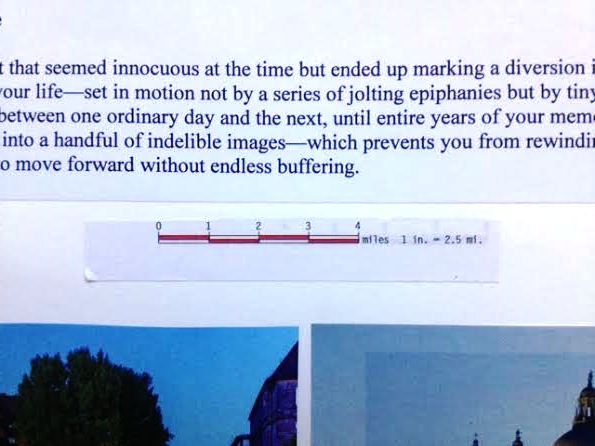
Here is the legend from a map used as part of this. I like these – you need a reference point to know what you are looking at.

key3

Here is the definition of the word –
Keyframe
n. a moment that seemed innocuous at the time but ended up marking a diversion into a strange new era of your life—set in motion not by a series of jolting epiphanies but by tiny imperceptible differences between one ordinary day and the next, until entire years of your memory can be compressed into a handful of indelible images—which prevents you from rewinding the past, but allows you to move forward without endless buffering.

Ingredients:
Strathmore visual journal
Glue stick
Magazine photos
Fortune cookie message
The distance key from a map

Created 3-2-16

The pictures were taken with my phone. Maybe I’ll remember to scan this and switch them out. This gives you an idea, at least.

(edit – here are the scanned, and thus brighter, images)
Keyframe A 030216

Keyframe A2 030216

Dwell

brace
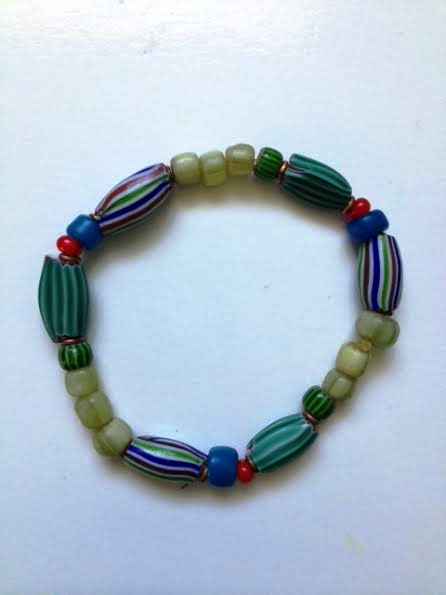
I made this bracelet to illustrate God dwelling among us. This is the picture of the whole thing, which has three units of the same “story”.

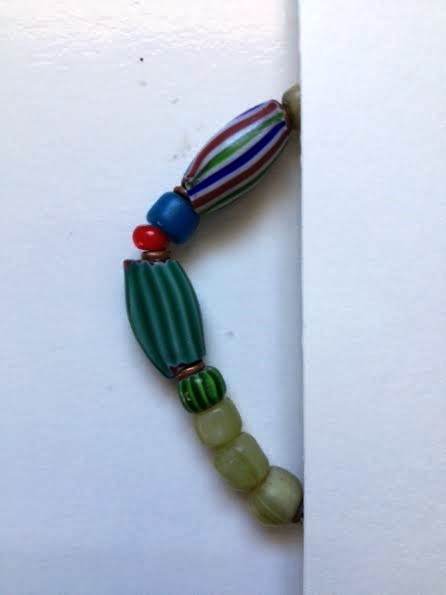
Here I’ve blocked off just the story itself. It reads going up.
brace2

This is how you read it –
(light green beads) God created the world. God sustained it for thousands of years.

(Deep green small bead)
Then, God said to the Jewish people
“I want to dwell among you”
and the Mishkon,
the traveling tabernacle, was built.
The tangible reminder that a non-tangible presence was among them.
It wasn’t a house for God
so much as a reminder
that God was already present with them.

(Large deep green bead)
Thousands of years passed with Jews following the One God.

Then the Holy Spirit (red bead)
spoke to Mary (blue bead).
God wanted to dwell among us even more intimately.
God took up residence inside Mary.
It wasn’t something forced.
She was asked.
She said “Here I am. I’m your servant.
Do unto me according to your will.”

God took up residence within her and created a pure, holy, being, a blend of past, present and future, fully human, fully Spirit, and the culmination of the Jewish hope. (Bead with green, red, blue, and white)

Never before in human history has God spoken to someone and asked them to make a place for God within themselves. He’d asked plenty to trust and to follow, but never to actually have God dwell within.

When Jesus came into the world, he asks us to do the same – to make a place for God in our hearts, to let God work through us. God is not in a building – God never was. God is here, within us, now.

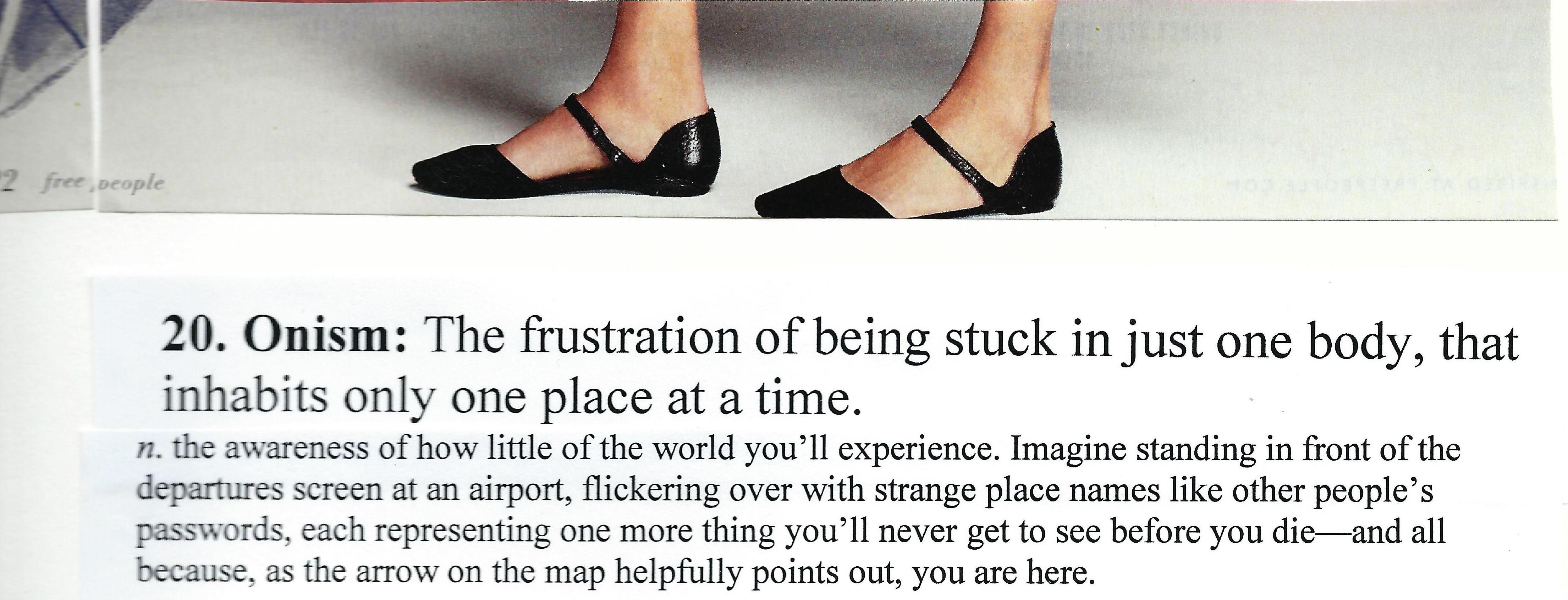
Onism

I like “The Dictionary of Obscure Sorrows” because it explains ideas that I not only didn’t know the word for, I also hadn’t even thought of the idea. New words help us see in new ways. This is part of why it is important to not let languages die out. Each language (like each person) has a unique perspective on the world. Without all perspectives, it is like looking at the sky through a straw – we miss so much.

I’m randomly picking these words from an envelope and using them when I play with art paper. It is kind of a two-for-one deal. I want to work with both things, so I’m doing them together. These are fairly easy to do in the morning before going to work. I like to think that I’m an artist first and that my paying job is a second job. Or, I think of making art as taking a vitamin or a supplement. It nourishes me in unseen ways.

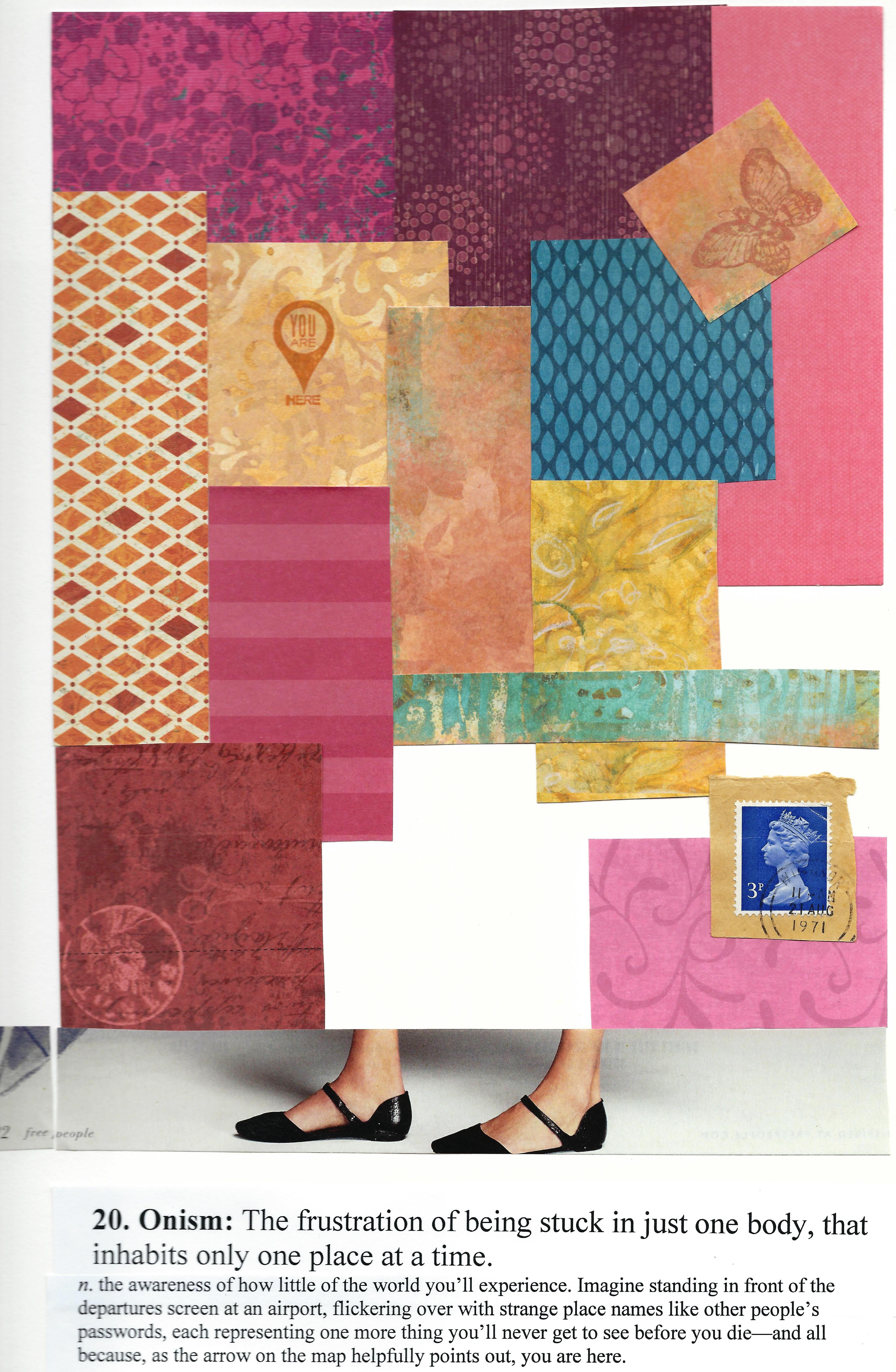
Here is the page from my art journal –

onism 022816

Note the disconnected feet. They are from another piece I did that I have not posted. I didn’t need them for that, but they are really interesting so I kept them. Also note the “you are here” stamp. This is my favorite thing right now. I misplace myself sometimes and the stamp helps. Also, Queen Elizabeth shows up – I sure like the amazing assortment of colors the Brits use in their stamps. Not a whole lot of other variety, but they have color down. I have whole embroidery box bin full of them, sorted by color.

Here is the detail with the definition of the word.
onism b

Now to find an online dictionary of obscure joys.

The Visitors (part 12)

The company thought they were making improvements to the population. They created chemicals that created a strong psychic ability in lab monkeys. After that, it was simple to add the chemicals to breakfast cereals for kids. Sure, they had to cover up the taste by adding more sugar, but it seemed like a good trade-off. Clairvoyance for a few extra pounds, perhaps?

They didn’t imagine the kids would stop playing outside, stop exercising almost entirely. Their parents were terrified of strangers kidnapping and killing them, so they plopped them down in front of the TV and let Bugs Bunny do it instead. The effect was the same – their minds erased by hours of TV, their health gone from years of inactivity.

The children ate the colorful cereal, marketed to them with cartoon characters just like those on the TV that served as a surrogate parent. Their parents thought it was good for them because the cardboard box said it was fortified with vitamins and minerals. They just didn’t know what else it was fortified with. Over the course of a few years, the chemicals in the cereal altered the DNA of the children enough so that when they were old enough to have their own children, they had the trait the company was hoping for. The only problem was that society wasn’t ready for it.

The children were almost too sensitive. They knew far more than they should have at early ages, because their brains were closer to crystal radios than carbon-based structures. They received all sorts of signals, all the time. They were flooded with information, with no way of filtering it or turning it off. Everything was too much. All of their senses were working overtime.

Some went mad. Some had to be institutionalized. The company managed to get some of its researchers hired on as aides at the long-term care facilities across the nation wherever the cereal had been sold. The worst cases came from parents who had eaten four times the serving size of the cereal as children, or had continued eating it into adolescence and adulthood. They were beyond hope, of no use to anyone.

Some of the others were very sensitive, but without too many adverse effects. Regular doctors labeled some of the children as having autism, or Asperger’s, or simply sensory processing disorder. The children’s difference was seen by them as a disease rather than an enhancement. The medical professionals kept trying to medicate them or assign therapy to make them act like regular children. The company never said a word, never let it be known that they’d dreamed of this day.

The company began hiring these children once they reached 18. The public and the press were delighted. Finally there was a business that not only was willing to make accommodations for this new and unusual generation, but actually seemed to want them. Little did any outsider realize but the company wasn’t being enlightened. They actually sought them out, not to appear benevolent but to further their own secret project.

Under the guise of new employee orientation, these unusual workers were assessed for their psychic ability. Those that had the highest scores were given up to three hours of specialized training every day. The other employees simply thought it was because of their special needs. Like all other employees, these new hires were sworn to secrecy. They had no idea that what they were learning wasn’t normal.

It wasn’t normal at all. In fact, no one had even tried to tap into the psychic ability of a group before. Each employee was trained to link up with each other, in series, creating a synergistic effect. The net result was far greater than the sum of the parts. It turned out to be more than the Overseer could have ever imagined or dreamed. It turned out to be the worst nightmare ever.

Strong emotions concentrated the results. The teachers had the group focus on their parents, thinking that they would have nothing but love for them. They were wrong.

They had not accounted for years of suppressed rage of being ignored, discounted, and ridiculed. They hadn’t realized that the vast majority of those in this group were seen as a being a burden to their family, an embarrassment. It was worse for the boys.

They were expected to carry on the family name, to provide grandchildren to dote on. The latent feeling of grief that their parents felt, especially their fathers, was profound. It was never talked about to the children, of course. It didn’t matter. The parents never knew that their hidden resentments were being broadcast directly to the very people who would most feel hurt.

Unknown to the researchers, the boys as one force shaped their rage at their parents into a ball of hatred, and then reached inside, shaping it. Like how a potter expands a vessel on his wheel, it became ever larger until it surrounded all parents, not just their own.

In a blink of the eye, all the parents were gone.

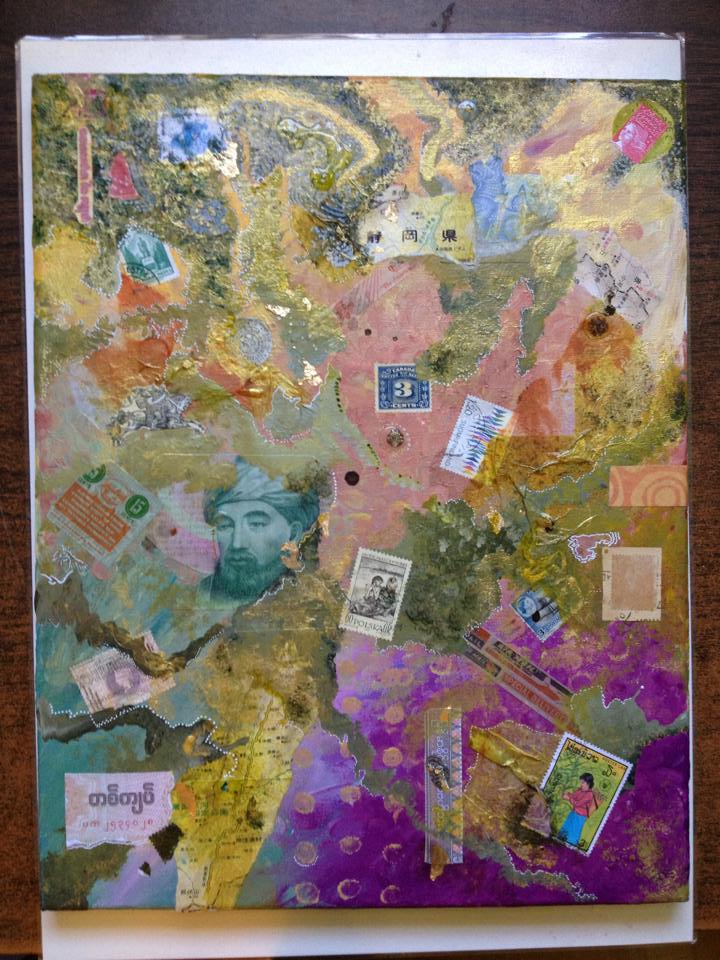
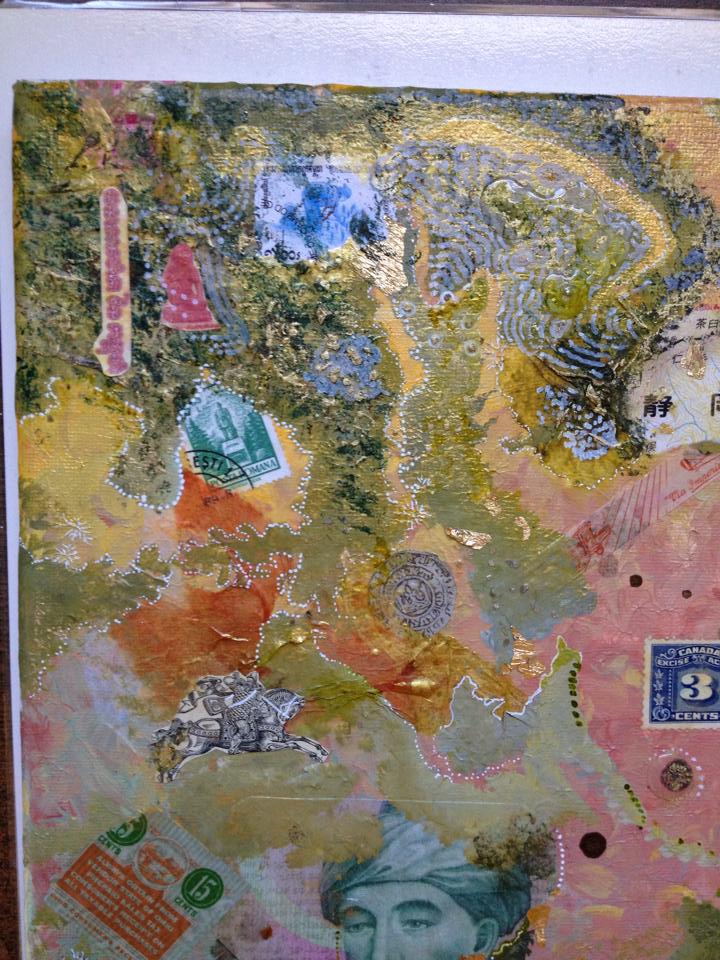
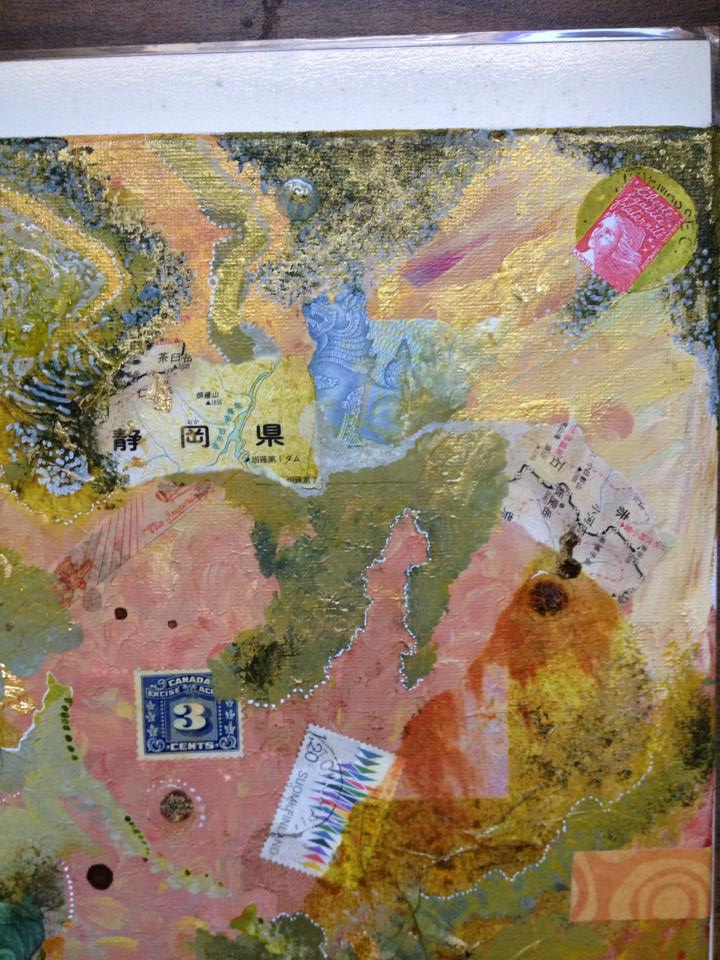
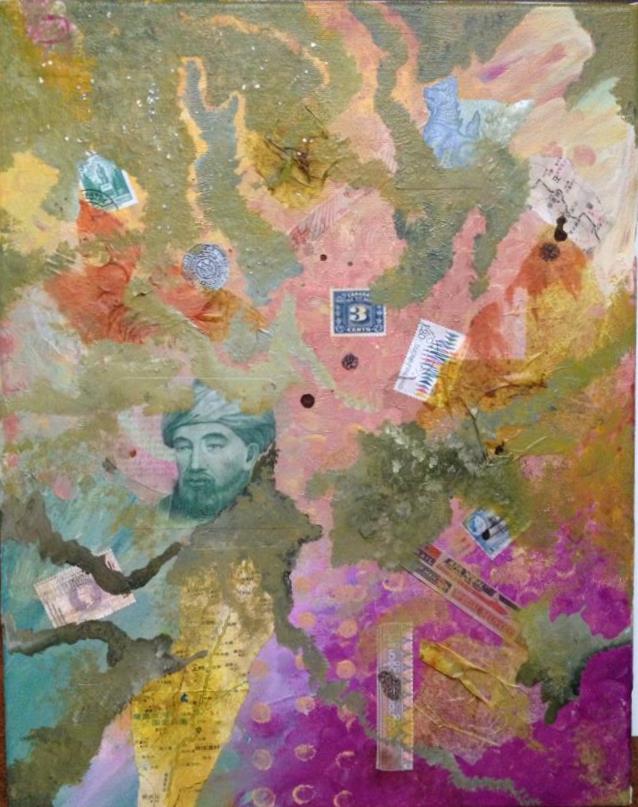
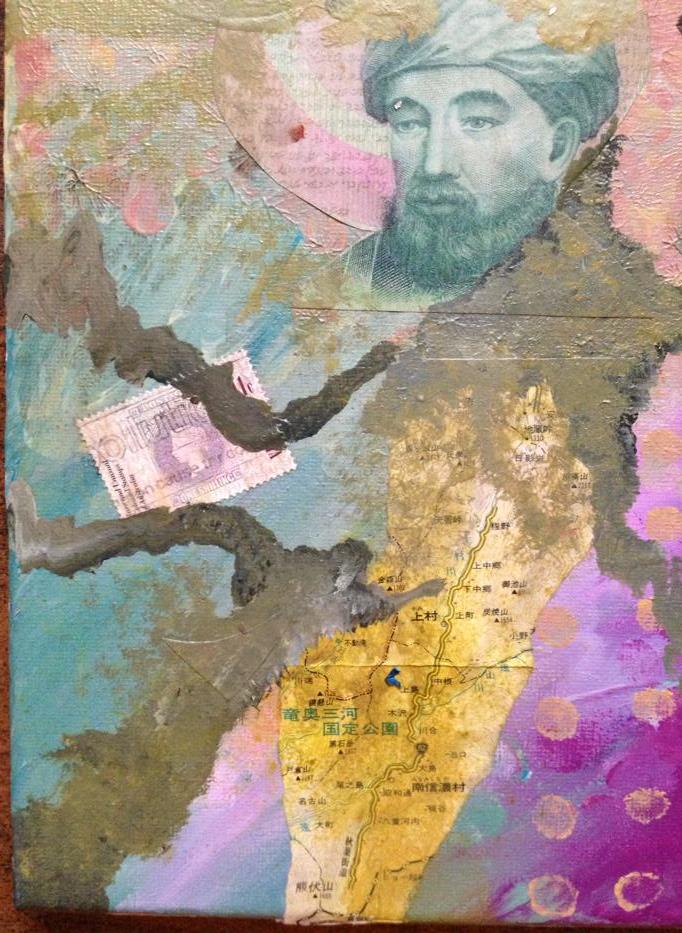
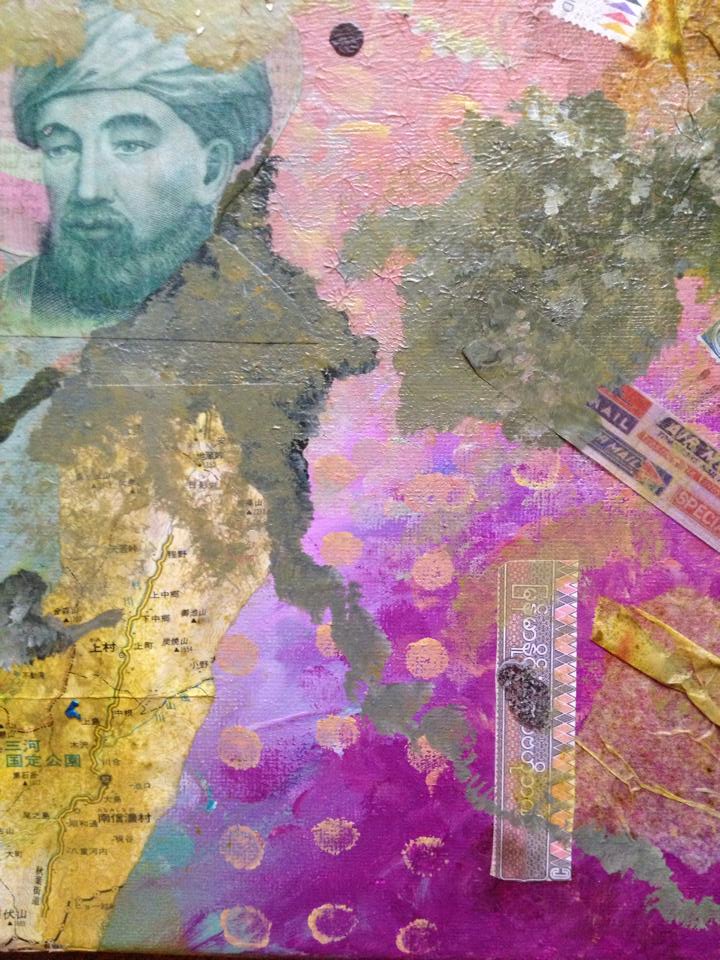
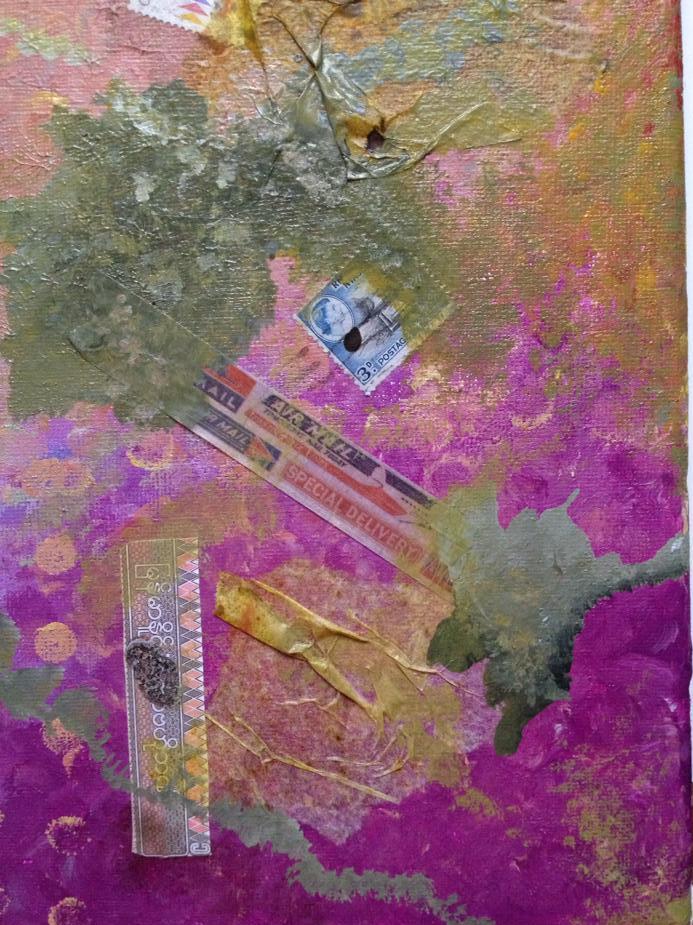
Layered art experiment (version four)

Things are progressing. It is approaching done.

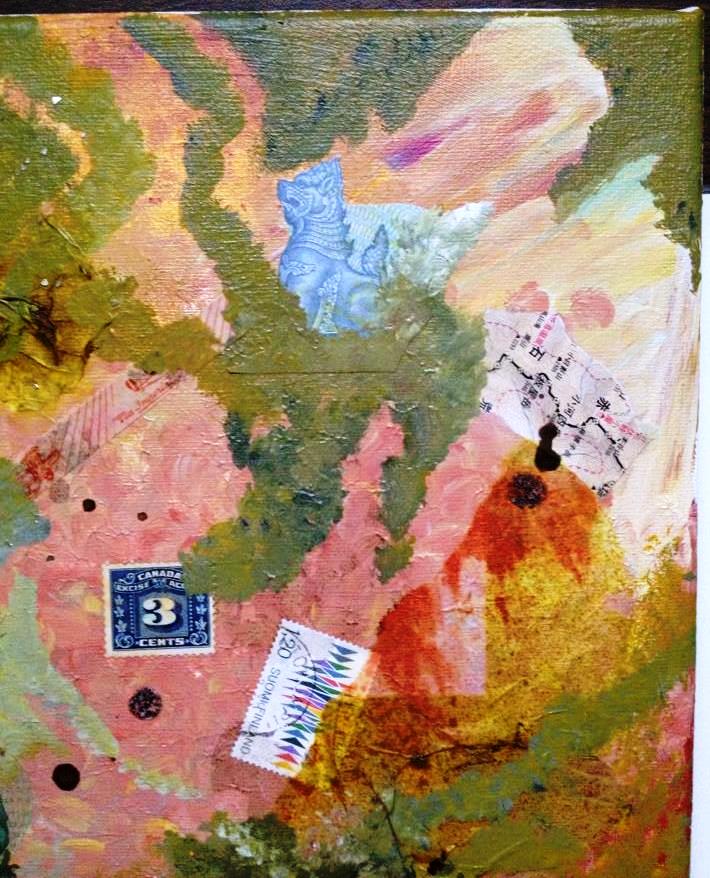
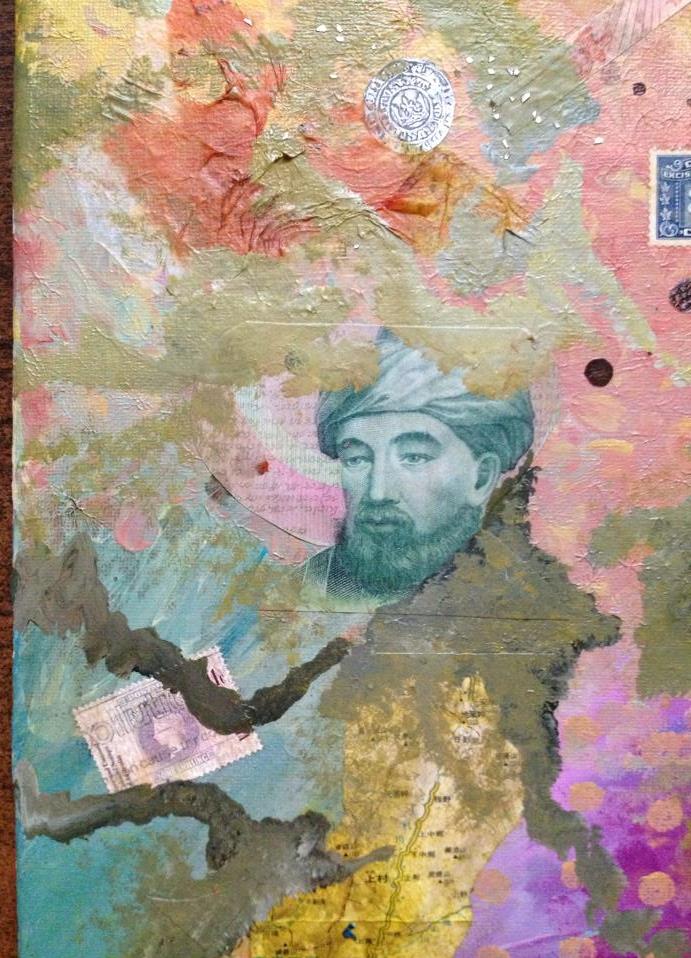
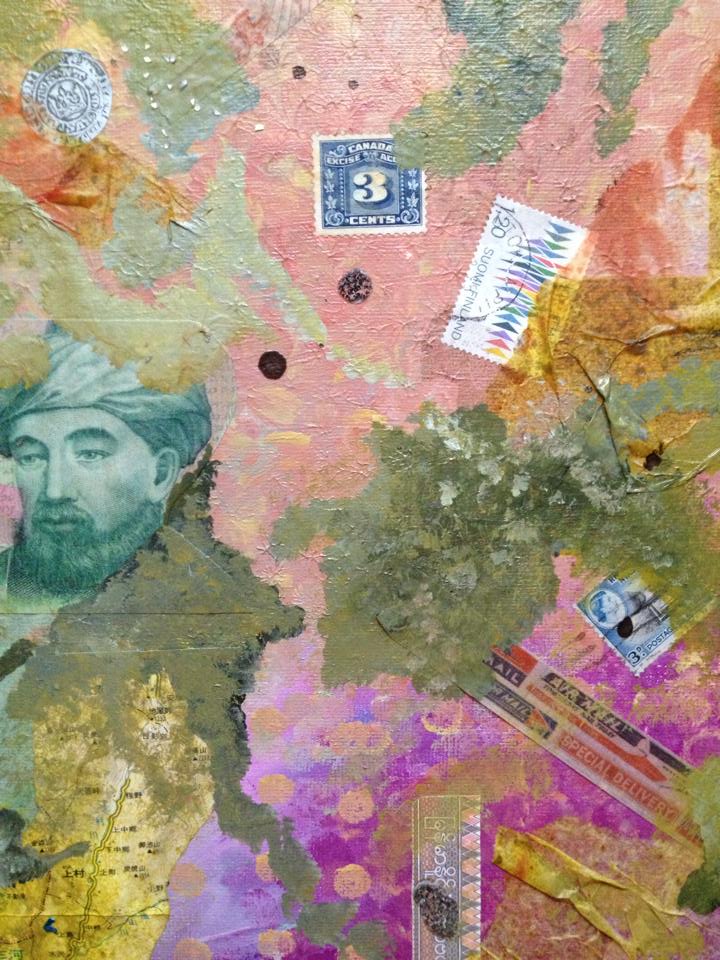
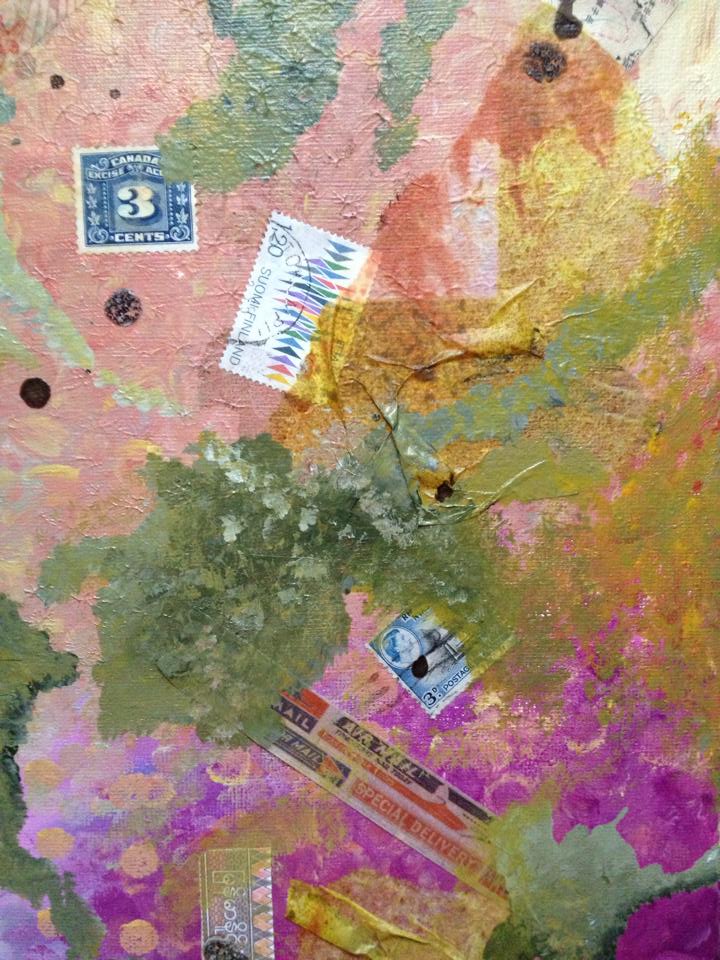
The whole thing
D1

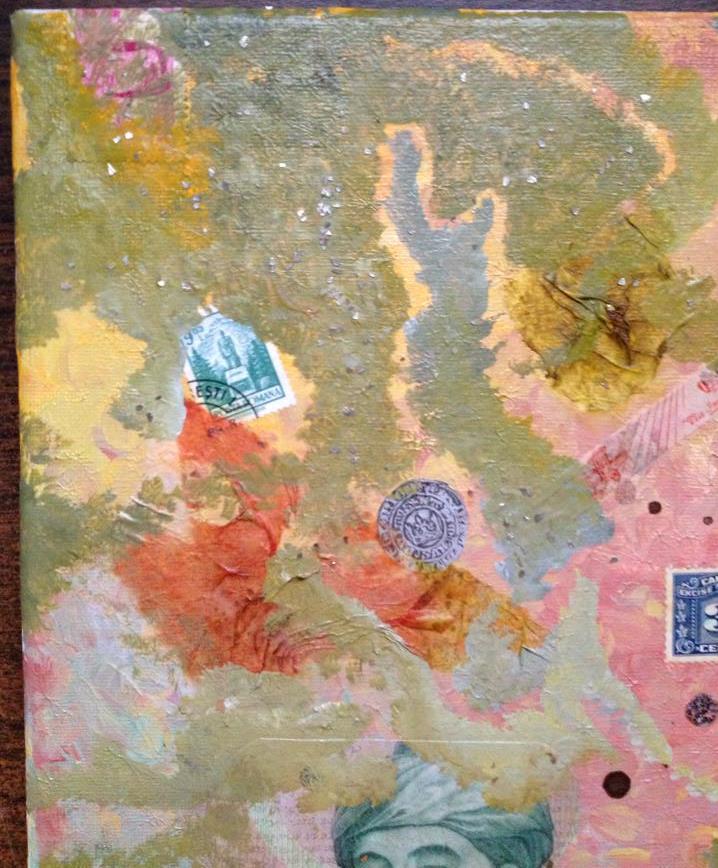
Top left
D2

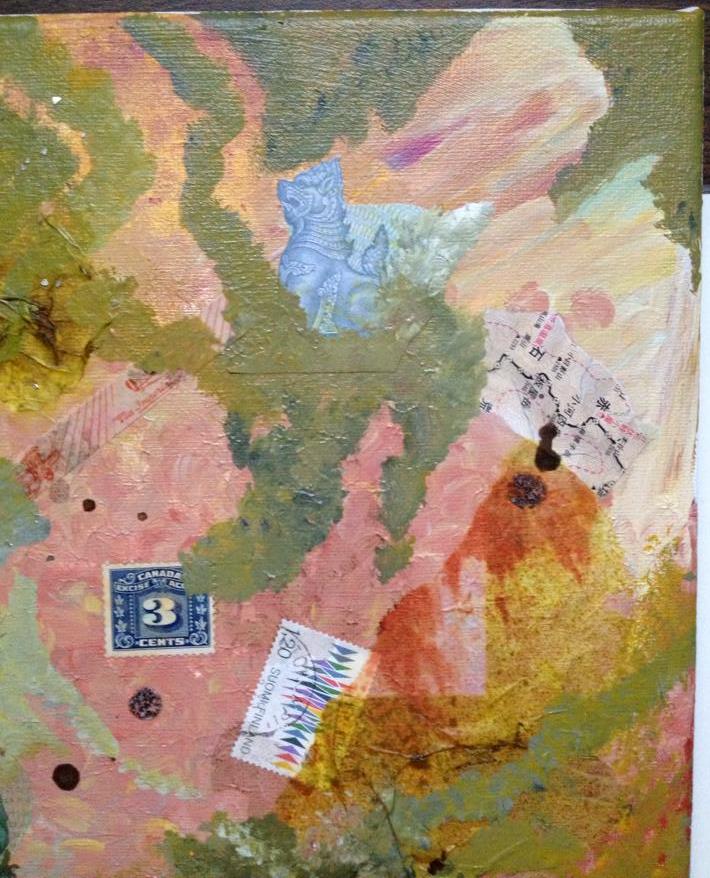
top right
d3

bottom left
d4

bottom right
d5

middle
d6

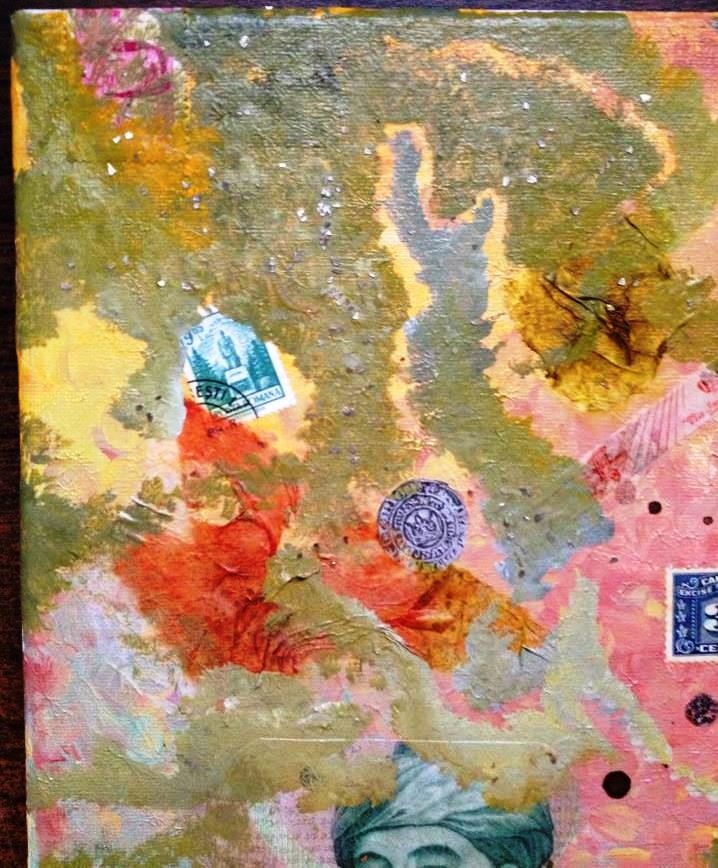
Detail, at an angle, of the top
d7

I added
artist-quality gold paint mixed with glazing medium.
More (photocopied) pieces of foreign money and stamps.
art paper
gold oil pastel pencil
white gel pen
Distress Ink crushed olive stain (painted on)
white chalk pen
decoupage glue

I’d started another project and used a bit of paper towel to take off and blend some of the paint on it. I then used that (now paint-blurred) paper to dab on bits of paint to this one.

The gold paint makes the picture change color and tone if you look at it in different angles and lights.

Other paints I have used during this –
a blend of cadmium yellow/ olive green / copper
payne’s grey
deep violet
yellow deep
magenta
manganese blue
burnt sienna

I’m reminded of zen gardens and the ripples on koi ponds on the top area.

I realize there is no focus – it is all interesting. I’ve not tried to draw the eye to just one area, but all of them separately. This is a piece that takes a lot of time to explore.

The Visitors (part 11)

Rob had stopped writing actual maps in his notebook after the second time he’d gotten caught. The police had confiscated his satchel along with his notebook and figured out too much from it. If he’d just had the usual things in notebooks – poems, stories, a few sketches, then they might’ve let him go, thinking he was a student of a sort.

That alone could have spelled trouble because schools had ceased to be in the years after the Disappearances. But it wasn’t uncommon for people in their early 20s to cobble together some kind of curriculum for themselves. The police didn’t mind that, seeing it as a harmless way to spend their time. They knew it wouldn’t, it couldn’t, lead to anything. But if they suspected his notes were about Walks then the whole plan could have unraveled overnight.

The police couldn’t go on Walks, of course. If they could, they would. Who wouldn’t? The ability to travel from Room to Room, discovering new buildings from the inside was quite a feat. It was like having a master key to every house. “Open house” events took on a whole new meaning if you were a Visitor.

The problem was, some Visitors worked for the police. Not willingly, mind you. The only “pay” they got was being set free. They’d been caught on a Walk, often helping themselves to something in a member of the Quality’s house. Visitors didn’t think of it as stealing, but the Quality sure did, and the police were notified.

How can it be stealing when the items weren’t even bought by the Quality? The concept of “possession is 9/10 of the law” still held true even in this time, because the people who did all possessing had all the lawyers on their side. Hell, half of the Quality were lawyers, those that hadn’t had time to settle down and start a family.

Visitors who were caught had two choices if they wanted to go free. Pay a fine or rat out another Visitor, which sometimes meant decoding their maps so the police would know where to catch them. It wasn’t much of a choice because most Visitors didn’t have enough money to make the police happy. Too little and they couldn’t pay. Too much and they were liable to face yet more charges, including burglary or robbery. It was seemingly easier to be a snitch. But it also carried a penalty. Snitches didn’t tend to last long. Once word got out among the Visitors, a snitch would often get shoved into a Room whose closest Door was at least 100 miles away.

Those kinds of Rooms were why Visitors made maps. Some things were too unpleasant to want to have to do again. They’d exchange information whenever they could about Doors that were useful and ones that were less than. Someone else’s misfortune didn’t have to be yours.

Rob had decided on his own to transform his maps into sketches of leaves and flowers. This way it looked like he was going on nature walks rather than going on Walks.

A darkened bit of leaf here, an apparently inchworm chewed bit there, and nobody was the wiser. His marks made sense to him, and that was what mattered. He used actual plants as his basis for the sketches to have verisimilitude. He didn’t have a good enough imagination so he didn’t try to make them up. His Gran had taught him quite a bit about plants, albeit unintentionally. He was her garden helper and had to know what was weed and what was vegetable. He thought of it as slave labor at the time, but he was grateful for it now.

His leaf maps were starting to make more sense. Now that he’d had time to compare notes with Mickey and Julia, some of the missing areas were filling in nicely. There still were areas that didn’t appear to have any Doors at all. He compared these areas against a large topographic map of the state at the local library. He and Julia agreed that more and more evidence pointed towards the problem starting with all three areas called Rayon City, and it didn’t take long for the two of them to convince Mickey that they were on to something.

The three Rayon Cities were built hundreds of years ago by a chemical corporation to house their employees. The cities, more like large villages, were built in short order along with the plant. It was an added incentive to have a ready-made place to live for young impressionable potential employee.

The same people who were drafted to go overseas to fight the Germans were the same kinds of ones who took up jobs in that labyrinthine, windowless complex of a plant. Both groups barely out of high school and with no marketable skills other than day labor. Both groups were average (or worse) students. Both groups were from poor families. They didn’t have many choices.

The military or the plant was the same as far as a choice went. They both paid well, had good benefits, and were dangerous. People took their chances going to work for either of them. With the military, you could die or come back missing a limb or your mind. Death or dismemberment wasn’t a great risk with the plant, but mental illness couldn’t be ruled out. Cancer was a strong contender, too.

Both groups thought of themselves as lucky, as above average when it came to the odds. In short, they didn’t think the bad stuff could happen to them.

Something bad happened, but not what anyone could have expected. All those years of “not me” Pollyanna optimism, all that time being surprised when the bad stuff actually did happen, all those people who cheated themselves out of their own future by borrowing against it with wishful thinking – it all mixed together somehow with the secret experiments that were going on at the plant.

The three plants were privately run but government controlled. It was a weird sort of marriage that had happened before. It had begun with the post office and ended with the auto manufacturers. It was an experiment that resulted in an odd hybrid of the two – good benefits from the government side, better management from the private industry side.

It wasn’t perfect, however. Employees had to commit an actual crime to be fired. Plenty of people who would never have gotten hired in private industry got to not only keep their jobs but often got promoted. It seemed like the more inept you were, the more you got paid.

Another feature of this corporate chimera was the secrecy. Regular private businesses were supposed to be transparent. The government was as transparent as a brick wall. Even the Freedom of Information Act couldn’t be used to pry open the company’s files on its less-than-normal experiments. It wouldn’t have mattered anyway even if someone had tried. They didn’t write any of this experiment down. It was too important to risk being exposed.

The company had divided all of the workers into tiny groups that never spoke with each other. Sometimes the left hand didn’t even know the right hand existed. Each workgroup had its assigned task and were told nothing about how it related to the whole. At first they were told it was for the benefit of national security.

The company made a lot of material for the war effort. They were involved in anything that involved chemicals. Rayon, that miracle fiber that was invented in their laboratory, was used in making parachute cord. Chemicals normally used in fertilizer were instead used to make bombs. The workers understood the need for secrecy – the less they knew, the less chance of the wrong information getting into enemy hands.

The war was long over but the secrets continued. It had become habit to not ask questions, become a matter of fact that you just didn’t even think about what other groups did, even those that shared your area. The metaphorical cat wasn’t even curious, so he stayed alive and safe.

Until everything went wrong.

Layered art experiment (part three)

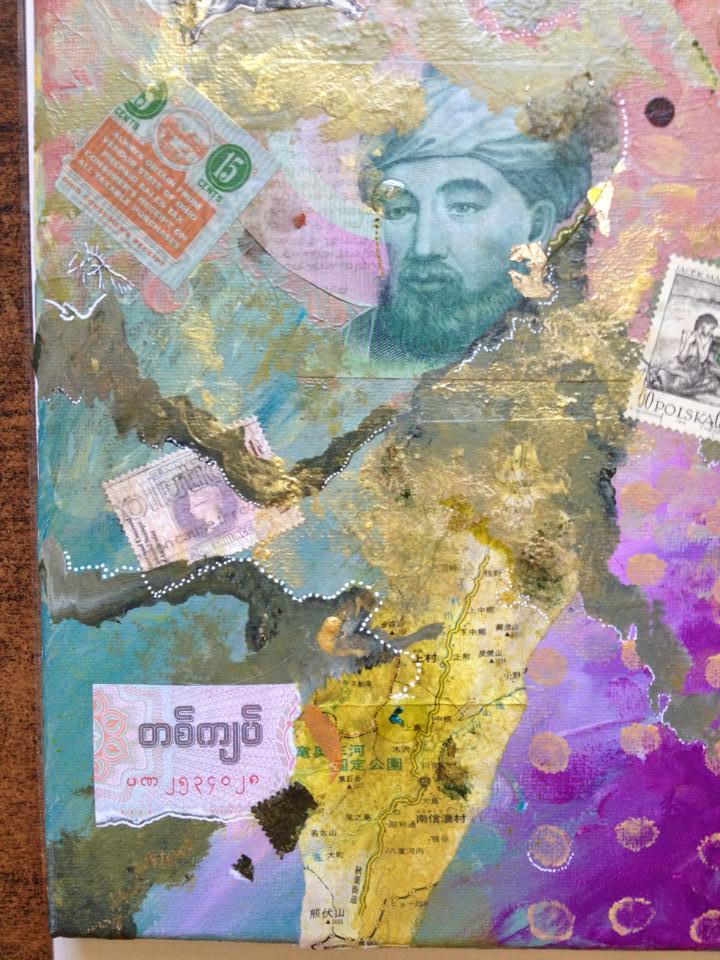
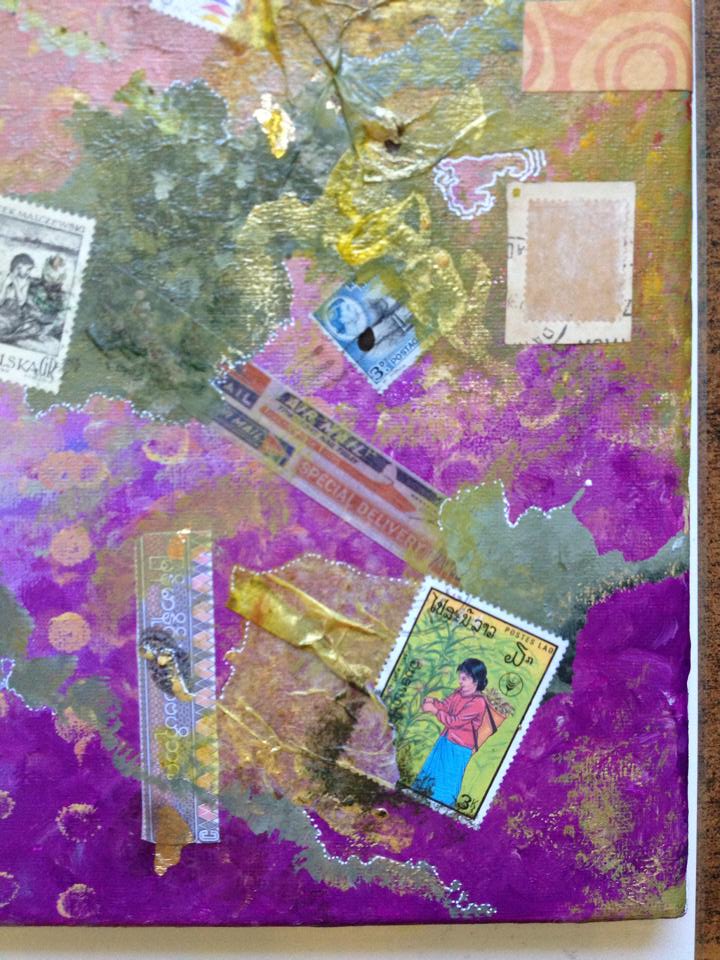
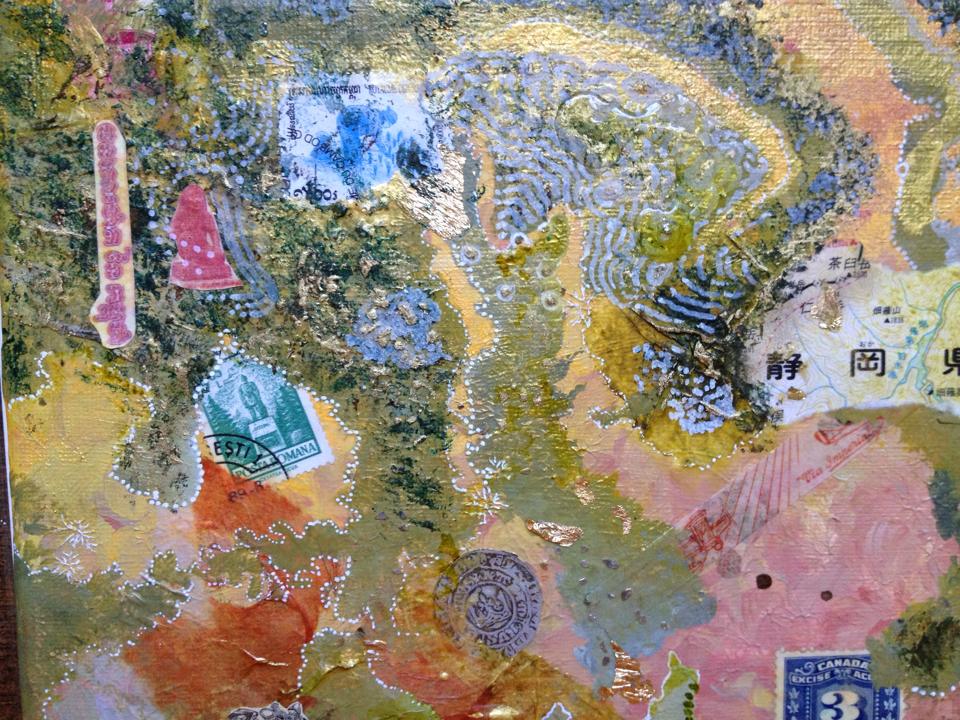
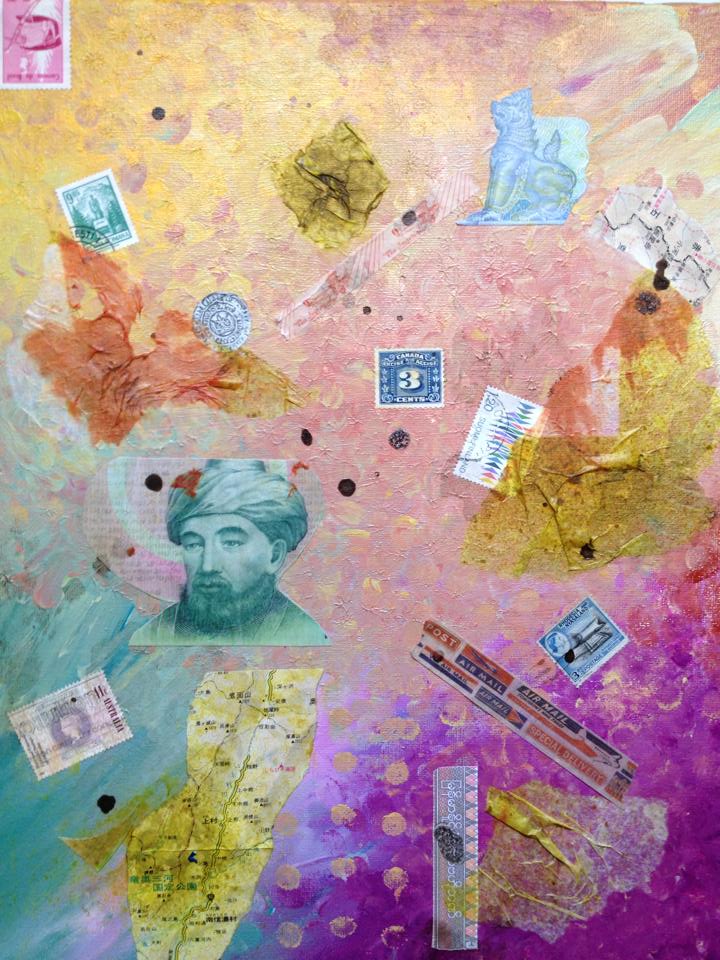
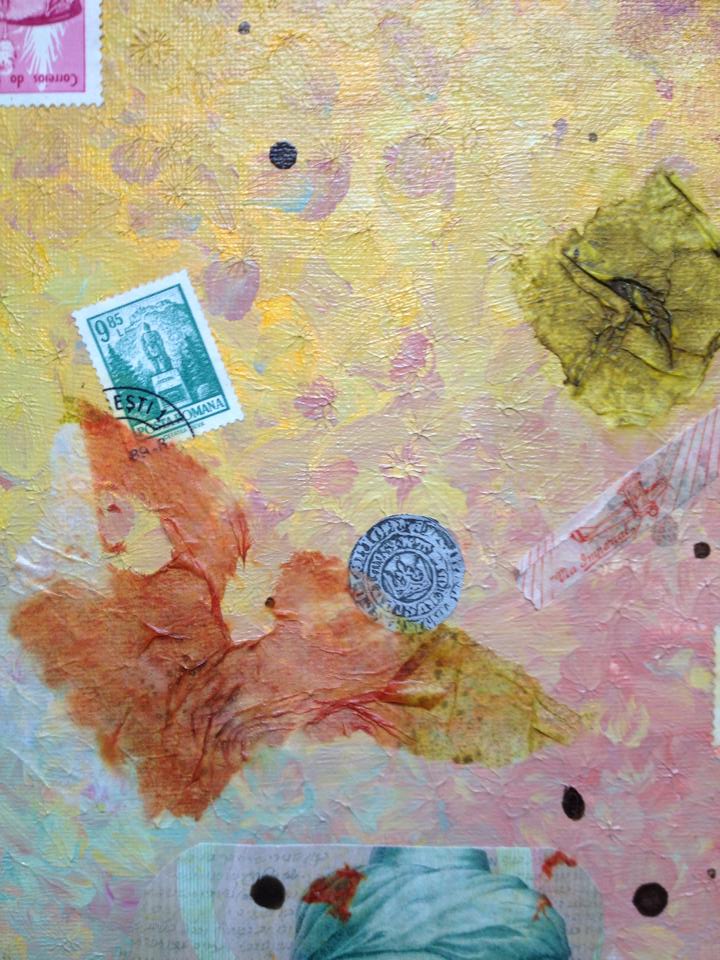
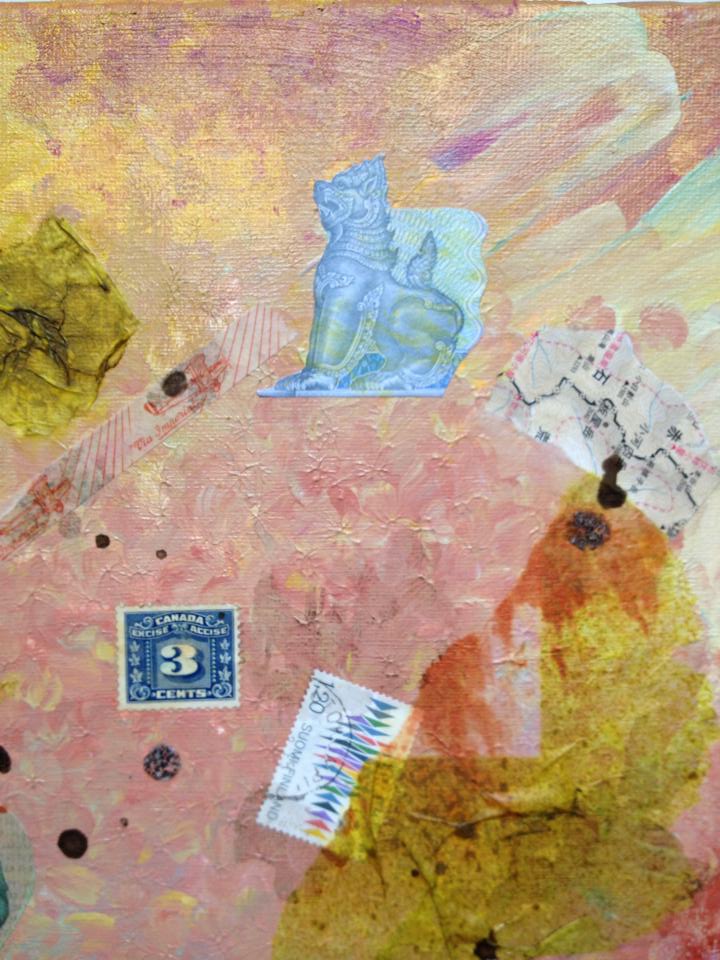
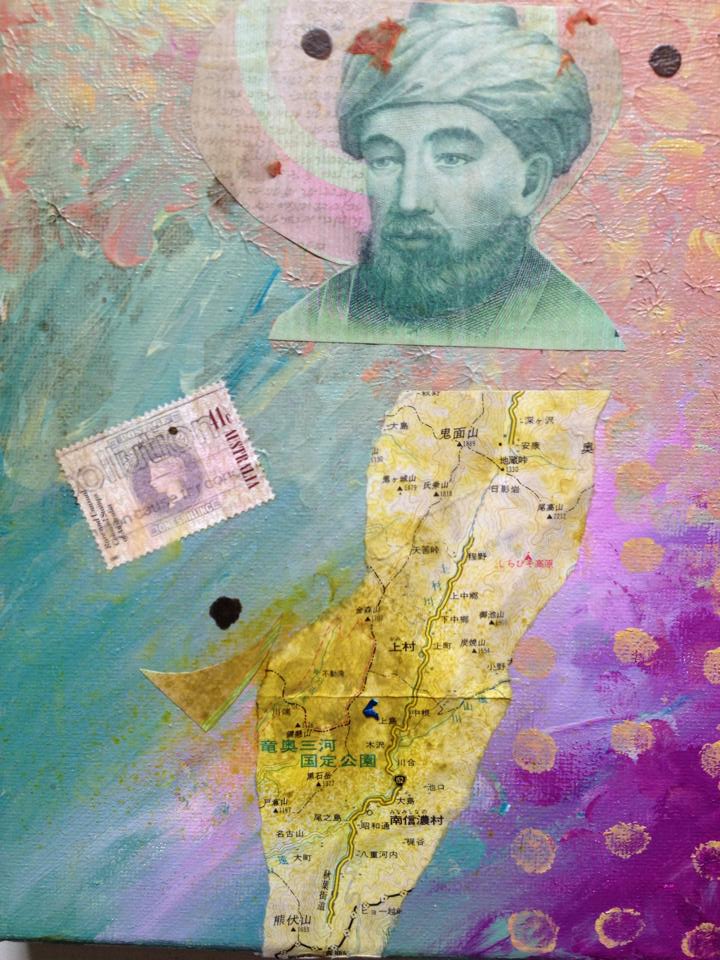
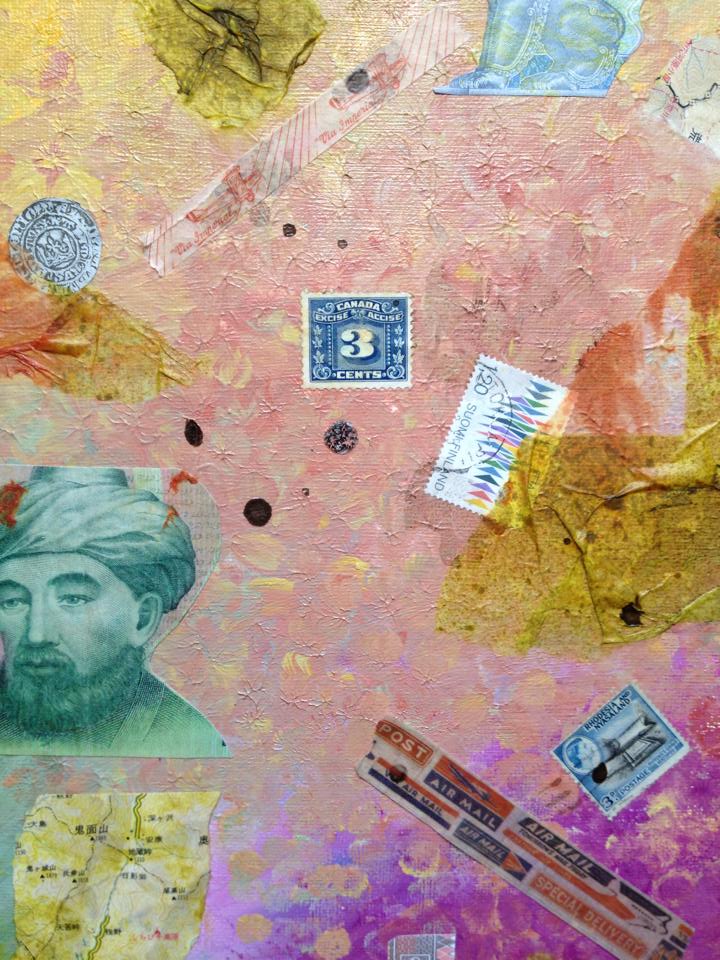
There are now three to four layers on this. I’ve added more stamps and map bits and parts of money. Gold foil was added.

Part three, whole
c1

whole, enhanced (the colors aren’t quite as bright in real life, but this shows off the gold foil)
c1a

Details –

top left
C2

top right
C3

bottom left
C4

bottom right
C5

middle
C6

middle, enhanced
C6a

I worked on it this morning and will share those pictures once that layer has dried. I used gel medium and gold paint to glaze over some of the darker areas. I’m still not happy with the dark olive green at the top, even though I think it needs some contrast.

Layered art experiment (part one and two)

I decided that I wanted to try to make art like Nick Bantock does. I still don’t have image transfer down, so I’m using several of his other techniques in the meantime. You can learn a lot about collage and layering art from many other sources, but Mr. Bantock has two different books that will give you an insider’s look into his personal process. They are “Urgent 2nd Class: Creating Curious Collage, Dubious Documents, and Other Art from Ephemera” and “The Trickster’s Hat: A Mischievous Apprenticeship in Creativity”.

Here is the first bit, which actually has two layers – paint and ephemera such as foreign money, stamps, and maps.

A1

Closeup of top left
a2

Top right
a3

Bottom right
a4

Bottom left
a5

Middle
a6

It took two days to get to this point. Then it took a few more days of looking at it to start painting over the areas that still needed work. I wanted to darken it at first, but then I decided to work with the colors I had. I mixed together copper and olive paint with some watered down white and got a mix kind of like camouflage and worn American dollars. I started to apply it and then added more of yellow and black to adjust it. It wasn’t the colors I’d used at all, but it was a nice alternative than just painting black.

This is what I got.
b1

When doing the cropping of the photo I decided to enhance the colors a bit digitally to see if I can show what they really look like in person. This is a little much, so you’ll have to kind of imagine that it is a little less than this, and a little more than the previous.

b1b

The idea of continuing to work on it is to make it all good. There are always areas that are better than others when you work on a collage or painting. Keep those, and add to the areas that aren’t so good. Keep editing until it is perfect.

I’m not enjoying this process as much as I’ve been enjoying the art journaling. That is faster, certainly, but it also seems to produce strong emotions and memories while I work. That in itself is the reason to do it. This is not producing many feelings, other than a desire to stop working on it to preserve it as is.

I’m learning that I feel very attached to the layers as I make them. I’ve not wanted to paint over any of it, even the so-so parts, because I don’t want to lose anything. This is the mindset that makes some people keep old things stored away in their basement with the idea that “one day” they will need it. I’m trying to work with and around that, so that is why I decided to take pictures as I work on this.

Here are the detail photos from the second set. There are two to four layers in each photo.

Top left
b2

Top left (enhanced)
b2b

Top right
b3

Top right (enhanced)
b3b

Center left
b4

Center middle
b5

Center right
b6

Bottom left
b7

Bottom center
b8

Bottom right
b9

I’ll add further pictures in a separate post as this progresses.

—-Materials used (so far)—–
Stretched canvas
gesso
Acrylic paint
tissue paper (some with Distress Ink on the underside)
matte medium
stamps
Asian map
photocopies of foreign money
“crushed glass” glitter

tools – fingers, paintbrush, sponge brush, tissue paper