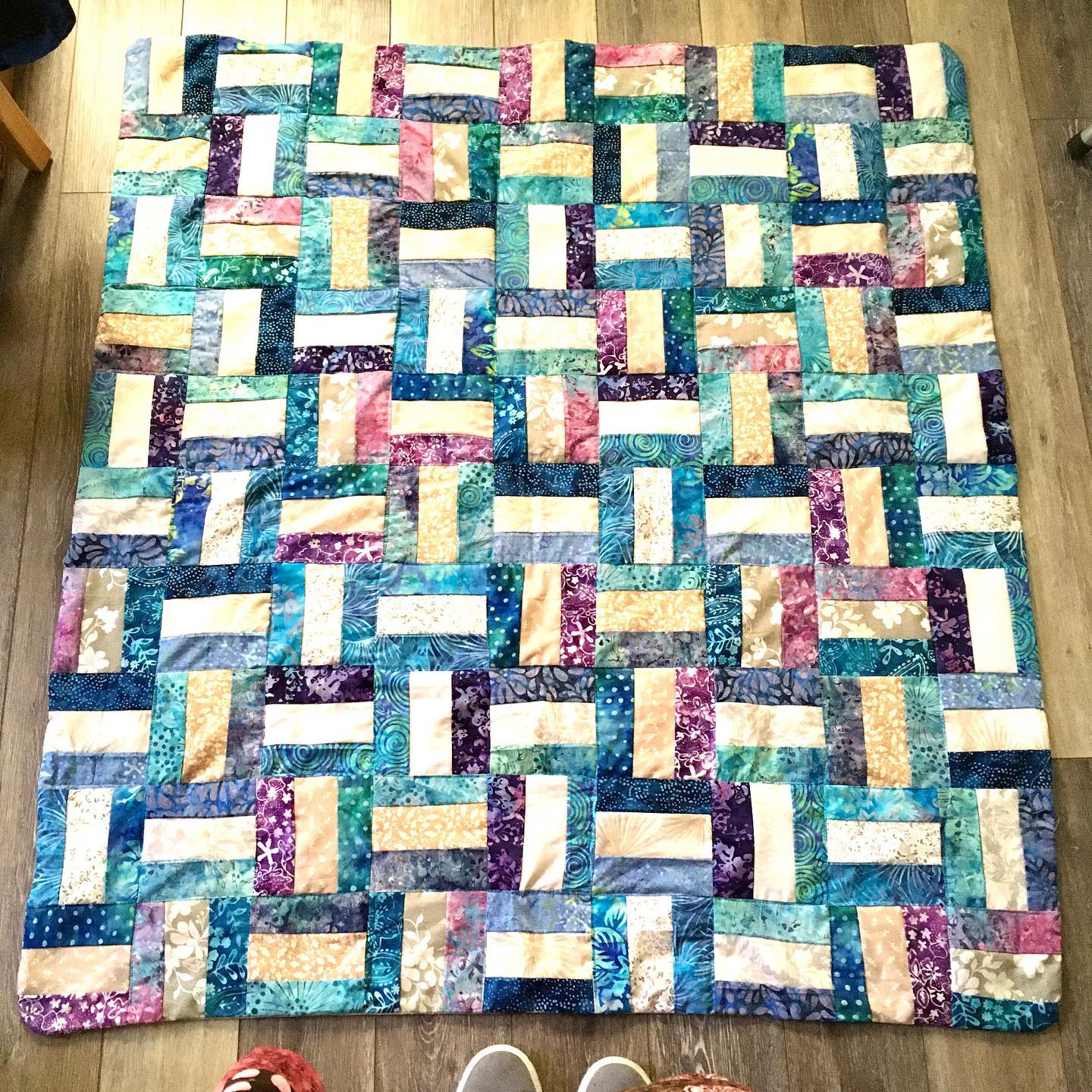
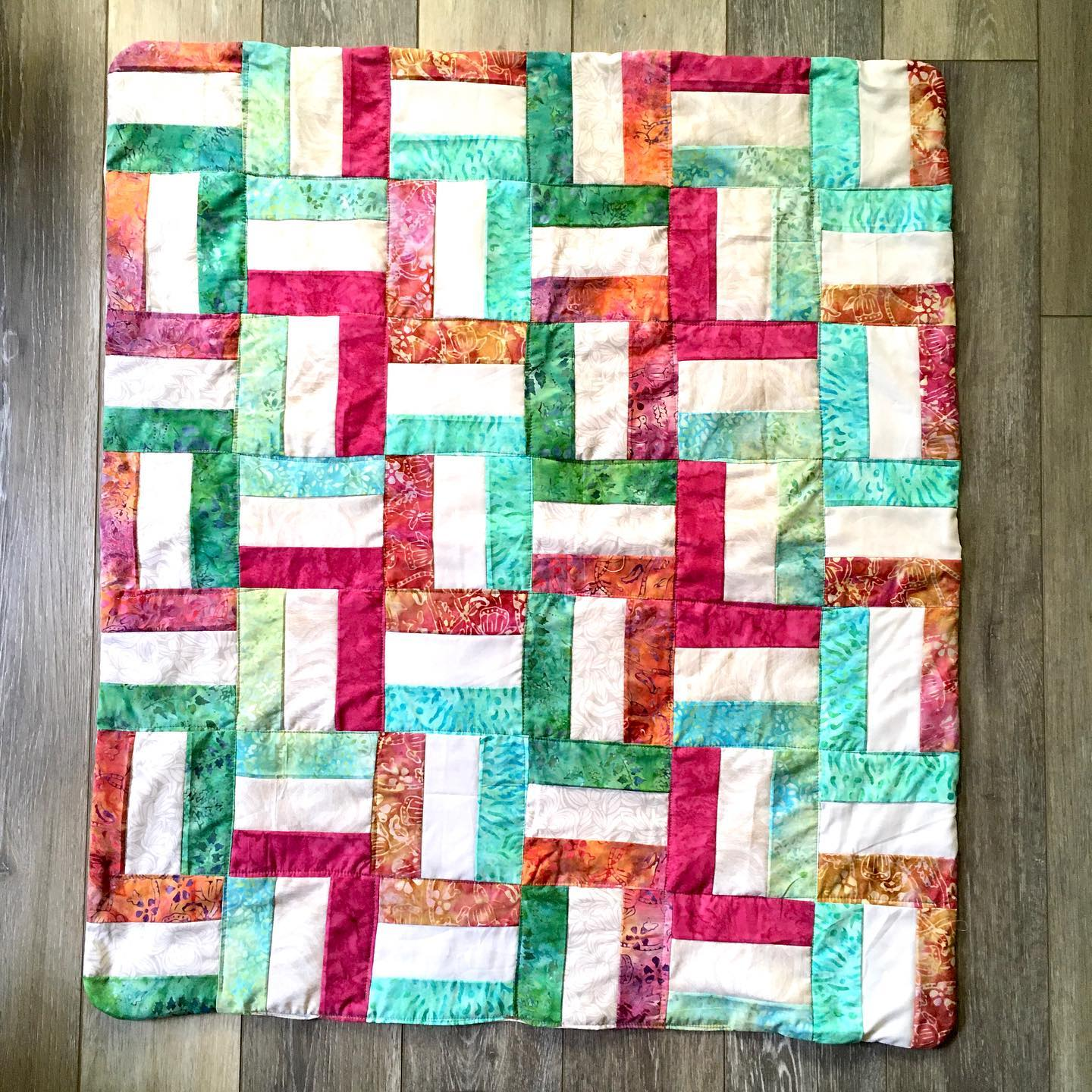
#3 finished 9-27-21 given away 6/8/23 A “jellyroll race” quilt with Halloween fabric
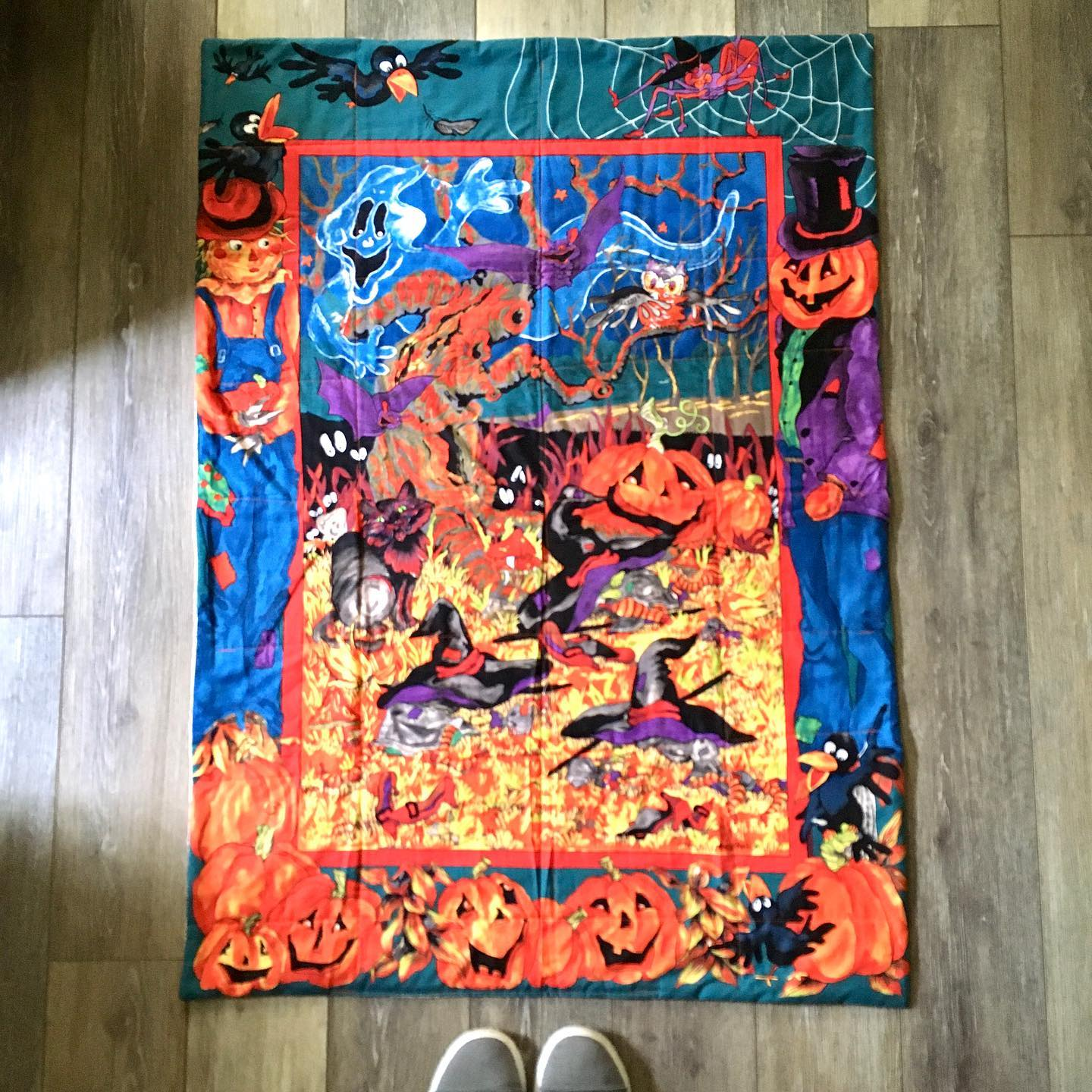
#4 Finished 10/11/21
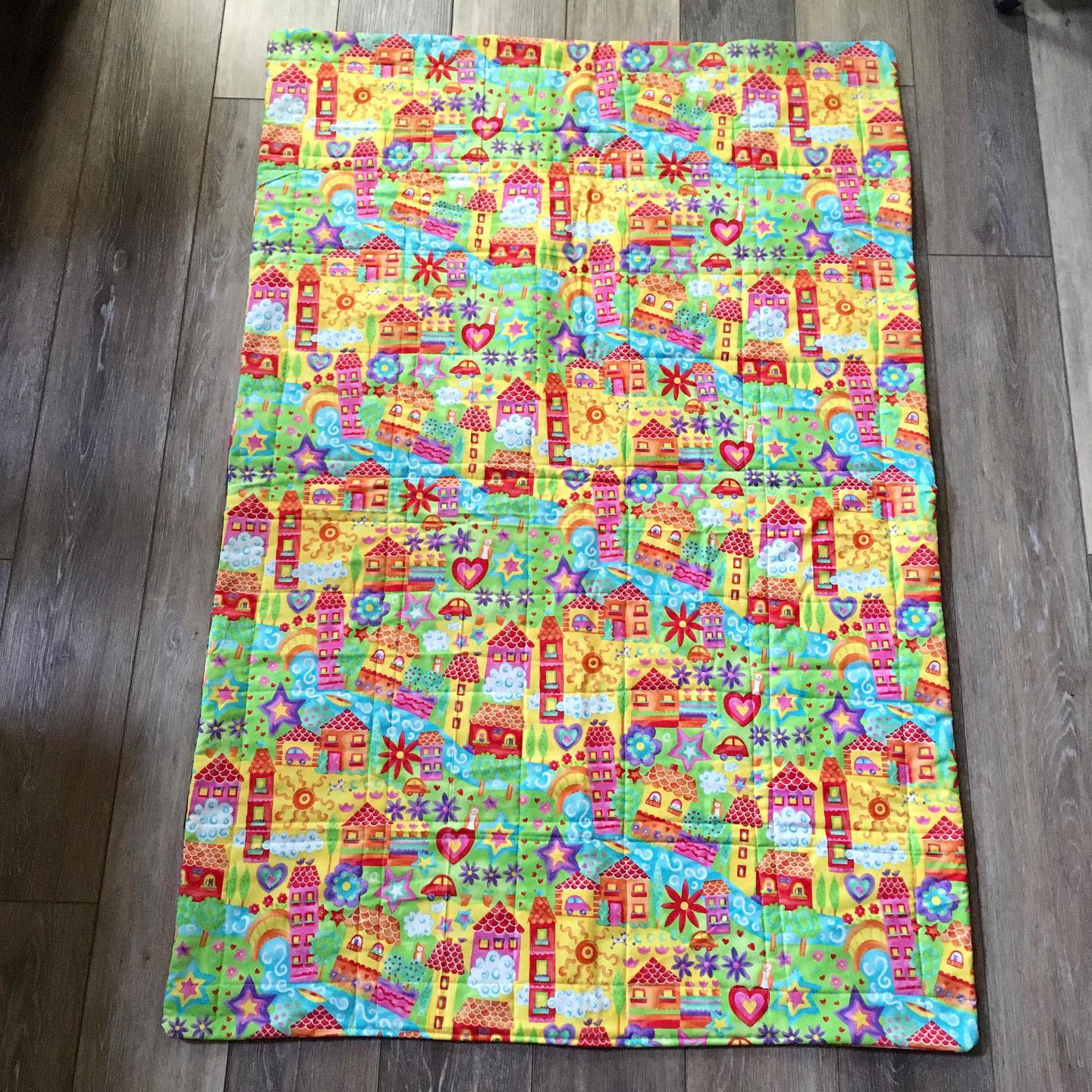
Fabric for the top came from Jo-Anns and Etsy. Fabric for the back came from SmArt art and craft supplies. I bought the Jo-Ann’s fabric and the Smart fabric before I knew how to quilt, knowing that I wanted to learn. This was made for sitting on the grass.
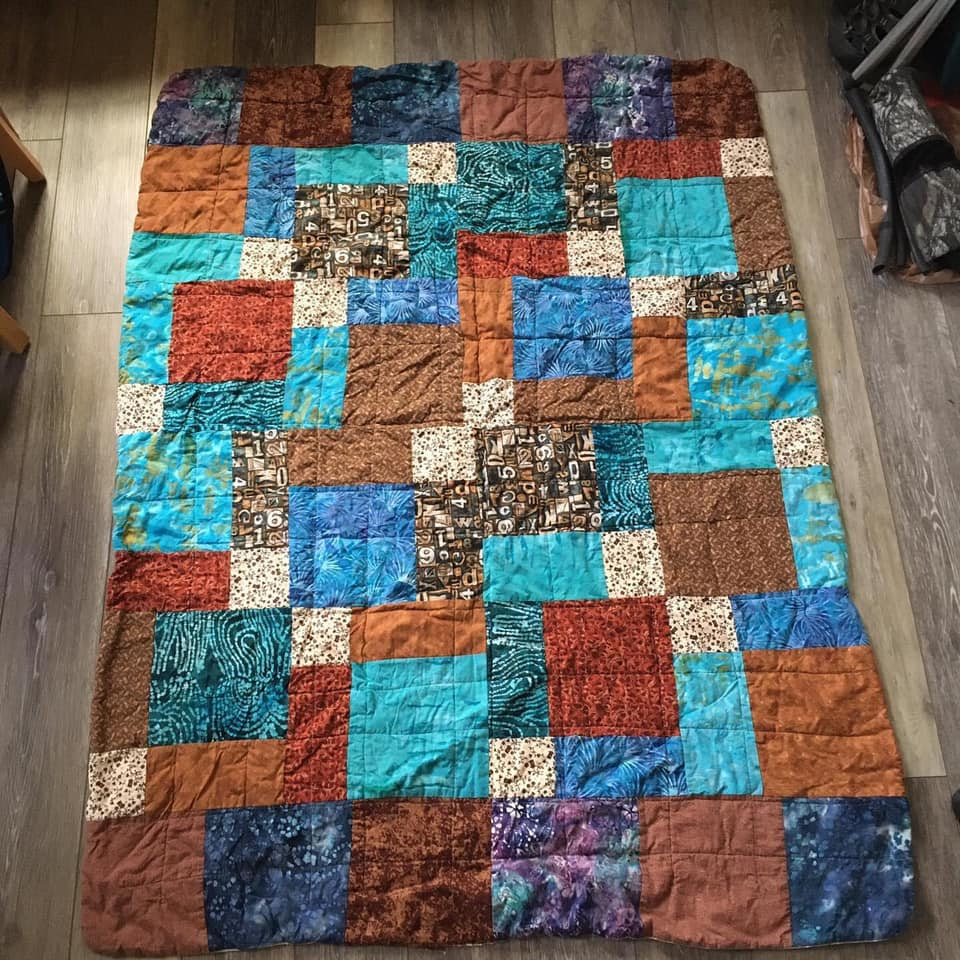
#5 finished 12/9/21 Blue-brown disappearing 9 patch. Fabrics from a fat quarter bundle from JoAnn’s in Rivergate (before I knew how to quilt) and Make & Mend. Sold 9/10/23
#6 finished 1/11/22 Donated to Caris Hospice 7/23/23 54×40″
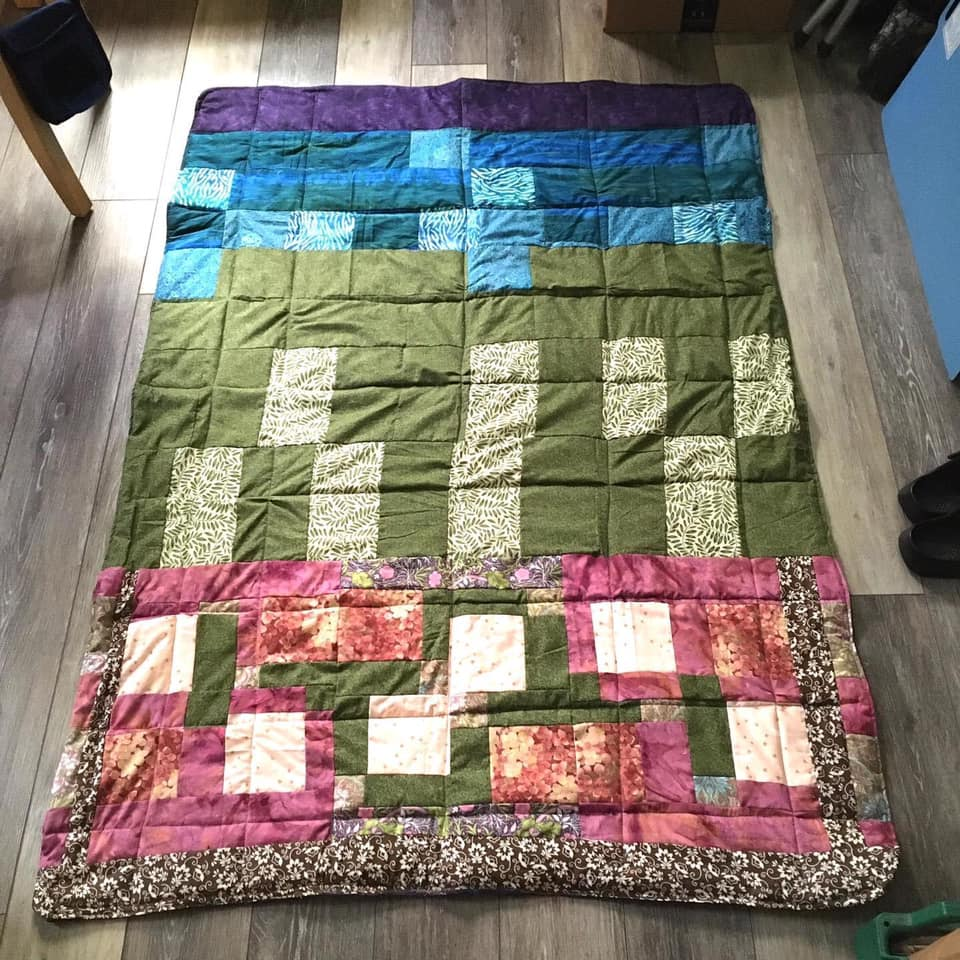
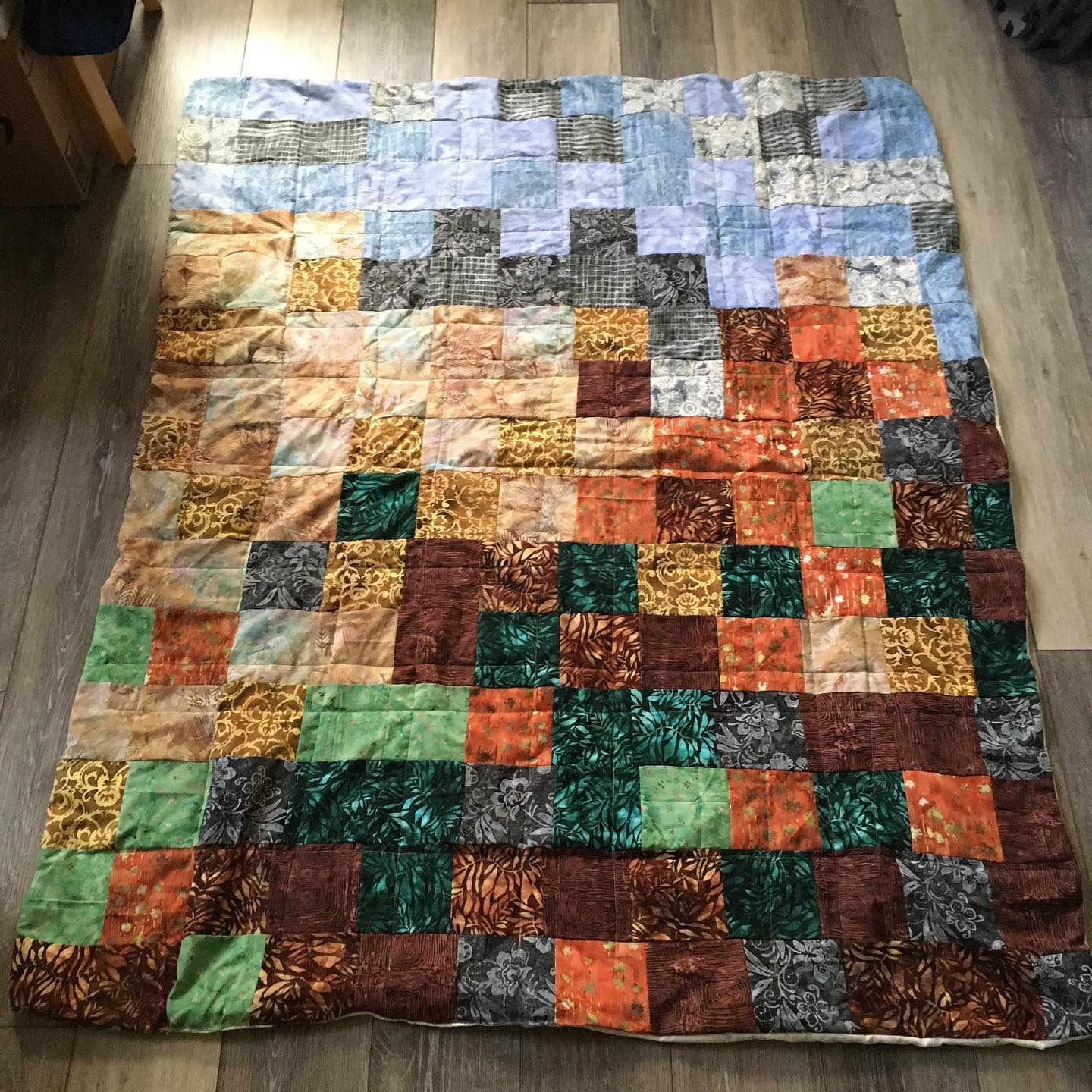
#7 Grandfather Mountain view in the fall finished 3/23/22 All fabric bought in Boone, NC
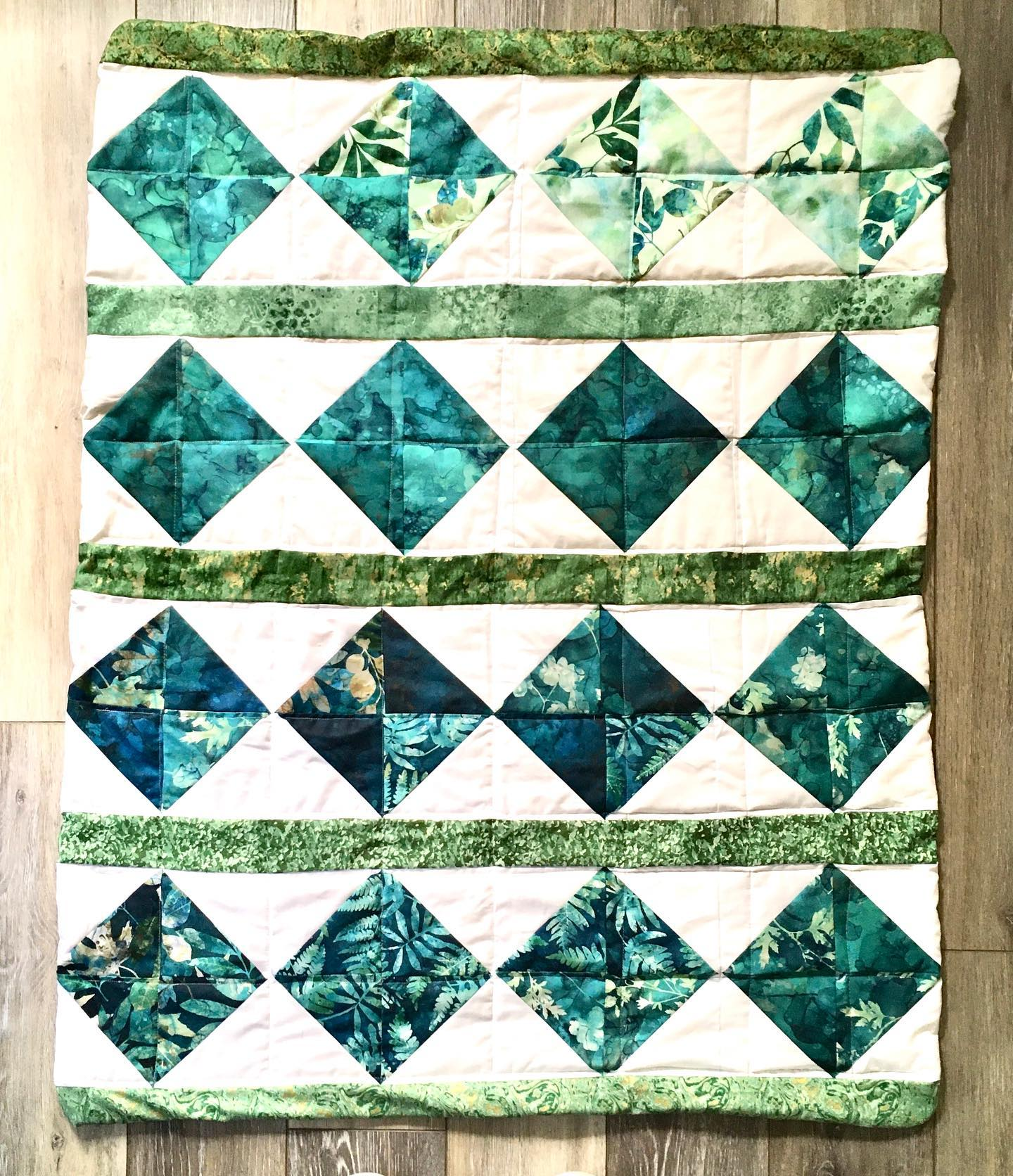
#8 Finished June 7, 2022, given as a baby blanket for my chiropractor. I learned how to do half-square triangles
#9 Finished June 14, 2022 Given as a baby blanket for a clerk at the pharmacy I use.
#10 finished 7/12/22 Disappearing Chattanooga. Disappearing 9 patch made with fabrics bought in Chattanooga TN.
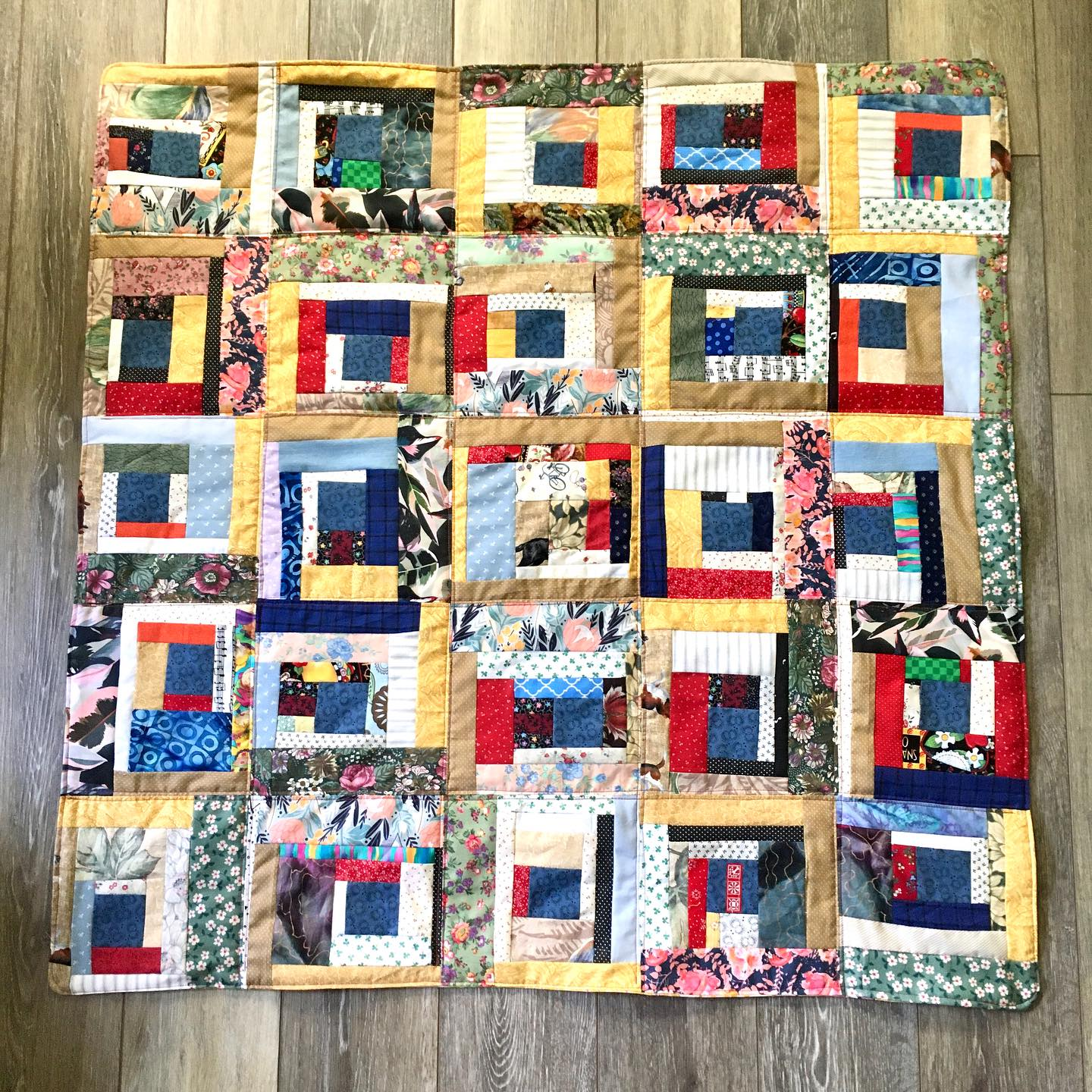
#11 finished 11/9/22 Sold to a neighbor. First log cabin quilt. All fabric from SmArt.
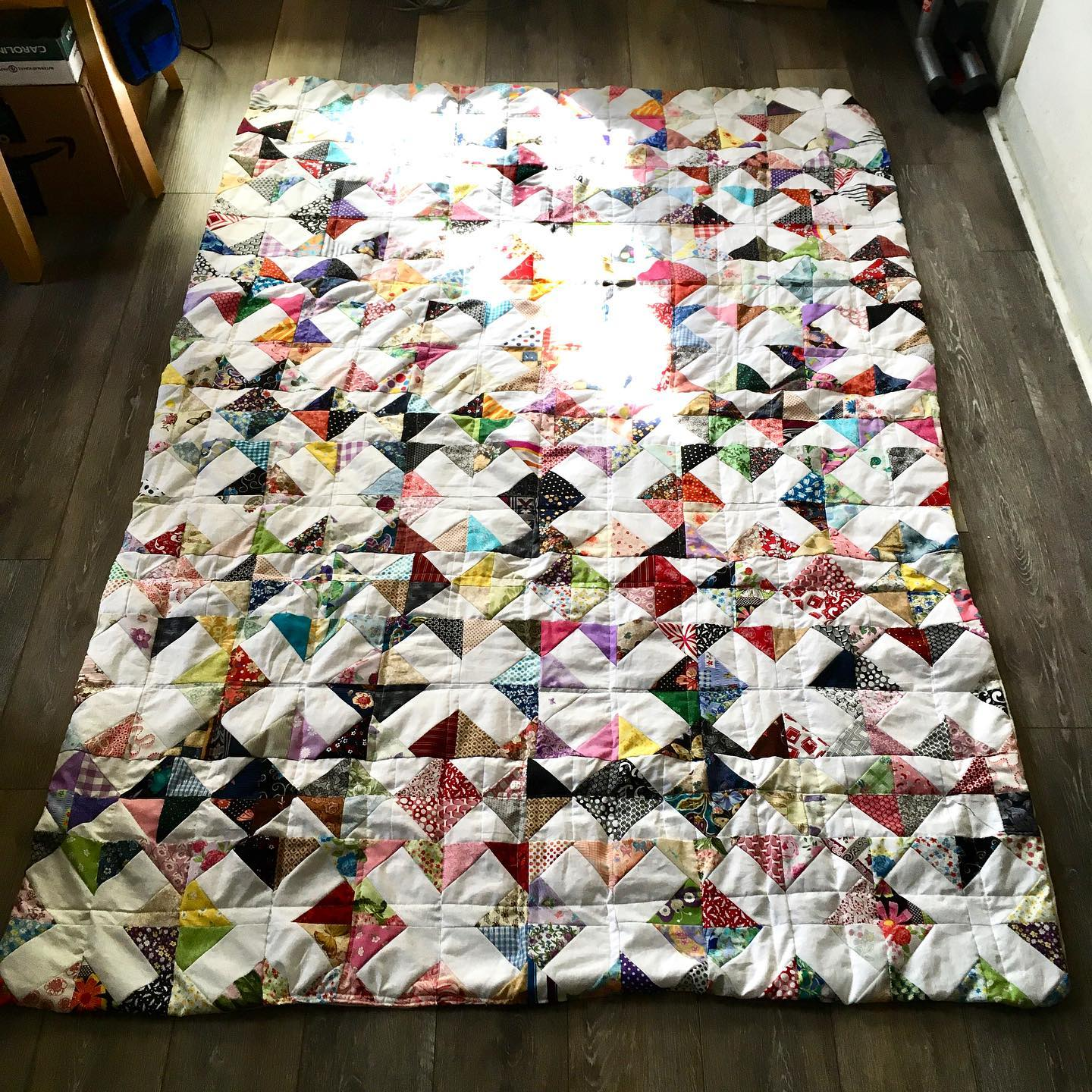
#12 Scrappy X finished 11/10/22 I learned how to do this from a YouTube channel called “My Sewing Room”. Fabric from “My Fabric Addiction” and “Farfalla Originals” on Etsy
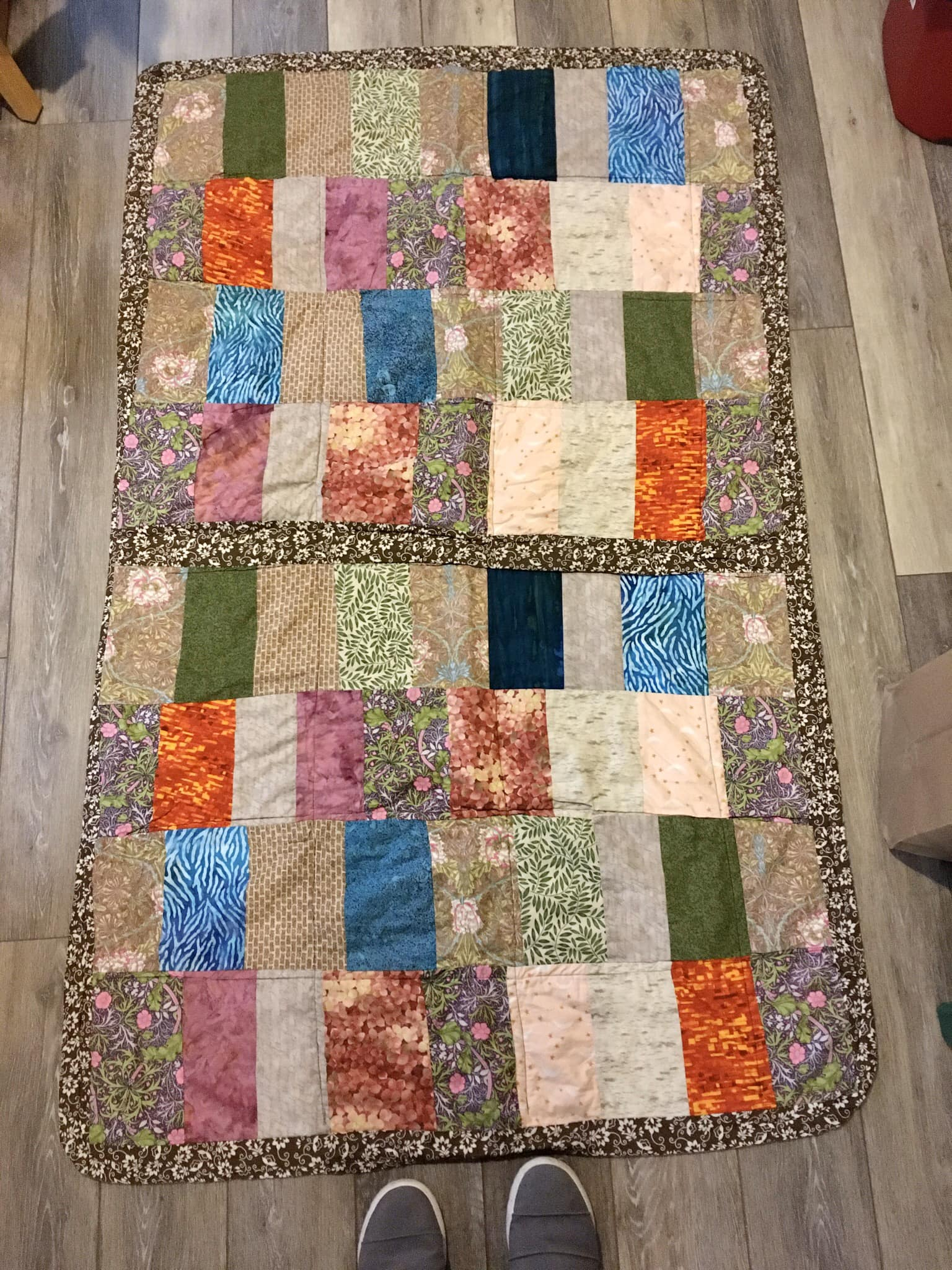
#13 Finished 12/16, 2022 6 disappearing 9 patch panels, made from 9 inch squares. Used 14 fat quarters. Given as a gift to my husband. It is flannel.
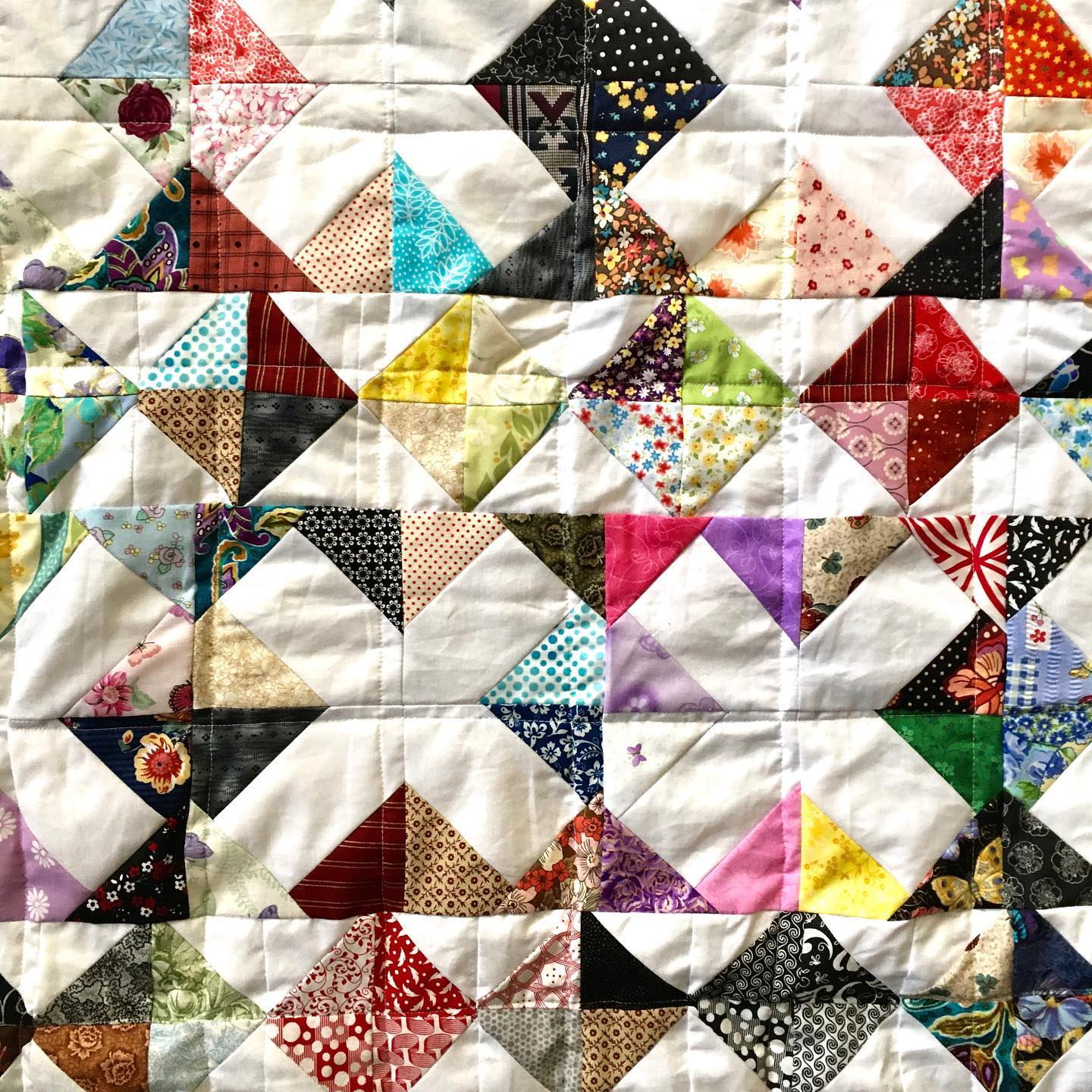
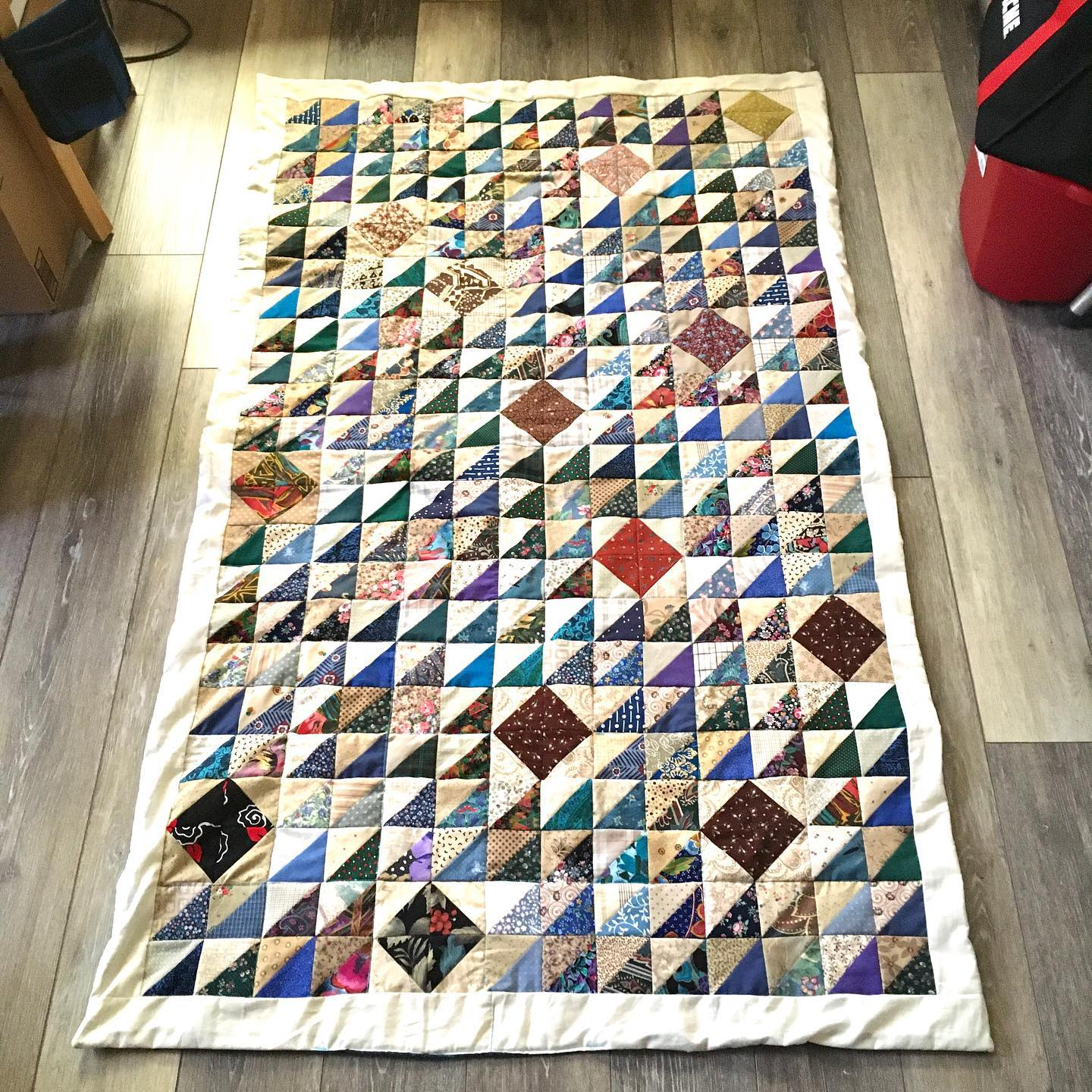
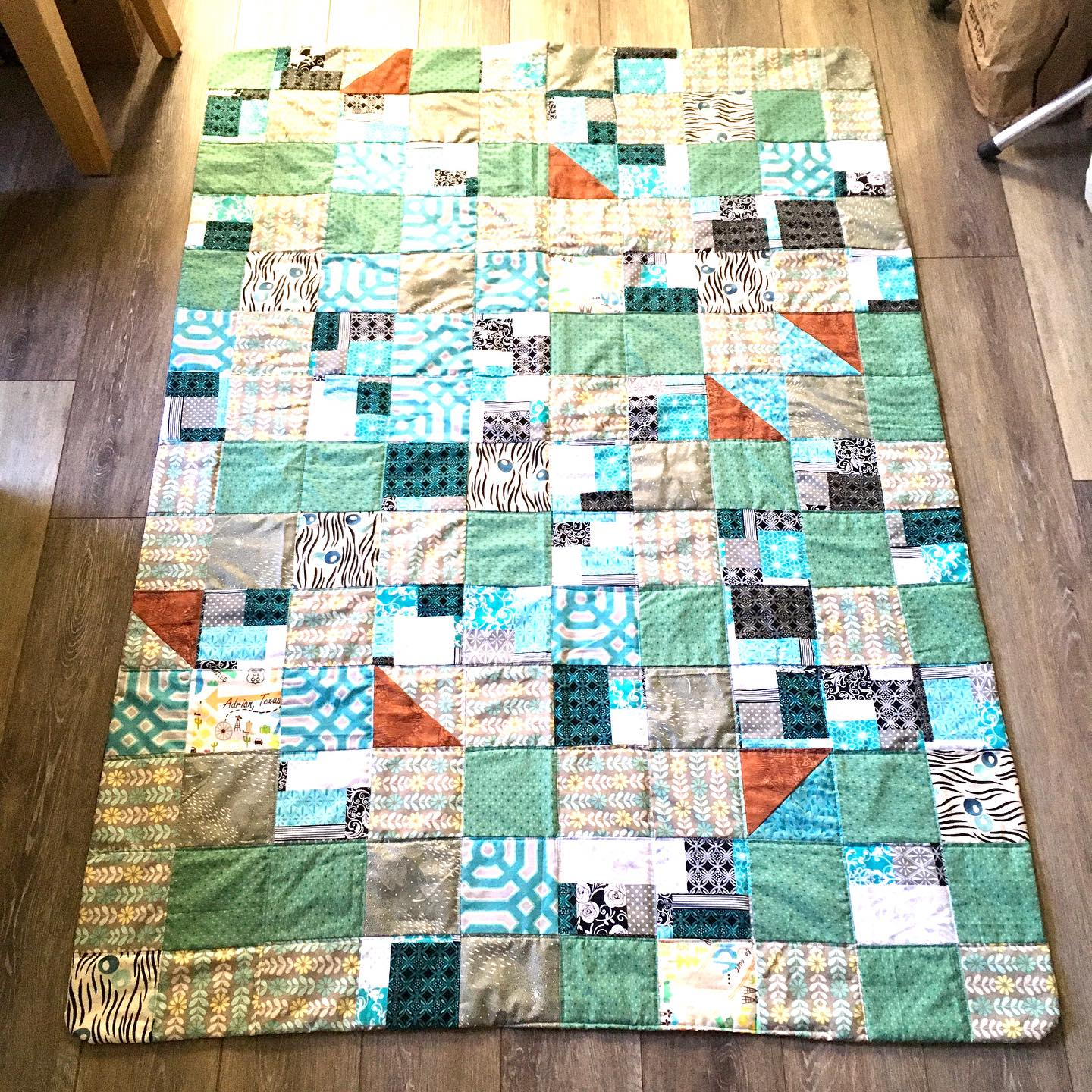
#14 finished Jan 6, 2023 I didn’t cut or sew the HSTs. They were in a bag from Make and Mend. I assembled them into this pattern, to resemble fish in a pond. 61×37 inches
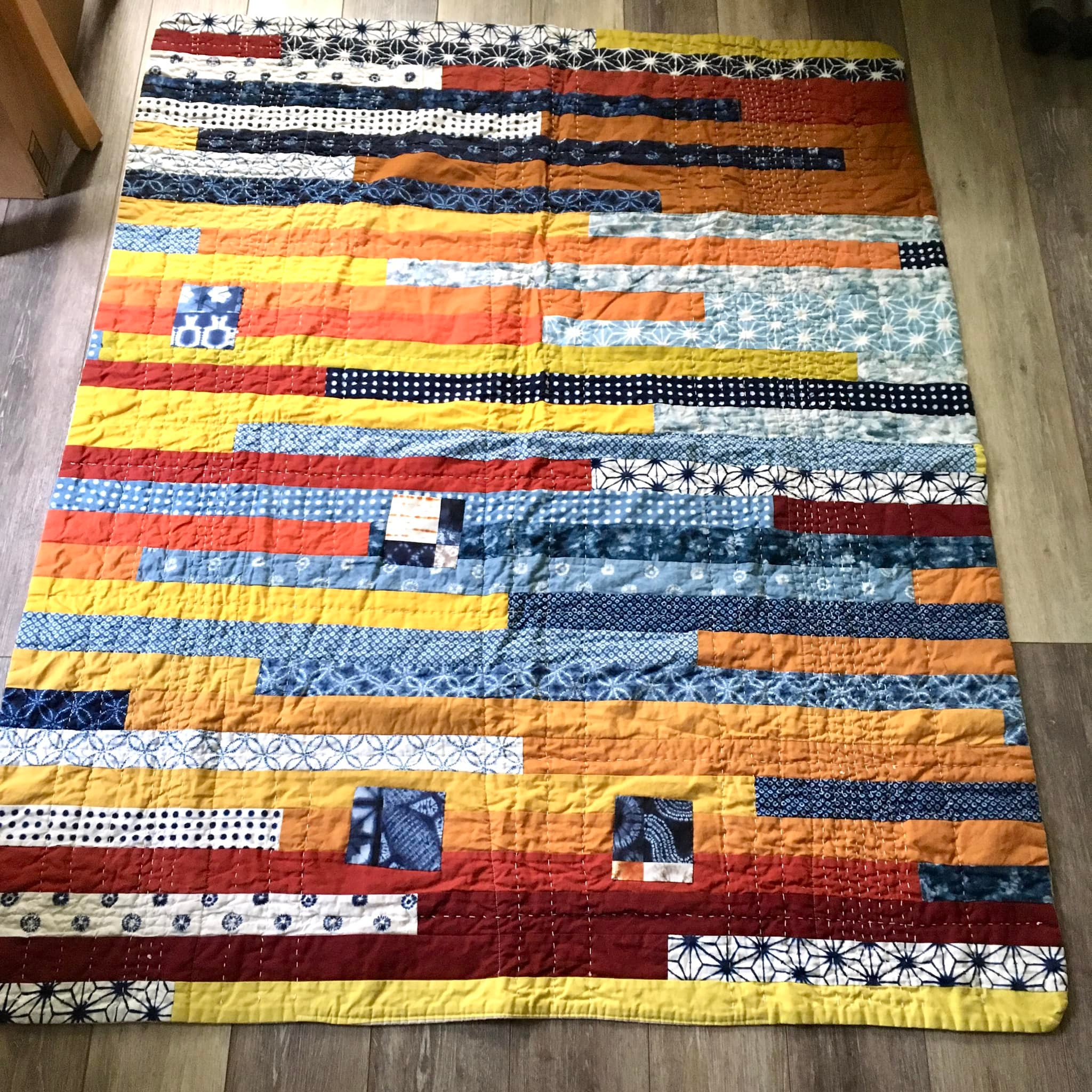
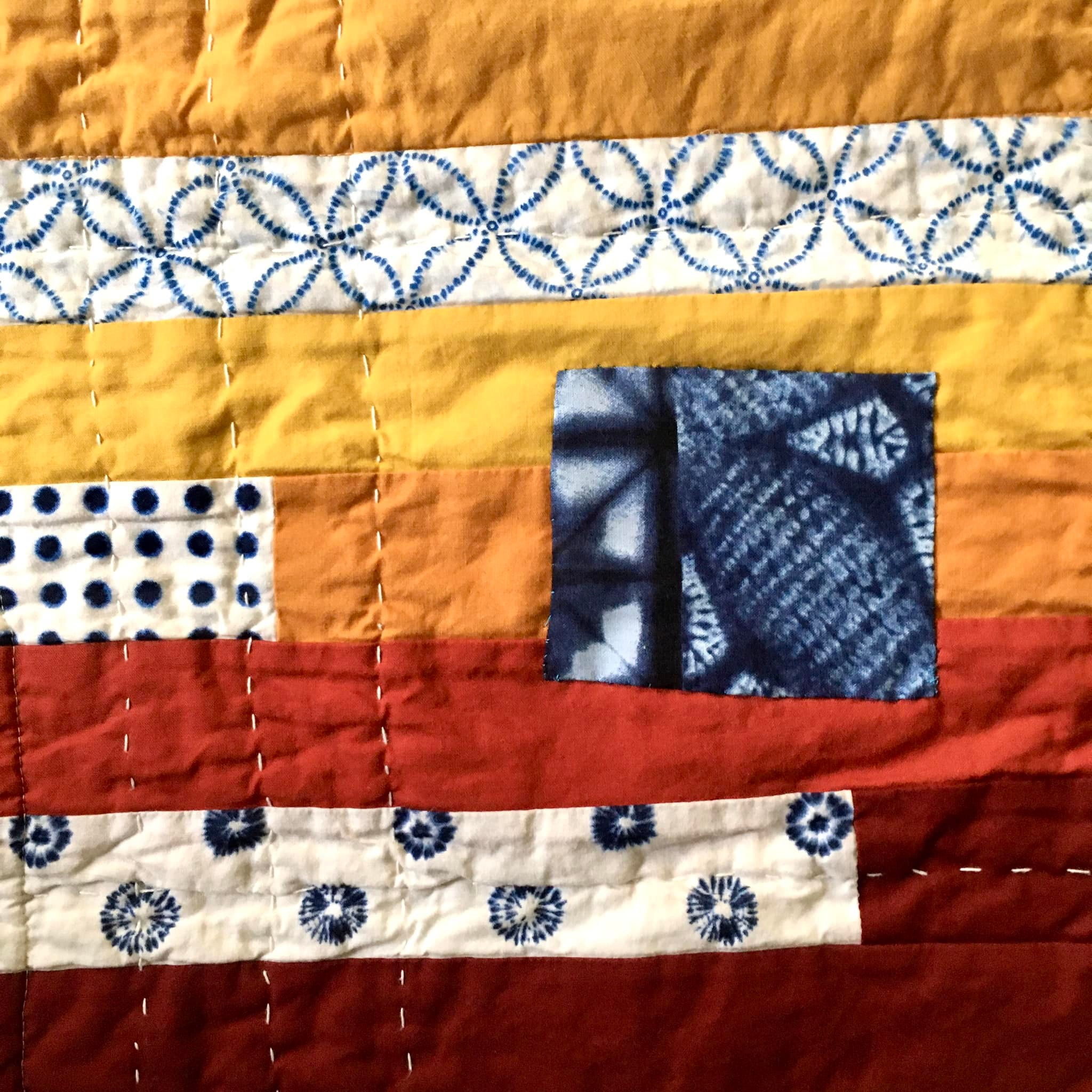
#15 finished 3/4/23 Kantha, technique by Terry Rowland. Fabric by Smart. Now I know why to sew coming from alternate sides
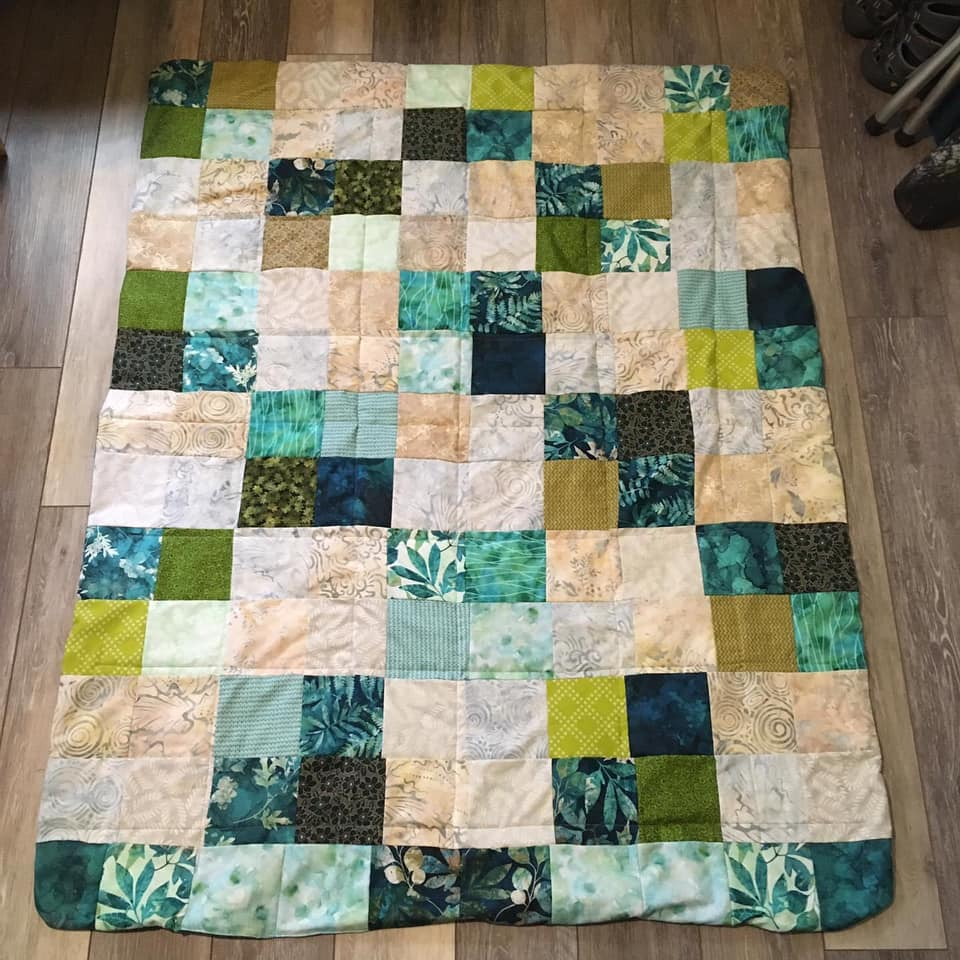
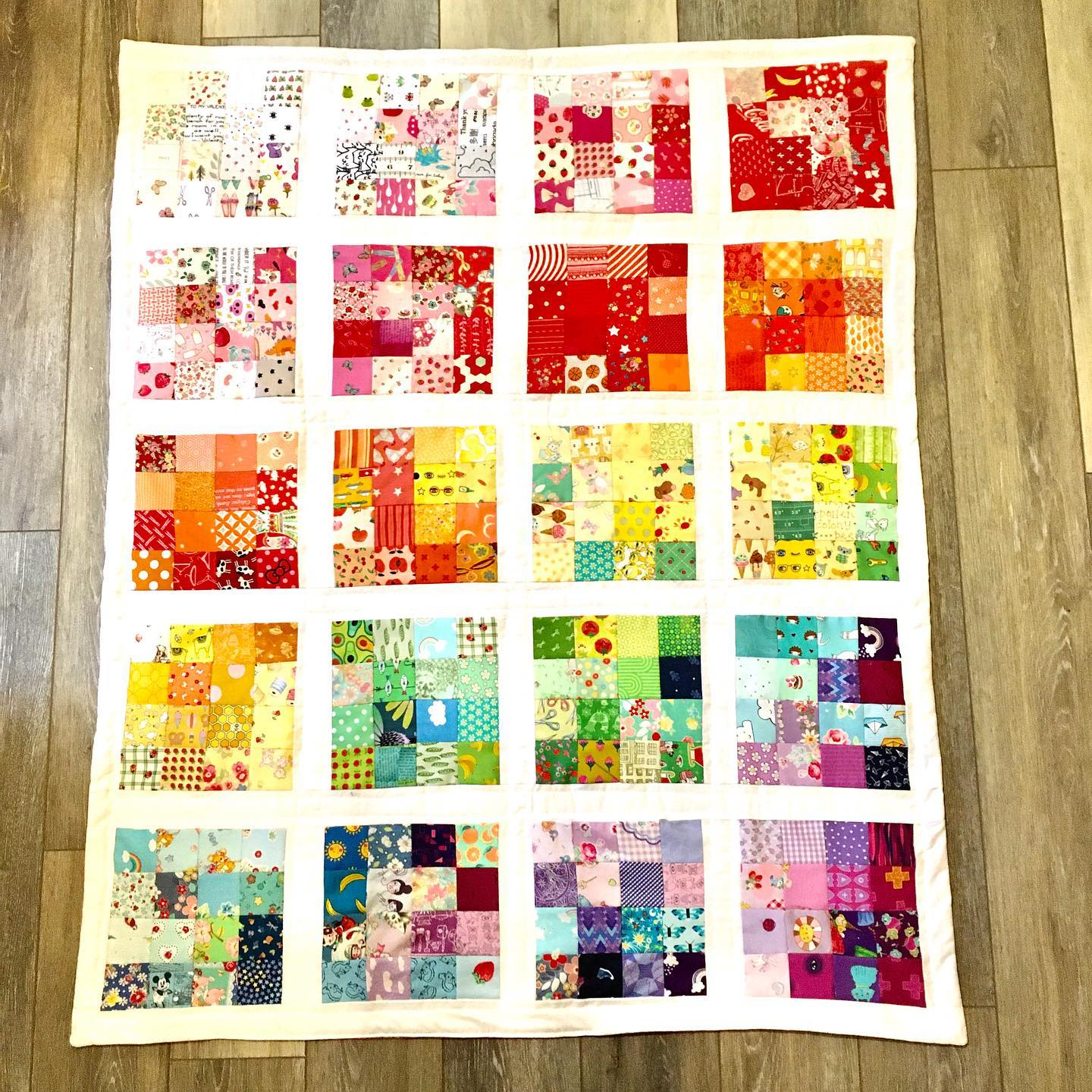
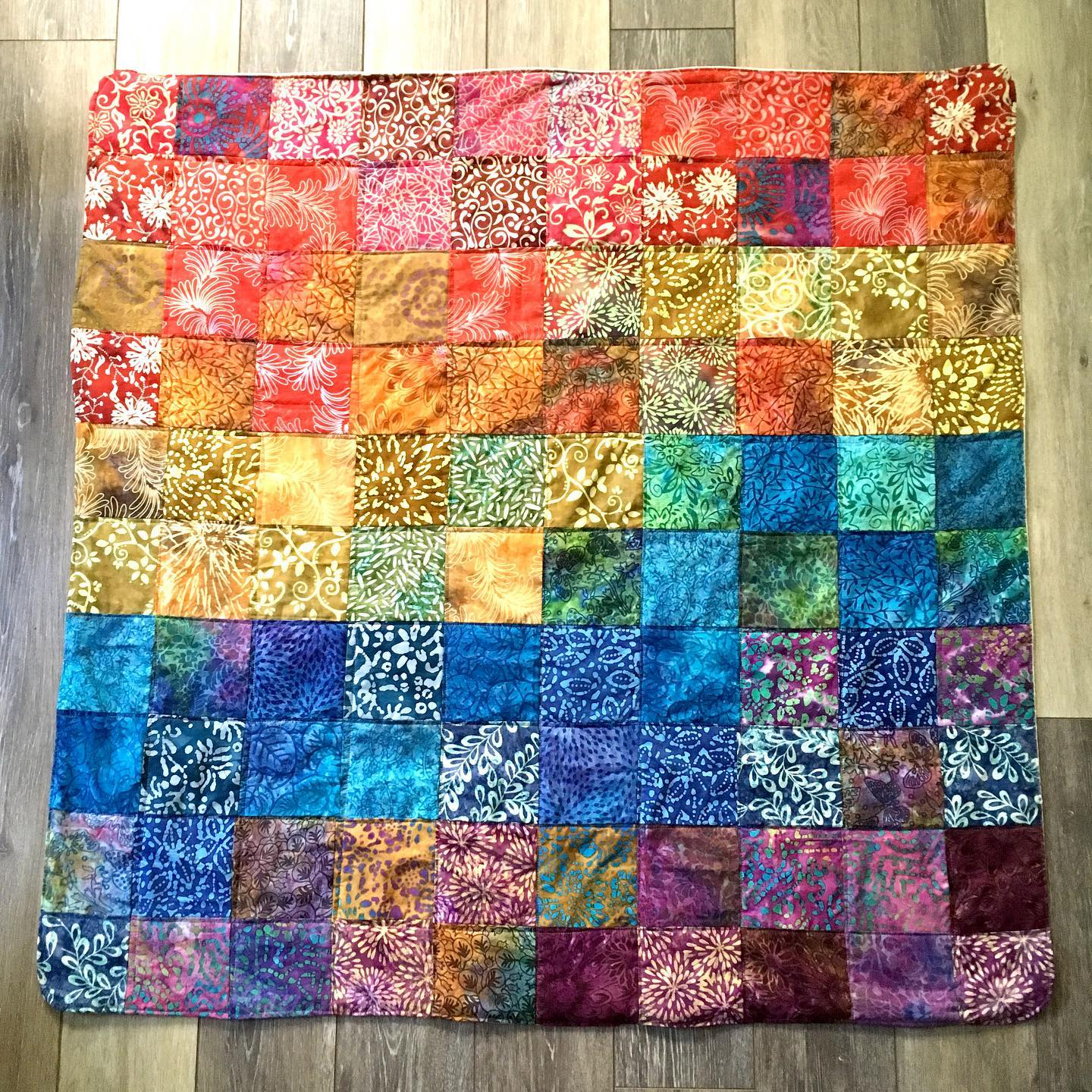
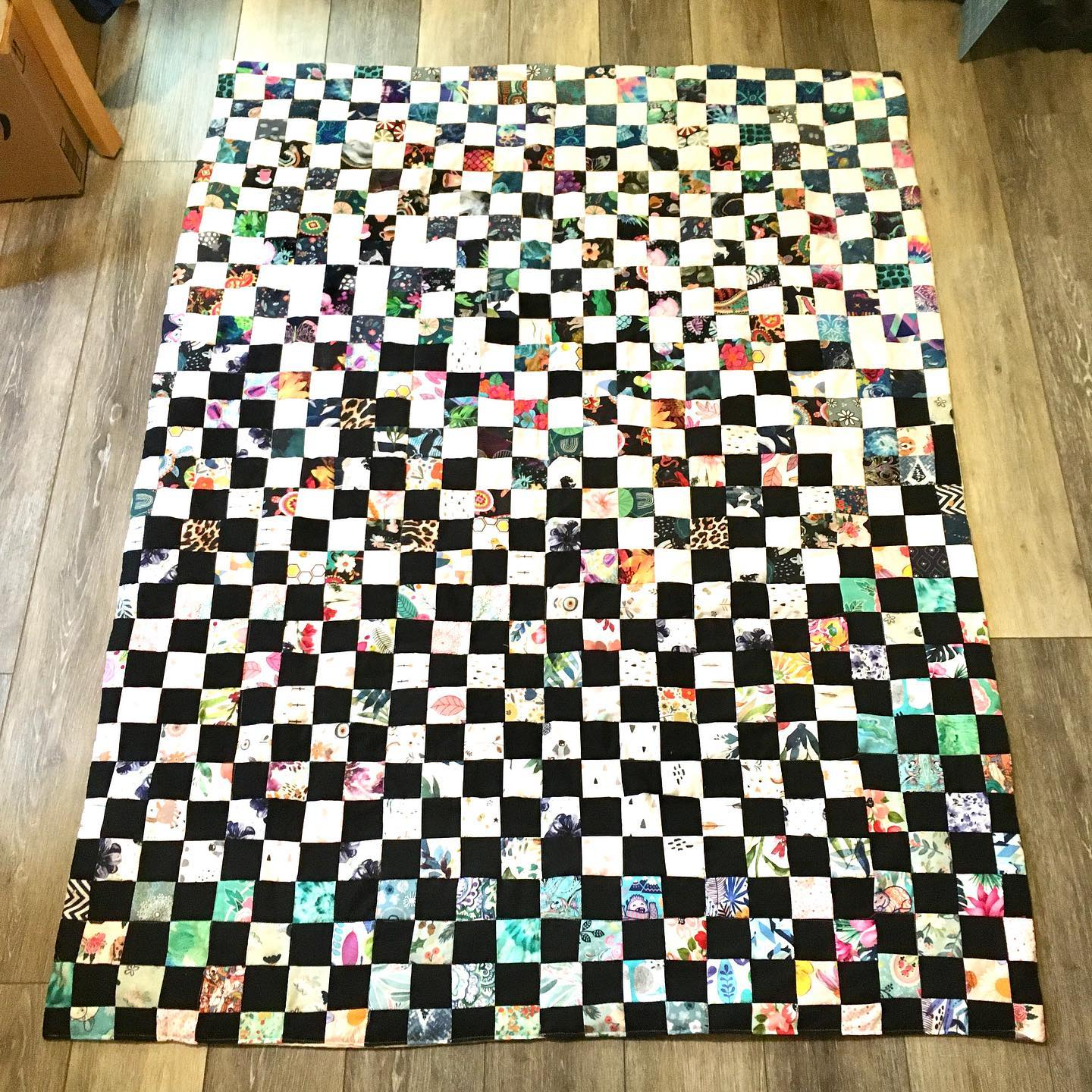
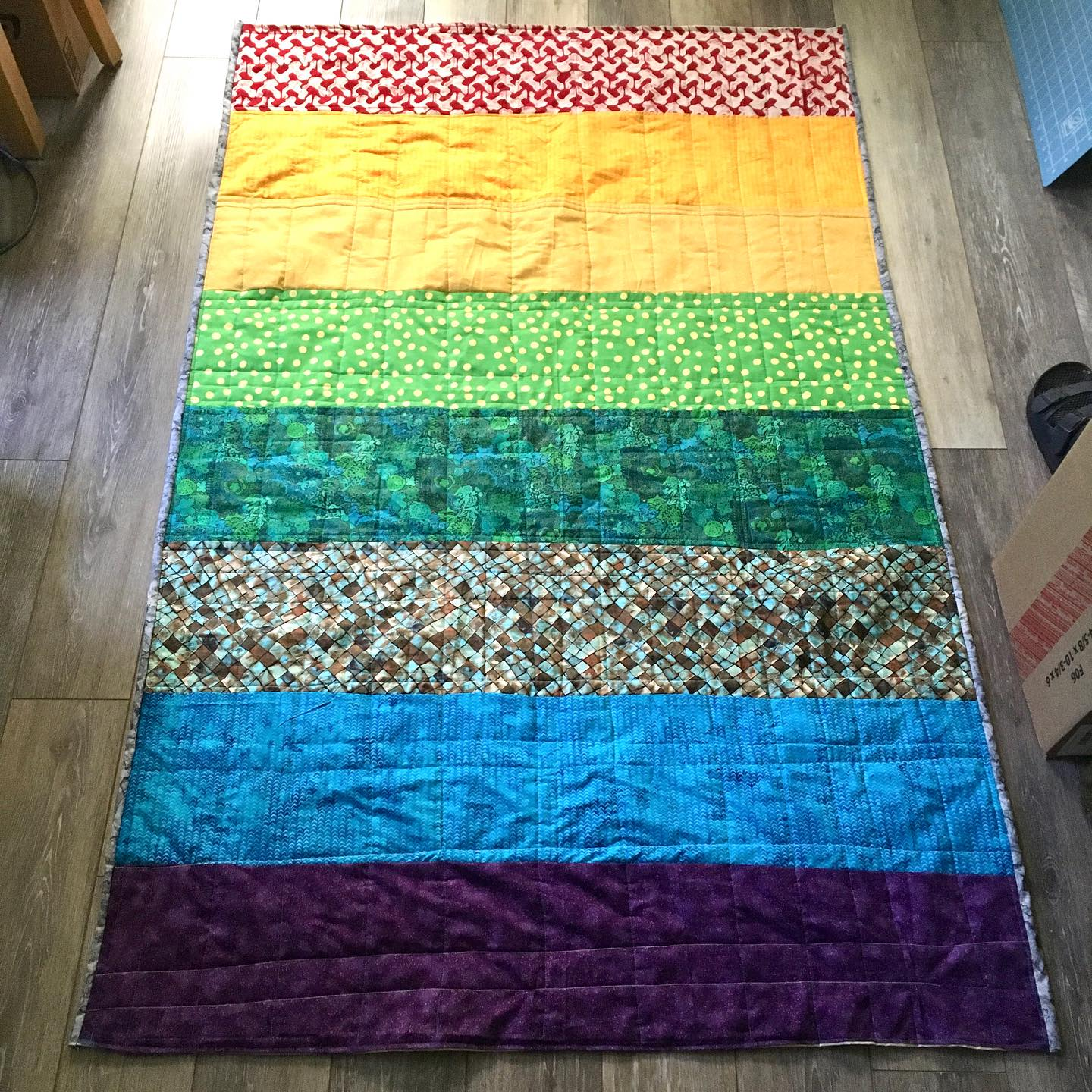
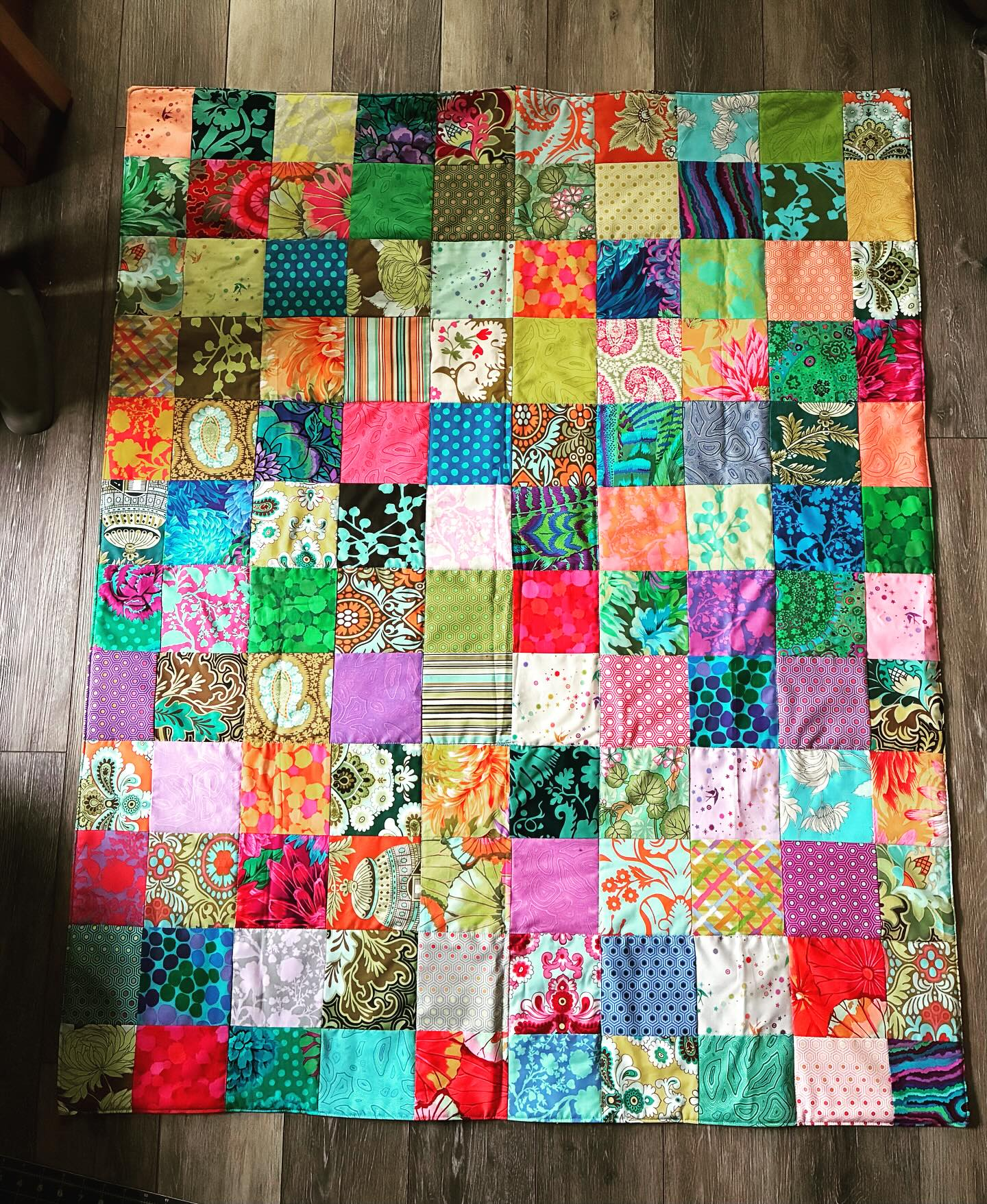
#18 finished 4/27/23 Rainbow postage stamp. Colorful fabric from “Shanzay’s Sewing Co” on Etsy
#19 finished 5/24/23 Halloween nap blanket for my husband
#20 finished 6/20/23 Donated to Caris Hospice 7/27/23
#21 finished June 22, 2023 Fabric from “My fabric addiction” on Etsy
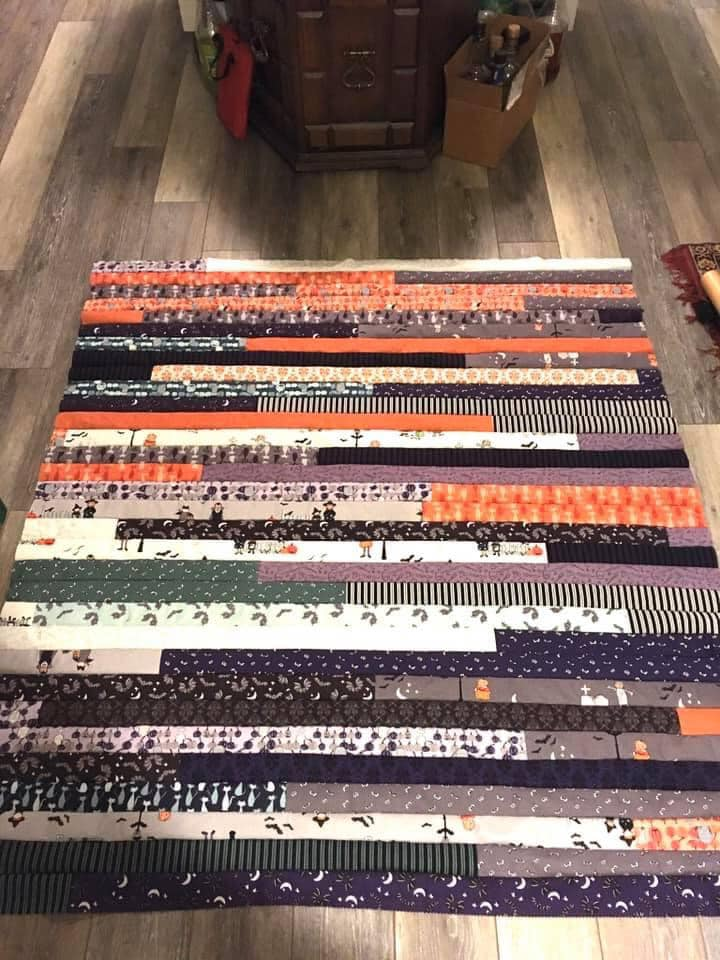
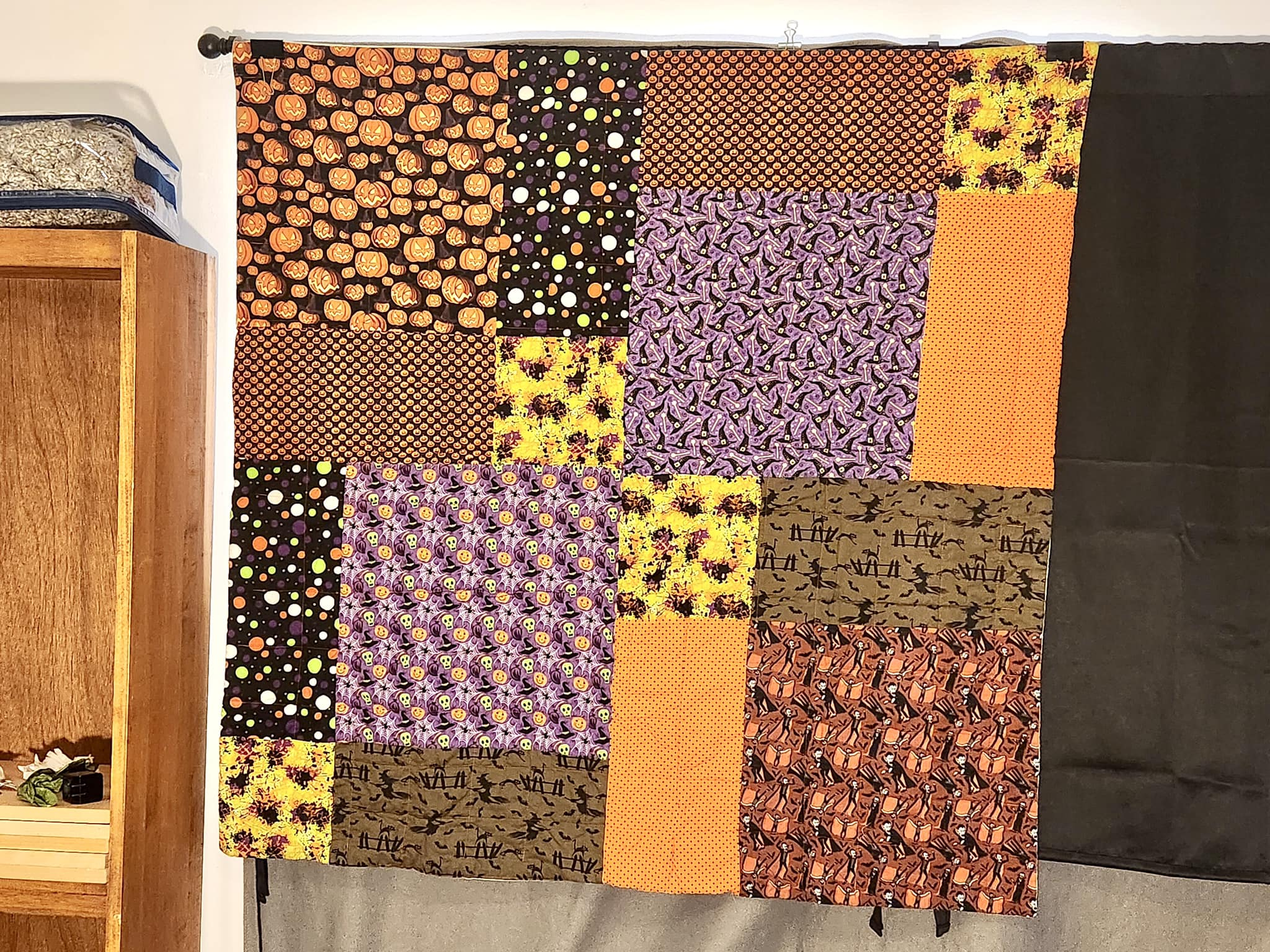
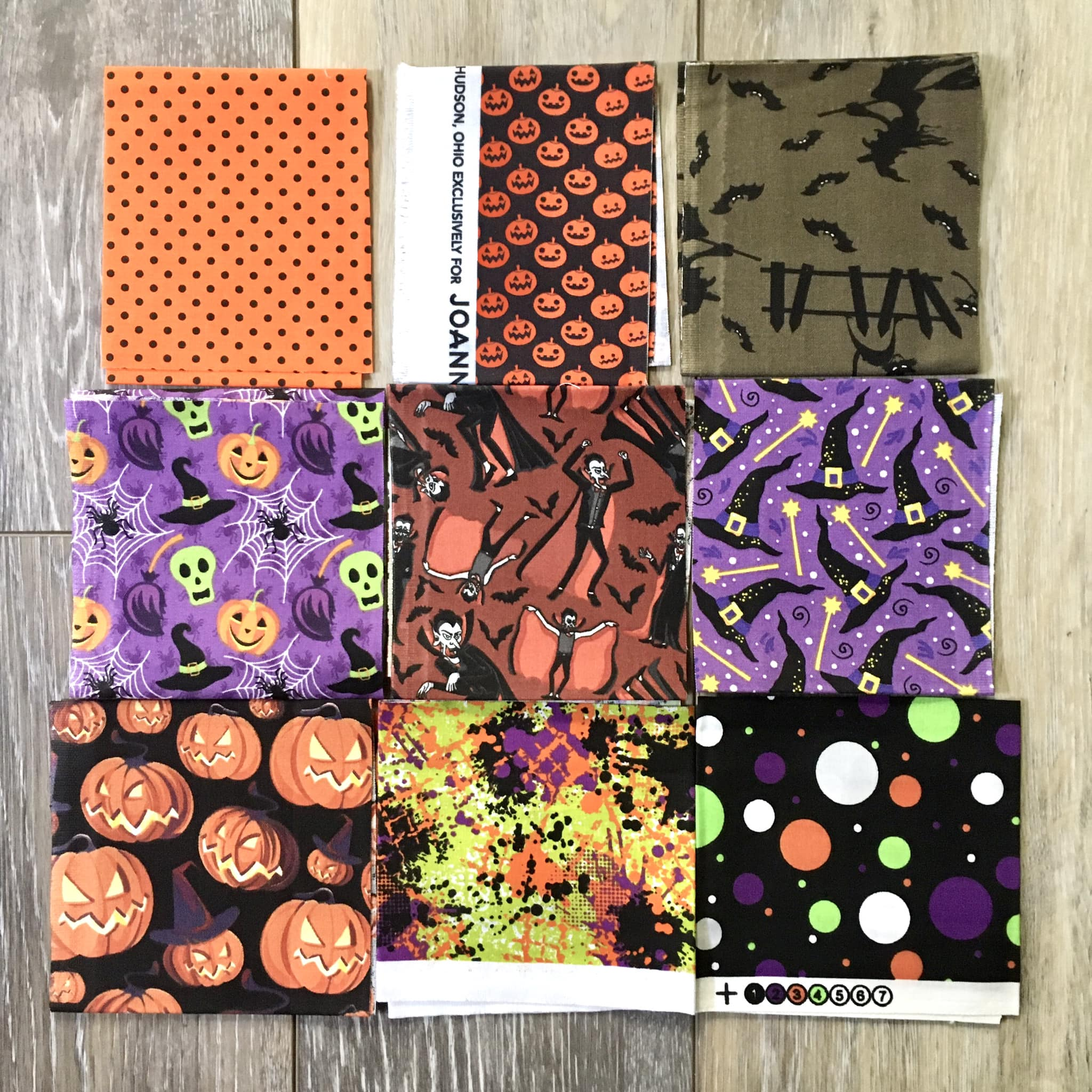
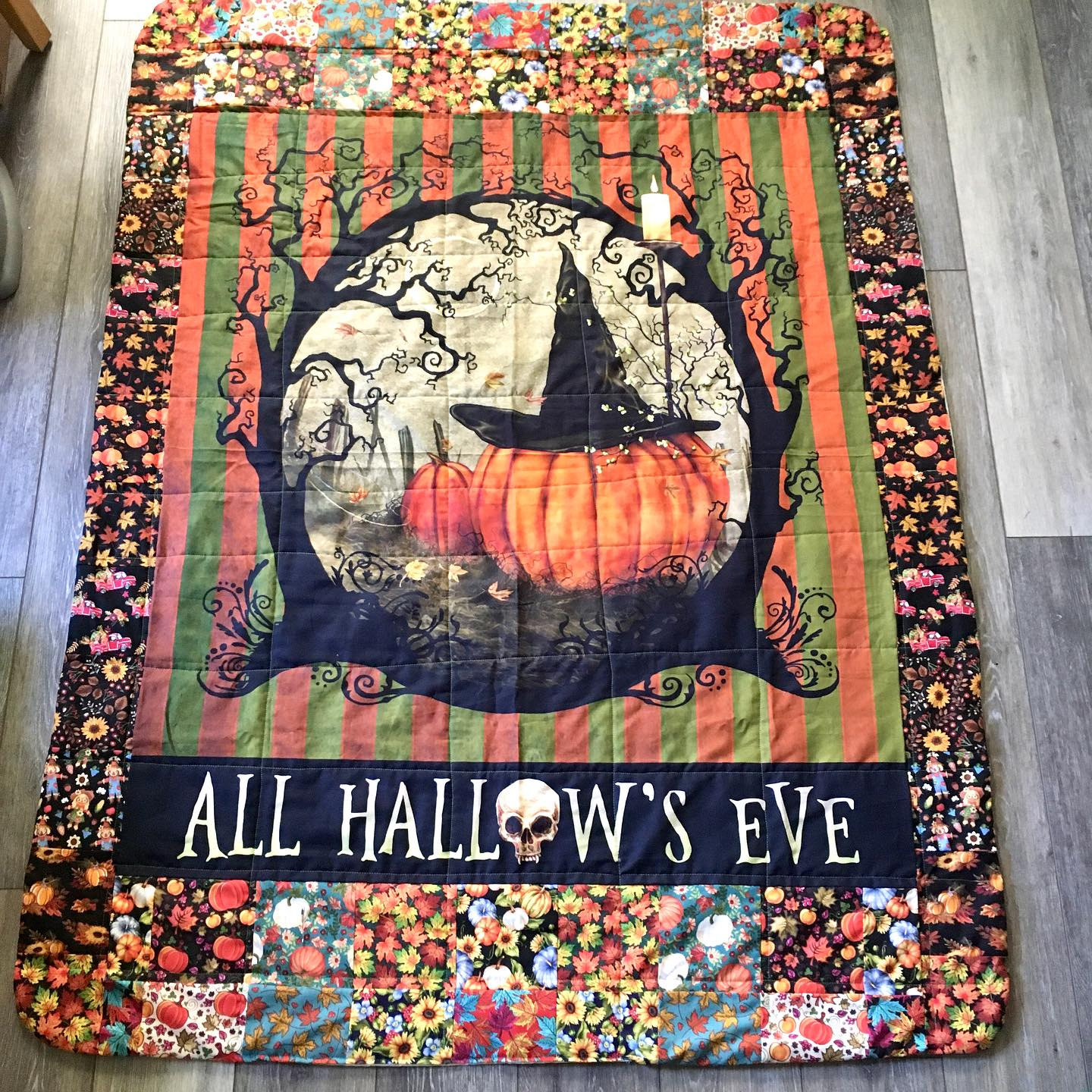
#22 finished 3/25/23 gifted 4/8/23 (forgot to take a photo of it so it got lost in the numbering) The recipient uses it as sound baffling because he is a musician. All Halloween fabrics. First picture is from him, second is the fabric before I sewed it (better light)
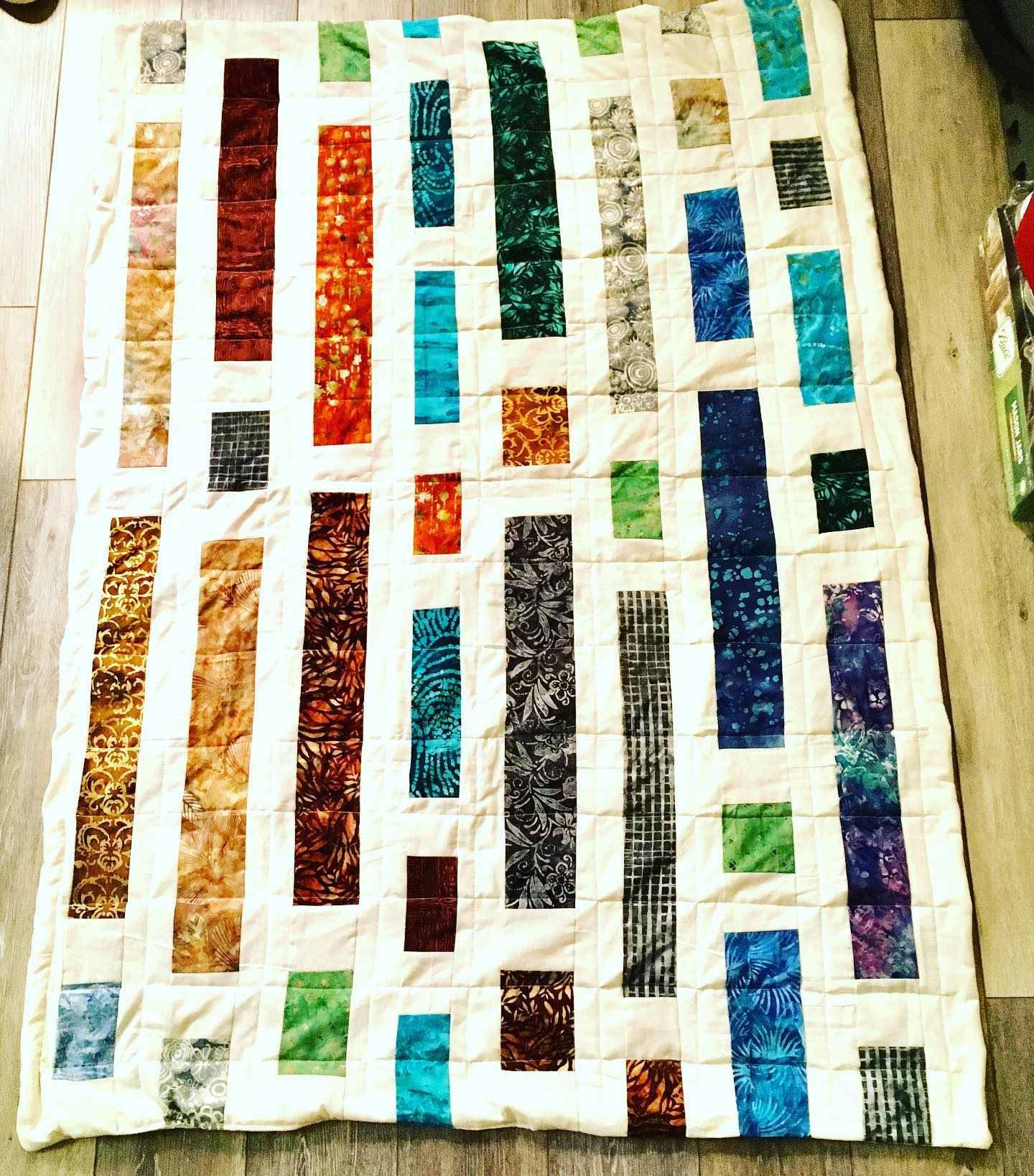
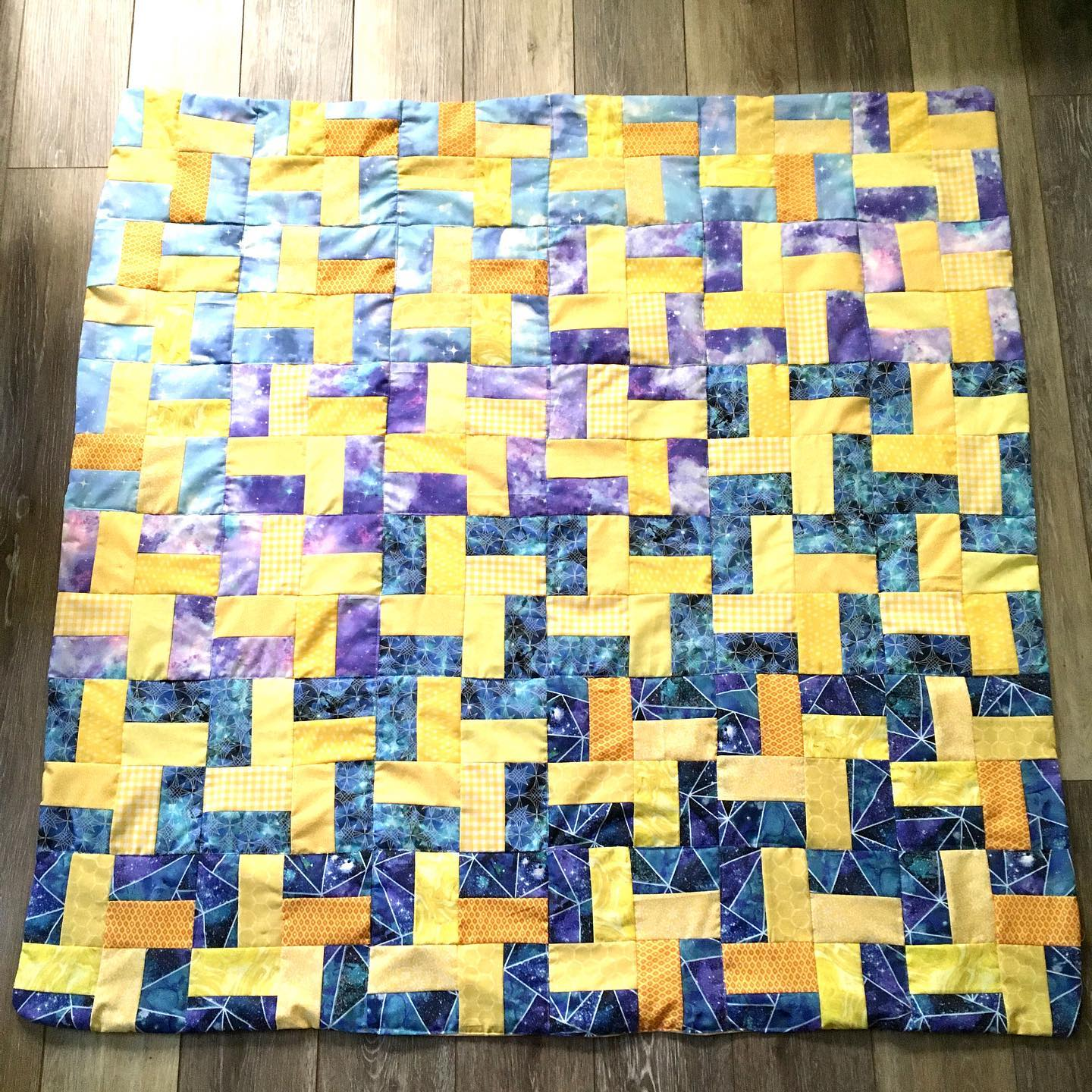
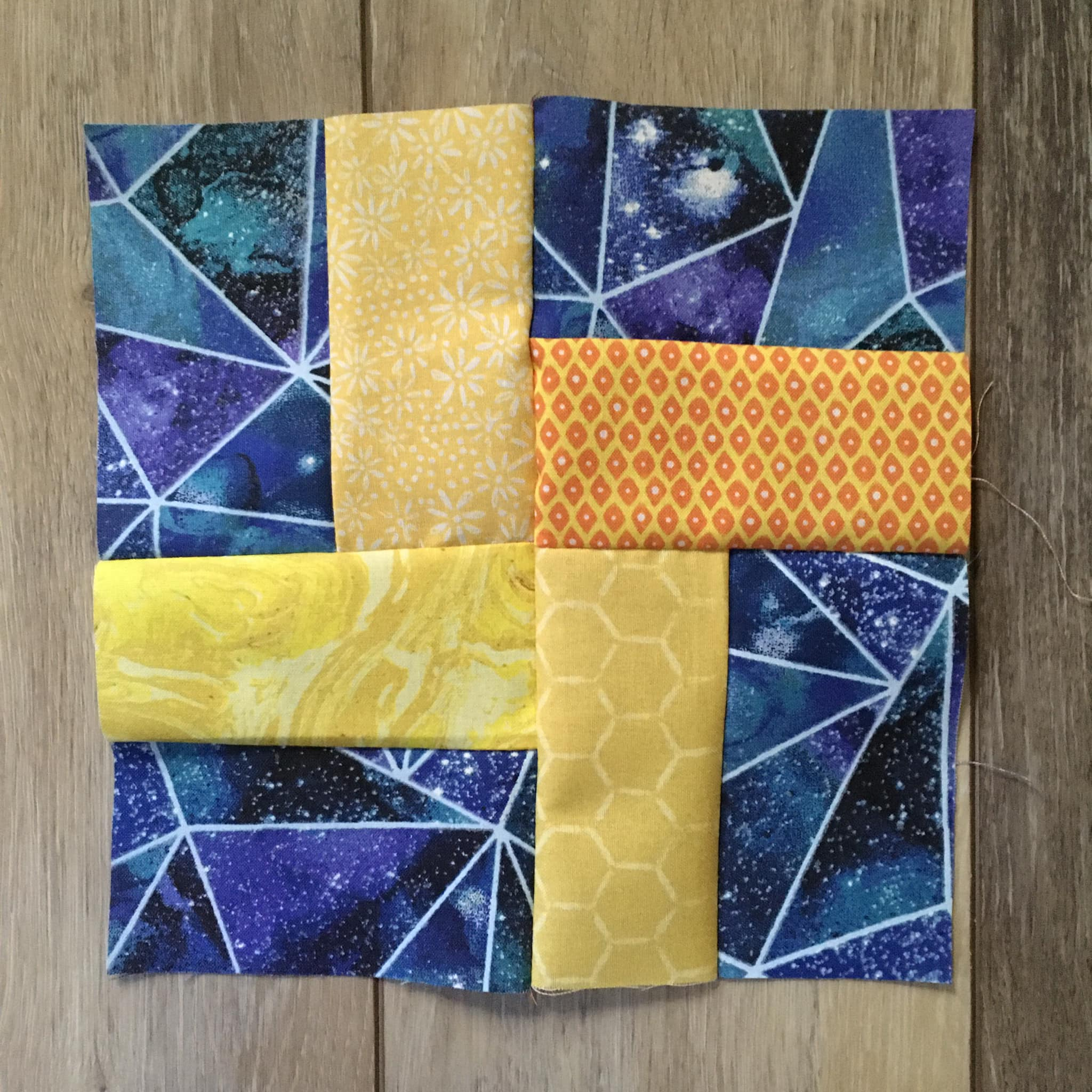
#23 finished 6/24/23 given 1/1/24 ‘L7″ quilt, fireflies at twilight. Fabric from JoAnn’s
#24 finished 7/7/23. Donated 7/27/23 All fabric from Smart. Autumn Leaves and Twigs
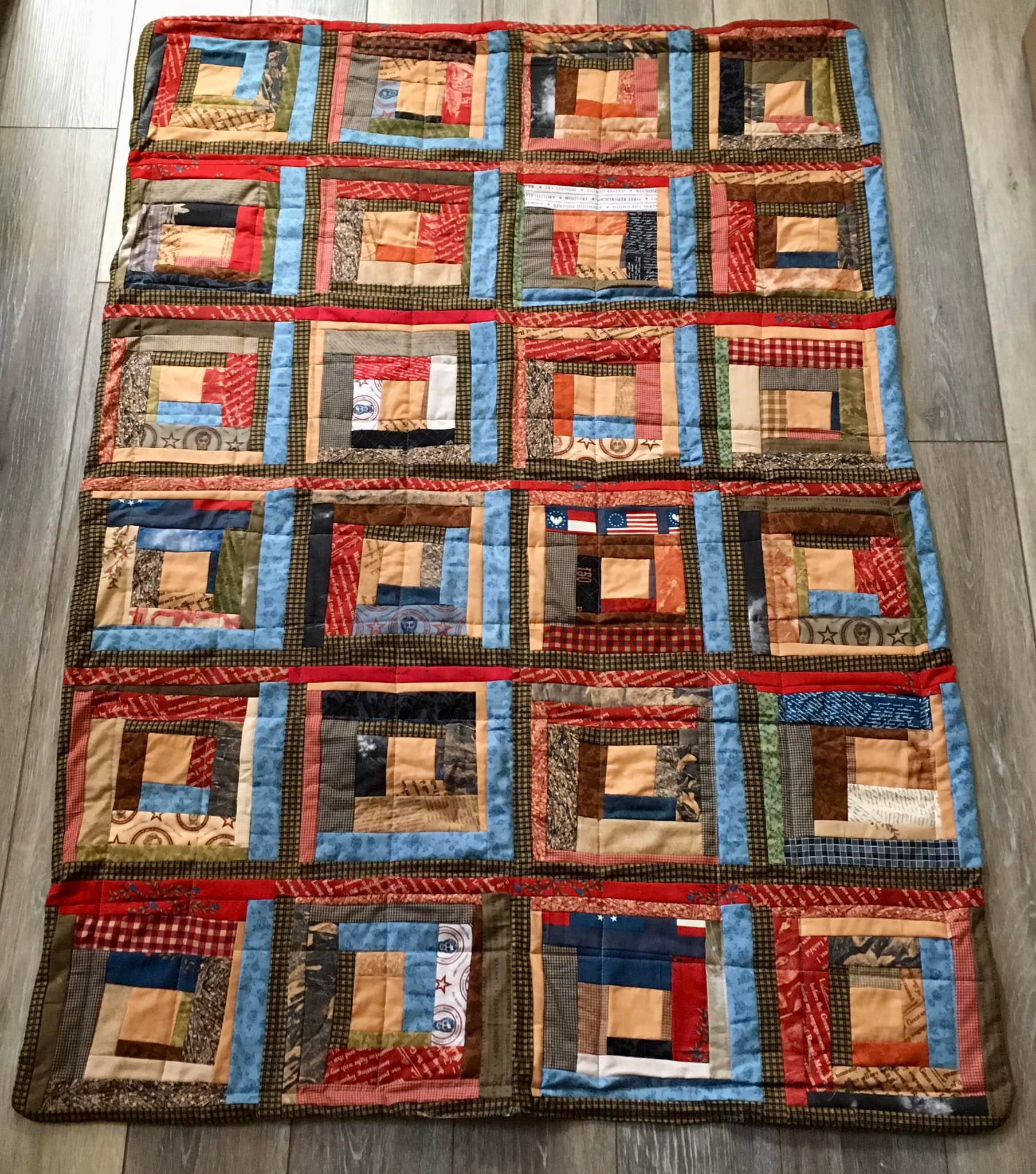
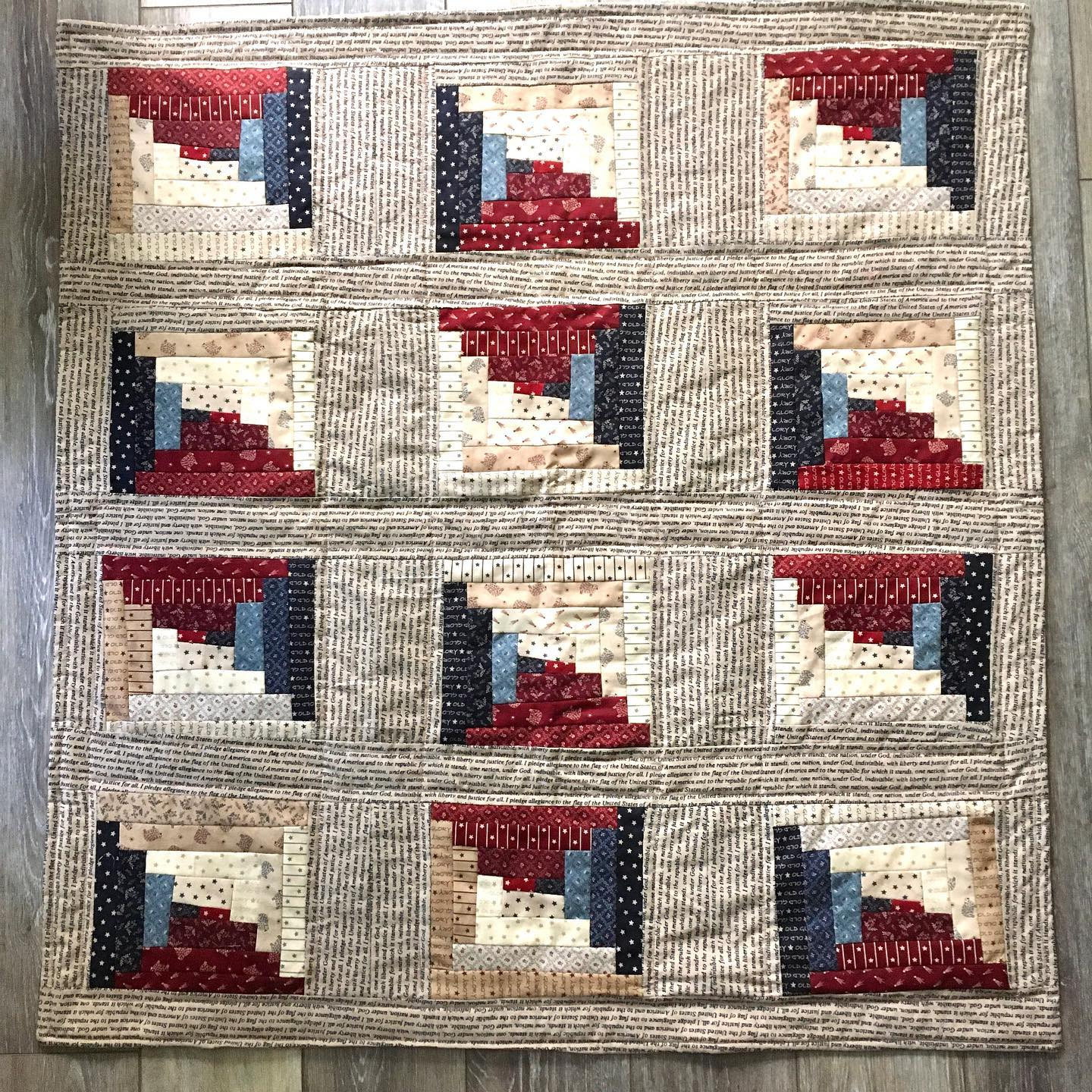
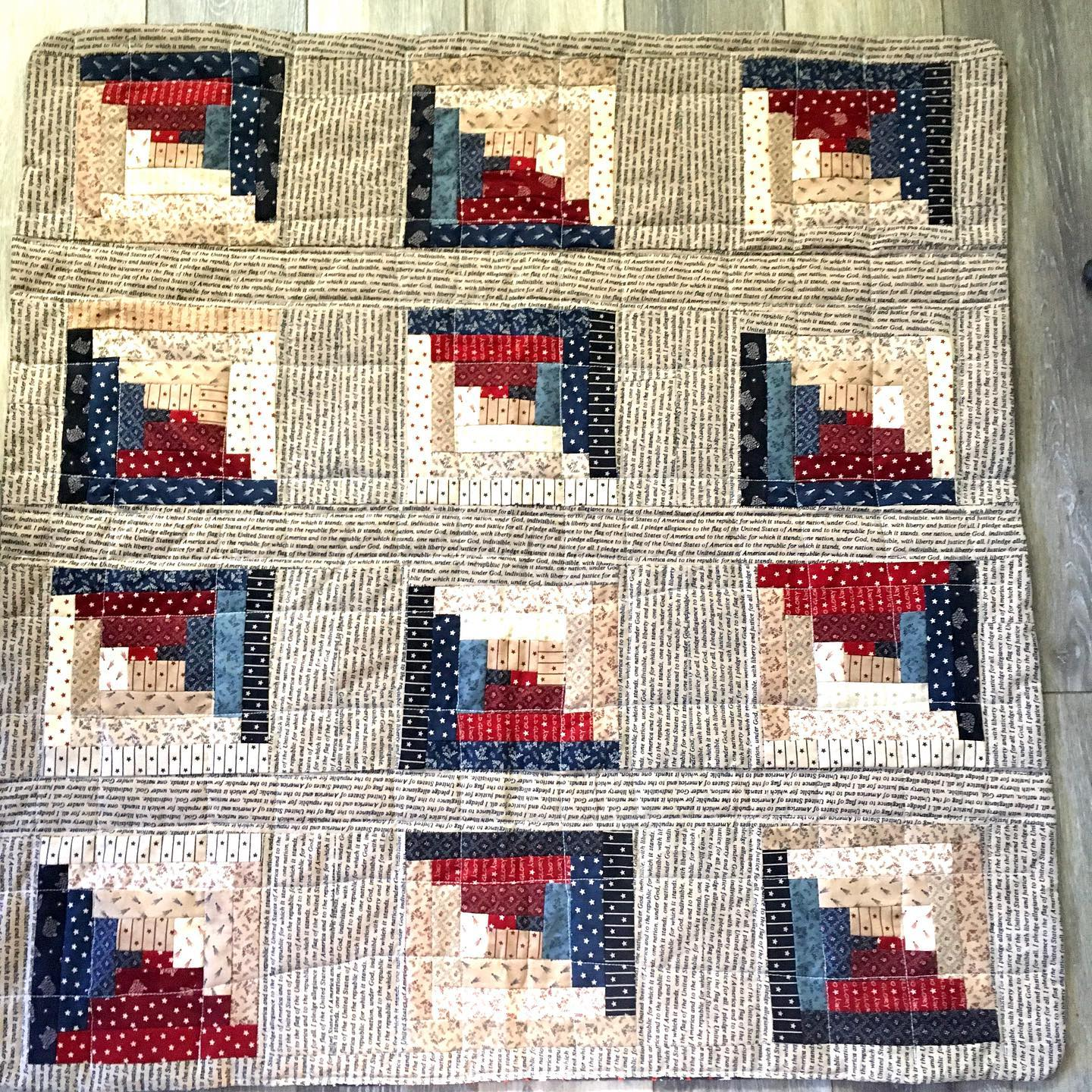
#25 finished 7/7/23 Patriotic Log Cabin. all fabric from Smart. Donated 10/18/24
#26 finished 7/14/23. Some hand quilting with perle cotton. Fabrics from Smart and Etsy
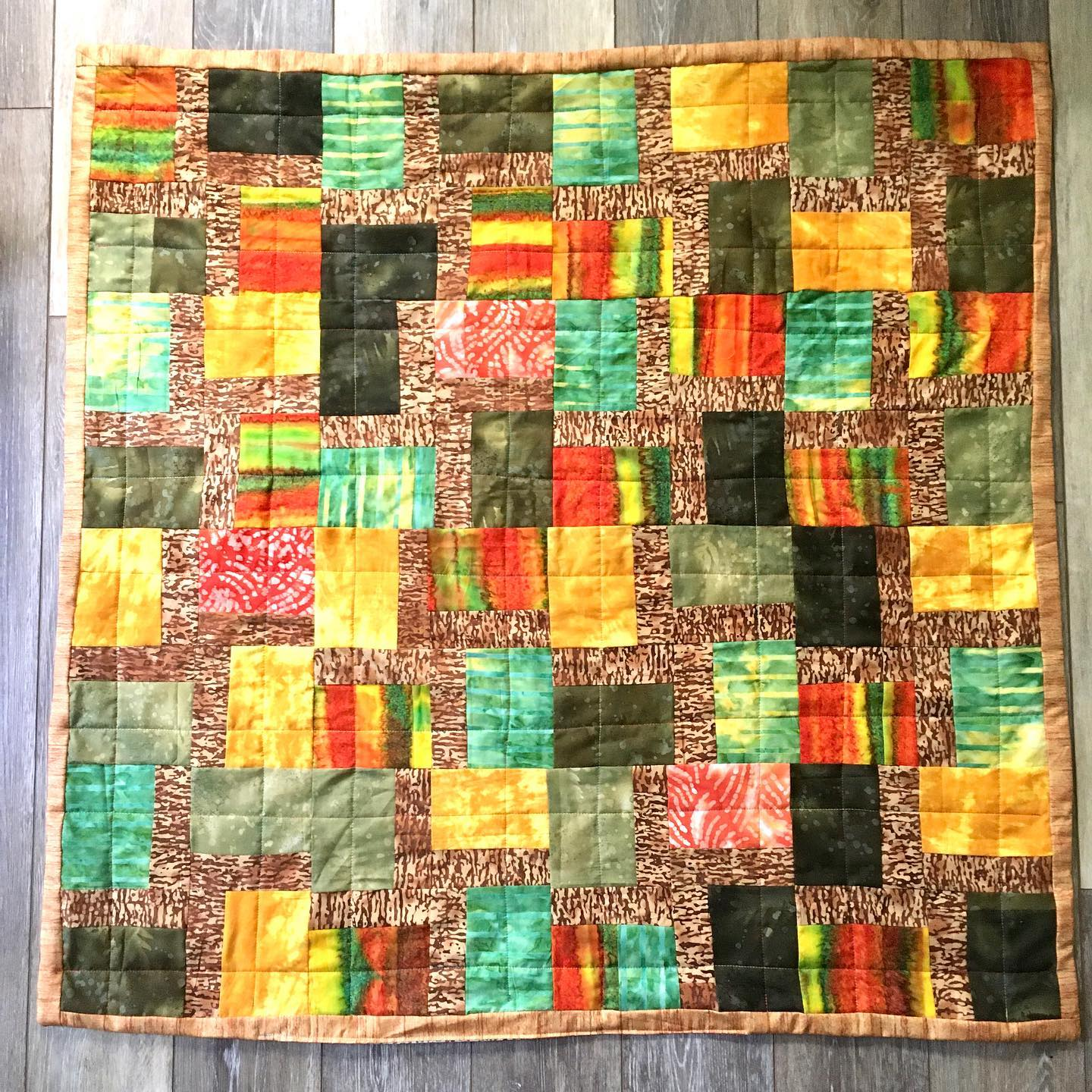
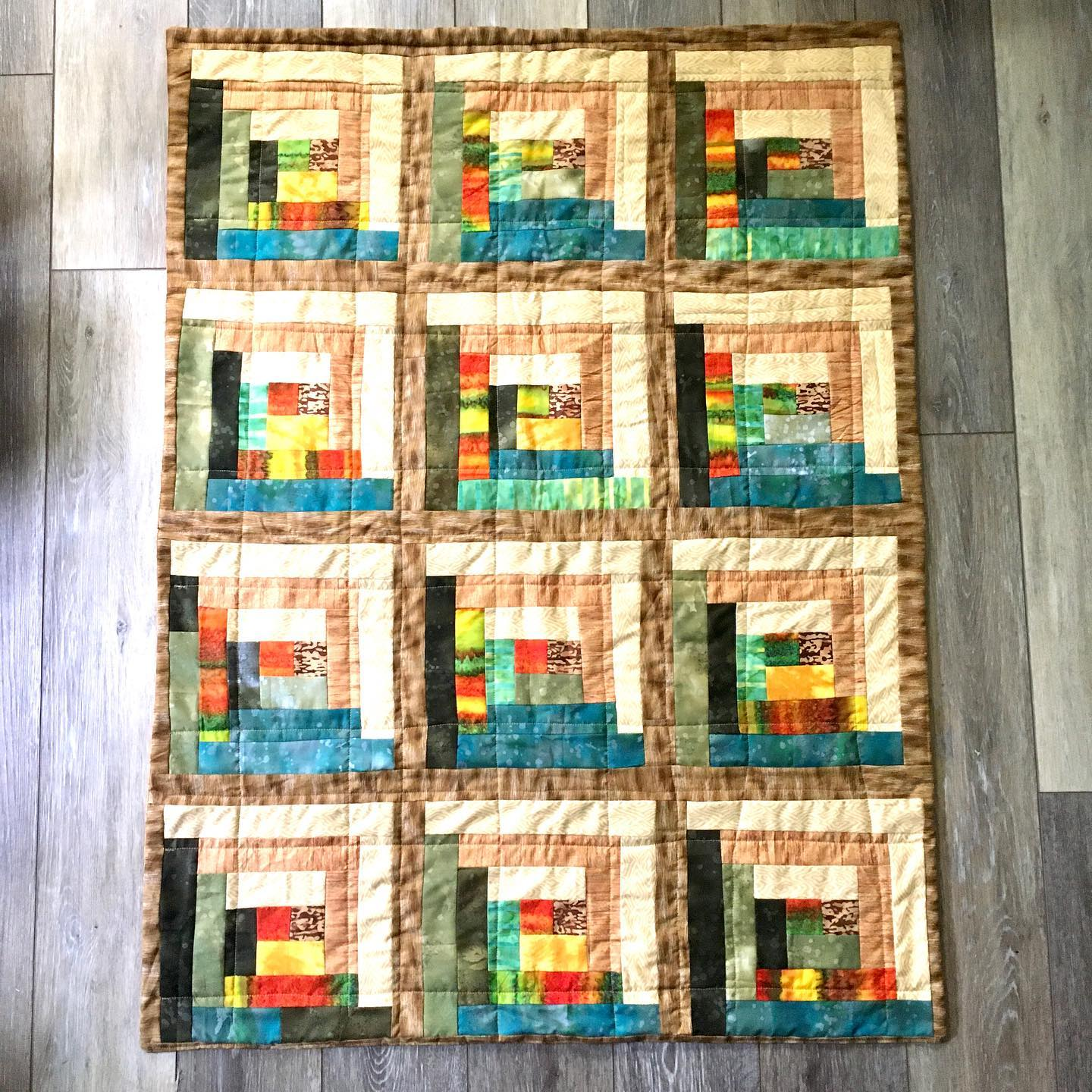
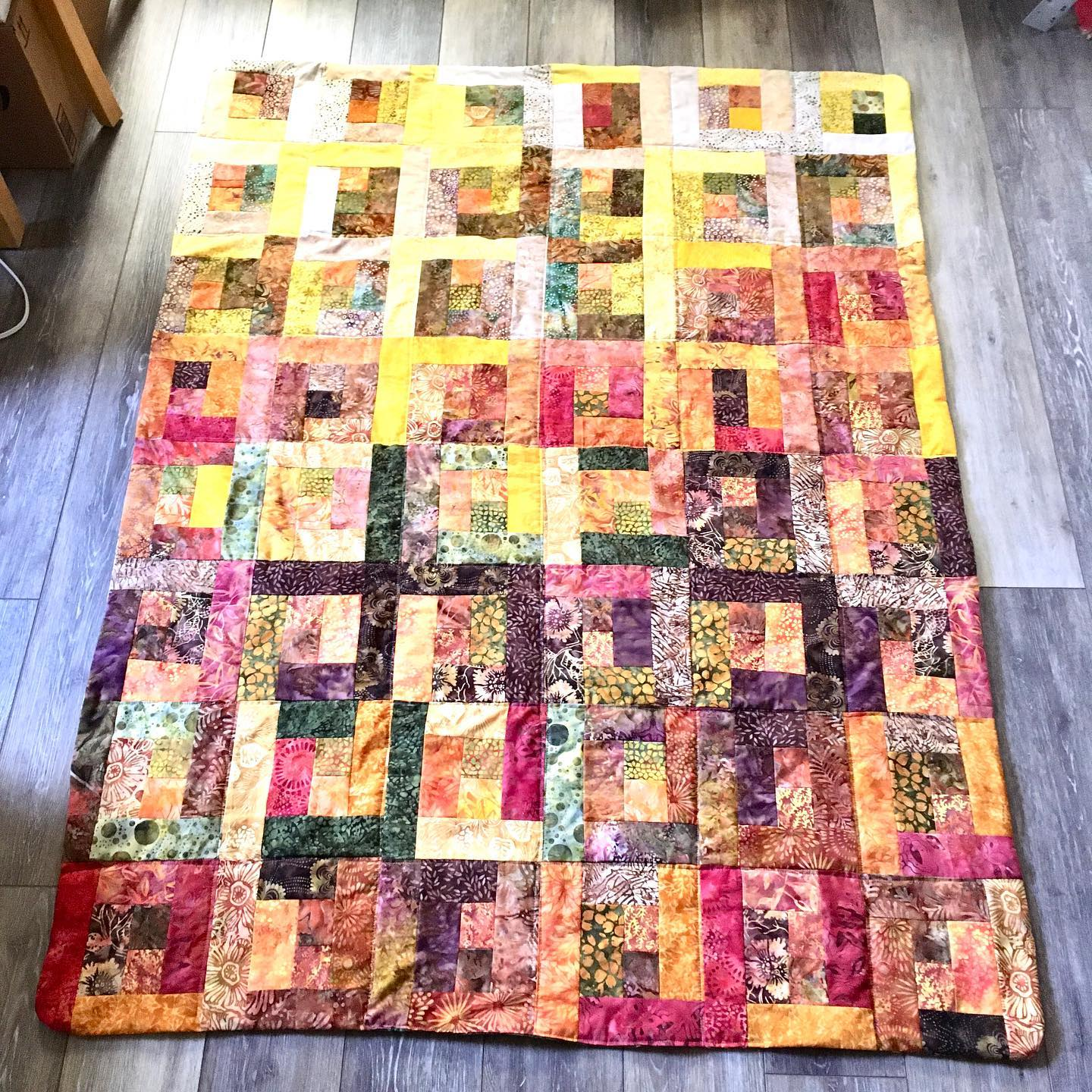
#27 finished 7/12/23 Autumn log cabin. Fabric from Smart
#28 finished 7/14/23 58 x 43 inches. A meditation on the “new normal” after Covid
#29 finished 12/6/23 Also made the back. Top- JoAnn, back, Smart
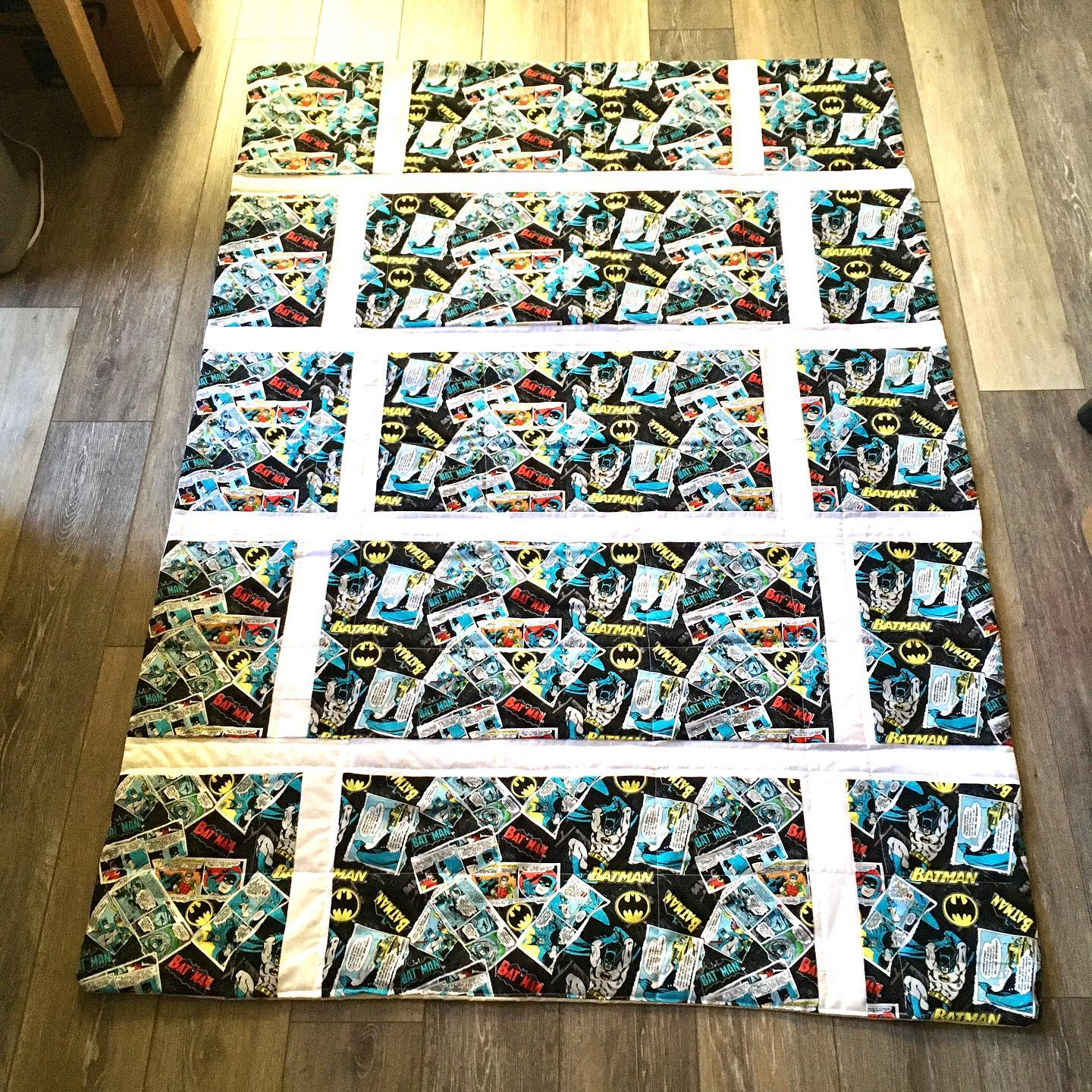
#30 finished 12/12/23 Gifted. Batman comic strip. Fabric from Hobby Lobby
#32 finished 12/13/23. Donated 10/18/24 (yes, I made the same quilt twice)
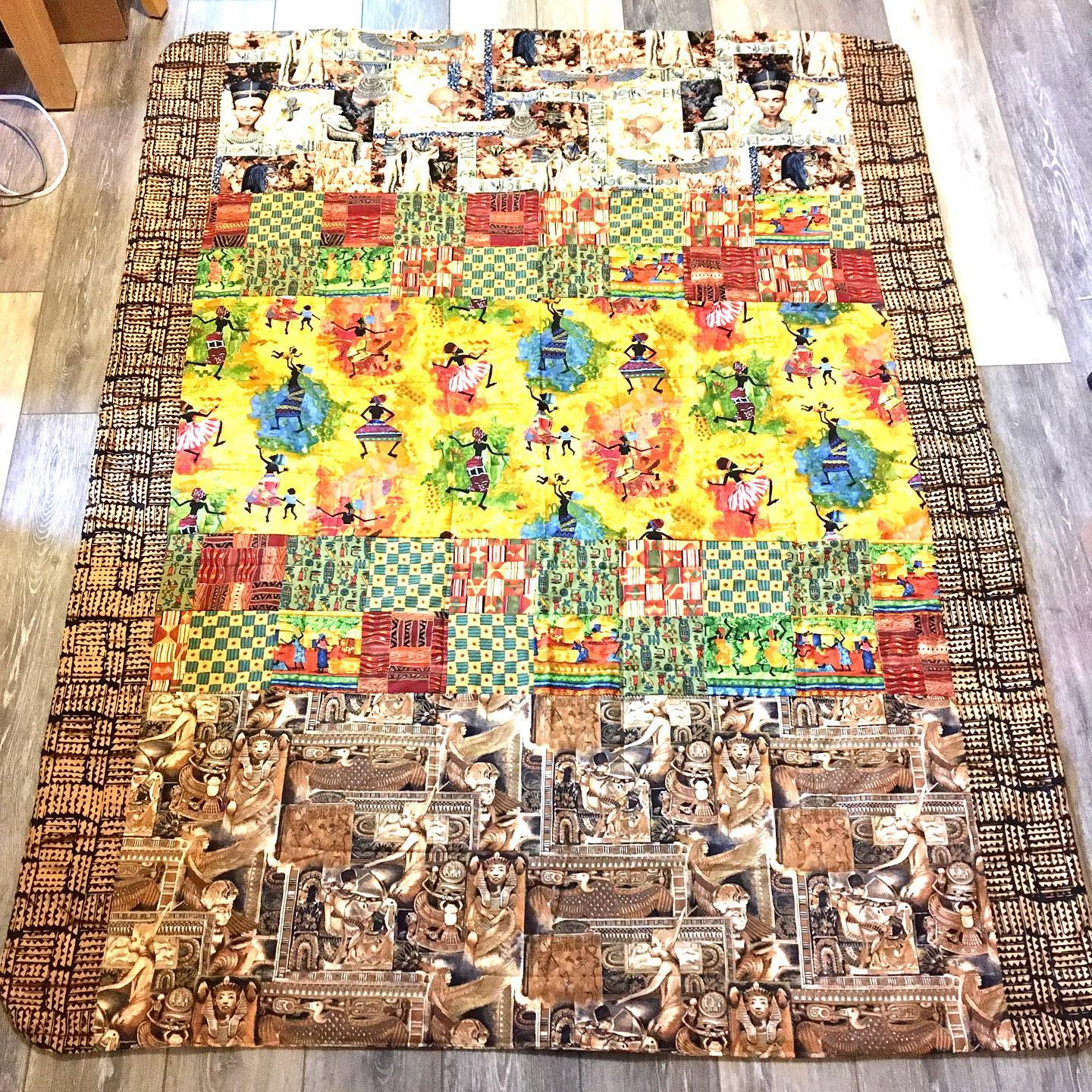
#33 finished 12/29/23 63×48 inches. All Egyptian and African fabrics from Smart
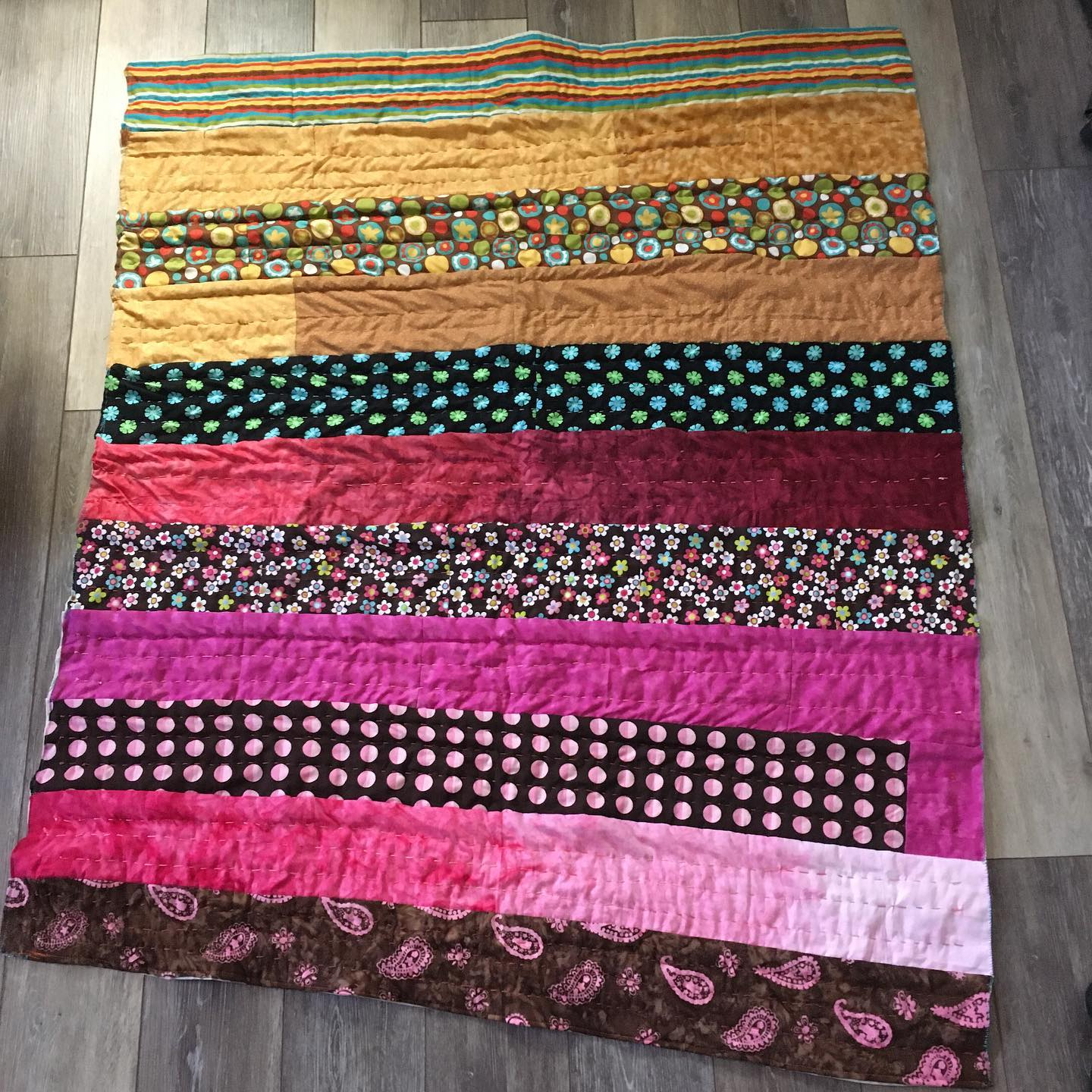
the back
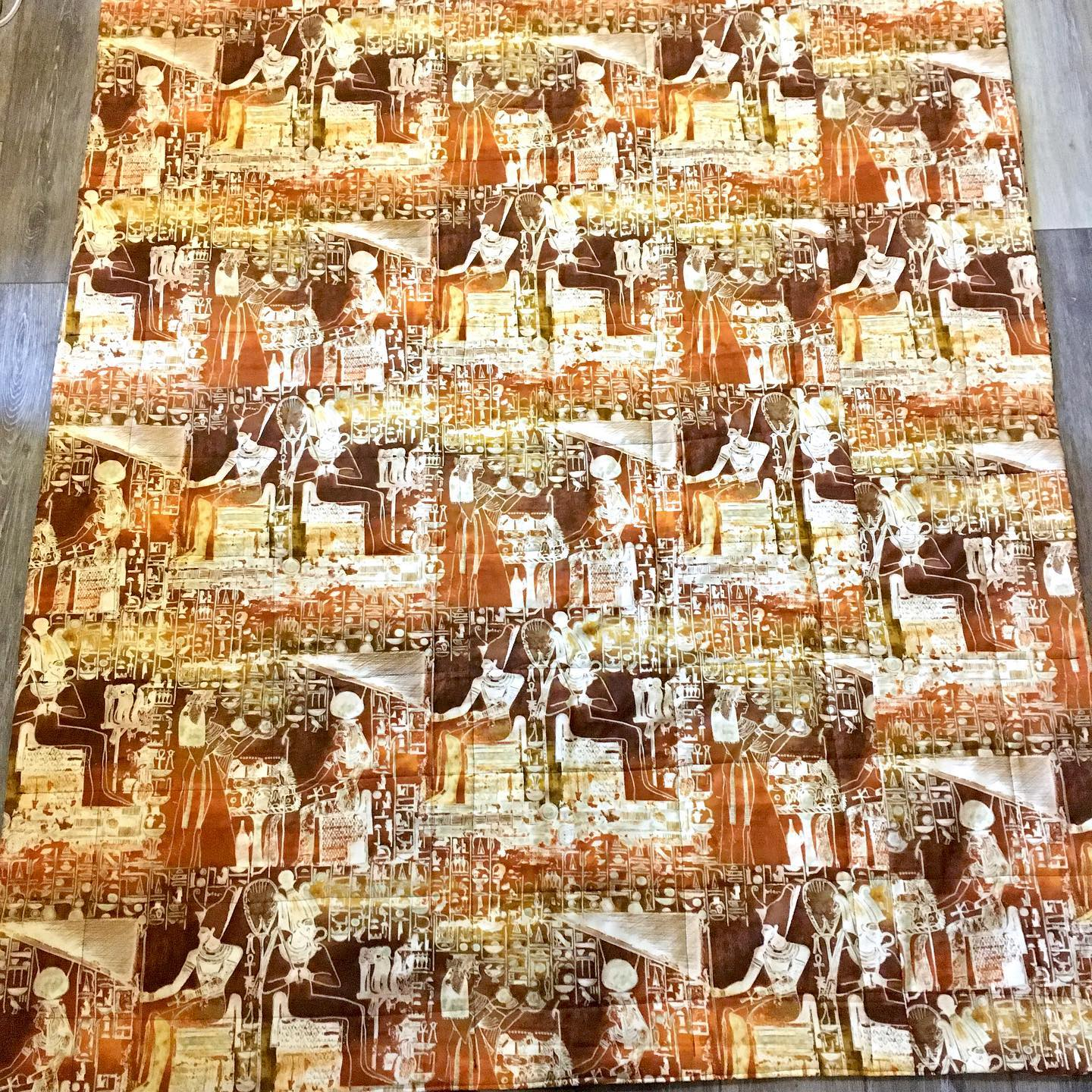
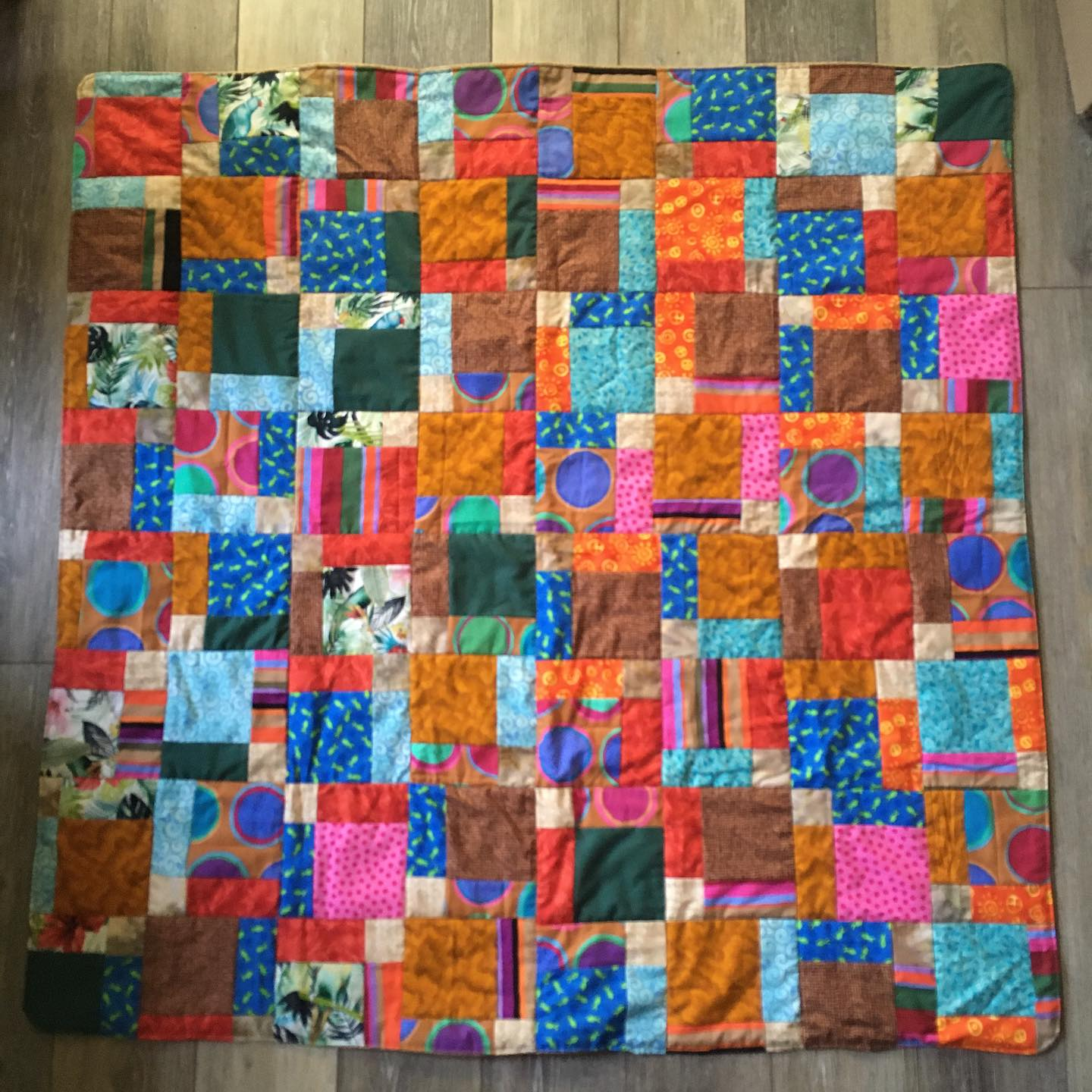
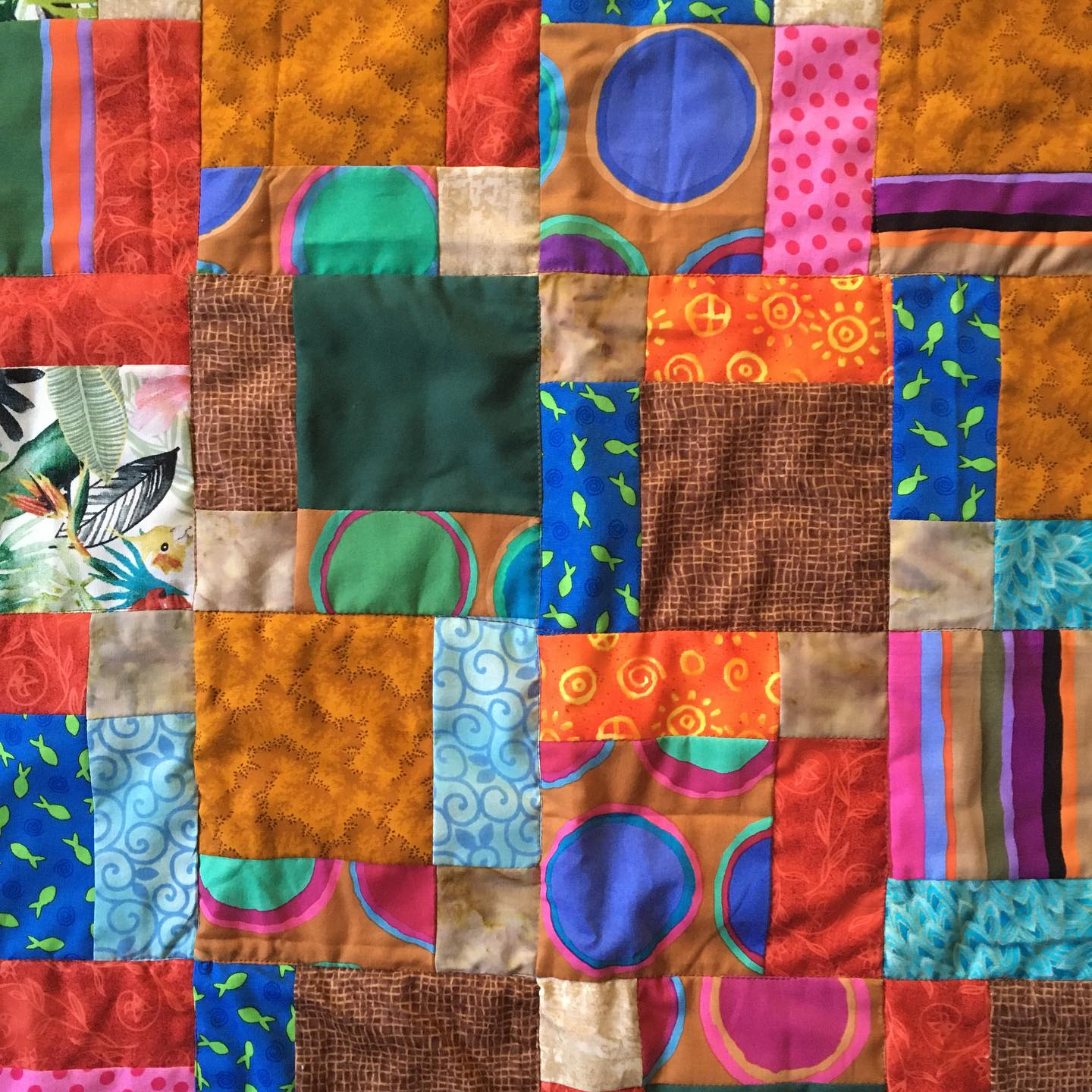
#34 finished 1/17/24 48×51
the back
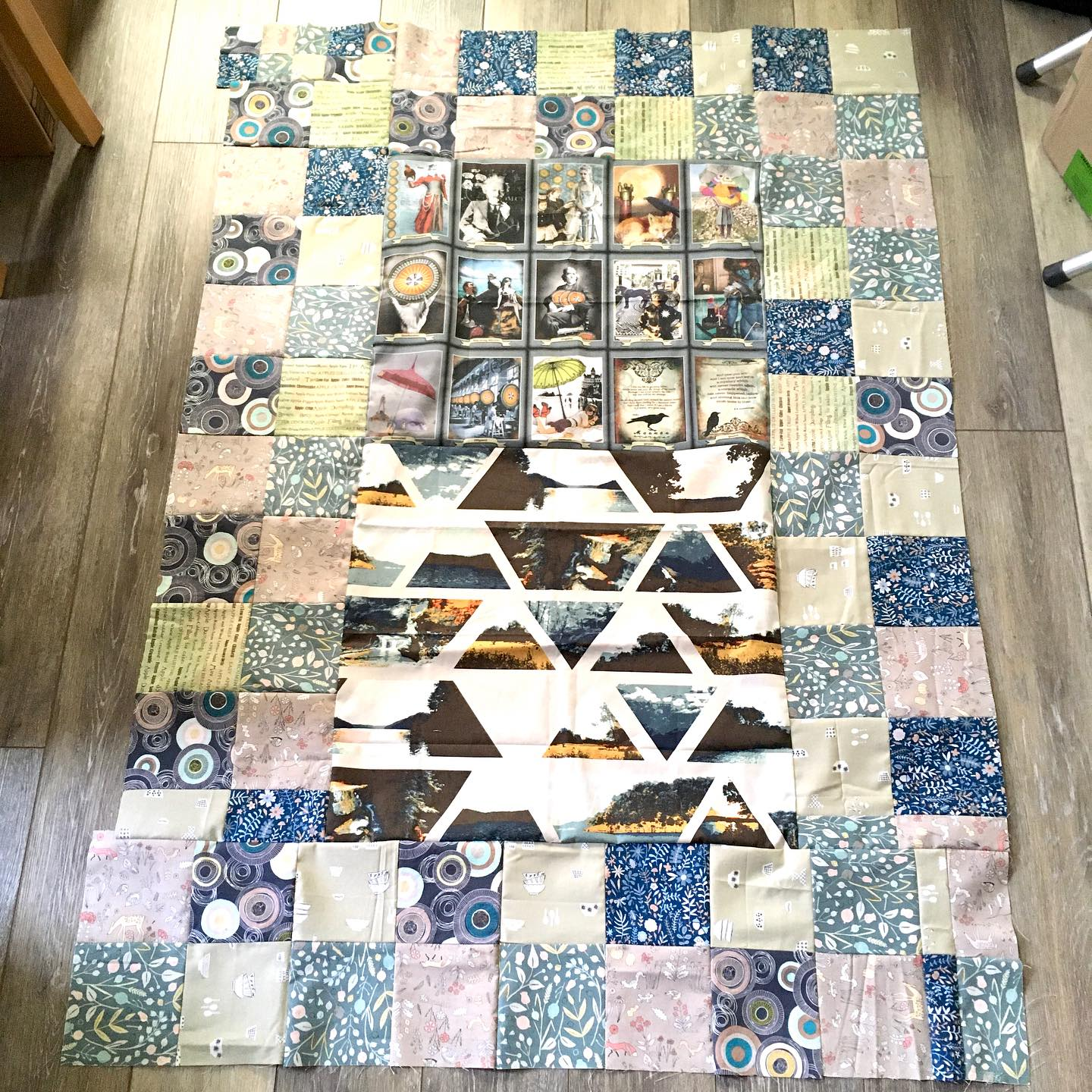
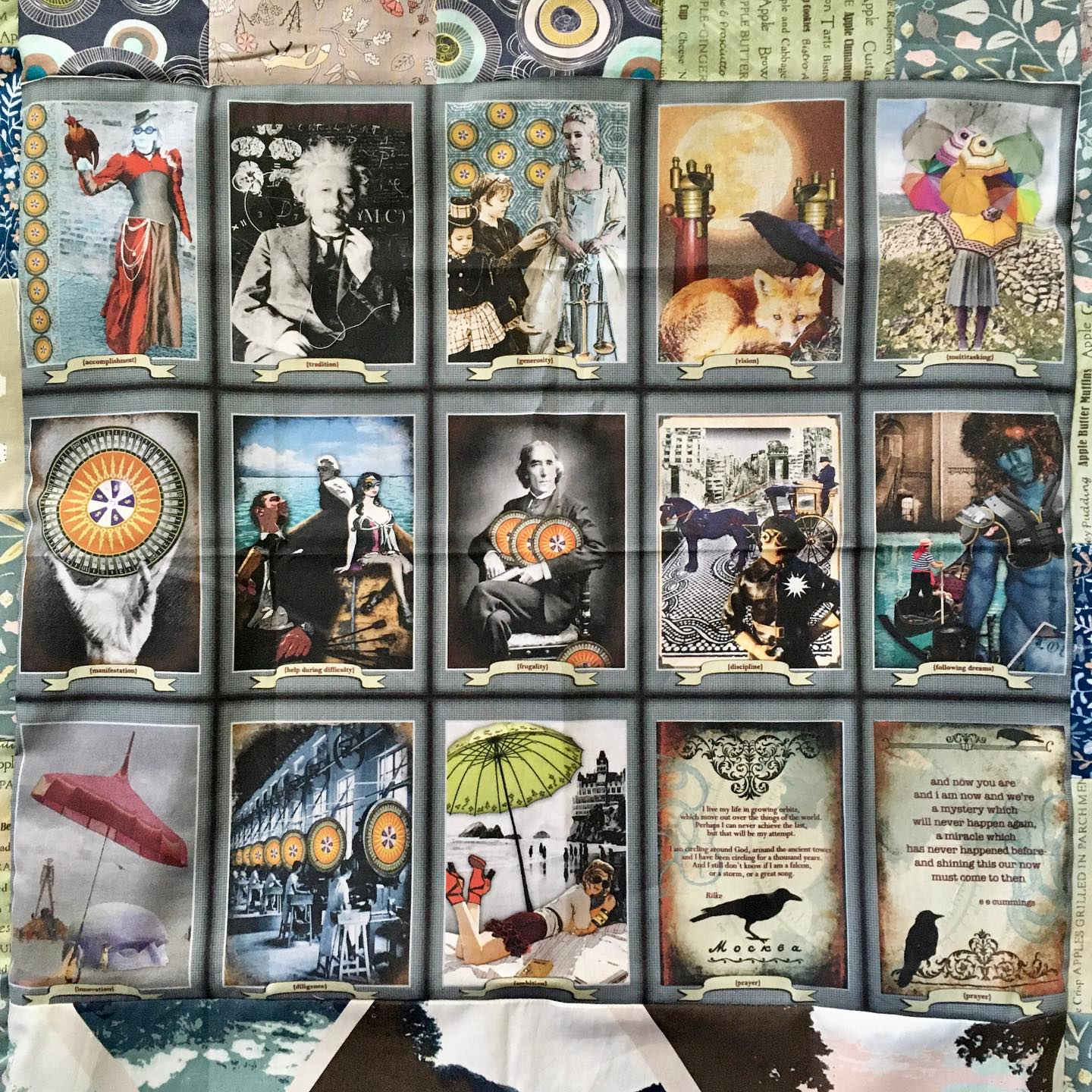
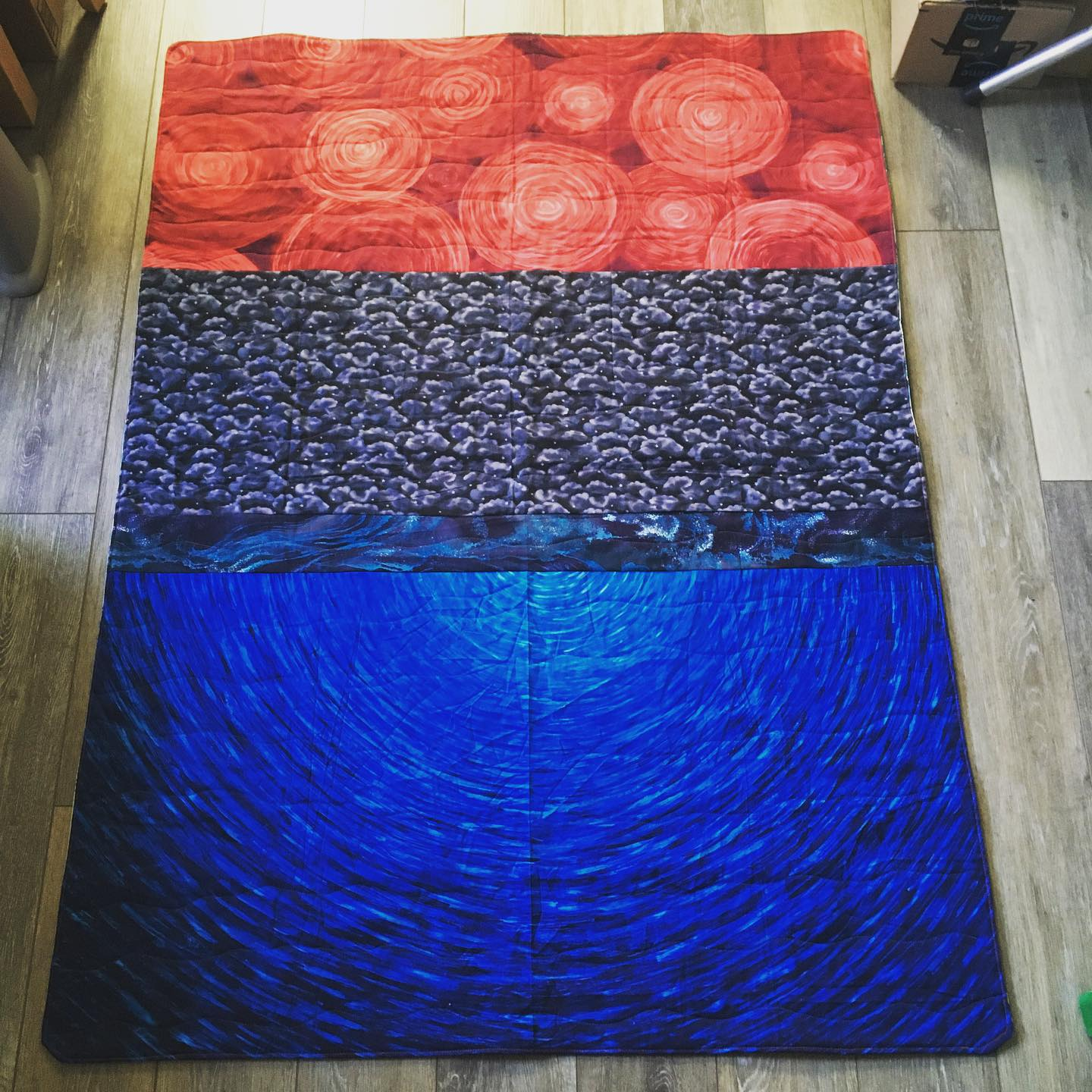
#35 finished July 27, 2024 Mystic panels. Fabric from Smart
close up
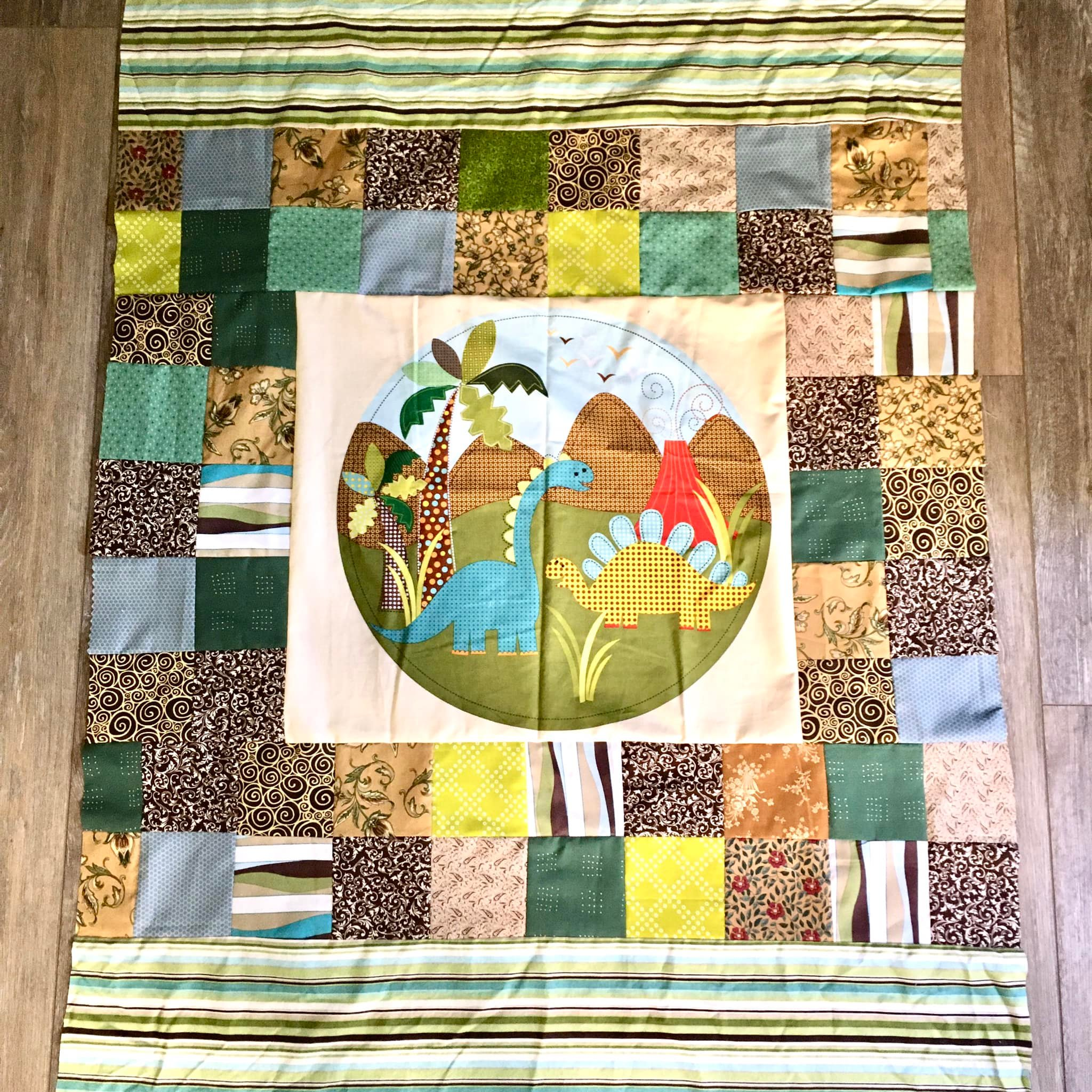
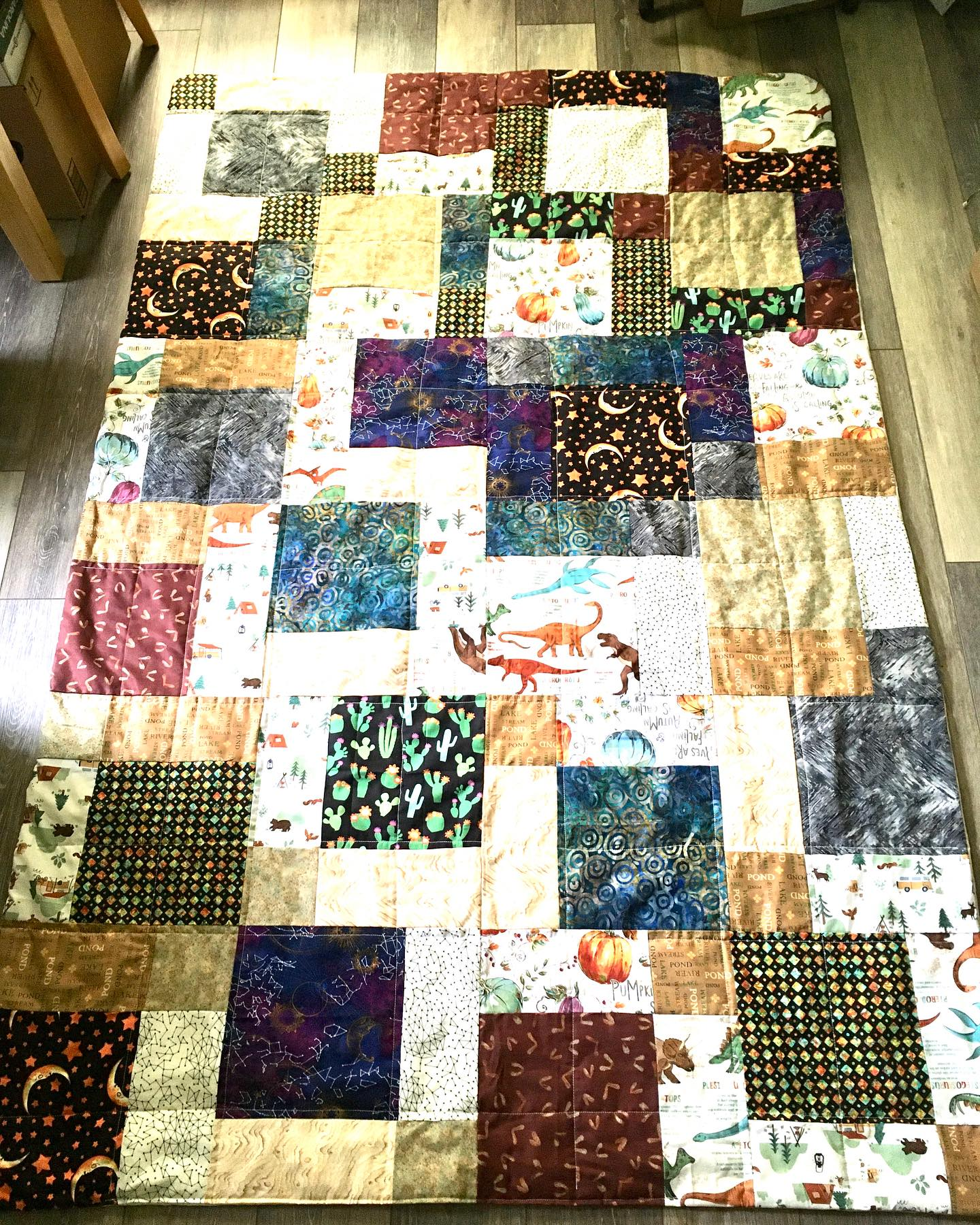
#36 finished 7/27/23 fat quarter favorites. Dinosaur fabric from Hobby Lobby. Some from a fabric shop in Chattanooga
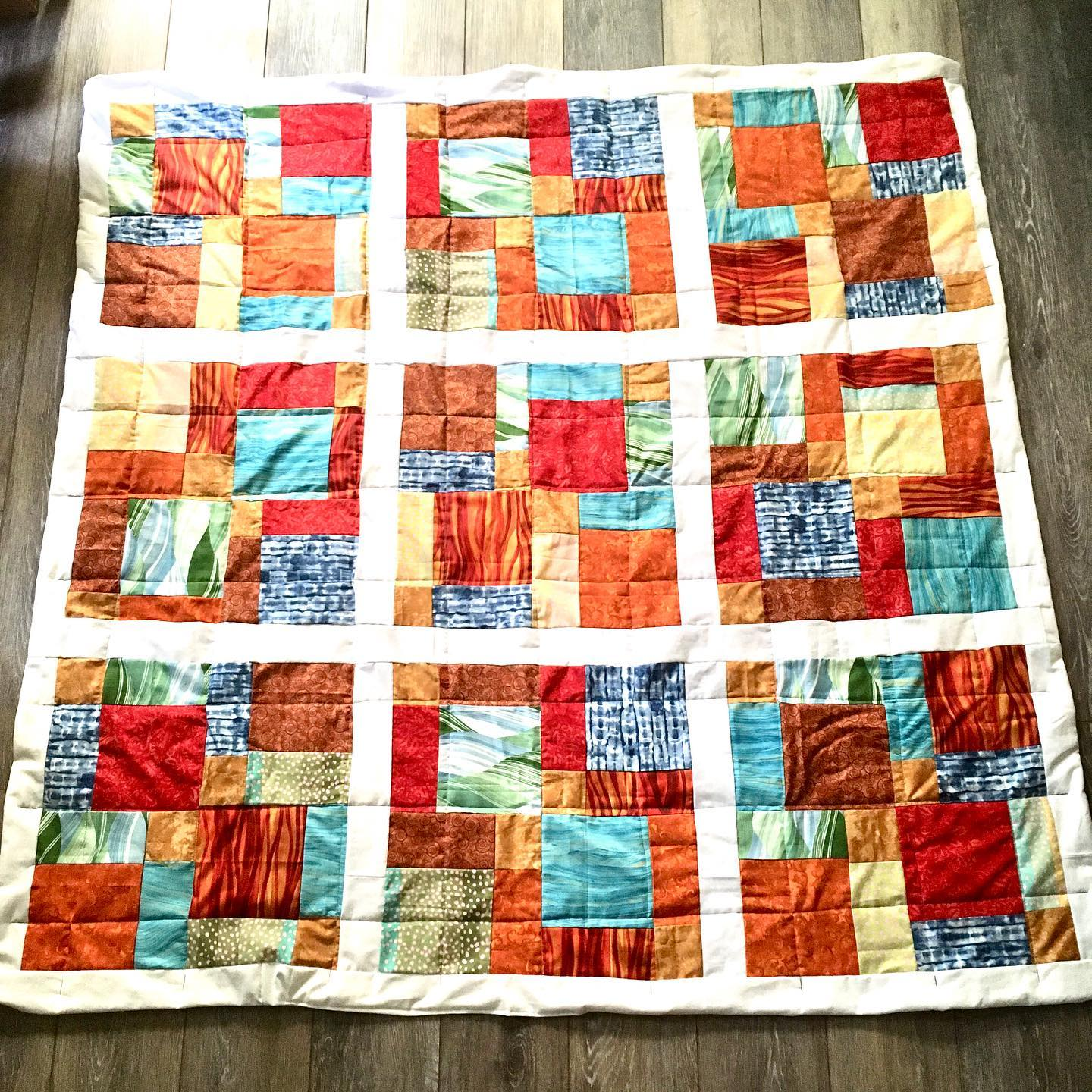
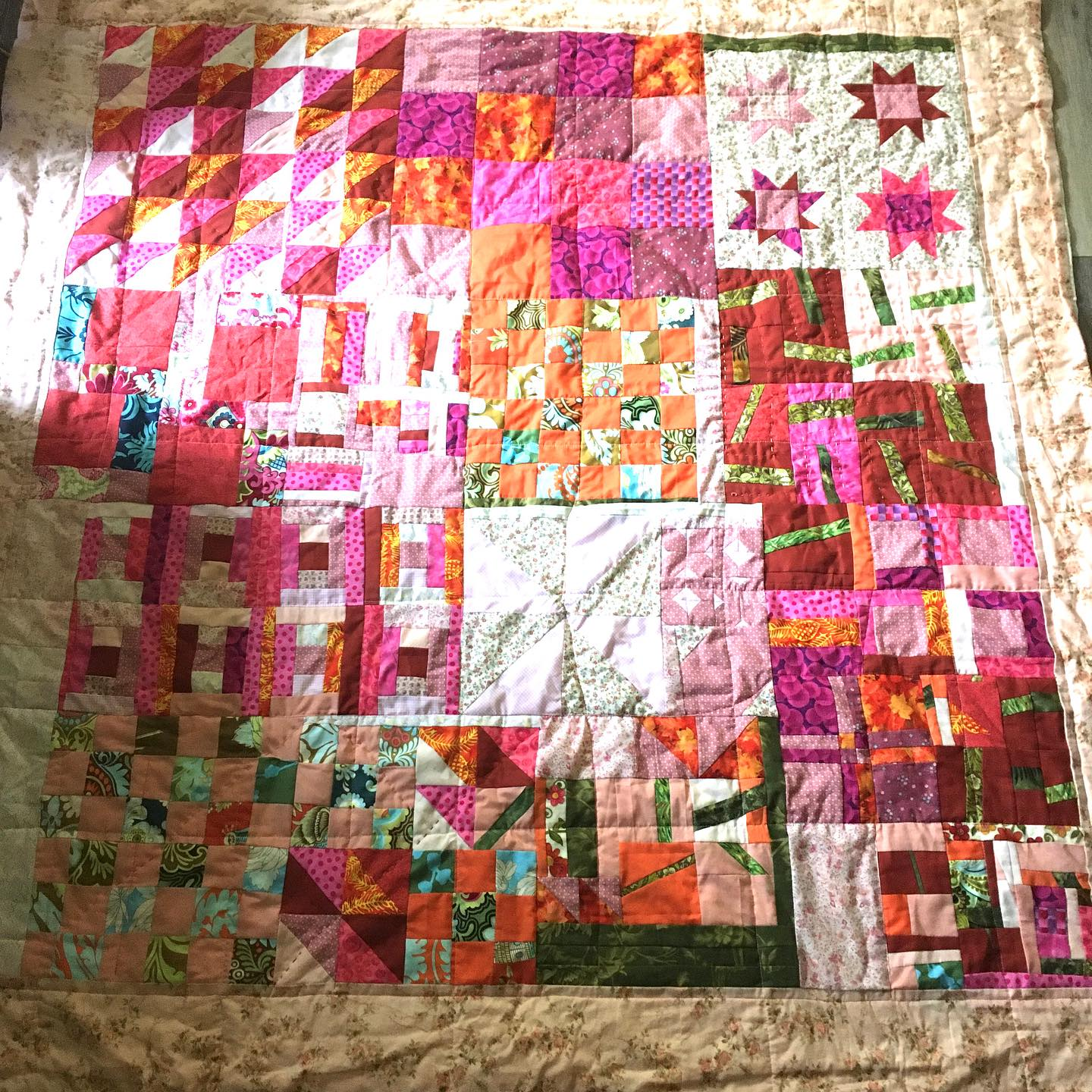
#37 finished 9/11/24 Orange/Pink orphan – created during a week when there was an ice/snow storm (Jan 2024) Learned Courthouse Steps, Wonky Star, Disappearing 4 patch, and practiced different sizes of make 4 at once HSTs for an upcoming project. Listening to “Otherland”
#38 finished 10/16/24 Blade Runner quilt as you go.
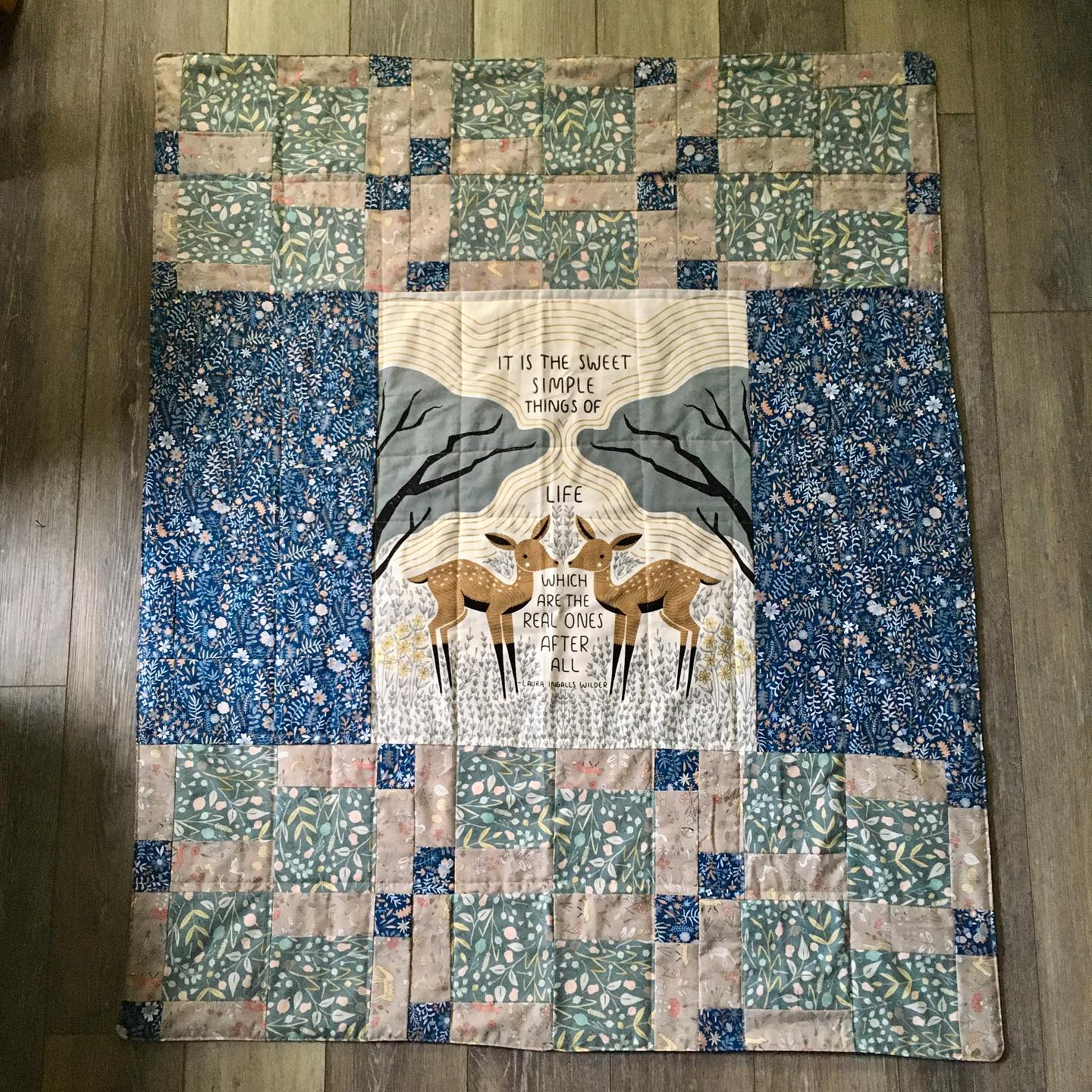
#39 finished 10/29/24 Panel from “Ready Set Sew” in Chattanooga, in 2022. Charm pack from “My Fabric Addiction” on Etsy
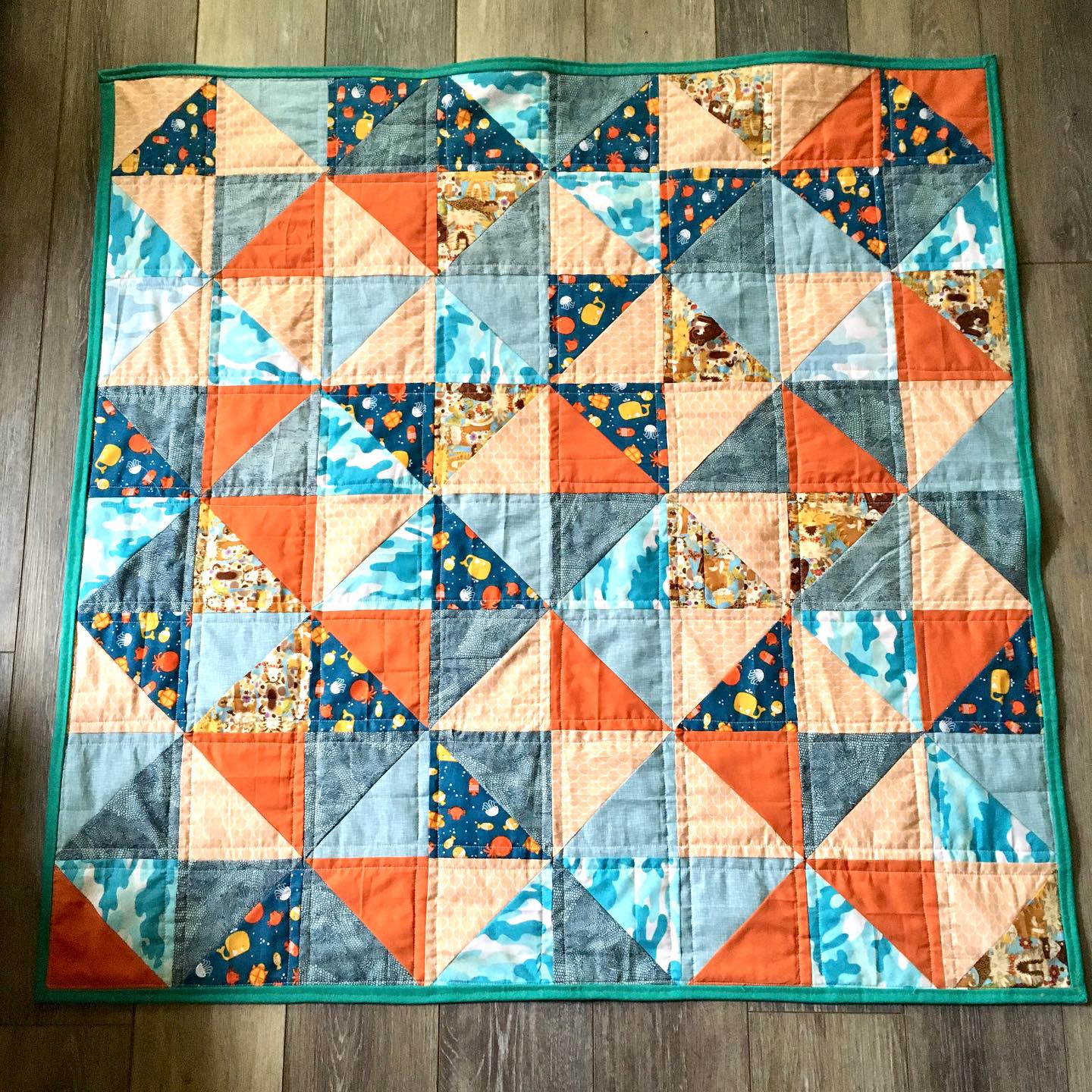
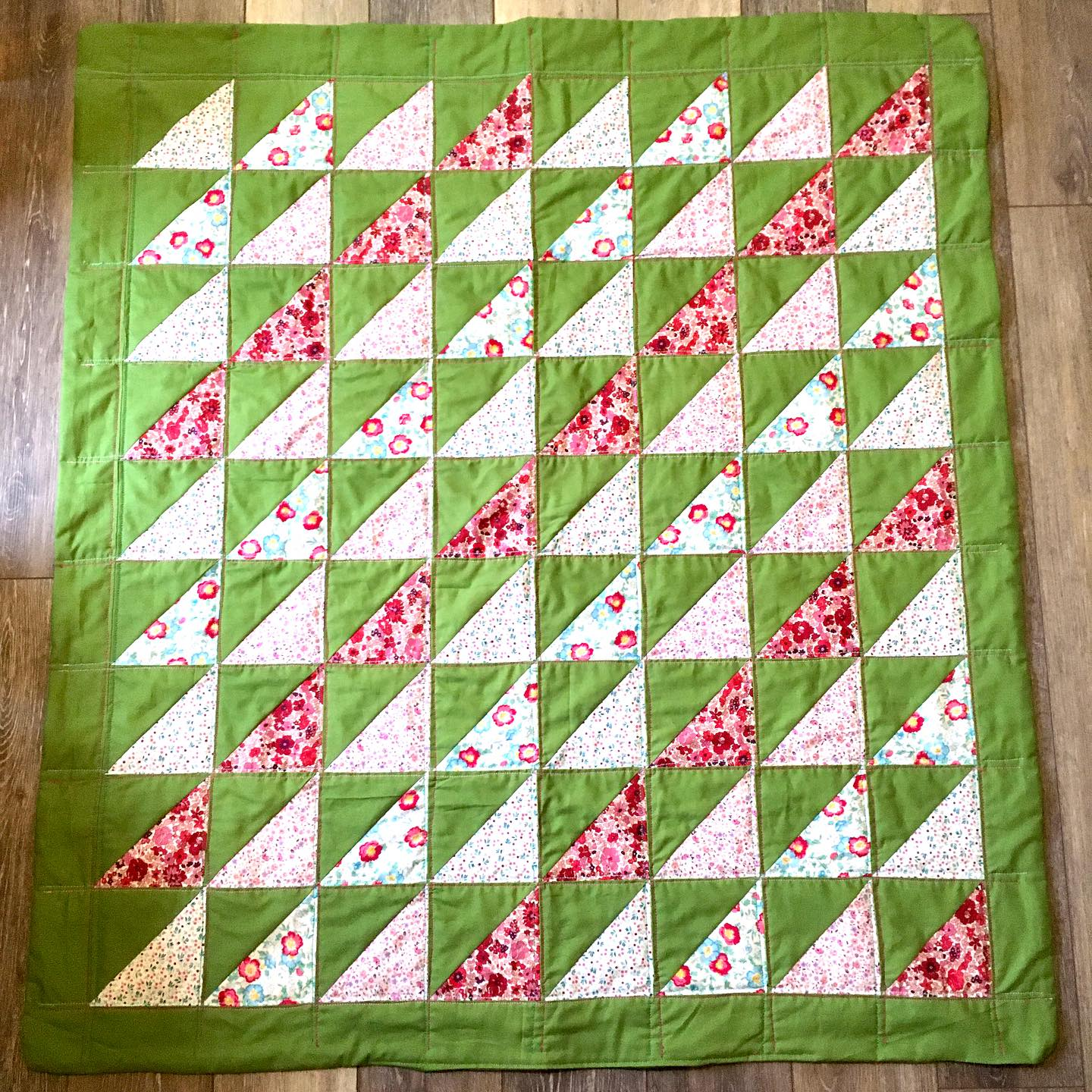
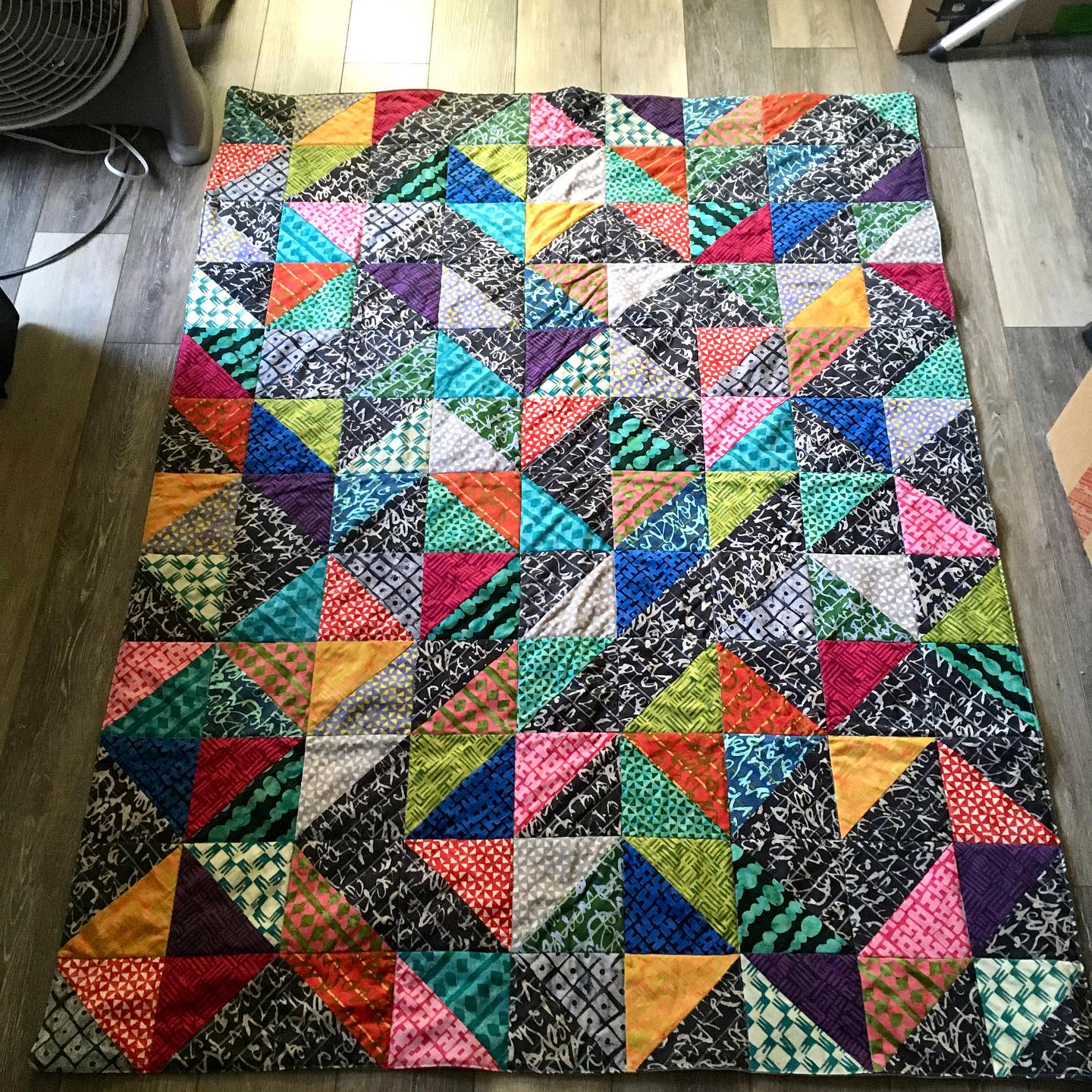
#40 finished 11/6/24 (after Election day). Scrap bundle from Smart. Given as a baby blanket to a local baker/ coffee shop owner. Good HST practice. Also, first time to bind it like normal quilters do.
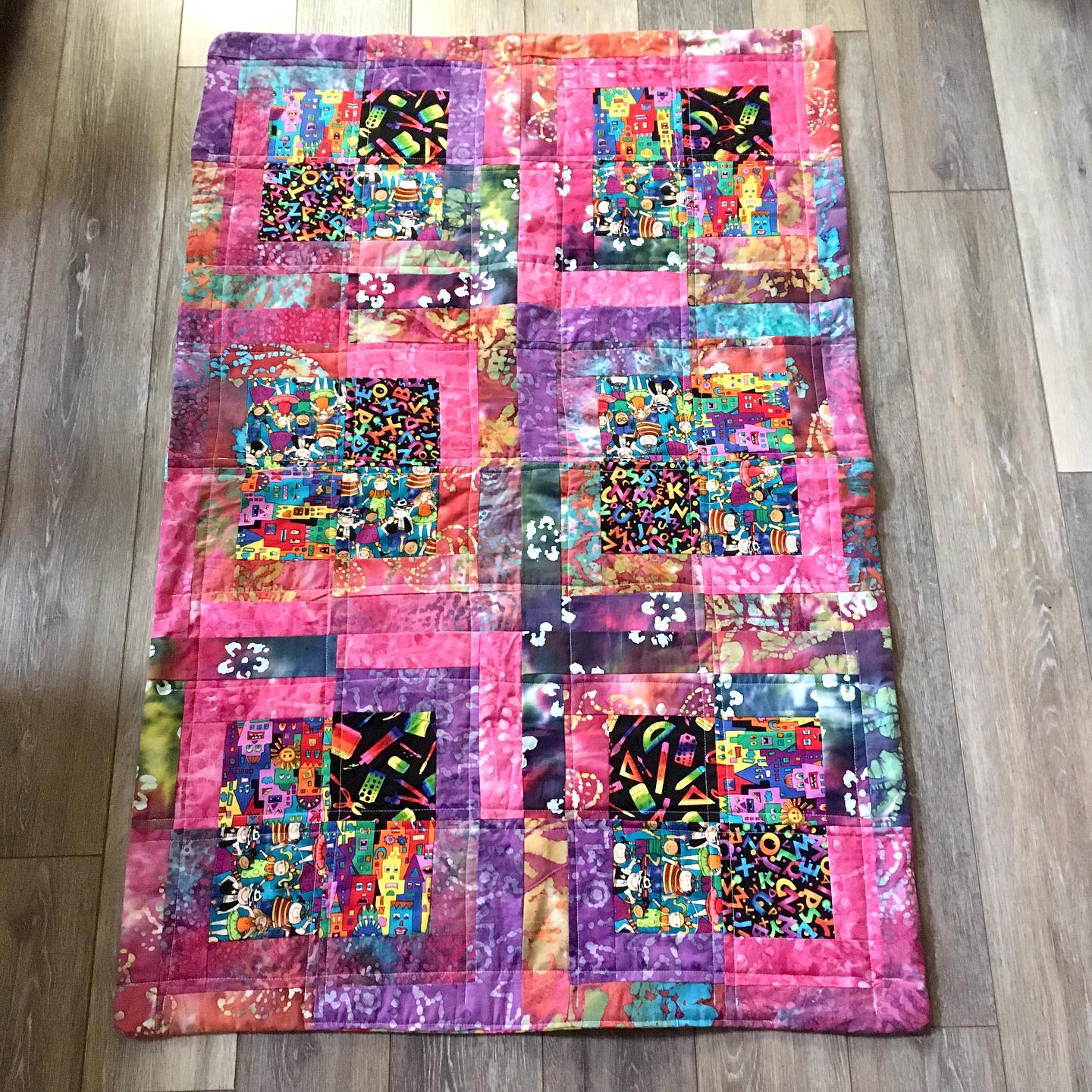
#41 finished 11/9/24 Tilda X and O. Colorful fabrics from a fat eighth bundle from Smart. Given to my aunt who was in a nursing home.
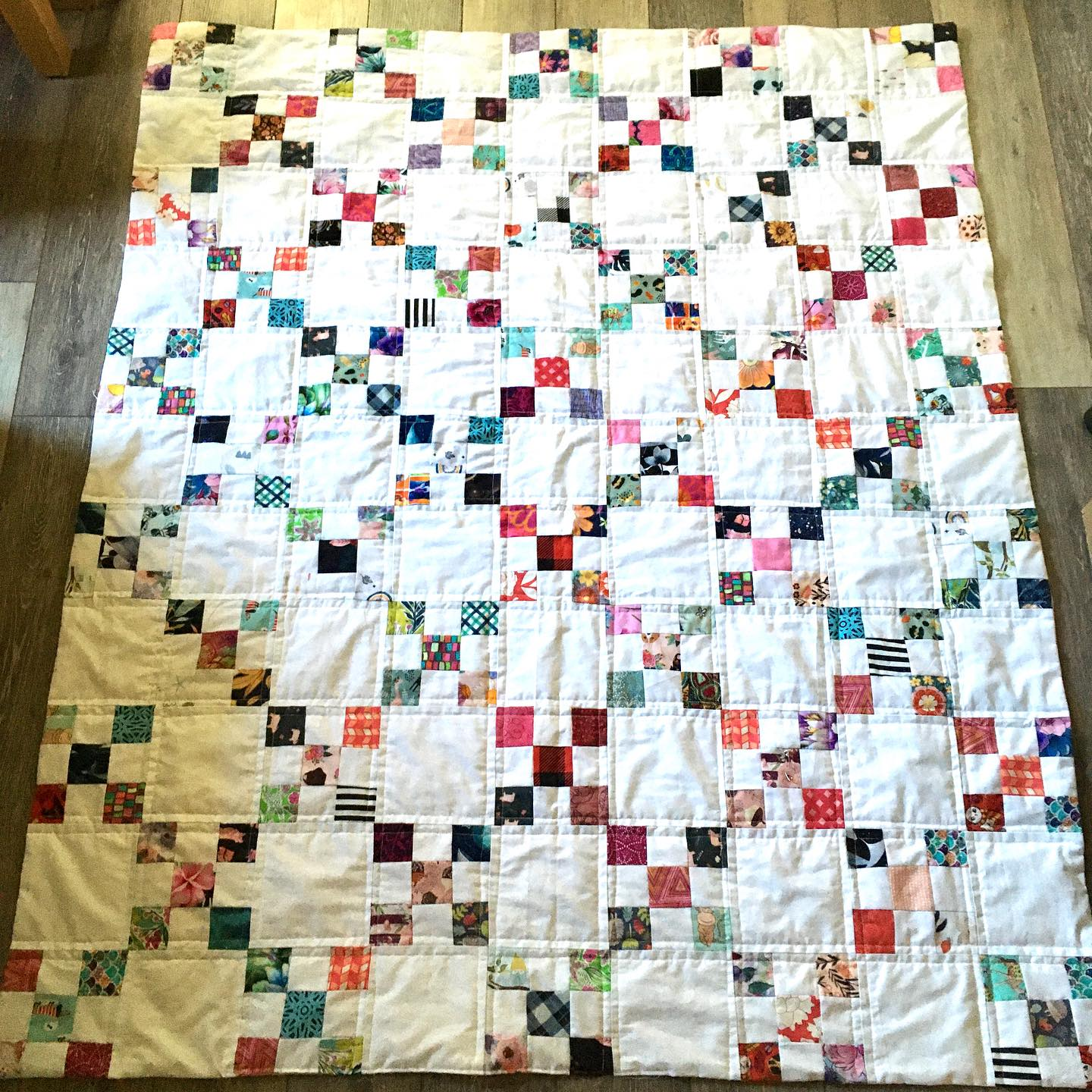
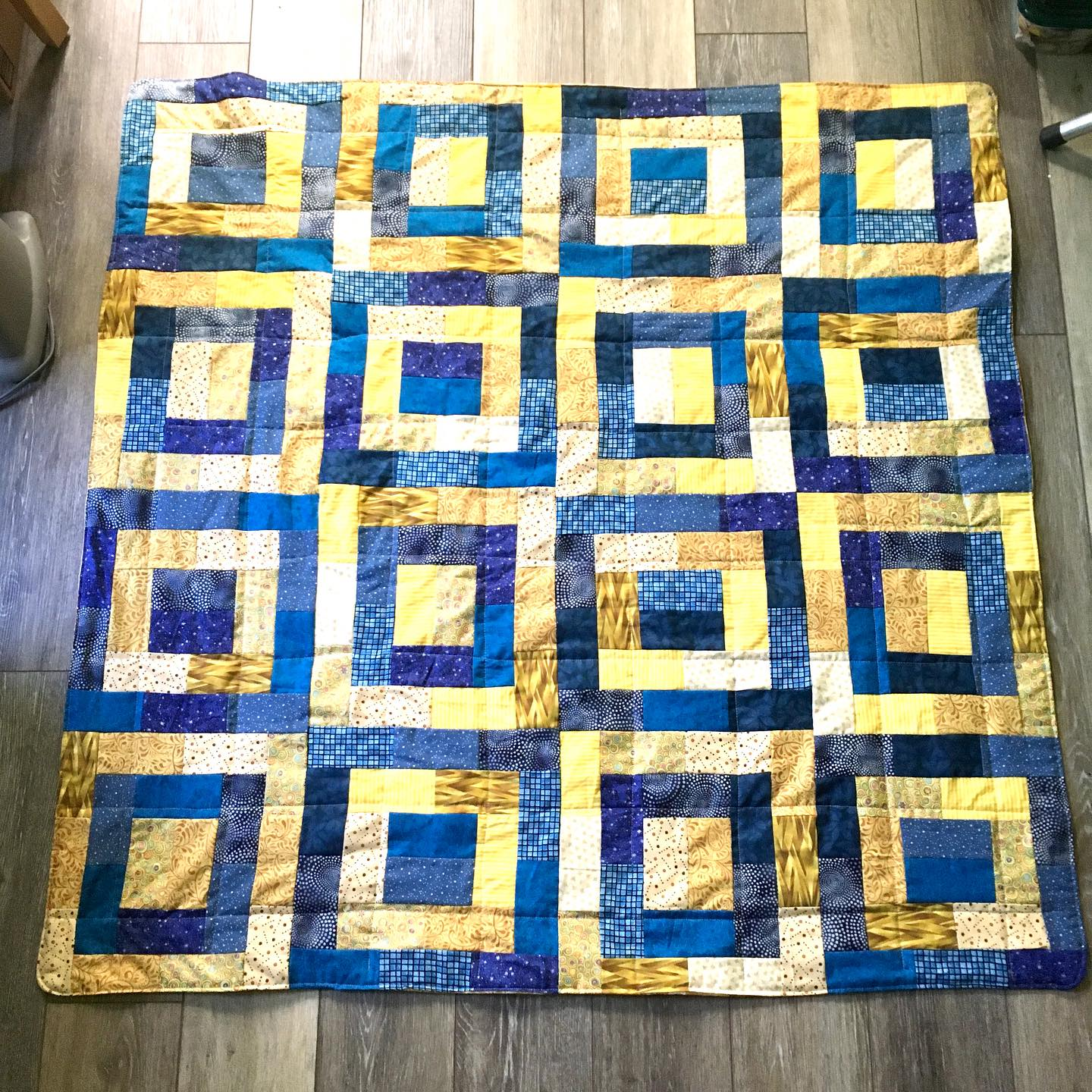
#42 finished 11/21/24 Irish Chain
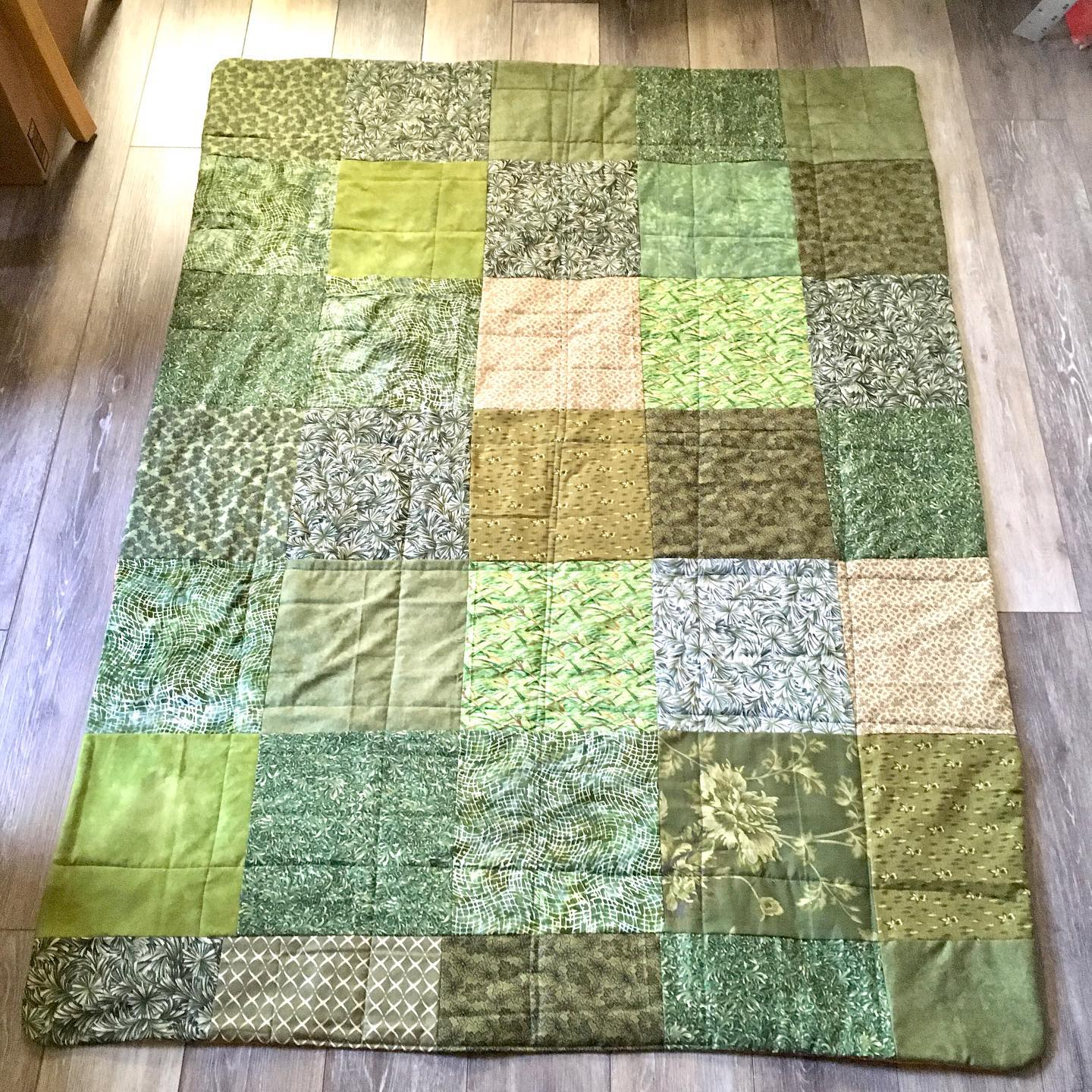
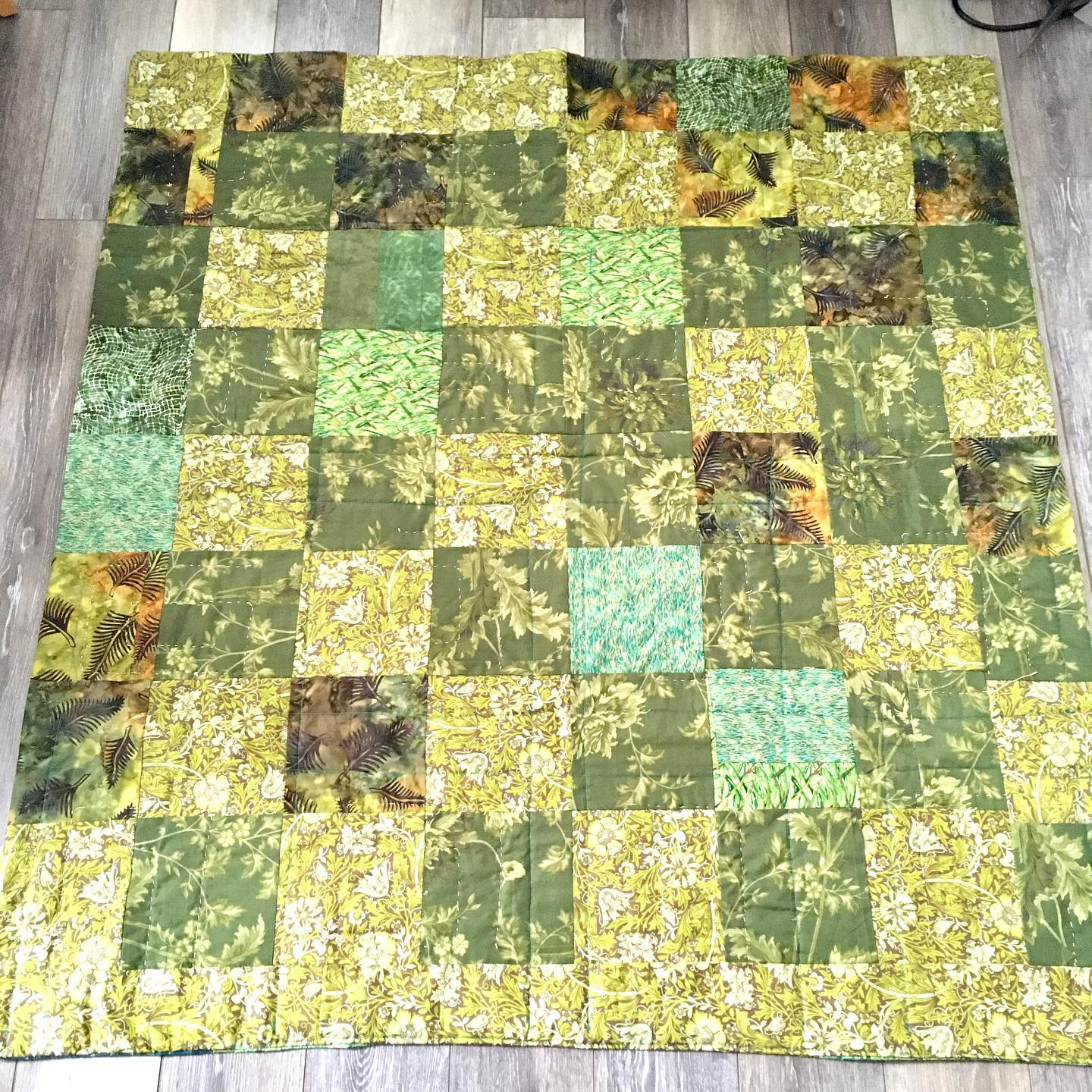
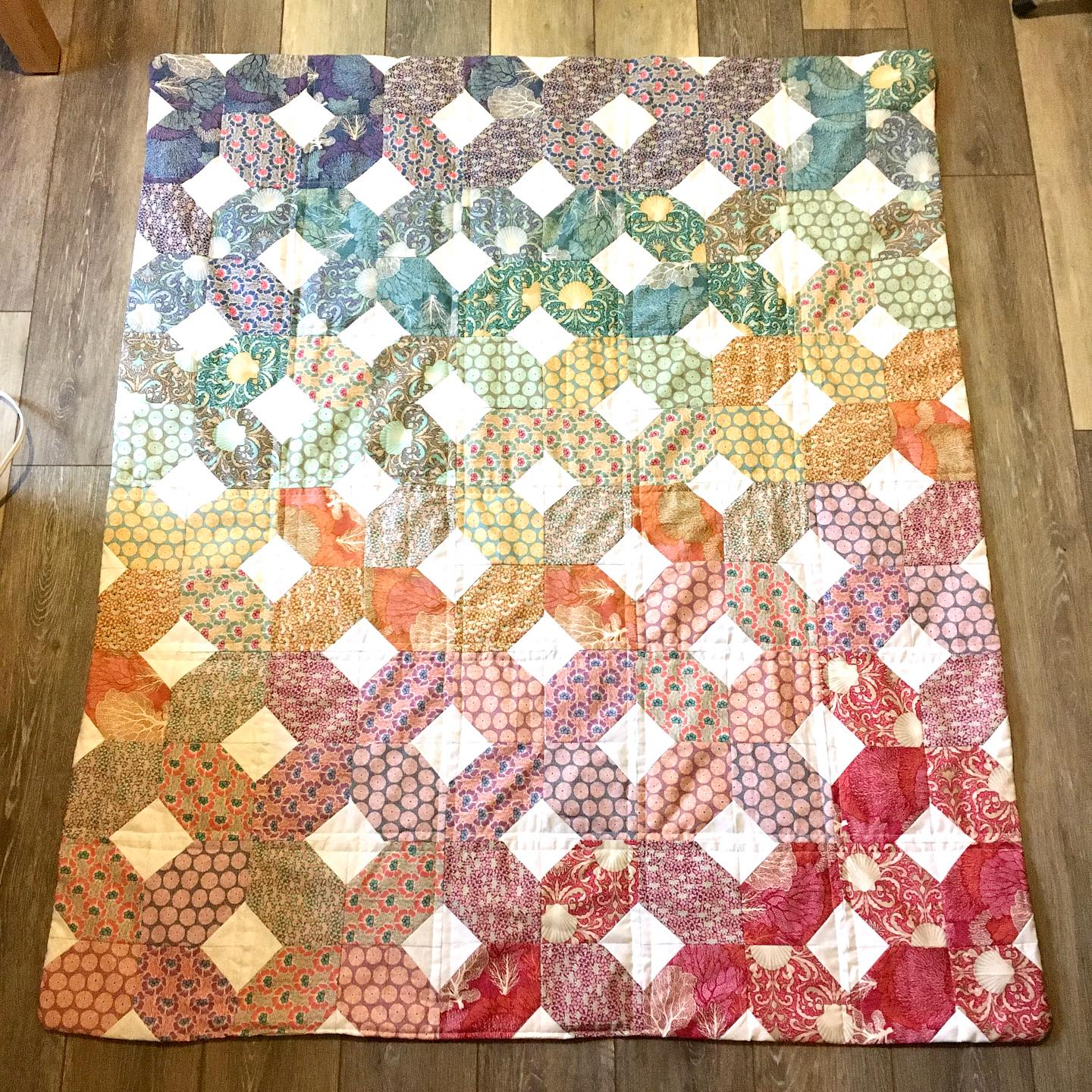
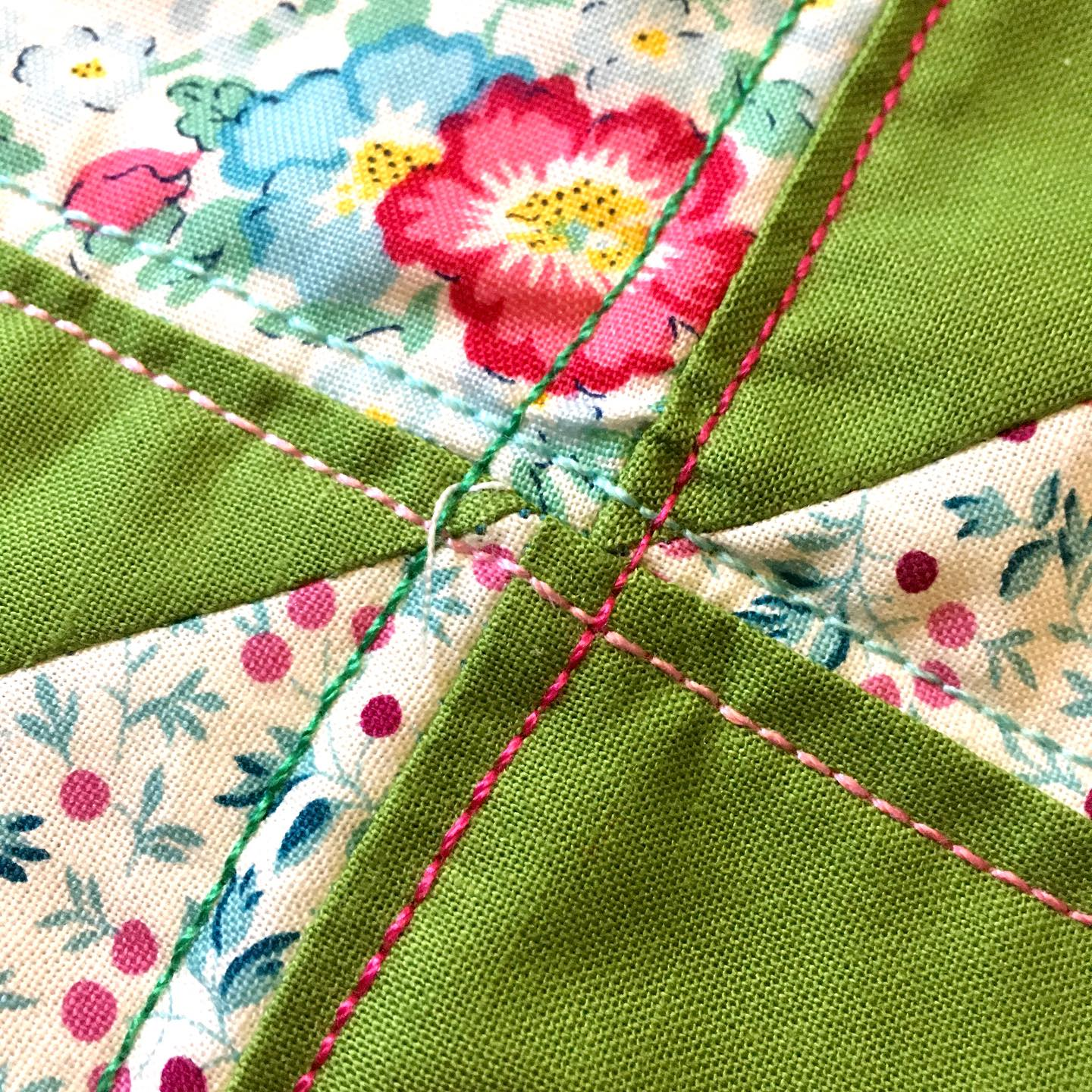
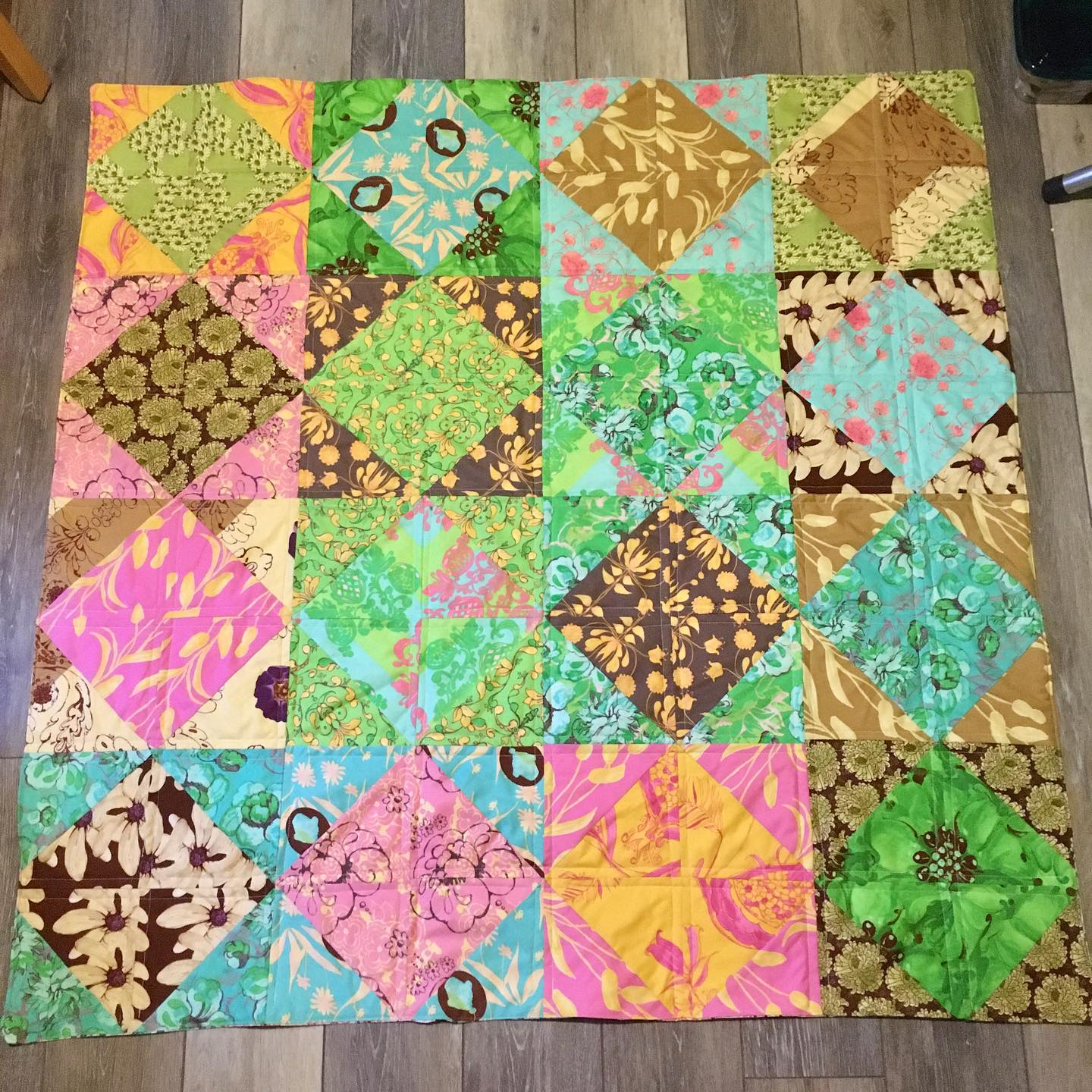
#43 finished 12/28/24 Lime/Liberty Liberty of London quilting fat quarters from “The Last Homely House” youtube channel. Lime Green fabric from JoAnn’s
Quilted using Aurifil thread that came with the Christmas packet
#44 finished 1/1/25 Fish in a pond. Given to my husband. Fabric from SmArt
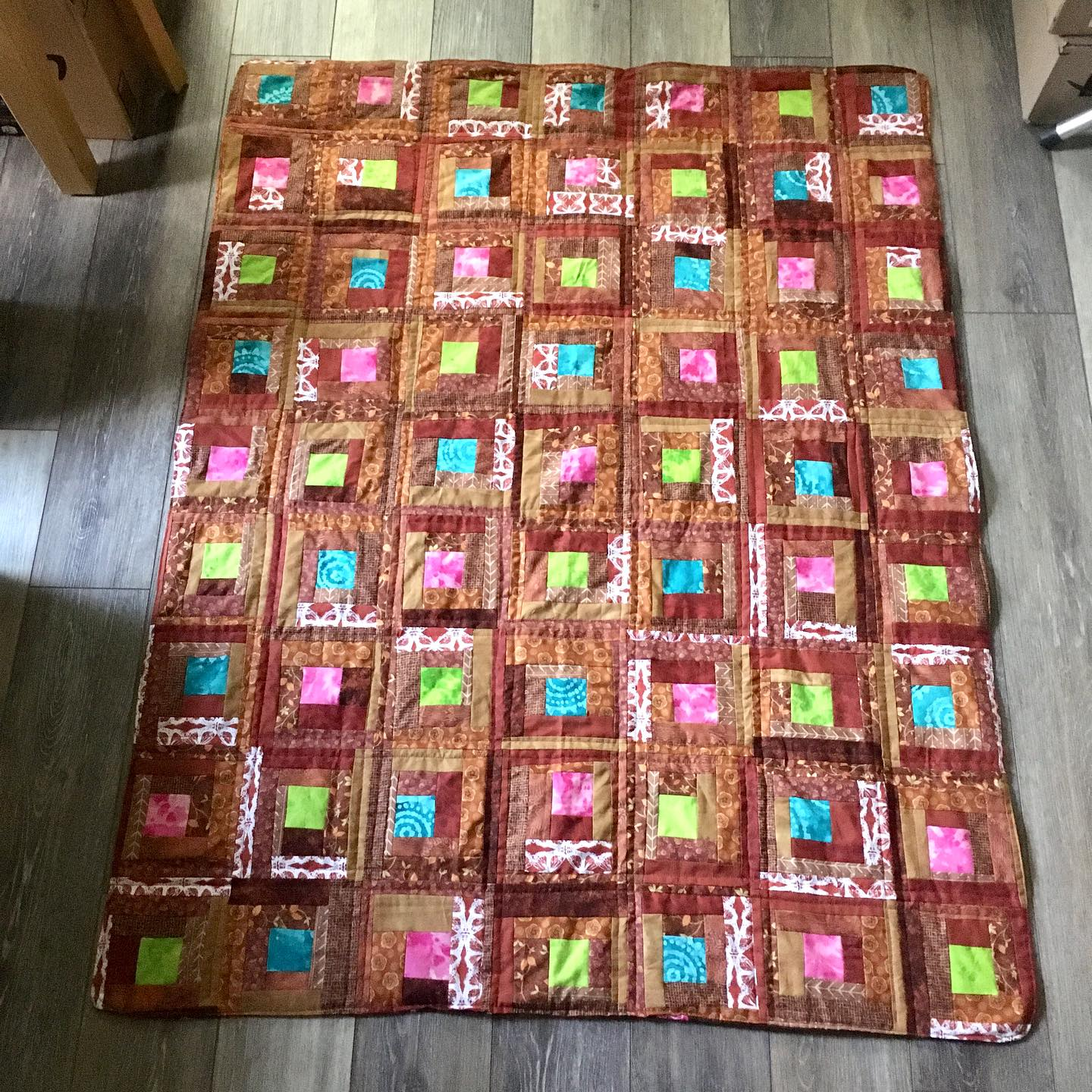
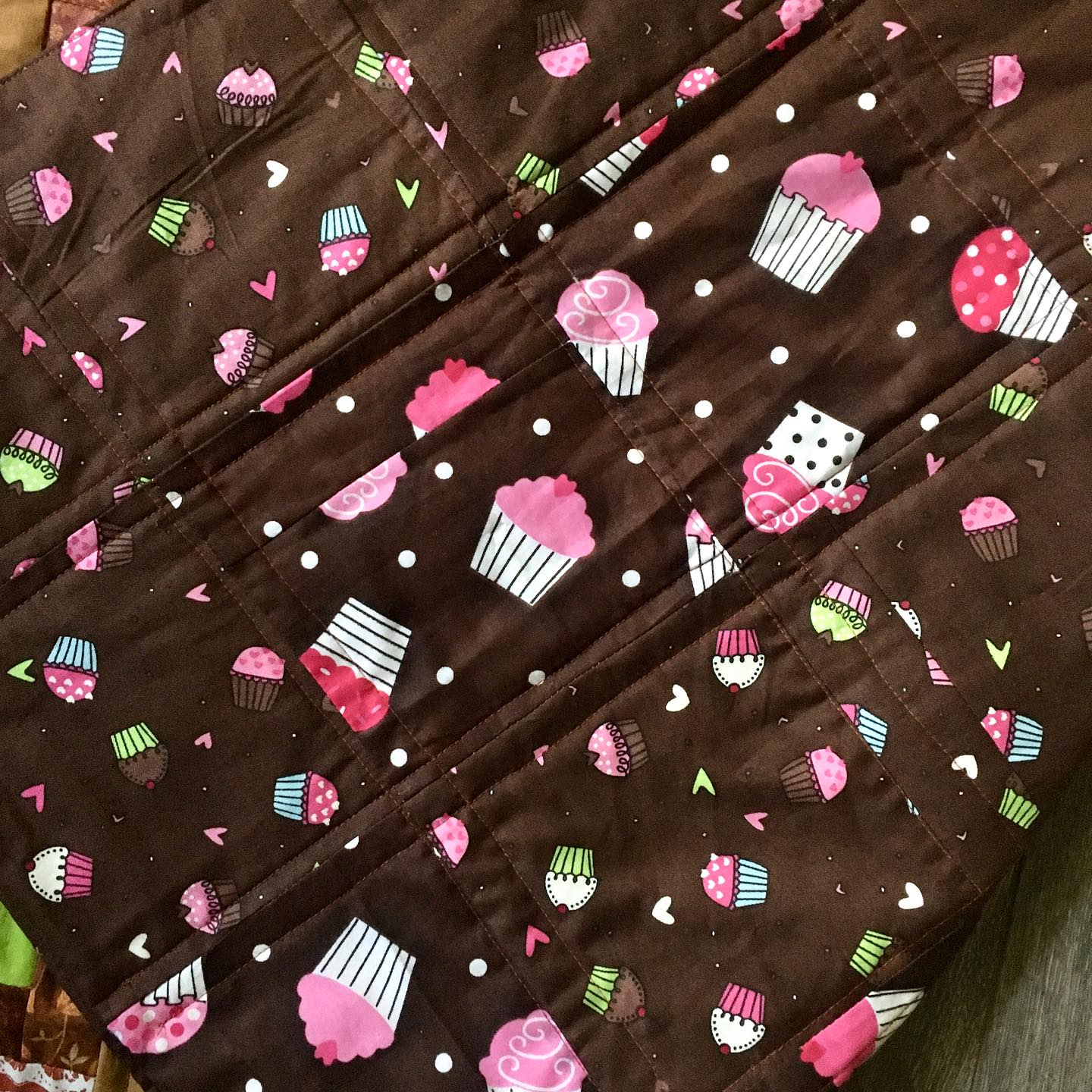
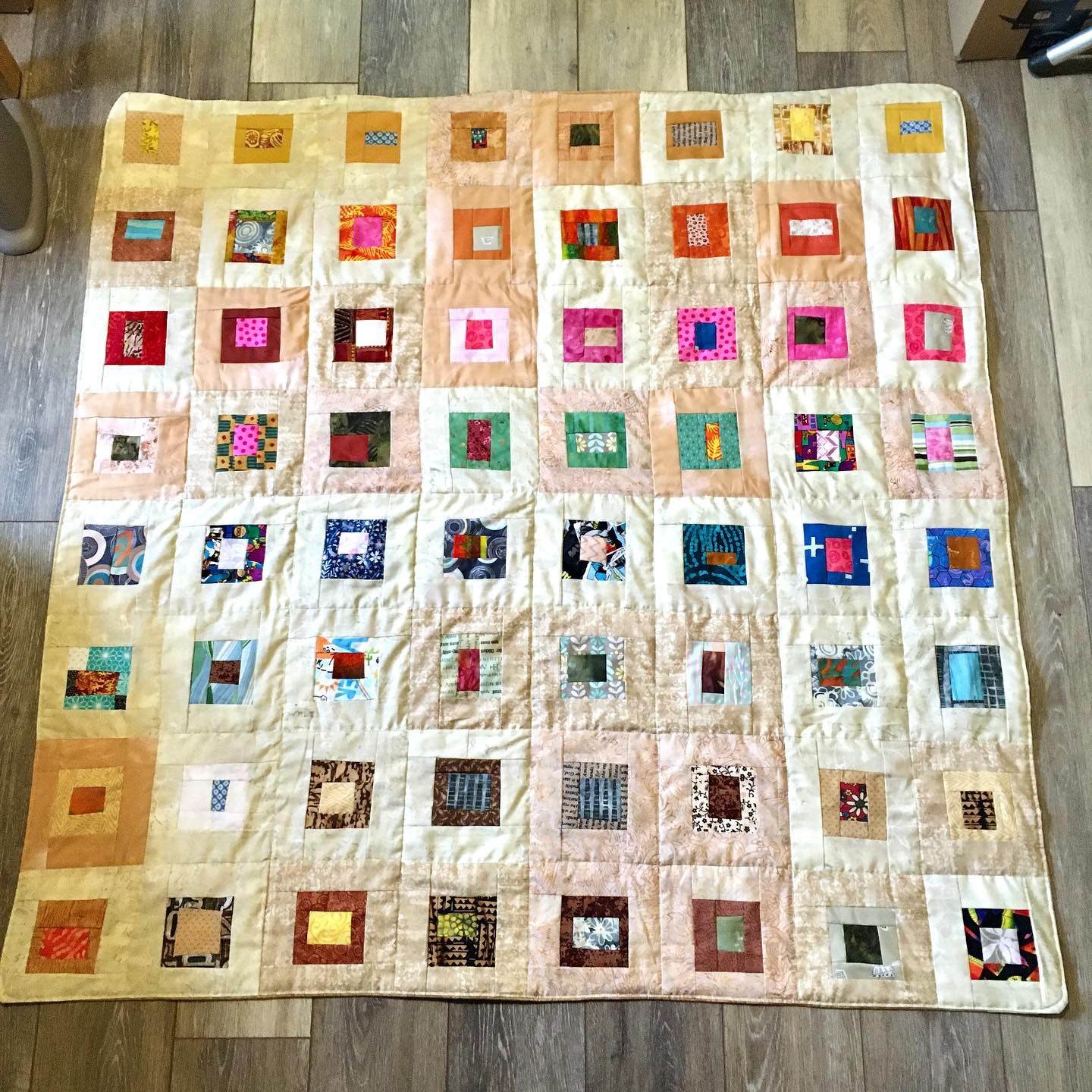
#45 finished 4/2/25 browns from Smart, pink/blue/green centers from JoAnn’s Log cabin – but a Chocolate Cupcake with Sprinkles. Backing fabrics were a fortuitous find.
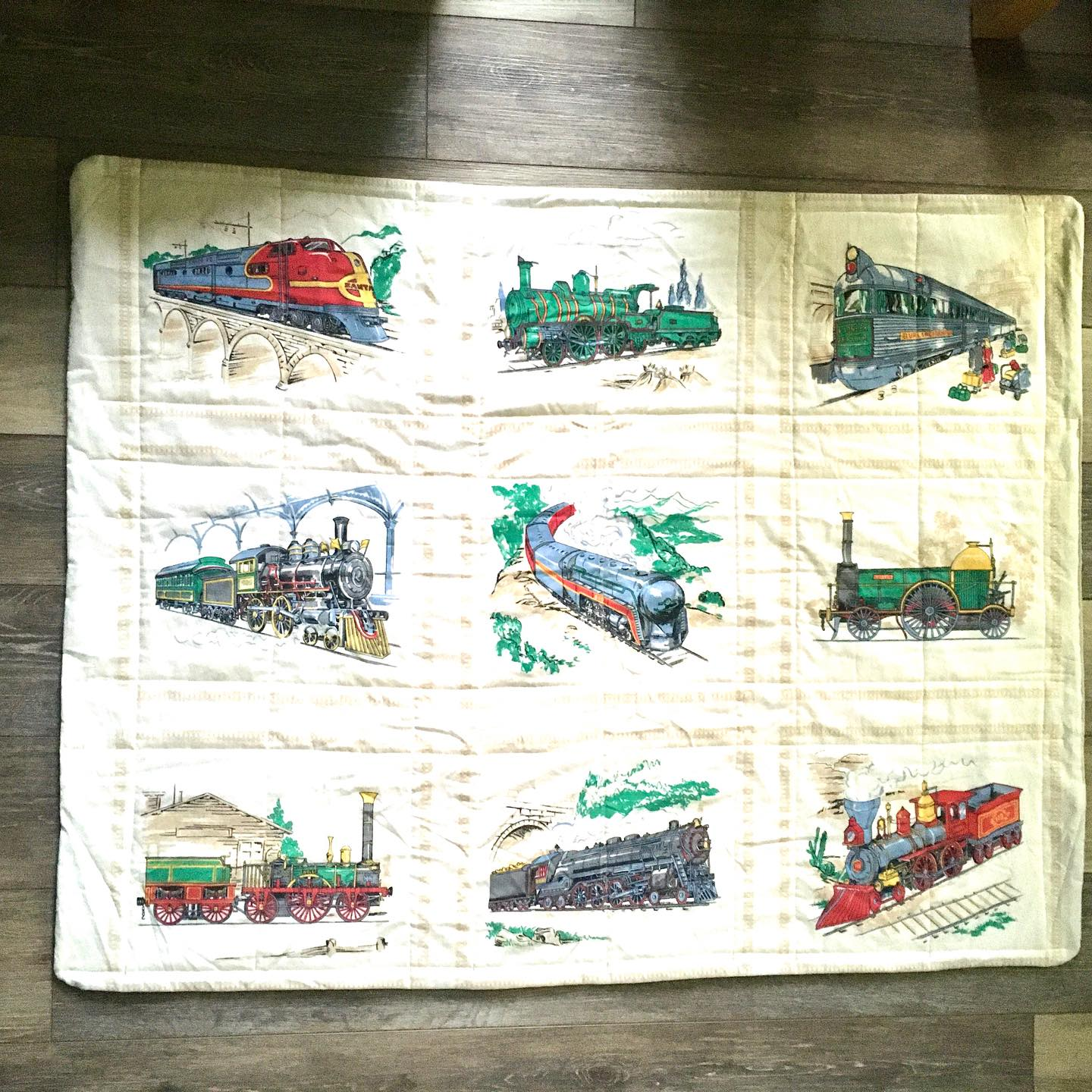
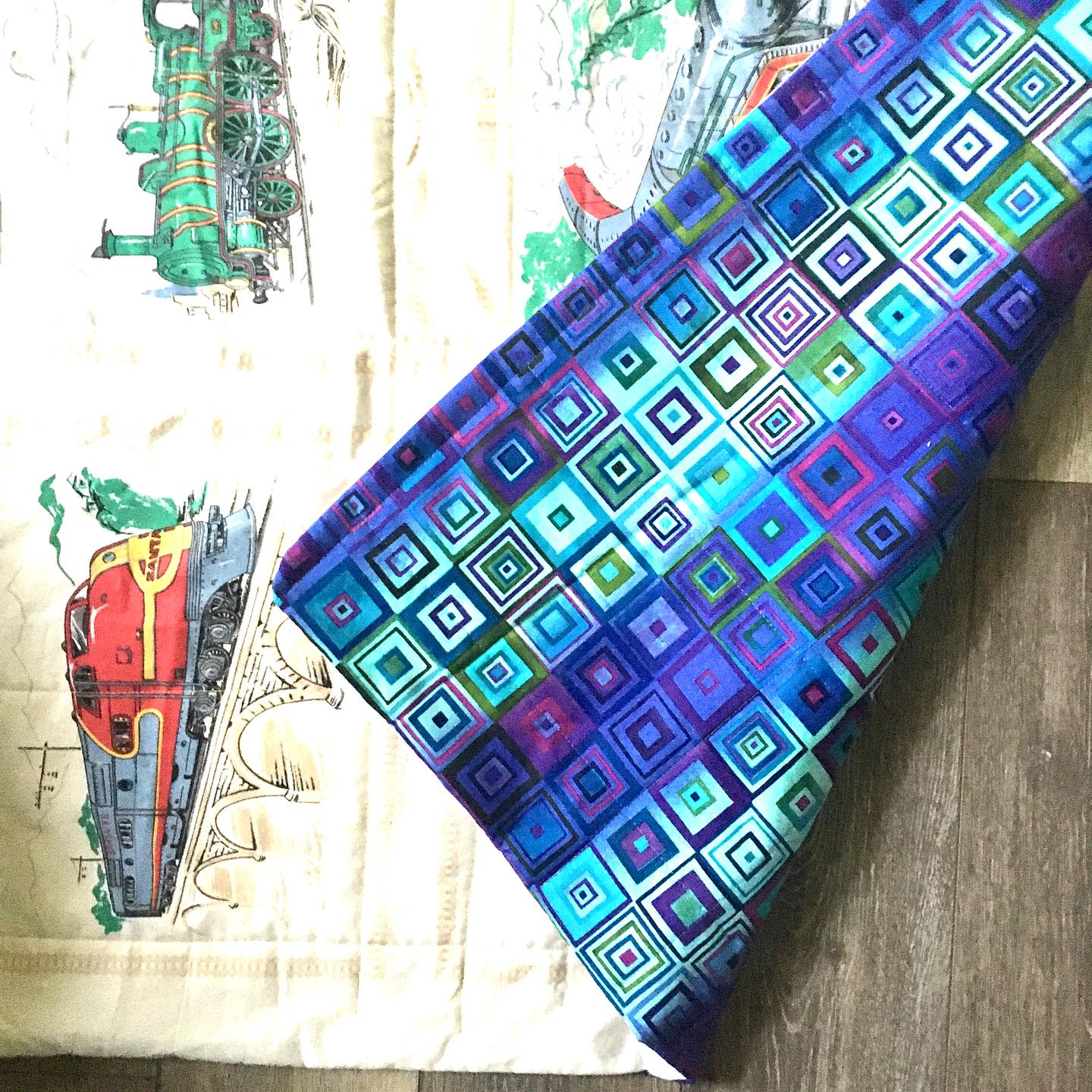
#46 finished 4/3/25 Train nap blanket. Fabric from Smart
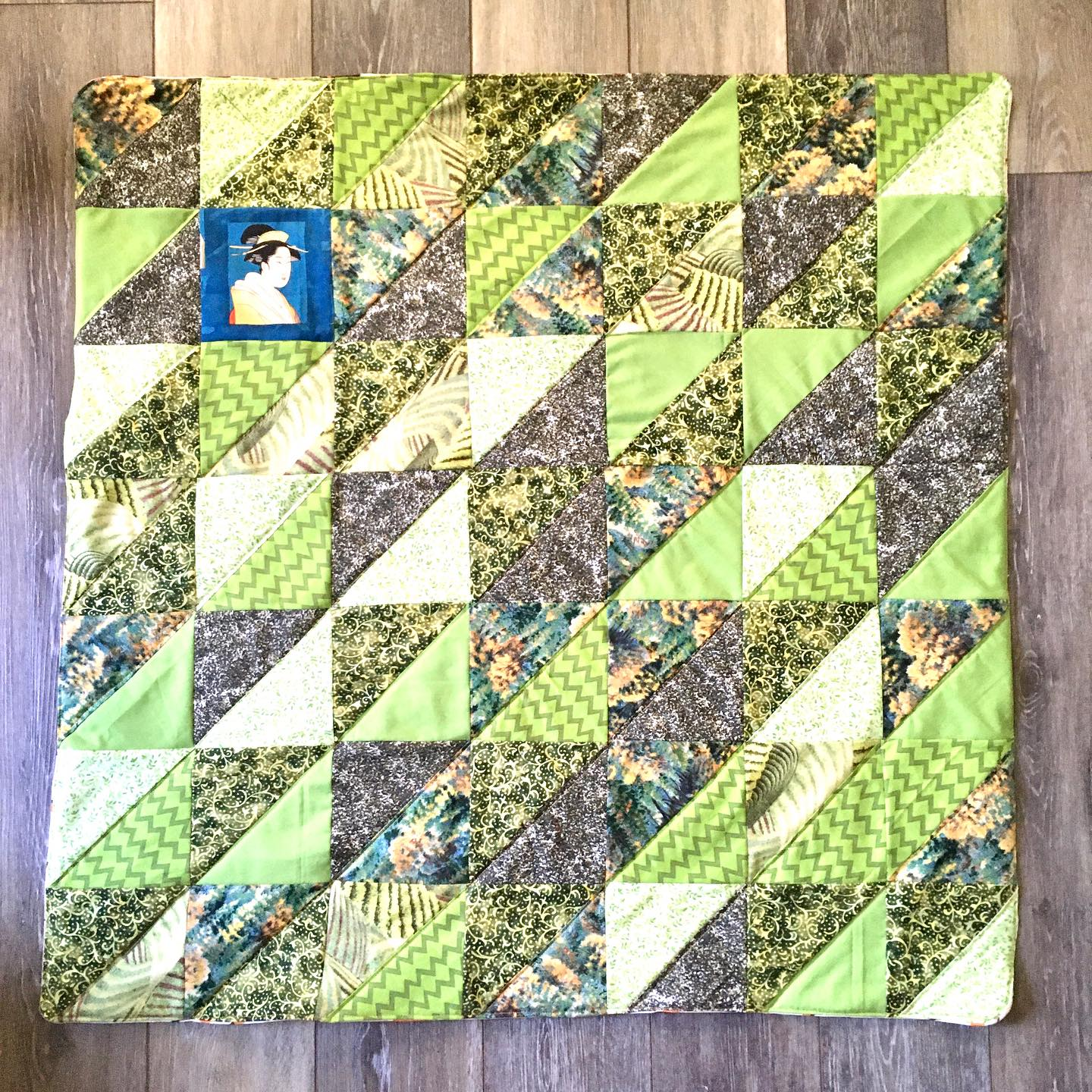
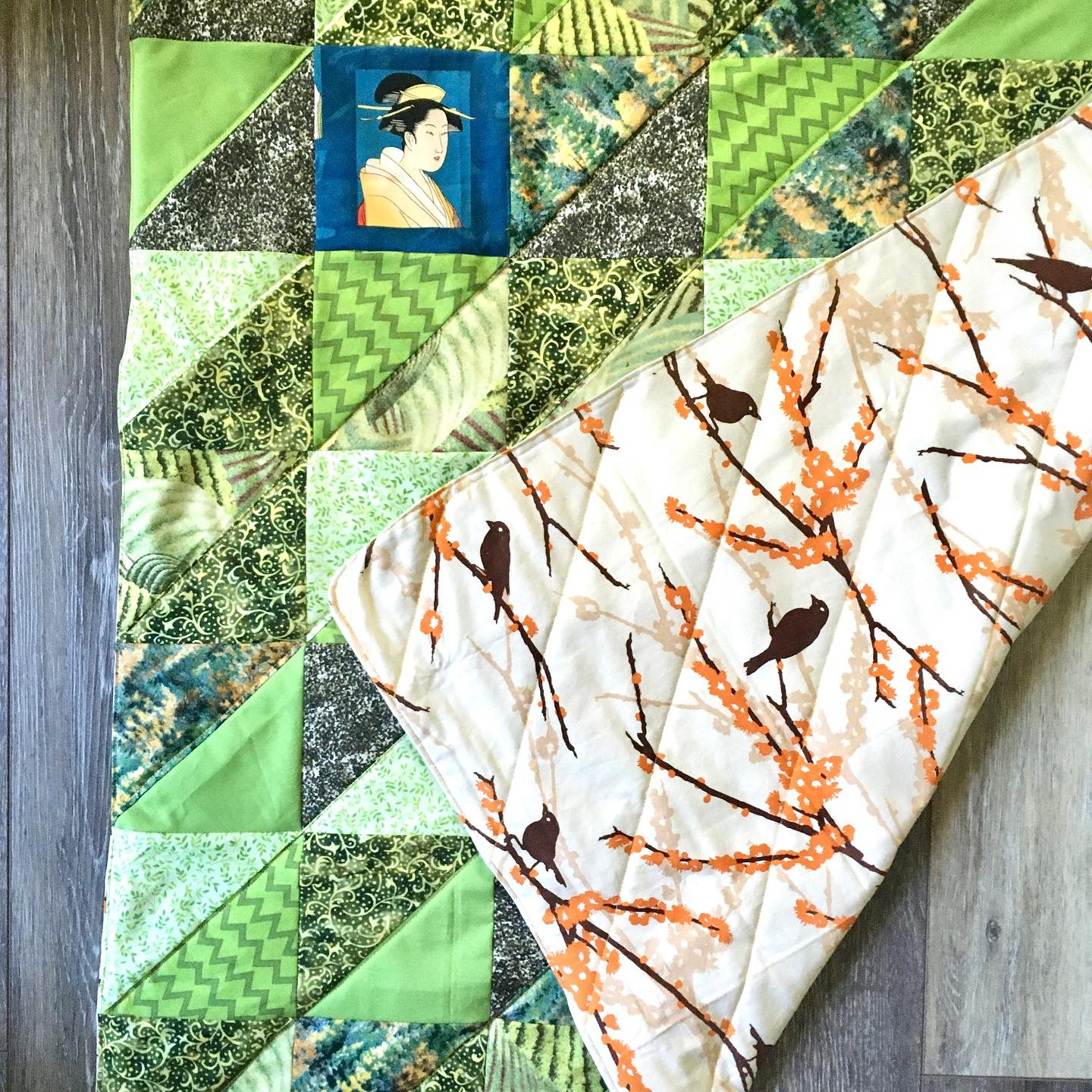
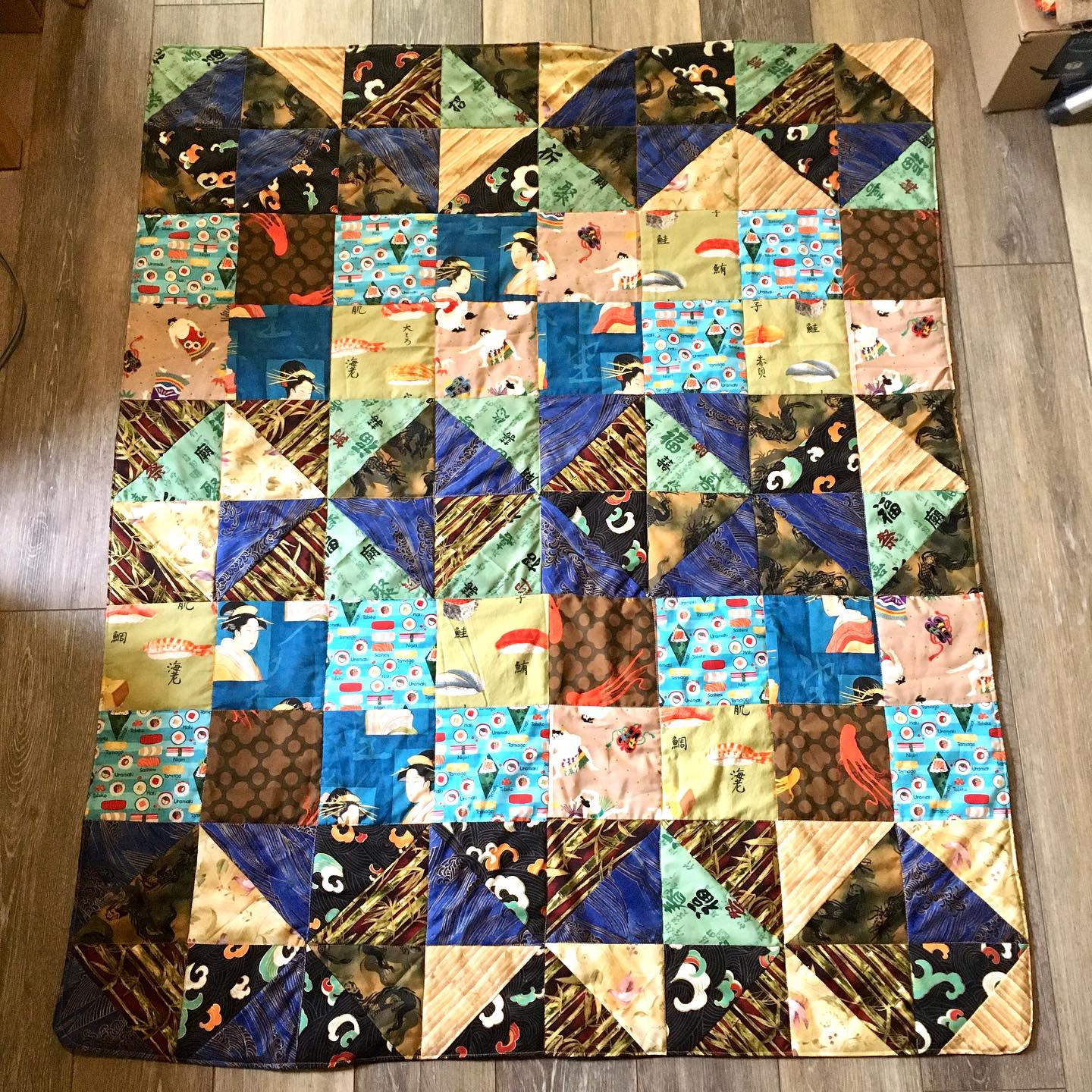
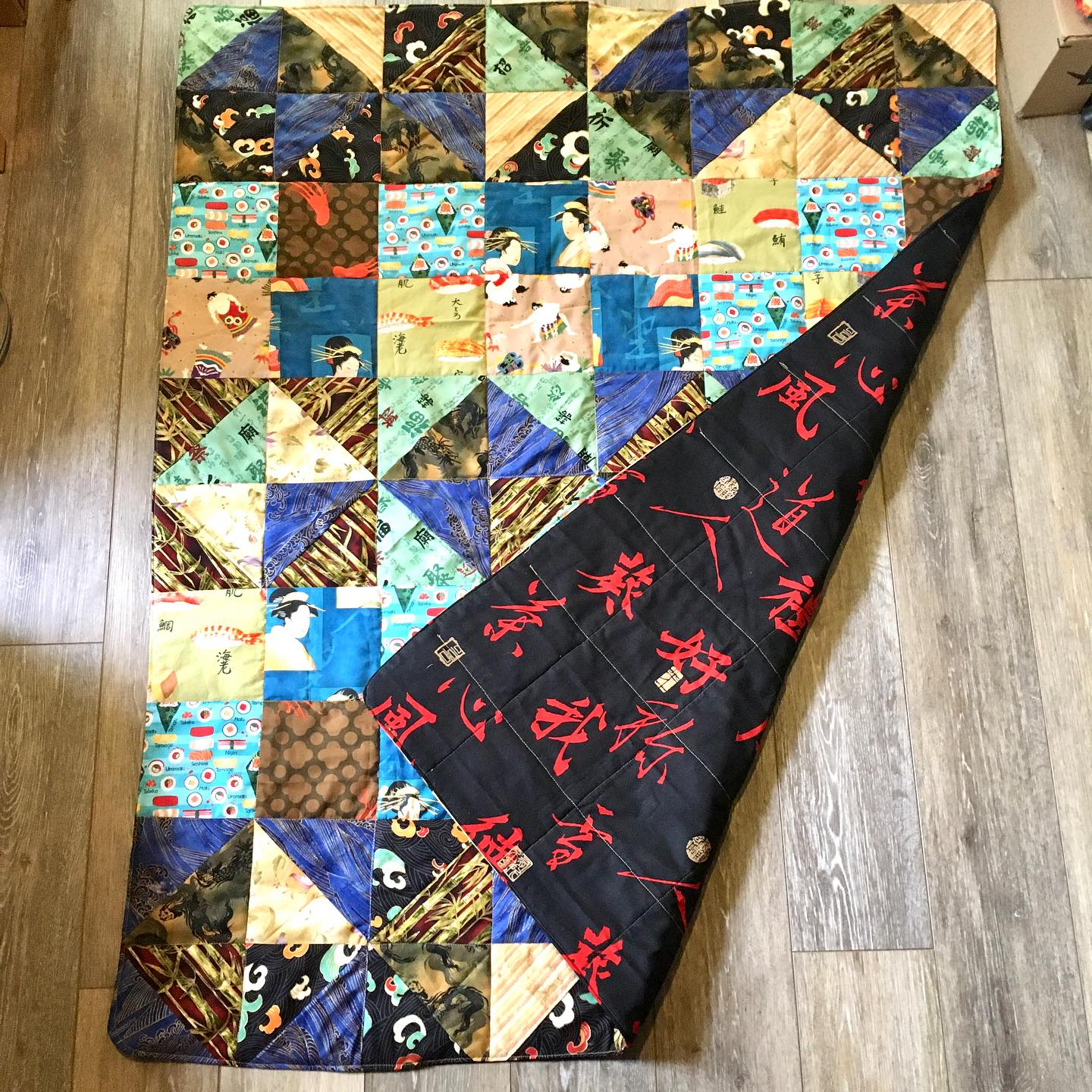
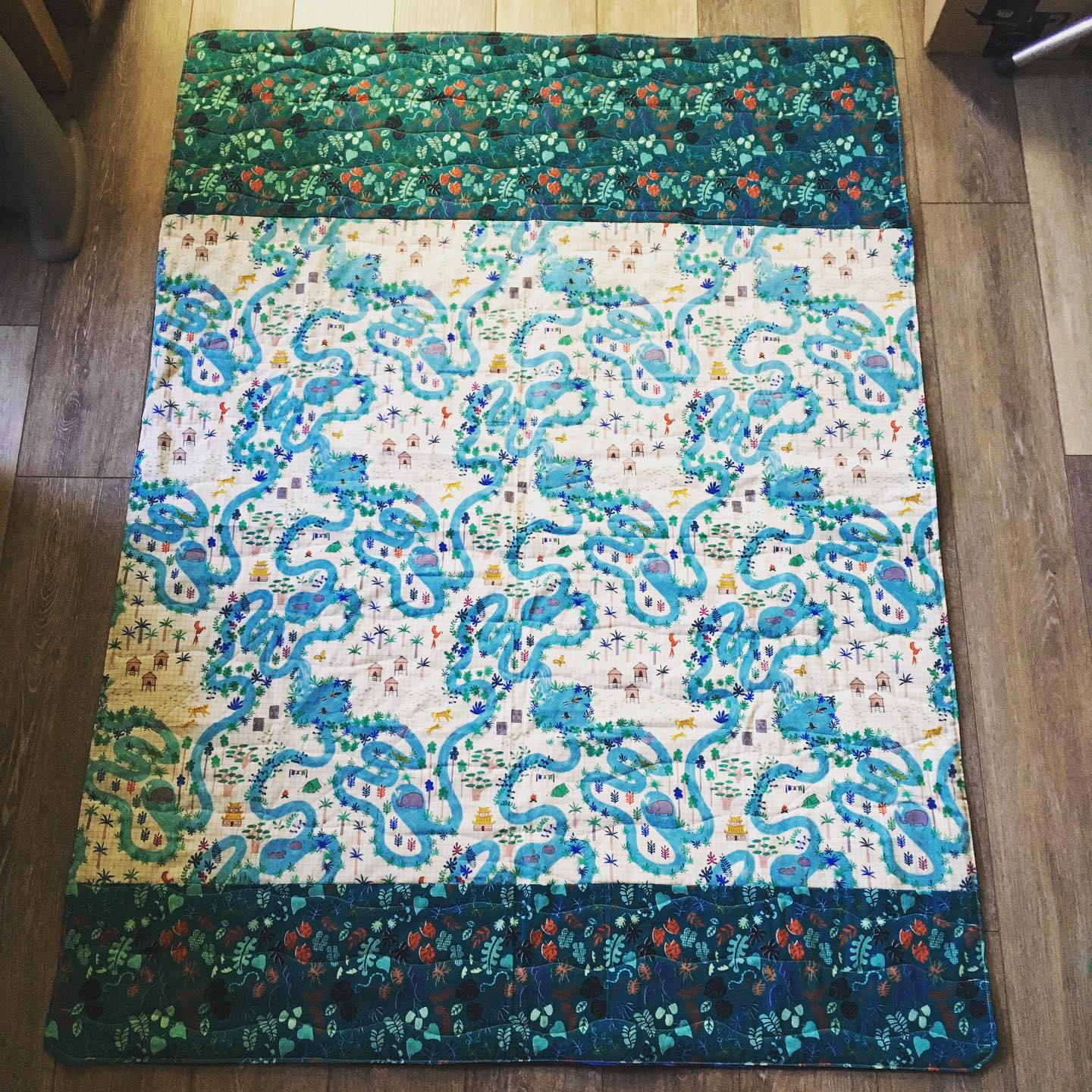
#47 finished 4/9/25 Given to my chiropractor for his second baby. 4/30/25 Geisha in a tea garden. Fabric from Smart
“Sometimes people use ‘Respect’ to mean treating one as an authority, and other times they use ‘Respect’ to mean treating someone as person. And sometimes someone will say ‘If you don’t respect me I won’t respect you’ and what they actually mean is ‘If you don’t treat me as an authority I won’t treat you as a person’ and they think they’re being fair but they aren’t.”
So much of my life right now feels like I’m weeding out people who act like a victim in situations they caused.
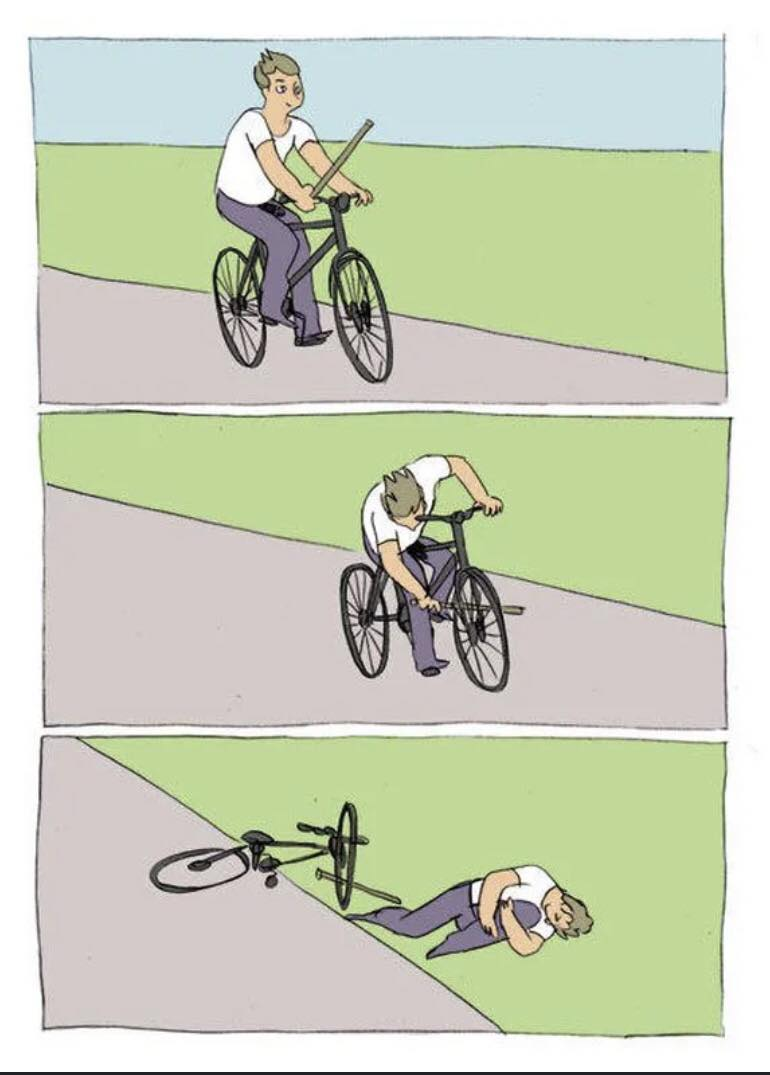
Maybe it is unique to American culture right now. Or maybe it is bigger than that. Maybe the disease of creating your own problems and then whining about it is worldwide.
One of the most common situations is obesity.
While we shouldn’t shame someone for being obese, neither are we doing them any favors by celebrating it. The recent trend of “body positivity” has resulted in social media “influencers” who are morbidly obese, complaining about how they can’t fit into an airplane seat or on amusement rides. Those limits are for safety reasons for themselves and for other passengers.
The actor and director Kevin Smith went that route, even though he wasn’t his plan to be a fat-fluencer. He was kicked off a flight in 2010 because he couldn’t fit into his seat. Reports indicate that he was over 330 pounds at that point.
But that incident made him rethink his choices and he decided to put in the work and lost 65 pounds. But it wasn’t enough to restore him to full health.
In 2018, at age 47, he had a heart attack. It was a “widowmaker” with 100% blockage in one of his arteries. He survived the surgery and decided to change his ways. He adopted a vegan diet and is now at a healthy weight.
But he’s the rare example of someone who decided to do something about their health rather than pretend everything is fine and blame everyone else for their problems.
It is hard to watch people I know get larger and larger, and be unable to walk for more than five minutes without needing to sit down. Or they complain that their clothes don’t fit. Or that their feet hurt, so they think they need special shoes.
No – your feet aren’t designed to hold that much weight. Your body isn’t designed to operate like this.
There are sumo wrestlers who are very large – but it is mostly muscle. They train every day for hours so they are exercising along with eating large amounts of food. But people don’t realize that they live on average 10 years less than the average Japanese citizen. Many also have weight -related problems such as diabetes and knee damage that decrease their quality of life.
Many people make up excuses – they don’t have the time, or the money, or the energy. But one thing is true – if you don’t make time for your body, your body will force you to take the time by causing disease.
I know someone who is deathly allergic to cats. Yet – knowing this – she adopted a cat. And – predictably – she had to go to the ER – twice – because she was having difficulty breathing. She eventually realized she’d have to give up the cat. It wasn’t a surprise. She knew it would happen. Yet she did it anyway.
“Stupidity is doing the same thing over and over again and expecting different results” – quote attributed to Einstein.
I knew someone who was obese and sedentary who had to have a quadruple bypass – and friends acted like it was a shock that he was so ill. They were calling for prayers for him, while I said that this was not a situation to pray about. Prayer implies that there is nothing YOU can do about the situation, so you ask for divine intervention. But being obese and sedentary isn’t an accident. It is a choice – and it is disingenuous to act like the resulting health problems are a surprise.
Thankfully he chose to eat better and exercise, and has lost a lot of weight. But the friends who were asking for prayers haven’t followed suit (they too are obese), and act surprised when their body fails them.
I don’t understand this way of thinking.
And I don’t want to be around people who act like this.
But this means I spend a lot of time alone.
I simply can’t pretend and say “Oh, that’s so sad!” when people complain after causing their own problems.
Maybe my lack of sympathy comes from the fact that my mother died from lung cancer at 53, after smoking two packs of cigarettes daily for decades. It was sad that she was sick, but not a tragedy. She had dug her own grave every single time she chose to smoke a cigarette. 40 times a day she made that choice. And because of her choosing death, I didn’t have a mother to see me graduate, or get married, or publish my first book, or learn how to do all the many things that I’ve learned since she died.
And I’m a little angry about that. And I don’t want to watch it happen again and again to people I care about.
When I was growing up in Chattanooga, TN, there was a toy store called “The Castle”. This is because the owners had taken a normal brick building and added wooden shingles to it to make it look like a castle with turrets. It was where I was taken if I got a good report card or for my birthday – or just because I needed a toy.
I miss that experience of rooting around and discovering just that special thing that I needed. I never got anything really expensive because I was very aware of how much money my parent’s didn’t have. I appreciated them wanting to get me a gift, but I also knew not to take them for granted.
I did some digging and found a scan of a newspaper image of it.
Here is what it looked like before they added the shingles. I never saw it this way.
The owner was Frank May.
It was located at the intersection of South Germantown Road and Ringgold Road – so I saw it every day on the way to school. Smack dab right in front of me, coming down S. Germantown to go left on Ringgold Road was this castle, with a lit up sign that counted down the days to Christmas.
Should you stay or should you go? Don’t fall for the “sunk cost fallacy”. I saw this list online that offered many different ways to think about your relationship and if it is worth staying for. I’m sharing it here because it might be helpful.
Don’t set yourself on fire to keep someone else warm (and don’t let them set you on fire to warm themselves)
We accept the love we think we deserve
At the end of the day, what does this person add to your life vs what they take away
There are people out there who will treat you how you allow them to, not how you treat them.
You can’t date the past or the future, when everything was/will be great when ______ happens. The relationship you have NOW is the one you have to live with.
Don’t keep drinking after you’ve found out your well has been poisoned.
You will never find the right person if you don’t let go of the wrong one.
It’s better to have a relationship end now with pain than have a painful relationship without end.
Never confuse what you’re offered with what you’re worth.
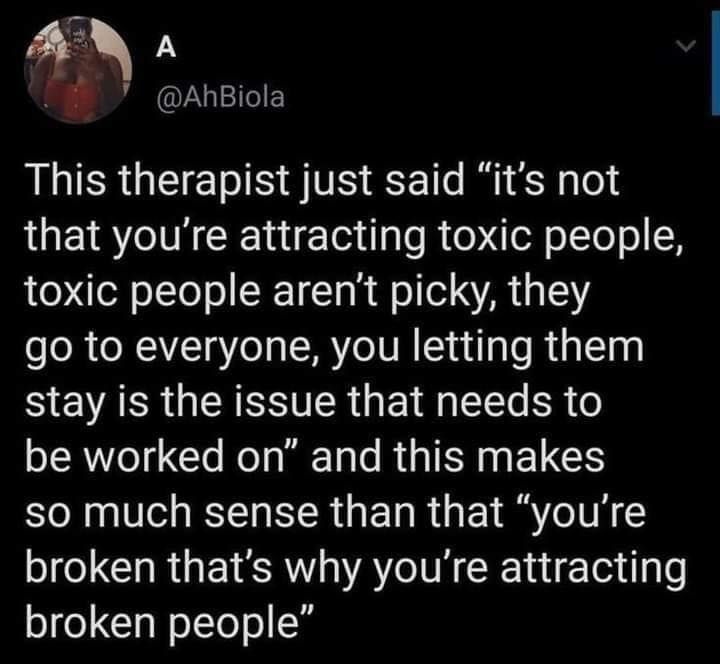
When they rob you of solitude but provide no companionship, it’s time to go.
The axe forgets but the tree remembers
Let go or be dragged
Smooth seas never made a skilled sailor
The portal to every next level is through the parts of yourself you avoid
“The chains of habit are too light to be felt, until they are too heavy to be broken.”
The well that gives too much becomes a hole.
“When the map and the terrain differ, trust the terrain”
Accept what IS, not what you’d like it to be.
You can’t pour from an empty cup
Don’t lose sleep over cutting ties with someone who handed you the scissors.
Do you want to play life on hard mode?
You can’t grow in earth that poisons you.
Our successes don’t have meaning without our struggles.















 betsybeadhead
You must be logged in to post a comment.