Debate over Jesus’ claims

The chief priests and the Pharisees challenged the Temple police when they returned without Jesus, asking “Why didn’t you bring him?”

The police answered “Nobody ever talked like this man!”

The Pharisees countered “Has he fooled you too? Has anybody among us or the Jewish rulers believed in him? But this crowd, which is ignorant of the Law, is cursed!”

Nicodemus, the Pharisee who had previously spoken with Jesus secretly, said “The Law doesn’t condemn a man before it knows what he’s doing, or before he has a chance to testify, does it?”

“Are you also from Galilee?” they questioned. “Check for yourself and learn that no prophet ever comes from Galilee.”

Everyone went home, but Jesus went to the Mount of Olives.

JN 7:45-53 and JN 8:1

The people are divided over Jesus

When some of the people in the crowd heard Jesus say this, they said “He is really the Prophet!” Others said “He is the Messiah!” Yet others said “The Messiah can’t come from Galilee, can he? Isn’t the Messiah supposed to be from Bethlehem, where David lived, and be descended from him?” The crowd was divided about who they thought he was. Some of them wanted to grab him, but nobody touched him.

JN 7:40-44

The promise of the Spirit

On the final and most important day of the festival of Sukkot, Jesus stood and shouted, “Anyone who is thirsty should come to me and drink! Just like the Scriptures say, anyone who believes in me will have rivers of living water flowing from their very center.”

He was talking about the Holy Spirit, which his believers were going to receive. The Spirit had not been received yet because Jesus hadn’t yet gone to his glory in heaven.

JN 7:37-39

The identity of the Messiah

Some of the citizens of Jerusalem were talking amongst themselves, saying “Isn’t this the person the authorities want to kill? But look here, he’s openly speaking and they aren’t saying anything to him. Is it possible that the authorities know he is the Messiah? But we know where he comes from. Nobody will know where the Messiah is from when he arrives.”

While Jesus was teaching in the Temple complex, he yelled “You know me, and you know where I come from. Yet I didn’t come here on my own, but you can trust the One who sent me. You don’t know the One who sent me. I know him because he sent me and I am from him.”

Then the authorities tried to grab him, but they were not able to even touch him because it wasn’t his time. However, many people in the crowd believed he was the Messiah, and said “When he finally comes, the Messiah couldn’t possibly perform more miracles than this man has, could he?”

The Pharisees heard what the crowd was saying about him, so they and the chief priests sent the Temple police to arrest him.

Jesus said “I am only going to be here among you for a little while. Then I will return to the One who sent me. You will search for me, but you won’t find me, and where I’ll be, you can’t go.”

Then the Jewish authorities said to themselves, “Where does he think he can go where we can’t find him? He doesn’t plan on going to where some Jews have spread out to Greece and teach the Greeks, does he? What did he mean when he said ‘You will search for me, but you won’t find me, and where I’ll be, you can’t go’?”

JN 7:25-36

Jesus at the Festival of Sukkot

Jesus secretly went up to Jerusalem to attend the festival of Sukkot after his brothers left. The Jewish authorities were on the lookout for him there, asking “Where is he?” The crowds were actively talking about him. Some thought he was good, while others thought he was leading people astray. However, nobody was openly talking about him because they were afraid of the Jewish authorities.

Halfway through the festival, Jesus began to teach in the Temple complex. The Jewish authorities were astonished and wondered “How can he know the Scriptures when he has never been taught?”

Jesus answered them “What I teach doesn’t come from me, but from the One who sent me. If anyone wants to do the will of God, he’ll know whether what I say is from God or from me. Anyone who presents his own ideas is seeking glory for himself. However, he who seeks to give glory to the One who sent him speaks only the truth and is free from unrighteousness. Moses gave you the Law, yet none of you keep it! Why do you want to put me to death?”

The crowd shouted “You are possessed by a demon! Who wants to put you to death?”

Jesus answered “I did one miracle and you all were stunned. Think about this: Moses taught you the mitzvah of circumcision – not like Moses invented it, because it came from our forefathers – and you perform circumcisions on men on the Sabbath. If a man is circumcised on the Sabbath to uphold the Law of Moses, then why are you angry with me because I healed a man on the Sabbath? Don’t judge based on outward appearances. Instead, judge based on what is righteous.”

JN 7:10-24

The unbelief of Jesus’ brothers

Jesus traveled in Galilee from then on. He didn’t want to travel in Judea because the Jewish authorities were trying to find a way to have him killed. The Jewish festival of Sukkot was approaching.
Jesus’ brothers said “You should leave here and travel to Judea in order that your followers can see the miracles you are doing. Nobody does something privately if he is seeking public acclaim. If you are going to do these works, you should do them so everyone can see.” Not even his brothers believed in his message.

He said “My time isn’t here yet, but yours is always present. There is no reason for the world to hate you, but it hates me because I speak up about it and its evil acts. Go up to the festival by yourselves. I’m not going yet because it isn’t my time.”

He stayed in Galilee after he said this.

JN 7:1-9

Many disciples desert Jesus

Many of Jesus’ disciples said “This is a difficult teaching! Who can understand it?” after they heard this.

Jesus knew that his disciples were complaining about this teaching, so he asked them “Are you offended by this? What would you think if you saw the Son of Man returning to heaven? The Holy Spirit gives life. There is nothing to be gained from the flesh. What I have spoken to you is spirit, and is life. But some of you don’t believe.”

Jesus knew from the start who would believe and which one would betray him.

He said “This is what I meant when I told you that only those who the Father calls can come to me.”

Many of his disciples left at this point and no longer followed him. Jesus then said to the Twelve “Are you going to leave too?”

Simon Peter answered “Who would we go to, Lord? Your words contain the way of eternal life. We now believe in our hearts and know that you are the Messiah, the Holy One of God!”

Jesus replied “I chose you Twelve, yet one of you is full of darkness.” He was speaking about Judas, the son of Simon Iscariot, one of the twelve disciples, because he was going to betray Jesus.

JN 6:60-71

The bread of life

The next day, the crowd that had remained on the other shore knew only one boat had been there. Likewise, they knew that Jesus had not gotten on board with his disciples and that they had gone off without him. Some boats from Tiberias approached the site where Jesus had fed the large crowd after giving thanks for the bread. When this crowd noticed that Jesus and his disciples weren’t there, they boarded the boats and set sail for Capernaum to look for Jesus.

They found him when they reached the opposite shore, and said “When did you get here, Rabbi?”

Jesus answered “Truly, you went searching for me not because you saw miracles happen, but because you were filled by the loaves of bread you ate. Don’t spend your energy on food that rots. Seek the food that remains so you have eternal life instead. The Son of Man will give you this because God the Father has approved him.”

“How do we perform God’s works?” they asked.

Jesus answered “This is God’s work – believe in the One he sent.”

They questioned him further, saying “By what sign will we know that you are the one? Our ancestors ate manna in the wilderness. The Scriptures say ‘Moses gave them bread from heaven to eat.'”

Jesus replied “That bread didn’t come from Moses. My Father gives you the true bread from heaven. God’s bread is the One who is sent by God from heaven to give life to the world.”

Then they said “Sir, give us that bread forever!”

Jesus told them “I am the bread of life. Those who come to me will never be hungry again. Those who believe in me will never be thirsty again. But as I’ve said before, you have seen me and still you don’t believe. Everyone who my Father has sent to me will come to me, and I will never reject them. I have come down from heaven to do the will of the One who sent me, and not my own. This is the will of God – that I shall not lose anyone God has sent to me, and that I should raise them up to everlasting life on the last day. This is the will of my Father who sent me – that I should raise up everyone he has given me on the last day, and not lose a single one. My Father’s will is for everyone who sees and believes in the Son to have eternal life and be raised up on the last day.”

Certain Jews began to argue about him because he said “I am the bread that descended from heaven.” They were saying “Don’t we know his parents? Isn’t this Jesus the son of Joseph? Why is he saying ‘I have descended from heaven.’?”

Jesus answered “Stop arguing among yourselves. The only people who come to me are those who the Father calls and I will raise them up on the final day. The prophets wrote ‘Everyone will be taught by God.’ Everyone who has been taught by God and hears God’s voice comes to me. The only one who has seen the Father is the one who is sent from God. I’m telling you the truth: anyone who believes already has eternal life. I am the bread of life. Your ancestors ate manna in the wilderness and they are dead now. The bread that I’m telling you about is the bread that comes from heaven, and anyone who eats it will never die. I am that living bread from heaven. My own body is the bread that I will give so that the world will live.”

Some of the Jews began to argue about this, saying “How can he give us his flesh to eat?”

Jesus answered “Truly, you do not have life in you unless you eat the flesh and drink the blood of the Son of Man. Anyone who does this will have eternal life, and I will raise them up on the last day, because my flesh is true food, and my blood is true drink. Anyone who eats my flesh and drinks my blood is alive in me, and I am in him. In the same way that the living Father sent me and I am alive because of the Father’s will, anyone who feeds on me will be full of life through me. The bread that came down from heaven is not like that which your ancestors ate. They have died, but this bread makes those who eat it live forever.”

Jesus said all of this while he was teaching in the Capernaum synagogue.

JN 6:22-59

More volume

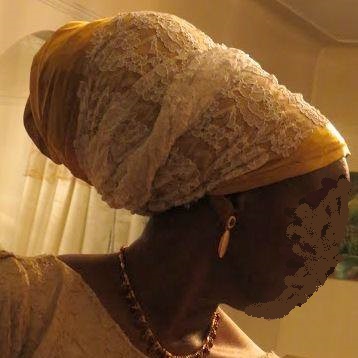
There is this push to have more and more volume in the headwrapping community. I don’t understand it. Here’s a picture to illustrate what I mean. The volume is the point, not the person, so I’ve removed her features.

head1

She says that this is constructed from a base of a sort of bag that goes on your head called a “volumizer” and it is stuffed with bunched up scarves. Some people use bath loofahs too. I can understand if you have a lot of hair. It has to go somewhere. But the volumizer and the extra scarves and the loofahs are for people who have short hair. They want to look like they have a lot of hair.

People “ooh” and “ahh” over this. They think it is amazing. I think it is strange. This is what I see when I see these kinds of posts.

head3

Why are women stuffing their heads like they stuff their bras? Why do they want to look like they have more than they do? Why can’t they be pleased with what they have? Is this big head envy?

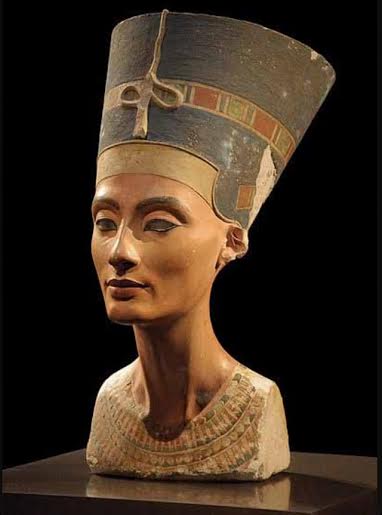
Then there is a woman who wraps her scarves in such a way that instead of going back, they go up. She ends up covering half of at least one eyebrow with the unusual way she wraps, just to get it all to stay on. Her headcovering looks like she has Queen Nefertiti’s crown on her head.

head4

Perhaps that is her goal. Perhaps she feels this looks best. Perhaps it helps in other ways – like it eases strain on her neck?

She says that people have told her she looks “weird” and they suggest she wear a wig instead. She thinks they are making fun of her wearing a scarf. I suspect that really they think that the way she wraps is weird – not that she wraps.

This is what I see when I see her posts.

head2

Covering your head is strange enough in Western society. Why add to the strangeness by doing it in an odd way – making it bigger than it needs to be, or piling it all on top of your head?

Is this really necessary if there isn’t any hair under there?  I get it if you have long hair because you don’t cut it.  But to stuff in extra for this look?  Why? It seems like it would make life more difficult.  How would you drive? The head-rest wouldn’t accommodate this.

12227171_10206409097000712_8009450078517496038_n

Poem “…for a big girl”

“You’re attractive,
for a big girl,”
he said.
He thought
he was trying to
butter me up.
He thought
he was flirting.
He thought
he was showing
mercy.
He thought
that I would want
to date him
after that.
He thought
he was
doing me a favor
by lowering his standards
to go out
with a fat girl.

And now,
nearly 2 decades later,
I see on his Facebook page
that he weighs at least
a hundred pounds
more
than I did
at my largest,
and I wasn’t even
at my largest
when he paid me his
“complement”.
I’ve lost 50 pounds
from that

and he’s found it,
with interest.

I want to be snide
and I want to say
“You’re handsome,
for a big guy,”
but
I’d like to think
I’m better than that.
I’d like to think
I’m above
reminding someone
of their rudeness.

So I wrote it
into a poem
and posted it
on my blog
instead.

Out of kindness,
I won’t tag him.