He’d always wanted to go to Japan. Many long years he studied the language, the culture. He made sure he wouldn’t be “that American”, the one who talks too loudly, too much, and always in English. That American was always asking for directions, always crossing over some invisible line, some taboo. That American made him want to say he was from Canada, or England, or anywhere else that he could pretend to be from.
He looked Swedish, with his shock of snow blonde hair and six-foot frame, but he couldn’t claim a home he’d never been to. He was descended from a long line of Swedes, but he’d only gotten the genes and not the language or the accent. Even his last name had been assimilated, Americanized to fit in. He couldn’t pretend for long. Once anyone heard his Midwestern accent or saw his passport, the jig was up.
So he blended in other ways. Learned how to not offend. Learned their habits. He always bowed lower. He always wore the right shoes, even the special bathroom slippers. It was important not to stick out any more that he had to.
He hoped that even if he couldn’t blend in physically, he could blend in culturally. Even if you look Japanese, you’ll stick out if you break the rules. He wanted to lay low as long as possible, hoping they wouldn’t notice him after long. This was the only chance to get to stay.
He wanted to see all the temples, praying at every one in the country. This was why he had to not get noticed. Going to just a few temples wouldn’t do. He had to go to every one. Maybe then he would get an answer to his prayer.
He had never spoken of it to anyone, never written it down. He didn’t want to jinx it, to have a self-fulfilling prayer. Or was it prophecy? He forgot. All he knew for sure was that it would only count if his prayer was answered through divine means. Anything else was sure not to last.
Monthly Archives: November 2015
She came out of the forest.

She came out of the forest, laughing, singing. She was unafraid of the crowd that was waiting, unafraid now of their jeers and taunts. She’d gone in alone, afraid, untried. She emerged a month later, at the next new moon.
If you survived a month with no supplies, alone in that unmapped place, you were never taunted again. The people who called you scaredy-cat to your face or behind your back had a new name for you if you emerged, whole and intact a month later. Wisdom-woman, perhaps, or keeper of the flame. Seer. Prophet. There were many names to be had then.
Women and men both ventured into those woods to prove themselves. It wasn’t required, and it wasn’t expected. About half returned. About half of them that did were never able to speak again, never able to even feed themselves. They’d returned, but in body only.
The others who never walked out of the woods? Forgotten. Their names were never mentioned again. Did they die? Run away to another village? Start a camp? The only ones who might know were those who returned, and they never said.
(Written 3/27/15)
Books on Japanese garden/home design
I spent one summer studying what makes a Japanese garden distinctly Japanese. These books were very helpful on my quest. Some of them cover interiors as well as exteriors of Japanese homes, so there is more to them than just gardens. I found it quite interesting that the Japanese word for “home” is composed of two characters – the one for “house” and the one for “garden”. A house isn’t a home unless it has a garden. The home is often designed around the garden, rather than the other way around.
A Path Through the Japanese Garden by Bryan Albright and Constance Tindale
The Japanese House: Architecture and Interiors by Alexandra Black
Zen Gardens by Erik Borja
Quiet Beauty: The Japanese Gardens of North America by Kendall Brown
The New Asian Architecture: Vernacular Traditions and Contemporary Style by William Lim
Japan Style: Architecture Interiors Design by Geeta Mehta
Japan Modern: New Ideas for Contemporary Living by Michiko Rico Nose
The Art of Japanese Architecture by Michiko Young
Serene Gardens – creating Japanese design and detail in the western garden. by Yoko Kawaguchi
Creating Japanese Gardens by Philip Cave
Books to inspire your artistic side.
Do you want start or become better at sketching? You can’t go wrong with these books –
The Art of Urban Sketching: drawing on location around the world by Gabriel Campanario
Urban Sketching: the complete guide to techniques by Thomas Thorspecken
The Creative License: giving yourself permission to be the artist you truly are by Danny Gregory
An Illustrated Life: drawing inspiration from the private sketchbooks of artists, illustrators and designers by Danny Gregory
Watercolor Journeys: create your own travel sketchbook by Richard Schilling
For inspiration, look at:
When Wanderers Cease to Roam: a traveler’s journal of staying put by Vivian Swift
Drawing from Memory by Allen Say
For mixed-media artistic experiments, try these –
Art Lab for Kids: 52 creative adventures in drawing, painting, printmaking, paper and mixed-media for budding artists of all ages by Susan Schwake
Drawing Lab for Mixed Media Artists – 52 creative exercises to make drawing fun by Carla Sonheim.
Also, look at anything by Keri Smith to get your head out of that rut. “Wreck this Journal” is a mandatory purchase.
Waiting.
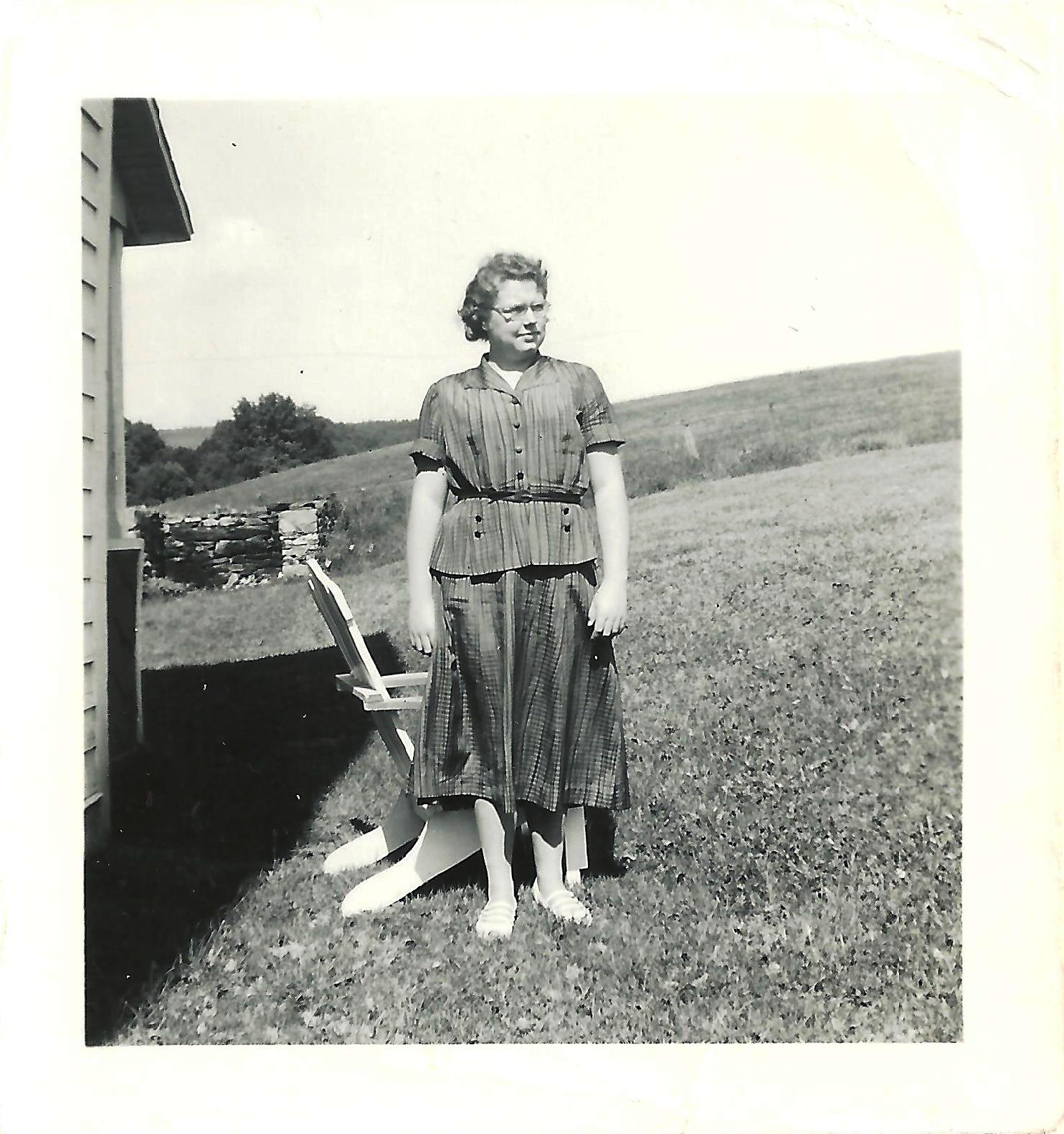
It wasn’t long now. They said they were coming back. Only problem was that they didn’t say when. So every day at 3 o’clock she went outside and looked towards the horizon, wearing her best clothes. Every day she stood in the same spot near the plain gray house, waiting.
The first day she waited three whole hours. She stood most of that time, wanting to appear as eager and ready on the outside and she felt inside. It wouldn’t do to look ungrateful for the gift they promised. Wouldn’t do to seem indifferent or casual about such an opportunity. After a while her legs got tired, so she sat on the Adirondack chair even though it was almost as uncomfortable as sitting on a pew. She had plenty enough of that kind of sitting. That was why she was so eager to go.
Still she waited, and still they made her wait. Maybe they forgot? Maybe this was a test? Maybe they reckoned time differently than earthlings did?
She kept the Visitation secret from Paw and her brother. They’d wonder about her if she told. If Maw was still around she’d have been sent down the river to the State Hospital, like how all the other rejects and misfits were sent, those who heard voices and saw people who weren’t there to everybody else. They were trash as far as the village saw it, so down they went, along with the barges of other broken and forgotten things. They took the Bible seriously when it said “You must purge the evil from among you.” Too bad their definition of evil was very wide.
She was safe now in part because she was female. The men-folk didn’t want to have to do all the cleaning and cooking. So even if they suspected something was amiss they’d be reluctant to send her away because they’d have to take up her chores. It didn’t mean they wouldn’t send her anyway, because harboring a defective was grounds for being sent downriver along with. Better to sacrifice your child or your spouse than to go yourself. A lifetime of building up the homestead wasted, and for nothing.
So still she waited, every day hopeful that would be the day. This was the 438th day, a Wednesday. She had waiting down to an art, if not a science, by now. She’d learned to finish her chores an hour before, and then to change into Church clothes at least 20 minutes before the time to go outside. Once, early on, she’d left it too late and didn’t have time to put her shoes on. Barefoot was better than left behind, so out into the prickly grass she went. She’d learned to do better from then on.
It took a while for Paw to get used to her going outside and waiting every day. At first she took a book with her as a cover, saying it was better for her eyes to read in natural light. He didn’t argue with that, thinking maybe it would save money on glasses in the future. He wasn’t keen on spending money at all, but much less so when it came to his daughter. He had no use for her. She wasn’t going to inherit the farm or the family name, so why bother? She was just another mouth to feed, and after that a dowry to pay. Made no sense to have to pay a man to marry his daughter, but that was how it was and no changing it.
Yet another reason to get away. She had no plans on marrying, of having to have some other man tell her what to do and when to do it. The ones who came promised her she’d never have to get married because they didn’t marry where they came from. Didn’t have a need of it. There, people were able to take care of themselves once they were grown up. They didn’t need to live with another person like a child would. They had partnerships, sure, but making legal commitments to each other just complicated things. They had understandings and agreements, without the need for a piece of paper or a judicial system. To complicate something as sacred as a partnership of any sort with the law meant that you were planning on trouble. If you didn’t think it was going to work out, it was best not to make a partnership at all.
They promised her a lot, more than she believed or could imagine. But everything else they had promised and delivered on was truer than true, and lasting. She knew they were good to their word because they’d already shown her miracles. They’d given her a locket that told the future. It showed her some of what would happen the next day, choices she could make to change things. Just small things, but small was better than nothing. All she had to do was open it and she’d have an edge on everyone else. She kept it closed most of the time, but it was good to know she had this small advantage, this small proof that the Visitation was real. She had a hard time believing it after so many days of waiting.
She kept the locket they gave her secret, under her clothes. Wouldn’t do to have it visible, or lost, wouldn’t do to leave it in her jewelry box, to be stolen like every other special thing she’d ever had. Her brother felt no guilt about coming in her room, going through her drawers and treasure boxes, taking whatever caught his fancy. He needed money for a new baseball mitt or the latest style of shoes, he’d take it from her, no asking. It took her a while to realize that things went missing. At first she thought maybe she’d spent some of it and hadn’t remembered to write it down. After a few weeks of money going missing, she had her suspicions and started keeping the tally in a separate place. When she showed the proof to Paw he just shrugged, saying “Boys will be boys”, like stealing was normal for boys. The part he didn’t say was that it meant being robbed was normal for girls. Too bad that being family meant nothing. No protection from thievery, of having your possessions, yourself, violated.
They promised that there she’d never have to worry about anything being stolen, not ever again. Never have to worry about being sick neither. Her personal safety was assured, and life would not only be better, but longer. Not immortal, mind you. Plenty others had promised that and couldn’t deliver. The trick there was simply living longer than anyone around you. They died, thinking you were immortal, when really you were just slowed down. There’s a reason hummingbirds have such short lives and turtles such long ones. Slow the heart rate down, slow the breathing down, and it seems like you are on the fast track to a long life.
She didn’t have to worry about taking medicine to slow her heart rate where she was going. They’d take out her human heart entirely, replace it with one they’d grown just for her, a better one. That would be the first thing replaced. They’d taken samples to grow a whole set of organs for her with plenty of cells to spare if something wore out sooner than expected. Lungs, pancreas, eyes, the lot. Grown as needed, one by one.
When they first started they had cloned people. Not just the organs, but the whole kit and caboodle, stem to stern. Seemed a good idea until it came time to harvest and it turned out the clones weren’t too willing to part with their parts. Whole new kinds of laws were developed then, saying these were now people, with rights, and not a collection of replacement bits to be switched out like a used fan belt or alternator you’d pick up at the local auto yard. Once they figured out how to grow the organs separately there weren’t any problems. A liver can’t complain with no mouth to talk with.
They promised painless surgery too. The organs would be exchanged by a form of highly localized teleportation. Beam the old one out and the new one in at the same time, like a kind of cross-fade, like in music. Hurt less than getting a shot, they said.
She was still waiting. Maybe she’d stay a little longer outside today, just in case, what with the time change and all.
(Photo found in the “Adopt a relative” box in an antique mall on King Street in Boone, NC.)
Poem – go walk yourself
How interesting that people will
buy a dog because
they
want to go for a walk.
They know that the dog
has to be walked at least
once a day
and so they have to
take him out.
They get the dog
as an excuse
to go for a walk.
It seems like it would be far cheaper
to forget the dog
and take yourself
out for a walk.
Why do we put more value
on the needs of others
rather than ourselves?
Why is a dog’s need to walk
more important than
the fact that
you
need to walk?
We have all been trained that we
should be
self-sacrificing
and serve others.
But they should not be
at the expense
of not taking care
of ourselves.
There should be a balance
where both happen.
So, skip the dog.
Skip the dog food,
the shots,
the veterinarian bills,
getting her fixed,
taking him to the groomers,
the whole thing.
Skip all of that.
Save your money
and go take
yourself for a walk.
Poem – afterlife
Nobody can tell you
where the flame goes
after it is
blown out,
so how do we know
where the soul goes
after
we die?
How do we know
there is more,
there is life after life?
Is it a bedtime story we tell
(our children, ourselves)
to keep away the boogeyman,
the things that go bump in the night?
Now is all we have.
Why worry about
the afterlife
and waste the life you have?
Live before you die.
If there is an afterlife,
let it be a bonus,
an extra.
Don’t let it be your only,
because it might not be.
Don’t worry
about whether
it is
or is not,
because that steals away
time
from the life you have,
now.
November 1 2015 memory map
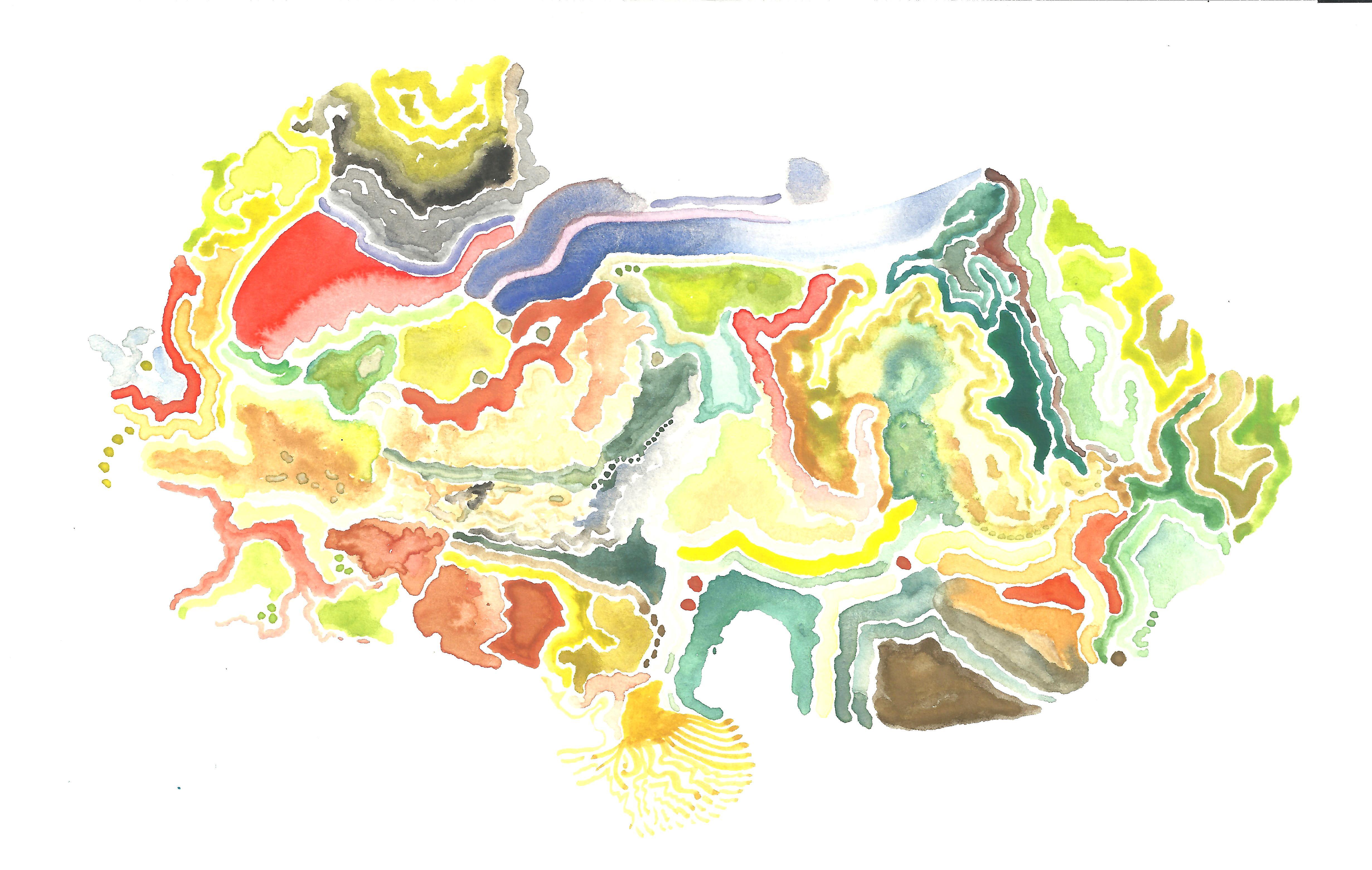
This was inspired by the artwork of Walter Inglis Anderson as well as that famous Moody Blues album, along with –
Topographic maps. Botswana agates. The glorious colors of fall leaves. The aimless trails left by burrowing insects in wood. Cloisonné. Geodes. Fractals. Intestines and the villi inside them. The meandering shiny trails left by snails on spiderwebs and across fallen damp leaves. “Ghosts of leaves” – Tannin stains on sidewalks left from falling leaves and rain in November. Rorschach tests. Misty mornings. The smell of decay and over-ripeness of wild muscadines rotting on the vine. Unknown secrets, so dark and forgotten that no one even knows they are secrets anymore.
Shrouds, palls, and veils.
Inlets, coves, and fjords.
Maps, puzzles, and labyrinths.
Lightning amongst the clouds on a humid late summer’s night. Tendrils on grapevines, blindly reaching, binding. How the letters don’t touch each other on Torah scrolls.
——————————————————
I mostly let my mind go free and “filled in the blanks” on a blank piece of paper. I selected color moment by moment. There was no pre-sketching or planning. This took a little over an hour to do. I kept another piece of paper nearby to write the words for what I was seeing/remembering/being inspired by. I think of it as a sort of memory map that works both ways. It shows me where I have been and shows me where I’m going, and something more.
Watercolor on 8” x 6” medium-heavy paper.
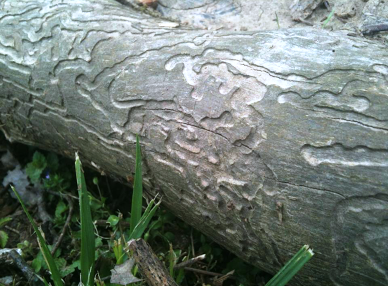
A picture of something that inspires me. Found on a walk at lunch at the Hermitage library. There is a small creek that runs beside it. This is a wonderful log with insect-wandering-doodles.
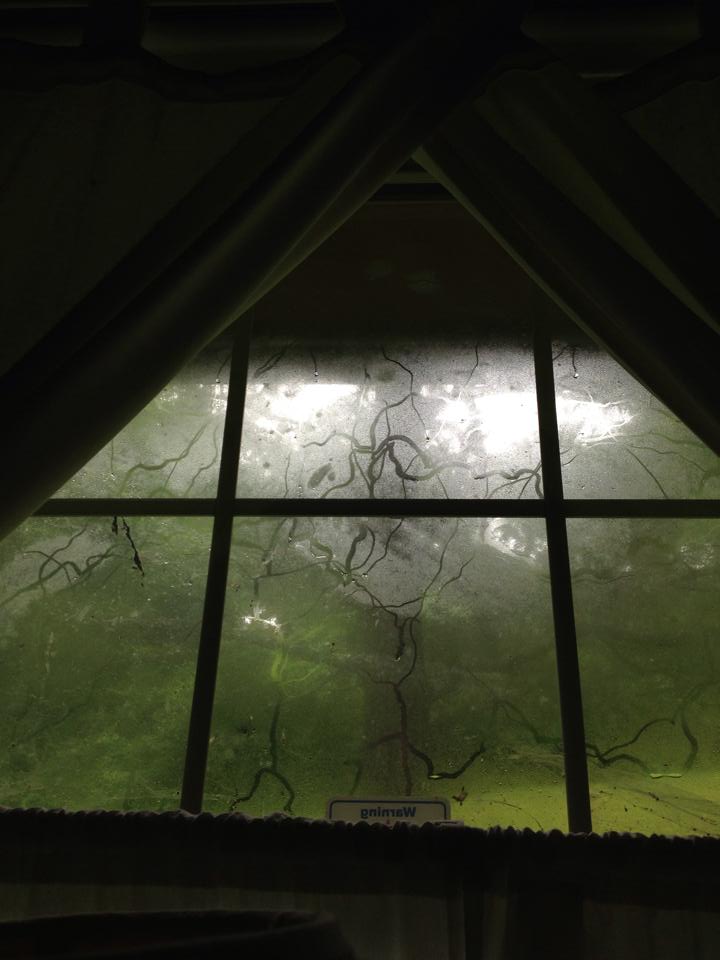
Lines on a humid window.
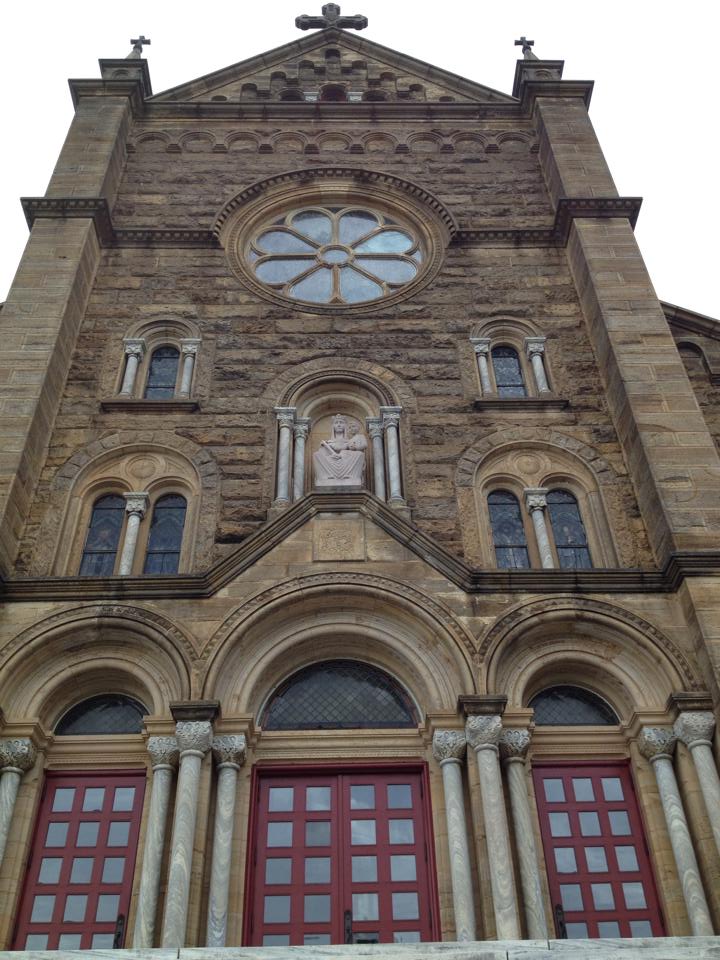
The red doors of St. Meinrad’s Archabbey
Red is a common color for doors in liturgical Christian churches. It is a symbol of the Holy Spirit, the fire and spark of God that animates all things. Interestingly, red is also the color that Tibetan Buddhists use to mark its buildings that have a statue of Buddha in it, as well as the color of the robes for their monks – for the very same reason. Red is a symbol of the Divine presence within. Red is also the color of Torii gates in the Shinto faith tradition. They are used to mark spiritual gateways, to indicate that beyond them is a holy place. It can also be described as being a visible symbol of the Presence of God, or as Jews would say, the Shekinah.
These were taken late September 2015 in St. Meinrad, Indiana, at the Archabbey and the seminary.


The front of the Archabbey with the three sets of red doors.
A closeup of the Yale lock on one of those doors, with the red paint better visible.

The cemetery at St. Meinrad’s Archabbey
November first is an appropriate day to share these pictures. Today is All Saint’s Day, where all the famous Christians who have died are remembered. These are notable people who have led the way and been examples of being the Body of Christ – of making love visible in the world. November 2nd is All Soul’s Day, where everyone else – family members and friends, for instance, who have lived honorable lives are remembered.
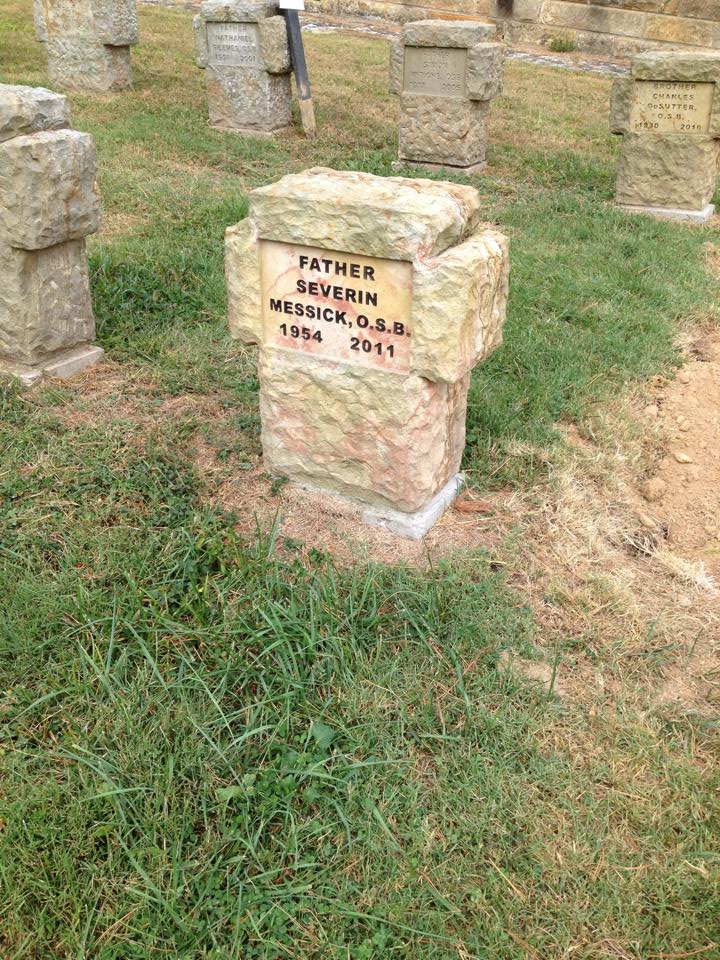
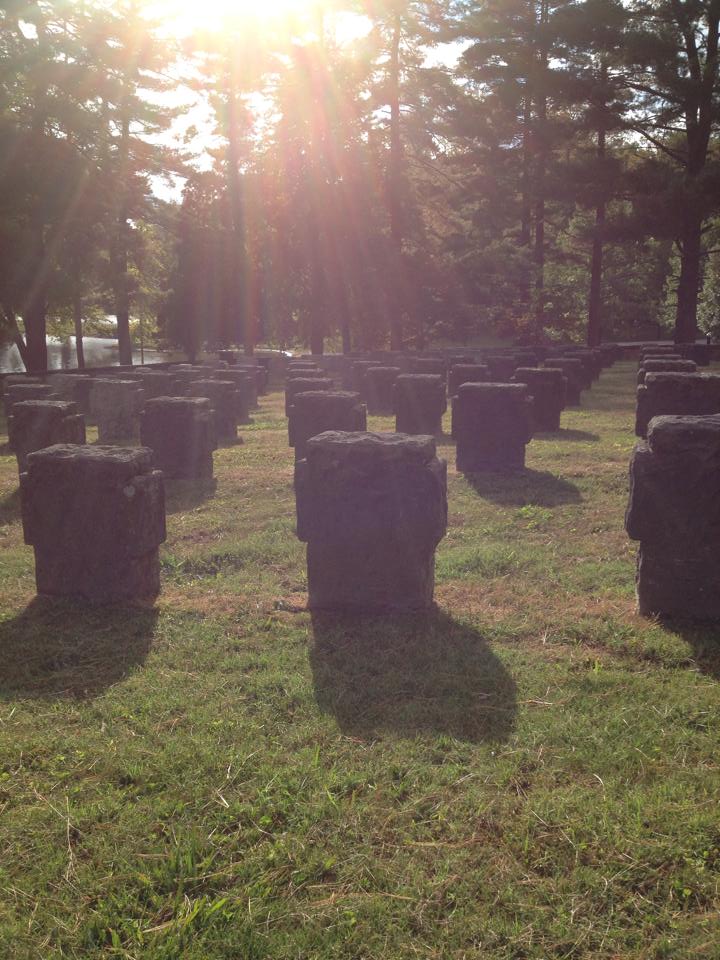
These pictures were taken in late September at St. Meinrad’s Archabbey (Benedictine monastery) in St. Meinrad, Indiana. This is the cemetery for the monks. The cemetery is slightly downhill from the seminary, and the headstones are made of the same local rock that the Abbey itself is built out of. They are very stout.


The 5 former abbots are buried in the walkway. The first abbot was buried elsewhere and then relocated here.


A newer grave, showing the same color of rock as the Abbey. The older ones have weathered to a grey.
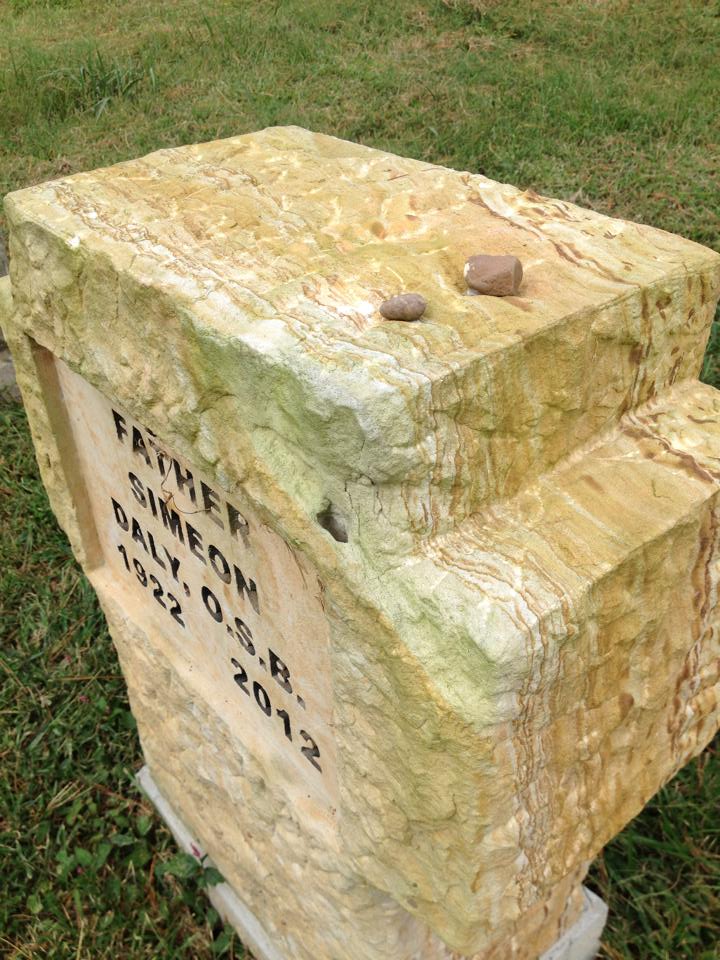
Even though they do not decorate graves, someone has practiced the Jewish custom of leaving a stone atop the headstone as a way of marking that they have visited it.
Quite atmospheric in the late Autumn sun.

There was a new grave – for Brother Benedict Barthel, born 1919, died September 15th, 2015. His birth name was Carl Frank.
The graveyard is walled, so it is limited as to how many more brothers can be buried here. There are only 42 spaces left. There are 252 monks already buried here. There are seven rows deep on two sides, with 21 columns.
 betsybeadhead
You must be logged in to post a comment.