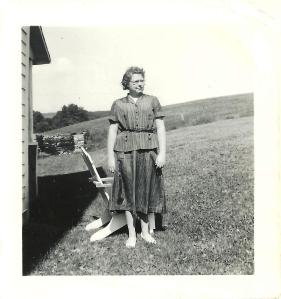
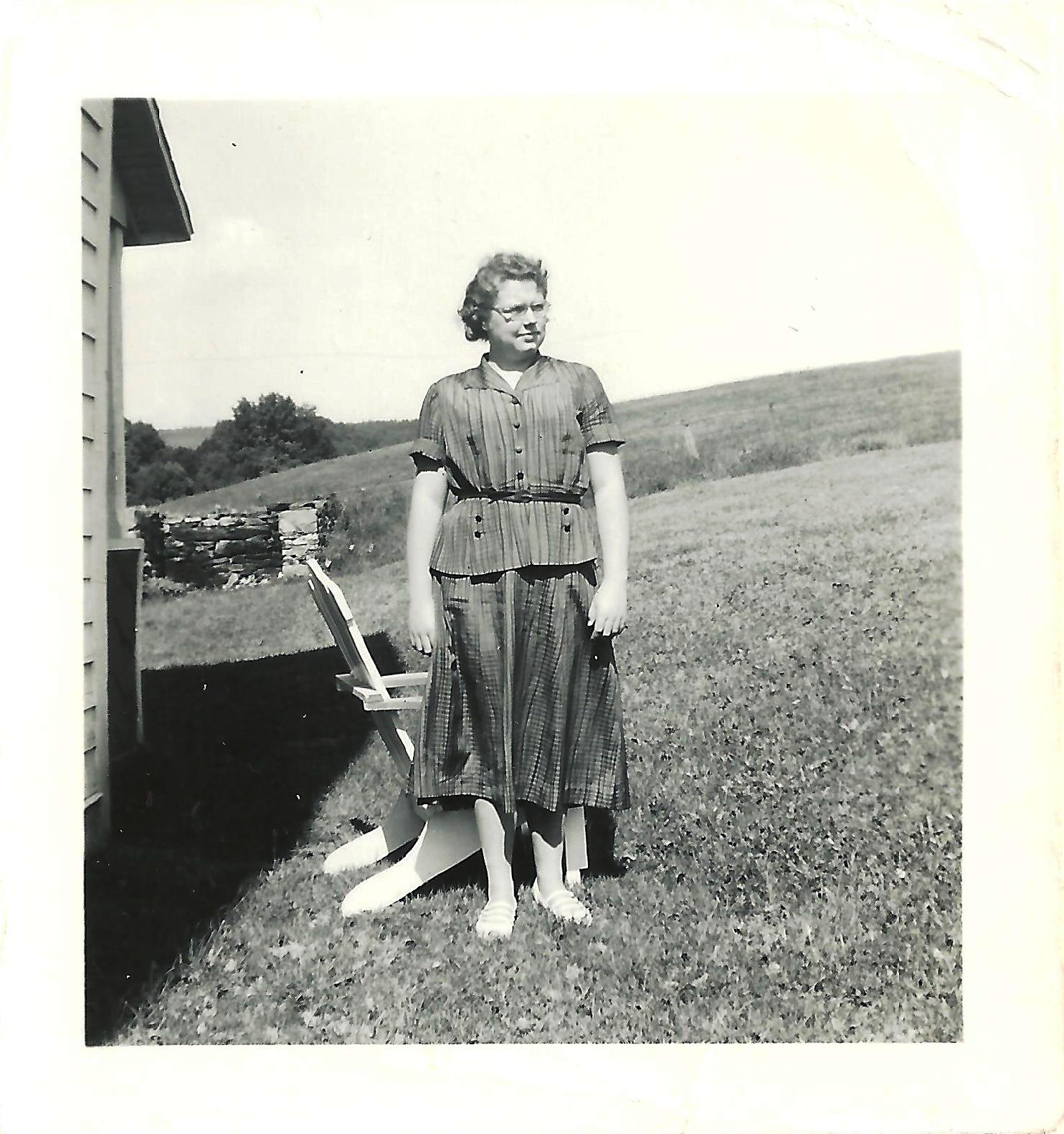
It wasn’t long now. They said they were coming back. Only problem was that they didn’t say when. So every day at 3 o’clock she went outside and looked towards the horizon, wearing her best clothes. Every day she stood in the same spot near the plain gray house, waiting.
The first day she waited three whole hours. She stood most of that time, wanting to appear as eager and ready on the outside and she felt inside. It wouldn’t do to look ungrateful for the gift they promised. Wouldn’t do to seem indifferent or casual about such an opportunity. After a while her legs got tired, so she sat on the Adirondack chair even though it was almost as uncomfortable as sitting on a pew. She had plenty enough of that kind of sitting. That was why she was so eager to go.
Still she waited, and still they made her wait. Maybe they forgot? Maybe this was a test? Maybe they reckoned time differently than earthlings did?
She kept the Visitation secret from Paw and her brother. They’d wonder about her if she told. If Maw was still around she’d have been sent down the river to the State Hospital, like how all the other rejects and misfits were sent, those who heard voices and saw people who weren’t there to everybody else. They were trash as far as the village saw it, so down they went, along with the barges of other broken and forgotten things. They took the Bible seriously when it said “You must purge the evil from among you.” Too bad their definition of evil was very wide.
She was safe now in part because she was female. The men-folk didn’t want to have to do all the cleaning and cooking. So even if they suspected something was amiss they’d be reluctant to send her away because they’d have to take up her chores. It didn’t mean they wouldn’t send her anyway, because harboring a defective was grounds for being sent downriver along with. Better to sacrifice your child or your spouse than to go yourself. A lifetime of building up the homestead wasted, and for nothing.
So still she waited, every day hopeful that would be the day. This was the 438th day, a Wednesday. She had waiting down to an art, if not a science, by now. She’d learned to finish her chores an hour before, and then to change into Church clothes at least 20 minutes before the time to go outside. Once, early on, she’d left it too late and didn’t have time to put her shoes on. Barefoot was better than left behind, so out into the prickly grass she went. She’d learned to do better from then on.
It took a while for Paw to get used to her going outside and waiting every day. At first she took a book with her as a cover, saying it was better for her eyes to read in natural light. He didn’t argue with that, thinking maybe it would save money on glasses in the future. He wasn’t keen on spending money at all, but much less so when it came to his daughter. He had no use for her. She wasn’t going to inherit the farm or the family name, so why bother? She was just another mouth to feed, and after that a dowry to pay. Made no sense to have to pay a man to marry his daughter, but that was how it was and no changing it.
Yet another reason to get away. She had no plans on marrying, of having to have some other man tell her what to do and when to do it. The ones who came promised her she’d never have to get married because they didn’t marry where they came from. Didn’t have a need of it. There, people were able to take care of themselves once they were grown up. They didn’t need to live with another person like a child would. They had partnerships, sure, but making legal commitments to each other just complicated things. They had understandings and agreements, without the need for a piece of paper or a judicial system. To complicate something as sacred as a partnership of any sort with the law meant that you were planning on trouble. If you didn’t think it was going to work out, it was best not to make a partnership at all.
They promised her a lot, more than she believed or could imagine. But everything else they had promised and delivered on was truer than true, and lasting. She knew they were good to their word because they’d already shown her miracles. They’d given her a locket that told the future. It showed her some of what would happen the next day, choices she could make to change things. Just small things, but small was better than nothing. All she had to do was open it and she’d have an edge on everyone else. She kept it closed most of the time, but it was good to know she had this small advantage, this small proof that the Visitation was real. She had a hard time believing it after so many days of waiting.
She kept the locket they gave her secret, under her clothes. Wouldn’t do to have it visible, or lost, wouldn’t do to leave it in her jewelry box, to be stolen like every other special thing she’d ever had. Her brother felt no guilt about coming in her room, going through her drawers and treasure boxes, taking whatever caught his fancy. He needed money for a new baseball mitt or the latest style of shoes, he’d take it from her, no asking. It took her a while to realize that things went missing. At first she thought maybe she’d spent some of it and hadn’t remembered to write it down. After a few weeks of money going missing, she had her suspicions and started keeping the tally in a separate place. When she showed the proof to Paw he just shrugged, saying “Boys will be boys”, like stealing was normal for boys. The part he didn’t say was that it meant being robbed was normal for girls. Too bad that being family meant nothing. No protection from thievery, of having your possessions, yourself, violated.
They promised that there she’d never have to worry about anything being stolen, not ever again. Never have to worry about being sick neither. Her personal safety was assured, and life would not only be better, but longer. Not immortal, mind you. Plenty others had promised that and couldn’t deliver. The trick there was simply living longer than anyone around you. They died, thinking you were immortal, when really you were just slowed down. There’s a reason hummingbirds have such short lives and turtles such long ones. Slow the heart rate down, slow the breathing down, and it seems like you are on the fast track to a long life.
She didn’t have to worry about taking medicine to slow her heart rate where she was going. They’d take out her human heart entirely, replace it with one they’d grown just for her, a better one. That would be the first thing replaced. They’d taken samples to grow a whole set of organs for her with plenty of cells to spare if something wore out sooner than expected. Lungs, pancreas, eyes, the lot. Grown as needed, one by one.
When they first started they had cloned people. Not just the organs, but the whole kit and caboodle, stem to stern. Seemed a good idea until it came time to harvest and it turned out the clones weren’t too willing to part with their parts. Whole new kinds of laws were developed then, saying these were now people, with rights, and not a collection of replacement bits to be switched out like a used fan belt or alternator you’d pick up at the local auto yard. Once they figured out how to grow the organs separately there weren’t any problems. A liver can’t complain with no mouth to talk with.
They promised painless surgery too. The organs would be exchanged by a form of highly localized teleportation. Beam the old one out and the new one in at the same time, like a kind of cross-fade, like in music. Hurt less than getting a shot, they said.
She was still waiting. Maybe she’d stay a little longer outside today, just in case, what with the time change and all.
(Photo found in the “Adopt a relative” box in an antique mall on King Street in Boone, NC.)


 betsybeadhead
You must be logged in to post a comment.