The little white house

little white house

The little white house had been there longer than anyone could remember. The cornerstone said 1781, but nobody thought that was possible. Sudbury wasn’t a town that far back. The archives in the local library said the first deed had been issued in 1824 to Saul Abrams, a fur trader, but it was the only house for miles then. It was four years later before the town had its first boom and then there were a dozen homes scattered about like corn thrown to chickens. Close enough to help if there’s a need, but far enough away that you didn’t have to worry about your neighbor seeing your business. Not like anybody was up to anything, mind you, but it was still nice to have the breathing room.

Nell was currently the youngest resident of the little white house, but she certainly wasn’t going to be the last. Her mom was due to give birth within a week to her latest sibling. Meanwhile, grandma Rose and uncle Pat lived upstairs in the north-east facing room. They preferred the early morning light to paint by. They said it meant they got a head start on the day before the rest of the family got up.

The little white house had resisted all sorts of change over the years. It had plumbing but no electricity. The family had never seen a need for it, preferring natural light over artificial. Plus the money they saved was nothing to sneeze at. Of course, money wasn’t a problem for Nell’s family. Up to four generations at a time lived there, sharing their skills and resources along with their joys and sorrows. It was so much cheaper to pay one mortgage than four (or more). The money saved was worth the minor annoyance of the cramped quarters. For starters, it meant that they didn’t all have to work full-time, and especially not at jobs that took more than they gave.

The Abrams family realized early on that they would have to be careful about how many children they had if they were going to share a house. It wouldn’t do to be too crowded. Plus, more mouths meant more food, and food wasn’t cheap. They’ve had a lot of land to work with years back, but now that the city had grown up around the house they had to buy food just like everyone else.

Of course, there was always the apple tree out front. It had been the reason Saul had bought the property in the first place. The apples had just ripened on it once Saul came over the hill, looking for a campsite for the evening after a long day of marmot trapping. That tree’s beauty stopped him in his tracks and he set up his canvas tent smack dab under it to spend the evening with it as his company. The next morning he knew he’d finally found a place he could call home. He dreamed about that tree the whole night long.

Saul’s family put great stock in dreams, being descended from Jacob, who God renamed Israel. Jacob knew that where he slept was a holy place and so set up an altar to God once he awoke. Saul knew the same was true here, but he knew he was to establish a house rather than a temple.

There wasn’t much difference, really, to his mind.

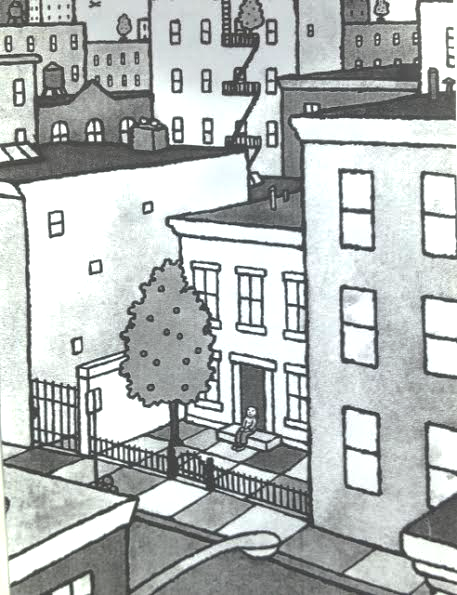
The city had grown up around the house, getting closer and closer. The yard had shrunk down to a little patio in front with the tree. Tall buildings bracketed the little white house on the sides but not at the front or back. Somehow, there was still an alleyway to one side, and Nell would often play there when she wanted to be alone.

The alley was gated, and only her family had a key, but it didn’t matter. Nobody would even think of walking through that gate. Most didn’t even notice it. It was kind of like one of those Japanese gates that weren’t really gates, marking out a difference between “there” and “here”. “Here” was the difference between storm and calm, between noise and harmony. Most people walked on by because this little island wasn’t what they were looking for, even though it was what most of them needed. Most people were looking for peace in the wrong places – more activity, more possessions, a different job / spouse / church / hobby. They figured if they weren’t happy it was because of something outside of them. Change that and they’d change how they felt, they thought. Yet they made the changes outside and they still felt empty inside.

The little white house had no ornamentation to speak of but it was always clean and tidy. It stuck out only in that it didn’t stick out at all, taking up just enough space but no more.

The residents kept a low profile, always doing things the same way. They always put the trash out on Wednesday mornings, always went to get the groceries on Thursday. On Friday they prepared for a day of rest by cooking double portions of food to make Saturday easy. On Sunday they might travel or work on school projects. They were always learning, whether they were enrolled in an institution or not. All of the Abrams kids went to public school and then to college, yet they also were expected to follow their own inspirations and learn as much as they could about whatever they wanted. The Sahara desert, bowling, tea, it made no difference. Anything was fair game to do a research project on, but each person had to do something.

Right now, for Nell, that something was sitting on the front steps, sketching the apple tree. Year after year it produced crisp red apples that the family lovingly harvested and ate fresh, baked into pies, made into sauce and preserves. Every single fruit was carefully harvested and used or processed immediately. “An apple a day keeps the doctor away” should have been engraved as the Abrams family motto because they sure took it seriously. Even if they were traveling they were sure to take enough applesauce or apple butter along with them so each person could have their daily allotment. Every day they ate from the fruit of that tree just like it was medicine, just like it was prescribed by the family doctor.

In a way, it was. All those many years ago, God told Saul in that dream to eat the fruit of that tree every day – him and his descendants, and they would never get sick. He took God at his word and had an apple for breakfast first thing when he woke up. Within moments the usual aches and pains he’d had for the past three years of making his living out of the wilderness were gone, like he never had them.

The family never told a soul their secret, out of concern that someone would try to steal the tree or chop it down out of spite. Some folks would rather destroy something beautiful than share.

Of course, they had to tell anyone who married into the family, but marrying into that family was harder than getting a job at the real White House.

Background checks were just the beginning. Then there was a complete physical. Financial records were obtained. Even visits to a psychiatrist were required. It was like applying for full term life insurance, a second mortgage, and a Secret Service job all at once.

In the end, if you were in, you were made truly part of the family by a dip in the local river. And, no matter what, you had to change your last name to Abrams. After that you were the same as anyone else who lived in the little white house, and you too got your daily serving of apple.

Getting a serving a day meant you didn’t get sick, but it didn’t mean you wouldn’t die. Accidents and old age could kill an Abrams the same as anyone else. They tended to heal faster from accidents, and age slower, but death still visited that house on occasion. Even then it wasn’t a sadness, because they’d always lived long and well there.

(The image is from the book “Trainstop” by Barbara Lehman. It is a wordless picture-book for children. My story was inspired by this image and not by her story that she told through her other pictures.)

Melissa’s story

3


Melissa knew it was time to leave her job when her boss sent her that email. Nearly 20 years with the same firm and it all came down to one thing – trust. She simply didn’t trust him to be honest. Or fair. Or rational. He was her third boss, but they were all the same. All toed the party line, all had degrees in “CYA”. Normally, she would have put her head down, not drawn any attention, and soon things would blow over or the manager would retire or get transferred.

It took her six years to realize that her job, while saying that it cared for its employees, didn’t back that up with real action. The bullies and incompetents got the management positions. They wrote the performance reviews too, and they were all one-way. All the reviews were top-down, so the subordinates never had a say in how they were being managed. This was the norm all over, so it never occurred to her that it was wrong, never occurred to her that it was possible to change it.

Her friend Bobby had died because of it. He’d drunk himself to death over anxiety and fear, too much stress and a job he had to have to pay his mortgage and his alimony. He managed to work up the momentum to leave the sinking ship of his marriage, but his job was another matter. He was dead three days before he was found. In many ways it was three years.

Melissa wasn’t going to go out like that. She wasn’t going to give her boss the pleasure of knowing he’d won with his squirrely ways. She ran over Paul Simon’s song in her head for options. Hop on the bus? Make a new plan? Drop off the keys? Well, she wasn’t leaving a lover, but it still sounded like a good exit strategy. And, after all, she had been screwed.

The email that morning said it all without saying anything. She’d asked for some time off. Her only joy now was looking forward to vacations, yet she was told, in writing, that her request did not meet his guidelines. There was also a mention that this was her second attempt to violate this policy. The only problem was that it wasn’t written policy. It certainly wasn’t corporate policy. And he did not say at the time that it was his policy, but just a guideline. She had no way of knowing that she’d stepped over some line into dangerous territory.

He told her more with that email than simply “no”. By putting it in writing, his not-so-veiled threat was made clear. Two violations, without the first one even being intentional, meant that three and you’re out. What nonsense. How could she have known she broke a rule the first time she did it when he hadn’t told her the guidelines? Heck, he hadn’t even given her a list of her job duties. Suddenly she was one step away from trouble. It was like driving on a road that had dangerous curves and no guard rails and no warning signs.

He was a squirrel.  That was certain. Everybody knew that he was a manager in title only. The problem was that nobody bothered to tell him. So he sent passive aggressive emails rather than confronting people directly. He didn’t manage. There was no plan or direction. He didn’t lead. Well, he led by negatives. Don’t do what he does. He didn’t even know what people did for their jobs, so how could he manage them?

Melissa took a breath in and reminded herself that Jesus said only God is above us. Don’t follow people. If you do, you are saying that they are more important than God is. To follow a person, no matter who they are – brother, father, aunt, boss, teacher, minister, spouse, governor, president, – anybody – was to make them into an idol.

She often wondered why she had so many bad bosses, so many who let the power go to their heads and quit working. It wasn’t fair that they got paid four times what so she did yet did a fourth of the work. It’s like they forgot what it was like to be a subordinate.

Perhaps that was the problem. Where could she work with there were no was no hierarchy? She left the social group she was in because of that kind of bullying. She left the church too for the very same reason, among many others. Over and over again she kept hitting that wall. The lesson wasn’t learned yet, apparently.

She’d waited out bad bosses before. How long until he retired? But deep down, she knew that if she didn’t learn the lesson with this one, it would resurface with another one.

Back to Jesus. What does he say? First, give thanks for the situation because it reminded her to pray and seek his help. Sometimes that was as far she got in her prayer, but now she knew there was more.

Jesus said that before you take your offerings to the Temple that if you have issue with anyone, you must leave your offering and go make things right. But how was she to do that? She was starting out in the negative. And she wasn’t even the one who had caused the problem.  Her boss was in the wrong.  This was backwards.

She remembered that story in the Bible when David was small and had no armor. With God’s power he killed Goliath with just one stone. Not even a sword. Anything was possible with God on your side.

Would talking with him make him feel threatened and thus worsen her standing? She knew she’d get no backup from higher up in the corporation. She’s gone that route before with an even worse manager. She still had unresolved trauma from that time. There’d be no help from her husband, either. He was even more bullied in his past. He couldn’t be objective.

So she was alone, again. Sure she had Jesus, and God, and the Holy Spirit. That had to count for something, right? But they weren’t physically here. They couldn’t go talk to him for her, or find her another job, or kill him off, or magically change everything. Perhaps that was the point too.

Perhaps Jesus came and said all that he did to tell her to not even have him above her, but within her, to give her the strength to do it herself. She wasn’t alone, then. She was doubled. Enhanced. There was a synergy, more than the sum of the parts.

But she still didn’t know what to do. Wait, and seem passive? Or wait until there is a clear path, a plan, and instruction from God? In the past, she always found herself doing the right thing, like a puppet, motivated by God. This current problem was a jigsaw puzzle and she didn’t have all the pieces yet, but God always does.

Was this event shifting her away from this job? Was it right to stay in a place, work 40 hours, and not feel like she fit? Had she outgrown it? It isn’t like she married this job. It wasn’t “till death do you part”. It certainly wasn’t for richer.

She prayed some more, and then she knew what to do. She was grateful that even though God doesn’t provide a map for life, God most certainly provided a compass.  With her heart focused on God, she knew she could walk through any situation, knowing that it would come out the way it was supposed to be.

Little Jake and the chicken

chicken

Little Jake Royce hated his chicken. He wanted a dog, the same as Billy had. His Ma said “If Billy jumped off a bridge, would you do that too?” Little Jake was only four but he already knew not to answer that question. There were some questions that had no answers. There were some, however, that if you didn’t answer you got a spanking.

But not at Little Jake’s house. They never spanked him, never would. Ma and Pa would talk to him if he broke some house rule. They’d use reason and explain how he was violating the social contract. They’d express how sad they were about his poor choices. This was of course when they actually noticed what he was doing. Most of the time they let him do whatever he wanted.

His parents had both been raised by missionaries. While they liked the wildness of not having a fixed address, they couldn’t stand the rules. Do this. Don’t do that. Whether it was about God or chores made no difference. They both craved unending vistas of freedom as children, so when they finally had a child of their own, they gave it to him. Except when it came to that chicken.

In general, he could do whatever he pleased.  He could stay up as late as he wanted, learn or not learn his numbers and letters whenever the mood struck him, or eat hot dogs and popcorn for three weeks in a row. They wanted him to be free to live his life. He still wasn’t potty trained and they were delighted, saying it was oppressive to insist a child do anything he wasn’t ready for. Of course, how could he be ready? He didn’t even know it was an option. He thought it was normal to poop wherever and whenever you wanted. He thought that his parents didn’t need to go as often as he did because they were so big. They had more room to store it. He never understood what they were doing when they said they were going to “step down the hall”. The bathroom was where you had a bath, and that was it.  Not like he had one of those very often, either.

But the chicken was not a debatable issue. If he had to have a pet, it had to be a chicken. Both his parents were allergic to anything with fur, so dogs and cats were out. Even hamsters weren’t okay. Ferrets weren’t even considered.  Even if they didn’t have fur, the smell was a real turn-off.

Hattie the hen and Reggie the rooster lived next-door at the co-op. Little Jake liked Hattie better (when forced to choose between a rock and a hard place), but his parents thought it was like supporting an indentured servant to have a hen – all that egg laying. She wasn’t free like a rooster to their minds. So that Monday, Reggie the rooster came home, seemingly pleased as punch to have a whole yard to himself. It didn’t take long for him to make a roost for himself in Little Jake’s favorite climbing tree. His parents took it as a sign that they were going to get along famously. Little Jake took it as a sign that the rooster liked pooping on his head. This made Little Jake think that maybe it was time to learn how to use the potty. He couldn’t be upstaged by a rooster.

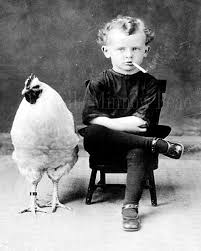
The day came for the annual family portraits, so of course Reggie was brought along to the studio. Pets were family in the Royce house. The photographer, Abe Johnson, was an old family friend and had learned years ago not to question the unusual behavior of the Royces. He set up a chair for Little Jake, who promptly fished into his pocket and pulled out a rollup cigarette and put it in his mouth before sitting down, saying  “Don’t want to crush it, you know, Abe? Got a light?”

Abe was unsure what to wonder about first – the fact that this toddler had a cigarette, it looked like he rolled it himself, or that he was being called by his first name by a four-year-old.

Was the problem simply that he acted like he was an adult, or was it something more? It was all too much. Maybe was time to retire. Or maybe it was time to talk to the matriarch of the Royce clan. “Being free” was a great concept until it got weird. Maybe she didn’t know how “free” her great-grandchild was being raised. Could be that his parent’s trust fund needed to be tightened up. Maybe they’d stop living in La-la land if they had to pay their own bills for change.

Abe always said that it did no good to children to give them a free ride in life. He was all for sparing the rod but not for spoiling child. A child with no direction and no boundaries wasn’t any good to himself or anybody else.

Just as Abe released the shutter, the startled chicken released a loud squawk and an even larger splat of poop on the studio floor.  Little Jake looked at the chicken, then at the horrified look on his parent’s faces, and decided that this chicken thing might just work out after all.

Pod people

pose


Nell was having none of it. Not anymore. Her husband simply refused to even try to breathe air. The doctor said he could, that his lungs could adapt to this environment, but he disagreed. Trouble was, he’d never know unless he tried.

Elowyn had read about other Marenians who had converted to air breathing. He’d never met one, of course. How could he? There were only three who lived in this state, and the closest was two hours away by plane. No airline would let him on a plane with his argon suit, that was a given. Their fears were unproven, but policy was policy.

They’d met three years ago at the landing site. She was a reporter, alerted by the scanner in the office that something was coming from the skies again. That scanner was worth its cost from all the leads it provided. Quick as a wink she was downstairs and in her car, trying to not drive off the road as she followed the plumes of green clouds stretching like a tightrope from the eastern sky to some nearby cornfield – Mr. O’Reilly’s, most likely. He had the biggest one, so it stood to reason. She turned down Ellis Way and got there before the locals did. Farmers listened to the scanner same as reporters did, and for much the same reason. It was the best way to know what was going on that might be of interest. Something like this would pull them out of their barns for sure.

Just think of it! Aliens! Here! In Mill City!

Nell had guessed the pod’s trajectory right and reached the small crater it created just after the police had gotten there. The ground was still steaming next to the blue (metal?) craft. She noticed that there was a bright iridescent sheen across the pod’s surface, reflecting the late afternoon summer sun, as well as a distinctive sharp smell much like ammonia, but she couldn’t quite place it.

They didn’t know at the time but it turned out that the color and the smell were both hallmarks of the Marenians. They both came about because their ships were alive, growing out of the same stuff as the people. This way they could self-repair. It saved a lot of money and time that way. It worked perfectly as long as they stayed in the Marenian solar system because the elements were more or less the same throughout.

Earth, however, was another matter entirely. The stresses of the previous crashes had resulted in every pod going into automatic repair mode, sending wispy tendrils into the soil to gather the raw materials needed to boil up replacement parts in the integral kitchen/lab. Three minutes after the tendrils went down, they came back up, spit out what dirt they’d sampled, and retracted back into the beetle-like shell, refusing to budge. The self-preservation instinct was the strongest one, so the pods calmly explained in their proto-language to the pilot inside them that the soil was not compatible with their electrochemical makeup, so repairs would not be forthcoming. As trained, each pod then sent out a trans-space summons for another pod to make the trek to bring dirt from home so repairs could proceed.

The only problem was that these supply pods came and they too became stranded. They’d underestimated the amount of dirt needed for the repairs.  The pods were small, with barely enough room for the pilot.  Even if they were able to navigate without a pilot there still wouldn’t have been enough room for dirt to repair both ships.

No matter – flying without a pilot wasn’t an option. Each pod was raised with its pilot from the moment s/he was formerly admitted to the astro-nav program. Saying that they were synchronized wasn’t the half of it. Cells were harvested from under the tongue of the pilot and cultured over three weeks, growing into a ship that learned as the pilot learned. This was no simple cloning. The two beings were separate in body only. All past, present, and future were shared.

This created a dilemma when the pods, and thus the pilots, began to be stranded. Without hope of repair, the pods chose to self-terminate, opting for a quick death over a slow lingering one. The pilots had to be tranquilized before the pods could self-euthanize. Otherwise it would have been too painful for them to endure. Some later, once they’d learned the local language, said it was like amputation of half your limbs and your brain.  Many were encouraged to adopt dogs afterwards as the closest Earth option to the deep connection that they had shared with the ships.

Nell had worked closely with Elowyn after the crash, helping him to adjust to Earth living.  There was no going back to Marenia, so he had to learn a whole different culture. This was made easier because of his astro-nav training, but it was still understandably difficult.

She’d not planned on adopting a stray, but the Mayor assured her that she was the most qualified person in the city for the job.  Simply being a reporter, curious about new things, made her ideal, he said.  Put that way, how could she refuse? It was a high honor to be deemed worthy of helping a stranded Marenian.  You were serving as an ambassador for the whole planet, after all.  The future of the relationship between the two solar systems would be created from these one-on-one relationships.

It was about a year later that they both realized that they were quite compatible together and decided to formalize their pairing.  Fortunately for them, other human-Marenian pairs had formed before they had even met, and laws had been changed to allow for interspecies marriage.  There was only one difference with these marriages and all others – one member of the union had to be sterilized.   Doctors weren’t comfortable with what could happen if a child was created.

There was no way a child could have been created in the case of Nell and Elowyn. He was still hermetically sealed inside his argon suit.  He had to have it to breathe on Earth, he insisted.  The material in the suit was fortunately impervious to decay, or he would have a more difficult time of it.

Nell was quietly upset when she learned this, hoping that he’d eventually be forced to adapt to Earth ways.  She loved him, of course, but she thought that things would be better for both of them if he didn’t wear that darned suit.  It made going out to visit friends awkward.  Plus, the smell took some getting used to.  The ammonia-like smell was a byproduct of the impervious material.  It was unnoticeable on Marenia, but on Earth it alerted others that there was a foreigner around even before they saw him.  It made some people not want to deal with Marenians at all, saying that they smelled like used gym socks.

Nell and Elowyn mostly kept to themselves at home when she wasn’t working.  He didn’t have to work – none of the stranded pilots did.  They didn’t need food, and they weren’t interested in owning anything.  If they couldn’t carry it, they didn’t need it – this philosophy was part and parcel of being a Marenian.  It was how they had finally adapted to a planet with too many people and not enough land.  They didn’t even need to live in homes anymore, having selectively bred themselves over twenty-three generations to be unaffected by temperature changes or ultraviolet rays.  Some did live in homes on Marenia out of habit or convenience, and most pilots on Earth did as well, but it wasn’t uncommon to see one hanging out with homeless people under overpasses or near street corners. They were comfortable wherever they happened to be.

The Marenians got along with the homeless population uncommonly well.  They had in common their philosophy of “less is more”, albeit perhaps unwillingly for some of the homeless.  Soon the Marenians and homeless had developed a spiritual system – not a religion – about this, encouraging others to get rid of their addiction to things. They explained that there was a reason that the Earth language used the word “possession” to refer to things as well as being taken over by demons.

It had to be a spiritual system because a religion would require stuff – books or buildings, for instance, and this was totally opposed to their beliefs.  Of course, many years later, after the founders had died and no more new Marenians came to Earth, their simple way was converted like all other spiritual paths had been and there were not only cathedrals to “less is more” but also gift shops with plastic trinkets made in China.

Rosie’s Adjustable Man

heads

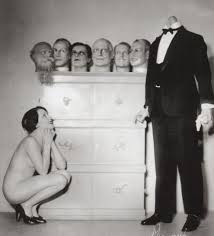
Rosie knew what she wanted in a man. Trouble was, she wanted something different every day. The wealthier ladies could afford different models, but they had room to store them too.  She’d had to settle for a model with adjustable heads. The body stayed the same, but the personality changed. It wasn’t ideal, but it worked.  Currently she had six different versions, but over thirty were available. Whenever she could afford it, she got a new head for her Adjustable Man.

Rosie’s house wasn’t tiny by any means. It was the standard allotment for Zeta-class citizens – three bedrooms and one large common area with dining/ kitchen/ living room, with movable panels to divide up the areas when necessary. This was a far cry from Gamma-class, with only two bedrooms and a living room but no kitchen. That was shared, communal style, with ten other Gammas.

Gammas tended to eat together in the common dining room. Slinking off to eat in their private apartments, hunched over a coffee table while sitting on a stiff sofa, was possible but frowned upon. Nobody would say anything about it to the citizen who did it, but then they simply wouldn’t say anything at all to them for a few days afterwards.

It wasn’t planned that way. It wasn’t a rule. It was more like a habit, or tradition. Not sharing time with your fellow citizens meant you wanted to be alone, so they gave each other space at those times. But, if a citizen was absent more than about four times a month and wasn’t on a scheduled trip for their task-group, then subtle and not-so-subtle inquiries were made. Some were to the citizen’s family. Some were to the Overseers. Perhaps s/he was ill? Perhaps therapy needed to be assigned? Perhaps s/he needed to be reclassified? Sometimes that particular area’s citizen class wasn’t a good fit for that citizen’s style of life. Never would they ask a Gamma-class citizen themselves if anything was wrong. That wasn’t thinkable, not for that class. It was only once you were promoted to Zeta-class that you were even considered to have enough spirit to have an opinion.

Rosie had opinions all the time, and felt that everyone needed to hear them. The Overseer channeled this into encouraging her to write an online blog, where she felt that she was being heard for a change. She thought she was making a difference. She was wrong. Nobody read her writing. The numbers on the statistics were a ruse from the Overseer to get her to keep writing and thus keep her out of the way. The comments were supplied by workers in his office.  It kept her placated and maintained order. It didn’t do to have citizens thinking too much. It upset the social fabric.

She was so opinionated that no man wanted to spend time with her, and so insecure that she didn’t want to spend time with herself. Fortunately for her, she was not alone in this. Plenty of women had been told “You think too much” by men, and rather than stop thinking, or at least out loud, they decided to get an Adjustable Man. He could be modified in any way imaginable, providing you had the resources.

It was easy these days to pick up a used version, have the memory wiped, and start from scratch. Or, you could custom build one online and have it shipped to you, ready to cook, mow the yard, and be pleasant to take on a visit with your friends. No more awkward times like when your man suddenly started talking about less-than-polite topics around your best friends or coworkers. No more attitude about doing housework or it being “woman’s work”. No, the days of men thinking their contribution to the family ended as soon as they left their workplace ended around the time women realized they didn’t have to have children, and thus didn’t have to stay home to raise them.

Adjustable Women were in the works for those women who wanted to work outside of the home after having children. There were never enough reliable or affordable childcare providers – never had been. Come to think of it, the same was true for eldercare. Nobody wanted to take care of the very young or the very old for very long, even if they weren’t related to them. Those that did wanted a lot of money for it, or they had less than honorable reasons for seeking those jobs. But Adjustable Women were proving to be harder to make than Adjustable Men.

Rosie was trying to decide who she wanted as her partner to the dance tonight. It was almost as important as determining what dress to wear. Too formal? Too casual? She wished there was a guideline on the RSVP, like “black tie” or “blue jeans” but for partners. She’d hate to take a stuffy, know-it-all partner to a casual gathering, the same as she’d hate to take a sci-fi geek, able to name all Star Trek captains in order (and delineate their flaws and charms) to a company luncheon. How did early-century escorts do it?

She opted for the boring “Bob” version.  He was cute, but he didn’t talk much.  Her friends would understand, and the new people she was there to meet wouldn’t care.


Wander (short story)

He’d been walking a long time. Days? Weeks? Years? It no longer mattered what time it was. It was today, always today. He had nowhere particular he had to be. He wore no watch, carried no day planner. His calendar was free.
He walked away from it all some years back and had just kept walking. When would this walk be over? He’d not planned on starting it, so perhaps it would end the same way.
It started suddenly. Just like with spring tulips, it seemingly occurred all at once. Only a careful observer could have seen that change had been coming a long time.
It happened suddenly for him, that was for sure. One day he gathered up a duffel bag’s worth of possessions, put on his shoes and her all-weather coat, and walked outside. He never thought he’d make it past the yard, but he did. Then he thought for sure she’d stop him when he got to the end of the street, but she didn’t. Every step further from that house his fear grew smaller and his excitement grew larger.
The thought of leaving never crossed his mind all those years. Not like he was happy being there, mind you. It was just that he didn’t know he had a choice. It was just like Hagar and the well. She was suffering and all along what she needed was right there and she couldn’t see it.
He walked three blocks fueled on fear and excitement before he started to wonder where he was headed. It was strange to feel so much at the same time after a lifetime of not feeling at all. Perhaps once he had felt something? Surely he had. He couldn’t remember.
At the edge of the neighborhood he decided to try to feel, but not too much. Best to start with something simple, like a direction. Which way? Straight? Right? Left? Turning around and going back was right out, he knew that. Just thinking about that made his stomach get smaller and tighter and fluttery. That felt like “no” most emphatically. This was new to him, this learning that his body was a sense organ, tallying pros and cons and providing the result. It was like learning another language to figure out what it was saying. Why trust his brain to tell him what to do, when he could use his entire body? His stomach loosened when he faced right. Okay, that way.
He didn’t know where that way led, but that was true no matter which way he went. He’d never been allowed out of the house. Never been given a map of the city, or of anywhere for that matter. There was no television in the house either, and certainly not a computer. He had no idea that there was a whole world outside of the house, and that was how she planned it.
He was lucky she’d even spoken to him, or he’d never have picked up the language. She didn’t at first, but he overheard snippets of words and sentences when she’d have her boyfriend of the month over to spend the night. Sometimes one of them would try to talk to him, try to make friends with him as a way of placating her. Perhaps he thought he could stay longer if he turned out to be father material? The way to a woman’s heart is through her child, right? Those that tried could have saved themselves the trouble. Once she realized they just wanted free room and board she cut them loose and changed the locks again.
All these years later, his body told him more than just how he felt. The rain was coming soon. His nose told him this. The hairs on his arm said it was going to be a long quiet soak. His big toe told him the mist he was in would pick up, grow just enough to be annoying and cut down on visibility in about 20 minutes. That was enough time to find a restaurant to wait it out.
Another wanderer had taught him the tricks of the trade. Look for a restaurant that is a little busy, but not overly so. If it wasn’t busy enough he’d stick out. Then the employees or customers would notice. If he was lucky, one of them would gently wake him when he dozed. If not, a cop would be called to do that chore. Sometimes he’d simply be asked to leave. Sometimes he’d be told to never come back. On the other hand, if the restaurant was too busy, a customer might sit too close to him and spot that he didn’t quite fit. Perhaps they’d notice his less-than-fresh aroma, or notice that he only had a soda in front of him, or they’d spot his duffel bag. The goal was not to be noticed.
A soda bought you a table for at least an hour. Keep it refilled and it looked like you just got there. Plus, the sugar and caffeine didn’t hurt. It was great to get refills – you could have a two-liter’s worth of pop for pocket change. If you felt like it you could even take the cup with you for next time. If the restaurant was busy enough they’d never even notice you’d not bought anything from them.
Actual sleeping required some skill and a prop. Find a flip phone on the side of the road or at a local thrift store, hold it open in your hand, and you could slouch down and make it appear you were checking texts while you dozed. People rarely looked long enough to notice your fingers weren’t moving. Most folks had been taught it was rude to stare.
If you were homeless for longer than a month you started to become invisible. People just didn’t want to look at you, to see you. They were afraid you’d catch their eye and say something like “Excuse me sir? Can you spare some change?” They didn’t want to hear whatever story you made up to convince them (or yourself) of your worthiness. It was easier to pretend you didn’t exist. It was a little lie they told themselves.
He was through with lies. They were too hard to keep up with, too hard to justify. They grew and grew, one lie leading to another, becoming a tangle like weeds or rope. Before you knew it you were lost or tripped up. He decided it was best to tell the truth, but not too much of it. Too much talk spoils everything.
He carried as little money as possible, same as everything else. It all weighed him down. Everything took up space, either in his bag or in his head. Traveling light was about more than having an extra pair of socks or a small bottle of shampoo.
The rain was almost over. Time to go.

Twins.

two

Their mother had always wanted twins, but not like this. Carol’s biological clock was winding down about the time her life was picking up. When she finally had the time, money, and energy to have children, she’d gotten too old to even consider having multiple pregnancies. She wanted at least two children for the same reason people brought home two puppies or kittens – they would always have a playmate. With time slipping away on her, having twins seemed like the best option.

She never even considered adoption. The children had to be hers. She knew that down to her bones. The idea of “family legacy” was so firmly imprinted onto her identity that taking in somebody else’s unwanted children was out of the question. It wasn’t even on the table. It wasn’t even in the room.

She couldn’t afford to chance it. So she went to the local medicine/miracle worker. The gnarled old being was a fixture of the community that everybody knew about but nobody talked about. She? He? Who knew? At that age it was impossible to tell. His? Her? voice was raspy and the clothes were baggy enough to conceal whatever shape s/he might have. Nobody knew, and everyone was afraid to ask. “Doctor” was the being’s title as well as name. Fortunately this language didn’t differentiate gender in its words or it would have been more awkward. Undefined gender seemed somehow appropriate for this profession, one of yes/and, of greys, of liminal spaces, of betweens. The Doctor’s shop/office/home was like that as well, beyond definition.

Carol had written a letter asking for an appointment. This was how it was done, how it always had been done. The Doctor felt that websites were too fiddly, too impersonal. The message would get lost. Even phone lines were eschewed.

Ideally, the client (never “patient”) would happen to meet the Doctor while they were both out doing errands in the village markets. A lot could be done to further the desired outcome if both of them were on the same time-line. Never quite syncing up was a bad sign. But, communicating by letters was a good second choice.

They agreed upon Wednesday the third, at 11:30 in the morning. The Doctor arranged visits by feel, rather than by any usual method. It was the same as how a safecracker worked, or a dowser, or a chef. It was all by feel. No astrology charts or Ouija boards or runes. No Day Planners either. There was never a receptionist or assistant. The Doctor’s motto was do it all yourself, or don’t do it at all. Too many cooks spoil the broth, and all that.

Carol left her house that Wednesday morning very excited and hopeful. She wore her favorite red jumper and galoshes even though the weather forecast promised a partly sunny day with only a 10% chance of snow flurries. They were her favorite galoshes, purchased used at the corner Oxfam three years back. She’d always had great luck when she wore them, so they seemed to fit the bill for the day. She even asked off from work for the rest of the afternoon so she could get started right away on whatever course of action the Doctor recommended.

Everything the Doctor did was by suggestion or recommendation – never an order, never even a request. Everything had to be voluntary. The client had to be a part of the process, never acted upon, but with. If the Doctor decided it was possible to effect a change there was always a list of recommendations. It wasn’t always possible to obtain or do all of them, either due to the time of year or available resources. The client, if accepted, (not a given) would then go out armed with that list.

Instructions could include such varied examples as “Stand barefoot on a newly harvested field for 10 minutes, facing west. Be sure not to be noticed. This must be done sometime between the hours of 8 AM and 3 PM.” Or perhaps something like: “Buy and eat some kind of fruit you have never eaten before.” Or maybe even: “Write down your greatest hope for your future on a piece of borrowed paper. Set it afloat on a stream.” Generally, at least two of the three options must be done, in whatever way the client could. The “how” was up to interpretation, and was part of the cure.

Wearing a certain color for a week (at least) was a common request, although the color changed with the task at hand. Often this was how other people in the community knew you were under the Doctor’s care. They never would ask, though, out of respect, or perhaps fear. It was difficult to not be noticed when someone started wearing shades of teal or salmon or magenta, especially day after day.

Almost immediately after having sex that Friday night a month later, Carol knew she was pregnant. She didn’t dare breathe a word of it to her partner for fear she might jinx it. She didn’t even go to the pharmacy to get a pregnancy test for the same reason.

She wasn’t sure where her self-imposed superstition came from, and that might have caused the aberration. Maybe it was the galoshes. Maybe the orientation of her bed. Maybe she didn’t follow the list correctly.
Later, after the birth, the Doctor consulted with Carol. They both looked at the babies (baby?). They went over everything she did, everything she ate, everything she thought. She was sure she had the right intention during the act. It’d been all she’d been thinking about for months, so how could it be anything else? Twins. Two babies in one pregnancy.

The Doctor had been very insistent with her that intention was important for all pregnancies, but especially for hers since it was so specific. The Doctor explained that ideally, people would have sex only when they wanted to have a child, and then they would do it mindfully and prayerfully. The moment of conception was when the soul chose to incarnate. This is a delicate and perilous time. There were many souls about, of all kinds, waiting to enter a body. Some entered at conception. That was ideal.

Others chose to take up residence afterwards. This resulted in what psychiatrists called “multiple personality disorder”. Priests called it “possession”. New Agers called it “walk-ins”. It was all the same thing, and it was all less than desirable.

The Doctor explained that ideally the potential parents would pray before having sex, alerting the souls, the beings-in-waiting, that an opening, a doorway if you will, was being created for them. The parents would meditate on the characteristics and personality of the child that they hoped to welcome into their lives. They would speak about what kind of home they could provide.

In a way it was like a blind date, or perhaps more like an arranged marriage. They were going to be together a long time. It was important to do this well, rather than leave it to chance.

The trouble is, too many people didn’t think it all before having sex. It was as if they were swept away, like they were in a stagecoach, and the horses got spooked. Before they realized what was happening, they were where they hadn’t planned on being, because they hadn’t planned. Sometimes they got stuck there. Just like with marriage, it is a good idea to choose wisely before this long-term commitment.

Too many babies were being born without souls properly attached to them because of this. Some had very weak souls and had sensory or neurological disorders because they weren’t fully in the body. Some souls weren’t even human.

But that wasn’t the problem here. Carol and her partner had prayed for two souls, alright. The only problem is that they somehow ended up with two souls in one body. This wasn’t uncommon, but could take different forms. The obstetrician had explained that sometimes twins are conceived but one is absorbed. The result? One baby, but it might have its twin as a vestigial part of its body, in the abdominal area, for instance. Or if the fusing is complete, it will have chimerism. Or in this case, conjoined. The obstetrician couldn’t explain why this had happened, but the Doctor could, after consulting with the souls of the twins.

Twins were wanted, and twins came. They were twins in the truest sense this incarnation. They were two, but one. When they were in spirit form, they were separate but they wanted to always be together.

In their previous incarnation they had been twins in the usual sense. That family had also wanted twins, but shortly after their birth the father had gotten laid off from his job. The economy had taken a downturn and he had difficulty finding another job. Months went by and the savings grew smaller. Their mother grew more and more exhausted with caring for them and with worry. Finally the decision was made. It was the same decision that some families made about their pets under similar circumstances. They were “given away to good homes”. Unfortunately in this case, they were separate ones. The children always felt that half of their very being was missing from that point onwards.

After their death, they had waited a long time to find another family that wanted twins. This time, they wanted to make sure they couldn’t be separated ever again.

Taxidermy for amateurs (short story)

1

Emma had no way of knowing how her experiment in home taxidermy would work out until she tried. She’d read up about it in a correspondence course, changing her name to Eugene on the paperwork. No self-respecting school would teach a woman how to do such work, especially if they knew how she planned to use this knowledge.

She’d started simple – a dead raccoon she found near the edge of the field. A bird who’d gotten too close to a stray cat. It was unfortunate that the possum she’d spotted just down the road from the farm was too far gone, the turkey vultures having gotten first dibs. Sure, she still could have practiced on the mangy thing, but she wanted her artwork to look natural, or as natural as the deceased can look.

It took her two and a half years to work up the courage to try on a human. This had been her plan all along, but she had to be sure of her skill before she tried something so bold. Even men wouldn’t be so presumptuous as to step into that field of work without official license.

Emma knew too many folks in the village who went into debt over having to bury their dead. There was no good reason to spend a year’s income on someone who couldn’t appreciate it. New fancy clothes for someone who could never afford better than hand-me-downs his whole life? Nonsense. Silk lined coffin to sleep in, when cotton sheets were just fine all their life? Ludicrous.

And worst of all was all those chemicals pumped into their veins to keep them fresh for whenever Jesus got around to making a return visit. When he came, he’d better have a shovel, a jackhammer, and a pair of wire cutters to help them out after he woke them from their slumber. 6 feet down stuck in a concrete vault and a locked coffin was bad enough. Their mouth wired shut (to avoid any unpleasantness during the viewing) would make life difficult for the newly reanimated. Who wanted to come back from the dead like that?

Emma had another plan, a kinder, cheaper plan. Taxidermy. Dry out Grandpa Ross or Uncle Seymour so he doesn’t develop a case of the rot, and prop him up in a chair in the living room. Much cheaper, and he’d still be around to chat with. When the second coming happened he’d be just as ready as anyone else.

Edward and the turtle

2

Edward had always been an unusual child. His teachers expected him to become an unusual adult too. His parents? Well, that was another matter entirely.

They never said exactly how Edward came to them, or even how he came to be. Bea and Charles, Edward’s parents as far as the world was aware, left town for a year a while back. When they returned, they had Edward with them. He was just over a month old they said, but some who looked in his eyes knew, just knew deep down in their bones that this child was far older in all the ways that counted. “He’s an old soul” they said, not knowing how true those words were.

Of course, not everyone could see the whirling abyss of time in his eyes. It was like looking into a dark disused quarry filled with rain water. You couldn’t see the bottom, and to some that was so frightening that their minds simply refused to look, to even get near. Those hidden depths spoke of secrets, of danger, of loss.

For some, Edward himself was invisible simply because of the dangerous unanswered questions that lurked like unwelcome promises behind his eyes. Their minds couldn’t accept their challenge, so they simply refused to acknowledge Edward’s presence, his very being. What Edward was could not be to them, so for them he was not.

Bea and Charles could see him better than anyone else, and they were grateful. They’d prayed for such a child, a “gift” as they called him, privately, fervently. The home they were living in now was a gift too, provided upon the introduction of Edward to his grandfather. For years they had scraped by, living with friends, or in trailers, or even in the library during the day and their battered Range Rover at night. The arrival of Edward had turned their lives around for the better.

A grandchild was all Bea’s father wanted from her. He promised her the house, paid off, furnished, utilities, the lot, on the day she and Charles married provided that they gave him a grandchild in due time. He made sure to explain it wasn’t just any house on the table, not one of her choosing. It was to be the house by the lake on the family estate. Her sister Eloise already had the woods house, and brother Tom had been gifted the one by the cold gray boulders. Only the big house remained, and it was occupied solely by Edward’s grandfather, known simply as “The Grandfather”, made so by the births of all his children’s children, now gathered like chicks on the family land.

Edward would have no siblings. The cost was simply too high. No money had changed hands for his conception. Money was just paper after all, just the promises of dead trees. Those who had brought Edward into the world needed something more solid than that.

Bea and Charles had been desperate to have a child, and the cost was nothing in comparison to the debt they were in. Who counts the expense when you stand to gain everything? It was like floating a check right before payday – something they knew very well.

They still didn’t understand what was to be expected of them for this “gift”, even though they’d signed a contract. There were fertility tests the doctors did beforehand, to make sure the couple didn’t have to pay such a price, could conceive on their own, but it was to no avail. Bea suspected some of her cells were taken then, for some other cause, but she didn’t dare to think about it for too long. All that mattered was that she had her child now. What happened in the future would just have to wait until then to be worried about.

Edward was always cold. Outside, on a warm July afternoon, he always wore a jacket or coat. Charles got his tailor to make a blazer for him out of the thickest tweed he could find. The colors looked like the bracken and gorse that surrounded his Uncle Tom’s house. When he was inside, a fire was always going in whatever room he was in.
At first, he insisted in his own way that all the fireplaces would be working all over the house, but Bea and Charles soon realized his subtle influence over them and set some boundaries. Even as a baby he was able to make people do his will. Even without speaking he could turn them, bend them. His parents didn’t realize he was influencing their minds until the fires.

Edward had never seen a fire until he was a year old. Before that his parents bundled him up in sweaters and blankets to stop his shivering. They simply hadn’t gotten around to having the chimneys inspected in that old stone house, so they had no fire out of fear. The moment they were able to light one, Edward wouldn’t leave the room, delighted with his newfound unencumbered warmth. When Charles tried to remove him from the room at supper time, Edward howled and kicked Charles in the shins. Not wanting to get into a fight with his son, Charles desisted and instead brought up a tray. They all ate supper together that evening, sitting by the fire, seated on the antique Persian carpet, the arabesques and swirling flowers in the design dancing all the more by the flickering firelight. Bea thought it was charming, like a picnic.

The charm wore off after week when Edward still refused to leave the fireside. They drew him out only after they lit fires in all the other rooms. Only then would he venture from his toasty lair. After a few months though, Bea and Charles had grown tired of the constant work involved in finding seasoned wood in town and then chopping it to size. Grandfather would not allow them to cut down trees on his land, not for Edward, not for anyone. They explained to Edward that it had to be one fire from now on, in only one room, and he could wear sweaters like before if he needed to wander anywhere else in the house. He sulked for a month in that room, unwilling to get cold.

They’d not wanted all that heat, especially going from spring into summer, but Edward did, so he simply placed his thoughts over theirs, like how a voodoun priest exerts his will over a zombie. He didn’t realize they would break free of his influence, his control of their actions, and certainly not so soon. For the longest time they thought they too were cold and needed the heat just like he did. It was only when Charles passed out from heat exhaustion one Tuesday that they started to question their actions, realizing that they didn’t want the house to be at 92°.

From that point on they questioned everything they thought. They wondered what passed through their minds was their thought, or Edward’s. He tested them to see how far his influence went. He tried simple things, like food cravings. For one week they craved bananas and they ate them like they were going out of style. A different week it was strawberries. That was a mistake, Edward soon learned, because Bea was allergic, had been since she was a child. She knew she wasn’t craving them, that it had to be Edward’s doing.

He had to figure out another way to get his needs met. He finally, reluctantly, decided to let them teach him their language. That dry chittering sound grated on his ears. It was so unlike the warm liquid sounds he knew as his native tongue. His mouth ached with the effort of shaping the sounds for them, but it was the only way.

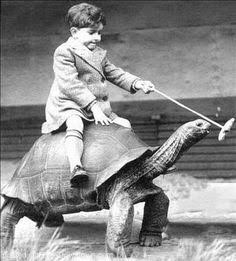
When he was three they took him to get a pet. Bea decided he needed a companion. A dog was ruled out straight off the bat – the warmth Edward needed would make it lethargic at best, dead at worst. A tortoise, a Galapagos tortoise to be precise, was decided after careful and discreet inquiries with the local librarian. She explained how they are cold-blooded so they need warmth, and how they live for many years. This added quality helped to tip the scales.

The elders who had helped them hinted that their true age was far beyond their appearance. Their kind were old at birth, having already lived half a human lifetime in a middle dimension, one where they were spirit only. This gave them certain advantages. They could learn quite a bit without the bother of a body. No colds to catch, no growing pains, no accidents, no trips to the doctor or the emergency room or the morgue. They even got to skip all that awkwardness of puberty while they were learning. Only when they had gathered about 50 of our years worth of knowledge did they bother to incarnate, and only then into a bespoke body, tailored to their temperament and needs. Certainly then there were the usual risks of being embodied, but by then they knew how to navigate safely through those obstacles.

Bea and Charles only suspected at the truth behind their benefactors, the ones who had given them Edward. The Grandfather would never know. For him, Edward was of his flesh and blood and that was all he needed (or wanted) to know. No matter that Edward was decades smarter than any of his other grandchildren. If he’d known the truth about this cuckoo child, he’d throw him and his parents out and never speak their names again.

Edward was their child in deed if not in act. He never grew in Bea’s womb, but he did share her DNA, as well as Charles’s. The elders didn’t mention there was a bit more to the mix than just the two, however.

It was kind of like fruit juice. How much actual juice was necessary for it to still be juice? Perhaps there are vitamins and minerals added to improve the quality. Perhaps other things to make it last longer. Sure, at the end it still looked and tasted like juice, but really only 50% of it was straight from the vine. It was kind of like that with Edward and his parents, but in their case it was more like 5% than 50%. They’d never be the wiser. Edward was theirs, and that was all they cared about. And of course, they were parents in the way that mattered most – they loved him, took care of him, and make sure he was happy and wanted for nothing.

Well, they didn’t give him everything. That would spoil him. And after all, they still had to make sure he wasn’t using the old mind push on them.

The longest day of Theodore Smythe (a short story)

4

Theodore was tired, more tired than he had ever been. This had been the longest day he’d ever known. He wasn’t even sure what day it was, or what year. He’d only been alive for three years and two months. That was when Timmy had gotten him for his fifth birthday. Before that, he was just a stuffed doll, a bear. Once he had bonded with his child he became a Bear, a real being. Every year when Timmy’s birthday rolled around, Theodore had a birthday too. It was the day he became alive. They even made him his own cake, but smaller. It was decorated the same as Timmy’s.

This year there was no cake. There was a celebration of sorts, sure. But what with the rumors and the rations, it wasn’t possible to have such a luxury as a cake. Even candles had to be saved for more needful times. Lighting any of them, using them up, when the electricity was still working was wasteful, and the Smythe family knew it.

Slowly there had been less and less, with luxuries like sugar and beef first. They didn’t miss these things anyway. They were too expensive even when times were good. But flour, and oats? That was another matter. It was a few short months before it came to that, and by then there was no denying that war was upon them. They had to conserve what they had and make do to support their boys on the front lines. They needed the food more, to fight the Nazis who were three countries away. It wasn’t much to ask to have the war kept at bay. Trading a cake to have peace at home seemed like a fair trade.

But then the war came home to them.

It wasn’t fair. War, and still no cake. They still were sacrificing, still saving, still rationing, and still the war came, came right to their villages, to their streets, to their doorsteps. Uncle Albert in Shropshire called their neighbor to tell them to make their way to him any way they could. They hadn’t found the money for a phone since they moved to the city, and their neighbor Mr. Pete kindly passed along messages in exchange for Mama doing a little extra laundry on wash day. He’d not quite gotten the hang of it since his wife took ill with the dropsy two years back.

Mr. Smythe didn’t think there was much reason to hurry. He still had a job to go to after all, and Timmy had school to see to. He was getting along so well with his classmates this term, and getting such good grades in penmanship and music. Mama Smyth didn’t agree with his assessment, and said so by not saying anything. Her ‘no’ was simply the absence of a ‘yes’, as befitted a good wife to her understanding. Papa took her silence under advisement and read the newspaper more carefully, listened to the radio more closely, trying to see if there were currents under the words, perhaps telling him things were worse than the government was letting on. The slogan “Stay calm and carry on” was what tipped it. Something about it made every hair on his arms stand up. It was then that he knew they had to leave and go back home to their village of Clun as quickly as they could. Mama was relieved, but said that going calmly was best. Best not to look like they were fleeing. That might start a panic. Just make it look like they were going on holiday.

So they packed just a few things, just enough to fit into suitcases. It wouldn’t do to have too much on the train. It would call attention, and that was the last thing they wanted.

Theodore wasn’t around when they left. Perhaps he had been hiding in the pantry. Perhaps he had been exploring under the bed. Even though Mama and Papa appeared calm to everyone around them, in the house they were anything but. The day they decided to leave was the day they left. No time to make up stories or have people wonder. Mama had allotted just a scant thirty minutes to pack so they couldn’t over think it and try to bring too much. Timmy was so flustered he didn’t realize Theodore wasn’t with him until their train was outside the city gates. He fussed, sure, but Papa said they’d get him another bear. He said it in a low tone, quiet, almost but not quite gritting his teeth. Timmy had learned not to push harder when Papa spoke like this, so he gulped back his tears and distracted himself by looking at the scenery fly past his window.

It was three days later when Theodore woke to the sounds of the bomber planes. Normally, Timmy would find him at night to take him to bed with him, waking him up from his daytime slumber. Bears are awake at night. That is when they guard their young charges. But nobody in the house to wake him up meant Theodore had dozed on in a dreamless sleep, unaware of time passing.

Now he was awake, and lost. Now the city was in ruins. There were fires a few blocks over in the cathedral. The library in tatters. The school used for emergency shelter, not lessons. Now Theodore’s whole being ached with the need to find Timmy. He decided to rest his head against a building for just a little while.

Can’t go to sleep.
Can’t go to sleep.
Must find Timmy and keep him safe.

To sleep meant to fall into that dull dreamless nothing where it is so hard to return for a Bear. To sleep might mean to lose Timmy forever.

He would rest here for just a little while, but not lie down. To lie down would be the same as death, because life without Timmy was not acceptable. A bear once turned into a Bear could not go back into that dull unfeeling world of before.