Food and money

This makes absolutely no sense. I’m strictly budgeting my money by buying everything with cash. I’m cooking more, so I’m buying the groceries for the household now. We have fresh produce, most of it organic. Somehow, we are saving a lot of money and eating a lot better at the same time. It doesn’t make any sense but I’m grateful.

I’ve always been told that it was cheaper to buy prepackaged and conventional, but healthier to eat fresh and organic. I decided to start small and build up. It started with a box of organic oatmeal. Then I got some organic apples. It wasn’t much, but it was a start. Every little bit counts in health. But then I started buying organic as much as possible. I didn’t see that much difference in price. Somehow I was able to justify it even while living on a strict budget. Perhaps I eat less food. Perhaps I’m just more mindful about what I eat. I don’t know, but it seems to be balancing out. Better food and saving money – win/win.

I think part of it is that we aren’t eating out nearly as often. We have fresh food that needs to be eaten. If we don’t eat it, it goes to waste. If you are saving money, wasting food is tops on the list of dumb things to do. Somehow I’ve realized that it is just as fast to cook our own food at home rather than go out and wait for food at a restaurant. And I’ve realized that when I cook, I know what went into the food. I know the amount of butter and salt. I know if the vegetables are organic. I know that all the ingredients are the best they can be.

I’m not cooking gourmet meals, but they are tasty. I’m not following recipes really. I’m following general guidelines. I think all the time I spent watching cooking shows has helped me to understand the general idea of cooking.

I’m coming to realize that I’m grateful that I didn’t learn how to cook from my Mom. I remember one year writing in my diary that all I wanted for my birthday was food that wasn’t brown. Everything was cooked to within an inch of its life. Everything was mushy and dull. Nothing was colorful and crisp. She was from England, and her Mom had cooked all the meals to suit a man who had ulcers. Everything was thick gravies and no fresh vegetables. She even had a special rectangular steamer pot for the frozen vegetables that came in a block. The only time she cooked from scratch was when guests came over, and that wasn’t very often.

Now, I know that some of this was because of the fact that we didn’t have a lot of money when I was growing up. She had to make do with what she had. I also know that some of it comes from the time period. I remember reading a recipe from that era that said for green beans almandine, you should boil the green beans for 20 to 30 minutes, or until tender. By that time they’d be limp and grey and all the goodness would have been cooked right out of them. That was normal for our house. That was normal for a lot of people.

I remember when Mom got sick with cancer and I started cooking. I went to the grocery store and got fresh, colorful veggies for a stir fry. I remember her looking at what I was cooking in amazement. I cooked it all for just a few minutes. She looked at it and asked “Don’t you want to cook that a little longer?” I told her that no, that we could eat the vegetables raw. We were just cooking them for fun. She was unbelieving, but tried anyway. After that meal she was sold on the idea and bought me an electric wok to use to make her more.

I remember seeing a documentary about a family that said they could only afford to eat from the McDonald’s value meal. They spent so much money on diabetes and cholesterol and blood pressure medicine that they couldn’t afford to eat real food. This, sadly, is the norm for America. If we eat better, we don’t get sick. Prevention rather than cure, you know. Food has to be seen as the ultimate medicine.

It is easy to cook and eat right, and it is cheap. I didn’t believe it, but I’m doing it. If I can do it, anybody can. They just have to get started. Little steps at first. Part of it is knowing that you can. Part of it is knowing that the desire to do it is the seed. Nurture that seed and you are on your way.
Weather Bell

People talk about the weather all the time. I’ve decided to see it as alarm bell signaling me to wake up.

It is mindless talk, really. “Boy, is it cold out there!” or “That wind is fierce!”

I used to say something like “Yeah, you’d think it was February or something!” Because it is February. Cold and windy weather are what define February in America. It isn’t a surprise. Freaking out over it makes no sense. It is normal.

If it going to be especially cold or windy, like more than normal for winter, then it is forecasted. Every day before I leave the house I know what the weather is expected to be like. I know whether to wear a thick coat or a thin one. I know to bring my umbrella or not. I know if I can wear my regular hat or I have to wear the one with a lanyard so it won’t blow away in a gust.

All these people who are surprised by the weather seem to be the same people who are surprised by life in general. They wonder how they got old and infirm. They wonder why they have no money saved up for retirement. They wonder where their health went.

If they can’t be awake enough to pay attention to something as simple and everyday as the weather, then how can they be expected to plan any further ahead? Just that day is enough of a challenge.

Sometimes the weather is a surprise. My grandfather said that a weatherman was the only person who could be wrong fifty percent of the time and still keep his job. But in general, what people are talking and/or complaining about with surprise and consternation isn’t a fluke weather pattern. It is something that is expected and was predicted, sometimes as much as a week earlier.

So I’m seeing it as a bell. I’m seeing any statement about not-out-of-the-ordinary weather as the same kind of bell in a church that calls people to services. It is the call of the muezzin. It is the tornado siren.

It is a bell that says – Wake up. Notice what is happening. Time is slipping by. Notice it.

Duck

Imagine a mama duck and all her baby ducks. They follow behind her, trusting that she is leading them the right way. But she is just leading them the same way that she was lead, and so on.

And what if they are all going the wrong way?

So many people are like those ducks. Just following, blindly trusting. Because the people before them, whether parents or teachers or ministers or elders, walked in this path, it must be right.

Not necessarily.

Who walked that first path? How did she or he discover it? What made her or him go that way? What made others follow in that path?

Whether it is a clothing habit or a diet trend or a way of thinking makes no difference. A path is a path is a path.

Where are you going? Who are you following? Do they know the answers to those questions?

Paper or Plastic?

If you want to be really mindful, go to the grocery store with cash.

I’ve started using cash for everything. I’ve created an allowance for myself. Every week I go to the bank to get cash. It is really weird.

I grew up this way of course. I’m old enough that credit cards weren’t a part of life during my formative years. When I first got a credit card it was just for emergencies. Then somehow it became a way of life. Somehow the credit card became the norm and cash became the thing I used for emergencies.

So many of us reach for plastic over paper these days.

I know a young guy who bought a wallet. It took him two weeks to realize that it didn’t have a place for cash. He didn’t even think to look for a place for cash when he was buying the wallet. He was constantly scoffing at me for carrying cash at all.

There are so many advantages to using a card. You can see online what you are spending your money on. Many companies give you money back or rebates for using their cards. If you pay your card off every month, you can actually make money doing this. I did, for many years.

But it is all a trick. I spend way more money when I use my credit cards. I don’t think about what I’m buying. I need it, so I get it. Or, I think I need it. Well, sometimes I just want it.

And then I have to make a place for it. Whether it is a new dress from Goodwill or a pint of ice cream, it has to go somewhere. With the ice cream the somewhere is my butt.

Shopping with cash at the grocery store means I have to really think about what I’m getting. Do I need it? I can’t justify buying snacks and other non-food items. I’ve not bought sodas in a while, but chips and cookies are still appealing. The more money I spend on those, the less money I have for actual food that I need. You know, food with vitamins and minerals. Actual nutrition is going to win in this debate. Having limited resources makes me mindful. Thus, it means I’m eating better.

Even with a bargain dress from Goodwill, I have to be mindful. I’ve got other dresses. I’m fine. It isn’t like I don’t have clothes that fit me and look acceptable. I justify buying the dress because it is a great price. But even then I’m not being mindful of my money. Ten dollars spent is still ten dollars spent, and it adds up. Too many trips to Goodwill means I’ve spent $100 before I even know it.

A bargain isn’t a bargain if you don’t need it.

I’ve always carried at least $40 in my wallet. I rarely used it, but when I needed it I was reminded of how useful that practice is. Sometimes the credit card machine isn’t working. Sometimes your card doesn’t work. Then how are you going to buy your gas or your meal? Cash always works, and cards don’t.

Some places don’t even take credit cards. We went on a trip to North Carolina and ate at a restaurant. It was a nice meal, but what happened at the end wasn’t very nice. We found out they only took cash or checks. There was no message about this on the door or on the menu. Fortunately I always kept a spare check in my wallet and used that. Otherwise we might have had to wash dishes to pay our bill. Or one of us would have to leave to find an ATM.

These days I’m turning this around. I’m carrying the credit card as the backup and carrying cash as the main thing. I’ve done this for a week and already I’ve noticed I’ve spent $200 less than normal, and I’m eating better. Instead of eating out as often, I’m making food at home.

It is interesting how this is dovetailing into my New Year’s resolution to cook more. I’ve wanted to get better at cooking for years, and the only way to get better at cooking is simply to cook. I’ve wanted to go to the store and get fresh vegetables and cook from scratch, and now I’m doing it. I’m feeling really empowered by learning how to feed myself well. But then I started deciding to use only cash, and that is going nicely with it. Both practices are keeping me mindful of how I spend my money, which ultimately represents my time and my energy.

I’m sometimes resentful of having to spend forty hours a week at work. I’m grateful for a job, but I’d like to have more time away from it to live my life. Thirty hours would be better but it isn’t an option. But how smart is it for me to waste that money on expensive, unhealthy food and trinkets and baubles? Using my money wisely will mean I have more money saved up for bigger things, like a trip overseas, or improvements to my house. In the meantime, I’m learning how to take better care of myself, and that is the best investment of all.

Cut up your cards.

There is plenty of paranoia these days about the government getting all of our information. Let’s go over some of it. Some of the precautions actually are worthwhile, but for other reasons.

If you are afraid of the NSA tracking your every move, then delete your Facebook and email address. Keep in touch the old fashioned way – by phone and by mail. Oh, and as for mail, get a P.O. Box, that way nobody can steal your mail. It is always safe and clean and dry.

Don’t use any “loyalty” cards either. All those keychain cards are worse than the NSA. You don’t have to worry about “them” getting into your information. Those deals and savings you get are the rewards for giving your information away. You are letting them track you. It may not be the government, but it certainly is a bunch of strangers knowing your business.

Remember Santa Claus – “He sees you when you’re sleeping, he knows when you’re awake”? With loyalty cards it is more that they know when you are buying cat food and they know how often you eat out and where. With Facebook and email and it is the same – strangers know more about you than your friends. They can see the big picture.

How about this too? Dump your smart phone with the GPS. They know where you are that way too. Every picture you take is geotagged. Every time you look up an address they know what you are doing and where you are going.

But this alone will call attention to you. Suddenly stopping doing all these things will create a sort of information void around you and that will look odd.

Then what about this – there are a lot of credit card scams these days. Target, Nordstrom’s and Michael’s just got hit by hackers. Thousands of credit cards essentially got stolen from their owners. All the information was quietly taken electronically.

The answer? Cut up your credit cards. Go back to using cash. Even checks can be tracked. Now, you can’t go in debt with not using credit cards. You can’t spend what you don’t have. So there is a legitimate reason for not using credit cards. It is a great way to stay on budget and be mindful of what you are buying. It also severely minimizes your exposure to identity theft.

So sure, you can live your life paranoid. Plenty of people do. But there are some really good reasons to stop using some of the modern conveniences we take for granted. Most of the reasons involve being mindful about what you spend and who you give your information to.

What is the point of having a security system on your house if you leave the front door wide open?

Practice

What is a “practice”? You may have heard this word before and wondered. People these days will talk about something that they do as being part of their practice. Your practice is anything you do mindfully and intentionally.

In the same way that you have to practice playing piano to get better at it, you have to adopt a practice for life to get better at it.

The interesting part is that there is not just one way to practice. Anything you choose mindfully can be your practice. You can have several practices and they can change over time. You don’t have to keep the same one. In fact, when your practice becomes stale is a good time to reexamine it. It may be time to change it. It may also be time to stick with it and dig deeper.

There are just as many practices as there are people. Gardening can be a practice. So can walking outside. So can painting, drawing, and writing. Eating vegetarian, or raw, or local can be a practice. Being part of a group class at the Y is just as valid a path as exercising at home alone to a video or making it up yourself.

The only constant to a practice is that it must be intentionally chosen. It can’t just be something you do because that is what you’ve always done. It can’t be something you do when you are bored. It has to be the exact opposite of an addiction.

How do you pick a practice?

First, think of where you want to go. If you don’t have a goal, you aren’t being intentional. Now, your practice may be the goal. You may find yourself opening up and growing just by adopting a practice.

A practice is like a map that gets you there. If you want to go to Cleveland and you have never been there you’ll either ask someone who has or you’ll get a map. The same is with a practice. Ask people who are good at what they do and enjoy it. Ask people you admire, either friends or experts (the two can be the same thing) what they did (or do) Read a book or twelve. Pray for guidance. Ask God/Source/the Divine to show you what direction you should go.

Then pick something and do it. It will be awkward at first. Give it some time. If it doesn’t feel like a good fit for you, try something else. You can’t get there if you have on the wrong shoes. Sometimes the practice works for someone else but it doesn’t fit you. That is normal. It doesn’t mean you are wrong. It means the practice is wrong for you.

Your practice may be to fully participate in your religion. Practice doesn’t have to be something new, it can be something old. You don’t have to take up a new habit or hobby. You can just do what you already do, but more mindfully.

You can find enlightenment through almost any path. Even doing a jigsaw puzzle can teach you a valuable lesson. Being open and childlike is essential. If your practice becomes like a job, then it isn’t a practice anymore.

It helps if your practice helps others. Sure, you need some inward focus too. You can’t help others very well if you are broken. If you are off balance and you try to catch someone else who is off balance you will both fall. But a practice that is all self-focused will be tight, like a flower bud that isn’t open. Flowers are made to open and be delightful. So are we.

Meditation on mindlessness.

Every now and then I get stuck in a loop. I find myself doing something that I don’t want to do, and I’ve been doing it far longer than I should. It doesn’t make any sense. I’m an adult. I’m in charge of my life, right?

It sure doesn’t feel like it to me sometimes, and I suspect you might know what I’m talking about.

There are habits that I fall into that don’t do me any good anymore, if they really ever did to start with. Doing the same thing over and over feels safer than trying something new, even if the old thing is a dead end.

This is how I’ll end up eating a whole bag of potato chips in one sitting. This is how I’ll spend two hours scrolling through Facebook to see if anything is happening. This is how I smoked clove cigarettes and pot for ten years.

Mindlessness. It’s all mindlessness. It’s being on auto pilot. It is worse than death because at least with death I don’t have control over my actions. I’d like to think when I’m alive, I do.

The bad part is that when I get in these loops I usually know it. I’m aware of how badly I don’t want to be doing this thing but I’m still doing it anyway. Ten minutes later I’m still doing it. Ten minutes more and I’m still there.

It’s how I end up plodding through books that I don’t really enjoy. They aren’t for a class. They aren’t assigned. Most of the books I read I got for free or really cheap too, so it isn’t like I’m wasting money if I stop reading a book that is going nowhere.

Sometimes when I am stuck in a loop, I start to think like this and it helps me so I offer it to you:

Would Jesus be spending his time like this? What if he were here with me? Would I be doing what I am doing?

It works for food too – would Jesus be eating this? Is it healthy? Would I serve it to him? Wouldn’t I serve him good food, something healthy and tasty?

As for the state of my house, would I be embarrassed to have him over? Is it welcoming, or a mess? And what would we do? Would we sit around watching tv or checking updates on Facebook?

So, if I wouldn’t treat Jesus like that, why am I treating myself like that? I need to show myself the love that Jesus showed.

I sometimes get Scott to let me do something nice for him by talking him into the idea that it benefits me. I’m trying the same trick on myself. Instead of thinking about my own needs, I’m imagining what if Jesus were here. Would I be doing this?

Would I be treating my body this way? Would I be spending my time this way? Would I be talking to myself this way? Would I be living this way?

Now, understand that I wasn’t raised with a guilt and gloom image of Jesus. Jesus enjoys a glass of wine and playing board games. But he also values doing the real work too. It isn’t all fun and games either. There is a balance there.

What would Jesus do, indeed. I always hated those rubber bracelets. They seem so cheap, so trivial. I felt that the people who wore them didn’t have a grasp on the real Jesus anyway, because their Jesus was anti everything. The Jesus I know is about love.

I feel like Jesus wouldn’t waste his time but then I remember that he spent a lot of time alone, hanging out talking with God. So there was certainly some down time, but I can’t compare that to surfing the internet mindlessly or reading boring books or ignoring things that need to be done around the house or eating junk food.

I think what I’m trying to do is use Jesus as a reminder to be mindful. I’m not giving Jesus control. That isn’t what it is at all. I’m not trying to guilt trip myself into doing or not doing anything. I’m trying to come up with a trick that helps me get unstuck from a groove, a rut.

So far, when I remember to do it, it works.

One reason why we eat too much.

I believe that our bad relationship with food is taught to us as children. We are taught to deal with our emotions by eating. Food is offered instead of comfort. When bad feelings happen, food fills the gaps.

How often do you see a parent putting a pacifier in her child’s mouth when he cries? This is so normal that we don’t even think about it. The child has legitimate need that needs to be addressed, and instead of getting help for his problem, something is put in his mouth.

Every time he is hungry, or tired, or wet, or sad, or upset, or too cold or too hot – something is put in his mouth. After months of this, he learns that this is how you deal with problems. Something isn’t right? Put something in your mouth.

This child will internalize this. He’ll either learn to eat or smoke or drink whenever he feels any twinge or any anxiety. When things aren’t going right, don’t find the reason for the problem. Self soothe by putting something in your mouth.

This is so simple that it is overlooked. This is so obvious that nobody sees it.

We need to stop using a pacifier and actually pacify children who are upset. We need to find out what the problem is and address it. They can’t fix their own problems. They can’t change anything about their environment. They let parents know that something is wrong by crying. Crying is natural. Crying keeps them alive. Ignoring it is neglect.

Say they have had enough food, and their diaper has just been changed, and they are still crying. They might just need love. They certainly don’t need a piece of plastic shoved in their mouths.

We have to think about the deeper lessons we are teaching children, those lessons we don’t even realize we are teaching them.

Agate – God in the details

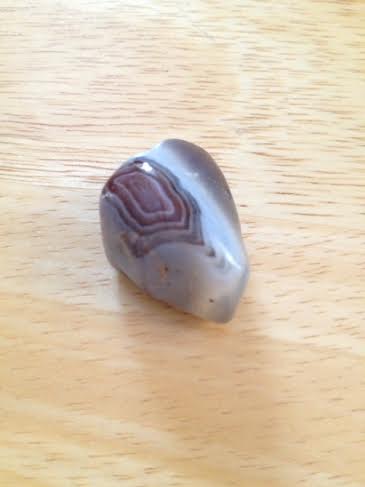
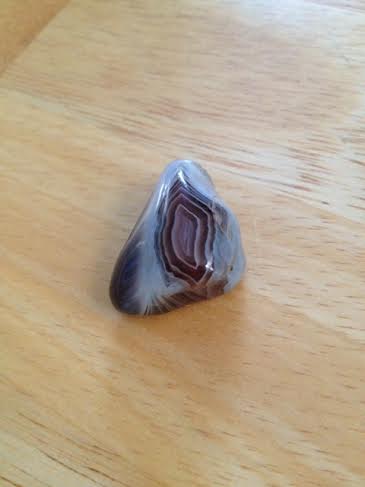
I love Botswana agate. It looks like this.

agate4

It looks like a topographic map, but not flat.
agate2

Here’s a necklace I made with two different kinds of agate. The small round ones are Botswana agate. The tabular ones are bamboo leaf agate.

agate1

Closer.

agate5

It doesn’t really look real. It is hard to believe that God made something so amazing. But then again, God is constantly making amazing things and we are constantly taking them for granted. Just look at a bug – any bug. It is totally mind-blowing to me that something that small is self contained and alive. Surely it needs more space to be a fully functioning being, right? We do. We humans need quite a bit of space for our bodies to have all the stuff they need to work.

But I think that is the point. We often compare things to ourselves, because it is the only reference point we have. We look at something as tiny and intricate as a piece of agate with a bunch of fabulous lines on it, and we think it can’t be natural. Surely a human made that.

We forget that we ourselves are part of creation. We are not the most creative things around. We are co-creators – but God is the One that created us. The only reason we are able to be creative is because God created us with this impulse and ability.

I used to carry around a coin that was dated exactly one hundred years before I was born. I carried it around to remind me that the world existed long before me. There were people who lived and loved and lost long before me, and will do so long after me. I carried it to give me a sense of perspective.

This is part of why I like Botswana agate. It reminds me to stop and look at tiny things, and appreciate that God is indeed in the details.

About face – on social media addiction.

Facebook has been my addiction for several years. The more I use it, the less I actually do that is meaningful. I’m trying to resist the impulse to check it multiple times an hour.

I’m like my Mom, who lit up a cigarette every 20 minutes she was awake. Instead of flicking my Bic, I’m clicking a mouse. I probably won’t get cancer from checking Facebook this often, but I’m just as surely losing pieces of my life.

So, like with any other addiction, I need to study it and replace it. I need to study the power it has over me, and dig down to what “hole” I’m trying to fill with it.

Then I need to address that underlying issue and fix it or make peace with it.

Part of that is filling the “hole” with better things. For me, that means writing and drawing and beading. If it was warmer outside I’d probably add in walking. Maybe I’ll do more yoga.

But I feel it is critical to not substitute one addiction for another addiction. Even healthy things can be misused and abused. It isn’t about the thing but the reason behind the thing or the intent.

If we are not being mindful, we are being mindless.

Being mindful is what makes us different from animals.

Prayer makes me mindful. Being thankful makes me mindful. I’ll start there.

Also, part of it is being observant. I’m noticing that I want to check Facebook, and just observing that feeling but not yielding to it. That alone is a big deal. I’m trying to make it harder to do as a way to remind me of my intention. Instead of having my phone right next to me, I’ll have it in another room, and turned off. Instead of having the Facebook icon on my Kindle, I’ve removed it from the carousel so I have to go into the Apps page to access it.

These things slow me down so that I remember. It has to be a conscious, intentional act to check it. That is my goal – to have everything I do be conscious and intentional.