Apologize! (?) – we are being distracted.

My two cents on the “Hamilton” hullabaloo. He should lead by example. How about he apologizes to the veterans with PTSD who he said were “weak”? Or perhaps the women he said were fat and ugly? Or those he sexually assaulted? Or the people who are disabled? Or basically everyone who isn’t a white male? He should apologize first, to show us how it is done. This is what leaders do.

But – here’s the important part. We are being distracted and divided again. He’s leading the dance. We are all puppets when we get distracted like we are on such little things. This is what he wants – to divide and distract us.  Don’t be fooled.

Stay focused. Be alert. Take care of yourself and those around you.  Take care of marginalized people in your community. If we each take the time to re-direct our energy, we’ll get through this. No longer can we count on the government to take care of us.  We’ve given away our power for too long anyway.  It is time for the American people to take care of each other.  We must.  We will be stronger for it.

The Horse, Hunter, and Stag

I was working on an art journal page recently and started digging through my paper collection.  I have some ephemera of my own, but I also have a stack that I’ve bought from a lady who meant to use the items for her own art. She soon realized that she had more ephemera than time for art. It turns out she has a great eye for things that spark creativity.  One of the pieces was a page from a book of fables – stories designed to teach us something.  I think this one is remarkably appropriate for what we are experiencing now.  The entire wording is contained between the lines below.  My comments will follow.

————–

A quarrel had arisen between the Horse and the Stag, so the Horse came to a Hunter to ask his help to take revenge on the Stag. The Hunter agreed, but said: “If you desire to conquer the Stag, you must permit me to place this piece of iron between your jaws, so that I may guide you with these reins, and allow this saddle to be placed upon your back so that I may keep steady upon you as we follow after the enemy.” The Horse agreed to the conditions, and the Hunter soon saddled and bridled him. Then with the aid of the Hunter the Horse soon overcame the Stag, and said to the Hunter: “Now, get off, and remove those things from my mouth and back.”

“Not so fast, friend,” said the Hunter. “I have now got you under bit and spur, and prefer to keep you as you are at present.”

If you allow men to use you for your own purposes, they will use you for theirs.

—————

It is now time to be aware and awake to our divisiveness. Our lack of unity with each other and within ourselves allows us to be led astray by others.  It renders us passive and not active members of life, of community.

It is not time to worry or complain about those who seek to divide us – to put us into “us” and “them” categories, who want to bait us like fighting dogs.

To be against those who seek to use us for their own gain is to further be drawn into the spiral.  It is to become that which we are trying to be aware of.


The goal is to be aware of every time you are distracted.

Notice when you are being baited, being told that “they” – whoever “they” are – are the reason that you are down.

“They” aren’t the reason for why you feel the way you do.  “They” are the same as you.  They are struggling too.

It is easy for people to pick on those who are seen as weaker.  It is easy to scapegoat.  Don’t do it.  Rise above. Don’t be drawn into that game.  Turn it upside down.  Notice who you are being told to be afraid of, to hate and instead make friends with them.  Learn everything you can about them.  Join up with them for your common cause of working together.

Remember the old phrase – “United we stand, divided we fall.”

Remember the motto on the back of the US dollar bill – “E pluribus unum”.  It means “Out of many, one.”  It means we are stronger together.

It is time to stop being scattered and divided.  We allow others to use us when we are like that.

Careful in that car

There’s something about driving that makes you forget what you’re doing. It is easy to get lulled into a sense that driving is more like watching a movie or playing a video game than real.  Perhaps it is the climate control so you don’t have to experience the weather.  Perhaps it is the good suspension that smooths out every bump so you don’t experience the road.  It is easy to forget that the other cars on the road are real and filled with people. It is easy to forget that one wrong move and someone will die.


The most aggressive drivers on the road are those who drive large trucks, like Ford F-150s. They are so high above and removed from everyone else that they seem to forget that there is anyone else on the road. These vehicles are very sturdy and give a sense of protection to the driver, but result in a sense of threat to everyone else, because the driver often drives as if he is the only person on the road.


I think it’s a good idea to have a car that has lightweight doors that make you realize how fragile and how thin your protection is between you and other cars. I think it’s a good idea to have a car that doesn’t have quick acceleration so you don’t feel you can cut off other drivers. A slow car makes you wait for an opening rather than forcing one. I think it’s a good idea to think of your car as a two thousand pound weapon. This way you will be considerate on the road.


When you ride a motorcycle you are fully in the elements. You are made aware of every moment and everything has to be done very carefully and mindfully or you will get hurt. The same is true for bicyclists or walkers.  The less you have between you and others, the more careful you have to be, but also the more considerate.  Imagine how many fewer accidents there would be if everyone drove as if they had the same level of protection as a motorcyclist.


What if we all had one 800 numbers on the back of our cars saying “How am I driving?” How many of us would get complaints? What if police pulled people over for driving well? How many of us would get stopped then?


Here is a prayer to be said before starting your car:

Lord, help me to remember to be careful on this road. Help me to remember to look out for the safety of myself and for others. Help me to drive in a way that would bring honor to you.  Amen.

Pretty little corner

Is it possible to miss a place more than a person? It is acceptable to say that the garden is more beautiful than the gardener? The creator made the creation. Surely the beauty of it is a reflection of the beauty of the one who made it.

I once was part of a debate on an artist page, where a customer was dismayed to see that so many artists used their art as their profile pictures instead of a head shot. He wanted to see what the person looked like. I commented that the outside of the person is arbitrary. We have little control over that. But what a person makes, their art, comes from the inside. That is their true face. That is what they truly look like.

I am coming to realize that there are things in my life that I will never see again. They pass, or change, or go away before I realize it. The moment is gone. The chance to really notice it is over, and will never happen again. Places that I loved as a child, that I spent a lot of time in, are no longer available to me. People move, or die, or stop being friends. Places burn down, or get remodeled. Change is the only constant.

Here is a picture of the garden at a family friend’s house. I found this online, after realizing that I could never go there again. They’d moved to assisted living and sold the house. The husband had grown too frail, too ill with Parkinson’s.

ellen2

We’d spent a lot of time at their house when I was growing up, and after my parents died I visited monthly. The couple here were like extra parents to me, but that has changed. He has died, and she has grown distant. The mourning is many layered.

He was from Iran, but long enough ago that it was called Persia. His name was Mohammed Hosein Rafiee (pronounced Raff-ee-ee) but was sometimes called “Joe”. He was a metalurgist at Combustion engineering. She is named Ellen, and they were married longer than I have been alive. Sometimes I think they stayed together out of habit or inertia. Sometimes I think the house is what kept them together. Neither wanted to leave it.

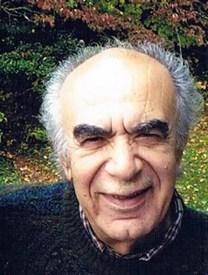
This is a photo of him that I got from the obituary that was online. Why had I not taken the time to take a good picture of him? I have some, I’m sure, but they are casual snapshots. Why can’t I find them? How did I not know that this was not forever, that he would be gone one day, that everything would be gone?

Hosein

He called the garden in Persian “Zebah Kenar” – pretty little corner. Ellen made it. He’d designed the house in a very Japanese style, where it wrapped around the garden. Most of the rooms had windows that opened out onto it. In Japan, the symbol for “home” is the the one for “house” plus the one for “garden”. A garden makes a house a home.

Hosein understood this. The soul of the place is the center, the inside, the living part that you work on.

I just found a picture of the garden that I’d taken.
Rafieepond

…and after some digging, I found some more. Here are shots of the lovely lantern by the front door.  Almost nobody came in that way, but you had to drive by it to get to the “real” entrance.


The window on the right side is one that Hosein designed and made himself.  He taught himself how to do stained glass work just so he could make the windows for the house.  They do not look like beginner’s efforts.  He chose a difficult design and rose to the occasion.  He never made a stained glass window again after he made the ones he wanted for this house.

I have a fondness for up close pictures and unusual angles.  These were taken near the front door.  The house is very close to the edge of the bluff.  A short walk out the back door and you will fall off a very high sheer cliff face.


Here are some that give you an idea of the shape of the house.  There was a lot of height in the rooms – only a small bit of the height was used for upper rooms.  The living room was quite cathedral-like.


Here is a nice picture of the front door, the lantern, and the windows he made.
r100

I know I have more pictures of the interior.  I’ll add them when I find them.

I found this – from my wedding. The only person I still speak with is my husband. How odd that I thought these people were so important to invite for this event.
raf

and yet more I’ve found, on my husband’s phone.

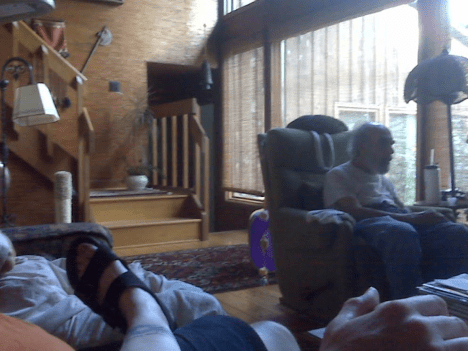
This was taken on the sly while on a visit a few years back.  This is in the living room.  Hosein is on the right.


1

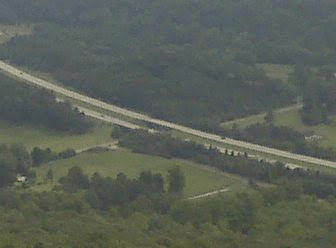
The view from their deck.  When they built their home this road didn’t exist  – thus the noise didn’t exist either.

4

This might be at their house – but then again, it might be at the Choo-Choo.  I wonder what happened to their Koi when they moved?  They surely didn’t take them with them.  Koi live a long time.

2

Death is every day

There’s an old story about a man who was walking towards a town and he sees Death walking along beside him. They start to talk and Death says that he is going to kill everyone in the town. The man bargains with Death and says “Please don’t kill that many people” and Death says “Okay, I’ll only take 100.” When they get to the town, the man warns everyone there that Death was there and he was going to take 100 people. After a week a thousand people had died. The man finds Death and speaks with him, saying “You promised you would only kill a hundred people!” Death replied “I did. Fright killed the rest.”

There’s yet another story going around that says that the world is ending soon. This most current one says that they miscalculated the Mayan calendars and that it really is going to be June 3-4. This doesn’t give us a lot of time to get ready.

When my mother-in-law found out that she had a terminal diagnosis of cancer, I asked her what she wanted to do. She said she wanted to live. I pointed out that there is a difference between living and being alive. What do you want to do with the time that you have? What do you want to be remembered for? How do you want to contribute to the world? She didn’t have an answer. All she knew was that she didn’t want to die.

Our life is God’s gift to us. How we use it is our gift back to God.

“Ask not for whom the bell tolls. It tolls for thee.” – John Donne

Jesus had many parables about constantly being ready for the kingdom of heaven. This could be interpreted as death or a change in our way of understanding. Perhaps the “Kingdom of Heaven” can be seen as a death of the way things have always been, and a new life of peace and harmony.

But he also said that even he didn’t know when this would happen. So how could these predictors know, when they aren’t anywhere as connected as Jesus, who heard directly from God? They don’t. But it doesn’t matter. The idea of being ready for death is useful.

People many years ago would keep a souvenir of a loved one who had died. It was called a “memento mori” – a reminder of death. It was not only to remember the loved one, but also to remember that death is their fate too.

Our society has sanitized death to the point that we don’t even see it anymore. Our dead are taken away from us by professionals. We don’t experience death as a part of life like our ancestors did just a hundred years ago. They took care of their own dead at home. They washed them, laid them out, built a coffin, and buried them, all on their own. Now because that is done for us, we are divorced from the idea of death. We see it as an aberration, instead of as normal, which it is.

Death waits for nobody. Death is every day. There are no second chances, no do-overs when death comes. Death isn’t a punishment or a failure. Death is the natural result of life. It is best to make friends with it because it isn’t going away.

What would you do if you knew you had only a year to live?
Why aren’t you doing that now?

Poem – What if?

What if we women
started working on our insides
as much as we are expected
to work on our outsides?

What if we got our beauty
from meditation
rather than makeup?

What if we spent
our money and energy
on learning how to be wiser
rather than
how to be more attractive?

What if we made our goal
to be a better person
instead of to be a wife?

Imagine how much more beautiful
we would be
after giving up
our worries and cares
about owning the latest fashion,
about being the most popular,
about attracting the right man.

Imagine how much stronger
the world would be
if we could focus on
what we really want to do and be
rather than the
narrow range
we are allowed?

We don’t have to wonder.
We don’t have to imagine.
It is today. Start now.
Start right where you are.

Examine everything you do and ask
“Do I want to do this,
or is this something
I was told to do,
I was told I would like,
I was told I must do
as a woman?”
If it still fits you, do it.
If it no longer serves,
(perhaps it never did)
then leave it and walk away.

You can be a full woman
and be married
and wear makeup.
Don’t get me wrong.
Just make sure
that is what
You want to do,
and not what you are told
you must do.

Viriditas, energy, and time

Saint Hildegard’s “Viriditas” refers to life force, essence. Many translators simply say that this neologism means “greening”, which it does at the most basic level, but it means so much more than that. It is power, energy, growth. It is the very marrow of what it means to be living. You know when you meet someone whether they are simply existing or truly energetically alive. This “Viriditas” is the difference. We have the ability to tap into this force, a gift from God, and be truly alive. We are then expected to use this power in the service of God to help our fellow humans.

It is what Moses talked about when he said “I set before you a blessing and a curse – therefore, choose life.” Life is the blessing. To grow, to use your gifts is the purpose of life. We must choose to tap into the power of God, and then choose to use it wisely. We are not meant to use this energy for our own personal gain, but to benefit others. We are meant to take what God has given us and magnify it.

Two men having sex together is seen as a sin in Judaism because it is “spilling of the seed” – it is seen as a waste of creative life force. The act isn’t the sin so much as the waste of creative force. Their energy is not being used to create, but is used for personal means. They are not making anything with their energy. It is a mis-use of a gift from God.

Likewise, to create laws against homosexuals is also a waste of power. Imagine how many hungry, homeless, and hurting people could have been helped with the money, time, and energy that have been spent on creating laws against people who are gay or transgendered.

The focus must always be on wisely using what God has given you. The energy must be turned outward to help people, with full trust in God.

This is what Jesus talked about in the parable of the talents. Use what you have and make more. Don’t keep energy to yourself.

This is at the heart of the miracle of the loaves and fishes – which happened twice. Take what you are given and add to it. Feed people, in as many ways as possible. Food, encouragement, love – humans need all of these. Our gifts are meant to be shared, not hoarded up.

We are meant to be fruitful and multiply as much as possible, and this does not necessarily mean to have biological children. Our kindness, generosity, compassion are our children as well. Our creative acts – making music or art – are also our children.

This is also about the sanctification of time. The very first commandment that Israel received in the desert was the mitzvah of the calendar. They were to use the moon as their way to mark time, to note its passing, to remember and be mindful about time. It is important to be intentional about the use of time, because it too is a gift from God.

Take nothing for granted. Waste nothing. Trust your gifts and share them with the world, with God’s help.

Remember what Jesus did – he gave thanks to God first before he performed miracles. Tap into the “greening” power of God by giving thanks first for what you have, then turn it outwards to give to others.

Twins.

two

Their mother had always wanted twins, but not like this. Carol’s biological clock was winding down about the time her life was picking up. When she finally had the time, money, and energy to have children, she’d gotten too old to even consider having multiple pregnancies. She wanted at least two children for the same reason people brought home two puppies or kittens – they would always have a playmate. With time slipping away on her, having twins seemed like the best option.

She never even considered adoption. The children had to be hers. She knew that down to her bones. The idea of “family legacy” was so firmly imprinted onto her identity that taking in somebody else’s unwanted children was out of the question. It wasn’t even on the table. It wasn’t even in the room.

She couldn’t afford to chance it. So she went to the local medicine/miracle worker. The gnarled old being was a fixture of the community that everybody knew about but nobody talked about. She? He? Who knew? At that age it was impossible to tell. His? Her? voice was raspy and the clothes were baggy enough to conceal whatever shape s/he might have. Nobody knew, and everyone was afraid to ask. “Doctor” was the being’s title as well as name. Fortunately this language didn’t differentiate gender in its words or it would have been more awkward. Undefined gender seemed somehow appropriate for this profession, one of yes/and, of greys, of liminal spaces, of betweens. The Doctor’s shop/office/home was like that as well, beyond definition.

Carol had written a letter asking for an appointment. This was how it was done, how it always had been done. The Doctor felt that websites were too fiddly, too impersonal. The message would get lost. Even phone lines were eschewed.

Ideally, the client (never “patient”) would happen to meet the Doctor while they were both out doing errands in the village markets. A lot could be done to further the desired outcome if both of them were on the same time-line. Never quite syncing up was a bad sign. But, communicating by letters was a good second choice.

They agreed upon Wednesday the third, at 11:30 in the morning. The Doctor arranged visits by feel, rather than by any usual method. It was the same as how a safecracker worked, or a dowser, or a chef. It was all by feel. No astrology charts or Ouija boards or runes. No Day Planners either. There was never a receptionist or assistant. The Doctor’s motto was do it all yourself, or don’t do it at all. Too many cooks spoil the broth, and all that.

Carol left her house that Wednesday morning very excited and hopeful. She wore her favorite red jumper and galoshes even though the weather forecast promised a partly sunny day with only a 10% chance of snow flurries. They were her favorite galoshes, purchased used at the corner Oxfam three years back. She’d always had great luck when she wore them, so they seemed to fit the bill for the day. She even asked off from work for the rest of the afternoon so she could get started right away on whatever course of action the Doctor recommended.

Everything the Doctor did was by suggestion or recommendation – never an order, never even a request. Everything had to be voluntary. The client had to be a part of the process, never acted upon, but with. If the Doctor decided it was possible to effect a change there was always a list of recommendations. It wasn’t always possible to obtain or do all of them, either due to the time of year or available resources. The client, if accepted, (not a given) would then go out armed with that list.

Instructions could include such varied examples as “Stand barefoot on a newly harvested field for 10 minutes, facing west. Be sure not to be noticed. This must be done sometime between the hours of 8 AM and 3 PM.” Or perhaps something like: “Buy and eat some kind of fruit you have never eaten before.” Or maybe even: “Write down your greatest hope for your future on a piece of borrowed paper. Set it afloat on a stream.” Generally, at least two of the three options must be done, in whatever way the client could. The “how” was up to interpretation, and was part of the cure.

Wearing a certain color for a week (at least) was a common request, although the color changed with the task at hand. Often this was how other people in the community knew you were under the Doctor’s care. They never would ask, though, out of respect, or perhaps fear. It was difficult to not be noticed when someone started wearing shades of teal or salmon or magenta, especially day after day.

Almost immediately after having sex that Friday night a month later, Carol knew she was pregnant. She didn’t dare breathe a word of it to her partner for fear she might jinx it. She didn’t even go to the pharmacy to get a pregnancy test for the same reason.

She wasn’t sure where her self-imposed superstition came from, and that might have caused the aberration. Maybe it was the galoshes. Maybe the orientation of her bed. Maybe she didn’t follow the list correctly.
Later, after the birth, the Doctor consulted with Carol. They both looked at the babies (baby?). They went over everything she did, everything she ate, everything she thought. She was sure she had the right intention during the act. It’d been all she’d been thinking about for months, so how could it be anything else? Twins. Two babies in one pregnancy.

The Doctor had been very insistent with her that intention was important for all pregnancies, but especially for hers since it was so specific. The Doctor explained that ideally, people would have sex only when they wanted to have a child, and then they would do it mindfully and prayerfully. The moment of conception was when the soul chose to incarnate. This is a delicate and perilous time. There were many souls about, of all kinds, waiting to enter a body. Some entered at conception. That was ideal.

Others chose to take up residence afterwards. This resulted in what psychiatrists called “multiple personality disorder”. Priests called it “possession”. New Agers called it “walk-ins”. It was all the same thing, and it was all less than desirable.

The Doctor explained that ideally the potential parents would pray before having sex, alerting the souls, the beings-in-waiting, that an opening, a doorway if you will, was being created for them. The parents would meditate on the characteristics and personality of the child that they hoped to welcome into their lives. They would speak about what kind of home they could provide.

In a way it was like a blind date, or perhaps more like an arranged marriage. They were going to be together a long time. It was important to do this well, rather than leave it to chance.

The trouble is, too many people didn’t think it all before having sex. It was as if they were swept away, like they were in a stagecoach, and the horses got spooked. Before they realized what was happening, they were where they hadn’t planned on being, because they hadn’t planned. Sometimes they got stuck there. Just like with marriage, it is a good idea to choose wisely before this long-term commitment.

Too many babies were being born without souls properly attached to them because of this. Some had very weak souls and had sensory or neurological disorders because they weren’t fully in the body. Some souls weren’t even human.

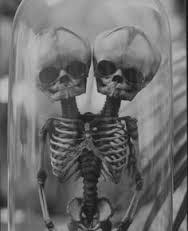
But that wasn’t the problem here. Carol and her partner had prayed for two souls, alright. The only problem is that they somehow ended up with two souls in one body. This wasn’t uncommon, but could take different forms. The obstetrician had explained that sometimes twins are conceived but one is absorbed. The result? One baby, but it might have its twin as a vestigial part of its body, in the abdominal area, for instance. Or if the fusing is complete, it will have chimerism. Or in this case, conjoined. The obstetrician couldn’t explain why this had happened, but the Doctor could, after consulting with the souls of the twins.

Twins were wanted, and twins came. They were twins in the truest sense this incarnation. They were two, but one. When they were in spirit form, they were separate but they wanted to always be together.

In their previous incarnation they had been twins in the usual sense. That family had also wanted twins, but shortly after their birth the father had gotten laid off from his job. The economy had taken a downturn and he had difficulty finding another job. Months went by and the savings grew smaller. Their mother grew more and more exhausted with caring for them and with worry. Finally the decision was made. It was the same decision that some families made about their pets under similar circumstances. They were “given away to good homes”. Unfortunately in this case, they were separate ones. The children always felt that half of their very being was missing from that point onwards.

After their death, they had waited a long time to find another family that wanted twins. This time, they wanted to make sure they couldn’t be separated ever again.

Turn away

I’ve seen several pictures of things that have really disturbed me recently, and rather than just turn away again, I’ve decided to meditate on exactly what I find repulsive about these pictures. This is part of my recent decision to be more mindful. It is not an easy practice, but it is necessary for being fully conscious and aware of my actions.

These images aren’t things that people normally would turn away from, such as violence or abuse for instance. Those are abhorrent as well, of course. What I’m writing about here are images of people who are in ICU, hooked up to machines and tubes. I never gave it a second thought as to why I was repulsed until I saw a video about a machine that can keep a heart alive outside of the body in preparation for transplant. That tipped the scales.

What disturbs me about it is not exactly the same as what disturbs me about the ICU pictures, but it is a good thing to start with. The donor was dead, as far as doctors could determine. The brain had ceased functioning. The heart had been removed, and rather than keep it on ice as was normally done in a transplant situation, it was hooked up to a machine that replicated the environment inside the chest. It was kept humid and warm, with blood circulating through it. This heart was beating just like a normal heart, but it was inside a plastic box. There was no person attached.

I also saw a video of two mothers who had a strange connection. Mother A had a young child who had suddenly died due to trauma. She had decided to donate his organs. Mother B’s child had received his heart. They met three years later and mother A used a stethoscope to hear the heart of her son beating inside the chest of Mother B’s daughter. It was supposed to be a touching video, but I was really disturbed. Something seemed deeply wrong about this.

I kept being triggered by these images. I decided to examine the original related triggers – images of people in ICU. I don’t seek these out – people share them sometimes on social media as part of a story.

One was about a new mother who had been in an accident and the nurse brought her child to her so she could breastfeed her child. While the person who posted it was pointing out the value of breastfeeding, it was very disturbing. The mother was not present in any form other than her body. She was not being helped to breastfeed. The nurse put the child to her breast and that was it.

I look at a sketching website every day, and today there was one of a man in ICU. The sketcher even commented about it, wondering if it was ethically correct to sketch such a thing. He did not mention if he’d thought about the ethics of sharing it online as well.

I read something recently that speaks to all of this in a useful way.

There is a Jewish belief that it is improper to have an open casket. To do so is to violate the privacy of the person. It is also putting focus and attention on the wrong thing, as the “person” is not there – their soul has left. When there is just a body and not a soul, it is not a person. It is a shell, a husk. An open casket is an insult to the person who had inhabited that body, because they have no say over how they are seen. They have no control over what happens to them. They are fully exposed for the world to see and cannot do anything about it.

I think this is at the center of it all. To show pictures of people who are not at their best (to say it lightly) is to violate their rights. It is an invasion of privacy. It is embarrassing. To focus on body parts rather than the whole is equally unethical.

The lady’s son was no longer present. His heart was just a piece of muscle, doing a job. The heart in the box for transplant was moving as if it was alive, but as it was not attached to a person, it was simply the illusion of life. There was no soul in it. It was the same as looking at a machine.

Being mindful and considerate of others’ feelings also applies to not sharing pictures of people who have passed out from being drunk or are intoxicated to the point that they are unaware of their actions.

Remember the story of Noah and his sons?

Genesis 9:18-27
18 Noah’s sons who came out of the ark were Shem, Ham, and Japheth. Ham was the father of Canaan. 19 These three were Noah’s sons, and from them the whole earth was populated. 20 Noah, a man of the soil, was the first to plant a vineyard. 21 He drank some of the wine, became drunk, and uncovered himself inside his tent. 22 Ham, the father of Canaan, saw his father naked and told his two brothers outside. 23 Then Shem and Japheth took a cloak and placed it over both their shoulders, and walking backward, they covered their father’s nakedness. Their faces were turned away, and they did not see their father naked. 24 When Noah awoke from his drinking and learned what his youngest son had done to him, 25 he said: Canaan will be cursed. He will be the lowest of slaves to his brothers. 26 He also said: Praise the LORD, the God of Shem; Canaan will be his slave. 27 God will extend Japheth; he will dwell in the tents of Shem; Canaan will be his slave.

The son who saw him in his drunken state, unable to control himself, was cursed, along with his children. The two sons who covered him and made sure not to see him exposed were blessed.

This is the core teaching. To look at someone who is dead, or like dead (in ICU, or passed out due to intoxication) is an insult to their very being as a person. It is disrespectful. It is a violation of their privacy. It is the same as stripping someone naked. One might even go so far as to say it is equivalent to rape, as the person is treated as a thing and not as a person.

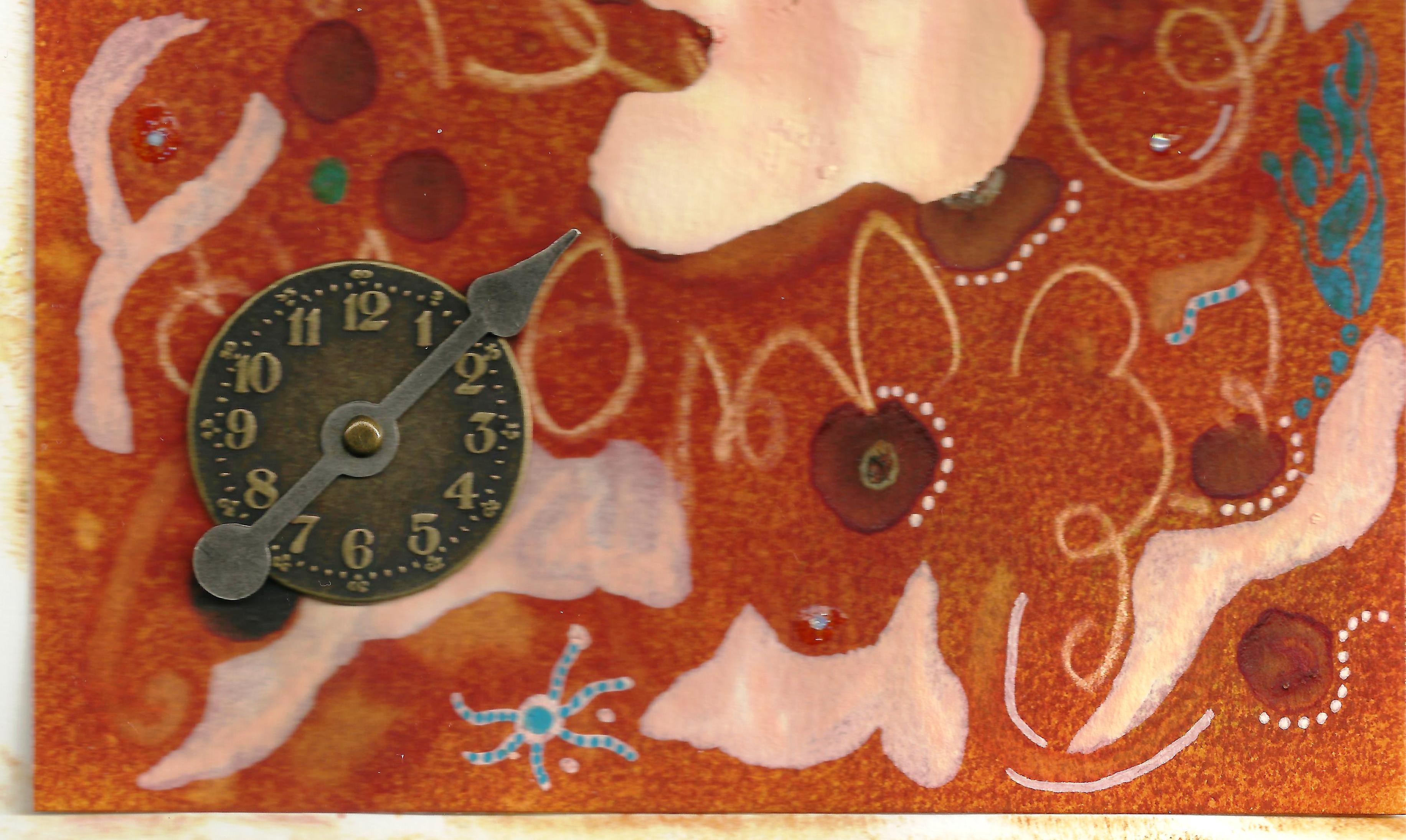
Lost time

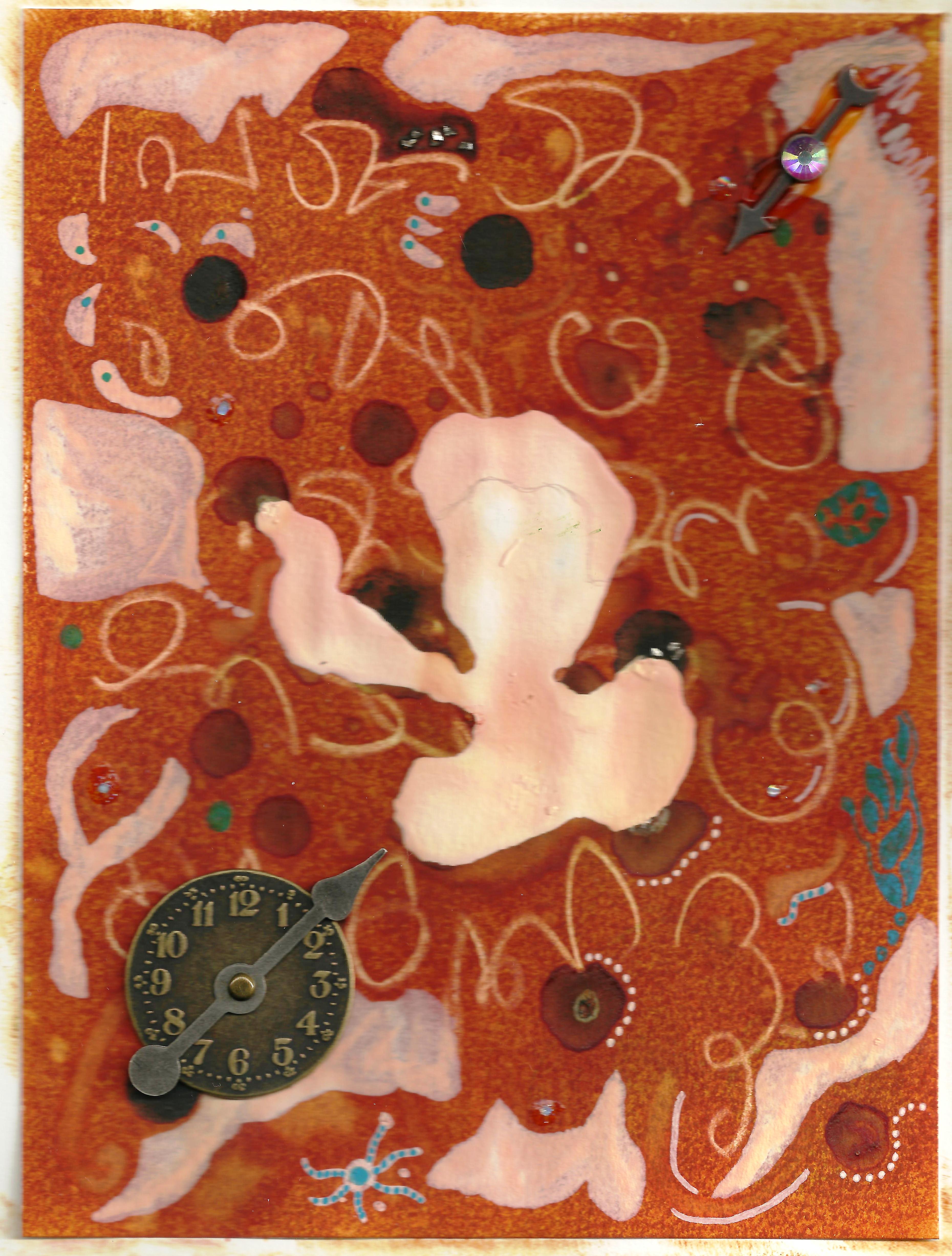
Lost time 012016

Inspired by/things that came up during the creation –
Fungi, soy/wasabi leftovers, debris, passage of time, look close you might miss it, beauty in ugliness, things passed over.

(Close up)
Lost time 012016 close

Materials used –
6×9 piece of “Pacon” watercolor card stock
Glue stick
White crayon
Distress Ink – Rusty hinge, crusted olive
Dr. PH Martin’s Bombay sepia ink
“thirsty brush” technique
Toothbrush with water to spatter
Used salt (previously used in watercolor painting, reclaimed)
“Crushed glass” glitter
Water/paintbrush
Holographic nail polish
“gelly roll” white pen
Light blue “super gel” pen
Poured white acrylic paint mixed with water
Decoupage glue
Tim Holtz “idea-ology” clock pieces
Glamour glitz crystal

Made 1-19 to 1-20-16