Book sniffer

I am a book sniffer. The older, the better. Perhaps that is part of why I chose to work in a library. I love the smell of books.

Now, I didn’t get hired at an old library. It was new when I started. You could say it and I started at the same time. It is now 13 years old and the books are just starting to smell pleasant. Fortunately we are part of a system and we get old books in on hold all the time. Every now and then there will be a special one.

A good book smells like fall leaves raked into a pile. It smells like the pile of leaves after you have jumped into it.

A good book smells a bit like vanilla pound cake, fresh out of the oven and cooling on the windowsill.

A good book smells faintly of pipe smoke from your grandfather, while he is warming up by the fire after coming in from the rain. He is sitting in a soft worn leather armchair, wearing his tweed jacket. It is a little bit of all these smells.

A good book smells comfortable and friendly. These smells are the smells of safety and home.

There was a coworker once who shared my love of smelling books. When we’d find one, we’d share it. We’d take the book in our hands, admire the cover and the patina of age on the pages, open it up and have a good sniff.

The branch manager saw us doing this once and openly wondered about our mental health. But, then again, she never read a book to our knowledge.

Now, not all books smell good. Some smell of feet, and cat spray, and the sad sickly smell of too many medicines and ointments and not enough fresh air. Way too many books smell like cheap cigarettes.

But it is the good smelling books that I cherish.

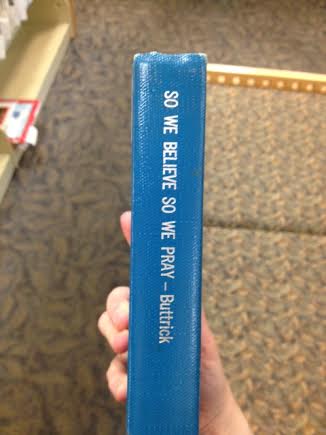
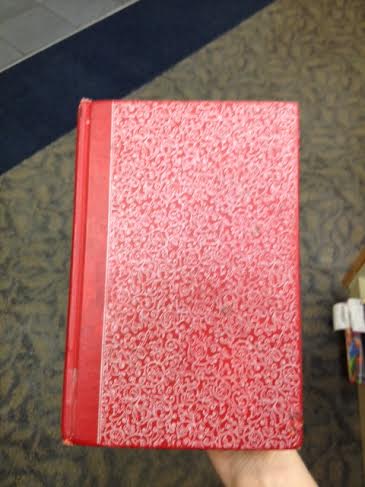
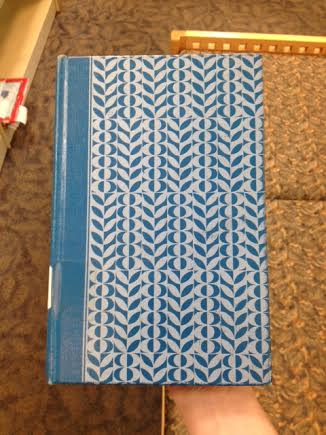
How can you spot a potentially good-smelling book? Covers like this are a sure thing. The original covers have been taken off and the book has been rebound in this amazing stuff. It is beyond the hardness of a hardback. This kind of stuff is going to last forever.
1

6

The spines are embossed, either in gold or silver.

2

7

The edge of the book looks like this. Note the worn nature and the color.

3

The corner edge is rounded. That is always a nice touch.

5

All these different bits point to really old books. That is what you are looking for. Smell the edge, and if that is OK, then open it up and smell the gutter (the inside, opposite the spine) of the book.

Modern books with their fancy ink and high quality paper just won’t do. You are looking for old books with old-fashioned paper.

Happy sniffing!
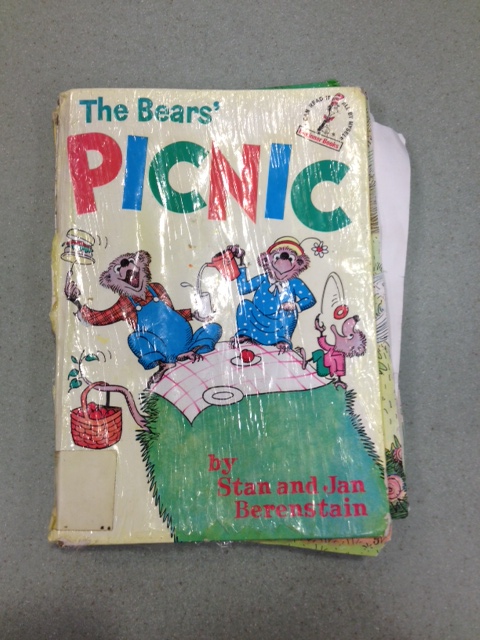
A sad library book.

A book was returned in the book drop this morning. This is what it looks like.
book 1

This is amazing. There is no way the patron checked it out like this. Sure, it has had over a hundred checkouts. Sure, it is over 10 years old. But there is no way it had this water damage when we checked it in.

Books aren’t supposed to be wavy.
book 2

Pages aren’t supposed to be falling out.
book 3

Now sure, we are human and we make mistakes. We miss things sometimes. But then it is on the patron to bring it to our attention while in the library and not check it out.

Returning it in the book drop, like we wouldn’t notice it, is really squirrelly. So of course I billed the patron. It is only $7.99, plus a processing fee. She could easily buy a replacement copy and bring it in and not have to pay our fee. We actually like that better. That way we get a copy of the book.

But that would require bringing in the book, which she didn’t do to start off with. Maybe she was busy. Maybe someone else returned it for her. But there are some things you should do in person. Admitting that you destroyed a book is one of them.

I can’t tell you the number of people who say “What do you mean I have to pay for this? You can still read it!” Or “I can’t believe I have to buy a new copy of this book – it is used!”

All books in the library are used. If they are checked out even once they are “used”. But if the patron hadn’t damaged the book, we wouldn’t be having this conversation. Books should be returned in the same condition that they were checked out. This seems logical. But sadly, not everybody shares this opinion.

Books come back sopping wet. Books come back dry, but with wavy pages from water damage. Books come back with pages that were ironed as an attempt to press out the wavy pages that were created from water damage. Here’s some tips. Don’t read library books in the tub. Put books in a plastic bag if you are bringing them back on a rainy day. Better yet, don’t return them on a rainy day and just pay the late fee. It will be cheaper than being billed for it.

Water damage isn’t the only damage that occurs to library books. Books frequently come back chewed up by pets. Very common are the “dog training” books that come back chewed up. Somehow I don’t think the book did the trick. Sometimes people deny that their pets chewed up the books. The best reply was that the person said he didn’t even have a dog, and accused us of taking it home and letting one of our dogs chew it. Now, that is insane. Why would we do that? It is as if he thinks we want people to yell at us. Trust me, that is the farthest thing from our minds.

Yes, people yell at the staff in the library. It isn’t the “safe” place you think it is. Anybody can come in, and they do.

Books come back with coffee stains, syrup smears, and jam spots. Yes, we bill for that. Books come back with sentences underlined, pages dog-eared, and “bad” words blacked out. Yes, we bill for that too.

Strangest damage? A whole slew of books came back with the dust covers torn off and the books covered in a fine grain dirt. It turned out that the patron’s younger son had taken the books to the ballpark while they watched the older son play baseball. He’d taken off the dust jackets “to protect the books”. The dust jackets are on the books to do exactly that. Taking them off not only exposes the book to damage, it is also a pain to put the cover back on.

The moral of the story? You can do whatever you want to your own books. But library books aren’t yours. You get to borrow them. You don’t have the right to damage them in any way. They belong to everybody in the county. So be nice to library books, out of thankfulness that you get to borrow them.

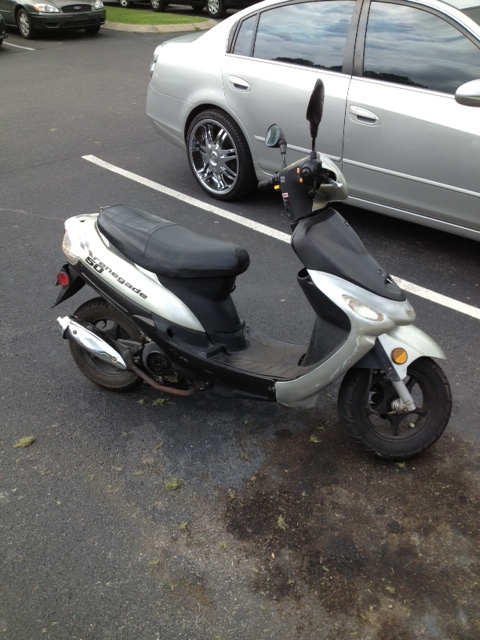
Renegade – meditation on a scooter.

I saw a scooter parked at my work. The make was “Renegade”. My first thought was that the manufacturer was trying to make a scooter seem tough. A scooter isn’t like a motorcycle. Motorcycles are for renegades. But scooters? Not so much.

renegade

But then I thought again. It takes a bit of counter-cultural thinking to drive a scooter. It uses less gas. Some are electric. So you are as far away from the Hummer mentality as possible. You are being environmentally conscious in a society that prides itself on big cars and big debt.

You are also risking your life. You don’t have two tons of 14 gauge steel insulating you from the vagaries of drivers. Driving in Nashville is risky business. People don’t pay attention normally, even when they aren’t texting and updating their Facebook and eating their lunch. Zipping around on a scooter is pretty brave.

So perhaps it is a renegade act to drive a scooter. I still think scooters look funny. But perhaps that is my problem. I think “tough” should look a certain way. I forget that Mother Teresa was tough, and so was Gandhi. “Renegade” isn’t about looks but action.