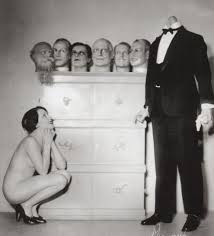
Merrick’s twin

experiment

He was a monster, but only on the outside. The real monsters were those who stared at him outright, or talked about him in hushed tones as he passed. He couldn’t help how he looked, but they could help how they acted – but never did. His various doctors over the years exercised cool detachment as one would expect from professionals, but then again they were under his employ. People can usually at least pretend to be nice if there is money involved.

The doctors were certain of the disease, but not so much on the cure or even the cause. They knew only the symptom but not the source. They took his money and made him feel special, but never once let on that there was no cure, only care. They could refer him to clothiers who would happily create bespoke clothing to fit his unusual frame. They knew of carpenters who could construct a bed that would allow him to sleep semi-upright to relieve the pressure on his overworked neck.

Only one person knew the true cause of his deformity, and he wanted no money for the tale. Money wouldn’t cure him anyway, nothing would. John had crossed the wrong spirit one Tuesday night in October when he was 15, and he didn’t even know it.

Movies were a dime on Tuesdays at the downtown three-screen theater and a quarter all other days. Even though Tuesday was a school night, John was allowed out to see the latest film once a week as long as he kept his grades above a B. Even a B- wasn’t good enough and would make him lose this privilege for a whole quarter until the report cards came out again. So every other day of the week he went alone to the library to study so he could go to the movie theater on Tuesdays. Sometimes he went with friends, but he was just as likely to go by himself, savoring the peace of being out of a house with five children. Five young mouths to feed and backs to clothe meant not a lot of spare money for extravagances like movie tickets, but John had convinced his parents that he was going to be an actor when he grew up. Costly acting lessons were out of the question, so learning by watching the finished product would have to do. Even if they could have afforded private lessons, nobody in Palmyra was offering. Actors didn’t move to tiny towns unless they were also close to big towns with big town amenities like airports to take them to where the jobs were. That was one reason John wanted to be an actor, to get out. Palmyra had nothing to offer anyone who was interested in something other than farming.

That fateful night he was thinking hard about how grand it would be to be an actor, where he could be himself and somebody else at the same time. It was like being a twin, he thought. He was so distracted that he tripped over the legs of Mr. Byron, the local eccentric. Mr. Byron wasn’t quite homeless, and he wasn’t quite crazy, but he wasn’t quite much of anything that usual people liked to associate with. Most steered a wide berth around his 5-foot-eight frame, all angles and elbows. The hair on his head was jet black but it didn’t mean he was young. He got his hair color from a bottle of shoe polish, having realized a decade back that actual hair dye was four times as costly. Shoe polish did the trick just the same, and he didn’t mind the smell. Nobody else got close enough to notice.

Mr. Byron seemed normal when you first met him, and young ladies would take pity on him and try to befriend him. They thought that others in the town were unnecessarily rude to him, and they defended him at every opportunity. They’d make excuses for his social gaffes. This was until he turned on them, like everyone else who had gotten close. The young ladies thought he was misunderstood. In reality he was just a misanthrope.

Mr. Byron often sat on the sidewalk near the movie theater with his legs splayed out, taking up half the lane. Usually John avoided him, but this night his head was in the clouds. Later, he thought that the scrape he’d gotten on his knee from when he fell after tripping over Mr. Byron was the extent of his injuries, but he was far mistaken.
It was a month later before he noticed the change. His right side had grown heavier, thicker, denser even. His arm wouldn’t stretch out like it used to. His hand started to curling in like a lobster’s claw. At first he thought nothing of it. There wasn’t spare money for a trip to the doctor anyway, so he did as his Mama had taught him. He drank a glass of water mixed with honey and apple cider vinegar. It was the best cure they knew and usually it worked a treat. But not this time.

Mr. Byron always worked his revenge silently. His Mama taught him that “Revenge is a dish best served cold” and boy, howdy, did he love his Mama. Whatever she taught him, directly or not, he took to heart and made it his own. All of his Mama’s family had the second sight, could see right into you to know what your dreams and hopes were. Trouble was, they also knew your nightmares too. More than that, they knew how to take that raw stuff from deep in your soul and push it, shape it, like so much clay and build it up just like a mug or a vase, able to hold more than what it was before. The good ones in the family could make your dreams come true. The bad ones chose to do the same with your nightmares.

Mr. Byron was unique. He’d take your dreams, shaped them up up up, and turned them inside out, made them turn back on you so even though you got what you wished for, it wasn’t ever like how you wanted.

Normally he kept to himself and didn’t use his perverse talents. In years past some people would seek him out and try to get him to put a curse on another person in the town, someone who’d wronged them, either intentionally or not. At first Mr. Byron refused, but then he came to enjoy the opportunity to practice and hone his craft. Even people who do bad like to be good at it. He felt it was important that the results matched his plan. It was a sad day when something that was to go wrong didn’t, or worse, turned darker and deeper than anticipated. Sometimes people needed a good scare, but ended up scarred instead. It wouldn’t do to make a molehill into a mountain.

All John did that fateful night was trip over Mr. Byron’s legs, so it didn’t seem right what happened next. But that night was just the cherry on the sundae of slights and snubs Mr. Byron had suffered, to his mind.

John had never noticed Mr. Byron, and that was his undoing. John never said hello or good evening to him. He never asked how he was doing, inquired about Mr. Byron’s family, never even invited him to see a show at the theater or out for dinner. Of course, nobody ever did any of these things, but that didn’t matter to Mr. Byron, because John was the one person who crossed his path every Tuesday night for years, so John was the focal point for his rage. There’s only so much being ignored a person can take after all. Rage is like sandstone, built up tiny layer by tiny layer, week by month by year, until it is larger than a mountain and just as hard to see around.

John’s dream of being an actor was turned on him that night, but it took a while before it showed. He’d been imagining how acting was like being himself and another person at the same time when he tripped over Mr. Byron. Mr. Byron caught that wish and shaped it, turned it, and made it true in the worst way possible. John became his own twin, shaped into a chimera of impossible belief. Slowly, so slowly that he didn’t realize the cause and effect, he turned into a monster, half of him crabbed and lumpy, some strange cross of an ancient gnarled oak tree and a mutant crustacean. It was as if his dreamed-of other half was on stage all the time, and John was powerless to make the scene end.

Melissa’s story

3


Melissa knew it was time to leave her job when her boss sent her that email. Nearly 20 years with the same firm and it all came down to one thing – trust. She simply didn’t trust him to be honest. Or fair. Or rational. He was her third boss, but they were all the same. All toed the party line, all had degrees in “CYA”. Normally, she would have put her head down, not drawn any attention, and soon things would blow over or the manager would retire or get transferred.

It took her six years to realize that her job, while saying that it cared for its employees, didn’t back that up with real action. The bullies and incompetents got the management positions. They wrote the performance reviews too, and they were all one-way. All the reviews were top-down, so the subordinates never had a say in how they were being managed. This was the norm all over, so it never occurred to her that it was wrong, never occurred to her that it was possible to change it.

Her friend Bobby had died because of it. He’d drunk himself to death over anxiety and fear, too much stress and a job he had to have to pay his mortgage and his alimony. He managed to work up the momentum to leave the sinking ship of his marriage, but his job was another matter. He was dead three days before he was found. In many ways it was three years.

Melissa wasn’t going to go out like that. She wasn’t going to give her boss the pleasure of knowing he’d won with his squirrely ways. She ran over Paul Simon’s song in her head for options. Hop on the bus? Make a new plan? Drop off the keys? Well, she wasn’t leaving a lover, but it still sounded like a good exit strategy. And, after all, she had been screwed.

The email that morning said it all without saying anything. She’d asked for some time off. Her only joy now was looking forward to vacations, yet she was told, in writing, that her request did not meet his guidelines. There was also a mention that this was her second attempt to violate this policy. The only problem was that it wasn’t written policy. It certainly wasn’t corporate policy. And he did not say at the time that it was his policy, but just a guideline. She had no way of knowing that she’d stepped over some line into dangerous territory.

He told her more with that email than simply “no”. By putting it in writing, his not-so-veiled threat was made clear. Two violations, without the first one even being intentional, meant that three and you’re out. What nonsense. How could she have known she broke a rule the first time she did it when he hadn’t told her the guidelines? Heck, he hadn’t even given her a list of her job duties. Suddenly she was one step away from trouble. It was like driving on a road that had dangerous curves and no guard rails and no warning signs.

He was a squirrel.  That was certain. Everybody knew that he was a manager in title only. The problem was that nobody bothered to tell him. So he sent passive aggressive emails rather than confronting people directly. He didn’t manage. There was no plan or direction. He didn’t lead. Well, he led by negatives. Don’t do what he does. He didn’t even know what people did for their jobs, so how could he manage them?

Melissa took a breath in and reminded herself that Jesus said only God is above us. Don’t follow people. If you do, you are saying that they are more important than God is. To follow a person, no matter who they are – brother, father, aunt, boss, teacher, minister, spouse, governor, president, – anybody – was to make them into an idol.

She often wondered why she had so many bad bosses, so many who let the power go to their heads and quit working. It wasn’t fair that they got paid four times what so she did yet did a fourth of the work. It’s like they forgot what it was like to be a subordinate.

Perhaps that was the problem. Where could she work with there were no was no hierarchy? She left the social group she was in because of that kind of bullying. She left the church too for the very same reason, among many others. Over and over again she kept hitting that wall. The lesson wasn’t learned yet, apparently.

She’d waited out bad bosses before. How long until he retired? But deep down, she knew that if she didn’t learn the lesson with this one, it would resurface with another one.

Back to Jesus. What does he say? First, give thanks for the situation because it reminded her to pray and seek his help. Sometimes that was as far she got in her prayer, but now she knew there was more.

Jesus said that before you take your offerings to the Temple that if you have issue with anyone, you must leave your offering and go make things right. But how was she to do that? She was starting out in the negative. And she wasn’t even the one who had caused the problem.  Her boss was in the wrong.  This was backwards.

She remembered that story in the Bible when David was small and had no armor. With God’s power he killed Goliath with just one stone. Not even a sword. Anything was possible with God on your side.

Would talking with him make him feel threatened and thus worsen her standing? She knew she’d get no backup from higher up in the corporation. She’s gone that route before with an even worse manager. She still had unresolved trauma from that time. There’d be no help from her husband, either. He was even more bullied in his past. He couldn’t be objective.

So she was alone, again. Sure she had Jesus, and God, and the Holy Spirit. That had to count for something, right? But they weren’t physically here. They couldn’t go talk to him for her, or find her another job, or kill him off, or magically change everything. Perhaps that was the point too.

Perhaps Jesus came and said all that he did to tell her to not even have him above her, but within her, to give her the strength to do it herself. She wasn’t alone, then. She was doubled. Enhanced. There was a synergy, more than the sum of the parts.

But she still didn’t know what to do. Wait, and seem passive? Or wait until there is a clear path, a plan, and instruction from God? In the past, she always found herself doing the right thing, like a puppet, motivated by God. This current problem was a jigsaw puzzle and she didn’t have all the pieces yet, but God always does.

Was this event shifting her away from this job? Was it right to stay in a place, work 40 hours, and not feel like she fit? Had she outgrown it? It isn’t like she married this job. It wasn’t “till death do you part”. It certainly wasn’t for richer.

She prayed some more, and then she knew what to do. She was grateful that even though God doesn’t provide a map for life, God most certainly provided a compass.  With her heart focused on God, she knew she could walk through any situation, knowing that it would come out the way it was supposed to be.

Little Jake and the chicken

chicken

Little Jake Royce hated his chicken. He wanted a dog, the same as Billy had. His Ma said “If Billy jumped off a bridge, would you do that too?” Little Jake was only four but he already knew not to answer that question. There were some questions that had no answers. There were some, however, that if you didn’t answer you got a spanking.

But not at Little Jake’s house. They never spanked him, never would. Ma and Pa would talk to him if he broke some house rule. They’d use reason and explain how he was violating the social contract. They’d express how sad they were about his poor choices. This was of course when they actually noticed what he was doing. Most of the time they let him do whatever he wanted.

His parents had both been raised by missionaries. While they liked the wildness of not having a fixed address, they couldn’t stand the rules. Do this. Don’t do that. Whether it was about God or chores made no difference. They both craved unending vistas of freedom as children, so when they finally had a child of their own, they gave it to him. Except when it came to that chicken.

In general, he could do whatever he pleased.  He could stay up as late as he wanted, learn or not learn his numbers and letters whenever the mood struck him, or eat hot dogs and popcorn for three weeks in a row. They wanted him to be free to live his life. He still wasn’t potty trained and they were delighted, saying it was oppressive to insist a child do anything he wasn’t ready for. Of course, how could he be ready? He didn’t even know it was an option. He thought it was normal to poop wherever and whenever you wanted. He thought that his parents didn’t need to go as often as he did because they were so big. They had more room to store it. He never understood what they were doing when they said they were going to “step down the hall”. The bathroom was where you had a bath, and that was it.  Not like he had one of those very often, either.

But the chicken was not a debatable issue. If he had to have a pet, it had to be a chicken. Both his parents were allergic to anything with fur, so dogs and cats were out. Even hamsters weren’t okay. Ferrets weren’t even considered.  Even if they didn’t have fur, the smell was a real turn-off.

Hattie the hen and Reggie the rooster lived next-door at the co-op. Little Jake liked Hattie better (when forced to choose between a rock and a hard place), but his parents thought it was like supporting an indentured servant to have a hen – all that egg laying. She wasn’t free like a rooster to their minds. So that Monday, Reggie the rooster came home, seemingly pleased as punch to have a whole yard to himself. It didn’t take long for him to make a roost for himself in Little Jake’s favorite climbing tree. His parents took it as a sign that they were going to get along famously. Little Jake took it as a sign that the rooster liked pooping on his head. This made Little Jake think that maybe it was time to learn how to use the potty. He couldn’t be upstaged by a rooster.

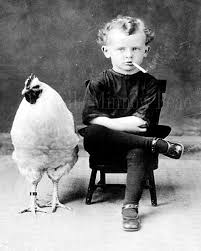
The day came for the annual family portraits, so of course Reggie was brought along to the studio. Pets were family in the Royce house. The photographer, Abe Johnson, was an old family friend and had learned years ago not to question the unusual behavior of the Royces. He set up a chair for Little Jake, who promptly fished into his pocket and pulled out a rollup cigarette and put it in his mouth before sitting down, saying  “Don’t want to crush it, you know, Abe? Got a light?”

Abe was unsure what to wonder about first – the fact that this toddler had a cigarette, it looked like he rolled it himself, or that he was being called by his first name by a four-year-old.

Was the problem simply that he acted like he was an adult, or was it something more? It was all too much. Maybe was time to retire. Or maybe it was time to talk to the matriarch of the Royce clan. “Being free” was a great concept until it got weird. Maybe she didn’t know how “free” her great-grandchild was being raised. Could be that his parent’s trust fund needed to be tightened up. Maybe they’d stop living in La-la land if they had to pay their own bills for change.

Abe always said that it did no good to children to give them a free ride in life. He was all for sparing the rod but not for spoiling child. A child with no direction and no boundaries wasn’t any good to himself or anybody else.

Just as Abe released the shutter, the startled chicken released a loud squawk and an even larger splat of poop on the studio floor.  Little Jake looked at the chicken, then at the horrified look on his parent’s faces, and decided that this chicken thing might just work out after all.

Pod people

pose


Nell was having none of it. Not anymore. Her husband simply refused to even try to breathe air. The doctor said he could, that his lungs could adapt to this environment, but he disagreed. Trouble was, he’d never know unless he tried.

Elowyn had read about other Marenians who had converted to air breathing. He’d never met one, of course. How could he? There were only three who lived in this state, and the closest was two hours away by plane. No airline would let him on a plane with his argon suit, that was a given. Their fears were unproven, but policy was policy.

They’d met three years ago at the landing site. She was a reporter, alerted by the scanner in the office that something was coming from the skies again. That scanner was worth its cost from all the leads it provided. Quick as a wink she was downstairs and in her car, trying to not drive off the road as she followed the plumes of green clouds stretching like a tightrope from the eastern sky to some nearby cornfield – Mr. O’Reilly’s, most likely. He had the biggest one, so it stood to reason. She turned down Ellis Way and got there before the locals did. Farmers listened to the scanner same as reporters did, and for much the same reason. It was the best way to know what was going on that might be of interest. Something like this would pull them out of their barns for sure.

Just think of it! Aliens! Here! In Mill City!

Nell had guessed the pod’s trajectory right and reached the small crater it created just after the police had gotten there. The ground was still steaming next to the blue (metal?) craft. She noticed that there was a bright iridescent sheen across the pod’s surface, reflecting the late afternoon summer sun, as well as a distinctive sharp smell much like ammonia, but she couldn’t quite place it.

They didn’t know at the time but it turned out that the color and the smell were both hallmarks of the Marenians. They both came about because their ships were alive, growing out of the same stuff as the people. This way they could self-repair. It saved a lot of money and time that way. It worked perfectly as long as they stayed in the Marenian solar system because the elements were more or less the same throughout.

Earth, however, was another matter entirely. The stresses of the previous crashes had resulted in every pod going into automatic repair mode, sending wispy tendrils into the soil to gather the raw materials needed to boil up replacement parts in the integral kitchen/lab. Three minutes after the tendrils went down, they came back up, spit out what dirt they’d sampled, and retracted back into the beetle-like shell, refusing to budge. The self-preservation instinct was the strongest one, so the pods calmly explained in their proto-language to the pilot inside them that the soil was not compatible with their electrochemical makeup, so repairs would not be forthcoming. As trained, each pod then sent out a trans-space summons for another pod to make the trek to bring dirt from home so repairs could proceed.

The only problem was that these supply pods came and they too became stranded. They’d underestimated the amount of dirt needed for the repairs.  The pods were small, with barely enough room for the pilot.  Even if they were able to navigate without a pilot there still wouldn’t have been enough room for dirt to repair both ships.

No matter – flying without a pilot wasn’t an option. Each pod was raised with its pilot from the moment s/he was formerly admitted to the astro-nav program. Saying that they were synchronized wasn’t the half of it. Cells were harvested from under the tongue of the pilot and cultured over three weeks, growing into a ship that learned as the pilot learned. This was no simple cloning. The two beings were separate in body only. All past, present, and future were shared.

This created a dilemma when the pods, and thus the pilots, began to be stranded. Without hope of repair, the pods chose to self-terminate, opting for a quick death over a slow lingering one. The pilots had to be tranquilized before the pods could self-euthanize. Otherwise it would have been too painful for them to endure. Some later, once they’d learned the local language, said it was like amputation of half your limbs and your brain.  Many were encouraged to adopt dogs afterwards as the closest Earth option to the deep connection that they had shared with the ships.

Nell had worked closely with Elowyn after the crash, helping him to adjust to Earth living.  There was no going back to Marenia, so he had to learn a whole different culture. This was made easier because of his astro-nav training, but it was still understandably difficult.

She’d not planned on adopting a stray, but the Mayor assured her that she was the most qualified person in the city for the job.  Simply being a reporter, curious about new things, made her ideal, he said.  Put that way, how could she refuse? It was a high honor to be deemed worthy of helping a stranded Marenian.  You were serving as an ambassador for the whole planet, after all.  The future of the relationship between the two solar systems would be created from these one-on-one relationships.

It was about a year later that they both realized that they were quite compatible together and decided to formalize their pairing.  Fortunately for them, other human-Marenian pairs had formed before they had even met, and laws had been changed to allow for interspecies marriage.  There was only one difference with these marriages and all others – one member of the union had to be sterilized.   Doctors weren’t comfortable with what could happen if a child was created.

There was no way a child could have been created in the case of Nell and Elowyn. He was still hermetically sealed inside his argon suit.  He had to have it to breathe on Earth, he insisted.  The material in the suit was fortunately impervious to decay, or he would have a more difficult time of it.

Nell was quietly upset when she learned this, hoping that he’d eventually be forced to adapt to Earth ways.  She loved him, of course, but she thought that things would be better for both of them if he didn’t wear that darned suit.  It made going out to visit friends awkward.  Plus, the smell took some getting used to.  The ammonia-like smell was a byproduct of the impervious material.  It was unnoticeable on Marenia, but on Earth it alerted others that there was a foreigner around even before they saw him.  It made some people not want to deal with Marenians at all, saying that they smelled like used gym socks.

Nell and Elowyn mostly kept to themselves at home when she wasn’t working.  He didn’t have to work – none of the stranded pilots did.  They didn’t need food, and they weren’t interested in owning anything.  If they couldn’t carry it, they didn’t need it – this philosophy was part and parcel of being a Marenian.  It was how they had finally adapted to a planet with too many people and not enough land.  They didn’t even need to live in homes anymore, having selectively bred themselves over twenty-three generations to be unaffected by temperature changes or ultraviolet rays.  Some did live in homes on Marenia out of habit or convenience, and most pilots on Earth did as well, but it wasn’t uncommon to see one hanging out with homeless people under overpasses or near street corners. They were comfortable wherever they happened to be.

The Marenians got along with the homeless population uncommonly well.  They had in common their philosophy of “less is more”, albeit perhaps unwillingly for some of the homeless.  Soon the Marenians and homeless had developed a spiritual system – not a religion – about this, encouraging others to get rid of their addiction to things. They explained that there was a reason that the Earth language used the word “possession” to refer to things as well as being taken over by demons.

It had to be a spiritual system because a religion would require stuff – books or buildings, for instance, and this was totally opposed to their beliefs.  Of course, many years later, after the founders had died and no more new Marenians came to Earth, their simple way was converted like all other spiritual paths had been and there were not only cathedrals to “less is more” but also gift shops with plastic trinkets made in China.

Rosie’s Adjustable Man

heads

Rosie knew what she wanted in a man. Trouble was, she wanted something different every day. The wealthier ladies could afford different models, but they had room to store them too.  She’d had to settle for a model with adjustable heads. The body stayed the same, but the personality changed. It wasn’t ideal, but it worked.  Currently she had six different versions, but over thirty were available. Whenever she could afford it, she got a new head for her Adjustable Man.

Rosie’s house wasn’t tiny by any means. It was the standard allotment for Zeta-class citizens – three bedrooms and one large common area with dining/ kitchen/ living room, with movable panels to divide up the areas when necessary. This was a far cry from Gamma-class, with only two bedrooms and a living room but no kitchen. That was shared, communal style, with ten other Gammas.

Gammas tended to eat together in the common dining room. Slinking off to eat in their private apartments, hunched over a coffee table while sitting on a stiff sofa, was possible but frowned upon. Nobody would say anything about it to the citizen who did it, but then they simply wouldn’t say anything at all to them for a few days afterwards.

It wasn’t planned that way. It wasn’t a rule. It was more like a habit, or tradition. Not sharing time with your fellow citizens meant you wanted to be alone, so they gave each other space at those times. But, if a citizen was absent more than about four times a month and wasn’t on a scheduled trip for their task-group, then subtle and not-so-subtle inquiries were made. Some were to the citizen’s family. Some were to the Overseers. Perhaps s/he was ill? Perhaps therapy needed to be assigned? Perhaps s/he needed to be reclassified? Sometimes that particular area’s citizen class wasn’t a good fit for that citizen’s style of life. Never would they ask a Gamma-class citizen themselves if anything was wrong. That wasn’t thinkable, not for that class. It was only once you were promoted to Zeta-class that you were even considered to have enough spirit to have an opinion.

Rosie had opinions all the time, and felt that everyone needed to hear them. The Overseer channeled this into encouraging her to write an online blog, where she felt that she was being heard for a change. She thought she was making a difference. She was wrong. Nobody read her writing. The numbers on the statistics were a ruse from the Overseer to get her to keep writing and thus keep her out of the way. The comments were supplied by workers in his office.  It kept her placated and maintained order. It didn’t do to have citizens thinking too much. It upset the social fabric.

She was so opinionated that no man wanted to spend time with her, and so insecure that she didn’t want to spend time with herself. Fortunately for her, she was not alone in this. Plenty of women had been told “You think too much” by men, and rather than stop thinking, or at least out loud, they decided to get an Adjustable Man. He could be modified in any way imaginable, providing you had the resources.

It was easy these days to pick up a used version, have the memory wiped, and start from scratch. Or, you could custom build one online and have it shipped to you, ready to cook, mow the yard, and be pleasant to take on a visit with your friends. No more awkward times like when your man suddenly started talking about less-than-polite topics around your best friends or coworkers. No more attitude about doing housework or it being “woman’s work”. No, the days of men thinking their contribution to the family ended as soon as they left their workplace ended around the time women realized they didn’t have to have children, and thus didn’t have to stay home to raise them.

Adjustable Women were in the works for those women who wanted to work outside of the home after having children. There were never enough reliable or affordable childcare providers – never had been. Come to think of it, the same was true for eldercare. Nobody wanted to take care of the very young or the very old for very long, even if they weren’t related to them. Those that did wanted a lot of money for it, or they had less than honorable reasons for seeking those jobs. But Adjustable Women were proving to be harder to make than Adjustable Men.

Rosie was trying to decide who she wanted as her partner to the dance tonight. It was almost as important as determining what dress to wear. Too formal? Too casual? She wished there was a guideline on the RSVP, like “black tie” or “blue jeans” but for partners. She’d hate to take a stuffy, know-it-all partner to a casual gathering, the same as she’d hate to take a sci-fi geek, able to name all Star Trek captains in order (and delineate their flaws and charms) to a company luncheon. How did early-century escorts do it?

She opted for the boring “Bob” version.  He was cute, but he didn’t talk much.  Her friends would understand, and the new people she was there to meet wouldn’t care.


Tracy and Robin

two 2

Tracy and Robin had joked for years before they got married that people never knew who was “he” and who was “she” of the two of them. They decided that it was nobody’s business, so they never let on.

Their friends had hoped to learn the truth on their wedding day. Surely they would wear the traditional clothes? They were in for quite a surprise when they arrived at the event. They wore the traditional clothes, but not in the traditional way. This was in line with everything they stood for, so it made sense after all, but it still didn’t answer any questions.

Tracy and Robin were drawn to each other not out of a sense of finding their other half, but in finding another person who was whole. Both were perfectly comfortable repairing a car or knitting a shawl. Both could mow the lawn as well as cook. They felt lucky that their parents had taught them both how to be people first and foremost. Their gender was never used as a reason for or against learning anything.

They both hid their gender, not out of a sense of privacy or shame, but out of a sense of rightness. They wanted people to relate to them as people. The first item of prejudice was gender. Sure, you could add race, religion, creed, national origin and a host of other things up to and including what football team they rooted for. People used any excuse they could to pigeonhole you, to decide who you were before you even opened your mouth. Tracy and Robin figured that the more you can avoid those markers, the more people would have to make up their own minds for a change.

They were mindful to shop only where the bathrooms were genderless. Sometimes the buildings were old and only had one restroom with a single toilet. Sometimes they had family restrooms. They didn’t want to have to out themselves if they could avoid it.

They shopped at thrift stores, getting whatever clothing that struck their fancy and wasn’t too snug. Both were equally comfortable in pants or skirts. They were pleased when they could find clothing that was from immigrants because it was often loose and ambiguous. Comfort was the most important thing.

It was always assumed that one was female, but it wasn’t a given. Both could have been. Or neither. Or one or both could be intersex. Did it matter? Nobody separates by eye color or height, so why separate by something as equally meaningless and random as gender?

Mr Michaels

haunted

Mr Michaels’ blindness was absolute. Born sighted, it had been 20 years before the cataracts had begun to form from the kiss of sunlight.

It happened so slowly at first, like a fog creeping in on cat’s paws. Every month the dull haze thickened, coalesced just a little more. It was so gradual that he never even realized his sight was being stolen from him until it was gone. It was as if his sight was a stone and the sun was the sea, washing it away to nothingness, no trace of it ever having been there.

It was nothing to Mr Michaels. His sight had gone so gradually that he’d forgotten he’d ever had vision. Just like that sea-stone, all evidence of its existence was erased. Just as slowly and just as insistently, his memory of sight had dissolved as well. He could no longer remember his mother’s face or the color of the sky in early November, could no longer even remember that he had ever known these things.

He didn’t think of his blindness as an absence. He didn’t think of it at all.

All his life he had worked outside. Perhaps it was an undiagnosed case of claustrophobia. Perhaps he was just set in his ways. His first job had been in landscaping, and every one after that had been related. Grounds crew for a municipal park, another one helping harvest apples, it was all the same to him, as long as he was outside.

His father never knew if he’d ever tried for anything more advanced. He never asked, but he’d been tempted to often. He wanted to encourage him to be his best rather than settle, but he remembered his own father doing the same to him and he still resented him for it. Perhaps this was his best? Perhaps he led a simple life because he was simple? Best not to dig too deeply.

Mr Michael’s hands became his eyes, showing him the size of the bulb or seed that he held. He then knew how far down to dig to plant it. His hands told him where the weeds were to pluck, told him what apples were ready to harvest and which ones were best left for the birds. His feet told him how far the flower bed was from the orchard, how far from the stables. His nose told him whether the horses were sick or scared. His ears told him whether a storm was coming, and whether it was going to be strong enough to warrant bringing the animals in early.

Watching him work, you’d never know he was blind. By tacit agreement, all the other workers on the farm kept everything where it had always been. That one incident with the misplaced hay bale had been enough to convince them.

It was only when you looked directly into his eyes that you knew beyond a shadow of a doubt that he was blind. Very few people were brave enough to do this more than once.  Looking into his milky eyes was like looking into a pair of mirrors set just opposite each other.  All you could see was yourself, all of yourself, unto eternity, ever diminishing into meaninglessness.  It was overwhelming and humbling.  You could see all of your strengths and all of your faults, unvarnished, untampered by the usual lies you told yourself.  This alone was unsettling, but the additional feature of his gaze was to leave you with an overwhelming sense of your utter insignificance.

Mr Michaels was completely unaware of this.  He wasn’t bothered in the slightest that people tended to leave him alone.  It meant he had time for his own amusements.  That suited him just fine.

Twins.

two

Their mother had always wanted twins, but not like this. Carol’s biological clock was winding down about the time her life was picking up. When she finally had the time, money, and energy to have children, she’d gotten too old to even consider having multiple pregnancies. She wanted at least two children for the same reason people brought home two puppies or kittens – they would always have a playmate. With time slipping away on her, having twins seemed like the best option.

She never even considered adoption. The children had to be hers. She knew that down to her bones. The idea of “family legacy” was so firmly imprinted onto her identity that taking in somebody else’s unwanted children was out of the question. It wasn’t even on the table. It wasn’t even in the room.

She couldn’t afford to chance it. So she went to the local medicine/miracle worker. The gnarled old being was a fixture of the community that everybody knew about but nobody talked about. She? He? Who knew? At that age it was impossible to tell. His? Her? voice was raspy and the clothes were baggy enough to conceal whatever shape s/he might have. Nobody knew, and everyone was afraid to ask. “Doctor” was the being’s title as well as name. Fortunately this language didn’t differentiate gender in its words or it would have been more awkward. Undefined gender seemed somehow appropriate for this profession, one of yes/and, of greys, of liminal spaces, of betweens. The Doctor’s shop/office/home was like that as well, beyond definition.

Carol had written a letter asking for an appointment. This was how it was done, how it always had been done. The Doctor felt that websites were too fiddly, too impersonal. The message would get lost. Even phone lines were eschewed.

Ideally, the client (never “patient”) would happen to meet the Doctor while they were both out doing errands in the village markets. A lot could be done to further the desired outcome if both of them were on the same time-line. Never quite syncing up was a bad sign. But, communicating by letters was a good second choice.

They agreed upon Wednesday the third, at 11:30 in the morning. The Doctor arranged visits by feel, rather than by any usual method. It was the same as how a safecracker worked, or a dowser, or a chef. It was all by feel. No astrology charts or Ouija boards or runes. No Day Planners either. There was never a receptionist or assistant. The Doctor’s motto was do it all yourself, or don’t do it at all. Too many cooks spoil the broth, and all that.

Carol left her house that Wednesday morning very excited and hopeful. She wore her favorite red jumper and galoshes even though the weather forecast promised a partly sunny day with only a 10% chance of snow flurries. They were her favorite galoshes, purchased used at the corner Oxfam three years back. She’d always had great luck when she wore them, so they seemed to fit the bill for the day. She even asked off from work for the rest of the afternoon so she could get started right away on whatever course of action the Doctor recommended.

Everything the Doctor did was by suggestion or recommendation – never an order, never even a request. Everything had to be voluntary. The client had to be a part of the process, never acted upon, but with. If the Doctor decided it was possible to effect a change there was always a list of recommendations. It wasn’t always possible to obtain or do all of them, either due to the time of year or available resources. The client, if accepted, (not a given) would then go out armed with that list.

Instructions could include such varied examples as “Stand barefoot on a newly harvested field for 10 minutes, facing west. Be sure not to be noticed. This must be done sometime between the hours of 8 AM and 3 PM.” Or perhaps something like: “Buy and eat some kind of fruit you have never eaten before.” Or maybe even: “Write down your greatest hope for your future on a piece of borrowed paper. Set it afloat on a stream.” Generally, at least two of the three options must be done, in whatever way the client could. The “how” was up to interpretation, and was part of the cure.

Wearing a certain color for a week (at least) was a common request, although the color changed with the task at hand. Often this was how other people in the community knew you were under the Doctor’s care. They never would ask, though, out of respect, or perhaps fear. It was difficult to not be noticed when someone started wearing shades of teal or salmon or magenta, especially day after day.

Almost immediately after having sex that Friday night a month later, Carol knew she was pregnant. She didn’t dare breathe a word of it to her partner for fear she might jinx it. She didn’t even go to the pharmacy to get a pregnancy test for the same reason.

She wasn’t sure where her self-imposed superstition came from, and that might have caused the aberration. Maybe it was the galoshes. Maybe the orientation of her bed. Maybe she didn’t follow the list correctly.
Later, after the birth, the Doctor consulted with Carol. They both looked at the babies (baby?). They went over everything she did, everything she ate, everything she thought. She was sure she had the right intention during the act. It’d been all she’d been thinking about for months, so how could it be anything else? Twins. Two babies in one pregnancy.

The Doctor had been very insistent with her that intention was important for all pregnancies, but especially for hers since it was so specific. The Doctor explained that ideally, people would have sex only when they wanted to have a child, and then they would do it mindfully and prayerfully. The moment of conception was when the soul chose to incarnate. This is a delicate and perilous time. There were many souls about, of all kinds, waiting to enter a body. Some entered at conception. That was ideal.

Others chose to take up residence afterwards. This resulted in what psychiatrists called “multiple personality disorder”. Priests called it “possession”. New Agers called it “walk-ins”. It was all the same thing, and it was all less than desirable.

The Doctor explained that ideally the potential parents would pray before having sex, alerting the souls, the beings-in-waiting, that an opening, a doorway if you will, was being created for them. The parents would meditate on the characteristics and personality of the child that they hoped to welcome into their lives. They would speak about what kind of home they could provide.

In a way it was like a blind date, or perhaps more like an arranged marriage. They were going to be together a long time. It was important to do this well, rather than leave it to chance.

The trouble is, too many people didn’t think it all before having sex. It was as if they were swept away, like they were in a stagecoach, and the horses got spooked. Before they realized what was happening, they were where they hadn’t planned on being, because they hadn’t planned. Sometimes they got stuck there. Just like with marriage, it is a good idea to choose wisely before this long-term commitment.

Too many babies were being born without souls properly attached to them because of this. Some had very weak souls and had sensory or neurological disorders because they weren’t fully in the body. Some souls weren’t even human.

But that wasn’t the problem here. Carol and her partner had prayed for two souls, alright. The only problem is that they somehow ended up with two souls in one body. This wasn’t uncommon, but could take different forms. The obstetrician had explained that sometimes twins are conceived but one is absorbed. The result? One baby, but it might have its twin as a vestigial part of its body, in the abdominal area, for instance. Or if the fusing is complete, it will have chimerism. Or in this case, conjoined. The obstetrician couldn’t explain why this had happened, but the Doctor could, after consulting with the souls of the twins.

Twins were wanted, and twins came. They were twins in the truest sense this incarnation. They were two, but one. When they were in spirit form, they were separate but they wanted to always be together.

In their previous incarnation they had been twins in the usual sense. That family had also wanted twins, but shortly after their birth the father had gotten laid off from his job. The economy had taken a downturn and he had difficulty finding another job. Months went by and the savings grew smaller. Their mother grew more and more exhausted with caring for them and with worry. Finally the decision was made. It was the same decision that some families made about their pets under similar circumstances. They were “given away to good homes”. Unfortunately in this case, they were separate ones. The children always felt that half of their very being was missing from that point onwards.

After their death, they had waited a long time to find another family that wanted twins. This time, they wanted to make sure they couldn’t be separated ever again.

Felix’s last stand

4

Felix was having none of it. His parents had chased him around the house for an hour, trying to snatch him up. This was the day to get his hair cut for the first time.

They had braced him for it for a week – dropping hints as to what to expect, offering promises of treats if he behaved. He knew full well what they were planning to do to him. He knew that of all the things they had done to him in the name of his ‘best interest’, this was the last straw. He had to finally draw the line.

He was sick of being directed, ordered, bossed around. Nobody ever asked him what he wanted to wear. Nobody even cared to know what he wanted to eat. Every day of his three years of being alive was a battle of wills.

Every now and then they got it right and they gave him something that wasn’t tasteless to eat or scratchy to wear. Those days were rare, and on every other dull, grueling day, he felt that his very being was being washed away bit by bit until the rock that he was had worn away to nothingness.

Little Maxie was his only friend, the only one who understood. They’d gotten her when Felix was six months old after a particularly difficult trip to the doctor for booster shots. They hoped she would be a calming influence on him. It turned out that the two had developed a stronger bond than his parents could ever imagine. They both felt the same way.

Both were ordered around. Both were ignored, neglected, relegated to the ‘passive’ pile in their parent’s minds. Felix and Maxie developed a common bond out of their silent mutual suffering.

They forged a method of communication that worked perfectly for them, which his parents were oblivious to. Why wouldn’t they be? They never even thought to speak with either one of them – always at, or to, but never with.

It was funny in a not-so-funny kind of way. Both of his parents were all about communication, but they never thought to apply their skills at home. Mom spent her weekdays teaching dolphins how to communicate, getting them to mimic human speech or to point at symbol boards with their noses or flippers. All day she taught them how to tell her what they were feeling. She constantly modified her techniques to better understand their needs and wishes and thoughts. Never once did she think to learn their language.

These ‘animals’, these beings she and every other scientist thought were lesser than, purely by virtue of the fact they weren’t human, were expected to learn human language rather than the other way around. Who was less intelligent?

Felix’s Dad was equally culpable. He too had no excuse. They both knew better and they both didn’t act upon their knowledge. Ignorance was indeed bliss, but they didn’t have that luxury.

His Dad worked as a counselor with people who had learning disabilities. It had been his passion for a dozen years, far longer than his marriage, a third of his life. He’d even gotten professional recognition for his techniques to reach patients who were considered unreachable by conventional methods.

Neither of the parents thought to take their work home with them. Felix was a child, and that was that. It was unthinkable to them that he should be asked his opinion. Dolphins and profoundly autistic children were paid more heed than him, purely because he was theirs. The idea of trying to communicate with their child was something they never would have considered. Why would they ask him his opinion? They knew that their job as parents was to tell him what to think – not to ask.

Felix and Maxie had refused to budge from the settee. That stiff sofa was the ultimate symbol of all they were fighting against. It had been moved into Felix’s room last winter when the parents had bought a plush leather sofa for themselves. They had decided unequivocally that dogs and children were not allowed on it, out of fear of stains and rips. They were relegated to the board-stiff contraption of cloth and wood that had been in the family longer than anybody could remember. It had stains but no stuffing. In their minds it was perfect for a boy and his dog – they couldn’t wreck it any more than it was.

The boy and his dog thought otherwise. Here they were going to make their final stand. Here was going to be the epicenter of their future, the point where they were going to make their captors listen to them for the first time.

In unison they both peed on the couch.

Horrified, Felix’s parents and Maxie’s owner (or was it the other way around?) stared at them both as the warm pungent liquid seeped into the threadbare cloth. As a communication technique, it wasn’t the best. It got them to be noticed for sure, but not taken as seriously as they had hoped.

The erasure

They finally came. After months of broadcasts on all known media (radio, television, Internet, newspaper, shortwave, telegraph, TTY, dolphins, psychics) saying it was coming, that they were coming, it had finally happened.

Nobody knew who was sending the broadcasts, or where they were from. Agencies and detectives and amateur sleuths all over the world tried to answer those questions, to no avail. Séances were held. Runes were consulted. Wires were tapped. Still the messages came, and still no one knew the source or the author. Television anchors were told to say nothing that might frighten the public more than they already were. Talk show hosts were, as usual, under no authority or ethical standard, so they said whatever they felt, regardless of truth or concern for how their prattlings would harm.

The beings, or spirits, or aliens, or whatever they were had tried to communicate with our earth for far longer than people realized. They had subtly influenced moods and desires since before 2000, like a silent alarm, like an odorless poison. They were the reason for the Y2K panic. They were the reason preppers stocked up on ammunition and canned ham. They were the reason people began to mis-trust the authorities and began to take matters into their own hands. Urban farms, homeschooling, anti-vaccine? These were their doing. Layer by layer they had painted a picture of paranoia in our brains to divide us, keep us off balance.

Everyone was affected to some degree. It was only those who didn’t consume mass media that maintained some semblance of control over their actions. All those who watched TV or movies or listened to the radio got multiple doses of the message, and it was cumulative, just like any other poison. A single bee sting is annoying, but not fatal. A thousand stings is another matter.

When they finally came it was almost a relief.

It was a cool day in August, one of those days that was not too hot or humid with a few clouds in the azure sky. The morning had gone peacefully for everyone for a change. The disturbing dreams have finally stopped. Even the news reports were calm for a change, with the latest plastic surgery of one celebrity being the lead instead of the usual threats of war from petty tyrants trying to get the world to notice them. It was shaping up to be a beautiful day, until the skies scissored open with the dimension-melting sight/sound/smell of their ships at 11:11 AM.

People started to see sounds and hear colors.
Time ran backwards and sideways and stopped.
Everything suddenly made sense
but there were no words
anymore to explain it.

And then there was nothing.

The silence was thicker than the darkest night, a crushing subterranean weight, more alienating than being trapped in the Marianas Trench in a powerless submarine.

Then, just as suddenly, there was only now. The past wasn’t even a memory. It was just a word. All mistakes, all forgotten grocery lists, all insults, all arguments, gone in a blink of the eye. Gone too were first kisses. baby’s first laugh, that perfect day in October when the sky is the blue of watery dreams and crisp like a Gala apple.

All of it.
Gone.

Somehow they knew, whoever they were. They knew that what was holding us back was our near-pathological need to catalog the past into neat (and not so neat) piles, holding onto memories and snapshots and train tickets and receipts for ice skates and ice cream. Somehow they knew that our need to separate those piles into “good” and “bad” was our secret un-doing, our un-humaning, our un-being. Somehow they knew that our “bad” pile held us down, became a pattern for our future, made us think we would always be cheated, be robbed, be abandoned. Somehow too, they knew that our “good” pile equally enslaved us, making us feel that we could never feel that exhilarated or proud or delighted ever again.

Our collective and individual past being erased was as great a blessing to us as a tornado or a house fire. It forced us to stop holding onto the dried husks of what it means to be truly alive. For too long we thought that the artificial joy of our memories was what made us human.

Overnight, the scrapbooking industry was rendered irrelevant. No one could even imagine why they had spent so much of their lives (and money) gluing memorabilia into organized books, accented with metallic rickrack and die-cut stickers. No one took photographs either, choosing to see their lives through their own eyes rather than through a viewfinder.

Why save the past anymore?
It was meaningless.
Only the present moment,
a moment eternally composed
of beginnings,
was valid.
In that moment
anything
could happen.