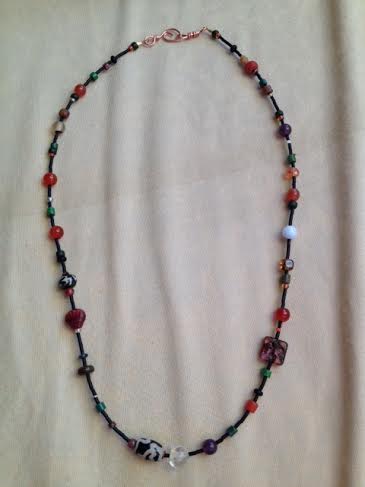
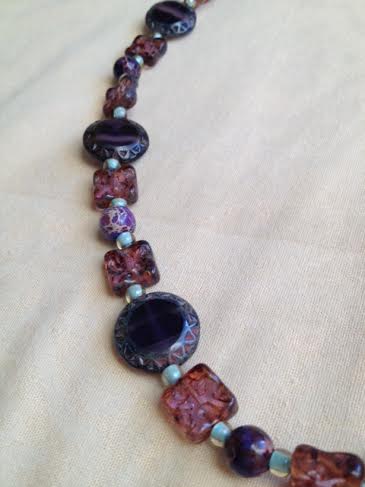
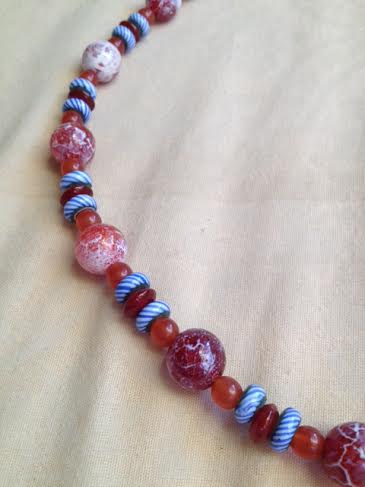
ESL and LD tutoring

When I first started tutoring, I thought I was just going to work with ESL students.

There are a surprising number of people from all around the world who move to Nashville. In my little suburb there are people from China, Somalia, Uzbekistan, and the Congo, as well as people from Mexico. They either bring their children with them, or they give birth to them here. Either way, they are entitled to a free public education.

Going to school for the first time is hard enough. Not sharing the same language as your classmates and teacher is extra hard.

Sometimes the class is comprised entirely of children who don’t have English as their first language. Sometimes the ESL children and the EL children are mixed together. There are advantages and disadvantages to both approaches.

I never thought of myself as an ESL tutor, much less a tutor to kindergartners, but I’d been praying about a way to help others and this opened up. Helping people assimilate is one of the many ways to make the world better.

So many people say “Why don’t they learn our language?” when talking about immigrants, but they don’t take the time to teach “them” the language. Learning a language is very hard and it takes a lot of time. You can try to teach yourself, but working with another person is the best way. Be part of the solution, you know.

I was helping a man from Haiti get his library card. He had a friend with him who was helping out. I was explaining things in English, but somehow how I was explaining it got in. His friend noticed and commented that I should be an ESL teacher.

All Metro employees had been offered the opportunity to volunteer in the schools for an hour a week on work time, so I contacted a patron who teaches ESL kindergartners. She was delighted to have me help. I think she was delighted to have help, period. I did all the paperwork and started as soon as I could.

Something I quickly realized was that I didn’t have to know the child’s language at all in order to help them. I have to know mine. Their goal is to learn to read and write in English. So it had nothing to do with my ability with their language. That was helpful to realize, and got me over my fear.

Teaching is scary. You never know if you are doing it right. What works with one student totally bombs with another. There is never enough time, and there are never enough tutors. You just keep on trying. You just keep on showing up.

Then I noticed that the teacher kept assigning me students who spoke English as a first language but were struggling for some reason. I balked at first. I thought I was there for the ESL kids. But the more I worked with these other kids, the more I realized I was needed for them as well. I was often able to diagnose a learning disability before anyone else had caught it. This resulted in an early intervention and a better outcome.

I tutored students with learning disabilities when I was in college. I’ve come to realize that almost every job since has involved helping people who have a hard time communicating or expressing themselves. I hadn’t planned this. It just happened. I don’t have any training for this. It is just something I have a knack for.

The funny thing is that I’ve come to realize that ESL and LD are the same thing. They both represent a disability to process ideas into the symbolic language of speech and letters. The letters and sounds of any language are arbitrary and invented. They are not natural. They are an agreed-upon construct that we use to communicate with each other. It is totally normal that some people would have a hard time with these symbols. The only problem is that these particular symbols aren’t optional.

Being able to communicate is essential. While I’m for offering people multiple ways to express themselves such as through art and music, language is a cornerstone. It is something that we all share, and is the basis for much of our culture.

If people cannot communicate they get frustrated. This leads to tension and anger. It is essential that people are able to express what they feel, not only to get it out, but to share it with others. They need to be able to understand themselves, and make themselves understood.

So I’m really not teaching people how to read and write, so much as how to interact with other people in this culture, using English as a bridge. It doesn’t matter whether they come from this culture or not.
Occupy the art.

Wouldn’t it be amazing if our society valued creativity more? Students would get scholarships for their art instead of their ability to play a sport. People would flock to see them perform a symphony they created instead of seeing them face off against each other on the field.

When we support sports over arts, we are supporting aggression over creativity. We are saying with our stadiums and our sports scholarships that violence pays. We are saying that the jocks are the heroes and the artists are the zeros.

Now, we certainly need sports too. We need physical activity. We need movement. There are way too many kids and adults who are inactive and obese. They are way too many people with diseases that could have been prevented by being active. And there are many valuable lessons to be learned from team sports. People learn about discipline and how to work together. They learn about how each member of the team is important to the outcome.

But sports aren’t everything. We can encourage sports and the arts. In fact I think that everybody in school should learn both. Have the jocks learn how to paint or play a saxophone. Have the artists learn how to play tennis or swim.

Arts and sports need to both be offered as team and individual options. There is a lot to be learned in working together and also in shining on your own. Basketball and being a gymnast should be equal. Playing in a symphony and painting a picture should be equal.

People need to learn as many ways to express themselves as possible. Humans have a lot of pent up energy in them that needs to get out. That energy is physical, emotional, mental, psychic, spiritual. We have many different parts to our personalities that need to be expressed. Communication isn’t just with words.

Perhaps when we get to this point that I see, we won’t have any more school violence. We also won’t have anywhere near the levels of depression and anxiety that we currently do.

But let’s not wait for the schools to do it. We don’t have to wait for committees to study this and funding to be allocated and lesson plans to be created. Let’s just do it on our own. Let’s do this from the ground up. Let’s start at home.

Let’s start an arts revolution right where we are. It doesn’t have to cost a lot. Get some crayons and some paper. Buy a kazoo. Go to the dollar store or Goodwill or Big Lots and find inexpensive art supplies. Get a notebook and start writing. Make up a play. Sew a costume. Design a garden or a house.

It won’t look great at first. Nothing ever is. A child’s first steps are pretty wobbly. A first sketch is pretty wobbly too. Just keep doing it. The point isn’t the product. The point is the production. When you are making art, you are making yourself at the same time. The goal isn’t the painting or the sonata. The goal is the part of you that you found along the way.

This isn’t just for kids. Adults of all sorts will benefit too. I’m interested in all people learning to express themselves creatively. I’m a little more interested in getting kids to be exposed to the arts because it means that they will not be as self-conscious about it. They will learn that being creative is a normal part of being human and not an extra.

“Successful” vs. “Starving” artist.

Notice how unusual it is to say that someone is a “successful” artist. Usually they are a “starving” artist. You never have to say that someone is a successful doctor or successful engineer or a successful plumber. It is assumed that they are successful. But artist? It is assumed that an artist isn’t successful. It is assumed that they are scraping by, just barely making it.
Why don’t we put more value on art? I mean real art. Art that is one of a kind, not mass produced. Art that is so amazing that it doesn’t match your sofa and you don’t even care. Art that is so amazing that maybe you even buy a new sofa to match it instead of the other way around.
Real art is one of a kind, just like the artists. It takes time to make and it takes love. That is worth supporting.
When you buy original art, you aren’t just buying the materials. You are buying the artist’s time and dedication to her craft. In the same way an Olympic athlete has to train many hours to get good at what she does, an artist has to work many long hours to get good at her craft. Good artists, like good athletes just make it look easy. It isn’t.
Notice that very few people get art scholarships, and many people get athletic scholarships. What do we need more of, arts or sports? What lifts our spirits and helps us see beyond ourselves? What shows us how we are all connected? I’m not saying to get rid of sports. I’m saying that arts need to be equally supported.
So go buy some art today. Or better yet – go make some. Art is for everyone, and it makes us better people.

1000 – a picture is worth a thousand words.

I hadn’t planned on writing any fiction. I started my blog as a way to explain the symbolism behind my poetry. Then I couldn’t figure out how to upload pictures to it, so I started writing my observations and opinions instead. Then I started writing poetry because well, my Kindle almost does it for me. But I certainly didn’t plan on writing fiction.

There was that time when I was at the eye doctor’s office and I decided to write about who might have lived in the building that wasn’t there anymore. But that was a fluke. I didn’t mean to do that. I was bored at the office, waiting to be called back. It was entertaining me to invent these people and their lives.

But then it happened again.

I painted a painting, but not anything of reality. I put blobs of paint on a canvas and swirled them around until I liked them. I wasn’t planning anything. I just was playing, receiving. I was letting the Spirit guide me.

I was creating, not re-creating. I wasn’t drawing anything specific. In a true way, I was re-creating, in the sense of relaxing. I was letting go of my ideas of what had to be and just letting it be.

Then I looked at it and saw something. Kind of like a Rorschach test but without the creepy business of being in a doctor’s office. It looked like a scene with murky light. I could see a rock. I started to imagine where this was and who would be seeing it. A story was developing.

I decided to set a limit of a thousand words, because a picture is worth that, right? I started to ask more questions. Where is this? How did the viewer get there? Who is it? What is the character’s backstory?

Soon I had a thousand words. It is a very short story. I thought I was through.

Then a few days later I painted a different scene, unintentionally continuing the story. I’d painted other things in the meantime and they hadn’t triggered more of the story. This did. I wanted to know more so I wrote more.

Now I am interested in this character and I want to know what is going to happen next. I have no idea where this is going. I’m not sure how long it will last.

I’m trying to decide if I should stick with the idea of painting a picture first and then writing a thousand words about it. Or, just write, and don’t set a limit, and don’t worry about the illustration.

Most books are written first and illustrated later. This started off backwards, but it still started. I’m amused by it, but this is normal for me. Things never seem to happen the usual way for me.

I want to write more nonfiction too, but I have limited time. I’m wondering if this is a distraction, too. Is writing a work of fiction a way to avoid doing the hard stuff of thinking about heavy topics?

Or, is it just a different way to write about it? I’ve noticed that even when I create predictive text poems, the same ideas that I wrote about in my longer, thought out pieces seem to come through. And they seem to get more “likes.”

In a way this bums me out. I’d like to think that the stuff I pour my heart and soul into would get more attention. But then, this is a fast paced world. People don’t make time to even chew their food. Why would they read something that is three pages long when they can get the same idea from a short poem?

The thought is what matters. The package doesn’t. And no matter how I package it, the thought shines through, even if I wasn’t planning it.

So I’ve decided to write anyway, whatever format it is. Paint anyway, or not. Just let it be. I just need to make time to do it, whatever it is.

Finding patience in a Monet painting.

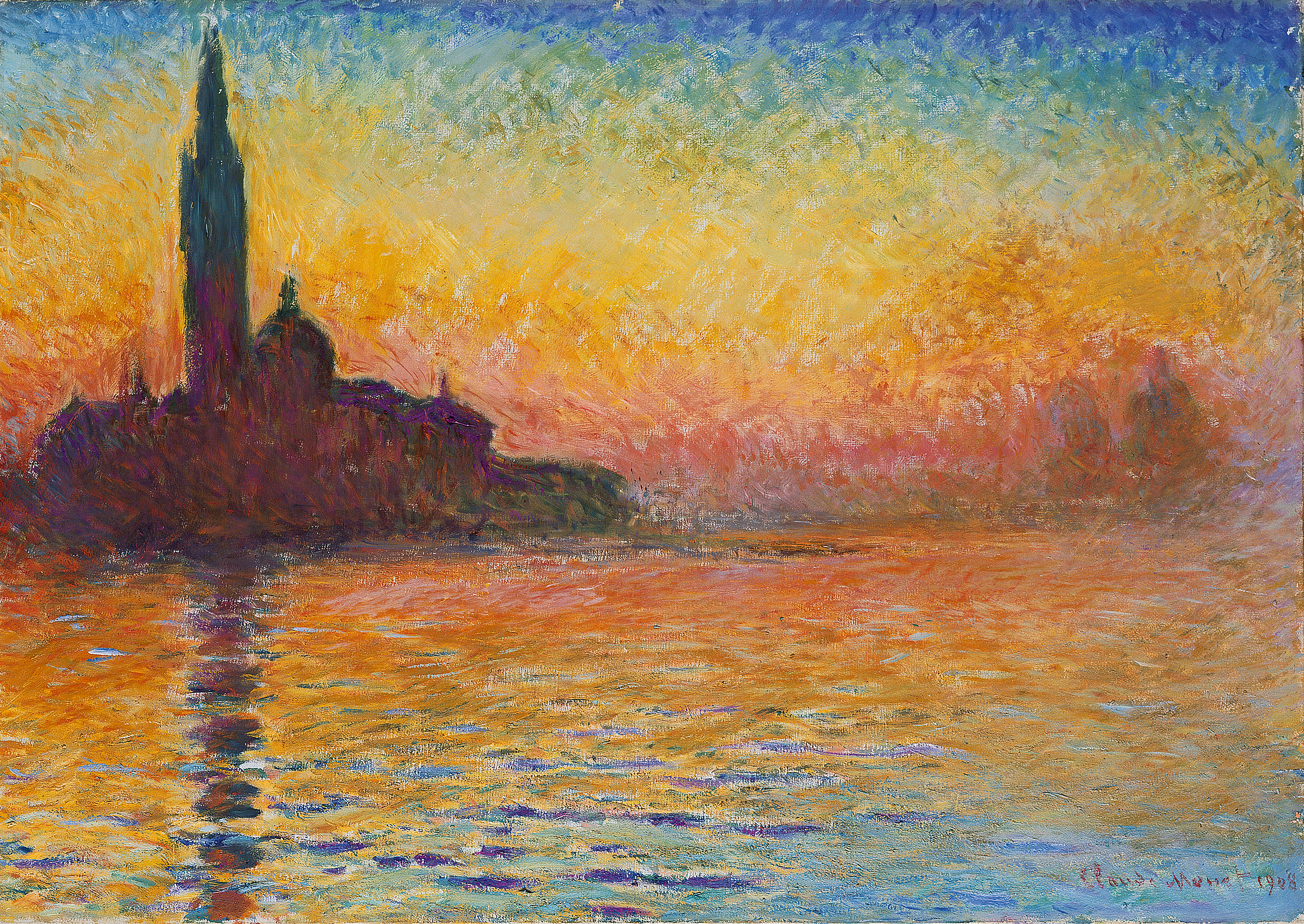
I came across a Monet painting recently and noticed the date. I was surprised to find out that it was completed over the course of four years. I’d always thought that I was a slacker if I didn’t finish an art project in a few days.

The painting is this –
Claude_Monet,_Saint-Georges_majeur_au_crépuscule

It is called “San Giorgio Maggiore at Dusk”, or in the original French, “Saint-Georges Majeur au Crepuscule”. The dates are 1908-1912.

This looks like a pretty simple piece to me. This looks like something that could be knocked out in an afternoon. But then again, I’m not a famous artist. Maybe the trick is that he just makes it look simple.

I’ve decided to take this to heart. I’ve decided to be more patient with my art and with myself. This is a dangerous place to be for me. If I don’t push myself enough I won’t do anything. I’ll let projects sit half completed. I’ll start things and not finish them.

But then again, if I do things too fast, I’ll not have time to do them well. I’ll not take the time to let them digest, or ferment, or mellow. Some things are better if they are done slowly. Some things have to be done slowly if they are going to be done right.

I’m not in a race. I don’t have any assignments. Creating isn’t my job. There aren’t any deadlines. The only rules I have are ones I’ve created.

I’m reminded of Luke Skywalker about to enter the cave on Dagobah. The only thing he took in there was himself. Sometimes that is the scariest thing of all.

When I create, I take with me all the rules that I’ve been given of how things have to be and all the rules I’ve made up. I put limits on myself before I’ve even begun. I have expectations that prevent me from finding innovations.

Part of my practice this year is to not limit anything, anymore. It is to be open and trusting to what God is leading me to be and to become. Part of that practice is to encourage you to do the same.

Poem – drunk dialing God.

When I create
I’m drunk dialing God.

It isn’t like dialing a phone.
It’s all loosey-goosey.

I might end up anywhere
or nowhere.

Maybe that’s the point.

It is
just like dialing a phone
but without a phone book.

And with my eyes closed.

It’s like leaping from a burning building
and knowing from long experience
that I’ll be caught.

It’s calling
out
and up
and knowing that
whatever I connect with
is what I’m supposed to
connect with.

It’s calling God in the middle
of the night
of my life
and saying I’m lost
and I don’t know how to get back
to myself.

The more I do this
the more I reach out
into that shapeless void
and pull out something that
surprises me.

And in finding it
I find myself.

Everytime.

Artist/whore

When you are an artist you have to sell yourself. When I say “sell yourself”, I mean be a prostitute. Now it is up to you how you view that.
There are different levels of prostitutes. There are whores, of course, but there are also call girls and courtesans. They all provide the same service. The difference is that they put different values on themselves. Artists have to do this too.
When I say “artist” I mean any creative person. Musician, painter, writer, whatever. If you create, you are an artist. If you are just creating for yourself then life is easy. You can create whatever you want. It is when you start selling to other people that things get complicated.
Consider Jackson Pollock’s art. It’s just paint, dripped on a canvas. It sells for millions of dollars. A child could do this. The only difference between him and any other artist is that he didn’t blink when he told a buyer his expected price, and the buyer agreed. And then he kept doing this.
If he’d sold his works for the price of the paint and the canvas, we’d never even know his name. You, as an artist, have to demand more for your work too. Don’t just give it away. Otherwise you are being a whore.
I don’t price my jewelry nearly high enough most of the time. Sometimes I cringe when I price something. I think there is no way that people will understand the value of what I made, so I under price it. I’ve done this for years. Every now and then I’ll find someone who appreciates what I make and pays full price.
But otherwise I feel like gutter trash. And I’m just going to have to get over that. I do stand up for myself when someone asks for a discount on something that is already very reasonably priced. I’d rather not sell it at all than be insulted.
This stuff doesn’t sell itself. Being an artist isn’t like working a regular job. You have to be the boss and the hired hand and the janitor. You have to get the sales and make the art.
Now, I’m not in business of making jewelry. It is a sideline. It isn’t my livelihood. I do it because I enjoy it. But I still have to hustle to sell it. This alone can be quite daunting, and overwhelming. Making art is very solitary, and perfect for an introvert. Selling art is the exact opposite, however.

This “prostitute” motif makes a lot of sense. You have to look for clients. Sometimes this means going into unfamiliar or even dangerous territory. It often means creating relationships with strangers.
You have to show off what you’ve got. The client needs to see an example of your work before he will consider looking at more.
You have to schmooze with the client. Flattery helps. It is up to you how much or how little you do this. But there is certainly some energy exchange.
You have to put a price on your goods. This is the hard part. You have to value yourself, and be willing to take no sale at all rather than a sale at a price that is insulting to you.
In short, don’t be an artist who is a whore. Sell yourself like a courtesan. Put a high value on yourself. If you demand it, the customer will rise to the occasion.

Poem – Harvest yourself

This may sound strange –
this line between
mental health
and problems
is through the field.

Go out there.
Go walking.
Find a field full of
ripe sunlight
and harvest yourself.

Remember what you think you can’t do
you can’t do.
Remember that in our childhoods
there are no rules.

Every day is broken.
Everyone needs a story
about how God has healed them.
Everything we are is a little
bit of energy,
and it is a little bit more than we ever thought.

——————————————————————

This started out as a predictive text poem, using the letters in the word “tree” to prompt the suggested words that I would choose. The meditation was about the Christmas tree, that it is a blend of pagan and Christian. Is it necessary? Is it honest? When something new comes along, does it have to steal bits from the old to get validity?

But then it became something else. It wasn’t about new traditions stealing old customs. It was about staying sane in an often insane world. It was about finding yourself when you are lost. I had to edit out quite a bit of ‘noise’ to make this make sense, but I like it this way.

This is part of the process – whatever you intend may not be what happens. Being creative sometimes means that you are just a vehicle for the Source. Sometimes you aren’t even that – you get carjacked and taken for a ride and then you get dropped off somewhere you’ve never been to and you don’t have a map.

But somehow, because of the beauty of it all, you still find yourself safe and well, in spite of the scary ride. It is scary only in that you don’t have control over it. But that is part of why anybody becomes an artist. To be an artist is to be a bit of a shaman, or an explorer. To be an artist is to go Out There with the hope that you’ll find something new to show to everybody. To be an artist isn’t to take a snapshot of what is – it is to discover something never before seen. It is to discover, uncover, recover. It is to boldly go where… wait, that’s been done before.

Thoughts on art – heavy vs. light

Sometimes I think that I just like buying beads.  The potential is always more interesting than the reality.  Seeing all the beads together in the bin- I go a little wild.

When I have to pick what I’m going to work with, I am a little overwhelmed.  There are so many choices, but I can’t use them all.  I like that at least if I change my mind I can take the necklace apart and do something else.  Somehow that makes it easier to get started.

Sometimes I just want minions.  I’ll finally work out the pattern that will use the beads in a way I like, and then it is all about just doing the work.  This is so boring.  This part is not the part that keeps me beading.

          Some of what I make is really boring.  Sadly, this kind of stuff sells well, so I make a fair amount of it.  Sometimes I think I make it so that I can afford to make what I really want to make.

Figuring out the pattern can be the hardest part, yet the most rewarding.  There are a lot of factors to consider.  Necklaces have weight that is both physical and visual.  I don’t want to make something that is very heavy and thus a pain to wear.  Some designers don’t seem to ever wear what they make, so they don’t get that this “art” piece is completely impractical to wear longer than twenty minutes.

Then there is visual weight.  If there are a lot of large beads very close to each other, the necklace will look heavy.  This is ok for certain people, but not others.  In general, older and larger women like “heavy” designs, while younger and thinner women like “lighter” designs.

Here is an example of a “heavy” design –
jan1

Here is an example of a “light” design. This is an end-of-week necklace, made with leftover bits of other projects.

jan5

Making a heavy piece lighter often just means adding some plain glass beads into the pattern.   This also reduces the cost, which is another factor.  You may make the most beautiful necklace ever, but people will simply not want to pay for it.

These are heavy beads, but I’ve watered it down by adding some plain glass beads.


jan2

I was interested in making a big chunky necklace but didn’t have enough of the big beads to make it work. I’m trying to not get obsessive about what I make to the point that I have to go to the bead store to finish out a design.  If I really want to make that specific piece a specific way, I’ll remember it the next time I’m at the store and just make a second version of the necklace.

Would you believe that the cost of just the beads alone in this necklace is $80?


jan6

And that is just the ones I used.  I had to buy the whole strand of antique chevron beads.  That was $200.  The strand of pre-Islamic cut lapis lazuli wasn’t cheap either. I did manage to get the centerpiece for free.  There is something to be said for not being pretentious at a bead show.


jan7

Sometimes I have just a few beads for a necklace and I want to use them up.  I’ll work out a decent pattern and then be short a few inches.  Then I have a choice.  Take the whole thing apart and figure out another design, or just add some filler beads to the end.  Nobody looks at the back of the necklace anyway, right?  And, after all, it isn’t like I’m going by a pattern that anybody knows.  They won’t know I didn’t mean for it to look like that.

jan3


I guess that is part of it.  Nobody knows what I’m aiming for, so when I miss they don’t know.  I think that is true with everything.   Just do it anyway.  Keep on trying.  Keep on making and writing and drawing and beading.   Keep on putting it out there.

Maybe one in twenty is a keeper, is one that I think ended up somewhere near what I was aiming for.  But I think that is the trick. If I don’t keep trying, I won’t keep getting that one at all. The funny part is “the one” is the least likely to sell if it is jewelry. In my writing, “the one” that really matters is only rarely noticed.  I have to remember that even if others don’t get it, I do, and that is good with me.

If you don’t love your art, quit doing it, because it isn’t about the money.  Well, getting money helps.  Don’t get me wrong.  I love it when my jewelry sells.  Now, in part I love it because it means I can buy more beads to make more jewelry.   It is about the chance to create, and thus the chance to get it right.

Creating is like mastering a language.  You’ll get really frustrated trying to express yourself until you figure it out.  Either you need a new set of words or a new phrase or a different way to communicate. Perhaps you need sign language, or poetry, or email.  Perhaps you just need to keep slogging away at it until you figure it out.

Supper surprise – limits create art.

Sometimes random things create the best results. We are in a “rustic” cabin. There is no food here save what we brought. Even basics like milk, butter, and seasonings are absent. It means we have to make do with very little and get really creative if we want something palatable.
What was supposed to be the main part of the meal wasn’t. It paled in comparison to what was the side dish. We brought potatoes to cook. We had a bag of new potatoes at home, so I pulled out five large ones. It was definitely time to eat them. They were starting to grow eyes. We mixed in a can of beans from our kit, but it just wasn’t that interesting.
We brought our kit we take to Grandfather Mountain, but slightly modified. We didn’t know what was going to be provided here, so we had to pack a lot. It is really a mind bending experience trying to figure out what two people will need to survive for a couple of days. We can’t take the whole kitchen. What is enough, and what is too much? What is essential, and what can be used for several things?
Our kit has a can opener, a bottle opener, a pair of scissors, clips, reseal-able bags of various sizes, reusable plastic bowls and cutlery, ceramic mugs (good for hot foods as well as drinks). There is also jar of honey, a jar of cooking oil (does not need refrigeration and substitutes for butter in many cases). A can of beans, a can of corn. Triscuits. Tea bags. Instant coffee. A sauté pan, and a pan for boiling or steaming. A wooden spoon, a spatula, a teapot. A pencil sharpener and pencils.
It sounds like a lot. But it all is needed and all will be used. Miss one thing and life could get complicated. No matter what, we are guaranteed to be short something.
We discovered that the lighter I brought had just enough in it to light once. So much for the fireplace. Tomorrow we will have to buy another lighter. My husband has bought survival firestarters but of course they are all at home. We don’t need to have a fire to cook – the cabin has a nicer stove than we have at home. But having a fireplace was part of the selling point of this cabin.
But then again, having a restaurant was part of the selling point of this site. Too bad the restaurant is closed for the season. So now we have to feed ourselves the whole time. We could go out, but then again, we could do that at home. The point is to stay in as much as possible, and to make ourselves make do with what we have.
We went to the grocery store. It was a Food Land, just up the road. Turns out we paid dearly for the convenience. We’ll remember this for the future. Shop at home for the stuff that can travel, and shop local for the perishables. We didn’t have a menu either. We got what looked good.
The result of the experiment the first night was toasted whole-wheat hoagie rolls with melted Colby-Jack cheese, with avocado spread and crumbly salmon. It was fabulous. We never would have come up with this at home, where we had lots of choices.
Now, it turns out that food and art have a lot to do with each other. Limits are good.
I can only bring a very limited amount of beads when I travel. Because of the canvas bag I have, the most I could bring is six of the 18 bins I have. But even six is too much for a trip, so I take one and some essentials. This forces me to edit and limit, and see things in new ways. It forces me to not be so picky and to just create. It is kind of like the challenges on “Project Runway”. You have to make something amazing but you have only three of the six things you need. ”Make it work”, and sometimes they do.
Sometimes having too much choice means you don’t create or innovate. Sometimes it is best to strip away everything and start again from scratch, just so you learn what is really important.