Rings and drumming

If you are going to play drums it is important to not wear rings. Wearing rings can damage your hands but can also damage the drum. Repeated exposure of the ring to the side or the head of the drum can slowly weaken it to the point of breaking. Or if they hit very hard it can damage it very fast.

If you were lucky enough to have replaceable drumheads this isn’t horrible. They are expensive and it will slow down your ability to teach drum classes, sure. You’ll be slowed down because you have to go get a new drumhead or order one. Or you may have to wait to raise the money to be able to buy the drumhead. If you weren’t lucky, you’ll have to buy a whole new drum.

While you can ask people to take off their rings, this can cause other problems. Some people may never have taken their rings off. From the time that they got married to today that ring has been on their finger. Sometimes they have gained so much weight in that time that they can’t get their ring off. Or they have arthritis and it is equally difficult. They also may feel uncomfortable about taking a ring off for fear that they will lose it.

One way around this is to bring Band-Aids. You can offer Band-Aids so that they can put one around the ring. This will soften the impact. Put the cushion side towards the bottom. Or you can bring ball chains. That way, people can take the rings off and wear them around their necks. They are inexpensive and will help people feel comfortable that their ring isn’t going to slide out of their pocket or get lost on the floor.

Drum class notes.

These are ideas I had after the Remo Healthrhythms drumming class, and thoughts on creating circles of people in general. This is a work in progress.

Create a safe space. Comfortable chairs, temperature is moderate. Have choices for chairs so different bodies can fit. Flat cushions, zabuton, rugs. Chairs. Or all the same? Do you want people all at the same eye level, or options?

Ask about any issues, sensitivity. Loud sounds, noise, crowds.

Be considerate of food and water needs. Supply choices.

Remind people that they can take care of their needs – bathroom, water, snack. They don’t have to wait for the group to take a break.

Plan for a variety of breaks so people can stretch, talk, decompress. Have a venue with a lot of different spaces for people to go to, including outside.

Vegas rules – what happens here stays here. Get all to agree. Confidentiality. Don’t talk about what someone says or does – good or bad.

A couple of questions to start – What is your favorite kind of ice cream? How do you fold a towel? These are ways to show that we all have individual ideas, and just because they are different doesn’t make them wrong.

Ground rules – have the group create the list. Discuss. Ask – Does anyone have a problem with anything? Is everyone able to abide by these rules? Don’t proceed until you get an agreement. The discussion during this part alone is part of the experience. How do we work through conflict?

Ask everyone to turn off cell phones so we can be fully present with each other.

Tell people to ask questions – if you are thinking it, there is probably someone else who is thinking it too. You may answer someone else’s question or fix someone else’s issue.

Don’t say “beat” the drum. It reminds people of abuse.

Don’t make it like musical chairs where somebody will be left out. Always have extra instruments so everybody has a choice.

Before the event – send out info to participants about needing to wear comfortable clothes – especially pants. It is difficult to play some drums wearing a skirt. If they are going to use their hands to play a drum (not a mallet) they need to not wear any rings because it can hurt your hand and hurt the drum head.

Assure people that there is no right way to play. Mistakes are where the magic happens.

Ask for what you need.

In the shaker pass icebreaker game, say it is ok to drop the shaker. If you drop it, let it stay. Model this in the first round.

Am I your friend or your customer?

I’m encountering a lot of people who have started their own businesses. I’m finding that the line between friend and customer is a bit blurred. Someone I thought was going to be a new friend turns out to be friendly just to sell me something.

I’ll meet them in a social setting. It isn’t as if I’ve walked into their business and tried to strike up a friendship there. I didn’t know at the time that they were trolling for new customers. I think we call it “networking”. I call it confusing.

There are many ways that the friend/customer line gets blurred. One is that I’ll ask for advice on how to do what they do and there is a hesitation. They aren’t consultants, but they are afraid that I’ll steal their tricks or their business. They want to charge me to talk with them.

Another is when I give a new friend my email address and then she signs me up for a mailing list of all her activities. I get an email every time she plans some new event. If they were free events, that would be one thing, but they aren’t. These are all things I’m supposed to pay her for, and often the fees are very high.

If she had to pay for the experience to happen or provide materials, I understand. Sometimes the rental place has to be paid for or there are supplies involved. But if it is an experience at her home where she didn’t have to put out any money, then I don’t see why there should be a fee at all. It is as I’m expected to pay a fee just for the privilege of getting to be with her.

We just want to be heard

Just like lessons are repeated until learned, stories are repeated until heard.

People most want to be heard and understood, but sometimes they don’t even know what their real message is. If someone tells you a story repeatedly, it may not be because they forgot they had already told you. It may be because they feel that message they are trying to convey with the story has not gotten across.

The real message is almost always about feelings and not events. It is about feeling respected, validated, included, and needed. It is about being truly seen and appreciated as an individual.

Instead of listening to the story over and over, listen to the message underneath the story. The story is just a vehicle – look for the driver of the car. Listen to see if it is about feeling excluded or not wanted or some other difficult feeling. Listen for the deeper meaning. They are telling you the story again and again because their hurt has not been addressed. That wound will continue to be open until it is noticed and dealt with.

Be careful not to put your own feelings into this – ask them how they feel. It is better to ask than to assume. They may not have words for how they feel, so this may be difficult. Wait, and give them space. Offer other ways of expressing themselves – drumming, painting, dancing, singing tones, for instance. Not all communication is verbal. But all communication is essential.

Sometimes “dealing with” a wound isn’t about healing it – it is just about hearing it. Sometimes things just have to get out into the open.

Now is good

The trick is learning how to adapt to what actually is happening. Too many of us live in the past or live in the future. Too many people wish that things were like they used to be or dream of how things are going to be. Meanwhile they are miserable and they don’t realize that they will continue living in the now. So they will always think about how things used to be awesome when they weren’t that awesome. And they will think about how they would like things to be but they never become that. So they will always stay miserable.

We need to recalibrate our brains to accept that what we have right now is what we have right now and stop trying to force it to be something else. We are trying to force a round peg into a square hole. It just isn’t going to work. We are trying to pour a gallon of milk into a pint glass. We will always be miserable this way. We need to change our assumptions and our perceptions. We need to start seeing things the way they are instead of the way we wish they were. This way, life won’t surprise us and confound us all the time.

One way I’ve found to stay in the now is to be constantly thankful. Whatever I have, I give thanks for. It can be something like having hot running water or wireless internet. These are commonplace things where I live, but not everywhere. The danger of them being common is that I start to take them for granted. When they don’t work, I miss them a lot. So I’ve learned to be thankful for them every day. It is the practice of “counting my blessings” rather than cursing my losses. This way, when something does break or go wrong, it isn’t the center of my world. It is softened by all the many other things that work well and have gone right. This practice ripples out into everything else. Being thankful in a little means that I start to become thankful in a lot.

Food and news – raw vs processed

We suffer from too many opinions, and not enough reality. We are pulling away from the mindsets and modalities of the past, but walking into the future with no tools and no idea.

No matter what you read or where you read it from, find at least three other sources on that same topic. Don’t share anything as “true” or a “fact” until you’ve learned as much about it as you can from as many different sources as you can.

I think the real issue is that people don’t trust “The authorities” – so they want to get everything raw, for themselves. They want to put it together themselves. This applies to information as well as food. They feel that their stuff has been tampered with, adulterated. They feel they are being lied to.

So they try to get their food organic and as minimally processed and as close to home as possible. Or they grow it themselves. This way they know where their food came from. Likewise, they trust the opinions of their friends and individuals more than they trust the news. They’ll learn from YouTube rather than a commercially-run organization.

While there is a lot to be gained from doing things for yourself, there is also a lot that can be lost. Do we have to become our own doctors and lawyers and therapists? They went to school to learn how to do what they do. They went through years of study and oversight and tests. Their experience and training has to count for something.

There seems to be a trend where people think they can simply “listen to their own inner voice” and know what needs to be done. Is this healthy? Is it wise?

While we are pulling away from the passive mindset of our past, we are jumping blindly into our future. We aren’t experts, but we are starting to think that even the experts aren’t the experts.

Where do we go from here? What happens next?

Say we can’t trust the authorities, the government, our teachers. Say that doctors are paid to give us pills, rather than get us well. Say that politicians are out to make money rather than make things right. Say that teachers teach indoctrination and submission, rather than how to think. Say that the farmers fill their produce and animals with poisons, rather than provide us with healthy food.

What next? Pull away from all of this, and do it all on our own?

While it is a good idea to be intentional about your life and mindful, it is also good to not think that someone with no education and experience is wiser than someone with a Master’s degree and thirty years on the job.

Take everything that is given you and study it for yourself. Ask the authority figure. Read as much as you can. Trust you own intuition. Talk to people you trust. Try it yourself. Do it all.

Ask the doctor why you should take this medicine. Ask what the benefits and side effects are. Look up your condition yourself and learn what the cause is. Do what you can to get and stay healthy – quit smoking, eat more vegetables, drink more water. Go for a walk every day. Move more, sit less.

Ask the teacher why you need to learn this lesson. Get your own books and read more about it – or anything else. Don’t homeschool – supplement. Double up on your education.

Ask the minister, the politician, the lawyer. Ask everybody – and learn on your own as well.

This isn’t an either-or kind of thing. It is a yes-and. Use what we have, and more. Learn on your own, and listen to that inner voice. Be mindful, be awake.

To pull your kid out of school and try to teach him yourself is the blind leading the blind. To stop going to the doctor and just pray over your illness is to do the same. To grow your own food can be as insane as being your own lawyer – you don’t know what you are doing. You aren’t an expert.

It is just as dangerous to be submissive and passive as to be blindly self-supporting. There is a middle path.

Lessons and tables

I’m tired of all these lessons. I’m tired of all this hard stuff. Why do all these lessons have to be hard? And so often? This must be graduate level work here.

If we are supposed to “love our enemies”, to be kind to them, then isn’t that enabling them? Isn’t that telling them that their ugly, abusive, selfish nature is OK?

Why do I have to eat at a table in the “midst of mine enemies”? Anger and strife don’t make for a good appetite or digestion.

But then I think – if the Lord prepares a table for me in the midst of my enemies, perhaps it means that while I’m in the middle of an unpleasant thing my needs are taken care of. Instead of the food coming first and the enemies second – it is the other way around. So I need to open up and see the bad situations as a prequel to goodness coming.

Bead control

I once taught a prayer bracelet workshop at a silent retreat. That was very difficult for me. I normally want to control things, and when I can’t talk, I can’t control. I could have written down what I wanted to tell people right then but either I didn’t think about that or I thought that was cheating. I had printed instructions for the very first silent retreat that I taught at but it seems like nobody read them or followed them.

There was a certain length of cord that I provided for the bracelets this time. That helped a lot. When I’ve taught prayer bracelet classes before where I could talk, people sometimes ended making bracelets that were either too short or too long. Some of them were more like necklaces.

Another thing that is important to tell people when making prayer bracelets is that they need to not put anything really heavy in the center because it will slide to that underside of your wrist and you’ll never see it. I couldn’t say that this time, and saw it happening. I knew the person would be frustrated later, but I had to let it go.

When I have taught the class before I would sometimes have to have people take the entire thing apart and redo it. At this retreat I couldn’t say anything, so I just had to let the bracelets be the way they were. Bracelets and people are a lot alike.

I had printed instructions telling them that they were supposed to put a special bead and then a plain bead and then a different special bead and the same kind of plain bead. Since the bracelets were only five dollars each this is a way that I wouldn’t lose money. Nobody did it this way. I had to let that go too.

I never thought that I would learn a lot about myself from teaching a prayer bracelet workshop at a silent retreat. It was hard to let go. I’ve invested a lot of my life into beads. Part of all of this was about relearning and unlearning. I wanted to share this new way of praying with people, but I didn’t need to do it in such a way that I needed therapy afterwards.

Life Support

Part of a living will states that you don’t want to be on life support. This can mean anything from artificial ventilation to artificial feeding. If you are unable to live on your own, you don’t want artificial methods to keep you alive. This is presuming that you are not likely to recover.

How far can we stretch this idea?

If a person isn’t able to exist independently, is she on life support? Say she can’t go to the grocery store because she has become so feeble that she cannot drive. Or he is so addled and confused that someone else has to pay the water and electric bill. They can’t exist on their own for very long without another person taking care of them. She’ll starve, and he will freeze in winter or die of heat stroke in summer.

Are they on life support?

What about the person who was born profoundly mentally or physically disabled? Every day, all day, for the rest of his life someone has to take care of his every need. He is not able to have anything resembling a normal human life without another person taking care of him.

Is this life support?

What about the wife who can’t figure out how to do anything in the house when her husband leaves on a business trip? The water heater breaks and she calls one of her children (who lives in another state) to come clean up and get a new water heater.

Is this life support?

Because of our modern society, we are all dependent on each other. Very few people grow their own food. The water and electricity we use is brought to us through the ingenuity and ability of others. Few of us have built the homes we live in. Our education is provided by others.

Is this life support?

A few people are homesteading. Some people have gone as far “off the grid” as possible. They take care of all their own needs. I read a story about a couple who had built their house, dug a well, and grew their own food. They wrote books and taught classes on how to do this. Because they had simple needs, they didn’t have to make much money. When the husband got older, he became infirm to the point that he felt he was going to be dependent on others. He made the conscious choice to stop eating so he would die, rather than have to make someone else have to take care of him.

So that begs the question – is everyone in a nursing home on life support? They are all dependent on other people for their existence.

What is life support, after all? In a way, aren’t we all on life support?

I challenge this – On banned books and women’s roles.

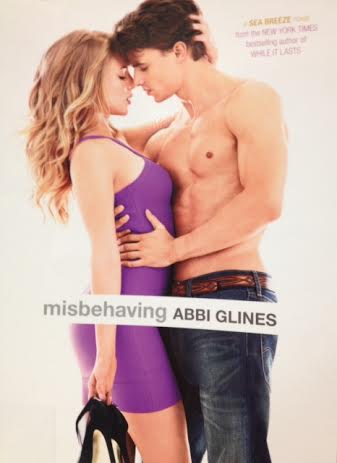
I saw this book cover the other day. It is in the “young adult” section.

misbehavingYA

Sure, it is Banned Books Week – so I should celebrate that people have the right to read whatever they want. While I’m OK with choices, I’m still going to question them.

It is the same issue I have with buffets. People can choose vegetables or fried meat. They can choose to eat only one plate of food, or fourteen. But we pay for our choices. And ultimately, society pays for people’s bad choices. My health insurance rates go up every year because people refuse to take care of themselves. Their health gets worse, so the costs go up, so it has to be paid for – by me. Meanwhile, I take care to eat well and exercise. I should not have to pay for their bad decisions, but I do.

We say we are all about free choice, but in some ways we aren’t. Notice light bulbs. We can’t buy regular incandescent bulbs anymore. They aren’t “environmentally correct”. Fluorescent bulbs last five times longer than incandescents. But – they can’t be disposed of in a “green” way. You can’t throw them away legally. You have to take them to a hazardous waste center because of the mercury in them. You can’t even recycle them. So in a way they are better, but in another way they are worse. The strange thing is that we don’t have a choice about it anymore – if we want light bulbs, they are fluorescent.

I’d think that if the government was really concerned about our well-being, they’d ban cigarettes for starters. Then, they’d make sure that all food was healthy – no additives or preservatives. Nothing would have extra sugar in it. We’d have mandatory exercise time during the work day too.

I don’t see any of this happening.

But back to the book cover. I am opposed to this book for several reasons. I’m not going to “challenge” it officially. I’m not going to try to get it banned. But I will bring up questions about it, and wonder why authors and publishers provide this kind of book. I will suggest how this kind of book affects us all.

This book is geared towards teenage girls. Do they really need to be indoctrinated to the idea that they have to be sexual beings? Do they need to be taught that they have to have a boy in their lives to feel complete? Is this a healthy message we need to be promoting as a society?

The “need” to have a mate distracts women from being full people. They spend their energy and money on attracting and keeping a boyfriend to the exclusion of anything else. Perhaps this is part of why women don’t go into science or politics nearly as often as men do. They don’t have the energy for it. They’ve given it all away to the goal of becoming a girlfriend or wife or mother.

Plus, do we really need to get young girls all steamy? They can’t handle the responsibility that comes with sex. Why have books that are explicitly sexual geared to this age group?

We don’t give full driving privileges to young drivers. They have graduated driving licenses. There are certain hours they can and can’t drive, and certain limitations as to who can be with them in the car. They don’t have the maturity to be able to handle the full responsibility of driving when they get their license, so we control it for them.

Sadly, sex isn’t that way. Once you figure out how it works, you can do anything, and anything can happen. Sadly, young people are still growing up themselves, and are almost never mature enough to handle the overwhelming responsibility involved in being a parent.

Sex is like playing Russian roulette with your life.

With this kind of book we are handing young girls a gun and telling them to put it to their heads. Either way, their own life will end. They’ll either get pregnant or distracted. Their energy will go into being a mother or a girlfriend. Their energy will be in relation to someone else. They won’t be their own people – strong, independent.

We all pay for this. We pay for it in teenage girls who get pregnant, who become single mothers and can’t afford to take care of themselves. So they get government assistance – which we pay for. Our taxes go up because of other people’s bad decisions, just like with health insurance. We pay for it in women who have spent their lives taking care of a house and home rather than fulfilling their dreams of being engineers or astrophysicists or diplomats.

How much have we lost as a nation, as a world, because we keep teaching young girls that their only value is to be found in their bodies, and not in their minds? We are prostituting our girls. We are selling them as surely as if we put them on the street.