He was one of the missing children, one of the many thousands who
disappeared every year. But Rowley (if that was his real name) wasn’t like
those children. Nobody was looking for him.
He’d disappeared that Wednesday afternoon, one of those wet
and blustery days so common in January. The sun had been gone for so long that
people simply forgot about it, simply forgot it was something to miss.
The same is true of Rowley, a boy who was shorter than
average, surlier than average. If people didn’t overlook him unintentionally,
they overlooked him on purpose. He wasn’t a pleasant child to deal with, and
there was little hope he’d grow out of it.
He’d been a latchkey kid, a forgotten child. He could go
missing for days and nobody noticed or cared. His parents (if that’s what they
were) neither spoke to him or about him. He might as well have been a piece of
furniture handed down from an eccentric aunt. He wasn’t wanted, and he knew it.
But then the circus came to town. It wasn’t like he ran away,
so much as he was recognized. The high wire performers noticed him at the
corner café, quietly pocketing leftovers from the tables about to be cleared
away. It wasn’t like he was stealing, not exactly. The food had been paid for,
just not eaten. It was headed for the garbage. He figured he was doing
everybody a service, mostly himself.
The aerialists followed him out, not so close as to spook
him, but not so far as to lose him. He knew they were behind him, how could he
not? That sense was well honed in him. It kept him safe all these many years.
If necessary he could make himself invisible without even leaving the area. It
wasn’t running away. He knew that didn’t work – that just called more attention.
It was more like he imagined himself invisible, made himself see-through to
anybody who was looking. He’d had plenty of practice at the sad excuse of a
home he had.
But turning invisible didn’t work this time, because the
circus performers knew how to do that trick too. It was the opposite of
performing. The bright light they shone from themselves when they were in the
ring could be switched off just as easily. It was second nature to them. It was
a skill that bonded them all into a strange sort of family, a wandering caravan
of vagabonds and misfits, who somehow discovered how to jigsaw themselves
together into this unexpected troupe.
The lack of a fixed address wasn’t a problem for them. They
were traveling entertainers after all. It was expected, necessary even.
Everybody in the circus was legitimately homeless. They’d discovered the one
way it was socially acceptable. Perhaps it worked because they sang for their
supper. They performed and sold tickets instead of begging. When they held a
hand out, there was a top hat at the end of it. Somehow that made it OK. The
public doesn’t like to think it has been deceived, but it does like to be
entertained. And so they gratefully gave money to them, rather than
grumbling about charity.
The two called out to Rowley, gently enough, to let him know they
meant him no harm. They knew what was going through his mind. They knew because
the same thing had happened to them all those years ago. This is how many of
them came to the circus.
Many if not all had gone missing on purpose, because they
were never noticed it home. Joining up with the other invisibles made sense.
Together, they created a new sort of family, where all the rules went out of
the window. Maybe it was because there were no windows in the circus. Trailers
and tents were the order of the day, and even if they did have windows they
were covered up with curtains or aluminum foil. This was one group that
understood the value of privacy.
NHe was walking away from it all. Walking away from the world that no longer even pretended to understand him.
He didn’t need them to agree. He wasn’t that vain. But he did need, (we all need), to be around people who at least understood what he said. For years they acted like they did, and it was enough. Years of acting added up, until he realized they were just faking it, just humoring him. Maybe they thought he was a genius and they didn’t want to let on how far behind they were. Maybe they didn’t care at all and were simply rude to everyone.
He didn’t know, or care, anymore. Wolfgang had been told he was special for years by his mother, but what did she know? She was his mother, so she was hardly objective. He was to fulfill all of her waylaid of plans, be all of who she was supposed to be but didn’t, or couldn’t, because of a myriad of reasons, some of which were probably valid.
Some probably weren’t, though. Some were very likely excuses fabricated to cover her own feelings, to blame others for things she chose not to admit were her own responsibility. She taught him well, but in reverse. He learned all of his skills by doing the opposite of her, since it hadn’t worked out for her. She was his negative role model.
His mother wasn’t bad, she just wasn’t great. She was a perfect example of what she was taught to be, overtly and covertly. She was submissive and passive. She bit her tongue. She never spoke up. She grinned and bared it until it ate her up from the inside, the slow ramshackle illness that manifested as high blood pressure and fibromyalgia for years. She rode that pity train for as long as she could, as far as it could go. Until one day she decided it wasn’t enough so she woke up with cancer. You always get what you want, especially if it is bad.
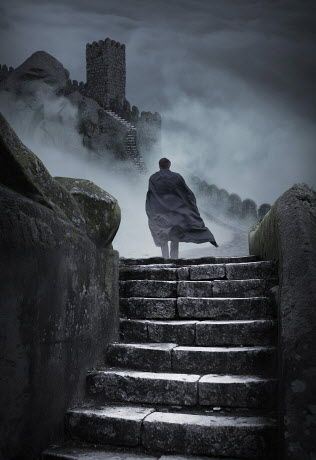
He was walking away from her madness, the madness of the culture he found himself in. It was time to retreat to the mountains, to the tower he’d read about in his studies. It was far enough away that he knew he wouldn’t be bothered unless he wanted to,. There were no roads, so all approach had to be by foot. There was a gate, but it was unguarded by anything he could see. This did not mean it was undefended, or vulnerable to entry from just anyone. A strong psi-wave push emanated from the moss green stones as he approached the gate. A lesser person would have turned aside, deeming the approach unworthy of attention.
The ramshackle tumble-down stones and the rusty dark gate spoke of inattention and lack of care. No treasures could be within. Yet he knew he was to push onward. This unassuming gate was a façade. It was real, of course, not an illusion. But he knew that it shielded what would lie beyond.
Beyond that door lay the only one who could help her, but she
no longer had the strength to call out.
Her savior, unknown, unseen, could be anyone – any gender,
any age. S/he would have the answer to her question, and it would be the right
one. Sure, certain, unflinchingly right, no doubt about it. S/he would know
right from the heart how to answer any question of hers.
The only problem is that she didn’t even know the question.
How could she, in a place and time that yelled all the answers 24/7 via TV,
computer, video chat – all the screens. Their eyes took it all in, flooding the
brain with ersatz knowledge, Tinseltown hopes, particleboard homes. Nothing was
real, not here, not now.
It was as if the whole world had gone crazy, had started with
the joy juice and never quit. Maybe they were crazy – or maybe they were
addicted. Maybe there was hope if only they quit – but quit what? Their drug of
choice was distraction, in the form of anything visual, anything flickering on
their screens. Stillness was rejected. Flat was out. The dancing shadows that
played before their eyes hypnotized and bewildered and beguiled. They were told
that new ways were better, that they needed to give up their old ways. Flip
phones were passé. Only losers and old people used those.
Now, only those who were computer illiterate were safe from
the octopus tendril fog that wormed its way into their brains via their eyes.
She wasn’t computer illiterate by any stretch, but her poor
eyesight had saved her. She too had been sucked in, like all the rest of her
generation. The strain to her eyes had let her know that she needed to make a
change. Somehow the hours she lost watching auto play videos wasn’t the turning
point. It felt like being stoned, so it was familiar. It was only later, when
she’d made an intention, an escape plan, that she had the perspective to see
what had happened to her. It was then that she truly woke up.
She tried to call out to the one behind the door, that door, the only door that mattered now. She had learned of it from a book, that ancient technology shunned by her peers. She had returned to the library, searching for meaning or entertainment after her self-imposed detoxification from the news and views, the mindless visual chatter, the one-way train wreck that was the computer screen.
There was no answer. She checked her book again, that book, the one in the thick red and gold cover. She sought out those books, the ones that had been rebound in simple yet understatedly beautiful bindings. These books had stood the test of time. They were so valuable that the library kept them for longer than they would normally last by putting them through the Perma-Bound process. It saved books that would be too expensive to replace with a new copy. Those were the kinds of books you needed now – the ones that were out of print, written before the possession of people’s minds by the screens.
Deep in her heart she knew there would be others who would awaken. Would it be enough? Would there finally come a time when people would properly name this time of mental and vital darkness, the dull lethargy that took over? Those in the Dark Ages didn’t know that was what they were in until afterwards, when the Renaissance, the rebirth, happened. This would be similar, she knew.
Again she knocked and again there was no answer. Perhaps this was a test, to see if she was sincere. It wouldn’t do to have someone find the secret only to turn it against itself. But those who were asleep, who had been lost to the mind fog brought on by electronic infection wouldn’t be standing here before this door. Maybe this was a way to think of it – as a virus. Videos and memes went “viral” after all. So maybe it was truer than they knew. She didn’t have time to think about that now. There were so many other ideas jockeying for position.
She considered whether she should sit by the door in the meantime and think, or go for a walk. If she sat by the door it might be opened, rewarding her for her patience. That quality was in short supply these days, and being able to sit still without an electronic babysitter was a sign you had shaken off the shackles.
But she’d always thought better when she was walking. “Solvitur ambulando” was the motto of a book she’d read when she first began to wake up, to realize her enslavement. “It is solved by walking”. But what is it? How could you know you found the answer when you don’t even know the question?
And that was why she was there. She needed to know what to do next. Her life was a blank slate now – no map, no direction. All roads seemed clear. So which one to take? As she walked, she understood that was the answer. There were no hints as to which way to go because all were valid as long as her heart was set in the right direction.
And then he reached the end of his quest. He hadn’t thought
it was going to be this soon. Not like it had been fast, by any means. It has
been years he’d trod the path before him, years of loneliness and darkness.
Often the only light he had to go by was in his heart, that still small voice
that urged him on when the world said it was pointless to go on – pointless,
and worse. He’d been mocked by family and friends alike. But now he was here.
It finally happened. He expected it on a more auspicious day than a Tuesday,
but who was he to question? He was finally here. He paused before the ornate
doorway, and admired the crenelations on the archway and the wrought iron
fixtures on the door. Should he say the blessing now, or after he crossed the
threshold? When could he say he’d truly arrived? Perhaps twice was better. He
fished around in his satchel and located his notebook to find the words for the
prayer. He’d been through three such journals in this journey and mailed the
full ones back to himself. He felt an odd sense of otherness the first time he
wrote his own name on a parcel. He wouldn’t be there to receive it. Or
would he?
What would it be like to be in more than one place at a time?
Ben had known all his young life that this was his destiny, to discover the
space between the atoms, to transcend the limits of the merely physical. Some
people were astronauts, exploring outer space. He was a psychonaut. His
unexplored territory was inside himself.
It had all begun when he was four. On a return trip from
Christmas in Florida with his parents, everything stopped near exit 66 on I-75.
He didn’t see it coming. How could he? He was safely (or so they thought)
strapped into his car seat. He could see nothing of the danger ahead. His view was
filled with his favorite bear and a collection of books. He was a great reader
for his age. His parents, both scientists at the university, doted on him and
read to him every day. He cherish the books he’d been given as gifts as well.
He equated books with love.
All he knew then was that day they were going, and then they
weren’t. Suddenly he was out of his body, floating around in the car as a
spirit. His body was too damaged by the crash to return. If he’d been read any
faith stories he would have known where to go, but his parents had no truck
with such foolishness. Religion wasn’t logical, and as scientists they couldn’t
be bothered to waste their time on myths. So he did the next best thing. Like a
scared puppy, he retreated to the only safe place he knew – his mother.
He’d been apart from her for four years now, but he had no other
choice. She was alive. Her injuries were slight. This couldn’t be said of his
father. One look in his eyes and Ben knew that ship had sailed. Sure, he still
could have stepped into that body, but he didn’t know that, and time was in
short supply. He had to choose soon or find himself without a choice.
So he slipped back inside his mother, returned to the first
home he’d known in this dimension, this place of noise and sound and touch and
bright colors and busyness.
The return was easier than the exit. A sidestep, a little
bend, and there he was, back inside, but seeing the world through her eyes,
hearing the world through her ears. It was odd, this other way, this borrowed
way. Now he began to understand her anxiety, for she had forgotten how to see
the world of spirit. Maybe that was why she’d become a scientist, forever
needing to prove the unprovable instead of simply believing.
After the accident, his mother felt the usual grief for her
husband‘s death, but very little for his. Grief being a new and unexpected
feeling for her, she had no way to know what to experience. She chalked up her
low affect to many things – his young age, her energy spent on her own recovery,
the sudden reversion of all household duties to her. It was more difficult to
go from a couple to a single then she had expected, and her grief for her only
child got folded up within that period. Or so she thought.
Because he was there, alongside her. He was within her, part
of her. He was four, and 28th at the same time. Over the years, he grew along
with her, and she with him.
That was why now, 15 years later, he was walking the pilgrim’s
path. She was 43 now, and remarried. He was 19, and still partnered with her,
sort of a Siamese soul. He was the one who had eased her back towards the faith
of her childhood, the faith she’d abandoned. He was the reason they were
walking the Camino now.
To her mind, the God of her ancestors had abandoned her, but
it was the other way around. She didn’t understand that faith is a lot like any
other skill. You get out of it what you put in. But her anger and questions at
the unfairness of the accident (and her ghost son’s persistence) edged her back
over the threshold of her parents worship hall..
That first time, she simply let the familiar chants watch
over her as she sobbed quietly in the back pew. She left before anyone could
ask her what was wrong, because she knew the answer would take too long. So she
went to the library instead, reading all she could about faith, and God, and spirituality,
preferring the safety and anonymity of books over the intimacy of public
worship. Over time, she learned of a pilgrimage that took a month of walking.
People went on it to find answers, or release their grief, or find a new
direction for life. All of that sounded ideal for her. So she left on a summer
break from the university, grateful to not have to use vacation time, but more
grateful to be able to leave in a way that she didn’t have to answer her
coworker’s questions. “Where are you going?” “Why?” “A
pilgrimage? I didn’t think you were religious.” She could hear the questions
already, and already she knew she didn’t have the answers. Sure she knew where
she was going, but why? And she didn’t think she was religious either, but here
she was. All she knew was that if she had to face these questions, she might
lose her nerve and that was the last thing she wanted. So a week after final
exams, she was standing at the airport, a plane ticket to Bilbao and a bus map
to Pamplona in her hand, kissing her new husband goodbye for a month.
And now it was almost over. They were about to walk through
the door – that door, the one where countless thousands of other pilgrims had
trod.
And then it happened. He felt the shift when both her feet
had crossed the threshold, when she felt the sudden but soft awareness of his
presence within her. Quietly, calmly, she knew she was not alone, knew who was
with her. It was a gift she’d not even dared to ask for – not even known it was
possible. She made her way, (they made their way), to a nearby pew and quietly begin
to sob tears of relief, and joy, and hope for the future. They had a lot of
catching up to do.
The door had been bolted and barred longer than anyone could
remember. It seemed better to go in through the side anyway. Long-ago one
insistent person had begun the slow process of removing the plaster and stones,
chipping away at the mortar with a spoon as if he was a prisoner breaking out.
And yet he was free, he was outside. It made no sense to the passers-by, what
he was doing, but he wasn’t in their way so they let him be, free to scratch
and scrape as he pleased.
The ownership of the building had passed into public domain
by this point so not even the police or the insurance company felt the need to
get involved. So he scraped away day by day, but only when the shadows
protected him. His skin was too fair to risk being out in the Guadal sun for
very long.
He thought he’d be through in a week, tops. But the builders
had done their job well so it took nearly 2 months to make a hole big enough
for him to crawl through. And what treasure did he find on the other side! You
would have thought he was Howard Carter in his excitement. He could barely keep
his joy to himself. The neighboring shopkeepers hurried over for the whoops and
chortles. They’d long gotten used to this strange visitor but this was
something else. They stooped down and peered in – and saw nothing, nothing save
the unusual prospector with his spoon, sitting in the middle of the empty room,
talking up a storm to the air.
And that was that. Nothing to see here. Move along. The town,
collectively but silently, agreed to let him stay there.
Who cared if he was a little weird? Who minded if he saw
things that weren’t there? They left him to himself the same as they left
people who didn’t see what was there.
Maybe he was more advanced than they were. Maybe it wasn’t time for them to see
the treasures yet. Who could say? So they left him be, but they contracted to
have a window built in the gap he made. It wouldn’t do to have people coming in
to bother him. Only those who were persistent (and particular) enough to go in
via the window were worthy of an audience with the Prince of the Invisible
anyway.
Because that is who he had become. Or maybe he’d
always been? Maybe this was who he truly was, underneath the mask of normalcy
he’d always put on when he was around everyone else. Maybe he’d always seen the
spirits the same as solid people. Or maybe the potential had only been unlocked
on that day when he’d finally crossed the threshold, especially on such an
unusual way. Perhaps the spirits took note of his persistence.
Perhaps it was none of that and it was just finally time for
the talent to be revealed to the town, like he was at a debutante ball. Now he
was fully himself, out in the open, at large. Now he was multidimensional and
could openly use all of his senses.
He held court with the spirits in that room for days at a
time, seemingly unaware that time was passing. He didn’t grow tired or hungry
while he was with them either. It is as if he took on some of their
characteristics while he was with them. When he would leave the room, he would
return to the world of the physical and require all the usual things and be
subject to all the usual limitations. No wonder he seemed to prefer his time
inside, where the spirits acknowledged and even respected him. It was much
better among them than with regular people.
For the spirits were people too, no doubt about it. They were
just as real, just as present as the visible ones. Many were quite powerful and
opinionated, just as they had been in life. Some were the spirits of those who
had lived before. Some had yet to incarnate. Some had been around the wheel of
reincarnation so many times it was difficult to say whether they were coming or
going.
All that mattered now was that they’d found each other, this
unusual sort of kinship, a family cobbled together out of people who were
unexpectedly able to interact with each other. And wasn’t that better anyway,
better than the usual family where the usual people could barely stand to be in
the same city with each other, much less in the same home.
The paint was peeling on the old doors, but
there were no plans to fix it. In the eyes of the caretakers it was a sin to
change things from the original. That was the paint that Ebenezer Crimmins put
on those doors, lo, those 127 years ago. Yes, they knew exactly how long it had
been. They kept track of all of that, and even more. Every tiny detail was
documented and filed in triplicate for posterity. It wouldn’t do to have
something forgotten.
Sure, they couldn’t see the pattern now, but
they had faith that it would surface later. Everything made a pattern one way
or another if you sorted it right. Sometimes it was the focus you put on it –
duration, frequency, type. Sometimes it was interval – how much time between.
They knew it had to surface somehow, but only with enough data and the right
person or computer to do the sifting. But now was not the time. Now, nothing
made sense except to save everything, change nothing. Who knew what would be
the final clue to unlock the mystery? Not them, not yet. But they knew enough
that some when, someone had to find the solution.
For shortly after old Ebenezer Crimmins painted
that door marking the completion of the house, he disappeared. Not went away. Not
was kidnapped. No, nothing as easy as that. Simply disappeared, as easy as you
please, fading away to nothing as the paint dried on the doors. He put the
paintbrush down and had begun to remove his paint spattered overalls and it
just started happening. Passersby thought it was a trick of the light, being
odd as it was on that late December day.
It was a rare sunny day, and warm for a change,
that December 20, the day before the solstice. The light was slantwise that
day, all shifty and strange. Most people didn’t take note of it, but Ebenezer
did. He didn’t trust it, no sir, but the door needed painting before the rains
came. It wouldn’t do to have the bare wood unprotected. All that work on the
house would be for naught if it wasn’t protected.
The house was like every other house in the
village, small and squat. The walls were thick, made from the local clay, fired
in a kiln built on site, purpose built just like for every house in the
village. There was a kiln as part of every yard – they all stayed. Used to fire
the bricks to make the house, then afterwards to make whatever pottery the
residents needed. Some had small stoves built adjacent, to take advantage of
the heat but not mix the materials. It wouldn’t do to get the clay mixed into
the food.
All the houses were built by the community as a
gift to the new inhabitants. They were not expected to construct their own
house, or even to design it. Each house was made for the family in accordance
with its needs and the prophecy determined for it. Manys the family of three
that were surprised to move into a home with six bedrooms, only to discover
they were more fertile than expected or in-law had to move in because of
illness. Likewise, manys the family of eight that had to squeeze into a house
with four bedrooms, only to discover tragedy came soon after.
For families were not allowed to move once they
were in their own home. Once built, you were there for better or worse.
Children could move away only upon marriage. There were no apartments, no
dorms. Everyone lived with their family and never alone, even in the case of
death. If a spouse died, the member returned to their homestead. Houses stayed
in the family for generations, until the family died out or the house
deteriorated. Sometimes the two happened at the same time.
But this tradition had come to be questioned by
the very people it excluded. The loners, the misfits, those alienated from
their family – they wanted to live apart rather than endure living together
with people who didn’t understand them. Yet there was no place for them – not
until this house. Constructed quietly, without council oversight, it had
appeared almost overnight and remained empty, with no official resident listed.
The villagers who built it had worked quietly, unofficially, and were known
only to each other. Only Ebenezer would be public in his actions, finishing the
paint job on that fateful day.
After 130 years, the villagers finally understood
what had happened to him. He disappeared because they chose to not see him, to
pretend that he was not doing this thing. It wasn’t planned. It wasn’t spoken
aloud. They just looked away, out of embarrassment perhaps, or consternation.
They didn’t know what to think about what he was doing, so they chose not to
think about him at all.
So he disappeared, slowly but surely, and soon
there was nothing left of him. Nobody ever stepped foot in that house, for fear
the same would happened to them. Nobody ever tried to build another home for
singles either.
It took all that time to develop a pattern to
see, truly see, what had caused the disappearance. It would take a dozen more
years to learn where, or rather when, Mr. Crimmins had gone. For he’d not just
faded from their sight, he’d faded from their timeline. He’d gone nearly 150
years into the future, many times the normal period of reincarnation.
It took 49 days for Tibetans to reincarnate,
which was a comfort in that culture. There was no need for a protracted grief.
You knew your loved one was alive again, and soon. There was no need to wait
for the resurrection – it was happening all the time. Mr. Crimmin’s culture had
no such consolation. The resurrection happened just the same to them, but they
didn’t know it. It wasn’t like anybody had ever come back and told them. Until
now.
Because Mr. Ebenezer Crimmins came back, looking
exactly as he did when he left. He got to pass go and collect $200. He won the
game and lived to tell about it – really. He was so thankful the town had
archived his life so he had proof he was who he said. Otherwise they might have
locked them up or cast him out. Because that was what most cultures did to
people who spoke truth that seemed better than they could believe.
A quick resurrection wasn’t what they
wanted. They were programmed for death,
and guilt, and waiting, and never seeing the other side any time soon. So they didn’t like the idea of this walking
ghost, this man their grandparents knew, standing among them telling them it
wasn’t like that at all. They didn’t have
to fear death. They all would get a second chance, and a third, and a 27th. He might as well have told them that they
didn’t have to worry about money, or sickness either.
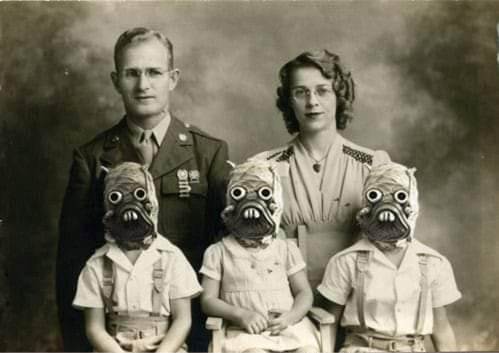
Christopher and Lois Helfman loved their children more than they could express, but they understood that not everyone could accept them. They were fraternal triplets – two boys and a girl, born one bitter December morning five years ago while Papa was on maneuvers with the Royal Marines. He’d not even gotten to see his wife bloom into her pregnancy,having just one home visit a year at that point. His wife joked that he made the best of his time while he was at home, but she wasn’t laughing when she was told it was triplets she was expecting not long after he returned to the lines.
How would they ever manage three babies, , and then corrected herself. Why ever did she think they would do anything? It would be all her doing, as it was for all the women in her time. Women had always done it all – all the cooking, all the cleaning, all the child raising. They did it because this is how it was. There weren’t other options as far as they knew.
Lois sent her husband a letter as soon as she was
sure the pregnancy was viable. It wouldn’t do to get his hopes up for nothing.
Because it was triplets, she waited an extra month just to be sure. So when the
letter finally reached him he didn’t have a lot of time to adjust to the idea
he was going to be a father.
Of course, they wanted children. They hadn’t planned exactly when, just leaving that particular to God. That was the best practice anyway, they finally realized after years of struggle. So many years of trying to do things their way and plans not working out. Why would they?Plans of mice and men never measured up to a hill of beans.
But the babies had been born early, too early for the happiness of the nurses at the village clinic. Doctors were in short supply, what with the war and all. They had been sent to the field to tend the soldiers. Civilians had to fend for themselves. Their needs were much less. It was quietly understood this was one of the many sacrifices they’d have to make to win the war.
And who was the war with? Desert dwellers, the People of the Sand. They’d finally ventured out of their domain and discovered the delights of temperate climates. No longer did they have to settle for the arid lands they’d been born in. No longer did they have to settle for a nomadic life of tents and beasts of burden. Now they knew there were choices, options other than a life of wandering from campsite to campsite, from bad pasture to only slightly better pasture. The herds were growing gaunt with all the work it took to forage for food, and so were they. So when they saw these new people, these fair skinned layabouts who didn’t have to fight the land for food, they knew they had to take over.
At first they sent sentries, spies, to move into and among these newfound neighbors. No weapons among them other than walking sticks and knives for butchering their supper meant diplomacy was the order of the day. They never had to fight anyone before and hoped not to now, but they weren’t above it. Their ancestor, the great Mahd had firmly said that violence was acceptable if peace failed. The survival of the People of the Sand was paramount. It would not do for them to be erased in the same way that footprints were in their landscape.
A life of shifting terrain shaped people into never settling down, never feeling stable. It made them suspicious of outsiders, of intermingling, so they clung to their traditions all the more. It was the only thing holding them together. It was who they were as a people –not anything material but all in manner. How you acted was what marked you as a member of the People.
War finally came inch by inch and day by day, until suddenly there was fighting in the streets of the Helfman’s little village. Unrest had come to the town in dribs and drabs, two different cultures mixing like oil and water. There had been attempts to integrate. There were evening classes at the local library to teach both languages, but they were sparsely attended. If only they had asked the people what hours they were available – or even if they were interested. There were other barriers too -where there were misunderstandings and confusion. There were little arguments over use of the community center for worship services. The newcomers didn’t understand the denial wasn’t personal – they didn’t allow anybody to have services there of any sort.
When war came, Mr. Helfman had volunteered straight away, knowing that if he waited to be drafted he’d most likely get a less than desirable position. Not like any position in a war was desirable –but some were better than others. He became a captain in the Signal Corps because he had worked in the village radio station for over a decade and had a ham radio license. Sending messages back-and-forth across the battlefield without the other side listening was his forte, and he relished his role. It was important, essential even, and he didn’t have to worry about getting shot.Well, that wasn’t exactly true. He’d been trained the same as everyone else in the unit how to handle a gun. This was war, after all. The time for talking was over. Diplomacy had been exchanged for destruction, and may the best side win.
And yet he still held out hope that they could work something out. The good Lord didn’t put these people on the earth – and especially in his village – for nothing. But there were so many barriers! The culture was unusual, that was for sure, but the language – that was a real stumper. They didn’t even use the same alphabet, just a bunch of squiggles and dots. It didn’t make any sense. So he began to test the limits of his radio technology. Perhaps he could get it to translate the sounds it heard while he was intercepting their signals. If his phone could figure out what song was playing by listening, surely he could rig up a way to get some sense out of their language.
He’d always done well with the belief that if he could imagine it, it was possible. Surely the Lord wouldn’t have put such an idea in his head if he didn’t want him to try. Now, plenty of folks took that the wrong way and turn God’s dreams into nightmares. They focused the signal on themselves, not on others. Christopher Helfman had been raised to serve others,so his experiments always worked out for the best. It wasn’t long before he had worked out a translator, and within months every person in the battlefield had a portable version.
They’d left ones for the People of the Sand in conspicuous places, knowing that if they simply tried to give them away it would be met with suspicion. So they waited, and were wary. But the experiment worked – they started using the translators! A few brave souls talked with each other across the lines, sharing words and not bullets for a change. An agreement was reached and more of the devices were handed over. Before long, the war was over because they could finally, truly, understand each other. The devices didn’t just translate words but feelings and emotions as well. The full range of meaning was conveyed, and the two sides discovered they had more in common than not.They decided to share their resources, creating a whole new kind of community.
And that is how the masks came to be on the heads of the Helfman triplets. Born too soon, their lungs weren’t fully developed.They were prone to allergies and asthma, and nothing seemed to soothe them.That was, until the village got a People of the Sand doctor, who decided to try something new. These people had long relied on their unusual and somewhat intimidating face masks to survive in their arid desert home. Now that many had relocated to the village, they had no need for the cumbersome devices. Thankfully,many kept them out of nostalgia, so several were available to the doctor. He decided to try one on the children after the usual tricks had failed. Unusual was the order of the day in the village at that point, what with the two cultures openly blending and sharing, so the children didn’t stick out too much.
A world bloomed in her mug. A forest emerged, complete with a circle of ravens to welcome the dawn. Perhaps this blend of tea was more magical than advertised?
Bergamot, hyssop, and a dash of hinoki oil were the listed ingredients, but she was sure there had to be some surprises. There always were. No cook gave away all her secrets. They were like magicians in that way. Revealing just enough but not too much … any more and the gig was up and you’d be out of a job.
People paid for secrets. They paid to be surprised. People paid to suspend their disbelief if only for an hour. It was how writers survived – this compulsive need for lies of all sizes and shades. White lies were still lies after all,still less than the truth. But the truth was too much for most people. Little white lies kept the wheels of society greased.
But this tea might take some serious adjusting to. Was she tall enough for this ride? She’d gone to this tea blender for several months now but this was the first time she’d considered that the mix wasn’t for her. Perhaps it was for another customer? Or perhaps the blender (more alchemist than anything else) had over estimated her needs this time.
For this was no ordinary tea shop that she found. The tea resided in dark brown glass jars, with handwritten labels. Some were blends, but most were raw ingredients, ready to be whisked together into the need of the day. Patrons didn’t even tell the clerk what they wanted. That wouldn’t do. They could not be expected to be objective enough to know what they really needed, after all.So they came in, waited their turn, and then sat before the clerk who observed them. Sometimes s/he would take their pulse. Sometimes s/he would ask the patron to stick out their tongue. But nothing more – no medical history, no list of prescriptions or supplements written down or spoken.
It was a simple affair, but one that required over a decade of training, and that was only after a rigorous testing just to be considered for the role of student. Students had to be impeccable in their words and actions,diplomatic, and able to raise all the funds for their training upfront. There were no scholarships. There were no loans. The entire tuition had to be fully funded from the start. The teacher wished for each student to be able to serve her whole-heartedly upon the completion of their apprenticeship (not graduation, for they would never cease to learn) so the patrons could be served without distraction or hesitation.
So this had to be what she needed, but was she ready for it? It tasted like no other tea she’d ever had. Was that a woodpecker call she heard from her mug? Did she see antlers? She’d never hallucinated before, college being at a private Christian school, but she suspected this was what it must feel like. And feel was the right word – she didn’t just see the trees and animals in her tea, she could hear and smell them too. They were there, but in miniature, in her mug.
Well, there was nothing to it but to do it, so she took a sip. The forest stayed horizontally oriented, the birds continued to fly, and the still hot tea tasted like earth and moss and stone as it slid down her throat.
She’d asked for a dog but they gave her an alligator instead.Or maybe it was a crocodile? She wasn’t sure and they weren’t telling. They never told her anything anyway. Just gave her chores to do and no instructions and there was hell to pay if she didn’t do it right – whatever that may be. She never knew because they never said.
And yet, somehow, at her tender age, she’d sussed it out.Without training or guidance or even an instruction book she knew how to do it,whatever it was, in spite of them. Were they trying to test her? Or were they simply evil, hoping for her downfall, wanting an excuse to yell at her for not doing well?
Was this how they were raised? Was this how they thought they should treat others? What goes around comes around, after all, and people can’t treat people like how they want to be treated if they don’t know any better.
So she suffered from these teachers, these guides, these “superiors”who left her a box of materials and not even a picture of it go by for what she was supposed to build. Sometime she built whatever she wanted. If they didn’t watch it, she might build a rocket launcher. It would serve them right.
Right now she was training her reptilian companion to fetch,but soon would start the real training. He had sharp teeth and a surprisingly strong tail. It would be easy to teach him to attack on command. It was part of this nature, after all, to grab a victim and pull it down under the water,thrashing and turning until he could bite down a few more times. Puncture wounds usually took the fight out of anything rather quickly.
She didn’t want to resort to that, having spent more time in Sunday school than she cared to consider. Perhaps that was their plan all along– make her docile, unwilling to fight for her rights, unwilling to follow her own nature. Humans were selfish creatures once you got down to the bare bones of the matter, and religion was nothing more than a way to civilize them, make it possible for them to live together in close quarters.
But that wasn’t who they really were, all that forgiveness and “turn the other cheek” hooey. What person in her right mind would give away her only coat, either? And yet they’d done it, mostly, had trained women to be passive, to apologize for speaking their minds, to forgive even when the other person hadn’t apologized. Maybe this was why women were majority of those who suffered depression and anxiety attacks. The dissonance was unbearable.
She started to wonder if maybe she wasn’t truly female, at least all the way. Maybe she was just female on the outside. She didn’t feel one way or the other on the inside, but she had nothing to compare it to so she didn’t know any better. But she did know she wasn’t swallowing what they were trying to feed her. She wondered how all her classmates and friends could stomach this madness, this meal of compliance and conformity. It tasted bitter to her, and bare. It tasted of bones and bile, nothing nutritious, and certainly nothing to benefit a growing girl.
Maybe that was their point – to stunt her, to slow her down.Maybe their treatment of her was for the same reason a horse was handicapped –to not give it an unfair advantage, to level the playing field. Maybe they were afraid the other children would feel low around her, so they brought her down to their level. But when ever has dimming a light helped those in darkness find their way?
It was time to shine.
But first, she was going to train her pet to do some tricks they didn’t see coming. They needed to know it wasn’t right to mess with nature.
She nearly slipped on the moss covered cobblestones. How long had it been since someone had used this hatch? And yet the planter near the gate had a tiny plant in it – trimmed, healthy, not unruly and wild as cultivated plants went. This was being tended – but by who? And why wasn’t s/he using the door? Why come all this way to keep this plant in a pot alive? This corner of the farm wasn’t exactly on the way to anything you needed. There weren’t chickens to feed, horses to comb over here. And yet someone had been here, and recently – within the week at least.
Funny how wildflowers never needed attention,but everything else did. Maybe it was time for people to start valuing things as they were and stop messing with nature. Nature knew best how to stay alive.
But now she was in charge of the farm. It washers, to have and to hold from this day forward, until she died. She hoped it was for better, not worse, but you never knew with these arrangements.
The country had offered this unique real estate plan for 30 years or more now and it was working out well. If you promised to improve the property and to never sell it, you could stay there for free. It was a great way to deal with the homeless crisis and abandoned buildings at the same time. Two birds, one stone.
Once a minor government worker had put the
pieces together it was so obvious a solution that the bureaucrats almost didn’t
act on it. It was so simple that they thought there had to be a hitch. Where
was the profit? How could they benefit – in tax revenue, if nothing else? Once
it was explained that they no longer had to pay the police to chase off
squatters, they started to warm up to the idea. Once it was explained that they
also wouldn’t have to spend any money on the homeless, they cottoned to the
idea even more. And yet they still were wary – were they simply letting the
squatters win? Was this another liberal trick?
There were background checks. There were interviews. There were tests. There were forms – God were there forms! That alone weeded out the illiterate and the impatient. Only those who made the time to wade through all that folderol were up to the task after all.
Plenty of people who won the challenge moved in right away, bringing their whole family with them – aunts, cousins, dogs, the lot. They had learned in the interview process that it would require many hands to make light work of all the farm chores. Others, lacking in blood kin,scouted the neighboring villages – the farm houses often being isolated affairs– and hired the very people who had been ousted as squatters the weeks before in the transition.
Those people knew the patterns of the farms – where the animals huddled in bad weather, where it was dry and where was wet. This knowledge would help speed things along. Plus – they were often grateful to legitimately live where they had spent so much time. To get paid in bed and board at a place you’d stay for free was a real blessing. The farms ended up like a kibbutz – a collective, where no profit was expected and hard work was understood.
But this little doorway – with its rough hewn wood and antique door lock – what was it guarding? And how long since it had been opened? Or had it ever? It was entirely possible that the door had been created just to keep something in forever, or at least as long as it was alive.Otherwise why have a lock? If it was something that needed to be forgotten, it could have been walled up, with no sign to passersby that there was anything of interest beyond.
So she found someone on the farm who could pick locks, and away they went into the hatch, just the two of them, but prepared at least with a pitchfork and a hoe. There was no telling what they would face.
Inside they met a mirror monster, which greeted them with suspicion and curiosity and a bit of entitlement. The two humans felt that this was their home and everyone else needed to leave – in the mirror monster felt the same way. It was only showing them what they showed it. It was nature, at its most basic, and it had stayed alive all this time because most of the people who encountered it were comfortable with the foreign, the alien. They saw it as a friend they didn’t know yet, rather than an enemy to be defeated.The mirror monster lived in this field – had as long as memory and longer. It roamed its land and never strayed.
A century ago or more a landowner had marked off the monster’s land, declared it sacred and special, because he felt whole there. This was his special place to remember who he really was – not scattered and divided, but complete and calm and centered.
If he’d been of the religion bent, he might’ve told the local rabbi or vicar about this place and let them enclose it further, building tall walls and a roof to further mark the space as sacred, as set-aside, but he wasn’t, so he didn’t. He felt it was important to leave this area for anyone who needed it, rather than seal it up only for those of that one faith tradition and only open when they felt like it.
It was his ancestor who watered the plant near the hatch, but she did it secretly. It wouldn’t do to call attention. Her forefather, the one who built the walls but not the door, had been ousted by someone of a different ilk, a darker bent. That person had come to visit but had jealousy in his heart. He saw the flourishing farm and wanted it for his own.
He used the law to his own advantage, not as it was intended.Instead of the law being a shield to protect the innocent, it was used as a sword to cut and divide. Within a few short months the farm changed hands.
When this interloper, this usurper, entered the field, the mirror monster struck with full force, meeting energy with energy as was its nature. Faced with his own ugliness, his own greed, the new owner put up a gate with a lock to ensure he never accidentally walked in there again. If the farm were smaller, he’d have torn down the walls and dug up the field, attempting to eradicate the spirit. Not like that would have done him any good – the force occupied the space, not the land. It was beyond the material, beyond what you could see and touch.
This would have been the case had a shrine been built there too – the place didn’t make you better or worse. It just made you more of what you already were.
These mirror monsters were everywhere, and many’s the temple that had been built over their domain. And many of the sacred sites had good people as well as bad visit. The place could serve as a challenge to the unsettled, the suspicious – where they suddenly had a choice. Continue feeling unsettled, fearful, or start feeling curious and open. They had a choice to stay where they were or become someone else – someone open and hopeful.
But now she thought – what to make of this place? Or did it need anything done to it? Not everything needed to be “developed”. Some things are perfect as they were, unspoiled, naturally alive. There is a wisdom in the unspoiled, the as-is. Where did humans get the idea they were improving land –that their way was better than God’s way?



 betsybeadhead
You must be logged in to post a comment.