Rosalee’s prize

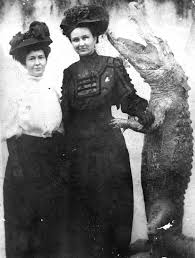
He was her alligator, fair and square. She’d won him at the county fair some ten years back. It was just a little thing then, of course, but it was the only prize she’d ever won, so she kept him. Most of the kids at that ball toss game on the midway simply took their prize (if that’s what you could call it) to the lake which ran beside the fairgrounds and let it go free. Most had been talked into this by their mothers who quickly saw the impracticality of such a pet. The barkers took advantage of this and simply re-captured the little terrors at a bend further down the lake so as not to be noticed by the punters. This is why this particular game wasn’t rigged like the rest of the tests of skill on the midway. Nearly everybody won at this stall. It didn’t cost them anything in prizes and they made plenty in tokens to play.

But Rosalee didn’t know anything about this. All she knew was that she’d won something for the first time in her life and it felt good. She didn’t care that it was an alligator. All she cared about was that her luck had finally turned and she was going to ride that train for as long as possible. She made a little wood and wire cage for her alligator so she could take him with her wherever she went. Her second grade teacher was amused that first day and decided to incorporate it into the science module of the day. The whole class learned the difference between alligators and crocodiles, learned what kind of food they preferred, learned how to take care of them. The second day her teacher wasn’t as amused. By the end of the week she politely asked Rosalee to leave him at home from now on, the lesson was over and the joke had worn thin. But Rosalee wasn’t budging. He was her good luck charm and she had no intention of ever being more than a few feet away from him. They reached a compromise and put her in a desk next to the window. Her father was somehow roped into cobbling together a pen for the ever-growing beast that was situated just outside. They could both see each other, and she could even reach out her hand and stroke its rough scales.

Rosalee was the only person who could pet the alligator. Everybody else he snapped at – especially the vet. She took him to her family vet for the first check up and all the cats and dogs in the waiting room huddled under their owner’s chairs while Rosalee was filling out the forms. When she got to the part on the form for the “name” for the alligator, she stopped. She didn’t know his name. He’d never told her, but then again she’d not thought to ask. She didn’t think now was a good time, a name being such a private thing and this being such a public place, so she wrote “None Yet.”

20 minutes later the nurse called out “Nunyette”. Rosalee looked around, noticed nobody else got up, looked at the nurse holding her clipboard, noticed her hand waiving her into the hallway where the exam rooms were. The nurse was all smiles until she noticed it was an alligator in tow. He was on a leash, as per office policy, but she was still apprehensive.

The alligator was well behaved up until the vet tried to take his temperature. They never went back. It was either that or be sued. 

It turned out the alligator was a better prize than Rosalee could’ve ever expected. He was a good protector, didn’t need any entertaining, and caught all his own food. She didn’t think of him as a pet, but she sure didn’t think of him as her “baby” like some did about their animal companions. Ten years later she took him to the town‘s grand coming-out fête as her date. She knew it would mean she’d never get an invitation to join the Junior League, but she was OK with that.

A is for Astronaut

She’d always wanted to be an astronaut, ever since she discovered that plastic helmet in her grandparent’s attic. It had a green visor that turned the world a magical, alien color when she put it on her head. It was so much more than wearing tinted sunglasses. Everywhere she looked was altered. There was no “normal” sneaking in her peripheral vision. That was covered with the helmet. Sounds were different too – more muffled, more distant. It made her feel safer, more peaceful, more powerful to wear it.

She was born in a time before there were words for what she was. “Gifted” they knew for sure, but there was more. She was sensitive, perhaps overly so. Now she would say it was a gift to feel in an unfeeling world, but then she thought it a challenge, if not a curse. It was hard to keep friends. She made them like anyone else. It was easy in the jumble that was public school. People became friends easily, often for no other reason than survival. They joined up out of some instinct that said it was dangerous to go alone into that minefield of strange rules and stranger adults. Best to connect with others who are equally lost or oppressed. This is why cliques formed after all. Once the obvious groups were created by hobby or skill, what was often left were the oddballs, the misfits, the loners. They connected as a way of self-protection, an unspoken union with no dues or representatives

She’d fit in these groups for about a month or so, just long enough for her or them to quietly decide that there wasn’t a fit after all and one side or the other would quit spending time with each other. Thankfully this was before the era of social media, or as she thought of it now, anti-social media.

She was 50 now – far past the age of recruits to astronaut school. She was in good shape and probably could have endured the training, but it wasn’t even an option. Or so she thought. She looked it up. There were no age restrictions. The oldest so far was 46. She’d been telling herself “no” without even asking the question. She just assumed it wasn’t possible, so for her, it wasn’t. Maybe deep down her former friends knew this about her – knew her lonely fear of failure, her feckless worry. Perhaps they were afraid of catching her secret disease of failing before she even began.

But she was a different person now. There had been growth on her part. It was a blend of self-help books and counseling that finally pushed her over the edge of her fear. It was like she’d been forever standing at the cliffside, afraid of falling to her death – all the while not realizing she had wings.

How could birds know they were birds after all? Their wings were behind them. Their mothers appeared as if by magic. How could they know they too had that same magic, waiting to be revealed?

Perhaps her fair-weather friends had done her a favor after all, without even realizing it. By quietly abandoning her, she’d learned to value her own company. She’d learned how to be her own friend and how to take care of things herself. These turned out to be valuable traits in an astronaut.

Because now that is exactly what she was determined to become. She applied to the program, confident and beaming. She saved up her money and quit her job so she could commit all her energy to this. There was no backing out. There was no Plan B. It was A for Astronaut all the way. The moon (at least) or bust. No glass ceiling for her – she was going to smash through it with her rocketship.

The program had changed a lot since she had first looked into it. Every few years she’d read about astronauts or space and think of it as a loss love, or perhaps a lost dream. Now it was far less physically demanding and far more mental and emotional – and perhaps even spiritual. Now they didn’t have to endure many G-Forces, being spun about in centrifuges to ensure they could survive the ordeal of acceleration and reentry. No, being an astronaut was a lot easier since the invention of the Hop. Just strap the Hop onto your wrist, set the dials, and away you went. Within a matter of the blink of an eye you were there instead of here. Scientist’s weren’t sure how it worked, but they’d said the same about prescription drugs for years and that never stopped them. All they knew was that they got the results they were looking for.

All she was looking for was a chance, so they gave it to her. Training now was about how to interact with aliens on other planets. Of course, they weren’t “aliens” while on their home planet. She was. She was the odd one out, the anomaly when she was there. She was the one who had to adapt well enough to observe them and be able to return home in one piece. You never knew what might happen. Just judging how earth people treated their alien visitors, she knew anything was possible, so it was important to be as nonthreatening as possible.

It wasn’t possible to assume that the environment would be hospitable. She’d have to wear a spacesuit to protect against air that wasn’t of the right balance of gases for human, or ultraviolet rays that were too harsh, or gravity that was too high or too low. The spaceship had to become the spacesuit – able to provide a protective shell around the person to make it possible to explore in safety.

The government had long ago given up the idea of a space program, so it was handled by other private investors. They were generally in the tourist trade or in real estate, looking for a place for humans to go when they got bored.

So now she was testing out the suit in New York City. It wasn’t New New York – that was in Proxima Centauri 4, of course. But she had to practice somewhere, and you couldn’t get more alien than a big city that was populated with all sorts of people. So she’d Hop to New York or Nashville, or Mumbai or Mongolia, walking around and trying to interact with people. Part of it was getting used to being stared at and not reacting.

The suits had built-in translators, thankfully, but that only went so far. She had to understand the meaning beneath the words – the true message that was being conveyed. That would prove to be the most useful trait of any astronaut, and that was the one skill that couldn’t be taught. But it was hard to test for too. You couldn’t just ask someone if they could get along with anyone. Of course they’d say yes. It had to be proven, time and again, through various experiments, like what she was doing now.

Long ago, the space program gave precedence to ex-military for their astronauts. These days, they discovered that ex-retail was the best way to go. Those people had to know how to be diplomatic at all times, and how to keep the peace without a weapon. Not true with military folk, who were used to solving problems with their weapons instead of their words. Peaceful coexistence was the goal – not colonizing. They learned long ago that it was best to work and live together with a variety of beings. Too much homogeneity led to stagnation, an endless loop that would spiral back in on itself eventually, strangling ideas.

The Sneeze

Sarah spent that whole day sneezing. She was being paid for it. It was a job, after all, even though it was just for the day. Some crazy photographer wanted to capture what a sneeze looked like, so he had put up fliers around town. Actresses came but he shooed them away. He didn’t want a forced sneeze, or a pretend one. He wanted the real thing. Only an authentic sneeze would do. This was for science after all. At least, that’s what he told himself.

He almost didn’t hire Sarah – she seemed too fancy. He suspected she was an actress by her clothes. She assured him that she dressed up for every interview. She believed it was best to dress better than expected. But she had no idea what to expect for an audition to sneeze, so she wore her best party dress, just to be sure. She needed the money. She couldn’t afford to act like it was a done deal, that she’d get the job without any effort.

The photographer liked her spirit, so he decided they needed to try to capture her sneeze. It wasn’t allergy season, so they had to resort to various methods to induce one. A feather was used, then a pinch of pepper, then some snuff. Sarah stood before the camera and tried each item, and the photographer pressed the shutter release. He rigged up a new system to take 10 photographs in quick succession. It wouldn’t do to miss one, and he never knew exactly when it would happen. They tried all three things and got three different sneezes – small, medium, and large. Sarah was a little embarrassed how much she sneezed after the snuff, but it was exactly what the photographer was looking for.

But he wasn’t just photographing her sneeze. He had her stand barefoot on a metal pad during the experiment. Wires ran from it to a small metal box with dials and scopes and a paper readout that looked a bit like an EKG. He was testing to see if there was a difference in her when she sneezed.

The Church taught that it was dangerous to sneeze because it was the breath of God you were casting out. So while it looked like he was photographing a sneeze, he was really measuring what God’s breath was. Did it have weight? Was there an electrical charge? Did the person lose anything during the sneeze – and if so, did it come back, and when, and how? Was there a difference if you said “God bless you” or not? What if the person wasn’t a believer – was there any change then?

He was a curious man, barely over 5 feet tall. He had a small voice it always seemed to be apologizing for something or other. His nails were clean, now, but sometimes they bore traces of nail polish in improbable colors. Nobody knew if he had a significant other, and if so, what gender they might be. He didn’t even have any pets. He kept to himself, except for the once a week he went to the local American Legion Hall for the music. He went there for the same reason he got a flu shot. He thought it did him some good, or ought to. He wasn’t certain enough to miss either one of them, just in case. He wasn’t sure what he’d catch if he wasn’t a little social. Maybe depression? Delusions of grandeur? Right now he barely had delusions of adequacy, but he knew that was part of the territory of being an artist.

And an artist he most certainly was. When he stepped behind the camera he became someone else, someone confident and sure. He was no longer short, or strange, or socially awkward. He could talk with people instead of just at them. It was a lifesaver that he had discovered photography as a form of self-expression.

Most artists had to build up their clientele, schlepping around their portfolios like second-rate prostitutes. He’d had the good fortune to start his career doing school photographs. He could learn the trade and get paid for it. No marketing – all he had to do was show up. Somebody else made all the contacts and did the hustle for him. It was ideal. He thought all artists should have it this good. Being an artist and marketing your work were two entirely different skill sets, after all.

It was while he was photographing Mrs. Murphy’s first grade class that he got the idea about documenting a sneeze. It was on an unusually cold day when school picture day came around, after a month of warmer temperatures. The children, unused to the sudden change, were sneezing in the makeshift studio that was set up in the gym.

Several retakes had to be made to make sure he’d gotten a good portrait. All the mistakes got tossed into his seconds box. He wasn’t going to do anything with them – they were for an acquaintance he knew at the American Legion. She was a songwriter who was almost as eccentric as him. They were an unusual sort of pair – both united in their oddness. They didn’t fit with people, but because of that they sort of fit with each other. They weren’t a couple, mind you, just friends in an offhand sort of way.

She fancied herself a visual artist as well, cutting up pictures from magazines and gluing them in her handmade journals. Sometimes she’d slap paint or stickers on the pages with the pictures and write stories about the people. He figured she’d like some actual photographs to use so he brought them to her.

Little did he realize but she was also a bit of a psychic. When she saw the first image of six-year-old Brian Thornton having a sneeze into the crook of his arm, she threw the photo down in shock, exclaiming “He’s not right!”  After she recovered, the photographer asked her what she meant. She simply stated “He has no soul!” and left it at that.

Now maybe that was true for little Brian. He was an odd child according to the teacher. But he was also sneezing at the time, so maybe that was it. So the photographer was now on a quest for the human soul, by way of photographs.

The Wind

She felt the January wind slink into her apartment, curling in like a cat, all sly and sophisticated. It thought it could slide in, lurk in the corners long enough that she’d get used to it, let it stay, like an afterthought. This interloper wind, this vagabond gust thought to hide in the corner, unnoticed but still unwelcome, a silent squatter.

But she was through with hangers on, of all sorts. She’d lived alone these last 20 years, ever since her husband moved away to find work in another state. Or had he simply moved without her, a divorce in all but name? They’d grown apart ever since she became sober. Only when she wasn’t seeing life through the fog did she realize she‘d not married well. But, a vow was a vow, so they muddled on, more roommates than spouses.

It had worked, for a while, but then it all became clear, slowly, like a Polaroid photograph developing. Only then could she see who she’d married – or perhaps worse, the person she’d become since that day.

How had she forgotten who she was? And why had it taken so long to remember?

She had her back injury to thank for this, she mused. Nothing makes you reevaluate your life like pain. She’d had to stop everything and re-learn who she was, learn how to put down all the heavy things she was carrying. It didn’t take her long to realize that meant more than just physical.

So she made less time for him. She started spending time with friends. She started spending time on herself. She started learning what it was like to not spend so much time around someone who was addicted to being broken, to being a victim. It was liberating.

It was sad,in a way, to realize how much he had leaned on her, how much he had expected of her. But she was through listening to his litany of complaints, his lists of people who had done him wrong. It was sad, too, to see how special he thought he was – and not in a good way. He thought he was unique in his pain, that the world paid special attention to him, singled him out for abuse, when in reality the world was as indifferent and impersonal to everyone.

This need to play the victim, to play the indirect object, the one who was acted upon rather than the active agent, was what had put him in his funk. She could see this plain as day, this self fulfilling prophecy of disappointment and delusion. He had not gotten better in the decade they’d been together. Perhaps he had gotten worse. And so she agreed to the separation, to see if perhaps he would learn on his own. It was how she’d learned, after all.

It wasn’t intentional, this separation. She hadn’t asked for it, but welcomed it all the same as the gift she’d never thought to ask for.

He had fallen on hard times since the layoff. A cozy job with the government, safe and secure, was his ace in the pocket for years. He could coast along, unmotivated, lackadaisical, feckless. Perhaps that had been his undoing, that job where mediocrity was the name of the game. Perhaps he’d learned too well that it didn’t pay to try harder. There were no promotions for those who tried to improve upon the time-tested procedures. In fact, mostly there was censure from the fellow dozens of that lackluster lair. They invariably pulled down anyone who dared to make their own mediocre workload look as lackluster as it really was. Only if they all conspired to put forth the least amount of effort could they continue in their façade. 

But then there was the layoff. Or was it a forced retirement? Being civil service, they couldn’t be fired, but they could be subtly forced to leave. Privileges could be revoked. Expectations could be raised. Work could be documented, quantified, tracked. This weeded out some of the lazy ones, but not all. Some clung on harder, determined to outlast the push to eliminate them. Some were determined to stay until the end, until they retired or things got bad enough that going through the ordeal of finding another job seemed better in comparison.

Somehow he lasted through the waves of attrition, kept his head down in that strange game of musical chairs where people weren’t fired but still found they didn’t have a job. Every week certain jobs were deemed unnecessary or redundant. It was clever, if not exactly honest. The people weren’t eliminated. The jobs were . It was a simple as that.

And that is why he left, before the ax came down on him. But that too is how he was patterned – to think that he deserved better but didn’t have to work for it – in fact, shouldn’t work for it.

It was nearly a year before he worked up the momentum to get another job, in the meantime relying on the kindness of his wife to keep him in the lifestyle to which he had become accustomed. And then she’d had it. It was only her anxiety attack that put her in the hospital that motivated him to start looking in earnest. Even then what he found was just part time, with no health insurance.

She’d promised, she said her vows, but she hadn’t counted on it being worse more often than better. She thought it would swing both ways, where they’d take turns relying upon each other. She’d not expected this protracted siege upon her compassionate nature.

And so finally he moved out, but not before she pushed him out of the bedroom, pushed his clutter out of the kitchen. She told him years ago it was her or the hoarding, and he’d not chosen her. So she got to do the choosing, slowly but surely maneuvering the situation to pushing him out without overtly doing so.

He was used to being a bit player in his own life anyway, so it was easy enough once she set her mind to it. No more would she be his emotional garbage dump. No longer would she pick up after him when he “forgot” to clean up his own messes – physical, financial, spiritual. She’d never agreed to having a child and certainly didn’t want one who was nearly 50.

So they lived apart, and it worked in a fashion. It wasn’t a normal marriage as far as they knew, but maybe it was. Maybe most people lived like this but never talked about it. Maybe behind closed doors all marriages were all the same. Meanwhile, it was time to do something about that draft. It wouldn’t do to let the wind get the better of her. She was done with being taken advantage of.

(written 1-3-19)

The Camera

This was the first picture she took with her new camera. Well, it was new to her and that was good enough. She found it at a pawnshop over on 9th Street, the street of lost chances and dead ends. Nobody went to live on that street if they could avoid it. But sometimes she went there to browse the pawnshop and see what she could find. There was always something there that she could find room for in her house. But that day she didn’t go to browse. She had decided she needed a camera, and the older the better. She didn’t want anything digital. She didn’t want her tools to be smarter than her. Sure, she had a smart phone that could take pictures, but she wanted something slower. Haste makes waste, after all, and being able to take a thousand pictures a day certainly created some bad shots. No, a roll of 24 shots was right up her alley.

She’d gotten into the mindfulness trend and decided her new hobby was going to be photography. Not that silly point and shoot business, but actually composing photos like you’d compose a sonata or sonnet. She wanted real pictures, with heart and soul.

But she ended up with pictures that were dark. They had soul, but it was of a dangerous bent. The camera never seemed to work when she tried to take a photo of a flower, or a child, or a puppy. Only when something tragic or scary happened would the shutter release, and she had no control over when that would happen.

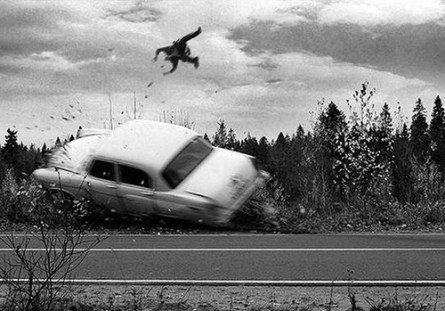
It wasn’t like she pointed the camera at that car accident. She tried to frame a shot of the roadside flowers. The shutter clicked, or so she thought. She stood up and then the car came around the bend, going 90 to nothing. It hit a pothole in the road and flipped. The passenger flew out, arms flailing and then, the camera, slung on a lanyard around her neck, took the photo.

She didn’t know until she got the film back two weeks later in the mail. She’d spent the whole weekend taking photographs and none of them came out. Or rather – all of them came out perfectly – they just weren’t the photos she’d taken. The camera had taken them all. All weird. All strange. All disturbing. She noticed all the strange things that were happening that weekend she chose to learn how to use her camera. But she’d not focused on them. Who would point their camera at that? A decapitated doll. A strangled snake. And worse.

She was here to share joy with the world, and her camera seemed bent on showing junk.

She took the camera back to the pawn shop. Maybe she could trade it for another? There were no other cameras there that day, and the clerk mutely pointed at the “no refunds” sign written in 48 point font taped to the cash register. But he did offer her the name of the person who had brought it in. This was against policy, of course, but she was a regular and so patient with him so he decided to make an exception as a way to appease her.

Now she had a name. Perhaps this had happened to the last owner. Worse – perhaps the last owner had done something to make this happen. She did a little research. It didn’t take long to make contact. He owned a tea shop just four blocks away, on the other side of the tracks.

She decided to swing by to see what he looked like. Maybe she could get a feel for what kind of person he was. If he looked scary she would just leave. But he didn’t. He looked normal. So she approached him and asked if they could talk. He was used to this. People were forever coming up to him to talk about what was going on in their lives while he was at work – mostly what was going wrong. He often used to say that he should have been a priest or a bartender instead of owning a tea shop. He heard a lot of dark secrets and confessions.

She asked him about the camera. Yes, he recognized it as is. He’d pawned it because he’d gotten a digital camera and didn’t need this one anymore. No, he didn’t recall it taking strange pictures. He said he’d not used it in years, having stored away at his desk. It was the same desk where he made art every day after work. Every day his customers would pour out their problems, like buckets of rocks, into his head. It weighed him down. So he’d pour out all that misery into his artwork. It left him clear to start fresh the next day. It was how he survived. It was how he stayed sane.

They realized that the camera must have picked up some of that strangeness. It had taken up the same skewed perspective of the world as all those people who had unloaded on him. Now the camera, like the people, chose to see only ugliness and deformity.

Soul Cave

A refreshing wave of cool, even sweet air filled her longs. A welcome respite from the oppressive heat outside. And yet, she wasn’t in a cave at all. It was a church, but it wasn’t a building. It was carved out from living rock, a sanctuary in stone.

And yet, it wasn’t. She was at work. From the outside all was the same as it has always been. It was inside that was different. She had done the work, using a spiritual pick-ax to hew out the limestone of her soul, removing the rubble handful by handful. It was the only way. There were no shortcuts with this work. It was slow going, but the other option was not at all. Only by doing this slow private work could anyone attain sanctuary. It couldn’t be found outside, not among the liars and charlatans, the shell games and shysters. Everybody who tried to sell others on their brand of salvation was a false Messiah, no matter how well intentioned.

She was lucky her stone was limestone. Some started with quartz, or marble, or even diamond. Too hard a core was very hard work. Most stopped too soon, barely making an alcove, barely enough to lean in from the rains. Homeless people sleeping in doorways had it better.

Yet others had caves of softer stuff – coal, or even chalk. Softer rock was certainly easier to work, but you ran the risk of the entire structure collapsing in on you. You had to plan ahead, taking out only some, not too much. You had to leave supports, like how stalactites met stalagmites. The best starting material was something strong yet also pliable.

Her soul rock used to be of denser stuff, but living water had softened it.

She thought back to that day when she had finally given up, finally relinquished her vain attempt at controlling her life and the actions of others around her. She gave over control to the still small voice she heard inside her, the voice that was breathed into every person when they were born.

Along with that breath, the first breath, was the quiet voice of the Creator. Outsiders (those who saw only the outside) thought that the child took her first breath, like it was something active, like it was something she did. Insiders knew that God breathed life into everyone, not just Adam. Every single person alive had been jump-started by God. This is why smoking was bad – it polluted that divine gift. This is why carefully regulating your breath was good – you were reconnecting with that gift. In rhythmically breathing in and out, you fell into God’s rhythm, God‘s embrace. You were calm because you had put your trust in the only One who had all the answers – even to questions that hadn’t been asked yet.

She sat inside her cave, just big enough for her, and looked out at the world. From here the light wasn’t so bright, the sounds weren’t so loud. She could experience it all with detachment, not anxiety.

Get with the Program

The asylum was a home to ghosts now. But then again, it always had been. Only back then it was the other kind. Back then the ghosts were bodies without a spirit, instead of the other way around. Or sometimes it was a body with more than one, or the wrong one – one that hadn’t come with the original owner.

People didn’t understand that bodies were a bit like houses. Sometimes they were unoccupied. Sometimes there was a new tenant. And sometimes there were squatters – people who snuck in and never left.

But the asylum’s founders never saw it that way. They saw it as a character flaw that people were less than stable. They were running a warehouse, not a hospital. It was more like a prison than a sanatorium. Nobody got sane there. In many cases they went even further down that rabbit hole. Sometimes so far they never came back.

That all changed when the new Program started. It was small at first – privately funded by a few far-sighted citizens and understanding congregations. It never wanted to take government money. Government money meant government meddling, and that meant nothing ever got done.

The Program’s motto was “Get with the Program” and they didn’t advertise or recruit. People found them through word-of-mouth. People who had gotten their lives back told friends they thought were ready for it. It was private, but not secret. But it was free to the people who needed it. Healing shouldn’t cost money. That cheapens it. But there was a cost. The clients (never patients) had to clean and cook. They were supervised and assisted but they had to do the work. Idle hands meant idle spirits, and the goal of the Program was to re-integrate body and mind. They did this by making the clients participate in their own recovery. They truly healed themselves – and more importantly they were taught how to keep that momentum going once they left.

They weren’t out on their own after the Program. There were weekly meetings to attend as graduates, to remind themselves of how far they had come and the path that led to life. All too often people forgot how they got well and so got sick again, entropy being what it is at all.

The natural way of life leads to decay. The founders of the Program knew that. They taught their clients a series of steps to do daily maintenance on their souls and bodies, just like with a car or house. This was their secret. It wasn’t pills or talk therapy that did the trick, but they were included too. It was more like occupational therapy than psychotherapy, with the occupation being living your life.

For some people, just being alive was work, and hard work at that. The daily tasks of self-care didn’t come easy to them, or they never learned them. So they struggled with tasks that everyone else did unconsciously. Or they did them for a little while – a week, or a month, or even a year – and then forgot, or assumed their stability was normal, forgetting the incredible framework they had to build all the time in order to prop themselves up and avoid collapse.

They were taught that sanity isn’t like taking penicillin. You don’t follow this prescription for eleven days and then stop. It requires daily work to keep away the decay in body and mind, the decay that leads to death. Maybe it isn’t an actual death, but a sort of living death, a half life. Maybe it is a zombie kind of life, one where you go through the motions, never really here.

The goal of the Program was life, full stop. A true integration into reality, an active participation. It included classes in mindfulness, gratitude, and forgiveness. It taught cooking and how to navigate grocery stores. It taught how to budget money, time and energy. It taught how to express feelings verbally and through art. It taught self-sufficiency and interdependence. And it did it all out of love.

Eventually, the building closed, because this new way of living became part of the community’s way of life.  Everyone followed the Program.  It became normal to take care of bodies and souls together, to not see them as separate, or as opposed to each other. It became normal to be healthy in body, mind, and spirit.  They kept the old building as a reminder of how far they had come, and as a warning to not go back.

(Written mid-July 2018, updated February 2, 2019)

Karma was rising

They took it all. The chairs, the tables, the books. They took it all and burned it for their fires to keep warm, the fires to cook their food.

We gave them the abandoned school to use, to live in. We had outgrown it, moved to a modern two-story all the amenities modern construction building five years earlier. We left this one, this building which had served us for decades, left it alone and abandoned. We were moving on and had no time for dealing with the past.

Until they came. The huddled masses yearning to breathe free. They came slowly, quietly, but surely. They came and had no place to stay, so alone and abandoned by other people, their country. They walked here, step by bloody step, first the men alone and then whole families. They left all that they knew for the promised land, a land flowing with food and jobs and peace. None of these were to be had anymore where they came from. Illiterate, impoverished, they came, hoping for a better life for their children.

Little did they know the well of compassion had dried up, and the Christians were the ones who were the most against them. They forgotten the miracle of the loaves and fishes, done twice for emphasis. The Lord showed them in their holy book how to do it. Take what you have, give thanks to God for it, break it, and give it away. There is always not only enough, but more. But the town had succombed to another God, the one of capitalism, the one that looks like greed, with the color of money and the sheen of credit cards.

That god was the god of poverty, but they didn’t know it. That god promised wealth through hoarding, through fear. Their Bible wasn’t the King James but the prosperity gospel. They forgot the stories of 40 years in the desert, trusting in the real God to provide for them day by day. Instead they thought they were to provide for themselves, saving and hoarding and prepping. They no longer trusted in God but in themselves. Their 401Ks – their pensions – their IRAs became their gods, the things that would take care of them. They forgot the story of the rich man who built the new barn to hoard all of his grain only to die in the night.

So they, in their mean charity, gave the visitors the old school, the one with the rusty plumbing, broken toilets, the lead paint. They gave them nothing of value, just their discards, just their trash. They gave them what they thought they deserved, treated them how they saw them – as discards, as trash. They forgot that you should entertain strangers as if they are angels, because you never know. They forgot that their Lord was a refugee once, fleeing from a tyrant who wanted to kill them. They forgot their own country was founded by people fleeing oppression, who sought a better life. Their own country, where they forced their way in by killing those who were already there.

Maybe that was their fear, that the chickens had finally come home to roost, that the check was finally due. After nearly 400 years of segregating and dominating the indigenous population, Karma was rising, demanding balance to be resumed.

(written 6-20-18)

All open

Door after door after door. All open. There were no barriers before her. She couldn’t get lost if she stayed going straight – no turning to the left or right. Have courage! She reminded herself that as long as she trusts in the Lord and asks (and listens) she will know where to go (and when and how).

Maybe the community will happen after she dies. Maybe all her work and writings will be used to build something later. Maybe she doesn’t have to make it happen herself. But maybe – that pause in her momentum was the plan of the Adversary, who wants to keep her from working.

On and on and on with no end. No obstacles. Not even illness or death. The promise of no illness, of not even her shoes wearing out – – – she claims that. 40 years in the desert is nothing, so 27 until retirement? Easy. If we follow God. Who takes care of us? God or our pension /401(k) / savings account?

All will be provided. We can’t see what is in those rooms ahead, but I know it is for our good. Treasures to use when and as they are needed, then walk on, leaving them. Don’t carry anything. With hands full, we cannot receive new blessings. The delight is in the receiving, after all.

(Early June 2018)

This woman is an island

The room was dark and damp. A faint smell of mildew tickled her nose, caused her to remember that her inhaler was at home. She hadn’t needed it the last several urban adventures and she didn’t want to need it now. She vowed to be careful, to breathe shallowly. It wouldn’t do to have an asthma attack here.

Urban exploring had become her secret passion. Early in the morning, at least an hour before the sun came up, she was out walking across deserted fields to abandoned buildings, her car parked a mile away to avoid attention. She was always back home in time to wash up before going to work. Nobody knew this was how she spent her time. Nobody would have suspected, and this was how she preferred it. Left alone, a silent life, away from the masses who didn’t think, who let their computers think for them.

This was her version of a video game – places to explore, rooms to discover. Who needs virtual reality when actual reality was so much better? Of course, this reality came with real dangers – loose flooring, rusty nails. You could land a trip to the hospital, or the jail, or the morgue.

She wandered alone. Plausible deniability. Nobody could rat her out if they didn’t know. Nobody had to lie for her. She was on her own for everyone’s benefit. She preferred not having to make arrangements to meet or what to bring to the site. If she didn’t have something or was late, it was her fault. She’d rather not have to be mad at anybody for letting her down.

She thought back to her family, her friends. They all had failed her. They all had lied, intentionally or not. She was done with it. Maybe it was true that no man is an island, but this woman was.

To everyone she was a girl, but she knew better. They called her a girl to keep her small, to take away her power. Maybe even to keep her from ever getting power in the first place. What they didn’t know wouldn’t hurt them.

She lived two lives, the public one and the private one. Maybe it was more than that. Her life was divided at home too – the life her husband saw, and the one she lived when he wasn’t around.

When she first got married she would cry when he had to leave – to work for the day, or away for the weekend on a project. But that was when she wasn’t sober. She feared sobriety at the time – that it would mean she’d feel too much, too often. How would she function?

But now she was sober, she’d learned how to feel and move and be alive multi-dimensionally. All those who looked down their noses, those who thought themselves as sober because they didn’t do drugs, they were fooling themselves. It was like people who weighed 200 pounds thinking they weren’t obese because that was normal, even svelte in comparison with others around them. Why change?

Over eating, over drinking – too much TV or social media, whatever. Fill in the blank – the thing they used to avoid life as it is was their drug. Legal or not, it is that which draws away from life, the path that leads to destruction, to being asleep.

Being awake was like riding a wave. So many changes, shifts. So hard, and yet so essential.

This skill was what she honed on her walks into unattended buildings. Fully present was the only option. Anything else meant death.

And death was the last thing she could afford right now.

She had 15 more years of time to do at work, 15 more years of wearing a mask, of faking it. It was still better than what others did. She couldn’t call them friends – more like acquaintances. They weren’t even friends of friends. Just people she knew. Maybe it was time to have better friends. But then again, why?

People thought she needed to read this book, watch this film, listen to that album. She never liked those things. It all felt fake, like they were just talking to themselves. Maybe they were. So maybe “you need to have friends” wasn’t for her, just like all of their other suggestions. Why force herself into their mold? The same people would turn their nose up to taking welfare but were OK with begging from friends to support their habits – namely not working a full-time job. Her take on it was that if you don’t work, you shouldn’t expect those who do to pay your way.

So her way was not their way. Yet she remembered – she used to be like them. It was grace that knocked her out of that groove, that horrible broken record. Perhaps the same grace would come to them. In the meantime, she stayed away from them. She had to. Their ways drew her back into bad habits and new ones. She tried to help them, fix them, and then realized that too was an addiction.

So here she was, alone in an abandoned warehouse. The more she thought about it, it seemed apropos. The building had housed a thriving industry, hundreds of people had worked here, made their lives here. And now it was crumbling away. Now only thrill seekers and transients came here. Perhaps she was a little of both, prowling around these dusty rooms with their peeling paint. Perhaps she too was near the end, but of what? Did the workers here know they’d never get a pension because this “sure thing” wasn’t?

So how had it come to be – for them and for her? How had the tried-and-true, the solid path, become unsure? How had their jobs ended? How had her life moved into one where she felt she had to put on a mask in front of everyone? Perhaps that sort of dishonesty, that lack of being truly present, as is, with no hedging and no apologies, is what finally closed down this business too.

She was going to have to watch her step, in more than one way. Being less than honest is a guaranteed way to get tripped up. And yet, there was this – she’d never lied. She just hadn’t revealed all of her truth. Was that being polite or politically correct? Who was she protecting with her silence? Them, or herself? Did it matter?

Soon it would be time to leave. Soon she would put on her uniform, put on her face for the world. Or maybe she wouldn’t this time. Maybe she’d just simply be herself, unedited. Could they handle it? Could she? The last time she was fully herself they thought she was sick, or crazy. Many’s the time that she did not fully put on her happy mask and the customers or her family accused her of being a bitch, or worse.

But she was tired of shoehorning her extra large personality into an extra small world. They were just going to have to make space for her. Maybe they’d be inspired to follow her example. Or maybe they’d try to commit her again.


(Started early June 2018
Completed late January 2019)