She sat there, alone, in the corner, until she cried it all out. Nobody had told her how to grieve. All she knew were two things – the rocking chair was where you sat to be soothed by your parents, and the corner was where you stood to reflect upon your sins. So she put the two ideas together. Her parents were no longer here to soothe her by rocking her back to sleep after a nightmare or to read her picture book filled with bunnies or bears.
The corner was where you stood facing inward, away from other people, a cheap form of solitary confinement. Bereft of company, you were stuck with your own thoughts. It was a foretaste of hell for those who feel guilty, felt wrong, felt broken. Never in her life had she voluntarily put herself there. This time was different. Everything was different now.
They died, both of them, not quite together, but a bit like dominoes anyway. People couldn’t quite grasp it, and assumed there’d been an accident. It wasn’t sudden. The signs were there all along. It was tragic only so much as it was preventable. It was sad that they’d squandered their lives, dissolved into nothingness, and for so long.
So now, not knowing what else to do, she sat, in the corner, in the chair. No need to face into the corner – nobody was there. Not just in the room, but the whole house. It was so quiet it was deafening. So here she sat, in the space of consoling isolation, to visit with the ghosts of her parents. They’d never left. Sure, their bodies were gone, buried in the cemetery on the other side of the city. Cemeteries and city dumps were always near each other, always in the low-rent part of town. The industrial waste recycling center was in the same block along the section 8 houses. It wasn’t an accident.
She noted she was getting distracted. Grief was like this, this veering away, then closer, like a moth to the flame at times. Dangerous to get too close. So usually we stay away. It hurts too much to look at it directly.
But after a while the phantom pains don’t fade. The anxiety stays long enough to pay rent. They both don’t have nameable causes, so when she finally notices her spirit is off-balance, she knows it is time to stop and face it.
How did she learn this, this inner healing? They certainly didn’t teach her. Death wasn’t something you talked about, just like politics or religion. It wasn’t nice to talk about in polite company. They acted like it was something that happened other people, less fortunate people, people who deserved it. They weren’t even in the same state when their own parents died. They skipped the funerals and cashed the inheritance checks. They wore black for about a month and told friends of their loss, but otherwise didn’t grieve. Maybe that is what killed them so young. If grief doesn’t get out by tears or wailing, it gets bottled up inside and starts eating you up from the inside out.
She was determined not to join them. So here she sat, in the corner, healing herself from the inside out.
Home » Stories (Page 10)
Category Archives: Stories
The cuckoo
They studied the population carefully. Select only the isolated ones, the weak ones as hosts. Select the ones who have low self-esteem, who feel grateful for any attention, even if it was from an “other”, an alien, an outsider. Humans need attention from others like flowers need rain. Not enough and they fail to thrive.
They studied the native large wild cats too, saw how they would select the weakest of the herd, separate it from the pack. This was who they would use – not the strongest. No, that was dangerous. It was too much risk, too much effort. Playing this invasion on the quiet was the best course, they realized – no need to show your hand. You might get shown the door, and in this case it meant not just homeless but permanently without a planet.
This was a one-way trip for many of the Xohni, and they knew it from the beginning. Outnumbered and running low on resources, they left their besieged planet decades ago. The invaders let some go voluntarily into the transport ships, packed together like sardines, feet to head, barely room enough to scratch an itch. Some were given up by their own kinsman – the misfits, the outlaws, the ne’er-do-wells, to be sold at auction like so much cattle. No matter however they ended up on Earth – voluntarily or not, they had to adapt to their greatly reduced circumstances. They had to breed, and fast. They barely had enough resources to shelter and feed themselves, however. There was no room on the ships to bring more than the basics for even those who went willingly. Those who were given up by their kinsman had less than that.
There was no time to set up homes with nurseries, no time to raise their offspring. If they’d taken the time, they wouldn’t stand a chance of recovering their home world. Many held out hope that they could return, somehow, some when, and rebuild their smoking husks of cities, razed to the ground by the faceless invaders. They needed to breed, to create troops from their own flesh, to be able to do this.
So the men found the softhearted ones, the quiet ones. The ones who were a little or a lot overweight. The poor ones, the less than clever ones. The host wasn’t important. Their DNA would not contribute in the slightest to this process. They were unknowingly broodmares, surrogates only. They would carry a child in their bodies but it would not be theirs. The alien men would mate with one of their own women before this event, and like the seahorse, would carry the fertilized eggs within himself. Up to a year could go by before they had to find a cow, as they termed the unsuspecting human women. Meanwhile, the embryo waited, not dividing, not growing, in their father’s womb sacs.
Once a cow had been located, it was quick work to charm her just enough to take her to bed and deposit his precious cargo inside her. Pregnancy was guaranteed. It didn’t matter if she was ovulating or not, on the pill or not. Her fertility was not in question because her eggs never came into the equation. What was deposited in her womb was already fertilized, already alive, and already stronger than anything she might have provided. These alien offspring were engineered to grow faster and larger than any human baby ever did. They were more aggressive, louder, more belligerent too. There was no debate that they were different, for sure. Everyone knew it, but none were willing to talk about it openly.
Teachers and pediatricians chalked the differences up to the fact that they were raised by single mothers, because they all were. The alien fathers never stayed around to raise their children. That would slow them down, take up too much time, and require resources they didn’t have. They left town the same day they talked their hapless targets into going to bed with them. Once fertilization was over, they had no need of them. It was time to find another cow. The fathers only came back at the time of the child’s maturity.
In this way, it was all too easy to double their population just a few years after landfall. Sure, the offspring were young, but they were strong. Native Xohni customarily went into the army at age 12. It was their coming-of-age ritual. While some cultures would have a party or give the child a new name to mark the crossing of maturity’s threshold, the Xohni went to the battlefield, and did so joyfully. Violence was as much a part of them as hair or eye color. It wasn’t a choice. Those who tried to suppress their violence by attempting to continue their education or by choosing to marry a human were shamed by their family and peers.
The fathers came back years later to claim their children. The cows were grateful for any attention, even though it wasn’t positive. They gave the boys guns to play with, and gave the girls baby-dolls. They knew that whatever you give a child as a toy becomes who they are. They needed the boys to be soldiers and the girls to continue providing eggs. This was the only way there was any hope for the reconquest of their world.
But it took too long. The invaders were too good at their job. The world was decimated by the invaders – cities were destroyed, land was salted. The Xohni continued anyway. Their aberration became normal on Earth by sheer volume alone, and they blended in as well as they could. Why would they care that their children were so different from those of the natives? They were strange looking, violent, and unable (or unwilling) to speak the local language properly. They had to rethink their plan. Perhaps in a matter of years they might alter the fabric of society enough to make Earth their permanent home instead of just a temporary base. Perhaps by then their deficits would be seen as credits in a society that had come to praise the lowest common denominator in a perverse effort to shrug off elitism.
The red doors. Abandoned project #1
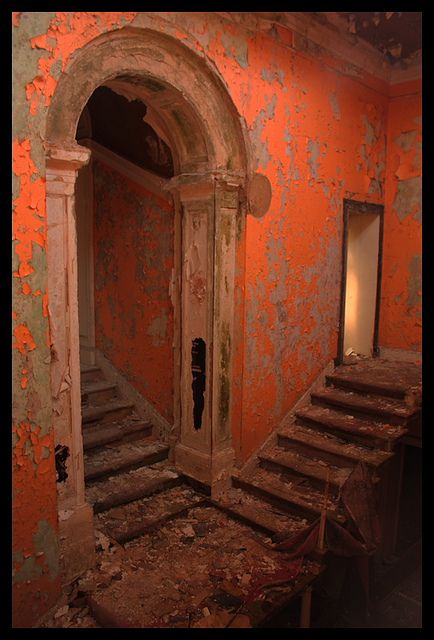
And tomorrow I will go into the smaller door, the lesser door. Always and forever the grand door, the steps leading upwards, but not to the light, no, never that.
You’d think so, with the wide entrance, the columns and the arch. You’d think so, but you’d be wrong. That is the way that leads to the world.
This world is the world of doing, of broken promises and prom dates and first kisses and grandparents who die. The whole ball of wax is there for the taking.
But the other door? The plain one, the one you can’t see in until you’d reached the top step, the landing? It isn’t for nothing that you have to take eight steps to get there. Too high for anybody in the room to peer in. It is the best kept secret after all.
Door not locked, not even there, even. Not even any hinges for the door. Never were. And that light! Warm and low, like a late afternoon in September, when the skies are clear and the summer heat is a memory.
No, that doorway you only go through once, because there’s no coming back, no backtracking – not as far as anyone knew. There could be a mind wipe, a re-cycling, an up-cycling, but we’d never know.
Yes, tomorrow it shall be.
(Photo from Pinterest. Bramham House, England. Copyright belongs to the photographer.)
The Donor
Jane had no reason to suspect Craig was the reason she was always sick. He was her joy. He cheered her up when she was down. He bought her flowers and turned them towards her saying she was the sunshine that they fed on. He noticed when she paused over a piece of art and bought it months later as a surprise. She often thought to herself that she’d never had such a kind and considerate boyfriend her entire life.
He never minded that she was often cranky because of the pain. The chronic feeling of un-wellness kept her up at night, made it hard to spend time with friends. Often all she wanted at the end of the day was to curl up on the sofa with a book and let her mind escape into the pages. At least there she could forget the dull but ever-present pain that ruled her days.
She drank anti-inflammatory tea by the gallon, did everything her therapist suggested, and still she had no relief. She had come to believe that pain was part of who she was, just as much as her bunions and her curly hair. She could no longer remember a time when she wasn’t at least a little achy, since a little had been a lot for so long.
It had started when she was in college, the year she met Craig. Under hypnotism much later she realized it was the very night she’d first seen him at a frat party that the aches had begun. They were mild at first, like the ache from being hung over. Then it continued, like she was getting a summer cold. Then it never left.
She had been dating someone else then, but Craig caught her eye and they had chatted. It was a few months later before she ran into him again, and by then she was single. The last relationship had left her a little sour on the idea of dating again any time soon, and she had told Craig so when he inquired. He understood and respected her space. There had been no question about it – he honestly and sincerely accepted her feelings. There was no hidden agenda of pretending to wait just so he could date her later. It was the first time in her life she’d ever felt like a potential suitor actually cared about what she wanted.
She’d decided to date him after six months, after she’d had enough “me” time and wanted “we” time again. Maybe it was the lack of pressure. Maybe the pain was wearing her down. Or maybe the hex sign he’d sketched out between her shoulder blades had done it.
She’d never noticed at the time. How could she? That evening had been a little hazy, what with the kamikaze she’d consumed. It had tasted so good on that hot summer afternoon, sitting on the front porch of the frat house. Her friend Fish, a resident of the house, had mixed it for her and it was a little stronger than she liked. So when Craig offered to give her a back rub when she mentioned how her shoulders ached, she thought nothing about how he warmed up with some delicate tracery on the bare skin between her shoulder blades. She didn’t know he had traced a sigil. She didn’t know it was a sigil of marking, of ownership. She didn’t know that his attitude of indifference afterwards was just an act. In that moment, she was tied to him for as long as he desired, and that was for as long as she was useful to him.
He had been born normal, like any other child of the Midwest. Nothing exceptional had happened that would have raised any red flags. No one would have ever suspected a thing until Bebhinn saw them together years later. She was a friend of a friend, really, not connected to either one. This made her objective, like a reporter. She was a curious about them as a couple since she’d noticed them at the Yule party three years ago. Sure, they had been at other parties before then, but this was the one where she had finally seen them, seeing the energy between them, and it wasn’t good.
Electric blue lines streamed from Jane to Craig, but none the other way. Bebhinn had seen that only once before, and it was in her native Ireland. A man had drained his wife’s life from her, bit by bit at first and then more and more as he grew hungrier and she grew weaker. The less she was able to give, the more he wanted until there was nothing left.
The town priest was secretly an exorcist. This was in spite of the official church statement that such activities were not in keeping with the rites and canons of a post Vatican 2 faith. He named the cause of the poor woman’s death, having seen it many times before in other guises in his native Nigeria.
The dire priest shortage in Ireland had meant that he’d had to transfer to this backwoods village a long decade ago. Bebhinn wasn’t pleased with the change in accent most of all, finding his heavily accented sing-song voice at odds with the native lyricism of her people, but what other option was there? So many parishes had closed or merged when their priest had finally died and not been replaced. So few young men chose to be priests these days. She should be grateful her parish’s doors were still open, even if the doorkeeper was almost unintelligible. For a while she decided to pretend that the mass was in Latin again, and just let it wash over her. After a few months she started to make some headway in understanding him. She decided to try to befriend him, to help make him feel at home in this wild, wet land, so different from everything he knew.
It was during their weekly lunches together that he confided to her that he could see spirits. She was the only parishioner he’d told and the only one he would ever tell. He knew, with the same sort of knowing that had led him into this clandestine club, that she had the same ability. Over the years he taught her all that was safe to teach a layperson. It was these skills that Bebhinn used now.
Jane had stopped going to church when she entered college, the same as many young people. Unlike them, she still had an interest in God, but didn’t have the time. Most quit because they no longer had to go as a prerequisite for free room and board. If she had continued to attend, her pastor might have seen the biggest change in her – the light slowly leaving her eyes. There wasn’t a spring in her step or song in her heart anymore. The change had come on so gradually that it would have been impossible for anyone to notice if they’d seen her every day.
Craig had been draining Jane for years before Bebhinn noticed her at that party. He was sly about it, withdrawing only tiny bits of energy at a time. He had to be sly – otherwise she might notice and leave, and then he’d have to groom another donor. For that’s what she, and at least 60 other women before her were – donors. Unwilling, unwitting, certainly, but donors nonetheless. They’d not signed a card or registered with any agency, but a part of them was being removed nonetheless.
Half soul
David was born with only half a soul, but nobody noticed for years. He was a twin, not conjoined, but still half of a whole. The doctor said that they were identical, but he and his brother thought otherwise. To their eyes, they looked only as similar as brothers do, nothing unusual or special. They also didn’t have the same interests or tendencies as most identical twins did, and would point these facts out to their mother when she would bring up their connection when one would bring a new girlfriend over for dinner. Because the doctor said so, she was convinced they were identical and no amount of fact would make her budge.
She was long dead before there was any suspicion that one of her sons had suffered any ill effect from his natal experience. You can get by with half a soul, but only if you get the correct half. Daniel was lucky. As the one who was on the left side of his mother’s womb, closer to her heart, when the quickening happened at 18 weeks of gestation, he got the good half, while David, on the right side, got the bad half. Now the bad half wasn’t evil per se, it just wasn’t quite up to snuff. It made him less compassionate, less caring. He was a bit self-centered, a little selfish, even.
Daniel was usually picked first for group projects in class because he simply worked well with others, while David was usually picked first for any sport that required ruthlessness, like rugby or dodgeball. Compassion never won a sporting match, after all.
Neither one felt left out by this arrangement, which had developed quietly and surely over the years. Neither one realized that the repetition of this pattern, determined by their divergent natures from their half souls, over the many years shaped them into the people they had become. They were truly identical, as the doctor who delivered them had said, but they were as different as the two sides of the coin – one thing but with two halves, both different. Just like with a coin, with one side you won, and the other, well, you didn’t.
David wasn’t bad, he just wasn’t good. Some people thought he was shy, and that was part of it. He wasn’t shy out of actual bashfulness or a desire to be polite, whether they were friends, family, or coworkers. He kept to himself because deep down, he didn’t like other people. He thought they were lesser than him.
In school, he blamed his average and never exceptional grades on his belief that the teachers were jealous of him and gave him lower marks than he deserved out of a desire to put him in his place. He was convinced they had a coordinated plan to subtly remind him every report card day that they were in charge and he wasn’t. He was sure that they did this to him and only him out of a mistaken desire to keep him from getting uppity. He was sure that they were operating on the premise that too much praise early on and the child wouldn’t get along well with others – they’d either lord their status over their classmates or they would shun them. They were doing it for his own good, he told himself, so he said nothing to anyone, not even to his brother.
When they moved three states away after his father’s job transfer, the low grades continued and he just knew that the teachers at his old school had sent a letter explaining their plan along with the transcript to the new school. Never once did he think that his lackluster grades were due to a lackluster performance. He maintained his fecklessness throughout his life, never quite amounting to much in whatever he did.
He wasn’t a schmuck, but he certainly wasn’t a mensch either. He had married well, with a patient wife who usually made up for his social gaffes. Their son, an apple from the tree, was possibly even more socially inept than his father and even with a graduate degree still lived at home and waited tables for a living. Members of their church gossiped that David’s wife, Jane, had married him as either a favor to him (she was forever taking in strays and rehabilitating them) or as someone who wouldn’t have the spine to challenge her whenever she wanted to do her own thing. Headstrong men were challenged by strong women. They felt threatened by a woman calling the shots, so some nontraditional girls chose to stay single, ally with other women, or marry a man who acted tough but really was a wimp. The latter was most certainly the case here.
He was all show and no go. At work, where he was a manager solely out of attrition, he would bluster about schedules and vacation requests from his employees, but clam up when they would confront him with the unfairness or duplicity of his newly minted rules, which never seemed to apply to him. He had become a manager because of budget cuts. His job as a designer was being eliminated, so he had a choice: become a manager or go find another job. He was already counting the months until retirement (it was under 100) so it made more sense to take what they were offering, distasteful as it was, than get a cut in his pension and have to start all over at the bottom of the pile somewhere else.
Fortunately upper management put him at a location where he could do the least amount of damage – one with little business. They were few customers and enough staff to cover his ineptitude. This worked well until further budget cuts and staff complaints forced him out of his office and at the service desk, assisting customers. It didn’t matter that he didn’t know how to use the software to look up auto parts or how to use the cash register to sell them. He had glided by on ignorance and feigned helplessness for too long. It simply wasn’t fair to force his subordinates (in position only, not a know-how or aptitude) to do all the work while he spent his 40 hours a week reading a book, chatting with friends from his previous office, or writing his latest novel on work time.
The CEO was aware of how much he shirked. Everyone knew. The only person who was fooled was David, he thought he was doing a fine job. He thought he’d coast right on for another year until it was time to retire. Little did he know that his invisible handicap was soon to catch up with him. Little did he know that going through life with only half a soul would have negative repercussions very soon.
The wooden dolly
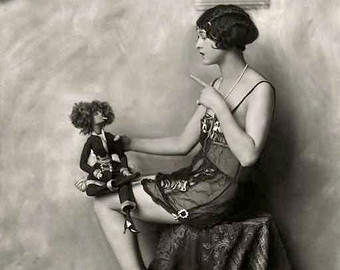
Maybelle was a bad doll, but she couldn’t help it. The wood that she’d been carved from was terribly damaged. Only one person knew that, and he wasn’t telling. He couldn’t. He was dead. The act of creating her had been the last thing he did. He hadn’t planned it that way.
Drogon was the village doctor – medical and otherwise. If you were out of sorts, you went to Drogon. Before that you’d have gone to Drogon’s father, and now you’d have to go to Drogon’s son, even though he was only seven. These kinds of doctors didn’t get trained in schools, or even by their parents. There was no apprenticeship. The moment the father breathed his last, his spirit and everything he’d learned traveled into the son. It had gone on so long that everybody in the village accepted it as normal, just like how flowers came out in the spring and leaves went away in the fall. The village was many miles from any other so the residents had no way of knowing this was unusual. It was only in the past decade that they’d even learned they weren’t the only people in this country, or even on the planet.
They’d never ventured any further than a few feet from “the edge of the world” as they called it. Why would they? Everything they needed was here. Exploration comes from want and need. If you have everything you want or need, you don’t tend to go exploring. Art was created for the same reason – out of a sense of lack and loss. Folks who felt content weren’t artists. Artists were forever plagued to create even more art, because what they made never felt quite right to them. The fact that they had a sense of something missing in the world caused them to make art – but then still feel incomplete.
Drogon was an artist as well as a doctor – never satisfied with his work. He was certain he could do better with his healing. This was unlikely, since he’d inherited 16 generations worth of healing knowledge when his father died. Everything his father had learned had passed on to him, as it had happened to himself when Drogon’s grandfather had died. It was an amazing process. One day you were yourself, the next you had all these voices in your head giving you unsolicited advice on what to do. It was a little like a family reunion but only one person heard the jokes, and thankfully nobody brought the green bean casserole.
Not many years after their first visit from the outside (as everything other than the village was called), Drogon had a visitor from very far away. He was told that everyone there spoke a different language than him and thought differently, acted differently, dressed differently. He was told that they weren’t as clever as the villagers, because they couldn’t make up stories to entertain themselves in the evenings. He was shocked to learn that hundreds of people would even pay to sit and listen to a person entertain them, to tell them stories, even hearing stories through the air on something called television, rather than in person. Drogon thought that there must be a huge drought on stories there to have to go to that extreme.
This visitor wanted Drogon to make her a very special doll – one that could tell stories to her people. She’d had a successful career as a ventriloquist, but this would be different. This would be special. This would be so amazing that she could retire early, at the top of her game. She wouldn’t have to suffer the indignity of having to do ads for life insurance or hearing aids in her later years, as so many of her fellow performers did. She wouldn’t have to hawk (or hock) anything. She’d be set, if only he would make this new dummy with some of his magic. She told him nothing of her own needs – only that he would be helping her people with their story-sickness.
Drogon had assured her that he had no such skill, no ability to make wood talk, but she was persistent, and he soon felt sorry for these people so far away who had to pay someone to do something they could do for themselves. He promised nothing, but said he would try. That night, he did something he’d never done before – he called a family conference.
That night, he called together all 16 generations of healers from his family. Never before had Drogon even attempted to rouse them. Normally they were just there in his head when he needed them. But this was different. This was a sickness as sure as malaria, as certain as cholera. To be without stories was a sickness of the soul, a certain death. Sure, you could live without stories, but it would only be half-life, a sorry existence. He told his ancestors, all those healers before him, that they would be giving the greatest gift of healing they could ever give if they would do this one thing for him.
It took them eight days to agree to try, and another ten to figure out how. Three more days and the performer from the faraway country was leaving. Drogon had to act soon on their suggestion. He wasn’t sure if it would work but he had to try. Early the next morning, before the sun had risen but after the birds have begun to sing, he went to the center of the village to the story tree. This was the tree where they all met every evening for stories and at least once a week for council. It was the center of the village. As far as anyone knew, it was the reason the village was there.
The tree at the center of the village was older than memory and bigger than dreams. A dozen grown men could stand around it with arms outstretched and embrace it in a circle. Its branches stretched out 40 feet all around and were thick enough to provide shade on the hottest of days and protection on the wettest ones too. Drogon looked at it, this member of the village he’d known the longest, and told it his tale. He asked it for its permission to do what must be done to cure the people he’d never seen, would never see. He told the tree that they would sing songs about it for years in the future, to honor its sacrifice of itself. There was no answer back. He hadn’t expected one, but he had tried all the same. He’d tried because to not try would have meant the guilt of what he was about to do would be on him and his descendants forever.
He assumed all must be well with the tree’s silence. “In silence it went to the slaughter, a willing sacrifice, the cure for their disease.” The lines of a half-forgotten prophecy came to him then and he felt better. Surely it was about this time, and this event? He felt the odd tingle of power that always happened when a prophecy came true, when to be became now.
With spirit ghosts from all of his ancestors helping, he had the tree chopped down in less than an hour, and quietly enough that none of the villagers awoke.
He had selected one log to use for the doll. It was from the heart of the tree, and was a warm sepia, the color of dry autumn leaves, the color of coffee with a hint of cream, the color of the people it had loved for so long. He had planned to carve it himself afterwards to complete the ritual, but first he had to call the spirit of the tree into it.
Right now it was like any other spirit after a trauma – floating around in the air, hovering close to its body. Car accident victims were the same. The spirit gets pushed out before it has a chance to realize that the body is no longer a safe vehicle for it. Meanwhile, it hasn’t prepared itself for the journey it must now embark upon to return to the All-spirit.
Many souls think they have years before them to prepare for that mapless and solitary trip. Some are surprised at a sudden death and they linger around the body longer than they ought. There was a danger to living humans in these places – the spirit might try to take over, to evict the living soul, or to try to double-up. This led to what the villagers called “possession”, and what Westerners called “mental illness”. Some spirits stayed in the area of the accident for weeks afterwards, the body buried elsewhere. This meant that it was possible to cross paths with a homeless spirit without even realizing it. Perhaps this was why some people in America had started putting up roadside memorials at the site of a fatal car crash – to subtly warn others of the risk of contamination. Perhaps they knew this truth deep down, on a subconscious level.
Drogon meant to call the spirit into the wood but it was harder than he’d imagined. None of his ancestors had ever been through anything this immense, so they couldn’t offer anything useful in the way of advice or warning. They were all winging it. They knew it was in their best interest, as a group, to be as careful as possible. This much energy in one place could possibly make all of them wink out of existence.
There was a reason that tree had been so big – it had held the hopes of the village for thousands of years. It had fed them with stories the same as a mother feeds her babies with milk from herself. It had sheltered them as a mother hen shelters her chicks. All of that spirit was too much to try to condense into one tiny log, but it tried. Perhaps the tree wanted to help out those nameless people who were so far away. Perhaps it trusted the village doctor, who had sat under its branches in the cool of the evening, just like his father and his father on back into the mists of time. He wouldn’t bring harm, no, not him. So the tree sacrificed itself, went easily, almost willingly. And yet it still was too much spirit to distill down into one log meant for one little doll. The energy poured in, but once the log was full (over-full, actually, in the same way you can cram more sugar into tea if you pour it in while it is hot), it spilled out, and up, and over Drogon, and in a flash of blue-violet light, embraced him, and erased him.
The sound that was created in that moment was like the sound of a waterfall swollen by spring rains, or that of a thousand bees swarming to find a new nest. It was sudden and sure and scary, like a lion before it charges upon a hyena foolish enough to prey upon his family. It was then that the rest of the villagers awoke to discover the remains of Drogon next to the felled tree. They ran to find Drogon’s son, knowing that he would now be able to explain what happened. The only reason they knew it was Drogon was from his clothes and the beaded jewelry he always wore. His body had been reduced to ash.
Drogon’s son, only seven years old but now the village doctor, took it upon himself to complete the doll. It had to be done. Otherwise, the death of the tree would have been in vain. He also had to atone for the actions of his father, as well as the ancestors who had agreed to this disastrous plan.
Out of a sense of guilt, the lady from the faraway land offered the villagers ten times the amount of money for the doll than she had originally agreed to. They wanted nothing – no money, no school, no hospital. Nothing could repay them for the loss of their tree. To accept payment would be to cheapen its sacrifice. They gave her the completed doll, hoping to never see it or her ever again.
The lady went on to become famous for her ventriloquist act, retiring earlier than she’d hoped. Her fans were amazed at how much better she had become. The skits were sharper, wittier, if a little edgy these days. They marveled at how adept she had become at throwing her voice without apparently having her mouth open.
She kept the doll with her all the time to keep her secret. She lived alone for the same reason. When she had first returned from her trip, she was living in an apartment, but soon made enough to move to a large home, far away from people. This was good, because otherwise they would have heard the wooden dolly arguing with her owner.
It all came to an end one humid summer night when the home went up in flames, reducing both the lady and the doll to ashes. Arson investigators scoured the ruined property shaking their heads. They agreed that the fire looked like it was set on purpose by the doll, but since this made no sense, they quietly agreed to officially state that the performer had dropped a cigarette while smoking in bed.
Lost and found penguin
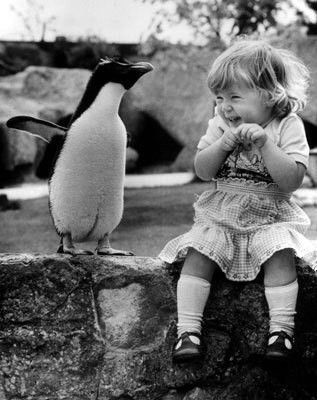
Sara thought Petey was her brother, and nobody had the heart to tell her otherwise. They’d grown up together, after all. Sarah and her mom had found him hopping on the shoreline near their home in Athenree, New Zealand. Rockhoppers were all over the coast, but it was rare for one to venture into Shelly Bay.
They left him where he was, and her mom promised that they would check on him the very next day. The toddler wanted to take him home right then but her mom said they didn’t have anything for him to eat. Sara didn’t think that was a good enough reason because she knew the Four Square market was open. Mama had to admit she was worried that he might be lost and looking for his family. She hadn’t wanted to say that, not knowing how Sara would take it. Would she feel for him, be sad that he was alone, and then insist on adopting him right away? This was not a situation she wanted to deal with on a Tuesday afternoon. She just wanted to go on a wander with her daughter and then come home to afternoon tea and a nap, preferably in that order.
Sara was concerned, but not overly so, and Mama again assured her they’d come back tomorrow and check on him. She hoped that he’d be gone and forgotten by then. Children have such short memories, and sometimes that was a blessing.
The rest of the day passed uneventfully. Mama had forgotten about the little lone penguin by the next afternoon. But he hadn’t forgotten about them. As soon as she opened the garage door to leave for their daily walk, he was standing there in the side yard. Sara shrieked with delight and started to run towards him. She hadn’t forgotten about him at all. Mama called to her to stay away but it was too late. She was already embracing him in a full-on hug as only a toddler can. It was a hug that was a bit like a tackle and a lot like a reunion after a wartime deployment. Fortunately the penguin seemed to be just as enthusiastic, flapping his stubby wings and chirruping in high-pitched squeals. You would have thought they were long-lost friends if they were of the same species.
Mama stood there in amazement, taking in the scene. Maybe he had followed them home? They lived not far from the shoreline, and there weren’t any roads he (Mama assumed it was a he – how do you to tell?) would have had to cross. How long had he been there? Sara’s voice broke through her musings.
“Mama he’s here! Our Petey!” she exclaimed in delight, her face lighting up like the sun.
“Sara, sweetheart, we can’t keep him, he’s a wild animal. There are laws about this.” She wasn’t certain about this but it sounded very parental to say. “And Petey? Is that his name?” – knowing that naming a pet meant it was harder to get rid of it. Name it and keep it. Anonymous animals came and went, but named ones stayed. How did she come up with Petey? They didn’t have any friends or relations named that. It wasn’t out of any picture book they’d gotten from the library to read at bedtime.
“He told me his name was Petey!” Sara beamed, and she hugged him all the more. He seemed a little overwhelmed and on the verge of being smothered by this point, but overall still quite happy to be found. Mama wondered if Sara could translate his squeaks and chitters. “How did he tell you, baby?” She used her most reasonable voice now. This wasn’t in her plans. Daniel would be upset when he came back from his business trip tomorrow to discover they had adopted a penguin. Or a penguin had adopted them. She wasn’t sure.
“He told me in my heart,” Sara said, and letting go of her newfound best friend with one hand, she placed it over her heart to show her mom. Sometimes she had to point things out to her mom to make sure she understood. Even toddlers know that parents can be a little dense sometimes.
Sara’s mom wasn’t sure how to take this. Was her daughter making things up again? Or was this a sign of a mental illness? It was hard to separate the two sometimes. Was this why so many artists and writers went off the deep end? This wasn’t going so well. She was supposed to be the adult, after all, supposed to be in charge. Toddlers weren’t supposed to run the show, although they often did. Adults just thought they were in control. Meanwhile, toddlers determined when and if they slept, and where and how they ate. The fact that Sara was an only child amplified her power over her parents.
It was not long before Petey became a member of the family. He lived outside, however, so he wasn’t a full member. Mama thought it was safer all around to not bring him inside, and the weather was always mild where they lived. She was concerned that if they brought him in they’d have to notify the animal control department. But if he lived outside, they could still think of him as “wild” and he could come and go as he wished. If they brought him in there might be shots and laws to be considered. Plus, there was always the thought that it wasn’t fair to keep him in. Daniel, once he got home and was consulted, remembered a roommate he’d had in college who’d kept a bird in a cage as a pet. He’d always thought there was something cruel and vain about that, because birds aren’t meant to live inside like dogs or cats. They are meant to be free. Penguins were birds too, after all.
Sara’s parents started to think of Petey as their second child, and while they never said that out loud to friends or coworkers, they were never so bizarre as to refer to him as their “featherbaby”. He was an animal, a quasi-pet. They loved him, but he wasn’t human.
Except to Sara. She remained the only child that Mr. and Mrs. Fullerton had, so she didn’t know any different. To her, Petey was her younger brother. It didn’t matter to her that he never learned how to speak English and never went to school. She understood that he was a little different than her friend’s siblings, and she was OK with that. All of her childhood she looked forward to going home after school and getting to see her best friend, who still waddled about in the back yard, still pleased as punch to see her.
Bone music
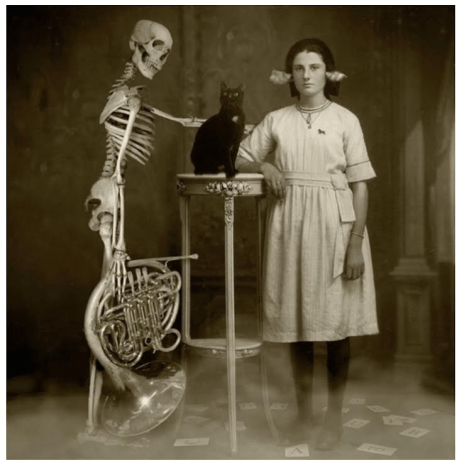
Harold loved playing the French horn. The tone was mellow and warm, inviting. He knew it would never be the lead instrument like the trumpet or guitar was, and he was fine with that. He wasn’t one for being in front, leading the way. No, that was for the peacocks in the world. He was more a pigeon, behind-the-scenes, anonymous. He never wanted to be a manager, bossing people around. He was happy being a team member, a cog in the wheel, someone who got things done without any fanfare.
And then he met Lydia. She loved him exactly the way he was, for who he was. She wasn’t put off by his meek nature or unassuming presence. She certainly wasn’t concerned that he was a skeleton, either. While most women were loathe to live with someone who looked like they escaped from an anatomy class, Lydia saw the advantages. Because he had no skin, he was never too hot or too cold. She could adjust the thermostat to whatever she liked and he’d never fuss. He never spent any money on clothes either, so they had plenty set aside to go on vacations.
And go on vacations they did! Every month they ventured to a new part the world, seeing a new place and meeting new people. They picked their destinations from their extensive list of pen-pals, strewn all over the globe like Easter eggs, each one a treasure to discover. Every year they had to get new passports made because they’d filled them up with stamps and visas. Lydia had a plan that the old pages could be used to re-wallpaper her art room one day.
Mr. Buttons, their cat, never got to go on a trip. He never left the house. The vet even came to him. He was terrified of the outside world. Trees sent him into a tizzy. Clouds? Forget about it. He’d run and hide under Lydia’s dress, cowering there until she picked him up and carried him back inside. Otherwise he’d stay there, trembling, paralyzed. It was kind of embarrassing really, but it did mean that they never had to worry about him sneaking out when they opened the door, or be bothered with him asking to go out and come back in every 15 minutes. No, all in all he was a good cat, and he seemed to enjoy Harold’s home recitals almost as much as Lydia did.
They met at one of his performances – that time in a mutual friend’s house. Jane had suspected they’d get along smashingly and set up the recital as an excuse for them to meet. It was the blindest of blind dates – neither one knew that they were being steered toward each other. Harold brought his French horn and Lydia brought her harmonica. While listening to the sousaphonist playing his solo, (a piece he wrote himself for the occasion) they began to talk.
Lydia was certain that she’d heard undertones in Harold’s playing – notes that she was uniquely capable of hearing because of her unusual ears. Nobody in her family talked about her ears, but she knew she was different. She assumed they didn’t want to talk about them out of kindness, to not make her feel different, or perhaps it was out of embarrassment. Nobody really was certain who her father was, after all. Sure there was a man who filled the role, who was married to her mother. Jack had raised her since she was a baby. Everybody knew he was Dad and not her Father.
The only person who knew for sure was Martha, Lydia’s Mom, and she wasn’t saying. She’d retired from the circus when she got pregnant and that was as far as the story went. Sure, there had been a mule act as part of the show, but nobody went so far as to suggest anything that questionable. Maybe it was the illusionist, spurned at the end, and he performed some real magic instead of those sleight-of-hand stunts that were his bread-and-butter. No matter, the family didn’t know and it wasn’t worth the bother of making up a story, so they just acted like everything was normal.
Harold said that yes, he regularly played more notes then were normally heard, basically playing two songs at once. If it was a depressing song, he simultaneously played a cheery one at a subsonic level to even it out. If it was a rousing march, he played a dirge for the same reason. He just felt it wasn’t right to bring people’s emotions too high or too low. Somewhere in the middle was best, and since he could, he did.
Nobody before had discovered the extra song weaving its way into and under the first, like how the framework of the house is hidden yet integral to the house itself. Nobody until now, he thought, and there and then he decided he would have to make her his bride. Partly it was out of admiration for her rare talent. But partly it was out of the desire to keep his actions a secret. No wife could testify against her husband – that was law. It was like testifying against yourself since “the two shall be of one flesh”. It stood to reason she wouldn’t tattle on him either, as a logical extension of that law.
She hadn’t told, and he never had reason to worry. She wouldn’t have anyway. Nobody ever believed her when she told them anything she’d learned from using her unusual talent. They had no way to check if it was true, and honestly they didn’t care. In some ways she was like a five-year-old boy, fascinated with trains or dinosaurs, telling everyone within earshot about the minutest details of her obsession. Even though what Lydia said was true it didn’t really concern them, so it wasn’t worth the bother. “Uh-huh!” and “Is that right?” they’d mumble to not appear rude, but they were already off thinking about their own interests. She never took it personally, knowing their actions said more about them than her, and learned to keep her own counsel early on.
The Clower twins
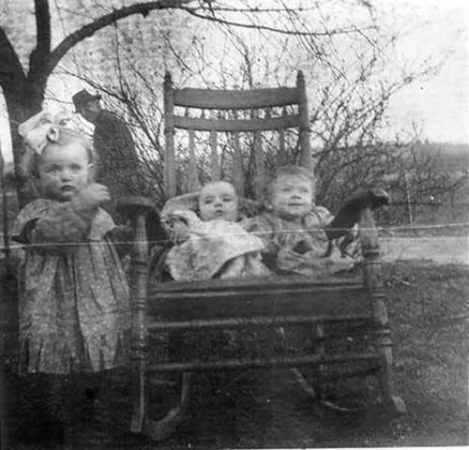
Emma hated her siblings. All day long she had to rock them back and forth. Even if they’d had arms and legs they were too small to do it themselves. Rocking was the only way to keep them content, but more importantly, to keep them quiet. Her shoulder was getting tired, but she kept at it. To stop meant noise either from them or from their parents. Or both. She wasn’t sure which was worse, but she was unwilling to learn the answer right now.
The twins were born three years ago but they looked half that age. They were so tiny, still. The doctor in Millersville was unable to tell Mr. and Mrs. Clower if they would always be this small, or if they would ever catch up. He also had no answer to why they had no arms or legs. He didn’t have a lot of answers for most of their questions, but he was all they had. They couldn’t afford to take the twins into Baltimore to get a second opinion. It was only 22 miles away, but that was forever when you didn’t have a car. Sure, it was only two hours by bicycle, but those babies couldn’t travel that way, no sir! How would they take them – in the basket like they were a package to be mailed or a bag of apples bought at the market? You can’t hold them and steer, either. Plus it would mean that Earl had no way to get to his job at the field, picking beans or tending the goats. No, one opinion would have to do, even though it wasn’t much. If the good Lord had wanted them to know more, He would’ve provided more. This was their burden, and they had to carry it.
Now, to be sure, Mr. and Mrs. Clower never said out loud that their newest children were a burden. They never intentionally sounded ungrateful for any gift the Lord gave them, no matter how odd it seemed. Their pastor had said years ago that nothing from the Lord was bad, only it might be bitter sometimes. Medicine was bitter, but it was good for you. And it took a while to see the effects. They remembered his words when the twins came, and thought about them often.
Why, the Lord Himself was born in a barn. That sure didn’t seem appropriate for God to make an appearance. Surely God would be born in a palace or at least a manor house. Never someplace so anonymous or dirty as a pen for animals. Imagine the noise! Imagine the smell! So if the Lord could be born in less than ideal circumstances, so could their babies. They’d just have to wait and see how things turned out, just like Mary did.
Emma didn’t have the patience to wait. She wanted these babies gone and she wanted them gone right now. They were getting on her nerves. She hadn’t asked to be a big sister. She had been fine being an only child. She sure didn’t want the limelight taken away from her, and even more she didn’t want to have to care for these interlopers.
Her parents never thought twice about making her tend them. It was part of her job as a member of the family. They didn’t charge her rent or expect her to pay for her food or clothing, so how else was she supposed to do her part? The same had been expected of them, both first-borns in large families. Of course you needed large families then. It was free labor. Having children was like printing money. Need more help? Have more babies. Of course you had to plan ahead a bit – look down the road a piece in order to see what you might have need for. It didn’t do to have a baby right when times got tight – then you were doubling your trouble. Best to have one who was at least five, so he was able to feed and clothe himself. It didn’t count as child labor if it was yours, you know.
But these babies weren’t going to be a help to anyone, seeing as how they were born without limbs. They sure were happy, though. That made it a little easier. All day long they laughed and smiled, eyes gleaming at everyone and everything. Some thought they were soft in the head, being so happy and all. It takes smarts to see the troubles in the world. But they really were smart and happy at the same time. It was weird. Maybe that was their gift. They’d been cursed physically, but blessed spiritually. They were happy no matter what was happening, which was good. Now, if only they could rub off some of that spirit onto Emma.
Ella

Ella had been raised with humans since she was a wee calf, only two months old. She’d been abandoned by her mother, who simply walked away one afternoon while Ella was sleeping in the damp savannah heat under a baobab tree.
Perhaps the mother forgot her? Perhaps she walked off to check on a strange sound or find something to eat. Perhaps she didn’t want to be a mother anymore. Perhaps she was too young for the experience, or it was more than she’d anticipated.
Regardless of the reasons why, the “what” was that Ella was by herself for a day and a night before she was found by a safari full of New Zealand tourists. That area wasn’t on their tour, but her bellows aroused their curiosity so they rerouted.
Ella was fine for a few hours after she awoke. It wasn’t unusual for Mama to go away. Calves had to learn to be independent early on, so mothers didn’t coddle them. But when sunset came and Mama still wasn’t there she started to get a little anxious. That hungry feeling in her tummy got more insistent, which only worsened her anxiety. It was a terrible self-reinforcing loop.
Ella began to whine, quietly at first, feeling sad and alone. She didn’t want to call the wrong sort of attention to herself. There were plenty of animals in the Savannah who would love to make a meal of a young elephant left unguarded by her parents. But after a few hours alone under the stars, Ella started the bawl openly, no longer holding back. She no longer cared if some predatory animal was drawn to her cries. Death was better than this, this half-life of loneliness and fear.
What would she do? How would she care for herself? Her Mama had been her world, her constant companion. And now as far as she looked across the flat scrubland, she saw nothing but thorn bushes and trees stripped of their leaves by the giraffes. She was still awake, red-eyed and hoarse from her keening in the early morning when the safari group found her.
A young couple, Mr. and Mrs. Jacob Halverson, married just 6 1/2 months, decided to take her as their own. They’d agreed when they were engaged that they didn’t want children, both having been raised by abusive parents. They didn’t trust themselves to not repeat the pattern. It was as if they both chosen to be teetotalers after being raised by alcoholics. They decided it was safer for everyone all around if they didn’t even try. But an elephant was another matter entirely. And who couldn’t fail to fall in love with her? Her huge dark eyes with her long ashes locked into them like a tractor beam. There was no chance of escape.
However, there were a few obstacles to overcome. How to get her home? An airplane was out of the question. If airlines charge by the pound for luggage, there’s no way they can get her on board. Perhaps a combination of train and boat? It was the only way it seemed. However, the moment they put her on the train for the first time they knew there was going to be a problem. She began to bawl when Jake stepped out of the car. He and Margie quickly realized one of them would have to stay with her.
They hurried to get another ticket and had to pay extra for the “privilege” of riding in the animal car. It wasn’t meant for people, and Mr. Gruber, the engineer, had to pay off the station manager to keep him from grumbling. Fortunately the weather was good, because the animal cars weren’t air-conditioned. No use wasting heat and air on them, the company thought. But Jacob would have a hard time. Even though it was early summer, the speed of the train would mean it would be rather chilly while it was traveling. Margie gave him her mink coat that he’d given her as an engagement gift to soften the blow. The other animals kept away from him once they caught a whiff of it, unsure of what it, or he, was. It masked his aftershave, however, and that was good. He was grudgingly accepted as one of them at least long enough to get Ella to her new home.
 betsybeadhead
You must be logged in to post a comment.