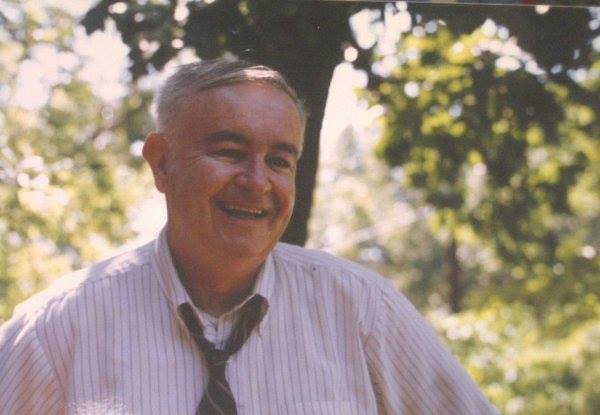
Widow’s weeds

There is an old custom of wearing black while you are in mourning. Some people would wear all black clothes, while others would just wear black armbands. People still wear black clothes, but it isn’t just for grief. They will wear black just because they like wearing black.

So the meaning is lost. People don’t know if you are grieving, or just fashionable.

The purpose of wearing black to indicate grief was to warn others to be a little more gentle with you. You had your leave time that you were allowed from work, and now you are back. Whether it was three days or a week, it isn’t ever enough, especially if it was someone close to you.

Wearing black while you are grieving is a bit like wearing a “trainee” tag. It tells other people that you aren’t quite all here yet, and to go a little more slowly. It is a kindness to them and to you, to not expect much out of you for a while.

But perhaps we should all do that, all the time. Perhaps we should all treat each other with a little more kindness and cut each other a little more slack.

Everybody we see is struggling with something. Everybody has suffered a loss or has a problem. “Dysfunctional” is the new normal for families, don’t you know? We all are faking it, and we all aren’t making it. We are just getting by as best we can.

Now, problems can also come in when we think we are the only ones who are suffering, or that our pain is worse than anybody else’s.

I remember a time where a patron said that she wanted to get on disability because she had migraines all the time. She went on and on about it. Every time she came in she told her tale of how hard life was. She was really wrapped up in her own problems. So I decided to share. I told her that I’m on medication for the rest of my life for three different chronic conditions.
I wanted her to understand that we all have our burdens to carry. She got it, and softened.

Buddha told a story about a lady whose young son had died. She went to every person in the village, carrying her dead child with her. She refused to admit that he was dead and begged each person for medicine. One kind person directed her to the teacher, Buddha, who lived in the village.

When he saw her, he understood exactly what the real problem was, and how to address it. He told her to ask for a mustard seed from every person in the village who had not ever grieved. She was to then come back to him with the mustard seeds and he would make a medicine for her from them.

She went from hut to hut, and every person she talked to had experienced grief. Every person had lost someone they loved.

She had no mustard seeds, but she had the medicine she needed. She understood that she was not alone in her suffering. Her life was not harder than anyone else’s. At that moment, she finally was able to accept that her child had died, and bury him. At that moment, she was able to rejoin the community.

May we all be kinder with each other.
May we all understand we are equal in our suffering.

Father’s Day, 2014. Eulogy, epiphany

Here’s to all the fathers –
Those who are here, and those who aren’t.
Those who show up every day, and those who were never there.
Those who abandoned us, and those who have died.

They have made us who we are.

It doesn’t take a license to be a father. There is no training for it. Fatherhood can be done by amateurs, and often is. Even having had other children doesn’t prepare you for having more. Every time is a new time, with new challenges.

I had an uneasy relationship with my father. He was emotionally distant. He hadn’t been nurtured by his parents, and he didn’t know how to nurture his children. Is this an excuse? Is this an explanation? Or is it just the way it is?

There are plenty of guys who left when they found out they were going to be fathers. Some stayed, but only half-heartedly. Some initially wanted to be fathers, but found out they weren’t up to the task.

Let us forgive them all. Not excuse them. Forgive them.

The best thing I ever was able to do was to forgive my father. He never knew about that bit of grace that happened that day. Shortly before he unexpectedly died, I finally saw him as just a person, and not my Dad. He didn’t owe me anything. There were no expectations to be unmet. There were no promise to be broken. I saw him as broken and sad and hurting. I finally realized he had done the best he could, with what tools he had.

I’m grateful to have gotten to that point. It took a lot of work.

I’d realized years before that if I wanted to have a relationship with my father, I was going to have to find something we could both do together. He seemed unable to connect with me, so I had to make the effort. Eating out seemed to be the way. We would meet for Sunday brunch at Ruby Tuesday’s, or Bob Evan’s. Every Sunday I would go to church alone, and then come back home and we would go together out to eat.

It was his choice to not go to church, even though he was an ordained minister, even though the church I went to was the one he had gotten married in. It was kind of an awkward routine on Sundays. It would have been easier if we had gone to church together and then to brunch afterwards, but that wasn’t going to happen. I took what I could get.

He didn’t come up with the idea of us eating out together, I did. I saw it as a point of agreement, something we could both enjoy. His other interest was classical music, and that wasn’t really something we could meet on. I didn’t love it like he did, and he would always be the expert on it. We wouldn’t have been on equal ground.

When we ate out, it was our time together, just us. It wasn’t always easy. He was a sloppy eater, a bit greedy. I remember when we would eat at home he would finish his food first and then look at my plate and ask to finish it for me. I ate slowly, carefully. He ate ravenously, like a dog. He was willing to take food from his child. This pattern happened in other areas of my life too.

This is who he was. This is how he was raised. He wasn’t allowed to grow up true and strong. His parents were either overbearing (his dad) or flighty (his mom). There was no healthy role model. It was military precision and perfection, or playtime. He never had a childhood, not really. His dreams were squashed as being unreasonable and unrealistic.

One day, over a mid-day breakfast of pancakes and sausage, it clicked. I stopped seeing him as somebody who owed me a good childhood. I stopped seeing how he had failed me. I stopped expecting anything from him. I started seeing him as just a person.

He died twenty years ago. There was no more time to work on our relationship. There was no more time to rebuild it. I was grateful that I’d had that epiphany while he was still alive. I was grateful that I’d had all those Sunday brunches with him to build up to that point. I wanted more. I wanted to rediscover my Dad as a person, but there wasn’t time. He died unexpectedly, just six weeks after Mom died.

My brother never made the time to get to know Dad as a person. That is his fault. That is his loss. He’d threatened to kill Dad when he was 17, and the relationship had never gotten better. Dad’s will reflected that. My brother blamed Dad for the bad relationship, but it takes two to have a good one. And Dad didn’t threaten to kill his son.

My brother insisted on an etching as part of the estate. It was of “The Prodigal Son” by Rembrandt.

It was worth a lot of money. It was worth nothing. It was a piece of paper.

I had the “returning” in reality, because I’d worked on it. In the story, the son returns, and the father welcomes him. But my brother hadn’t worked on it, hadn’t returned. He had the image, but not what it represents. It is sad, but not tragic. Perhaps he thought he’d have more time. Perhaps he didn’t think about it at all.

When Dad died suddenly, there was no more time to work on the relationship. Tomorrow is never guaranteed. We didn’t know he was that ill. In a way, it wasn’t a surprise – he’d never taken care of himself. He smoked two packs a day. He never exercised. He ate whatever he wanted and it was never fresh.

Relationships transform after death. I’ve come to see that every time I think about him, he’s thinking about me. People who die don’t leave, so much as change state.

Death is freeing – a person is not limited to the body anymore. Your loved one is always with you.

There is a time of transition, surely. There is grief, and acceptance, and anger. There is a time of growth and deepening after that. It isn’t all pain.

Our society doesn’t teach us how to deal with death and grief. It doesn’t teach us how to transform it. It doesn’t teach us the other side of it.

Here it is –

After death, you can ask your Dad anything and he will answer. He is part of you now, just like you were always part of him. All of your ancestors are with you now – even the ones that you never met, even the ones that you don’t even know the name of. Your presence is the sum result of all their efforts. You are the end of the relay race. The baton has been handed to you. They passed on their genes, their knowledge, their fears and hopes – to you.

They are all with you, now.

Death isn’t an end. It is just a beginning.

My Dad.
Dad

Cemetery walls

Why do we wall off cemeteries? Even little ones, family ones? Ones that have only ten people in them?

Perhaps we wall them off to let people know that this land is different. Is it considered holy or sacred ground? Certainly there are taboos about walking over graves. Some people will not knowingly enter a graveyard, much less walk amongst the graves.

There was a graveyard next to the college that I went to. It was a Civil War cemetery. Once I realized what it was I spent time there writing and studying. It was like a park, nicely landscaped, with pleasing trees and shade, and of course graves. It was quiet there.

When people found out I was studying there they would get a little freaked out. To me, it is safer in a cemetery than elsewhere. All the people in here can’t harm me.

Perhaps the issue is death itself that people are afraid of. People think it is catching. We have to wall off the dead people, put them in a separate area, so we won’t get what they have.

That doesn’t work of course.

So perhaps we should be more open about death, and not wall it off. Perhaps we should bury our loved ones close to us, in our back yards. Or even our front yards. Why would it matter to them? They are dead. If they are buried in the front yard then we will remember them more often.

Does this sound sacrilegious? If so, why so?

Why do we even bury the dead at all, and put them in special places? The body is a shell. The part that mattered is gone. They aren’t coming back.

Some faith traditions say that the dead will rise again. If so, they are going to have a really hard time of it. Six feet under, in a lead lined coffin, which itself is in a concrete case. And this is not even talking about the embalming process. I hope that the dead don’t rise again. They’d have a bear of a time getting on the right side of the dirt, and being worthwhile after all that, what with their internal organs having been removed and their orifices sewn shut.

Sounds terrible, doesn’t it? The more I’ve read about modern embalming practices, the more I want my body to be cremated. Efficient. Takes up less space. Not icky.

So what is best? Have cemeteries visible, regularly viewable? This would remind people that death is a reality and not something to be afraid of. The more we are mindful of our death, the more we will pay attention to life and take it seriously. We won’t waste our life on things that don’t matter.

Or should we not have cemeteries at all because the body is not needed after death? Would it be better to “recycle” the body, to return it to the earth to let it provide nourishment to a tree? It isn’t really “ashes to ashes and dust to dust” going on the way that we have it now.

Burial chamber

I was looking at the “Lakeland Cam” website today and came across this picture.

14051318carn_llidi (1)

The author describes it as “burial chamber”. He is in Pembrokeshire, Wales. On the picture’s metadata, it is labeled as Carn Llidi.

I know, in my heart, that it isn’t a burial chamber, in the sense that we mean it. Sure, there are burials there. But not in a physical sense. There are no bodies there.

It is a place for shedding off skin, like a snake. It is a place of building a cocoon if you are a caterpillar. But the snakes and the caterpillars are human, in this case.

These are deaths, sure. These are most certainly deaths, but also rebirths. These are transformations from one state to another. This is a place where people go to become human, to evolve.

It is a place to let go of old selves. It is a place to smooth off the rough bits.

It is a shelter and yet a danger. Look how it is a lean-to. If you sit under it, you’ll be protected from the sun and the rain, but you can still see and hear. You aren’t sheltered like you are if you go into a cave. But it is also a danger. Look at the size of that top rock, and how small that supporting rock is. There is a risk of death there. The rocks could shift and it is all over.

The same is true with transformation. It isn’t always easy, and it isn’t always good. Sometimes bad things happen when we go from one thing to another. Sometimes it isn’t how we planned it would be.

We transform all the time. We transform when we graduate from high school or college. We transform when we marry, have children, get that promotion. We transform when we publish a book or start a band or a business. We transform when we retire. We transform when we die.

There are often ceremonies and rituals for these transformations, these gateways. There are often special places we go to mark them.

This is one of those places.

So sure, it is a burial chamber. But it is also a nursery. It is a place to lay down the old self and pick up the new self. And there is just enough room in there for you. You bury yourself, and midwife yourself here too.

Sideways death.

If there’s someone you know who has died, it is if they are standing on your side. They are standing just to the right of you. They are outside of your field of vision. You can’t see them but you know they’re there and you can still talk to them.

That’s the most important part. You can still talk to them and you can still hear them, albeit in a different way. You don’t hear them with your ears, but with your heart.

It’s a whole different way of being with someone. Our society doesn’t talk about it, and we don’t have words for it. I’m making them up right now.

But it is real, and they are still there. It may not seem like it, because they aren’t right in front of you. But they are still there.

Try this when you are in need – call upon your relatives who have died/passed on/transitioned. Call upon them – all of them. Call upon those who you knew, and those who you didn’t.

Remember that you are the net result of all of their efforts. It is as if life is a relay race and they have one by one passed the baton on, resulting in you. You are it. You are the peak of the mountain. They existed just so that you can be here now.

Soak in that feeling.

And know that they are cheering you on.

The other side of grief

You know how it hurts when you see something that reminds you of your loved one? Or hear a song that they liked, or eat a food that the used to make for you? Sometimes you’ll see something and think Hey, I need to call her and tell her about this.

But you can’t call her, because she has died. And then it hurts a lot. Then that wound of grief is opened back up, raw.

This happens often when you are newly grieving, but can also happen years later.

I’ve realized something that can help.

Every time you have one of those moments, that is your loved one thinking of you. That is your loved one saying “Hey, I’m still around. You can’t see me, but I’m still here.”

Every time you hear that song, see something that would make her a great present, find a book you want to tell her about – every time she comes to mind that is her saying that she loves you – and she is thinking about you just as much as you are thinking about her.

Death just changes the relationship. It doesn’t end it. It shifts it sideways instead of straight on. With death, the spirit is free to be with you any time. There is no limitation of a body.

Death guilt – on the relief you feel after a parent dies after a long illness.

There is a lot of guilt that comes when a loved one dies that we have taken care of. If you have been the primary caregiver, you are suddenly relieved of the majority of your duties. You duties don’t end totally – there is most likely an estate to settle – but they change. You aren’t “on duty” constantly.

There is part of where the guilt comes in. If your loved one has been sick a long time and you have been the main (or only) caregiver, you are worn out from that constant work. Sick people take a lot of attention. They are often sick at very inconvenient times. The middle of the night is a common time for things to go south. Everything is harder to deal with when you have just a little sleep. It is even harder to deal with when that has been going on for weeks. Or months. Or years.

Very few people talk about this, but there comes a time when you look forward to your loved one dying, because that means you are free to start living. It sounds cold to say this, so people will say that they want their loved one to “pass on” or “transition” so that they can be free of pain. They want that too, of course. Part of the pain of dealing with a very sick loved one is seeing them suffer and knowing there is little you can do for them other than bring them food and fluff their pillows. Death is a release and a blessing at times.

In reality, death is a release and a blessing for the patient as well as the caregiver. When the patient dies, the caregiver is now free to live. The caregiver no longer has to stay by the bedside of the sick person. She no longer has to sleep on the sofa, hurting her back. She no longer has to call in to work, using up personal leave or vacation time (if she has it). She no longer has to do double duty of taking care of her parent’s home and her own.

There is something to be said for having families live together. The more the nuclear family explodes into satellite units, the more problems are created when a member needs help. Also, why have three households who have to buy three sets of lawn equipment, when you can have one big one that shares? I wonder if this is part of the “commune” idea. Instead of having friends living communally, start at the source and have families live that way. But I digress.

Sometimes the reason children leave the household as soon as they can is because they don’t really like their parents. Just because someone is your parent doesn’t mean that he is a good person. Becoming a parent isn’t the same as being an adult or a mature person. Sometimes “parent” just means someone who has reproduced. The parent is little more than a maladapted child himself.

Our society doesn’t speak about this very much. We laud parents. We think that parents are all knowing and all powerful. They aren’t. Nothing magical happens when they have a child. They don’t suddenly stop being neurotic or needy. In some cases their problems just get deeper and darker. So when such a parent-person gets sick enough to need help, the child is conflicted. They are expected by society to help. They are expected to drop everything and take care of their sick or dying parent. The only problem is that the abuse that the child received is often never revealed. Sometimes even the child is not aware of how mistreated she was. She just knows deep in her gut that she doesn’t want to take on this task. It isn’t because she is selfish.

It is a double bind. The child was taught her whole life to serve the parent. She was taught that she deserved to be treated badly. She was taught that her own needs didn’t matter. So when the parent is terminally ill, the child is expected to drop everything to take care of him. Then she feels conflicted.

It is hard enough to take care of a really sick person. Nurses have training for this. The average person does not. You don’t just wake up with the know-how to be a competent caregiver. When that sick person is your parent it is extra hard. When that parent was abusive it is nearly impossible.

When your parent is very sick, you have to become the parent. You are in charge. There aren’t classes for this. We don’t talk about this in Western society. I’m not sure any society talks about this, but I know this one sure doesn’t. But Western society rarely talks about anything real anyway.

For years, the child is subservient. Even if the child has become an adult and has a family and household of his own, he is expected to defer to his parents. That role never stops unless he establishes boundaries. The only problem is that there isn’t training on this, and there isn’t a lot of social support for it. If his parents die before he has established these boundaries and stood his own ground, he has a lot of ground to make up.

Even if none of this is going on, even if the relationship is healthy and sound, there are conflicting feelings when the parent dies. One of those feelings is relief, but that feeling alone causes guilt. You aren’t supposed to feel relief when your parent dies. You are supposed to be sad. Often you are sad. Sometimes you are angry too, at them having left you. Sometimes you are frustrated about all the mess they left you to have to clean up. But sometimes it is relief, because it is a lot of hard work taking care of a sick parent. Sometimes it is relief because now for once you can live your life your way without being second guessed by your parent.

It is healthy to feel whatever you feel when your parent dies, regardless of what you feel. Your feelings are yours, and they are valuable. If they have died after a long illness where you were the caretaker, your feelings will be even more complex. Don’t ignore those feelings, and don’t feel embarrassed or ashamed. They are natural. It is healthy to feel them and express them. You may not have heard other people talk about the relief they felt because they thought they shouldn’t talk about it – but it doesn’t mean you are alone. Sometimes just sharing this feeling with others who have been in a similar situation is very healing. This is why I’m sharing this with you.

Twenty years gone.

It has been twenty years since my parents have died and I almost forgot. The thing that reminded me was a notice from AAA telling me it is time to renew my membership. I’d gotten it after my parents died because I realized I didn’t have anybody to call if I was stuck somewhere with a broken down car.

They died six weeks apart. Mom died first of lung cancer and then Dad died of a heart attack. Mom’s was an expected death, Dad’s wasn’t. It wasn’t a total surprise – he’d never taken care of himself. But I hadn’t prepared for it like we’d had to do with Mom’s.

I remember the first few years after they had died. Every year when the date for Mom’s death would come up I would dread it. I didn’t have to write it on the calendar to remember it. It would rise up, unwelcome. The memories of my loss would come to visit and stay with me like a crazy relative who overstays her welcome. Then, because my Dad died six weeks later, I’d be in a holding pattern. I’d feel like my life had been put on pause for all that time. Six weeks of feeling my feelings, of holding them and examining them. Six weeks of waiting.

What was I waiting for? It was like I was holding my breath until the day that Dad died would roll around. Somehow that day was the day that the strange double-grieving period was over in my head. It was time to start life again then. I was released.

This pattern went on for years. Sometimes I would meet up with a friend of my Mom’s on her death date. We would console each other over a beer and a burger, or a trip to a craft show. Sometimes I would do something in honor of Mom and Dad. I’d listen to their favorite music, or try a hobby that they liked. They were ways of trying to bring them back to me, if just for a little while. It helped.

But this year I’ve forgotten. This year I’ve found myself in the middle of their death days. This year nearly two weeks have passed since my Mom’s death day and I missed it. I figured that this year would be extra different because it was twenty years.

Every year it has gotten easier. I’ve heard there is a sort of half-life to grief. However long you knew the person, take that time and divide it by two. That length of time is the length of time you will grieve for that person. I’d known them for twenty-five years – so twenty years grieving is way past that time. By that reckoning I should be over it.

You aren’t ever over the death of your parents, or of anyone who meant something to you, who impacted your life. Their loss will always mean something. There is a hole that can’t ever be filled.

The hole does get smaller. It can’t ever completely go away, but it can get less like a gaping wound and more like a scar. It will never be perfect. You’ll always know it is there, but it won’t cripple you like it did.

Maybe this is why I felt the need to make lemon delights this weekend. Maybe in the back of my mind I did remember. This was my favorite dessert that my Mom would make. I’d ask for them for my birthday instead of cake.

A few years ago my mother-in-law tried to make them for me when we were visiting around my birthday. She didn’t have baking powder and used baking soda instead. They weren’t the same, but she got bonus points for trying to console me anyway. Even if she had made them exactly according to the recipe, they wouldn’t have been the same because she isn’t my Mom. Nobody can ever fill that spot. But her trying to soothe me was kind.

But somehow, this week, I got the hankering to make them. I’ve never made them before. I haven’t really cooked before, so I haven’t had flour or eggs or baking powder in the house. I hadn’t thought about buying them because I thought it would be wasteful to have these things here just for this one recipe. But this year I’ve been cooking, and with that, baking.

I talked with my Mom while I made the lemon delights this weekend. People rarely tell you that the relationship continues after the person’s death. They don’t tell you how to do it, how to communicate with them and have a relationship. It turns out that they are still with you, in your heart. You can talk to them, and if you are quiet enough, you can hear them. It is beautiful and sad and special. You can work things out. And that is what we did.

I followed her recipe, that same recipe card that she used, in her funny squiggly handwriting. The card is smeared with stains from dozens of years of use. My husband had gone out on a bike ride so it was just me and the recipe. So I started to talk to my Mom. I told her how sad I was that she had not taught me to cook. I told her how hard it was to be without her, that I wish she could see how well I’m doing now. I wish she could meet Scott. I wish she could read my writing. I wish I wish I wish.

And I heard her. I heard her back, gently, lovingly, sadly. I heard her back in my heart as I mixed and blended and sifted. I heard her tell me that in everything I had ever done I had surprised her. I heard her tell me that she thought that because I was “gifted” that I didn’t need to learn these simple basic things like cooking and housework. I heard her tell me that she was sorry, that she didn’t know. She didn’t know that just because I can grasp things quickly doesn’t mean I don’t need them to be handed to me first. She didn’t know, because she couldn’t know.

And I forgave her. And I move on in my grief. I move on in my loss, the loss of my Mom at a young age. I move on in my loss of all the things I wasn’t taught and didn’t even know I needed to know. I move on, but at the same time I’m moving on I’m moving back, and in, and within. I’m moving around inside this hole that was left when my Mom died.

Maybe she was the one prompted me to make lemon delights this weekend. Maybe she knew that I’d come to in the middle of this time and be sad that I didn’t remember, didn’t memorialize it. Maybe she knew that I would need something to hold on to.

She has given me something in this. This isn’t a blanket or a talisman. This isn’t a token or a fetish. There isn’t something to point to or to work with like worry beads. What she has given me is the knowing, the sure knowing, that she is not gone. She has come back to me in my heart, and in that coming back she has restored a bit of myself to me. She is filling that empty hole that was left when she died. She is filling it with herself.

Eulogy for a young mother who died tragically. (Be open to grief)

There are no words for our grief. We are here together, wordless, numb, and hurting. We cannot make sense of this senseless loss.

But we are here. We are here to pay our respects to Hannah. We are here together as a testament to our love for our friend, our coworker, our wife, our mother. We are here searching to make sense out of a senseless thing.

Let us comfort each other in our grief. Let us take this time now to cry with each other, to hold each other, to wail with each other. I invite you to do this now.

In some traditions there is something known as Passing the Peace. You do it by shaking the hand or hugging all the people next to you, one at a time. You say “Peace be with you” It is done as a sign of reconciliation. It is done right before communion, because it is important to approach the Lord’s table with an empty heart – one that is free of the burdens of grief and anger. Those feelings keep us away from our true nature, which is love.

When we are angry or grieving we are closed off and cold. The purpose of reconciliation is to make us open and warm. When we are open we grow. When we are closed we die.

Many of us are angry right now. We want answers and there aren’t any. Why did Hannah have to die? Why did someone we love get taken away from us, so soon in her life?

Many of us are angry at God, and that is alright. Be angry. God can handle it. We are the ones who can’t handle it if we hold it in.

I’m not here to explain any of this. I can’t tell you why she died the way she did. I’m not here to tell you that it will all make sense and it is part of God’s plan. Because it will never make sense. And I don’t believe that God plans for us to feel pain, certainly not this kind of pain.

I believe that God is crying with us, is wailing with us, and is holding us right now. I believe that each time we share our grief with each other, God shares our grief with us.

God is there, acting through us. God is in the arms of the person you hug in your grief. God is in our arms as we hug them.

I invite you to be open. I invite you to open yourself to these feelings and to let them out. Cry. Wail. Talk about Hannah. Talk about how you love her.

Notice I said love, and not loved. There is no past tense with love. Love doesn’t end with death, it just changes shape. Where before the shape was the size of Hannah, now it has to expand. It has to get big enough for us to include each other in it. Every person here has a tiny bit of Hannah in them. When we share our grief with each other, we are also sharing Hannah with each other.

Open up. Don’t close yourself off.

Our society teaches silence and stoicism. Our society teaches us to have a stiff upper lip and that big boys don’t cry. Our society is full of it.

Cry. Let it out. Let it out because that grief will hold you back from life. That grief will hold you back from love.

That grief, locked up, will hold you down under the waves for so long that you’ll stop being able to breathe. That grief, locked up, will kill you. Maybe not literally, but you’ll be dead just as certainly as you would be if you drowned. Grief, locked up, leads to a certain half-life, a certain zombie like existence. Grief, locked up, only delays the pain, it doesn’t get rid of it. Let it out, and live.

Let it out because you have to. Let it out because you must, because you love Hannah.

Talk about her. Celebrate her life. Celebrate the time she spent with you and everything you did together. Do something in honor of her, something that you both enjoyed doing together. Donate to a charity in her name. Plant a tree. Paint. Write. Dance.

Many people say that to show joy in grief is to show disrespect to the person you are grieving for. I say that to not show joy is to not show the love you have for her.

We grieve deeply because we love deeply.

Be open. Be open because you love Hannah.

Peace be with you.

(Written as a eulogy for a young mother who died tragically.)

Life *before* death

I’ve had a lot of people say to me that if they get a bad diagnosis or their quality of life declines, they are OK with the idea of killing themselves. Conditions are discussed like ALS, or becoming so disabled that they are unable to move without assistance.

I think it is important to have some control over your life. That if life isn’t life – if it is just being alive but not living, then it is important to do something about it.

But then I got to thinking. What about all the folks who aren’t really alive now? We are often zombie-like. We wake up. We go to work. We come home. We eat. We go to sleep. Repeat. There isn’t much life there.

What if you don’t have a terminal or debilitating illness, but you just aren’t living? To be fair – we all have terminal illnesses. We are all dying. Our fear of death means we have ignored it, glossed over it, sanitized it. This is a grave mistake. Death gives life meaning. Because it will end, we need to make it count.

What about making life count now while we can?

Instead of debating about life after death, why not focus our energy on living life now? Now is what we have. Now is what we are dealing with. Life after death is an unknown. What if there is life after death and we waste it too with mindless television and bickering?