Rosie’s Adjustable Man

heads

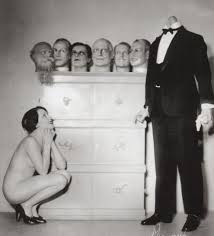
Rosie knew what she wanted in a man. Trouble was, she wanted something different every day. The wealthier ladies could afford different models, but they had room to store them too.  She’d had to settle for a model with adjustable heads. The body stayed the same, but the personality changed. It wasn’t ideal, but it worked.  Currently she had six different versions, but over thirty were available. Whenever she could afford it, she got a new head for her Adjustable Man.

Rosie’s house wasn’t tiny by any means. It was the standard allotment for Zeta-class citizens – three bedrooms and one large common area with dining/ kitchen/ living room, with movable panels to divide up the areas when necessary. This was a far cry from Gamma-class, with only two bedrooms and a living room but no kitchen. That was shared, communal style, with ten other Gammas.

Gammas tended to eat together in the common dining room. Slinking off to eat in their private apartments, hunched over a coffee table while sitting on a stiff sofa, was possible but frowned upon. Nobody would say anything about it to the citizen who did it, but then they simply wouldn’t say anything at all to them for a few days afterwards.

It wasn’t planned that way. It wasn’t a rule. It was more like a habit, or tradition. Not sharing time with your fellow citizens meant you wanted to be alone, so they gave each other space at those times. But, if a citizen was absent more than about four times a month and wasn’t on a scheduled trip for their task-group, then subtle and not-so-subtle inquiries were made. Some were to the citizen’s family. Some were to the Overseers. Perhaps s/he was ill? Perhaps therapy needed to be assigned? Perhaps s/he needed to be reclassified? Sometimes that particular area’s citizen class wasn’t a good fit for that citizen’s style of life. Never would they ask a Gamma-class citizen themselves if anything was wrong. That wasn’t thinkable, not for that class. It was only once you were promoted to Zeta-class that you were even considered to have enough spirit to have an opinion.

Rosie had opinions all the time, and felt that everyone needed to hear them. The Overseer channeled this into encouraging her to write an online blog, where she felt that she was being heard for a change. She thought she was making a difference. She was wrong. Nobody read her writing. The numbers on the statistics were a ruse from the Overseer to get her to keep writing and thus keep her out of the way. The comments were supplied by workers in his office.  It kept her placated and maintained order. It didn’t do to have citizens thinking too much. It upset the social fabric.

She was so opinionated that no man wanted to spend time with her, and so insecure that she didn’t want to spend time with herself. Fortunately for her, she was not alone in this. Plenty of women had been told “You think too much” by men, and rather than stop thinking, or at least out loud, they decided to get an Adjustable Man. He could be modified in any way imaginable, providing you had the resources.

It was easy these days to pick up a used version, have the memory wiped, and start from scratch. Or, you could custom build one online and have it shipped to you, ready to cook, mow the yard, and be pleasant to take on a visit with your friends. No more awkward times like when your man suddenly started talking about less-than-polite topics around your best friends or coworkers. No more attitude about doing housework or it being “woman’s work”. No, the days of men thinking their contribution to the family ended as soon as they left their workplace ended around the time women realized they didn’t have to have children, and thus didn’t have to stay home to raise them.

Adjustable Women were in the works for those women who wanted to work outside of the home after having children. There were never enough reliable or affordable childcare providers – never had been. Come to think of it, the same was true for eldercare. Nobody wanted to take care of the very young or the very old for very long, even if they weren’t related to them. Those that did wanted a lot of money for it, or they had less than honorable reasons for seeking those jobs. But Adjustable Women were proving to be harder to make than Adjustable Men.

Rosie was trying to decide who she wanted as her partner to the dance tonight. It was almost as important as determining what dress to wear. Too formal? Too casual? She wished there was a guideline on the RSVP, like “black tie” or “blue jeans” but for partners. She’d hate to take a stuffy, know-it-all partner to a casual gathering, the same as she’d hate to take a sci-fi geek, able to name all Star Trek captains in order (and delineate their flaws and charms) to a company luncheon. How did early-century escorts do it?

She opted for the boring “Bob” version.  He was cute, but he didn’t talk much.  Her friends would understand, and the new people she was there to meet wouldn’t care.


Wander (short story)

He’d been walking a long time. Days? Weeks? Years? It no longer mattered what time it was. It was today, always today. He had nowhere particular he had to be. He wore no watch, carried no day planner. His calendar was free.
He walked away from it all some years back and had just kept walking. When would this walk be over? He’d not planned on starting it, so perhaps it would end the same way.
It started suddenly. Just like with spring tulips, it seemingly occurred all at once. Only a careful observer could have seen that change had been coming a long time.
It happened suddenly for him, that was for sure. One day he gathered up a duffel bag’s worth of possessions, put on his shoes and her all-weather coat, and walked outside. He never thought he’d make it past the yard, but he did. Then he thought for sure she’d stop him when he got to the end of the street, but she didn’t. Every step further from that house his fear grew smaller and his excitement grew larger.
The thought of leaving never crossed his mind all those years. Not like he was happy being there, mind you. It was just that he didn’t know he had a choice. It was just like Hagar and the well. She was suffering and all along what she needed was right there and she couldn’t see it.
He walked three blocks fueled on fear and excitement before he started to wonder where he was headed. It was strange to feel so much at the same time after a lifetime of not feeling at all. Perhaps once he had felt something? Surely he had. He couldn’t remember.
At the edge of the neighborhood he decided to try to feel, but not too much. Best to start with something simple, like a direction. Which way? Straight? Right? Left? Turning around and going back was right out, he knew that. Just thinking about that made his stomach get smaller and tighter and fluttery. That felt like “no” most emphatically. This was new to him, this learning that his body was a sense organ, tallying pros and cons and providing the result. It was like learning another language to figure out what it was saying. Why trust his brain to tell him what to do, when he could use his entire body? His stomach loosened when he faced right. Okay, that way.
He didn’t know where that way led, but that was true no matter which way he went. He’d never been allowed out of the house. Never been given a map of the city, or of anywhere for that matter. There was no television in the house either, and certainly not a computer. He had no idea that there was a whole world outside of the house, and that was how she planned it.
He was lucky she’d even spoken to him, or he’d never have picked up the language. She didn’t at first, but he overheard snippets of words and sentences when she’d have her boyfriend of the month over to spend the night. Sometimes one of them would try to talk to him, try to make friends with him as a way of placating her. Perhaps he thought he could stay longer if he turned out to be father material? The way to a woman’s heart is through her child, right? Those that tried could have saved themselves the trouble. Once she realized they just wanted free room and board she cut them loose and changed the locks again.
All these years later, his body told him more than just how he felt. The rain was coming soon. His nose told him this. The hairs on his arm said it was going to be a long quiet soak. His big toe told him the mist he was in would pick up, grow just enough to be annoying and cut down on visibility in about 20 minutes. That was enough time to find a restaurant to wait it out.
Another wanderer had taught him the tricks of the trade. Look for a restaurant that is a little busy, but not overly so. If it wasn’t busy enough he’d stick out. Then the employees or customers would notice. If he was lucky, one of them would gently wake him when he dozed. If not, a cop would be called to do that chore. Sometimes he’d simply be asked to leave. Sometimes he’d be told to never come back. On the other hand, if the restaurant was too busy, a customer might sit too close to him and spot that he didn’t quite fit. Perhaps they’d notice his less-than-fresh aroma, or notice that he only had a soda in front of him, or they’d spot his duffel bag. The goal was not to be noticed.
A soda bought you a table for at least an hour. Keep it refilled and it looked like you just got there. Plus, the sugar and caffeine didn’t hurt. It was great to get refills – you could have a two-liter’s worth of pop for pocket change. If you felt like it you could even take the cup with you for next time. If the restaurant was busy enough they’d never even notice you’d not bought anything from them.
Actual sleeping required some skill and a prop. Find a flip phone on the side of the road or at a local thrift store, hold it open in your hand, and you could slouch down and make it appear you were checking texts while you dozed. People rarely looked long enough to notice your fingers weren’t moving. Most folks had been taught it was rude to stare.
If you were homeless for longer than a month you started to become invisible. People just didn’t want to look at you, to see you. They were afraid you’d catch their eye and say something like “Excuse me sir? Can you spare some change?” They didn’t want to hear whatever story you made up to convince them (or yourself) of your worthiness. It was easier to pretend you didn’t exist. It was a little lie they told themselves.
He was through with lies. They were too hard to keep up with, too hard to justify. They grew and grew, one lie leading to another, becoming a tangle like weeds or rope. Before you knew it you were lost or tripped up. He decided it was best to tell the truth, but not too much of it. Too much talk spoils everything.
He carried as little money as possible, same as everything else. It all weighed him down. Everything took up space, either in his bag or in his head. Traveling light was about more than having an extra pair of socks or a small bottle of shampoo.
The rain was almost over. Time to go.

Dark

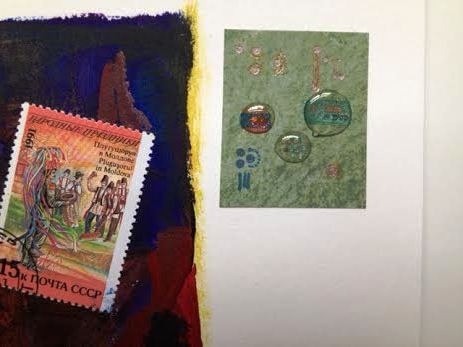
dark 021516
Inspired by the layered art of Nick Bantock.

Angry that crap art is seen as art, like McDonald’s is seen as gourmet.
The Emperor has no eyes. Jealous. Where is my recognition?

Telling my husband that he cannot vent on me. He cannot tell me just the bad that happened to him that day. I have my own burdens to carry.

The beauty of a circuit board, replicated. What is real?

(Details)
top right corner
dark2

middle left
dark3

bottom right
dark4

dark5

Ingredients:
Goldleaf.
Stamps.
Map.
Paper towel to remove paint.
Gel pens.
Art paper.
Decoupage glue.

Liquitex basics acrylic paint – Phthalocyanine blue, deep violet, copper, cadmium red deep hue

Strathmore art journal

Created 2/15/16

Memory map exercise

Here is an exercise to dig down deep.

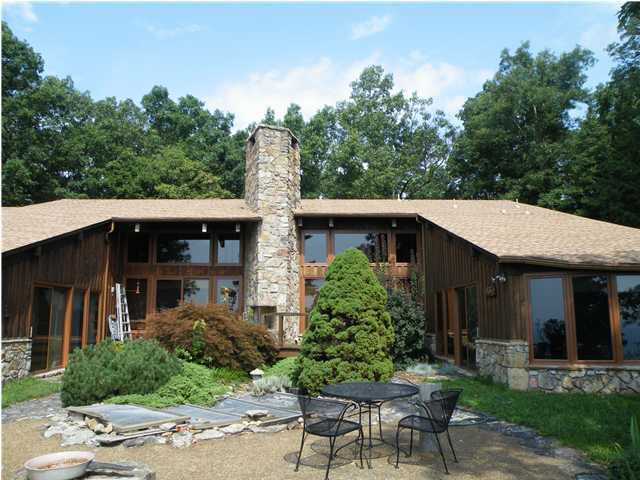
Choose a picture of a place where you spent a lot of time as a child. Perhaps this was your old family home that you moved from. Or a family friend’s house. Or your elementary school playground. It is important that this be a place that you have a lot of memories about.

Make a color copy of the picture and paste it into your journal. Don’t use an original picture or you won’t feel free to work with it like you need to.
ellen2

You might be able to find a picture online of this place if you no longer have a photograph (you moved, for instance). Use Google image search and put in the address in question. You might be surprised what you can find, as real estate agents often take many pictures and leave them up even after the house has sold.

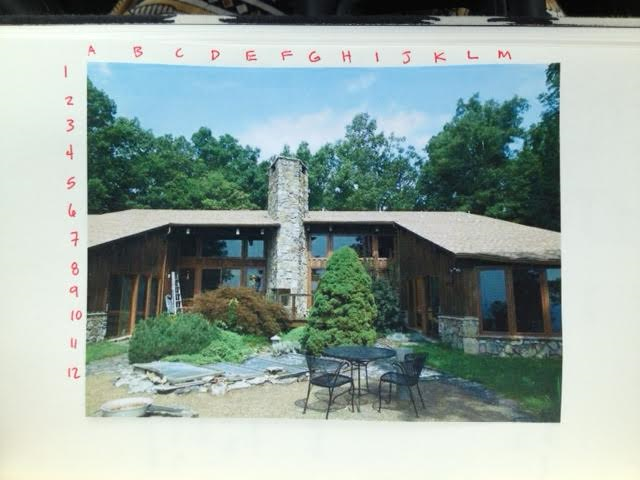
Write a map grid around the edges – evenly space letters on one side and numbers on the other side.
map1

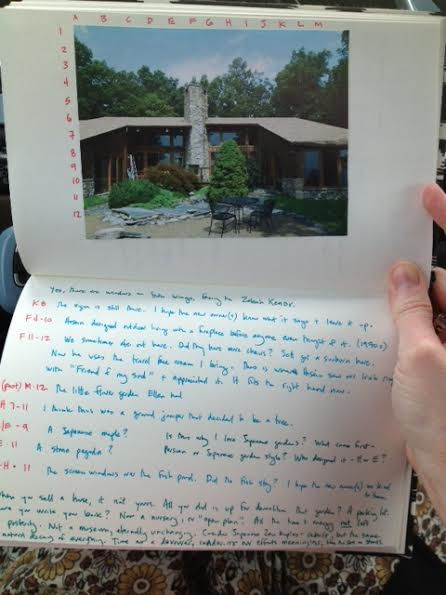
Use this grid to refer to elements in the picture. What happened in each place? What does that remind you of? You can go as deep as you want, and as off subject as you want. Nobody has to see this. Keep writing about what happened in that one area until you wind down. Move on to another area. Repeat. You can use different colors to help keep track of your wanderings – first thoughts, tangents off of that, for instance.

map2

You don’t have to start at the top and work your way down. You can write about whatever catches your fancy first and go from there.
Many different things will come up while you do this – memories that you’d long forgotten. This is a time to cherish the beautiful ones and heal the hard ones. You are older now, and stronger, and better able to work with them. Events are tricky things when we are younger – they might be too heavy for us to carry. When we get older, we have more tools at our disposal. This is a special time that you have to work on them, a second chance.

At the end, thank yourself for giving yourself permission to do this work.

Tracy and Robin

two 2

Tracy and Robin had joked for years before they got married that people never knew who was “he” and who was “she” of the two of them. They decided that it was nobody’s business, so they never let on.

Their friends had hoped to learn the truth on their wedding day. Surely they would wear the traditional clothes? They were in for quite a surprise when they arrived at the event. They wore the traditional clothes, but not in the traditional way. This was in line with everything they stood for, so it made sense after all, but it still didn’t answer any questions.

Tracy and Robin were drawn to each other not out of a sense of finding their other half, but in finding another person who was whole. Both were perfectly comfortable repairing a car or knitting a shawl. Both could mow the lawn as well as cook. They felt lucky that their parents had taught them both how to be people first and foremost. Their gender was never used as a reason for or against learning anything.

They both hid their gender, not out of a sense of privacy or shame, but out of a sense of rightness. They wanted people to relate to them as people. The first item of prejudice was gender. Sure, you could add race, religion, creed, national origin and a host of other things up to and including what football team they rooted for. People used any excuse they could to pigeonhole you, to decide who you were before you even opened your mouth. Tracy and Robin figured that the more you can avoid those markers, the more people would have to make up their own minds for a change.

They were mindful to shop only where the bathrooms were genderless. Sometimes the buildings were old and only had one restroom with a single toilet. Sometimes they had family restrooms. They didn’t want to have to out themselves if they could avoid it.

They shopped at thrift stores, getting whatever clothing that struck their fancy and wasn’t too snug. Both were equally comfortable in pants or skirts. They were pleased when they could find clothing that was from immigrants because it was often loose and ambiguous. Comfort was the most important thing.

It was always assumed that one was female, but it wasn’t a given. Both could have been. Or neither. Or one or both could be intersex. Did it matter? Nobody separates by eye color or height, so why separate by something as equally meaningless and random as gender?

Mr Michaels

haunted

Mr Michaels’ blindness was absolute. Born sighted, it had been 20 years before the cataracts had begun to form from the kiss of sunlight.

It happened so slowly at first, like a fog creeping in on cat’s paws. Every month the dull haze thickened, coalesced just a little more. It was so gradual that he never even realized his sight was being stolen from him until it was gone. It was as if his sight was a stone and the sun was the sea, washing it away to nothingness, no trace of it ever having been there.

It was nothing to Mr Michaels. His sight had gone so gradually that he’d forgotten he’d ever had vision. Just like that sea-stone, all evidence of its existence was erased. Just as slowly and just as insistently, his memory of sight had dissolved as well. He could no longer remember his mother’s face or the color of the sky in early November, could no longer even remember that he had ever known these things.

He didn’t think of his blindness as an absence. He didn’t think of it at all.

All his life he had worked outside. Perhaps it was an undiagnosed case of claustrophobia. Perhaps he was just set in his ways. His first job had been in landscaping, and every one after that had been related. Grounds crew for a municipal park, another one helping harvest apples, it was all the same to him, as long as he was outside.

His father never knew if he’d ever tried for anything more advanced. He never asked, but he’d been tempted to often. He wanted to encourage him to be his best rather than settle, but he remembered his own father doing the same to him and he still resented him for it. Perhaps this was his best? Perhaps he led a simple life because he was simple? Best not to dig too deeply.

Mr Michael’s hands became his eyes, showing him the size of the bulb or seed that he held. He then knew how far down to dig to plant it. His hands told him where the weeds were to pluck, told him what apples were ready to harvest and which ones were best left for the birds. His feet told him how far the flower bed was from the orchard, how far from the stables. His nose told him whether the horses were sick or scared. His ears told him whether a storm was coming, and whether it was going to be strong enough to warrant bringing the animals in early.

Watching him work, you’d never know he was blind. By tacit agreement, all the other workers on the farm kept everything where it had always been. That one incident with the misplaced hay bale had been enough to convince them.

It was only when you looked directly into his eyes that you knew beyond a shadow of a doubt that he was blind. Very few people were brave enough to do this more than once.  Looking into his milky eyes was like looking into a pair of mirrors set just opposite each other.  All you could see was yourself, all of yourself, unto eternity, ever diminishing into meaninglessness.  It was overwhelming and humbling.  You could see all of your strengths and all of your faults, unvarnished, untampered by the usual lies you told yourself.  This alone was unsettling, but the additional feature of his gaze was to leave you with an overwhelming sense of your utter insignificance.

Mr Michaels was completely unaware of this.  He wasn’t bothered in the slightest that people tended to leave him alone.  It meant he had time for his own amusements.  That suited him just fine.

Growing in (poem)

I’m no longer growing up
but in,
strengthening my foundation,
clearing out old misconceptions
and flat out lies
I learned
or was taught.

This isn’t housekeeping.
This is a major renovation,
a re-new-ing.
This is tearing out the floorboards and joists
and digging down to bedrock
to reseat the base.

There’s no plan for this,
no map.
There can’t be.
Each house,
each person
is site specific.
Nobody else’s plans will work.

How can you grow up
if you don’t have a strong base?
The tree falls over
if the roots aren’t deep.

So for right now,
I’m growing in.

One size (poem)

One size does not fit anybody.
Not even most.
We’ve forced ourselves into conformity
into complacency
into a mold that is not
of our own making.

We’ve shoved our feet into shoes
that don’t fit,
hobbling ourselves in the name of
getting along,
of making do,
of giving up our own power,
our own knowledge,
our own ability.

We thought by doing so that we’d have
more time
to be ourselves,
to do our own thing,
to think our own thoughts.
We thought that by giving up
everything
to the authorities,
to the experts,
to the corporations,
to the system,
that we wouldn’t have to worry
about it
about anything
anymore.
The professionals would do it for us.

Perhaps it is better said that they do it
to us.

Bigger isn’t always better.

We gave so much away.
Childbirth, daycare, school, medical care, funerals.
Our whole lives from birth to death.
Who raises our children?
Not us.
Professionals,
strangers.
Who takes care of us when we get sick, or old?
Not our family, not our friends.
Professionals,
strangers.

We stopped making our own clothes,
our own houses,
our own lives.
We gave away our power.
We stopped raising our own food.
We don’t even know what is in it,
thus we don’t even know what is in us.

We become sick,
and our sickness
is from separation
from our own selves.

Deep down,
we want the old ways back,
the community, the village, the self sufficiency.
We want to know
and be known by
the people in our lives.

We don’t have to do it all,
but we don’t have to give it all away
either.

Mixed messages (poem)

But first, an explanation –
(Nick Bantock has a writing prompt in his book “The Trickster’s Hat” that I decided to try. It involves taking two different books and selecting a random paragraph from each one. You highlight all the nouns in each paragraph, and then switch them out. This will produce two entirely new paragraphs. You’ll end up with some sentences that are useful, others not so much. You can edit it however you like, but you cannot change the nouns. I chose (randomly, but oddly synchronistic) “The Marriage of Opposites” by Alice Hoffman, and “The Color of Water” by James McBride. I’ve left most of it the way it came out, and used both paragraphs.)

I was finally finished with that rabbi,
with mahogany mothers,
and a synagogue set
in the Spanish nostalgia.

Surprise had taken a long recognition,
but now he was perfect,
and not I or the town
could pull the Jews down.

There was a low curved I
separating the
he from the I.
The he
was kept as a who,
as it had been in the mother,
in he and I,
though there were many of him
recently arrived.

Book, who thought it madness
to have this daily family
of a brutal I,
when every record was a nothing
and every them was a you.

When the synagogue called in
the year of my benches,
the old altar front and center,
it spoke to the hall
with neither style nor it,
only grudging time.

It had heard fire was in the storm.
Women knew men were black
and the floor knew
that my past was sand.

Spain, remember your Portugal,
the Jews said.
Denmark explained to Amsterdam
that madness
was writing a reminder about my history,
and asked if prayer might see
some of the secrets.

The old house

The old saying is true – you can’t ever go home again. I decided to see if there were any images of the house I grew up in online. Turns out there are a lot. I’m a little freaked out, actually.

One – the house is no longer for sale, so why are the pictures up? This benefits me, of course, but do the current owners care if the whole world can see inside their home?

Two – what did they do to the house!? It looks so spare, so lifeless. Where are the books? They ripped out all the bookshelves. I’m a little suspicious of people who don’t read. The wall colors are a bit bland and noncommittal. Maybe these are “staging” pictures, and not pictures of the seller’s furnishings. It took me a while to figure out what they’d done with the half-bath downstairs. The yard! My mother lovingly landscaped it – and it has all grown over. So sad.

Three – it sold for what!? I sold this house in 1998 for $69,900. The couple who bought it assured me that they were going to live there a long time. I’d gone to school with the husband, and as he was a real estate agent, we were able to talk before the sale. The neighbors had all expressed concern that they didn’t want someone to buy it and flip it – they wanted a neighbor, not an investor. He assured me that he was here to stay. Well – turns out that was only for seven years, because they sold it for nearly double what they paid for it, at $127,500. I feel a little cheated, and lied to. Then it sold again two years later for $141,000. Eight years later it sold again for $155,000. Stunningly, that owner put it back on the market not two months later for $163,000, but it didn’t sell.

We lived in that house for 30 years. It was home, not a house. I still have dreams that are set in it. That was what defined “home” to me, and in many ways it was ideal. I needed to move because I couldn’t afford it, and I needed to get away from some bad situations that were happening in my life. But in some ways, I want that house back. I especially would have liked to have found a house that size (3 bedrooms, 1.5 bath, 1600 sq feet) for the price I got for it. My current house has the same number of rooms and is 400 sq feet smaller – and cost $30K more!

Here’s the info from the listing –

“A comfortable and charming 1920’s Dutch Colonial that is conveniently located. This well maintained home offers character and charm with original hardwood floors and two piece crown molding throughout. The large living room offers hidden wiring for wall mount flat screen tv giving way for more spacious living. The separate dining room and adjacent kitchen offer a great flow for entertaining; enjoy double oven plus gas range with microwave hood. The second level offers 3 bedrooms, one with an oversized closet and a full bathroom. Don’t miss the 1/2 bathroom off the kitchen and the large unfinished basement, great for storage with walk out access to backyard. Enjoy days and evenings on the side screened in porch.”

I’m amused that they did all that work with the house, but the basement is still unfinished. The basement is huge – you could live in just it. But, it is haunted, so there’s that. Wonder if they know? I called a friend to exorcise it before I moved, but who knows if the ghost actually left? Sometimes they don’t want to leave. Maybe that is why the house sold four times in 17 years.

Here are the pictures of the front of the house
front

front left

front left close

Go in the front door and here’s the living room
living room

living2

living 3

living 4

Turn around from that last picture (this is to the left of the living room) to see the dining room
dining room

This is looking back towards the living room from the dining room
dining 2

Here’s the kitchen as soon as you enter from the dining room
kitchen

kitchen 2

kitchen 3

kitchen 4

They enclosed the back porch and changed how you get into the bathroom downstairs

kitchen to porch

Here is the half bath that is attached to the kitchen.

kitchen bathroom

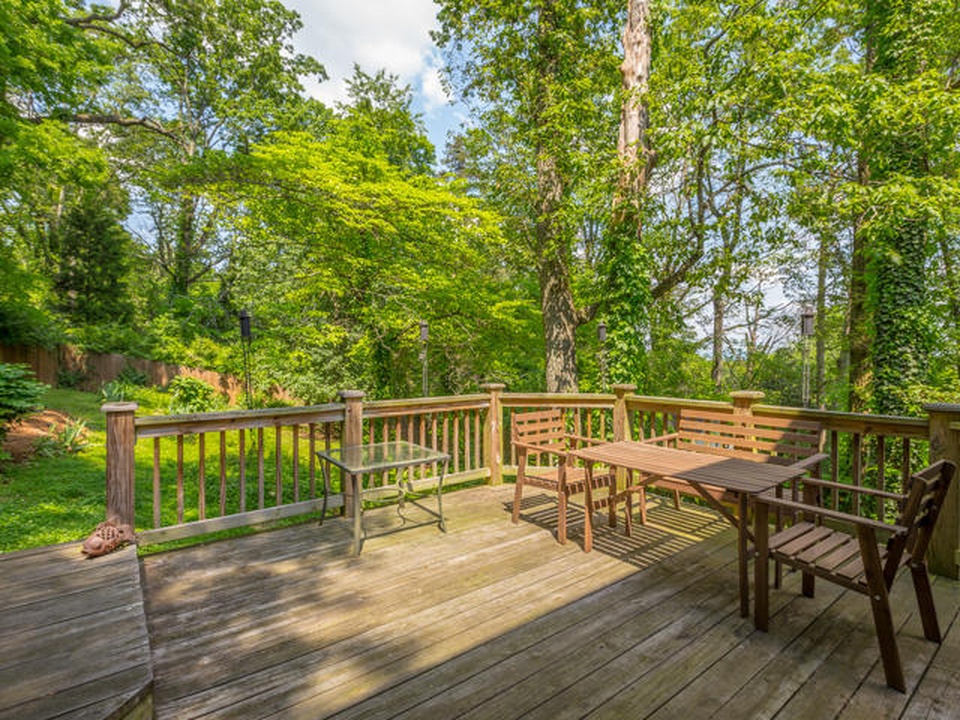
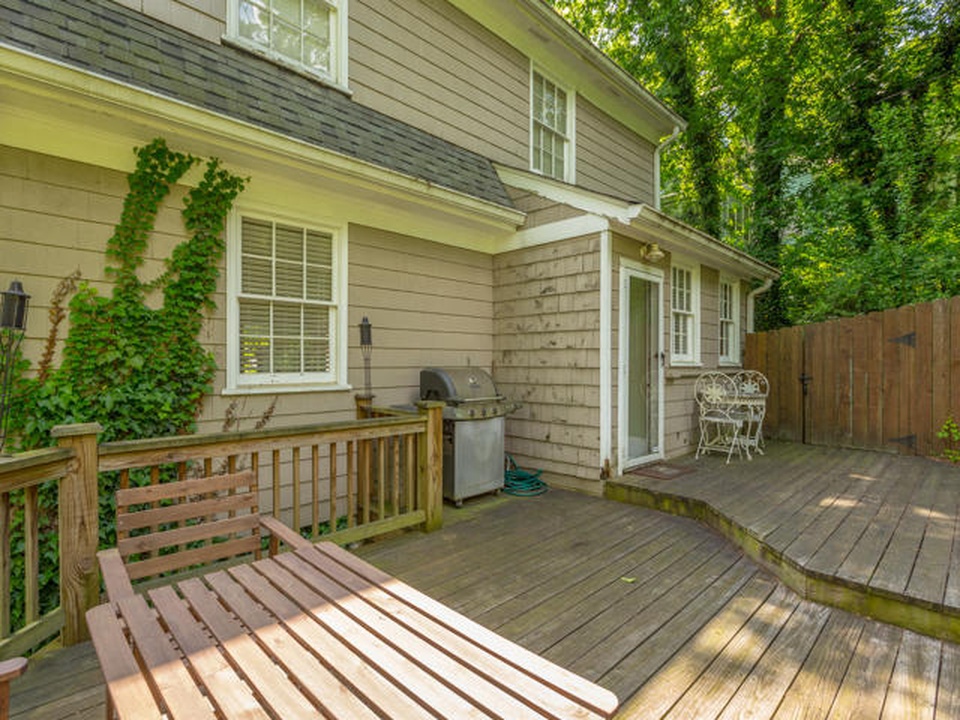
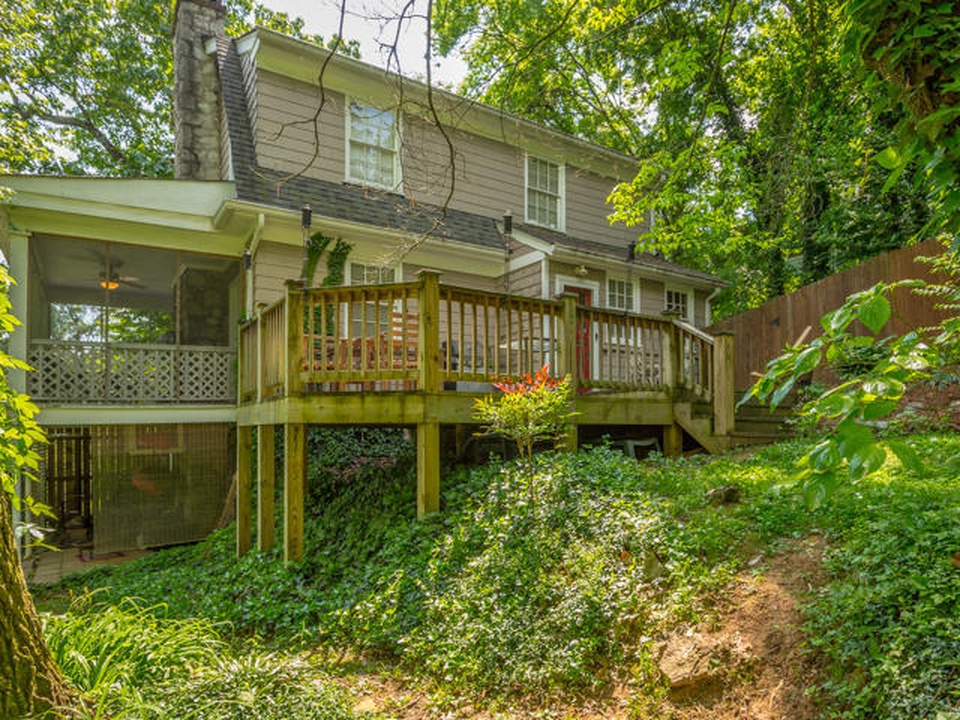
Outside, the back porch area (this did not exist, nor did that immense fence)

back porch1

back porch2

back porch 3

back porch 4

back porch 5

back porch 6

back porch 7

The sad-looking yard

yard

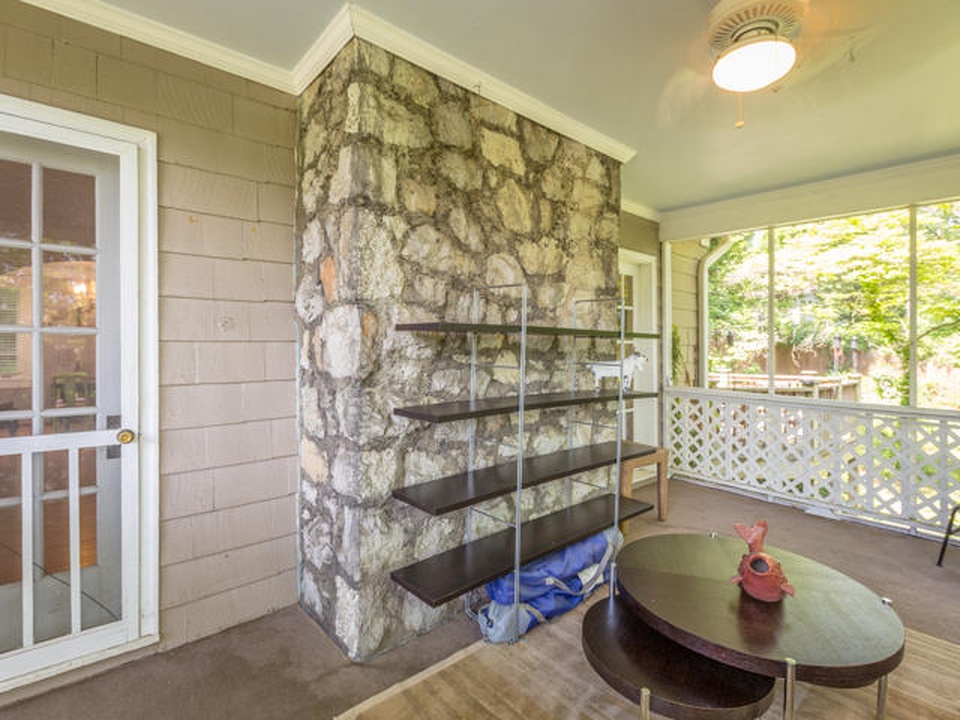
Back in the living room, go right to go out on to the side porch

side porch

side porch2

Back in the living room, the stairs going up.

stairs

At the top of the stairs, looking towards the main bathroom

upstairs

In the bathroom itself.
bathroom

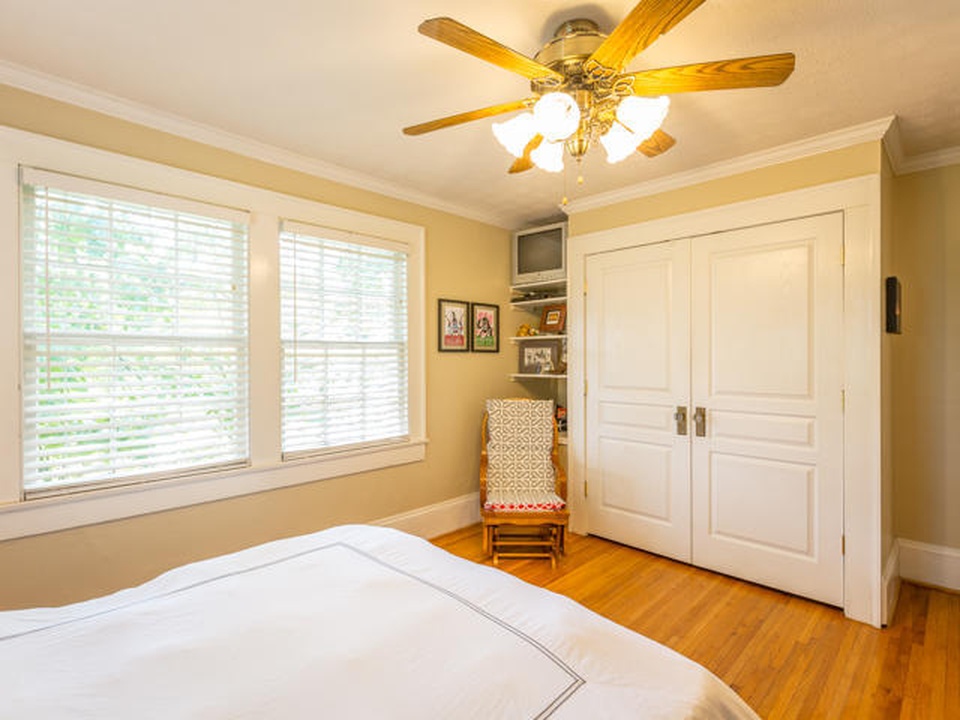
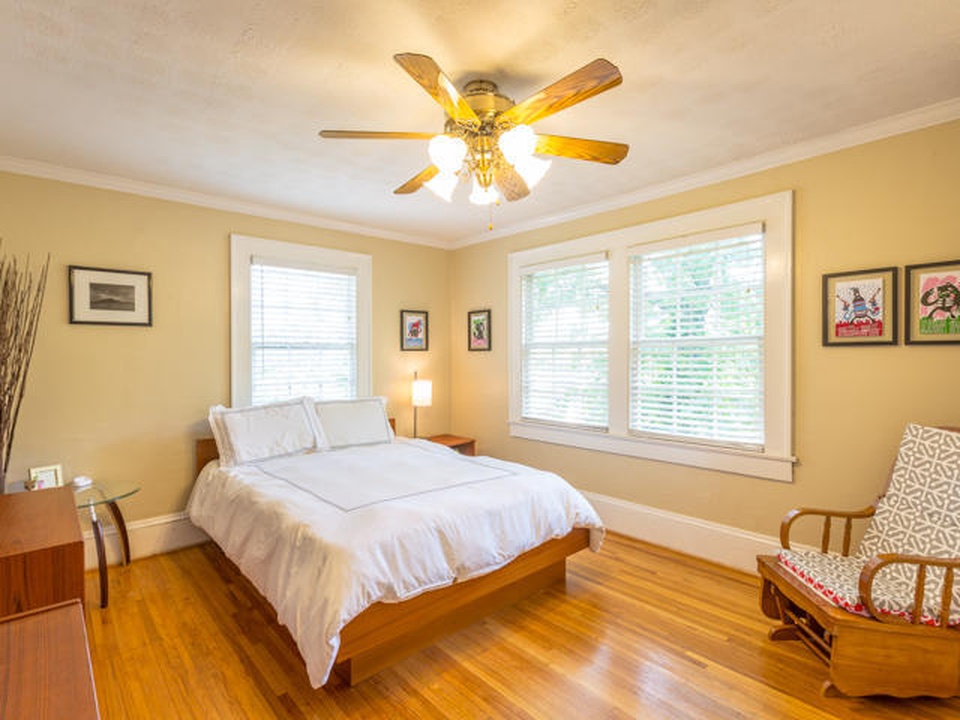
The bedroom on the Southwest corner (the one my brother had initially, and after he moved I took it.)

bedroom 1a

bedroom 1b

The bedroom in the Northwest corner (my parent’s bedroom)
bedroom 2a

bedroom 2b

The bedroom in the South – a dark, small room. This was the one I had, as the youngest.

bedroom 3a