Current list of books I’ve written

Free Range Faith.   Essays on following Jesus and not Christianity.  Published 12/11/2014.  ISBN-13: 978-1502367679

Fortunate Stamps.  Collage using stamps and fortune cookie messages. Published 1/17/2015.  ISBN-13: 978-1507623480

The Condensed Gospel.  The Gospel, as one story, in order, with no repetition.  Published 12/19/2015.  ISBN-13: 978-1505514940

Travel by Stamps.  An all-ages story using vintage stamps for the illustrations.  Published 12/27/2015.  ISBN-13: 978-1522947127

Some for the Road: Meditations and milestones on the road of recovery. Daily meditations on recovery. Published 4/22/2017.   ISBN -13: 978-1507633588

Images of God (in color).  Inspirational poetry and pictures, in full color.  Published 6/21/2017.   ISBN-13 978-1546815129

Images of God (in black and white).  Inspirational poetry and pictures, in a more affordable black and white format.  Published 6/23/2017.   ISBN-13 978-1548191023

Short and Strange. 25 unusual short stories inspired by vintage photographs.   Published 9/26/2017.   ISBN-13:  978-1974103669

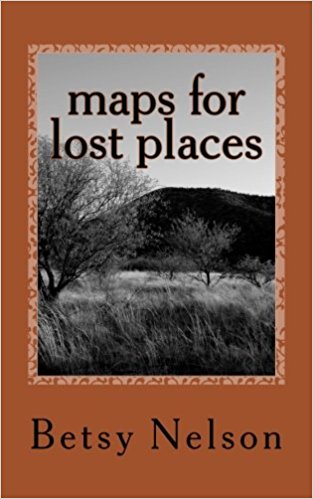
maps for lost places. 27 speculative fiction short stories.  Published 1/6/2018. ISBN-13: 978-1981396856

Creating a Life. Essays about being an artist with a full-time life. Published 2/17/2018.  ISBN-13: 978-1985022140

home is a place in your heart. Essays, poems, workbook-style prompts and full color pictures exploring the idea of “home”. Published 10/30/18   ISBN-13: 978-1726019750

The Invisible House series.    Essays and tales about negative space and impermanence. It is more of an art piece than anything else. It is non-classifiable.   ISBN 9781795706964   Kindle edition published 2-27-19

The Abandoned Project (volume 1) Short stories inspired by pictures of abandoned doors and gateways. Published 5/16/19    ISBN: 9781799149507

Short and Strange volume 2    21 short stories inspired by unusual black and white vintage photographs. Published 11/22/19   ISBN: 978-1703976113

Stamp Stories   A diverse collection of art and stories illustrated by stamps and ephemera.  In color.  Published 3-23-20.   ISBN: 979-8629681601

Tuesday Buffet   A series of photographs taken once a week of a tree, for a year. Published 3/31/20.    ISBN: 979-8632414265

Female Trouble: stuff we don’t talk about   Essays on womanhood in 21st century America.  Published 5/8/20    ISBN: 9798644132874

poems for hard times    47 poems of inspiration and uplift, written between 6/30/13 and 1/31/19.  Published 5/14/20   ISBN: 9798645747121

Wander    Essays, poems and stories inspired by The Wander Society.  Written between February 2016 and June 2018.  Published 6/23/20    ISBN: 9798656489744

A Walk Through the Bible Essays about the Bible, written April 2013 to July 2020. Published 8/14/20. ISBN: 9798672088235

The View From Here    125 essays on an array of topics that will probably improve the world if people actually read them. Written between October 2013 and January 2021.  Published 2/18/21   ISBN: 9798708113092

A Life in the Margins  126 essays, written between January 2013 and April 2021 about nearly 2 decades of working for a public library. Published 6/28/21   ISBN: 9798528401553

Further Along the Road  85 essays, written between May 2013 and December 2019 on recovery and health. Published 10/12/21   ISBN: 9798495431485

Cabinet of Curiosities – a short story collection.   These 35 stories were written between February 16, 2016 and November 24, 2020. Published 12/22/21  ISBN: 9798788030609

All titles are available through Amazon. Most titles are also available on Kindle unlimited.
Author page: amazon.com/author/betsynelson

The dog-sitter

monkey baby

It was hard to get good help those days. The Brown family had a bear, a young one, mind you, to tend the children. The Nelsons, however, had a dog. You might say having a dog to keep the children company was to be expected, and it was, but not in this way.

Simon was a spaniel mix of some sort. They weren’t sure. It wasn’t like they got him from a kennel. He was found along with his littermates under their back shed one spring day, all mewling and trembling. All of them were cute, but only Simon was attuned to them.

They’d gone to check on the litter several times, admiring the way the mother was caring for them. This was probably her first litter, but she was doing great, like this was her favorite thing to do. The Nelsons had heard of animal mothers instinctually knowing what to do, and this one sure did. They wondered how it was possible that some “lesser” animal could know more about tending an infant than humans did. Maybe humans did know, they’d just forgotten in the race to be “civilized”. Maybe they still knew, very deep down.

They found homes for the rest of the puppies, but Simon they had to keep. He was too perfect to give away. They’d only briefly considered giving him a dog name like King or Spot, but no such name fit him. He really was like a human in dog form, so they gave him a human name. He was a full-fledged member of the family then, albeit one who slept in the garage.

That was until they had their third child. There was no time for taking off from work, no money for daycare. Mr. and Mrs. Nelson’s parents had died long before they got married, so there were no free babysitters to be had. So Simon would have to do.

He was normally a very serious and sober dog, but he became even more so when they put his uniform on. It was as if he knew he was on duty once they dressed him in his apron and cap.

Simon was the best babysitter they could have ever hoped for. He was alert to every cry and always made sure the baby was warm enough. He’d either drag a blanket over her or just lay down next to her.

There was only one problem. The baby thought Simon was her mother, and refused to even recognize her real mother when she returned home from work. It was as if her own mother was a piece of furniture that moved. She didn’t hate her mother – she didn’t even know her to hate her. Simon was all she’d ever needed and not even known it.

Spirit jump

He was fine, and then he wasn’t. It started as a cold, or maybe the flu. A sore throat and weakness in his hands and feet, the afternoon after work. He thought he was just tired after a long week but it was only Tuesday. Brian felt well enough to go to his job on Wednesday only because that was the end of his work week. If he’d not been off from Thursday on, there would be no way he could have pulled himself together.

Brian owed it to his patients to be at the top of his game every day, to be alert and attentive. Machines couldn’t do it all, shouldn’t do it all. You needed a person to notice the subtle signs of a person regaining consciousness too soon, of them experiencing pain and unable to do anything about it. That was part of his job as an anesthetist, to safely ferry them across the dark waters of that chemical sleep during their operation.

He’d done his job well for seven years. He’d never lost a patient due to his error. Sure, some had died, but it wasn’t his fault. The surgeon made a mistake, an accident happened, a hidden deficit in the constitution of the patient made itself visible. Things happened that were beyond his control.

Some people were barely held together. Some people were sicker than even they realized. A shell, a façade, a thin veneer was all that stood between them and utter collapse. It wasn’t his fault when they died. He just happened to be there, like a bystander at an accident.

It was a little like that on that Tuesday, that meaningless day, that between day. Nothing happens on a Tuesday. The only problem is that sometimes nothing is something. Without noticing, without thought, he was infected by something worse than a virus, more insidious than a disease. It wasn’t even something that would show up on a blood test or an MRI.

It happened like this:

The patient was infected, possessed if you will, by a spirit. It had caught him and was riding him, like how the fleas rode on mice during the bubonic plague. The mice weren’t infected – the fleas were. The mice were just vehicles, taxis if you will. They shuttled the fleas around faster than they could have on gone on their own. In return, the fleas left the mice pretty much alone. They didn’t even know they were being used.

The same was happening here. The patient was the mouse, the evil spirit was the flea. It hadn’t badly affected the patient – that wouldn’t do. You can’t use them up too soon, they’d wear out. Then you’d have to find another one, sooner than you might want.

This was a spirit of complacency, of smugness, of self-satisfaction. It was a belief in a job well done in spite of evidence to the contrary. It was insidious, spawning vanity and a total lack of hubris. It said “all I have accomplished has been by my own hand, and mine alone”. It invited no disagreement and produced no diligence. There was no need to double check your results if you were convinced they were perfect. There was no need to try harder if you knew you were better than everyone else.

It produced vision problems, but the vision was of the heart, not the eye. It made the “mouse” see everyone and everything as lesser than. Instead of being better, it made everyone else appear worse. It made its victim feel higher by making others appear lower. Average was suddenly an accomplishment.

It caused alienation, of course. Nobody wanted to be around a goody-goody and “I Told You So”. And that led to stress, to dis-ease. The problem wasn’t a virus but a victimhood, a sense of lesser than, of isolation. People separated from others became sicker more often, and for longer. Humans were made to live in community, after all.

The patient suffered from stomach problems – losing weight, loose stools, frequent vomiting. It was part of the stress of the dis-ease, the particular form of illness his spirit assumed. The same spirit could cause cancers, or heart disease, or anemia for instance. It didn’t matter. Genetic tendencies were just indications of possible failure, weak spots in the wall of immunity. The disease was just a manifestation of an excess or lack, an imbalance of nutrition, movement, or something more nebulous. “Failure to thrive” isn’t just about infants. A soul lack, an empty yearning, a hole, these wore away at any possible wall a person might have. Aimless, loveless – a life without meaning was a death sentence.

None of this mattered when the last transfer happened. Brian was strong in body and soul, regularly walking on the track and with the Lord. He took care of himself and of his spirit. This is why it was such a surprise when he got sick.
The spirit hadn’t been listening when plans were made for exploratory surgery of its “mouse”. That was part of the specific character of that spirit – an unwillingness to listen to anyone or anything. So it came as a huge surprise to it when the patient began to go unconscious as the anesthesia took over, paralyzing his body so the surgeon could work. It bolted, like a startled colt, unsure, unaware, suddenly stronger than it already was because of fear.
It was afraid, not of dying, because that was impossible. It wasn’t corporeal, so there was no body to die, to decay. No, its fear was of a deeper sort. It was of ceasing to be, of existence itself. The spirit had to be in a body – any body, to exist. This is why spirits resisted being cast out. So when the fog of anesthesia began to cloud its victim’s eyes, it panicked.

Spirits need skin to skin contact for transference. That is how sexual disease spirits infect new people. That is why lepers are segregated. So when the panic gripped it, choking, struggling, it jumped to the one person who was touching its previous vehicle.

This was Brian, the anesthetist, who was holding the gas mask to the patient. The transfer was sudden and sure. Normally Brian would have been immune to such a spirit, but this was not a normal situation. The fear of having its existence snuffed out as instantly as a candle flame, spurred it on, made it more violent. Brian had no chance against this force.
In the same way that mothers gain incredible powers when their children are in danger, the spirit became unstoppable, irresistible. It barreled into Brian the same way a linebacker runs into his opponent.

Brian was very spiritually strong, so the force of the unexpected attack was not enough to knock him down. He felt something shift, slide sideways, and lock. The feeling was a lot like what Obi-Wan Kenobi felt when Alderaan was destroyed – a great disturbance in the force. This was what Brian first thought it was – some outside event, some terrible, horrible occurrence, a victory of dark over light.

It was a month before he admitted he was the one who had been defeated. By then he was unable to work. His gait was slower, his reaction time tripled. He couldn’t respond to sudden changes quickly enough to prevent disaster. A missed a step lead to a fall instead of a minor correction. While inconvenient for everyday life, this inattention could be deadly at work, where patient’s lives were in his hands.

His speech was slower too. He used to be garrulous and outgoing, but now he was unsure if he could remember how to say what he wanted to say. Words were slippery or sluggish or not there at all.

It took him six months of struggle to admit he needed help, even though the doctor still couldn’t tell him what his disease was. He felt a little like the woman in the Bible who had bled for over a dozen years and doctors hadn’t be able to heal her. If only he could be like her and touch Jesus’ robe! In the meantime he’d have to settle for the leash of his therapy dog.

Jesus builds upon the old

Jesus came to uphold the words of God, not tear them down. His message was fresh but not new. The more you read of the Hebrew Bible, the more you’ll see it echoed in the words of Jesus.

Jesus says in Matthew 5:17-20
17 “Don’t assume that I came to destroy the Law or the Prophets. I did not come to destroy but to fulfill. 18 For I assure you: Until heaven and earth pass away, not the smallest letter or one stroke of a letter will pass from the law until all things are accomplished. 19 Therefore, whoever breaks one of the least of these commands and teaches people to do so will be called least in the kingdom of heaven. But whoever practices and teaches these commands will be called great in the kingdom of heaven. 20 For I tell you, unless your righteousness surpasses that of the scribes and Pharisees, you will never enter the kingdom of heaven.

Here are some illustrations of this –

Consider his words in Luke 14:7-11
7 He told a parable to those who were invited, when He noticed how they would choose the best places for themselves: 8 “When you are invited by someone to a wedding banquet, don’t recline at the best place, because a more distinguished person than you may have been invited by your host. 9 The one who invited both of you may come and say to you, ‘Give your place to this man,’ and then in humiliation, you will proceed to take the lowest place. 10 “But when you are invited, go and recline in the lowest place, so that when the one who invited you comes, he will say to you, ‘Friend, move up higher.’ You will then be honored in the presence of all the other guests. 11 For everyone who exalts himself will be humbled, and the one who humbles himself will be exalted.”

This is an illustration of Proverbs 25:6-7
6 Don’t brag about yourself before the king,
and don’t stand in the place of the great;
7 for it is better for him to say to you, “Come up here!”
than to demote you in plain view of a noble.

Likewise, Proverbs 25:8-10 continues on, saying –
8 Don’t take a matter to court hastily.
Otherwise, what will you do afterward
if your opponent humiliates you?
9 Make your case with your opponent
without revealing another’s secret;
10 otherwise, the one who hears will disgrace you,
and you’ll never live it down.

These teachings are illustrated in various verses –
Matthew 5-21-26
21 “You have heard that it was said to our ancestors, Do not murder, and whoever murders will be subject to judgment. 22 But I tell you, everyone who is angry with his brother will be subject to judgment. And whoever says to his brother, ‘Fool!’ will be subject to the Sanhedrin. But whoever says, ‘You moron!’ will be subject to hellfire.23 So if you are offering your gift on the altar, and there you remember that your brother has something against you, 24 leave your gift there in front of the altar. First go and be reconciled with your brother, and then come and offer your gift. 25 Reach a settlement quickly with your adversary while you’re on the way with him, or your adversary will hand you over to the judge, the judge to the officer, and you will be thrown into prison. 26 I assure you: You will never get out of there until you have paid the last penny!

Matthew 18:15-20
15 “If your brother sins against you, go and rebuke him in private. If he listens to you, you have won your brother. 16 But if he won’t listen, take one or two more with you, so that by the testimony of two or three witnesses every fact may be established. 17 If he pays no attention to them, tell the church. But if he doesn’t pay attention even to the church, let him be like an unbeliever and a tax collector to you.18 I assure you: Whatever you bind on earth is already bound in heaven, and whatever you loose on earth is already loosed in heaven.19 Again, I assure you: If two of you on earth agree about any matter that you pray for, it will be done for you by My Father in heaven.20 For where two or three are gathered together in My name, I am there among them.”

Jesus expands and illustrates the lessons and teachings from the Scriptures he grew up with, and explains them in relatable ways to people. Instead of just repeating them, he made the teachings meaningful by telling them as stories. But he didn’t make up the original teaching. He built upon the old to create something new.

(all Bible translations are HCSB)

Creative book list

Here are some books I’ve read that have helped me on my creative journey. Some have taught me tricks that have saved me years of struggle. Some have made me see the world in new ways. If your local library does not have them, ask for them to get them for you from Inter-library Loan (ILL). Remember, the more money you save from not buying books means more money for art supplies.


Bantock, Nick  The Trickster’s Hat – a mischievous apprenticeship in creativity.

Bantock, Nick     Urgent Second Class: Creating Curious Collage, Dubious Documents, and Other Art from Ephemera

Beam, Mary Todd  The Creative Edge: Exercises to Celebrate Your Creative Self

Berry, Jill K.  Map Art Lab: 52 Exciting Art Explorations in Mapmaking, Imagination, and Travel.

Cameron, Julia   The Artist’s Way: A Spiritual Path to Higher Creativity.

Cameron, Julia   How to avoid making art.

Campanario, Gabriel  The art of urban sketching: drawing on location around the world.

Conlin, Kristy Art Journal Kickstarter: Pages and Prompts to Energize Your Art Journals.

Cozen, Chris Acrylic Solutions: Exploring Mixed Media Layer by Layer.

Currie, Jim.  The mindful traveler – a guide to journaling and transformative travel.   

Diehn, Gwen  The Decorated Page – Journals, Scrapbooks and albums made simply beautiful. 

Doggett, Sue   Bookworks.

Evans-Sills, Faith and Mati Rose McDonough Painting the Sacred Within

Ganz, Nicolas   Graffiti World – Street art from five continents

Gregory, Danny   Art Before Breakfast: A zillion ways to be more creative no matter how busy you are.

Gregory, Danny Everyday Matters

Gregory, Danny   The Creative License: Giving Yourself Permission to Be The Artist You Truly Are.

Harrison, Sabrina  Spilling Open – the art of becoming yourself.

Hellmuth, Claudine    Collage Discovery Workshop: Make Your Own Collage Creations Using Vintage Photos, Found Objects and Ephemera.

Hennessy, Alena  Alter This!   Radical ideas for transforming books into art.

Jacobs, Michael and Judy Creative Correspondence.

James, Angela  The Handmade Book

Jones, Heather.  Water Paper Paint.  Exploring creativity with watercolor and mixed media.  

Koch, Maryjo   Vintage Collage Journals – journaling with antique ephemera.

La Plantz, Sherren Cover to Cover – creative techniques for making beautiful books, journals and albums.

MacLeod, Janice   A Paris Year: My day to day adventures in the most romantic city in the world.  

Nerjorde, Arne   Make your own ideabook with Arne and Carlos 

 Neubauer, Crystal   The Art of Expressive Collage.

 Newburger, Emily    Journal Sparks.  Fire up your creativity with spontaneous art, wild writing, and inventive thinking.

Pickett, Jan Decorated Lettering.

Roberts, Kelly Rae   Taking Flight: Inspiration and Techniques to Give Your Creative Spirit Wings.

Scheinberger, Felix  Urban watercolor sketching: a guide to drawing, painting, and storytelling in color.

Schilling, Richard Watercolor Journeys: Create Your Own Travel Sketchbook. 

Sharpe, Joanne    The Art of Whimsical Lettering.

Smith, Keri   Wreck this Journal.

Smith, Keri   How to be an explorer of the world- portable life museum.

Swift, Vivian   Gardens of Awe and Folly.

Swift, Vivian When Wanderers Cease to Roam.

Sonheim, Carla   Drawing Lab for Mixed-Media Artists: 52 Creative Exercises to Make Drawing Fun.

Thorspecken, Thomas   Urban sketching: the complete guide to techniques.

Tourtillott, Suzanne   Making and Keeping Creative Journals. 


How Jesus heals

Jesus heals by taking your burden from you, or carrying it with you. Just like how we can hand him our worries, we can hand him our diseases.

Because they are the same.

Diseases are worries that have grown because they were not addressed early on. Worry, fear, and doubt if not dealt with early on become cancer and addiction.

For instance, your liver does not fail on its own. It grows weak because of your drinking, which you did as a flawed coping mechanism for stress.

Disease is the result of you carrying a burden that you aren’t made to.

Give it Over and Up to Jesus – that thing you are worried about. That thing you are trying to control.
Don’t let the world become your worry. Don’t let the world become your idol – the thing that controls you. Put your faith back into the hands of God.

The room of abandonment (prose poem)

What does it look like?
Invite Jesus in, so you aren’t exploring this scary room alone.
What is in there?

Silence
Alone
No tools or toys

The walls are light blue, robin’s egg. There is a handmade wooden chair in the center. And a green fuzzy shawl, a gift from Jesus There is no door, but there is plenty of sunlight from the windows.

What situations, people are the cause of this room?
Why did I have to build it?

I must practice Self care to heal
be my own Shaman
Exercise food sleep, you know the drill.

What happens before the anger? Anger is a response, a protective thing. It shields from grief. Dig down to find the truth.

Don’t make God an afterthought. Make God the base of the building, of the life.

Anger comes from grief, a sense of loss, any loss. It is an unwillingness to accept change. That is also an unwillingness to accept things as they are. It is a desire to shape the world to fit me.

So roll with the punches. Accept, in a fluid way. Don’t resist. Turn the other cheek to stop that same one from getting too bruised.

(This is from an exercise I did with my first spiritual director, probably around 2013.)

A choice to return

It is tiresome to hear someone point out negative things all the time. Like a coworker I had who was always talking about the bad things – patrons, news stories. Like the friends who have to share only bad news on Facebook – their own, the world’s. It is hard to stay centered and focused and calm when this happens.

But we are told to love our enemies. That is the test. It is easy to love people when they are good. Jesus tells us that even unbelievers do that. But the rubber meets the road when people and situations are difficult. That is when we must rise above our human nature.

The only way to do that is to ask Jesus into the situation, to take up his yoke. It is when things are hard that we are given an opportunity to grow, to get stronger, to get better. It is when things are difficult that we have a reminder an opportunity to recommit to our path. It is then we can choose again to follow Jesus, and not the world.

Time-slip. Abandoned project #5

Savanna could see the open door, plain as day, but she chose not to walk through. Not yet. It would disturb the counselors. She’d been in this particular asylum for two days now, and wasn’t yet bored. They treated her well enough, as well as could be expected, you understand. A time in the loony bin wasn’t a vacation by any stretch. The food was okay, and the beds were nicer than those in a real hospital, that was for sure. They weren’t hospital quality, of course, but they didn’t have the weird side-rails either.

Maybe tonight she would walk out and look at the stars. They never let the patients out to see the stars, or even the sun. Fresh air was forbidden to them, as if their disease was catching, like it could spread in the air. They were locked away in theory for their own good but really it was for the community. It wouldn’t do to have any sort of weakness on display. It was like how some communities banned homeless people from selling newspapers on street corners out of embarrassment that they were proof that homeless people lived within their boundaries.

She’d walk out as she always did. She would simply walk forward, shifting her vision to the past, back to before the building was there. She’d done this for most of her life. It would get her out of here. It was also what happened to get her into here.

Perhaps her unusual gift was a side effect of her amblyopia. Her eyes hadn’t worked together her whole life. Abnormal vision was her normal. She’d learned to switch her vision from her left eye to her right, because she didn’t have bifocal vision. Her eye doctors didn’t like it one bit that she could switch, didn’t understand it. But it made sense. You make do with what you have. You make it work, even when others think it is broken. If you don’t know otherwise, “broken” becomes a blessing, because it teaches you to see in other ways. Sometimes literally.

While figuring out how to use her (unknown to her) defective eyes, she learned to see the space between time, the shimmering edge between “then” and “now”. These days, Savannah calls this a time-slip, but then she wasn’t aware that what she was doing was any different from anyone else. She could push that shimmering line a little, bend it, fold it back upon itself. Then it was just a little effort more to focus with her inner eye to see what used to be. Thankfully her crib had been on the first floor or she would have been in for a terrible drop the first time she tried her talent.

The first time she tried she was six months old. She shifted back to long before the house was there, before the subdivision, before the town even. She fell 3 feet from what was the first floor of the house onto a rolling hill. Breath knocked out of her, she sputtered in her amazement and suddenly found herself in her own time again, but this time falling into the basement. Her Mama found her there, wailing and dirty near the abandoned coal chute. They never did figure out how she got there. She certainly didn’t know, and at that age wasn’t able to tell even if she did.

That experience stuck with her, and over the course of her childhood she learned how to stay in the past longer and walk around. When her Sunday School teacher told the class about Peter walking out of prison she had an idea it wasn’t an angel who helped, but she wasn’t saying. She knew better by then to not talk about it.

She’d noticed that her ability wasn’t just unusual, it was downright unheard-of. After a few tentative efforts to inquire about it, she learned it was better to keep silent. If nothing else, it made games of hide and go seek much easier.

She learned she could walk to wherever she wanted to while she was in the past and then refocus and return to the present. By that point she could be on the other side of the playground or the neighborhood. She could stay hidden for as long as she wanted, or if she was “it” she could pop in on her prey without making a sound. After a while the other kids stopped playing with her, but she didn’t mind. This gave her more time to play with her friends in the past.

They were native children, who had lived here long ago, but had been dispersed when the whites came. They were like wild animals to these new settlers, who were fleeing religious persecution. It was too bad that their religious practice didn’t extend to seeing the natives as neighbors. The natives were relocated – land was found hundreds of miles away. It wasn’t the same quality of land, but it was somewhere, and the whites thought them ungrateful for not accepting their “charity”. The thought never occurred to them that if they had lived in harmony instead of pushing the inhabitants out that such kindness of a gift of scrubland wouldn’t be necessary.

When she was on her early wanders, Savanna had thankfully shifted into a time before all that unpleasantness, a time before the natives had reason to be wary. Plus, she was a child. Nobody felt threatened by a child.

But this was now, and the amusement of being in a loony bin was wearing thin. She wasn’t afraid like most of the residents. She knew she wasn’t trapped. The counselors and doctors didn’t know (or didn’t care) that their locked-door policy only made the symptoms worse for the residents. Large signs warning of patients “eloping” were affixed to the doors to warn visitors to not let a patient sneak out as they left.

There was no sneaking out now. She’d had her supper and the night shift was signing in. It was as good a time as any. She squinted and saw the shimmer of time bunch up. A twist, a shift and she was over the threshold, neat as you please. She walked out into the twilight painted field and went west towards the sunset. A mile later and she shifted back near a corner café with a payphone. She had researched this place a year ago when she moved to the area. It was best to be prepared. She knew the area around the jail too, just in case. Fortunately she had not concerned anyone enough to get put in there, but you never knew. Some small towns didn’t know the difference between dangerous and delusional so they ended up erring on the side of caution.

How has she ended up in this hospital? A time-slip wander that led to a fall, and a trip to a regular hospital had been the beginning. She had not planned on that wander, not that time. She was tired, overworked. Not enough “work/life balance” as her job prattled on about. She mused that if they really cared they would let her work less and pay her the same. Five days of work with two days off wasn’t balanced no matter how you did the math. This was especially true when most of her time off was spent doing chores and errands. When was she supposed to have some of that “me” time that people were always going on about?

That Thursday afternoon she had wandered at lunch and never came back to work. She was found, unconscious, near the river. She had gone back two hundred years before the river had come this far west, before the flood that had rerouted it almost overnight. She had gone back without thought, without plan and lost her bearings in the foggy haze of sleep deprivation and anxiety which had become her normal over the past year. She had spent so long feeling bad that feeling good was a distant memory. She would have been suspicious of it if it had dared to show up.

But then she slipped and knocked her head while “then”, so she woke up “now”, her head bruised. She forgot what had happened, forgot to keep her mouth shut too when she was found, and babbled on about the past and her native friends, and that very night found her the newest resident of the funny farm.

Yet it wasn’t funny at all, and it certainly wasn’t a farm. If it had been either, or both, maybe it could have done some good for its hapless residents. As it was, it only made things worse with its insistence on mind-bending drugs and no exercise out in the fresh air. Her time-slip wander was the only way to get out in under a week, when most were freed in eleven days. Not because they were healed, you understand. That was just when the insurance money ran out.

But now she was out, and it was time to look for a new place to live. It wouldn’t do for word to get out that she was less than normal. She’d have to be more diligent in the next town. All this moving was getting old.

(The photo was found on Pinterest. Unknown photographer or location.)