What is this thing?

Halfway into the second day of Circle facilitator training, one of the three ladies who were there involuntarily finally said “What is this thing we are doing?” They were sent there by their boss. They’d never been through the Circle process. They had no idea what it was all about, and they were sent to learn how to do it.

Learning how to do it when you already have been through it is still crazy-making. It is hard enough for me and I’ve been in a lot of Circle experiences. I feel like I’ve just been given my driver’s license and now I’m expected to take a vanload of kids to Memphis to see Graceland. I don’t have a map. I don’t have a van. I don’t even know where to get gas. But I’ve taken a class, and I have a certificate – so off we go, right?

No, not really. But it is a start. Just like with driving, you really can’t learn how to do it until you do it. And then you do it some more. And you’ll probably get into an accident on the way. You might have a fender bender. You might run over a curb. You might hit a squirrel.

Hopefully nobody gets taken to the hospital – and that includes you.

But part of the Circle process is trusting it, and staying with it. Part of it is not rescuing other people either. Part of that was, for me, not explaining it to them in their frustration and confusion. They had to figure it out for themselves.

We kept coming back to a Guideline – “Trust the Process”. How can you trust something you don’t understand?

The process is about listening and speaking, and being real. It is an entirely different way to communicate – not only with other people, but with yourself.

It is really hard.

I felt I couldn’t tell them what was going on. I remember what it was like for me for my first Circle. It wasn’t called that. It was a Dialogue in Diversity class, and the topic was religion. Turns out, the topic was just an excuse. The topic was something to get us to learn how to listen to each other. We were there to learn dialogue versus debate. We were there to speak our truths, and listen to others speak their truths, and be OK with the fact that those truths didn’t match up. It wasn’t about consensus. It was about listening, really listening.

Maybe three classes in, I wanted out. I was so overwhelmed with the changes going on inside me. They hadn’t prepared me for this shift in my consciousness. They hadn’t told me it was going to happen at all. It was a big unspoken thing, and I thought I was losing my mind.

Maybe I was. Maybe I needed to lose my mind.

If I tell you how to do the Circle process then I’m shortchanging you on the Circle process. I’m making it easier for you to shortchange yourself by telling you how to do the Circle process.

It is like I’m unwrapping a present for you. In fact I’m keeping you from the present. I’m keeping you from discovering for yourself that just being present is the present.

That feeling uncomfortable and still staying with it is the whole process. That not knowing and being angry and confused is part of it too. It is a shift, an evolution.

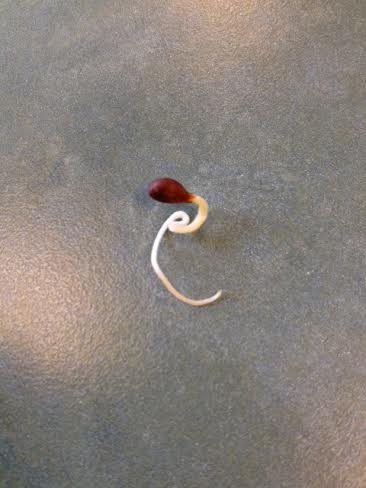
The caterpillar doesn’t know when he is going to become a butterfly. It is a painful thing. And when he emerges, different, sticky, cramped, how does he learn how to fly, when all he has ever done is crawl? How does he know?

How do we know when it happens to us?

The fact that you don’t know what is going on when you are in Circle is part of it. It can’t be taught in a book and it can’t be explained. I can just let you do Circle with me and then the next thing we know you have that moment when you go “Oh, this is what we are doing. Now I get it”.

And then you don’t get it again, because you are still holding on to that chrysalis, and your wings are still wet, and your legs are wobbly and you have knees for God’s sake, what am I doing with knees –

And that is part of it too.

Finding home without a map.

We had a dog when I was growing up who was named Chumley. My brother picked him out, and my brother named him. Somehow, though, the dog ended up becoming my dog, and not in the good way. Somehow I, the younger sister, ended up having to make sure the dog was fed and watered and walked. This turned out to be a regular occurrence with my brother and pets. He’d get them, and then I’d have to take care of them. Perhaps this is part of where I learned to be a caretaker of others and not myself. But this is not that story.

This story is about a time where Chumley ran away. Most dogs know how to stay in the yard, but not Chumley. That dog was a wire haired fox terrier, and they aren’t really mentally intact dogs. Those dogs are a bit high strung and wild. They really aren’t the best around small children, and sometimes I think they really aren’t the best around themselves. They get a bit excitable all the time and kind of lose their minds.

Chumley was an inside dog in the biggest possible way. If we let him out without a leash he’d just run and run and run. Even with a leash it was hard. He was always straining at the leash, pulling me along, nearly choking himself to get to the next place. He made a hoarse, desperate sound all the time as he pulled ahead. The walk was a real workout for my shoulder muscles and not really very fun. I suspect it wasn’t very fun for him either.

He was so scattered that he even had to poop inside. We had newspapers in the kitchen, and that is where he would go. I can’t even imagine how I thought that was normal, to have food and crap and pee in the same room. It was what was introduced to me as normal, though, so I went with it. I didn’t know otherwise.

One time, before Christmas, he got out. He slipped out of the front door and went running. He kept running. Before we even realized it he was gone gone gone.

Days went by.

It was getting colder. It wasn’t too cold, because it was Chattanooga, and white Christmases are really rare. Brown with mud was more like it. But it was cold-ish, and this dog wasn’t an outside dog, and how was he eating and getting water? What was happening to him? Was he OK? Was he dead? There was no way he could have defended himself against another dog. He was like the clown of the circus.

Maybe we looked for him. Maybe we didn’t. I don’t remember. I hope we did. I could tell you that we put out an all points bulletin and stapled “Lost Dog” flyers on telephone poles, but I’d be lying. I don’t know if we even got in the car and drove around, calling out his name.

Maybe we just thought he wanted out.

I can understand that. I can empathize with that.

He didn’t choose to be there. He wanted to be out. He wanted to eat grass and poop outside and sniff other dog’s butts. He wanted to roll in mud puddles.

He wanted to be a dog.

And we weren’t letting him.

So, he was gone, for days.

Just about the time that we thought he must be dead (at worst) or adopted by another family (at best), he came back.

But he didn’t come back alone. There was this other dog with him. There was this smallish mutt beside him. Some dog that we’d never seen.

I played all over that neighborhood, and I knew every dog within a three mile radius of my house. I didn’t know this dog.

Somehow, this dog, this strange dog, had found Chumley and brought him back home.

I have no idea how he knew where Chumley’s home was. I have no idea how they communicated. All I know was that it was three days later and Chumley was dirty and tired and his feet were bloody from all that running outside, but he was home.

And I understand some of it now.

Sometimes I’m Chumley, and sometimes I’m the mutt. Sometimes my husband is Chumley, and sometimes he is the mutt. Sometimes we have to take turns walking each other home.

And sometimes home isn’t where we feel at home, but we stay there anyway. And sometimes “home” is more about the places in our heads and our hearts, rather than where we sleep and keep our stuff.

And sometimes all we want to do is run away as far as possible.

Sometimes I don’t feel at home in my self, my being, my “me”. Sometimes all I want to do is run away.

Sometimes I go up to my star stones. Sometimes I write. Sometimes I take a hot bath. Sometimes it is so bad that I have to do all three.

Sometimes I’m so upset and angry that I’m on fire and I don’t even realize it.

Sometimes the person I want to run away from is my husband.

Sometimes I want him to fix this fire burning in me, to put it out, to stomp on it and then call for a firetruck. Sometimes I want him to know what to do, what to say, how to stand just right that this fire will die down to a pretty little candle, contained in a glass dish. Something simple. Something safe. Something easy.

Sometimes I’m embarrassed at the bonfire of my emotions and feelings and I’m on fire and all I want to do is light up everything around me and leave it all a charred, smoking hulk of rubble for the forensics team to walk through and try to figure out what happened two days later when it cools down enough to be safe to pick through the pieces.

And then it turns. It changes.

I’ll have been gone for three days, or three minutes, or three hours. No matter how long, I’ve been right here, but I’ve been gone in my hurt and anger and loss and pain.

And somehow he finds me, and brings me back home.

Circle – truth

The Circle process is about a lot of things. One of those things is truth. It is about speaking your own truth, and listening to every other person speak their truth. It is about knowing your truth. It is about being OK with the idea that your truth may change. It is about being OK with the idea that somebody else’s truth may be radically different from yours.

It is about listening to yourself and to others.

It is about sitting in that space, in that circle, and really being open to what is happening.

It is about understanding that we all want to be heard and seen.

Part of the Circle process is to create a sort of group mind. It is understanding that what you see and what I see are different sides of the same thing. Just like in the story of the five blind men and the elephant, we all are groping towards an understanding of “what is”. When we share our viewpoints and our understandings in Circle, we are opening ourselves up to a bigger understanding. We are essentially creating new eyes for ourselves.

But in order to have new eyes, we have to have new ears.

We have to listen, really listen, deeply.

And we have to know our own truths in order to share them.

And those are both really hard.

We come from a culture that teaches debate, not dialogue. We come from a culture that teaches us to sit down and shut up. We come from a culture that says you have to give up your own ideas in order to get along with others. The group is more important than the individual.

Consensus sometimes means that one person yells the loudest and everybody else goes quiet. The squeaky wheel gets the grease, after all. If you stick your neck out, it might get chopped off.

We are taught that if we are all leaders, then we are going to go nowhere.

Circle isn’t about anybody being the leader, and about anybody being a follower. We all contribute. We all share. We all listen, and we all talk.

One at a time.

And that is hard. It is hard because we aren’t taught this. It is hard because we are taught to just go along with the flow. It is hard because we aren’t allowed to have our own voice in our culture.

It is uncomfortable and unusual to be in a space where people listen to us for minutes at a time.

Half the time we don’t even know what our own truth is. Sometimes our truth changes from moment to moment, with every new voice that is added.

Sometimes the hardest thing is being able to say that something is black when everybody else sees it as white.

Circle is about staying in that process, even in the awkward bits, when you feel that nobody is listening to you and nobody understands you. Circle is about staying in that process, even when you feel like you aren’t listening to everybody else. Circle is about staying in that process even when you think that everybody else is wrong, or crazy, or just plain blind. Circle is about staying even when you want to run away, even if it is only in your mind.

It is about coming back, and staying, moment by moment.

It is really hard. It is really beautiful. It is a whole different way of thinking and being.

And it could save the world.

Way out and way in writing

Writing is my form of self defense. Writing is my way out, and my way in. Writing is how I understand the world and myself.

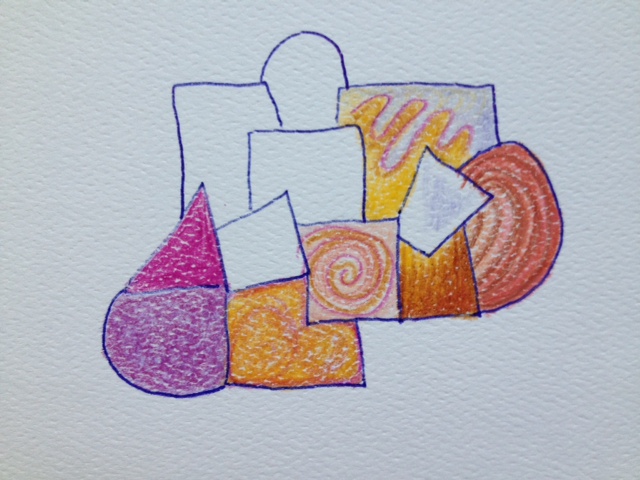
I’m coming to learn that drawing is just like writing. It is a way of slowing down and really looking at the situation, really seeing what it is. Now, of course, I’m not seeing THE truth of what is there. I’m seeing MY truth. I’m seeing things from my perspective. I can’t see the whole picture, but I can accurately report what I see. I also fully understand that what I see is filtered through my perceptions and experiences, and that is fine too.

Whatever it is that I see, at least I’m looking at it for a change. I’m not running away from it like I used to.

I haven’t written, not really, in the past few weeks. I’ve compiled things. I’ve made some sketches, if you will. I’ve pulled up old notes where I started a piece and finished it off. But I haven’t written like I had been writing. I think I’ve kept my original goal of one post a day, but I’d gotten away from my recent two-or-three posts a day. I’ve just not had the push.

I’ve just not pushed myself, really.

I’ve taken a break.

Just like with yoga, I’ve reassessed it, and my lack of stretching, both with yoga and with writing, has made me feel out of sorts.

While I never want to do something just for the sake of doing something, I’m learning that there are some things that I just have to do. Writing is one of them. But it was starting to feel that I was using writing as a way to hide, rather than a way to experience.

I’d taken to writing while on my walking break at lunch. I was using the walking path as a sort of treadmill. I knew where everything was. There was nothing that was going to trip me. So I could write, using the notes feature on my phone. I was able to get in lots more posts that way.

The only problem was that I was missing all the stuff that was happening around me. I was missing the birds that were nesting in the airplane wings that serve as a sundial. I was missing the little stream that goes into the sinkhole. I was missing the dragonflies.

While I had my eyes directed to the screen and my mind directed to what I was writing, I didn’t have my brain open to new things.

I took time off, not because I didn’t have anything to say, but because I thought I was saying too much. You know, the whole one mouth and two ears thing. I wasn’t balanced. I was producing more than I was consuming. I wanted to rest and receive.

But then I went too far, and at the wrong time. I’ve been a little tense anyway because my schedule has been weird. A retreat, an odd schedule at work, Circle training, a vacation to pack for… There is a lot going on that isn’t autopilot kind of stuff. A lot of new balls in the air to juggle.

I’ll remember from now on that one of the balls that I have to keep is writing. It seems to center me and ground me. It seems to make me who I am. It keeps me present.

Risk of drowning

My parents were constantly exposing me to risks. Really dangerous risks. Lethal risks. Many of them involved drowning.

They thought it was a good idea to take me to the site of a local K-mart that had gotten flooded. This was before the levees were put in place in Chattanooga, and the entire store and the parking lot was flooded. My mother held me in her arms and waded into the swirling waters. I was a toddler, maybe three. I can remember trying to claw my way out of her arms to get away from those turbulent waters, those unpredictable waters. I didn’t know where I thought I was going to go, but I knew I needed to get away.

They thought that it would be a good idea to tell six-year-old me that the train that we were going on in New York was going to go under a river. They somehow thought that was something I needed to know. I remember, almost forty years later now, being terrified of this idea. What if the walls broke? All that pressure of all that water. It would come in, on top of us, and kill us. We’d die slowly because we were in a subway train. But we would die, certainly. The water would seep in, if it didn’t crush us first. I can remember nothing more of this experience, because apparently the idea of it simply short circuited my brain and I went to sleep. I woke up at the end of the journey.

They thought it would be a good idea to tell me that the wall that I saw when we were in New Orleans meant that we were twelve feet below sea level. That wall was the only thing that was keeping the water from engulfing us. From engulfing me. That wall was all that stood between me and a watery death. That death would have been faster than in the train, but still terrifying. I was twelve, and not past the idea of irrational fears. The wall had held this long. Surely it would hold longer. Surely it wouldn’t cave in just at the moment I was there. Surely.

My parents kept exposing me to these risks, these dangers. They kept thinking that this was a fine way to parent. I thought that they were good parents, and in many ways they were. They tried their best. They did the best with what they had. They meant well. But they weren’t ideal. And the fear of water stuck with me for a long time.

I can remember one time when we were on one of our last family vacations. I was around six, and we were in Florida. I don’t know why we stopped going on vacation. There were twenty more years of sullenness and sulking that happened after that – and that was between them. I’d expect that from teenagers, but not from middle aged people. Perhaps we didn’t have enough money. Perhaps they didn’t like to spend that much time together anymore. Perhaps they were just going through the motions.

It doesn’t matter.

I remember going out into the sea and getting turned upside down. I remember the water was all around me. Perhaps a wave had engulfed me. Perhaps I’d wandered out too far and lost my footing. All I remember was that I was in the water and I didn’t know which way was up. Somehow I didn’t worry about it at the time. It seemed normal. The next thing I know, my Mom grabs me by my foot and pulls me out of the water.

They didn’t teach me how to stay safe in the water then. They didn’t teach me any survival skills in general. Perhaps they didn’t know them for themselves. Perhaps they didn’t think that was their responsibility.

I took swim classes later, when I was probably eight. We went to the Cumberland Y at the time. I faked learning how to swim. I didn’t know I was faking it. Turns out that I could move through the water, but I didn’t know how to breathe at the same time. I was really good at holding my breath.

My Mom had told me that as soon as I learned how to swim I could get my ears pierced. I swam one day, and she thought I was fine. I wasn’t. I was still in the shallow water, and I still was faking it. In that swimming test I was allowed to stop and touch my feet to the bottom of the pool twice. I did. I caught my breath and went on. My Mom was so proud of me, and I didn’t know why. I got my ears pierced that afternoon. I still didn’t know how to swim. Water still was winning that battle.

When I was offered the chance to take the deep water class I freaked out. I knew I couldn’t fake it there. I knew that there was no way I could make it. I knew that was a death sentence for sure. I said no to the class and never went back there. My Mom didn’t understand my terror, and didn’t question it.

Years later I took a swimming class when I went to my first college. That school had a policy that everybody had to know how to swim by the time they graduated. Some benefactor had a son who had graduated, but had died in a boating accident because he didn’t know how to swim. The benefactor was overwhelmed with grief that his son had graduated with honors but didn’t know this basic life skill. He donated a lot of money to the school with the stipulation that everybody had to know how to swim, at least in a basic way, by the time they graduated.

I took the class the first semester to get it over with. I took it, and I took basic swimming. I learned how to breathe. I learned how to turn myself over to rest. But most importantly I learned how to not freak out in the water. I didn’t learn this from my parents, and I’m sad. I’m sad for them that they taught me to fear water rather than to respect it. I’m sad for them that they never understood the damage they did to me.

I now take water aerobics for exercise, and I’m grateful for it. I actually do it in the deep end, with a flotation belt. I’m glad that I’ve gotten over my fear. But I don’t think I’ll ever get over wondering what other psychological damage my parents wrought.

“Still waters” meditation – part one.

My still waters aren’t that still.

I’m trying a meditation at the retreat. We are supposed to be led to the “still waters” of Psalm 23 by Jesus, but I’m not liking the still waters that I see in the picture I was given to focus on. They are too still. The water looks dead. There is nothing to look at. The color is autumn and not spring. I need the green of spring, the promise of it.

I change the meditation to somewhere I think I’m going to like. I change it to a mountain stream, or a brook. Something like that. Surrounded by trees, not an open lake. Maybe twenty feet across, but I’m not concentrating on the distance. I’m looking at the shore. I’m looking at the rocks and the shells buried in the mud. There are clam shells here, and a little evidence of humans. Soda cans. Coke bottle caps. A little, not much, but enough to remind me that other people have been here. The metal is interesting in a casual way.

The light catches in the pools of water, sparkling. A fish swims by, scales flashing. There are bubbles and swirls in the water and dappled light from the sun filtering through the leaves. I thought I would like it here but I’m a little ill at ease. There is a little too much of everything and I’m a little overwhelmed. Everything I see is beautiful and everything I see is special and I want to take it all home with me. There is a just too much and yet not enough at the same time.

We sit down, Jesus and I, by the side of the water. We sit down on a large dry rock, warm from the sun. There are bits of green moss clinging to the side that edges the water. It is plenty large enough. No worry about falling off, and there are plenty of flat places to put our things down without worrying about them falling over and spilling.

Jesus hands me a sandwich. The bread is homemade and brown and warm. It’s warm out like an afternoon that stretches out forever, an afternoon of naps, an afternoon of no appointments, of nothing to do. Nothing to do except just be.

There’s hummus on the bread and spinach leaves and there’s cucumbers that have been sliced. There’s no skin on them so there’s no bitterness. The sandwiches are wrapped in wax paper that has been folded carefully and mindfully. It is sealed with a tiny bit of masking tape. It is a delight to unwrap. I enjoy the sound and the feel of the paper. I bite into the sandwich and it is everything I need. I didn’t expect it, and I wouldn’t have thought of it on my own but it’s just what I need and he knows that. We sit together, eating our sandwiches.

We drink lemonade that he made. It is a little tart and a little sweet. Perhaps he used a lime or two in with the lemons. We drink out of glasses he brought along with him. The lemonade is cool but not cold. It is a simple lunch but it is enough and I am thankful. I’m thankful he thought to bring lunch, and thankful that it was handmade.

He keeps showing me these kindnesses, these bits of thoughtfulness. I’ve never known anyone to love me this much. They are usually so wrapped up in their own busyness and their own problems that they don’t have time to think of me. He is always as near or as far as I need. He’s never too much.

We’ve finished lunch and while it was soothing, the place where I am isn’t quite what I need. It was what I thought I wanted. It was where I thought I should be. I allow Jesus to take me somewhere else. I can’t imagine there is anywhere else, but he knows the way.

He leads me a little further along and I see a way out. I see there is an island in the distance, across a wide expanse of water.

It looks something like this –

desert-island-discs

There are steppingstones to it. They are sort of like this –

Garden-Stepping-Stones

Or maybe this –

Stepping stones across the water

Or kind of this –

reiki_pic_3

I don’t really want to work that hard. So we look to the left and there’s a small rowboat just big enough for two. It is wooden, grey, weathered.

It is facing out, ready to go.

stock-footage-old-fishing-boat-description-old-wooden-fishing-boat-on-the-calm-sea

boat

wooden-boat-1440-900-312

It looks sturdy. We get in.

He rows out in the sunny day. It is bright, and there’s a little bit of a wind. He’s rowing and it’s hard work, and he’s doing it all. I smile into the sun and I enjoy how I can hear the sound of the gulls and the wind out here.

We are rowing alongside the steppingstones. There’s not a path like in Marazion. It isn’t solid –

st-michaels-mount

But it also doesn’t disappear with the tide twice a day.

Mount1

These stepping stones are always there, he says, even when the tide is high. Boats don’t come through this way this way because it is too shallow for them. I could wade in these waters and be safe.

We get to the other side and I enjoy the walk through the woods. It’s a small island with a lot of trees and shade. While I’m there I think it would be nice to rest here and we go looking for a place. There’s a cabin with a stone base but there’s also wood to it. It isn’t quite a stone cabin or a log cabin. It is a bit of both.

4123479877_b65fe41a16_b

There’s a fireplace, and the cabin is just big enough for two. It is cozy and welcoming.

Hobbit-Guest-House-Colorado-13

There’s food there. It’s already stocked, and there is even tea ready for us.

I want to stay here but I can’t. There are other responsibilities, so I’ll stay here as long as I am allowed.

(No pictures are original – all are from Image search on Google. Ideally, I’ll paint this, but I needed some reference points.)

Poem – manna

I’m surrounded by manna
and I’ve eaten my fill.

I want to grab it all,
the 12 bushels overflowing,
the scraps, the crumbs.

I want to gobble it all up
and get sick on God.

I forget there will be another day,
another blessing,
another brokenness.

I forget the lilies and the swallows.

I forget the quail in the desert too.
I forget those who gathered 2 day’s worth.

All I see is now
and I want it all.

My hands are full and I want more.

What is the goal? On diet and deity.

Say you have a friend who wants you to do things their way. They want you to eat only raw foods, or no carbohydrates, or a macrobiotic diet.

What is the goal? The goal is health, and they think they have the path that is right for you because it worked for them.

But say you already are healthy. Your weight is good. Your cholesterol is fine. You are sleeping well. You don’t need to do things their way because the way you have been doing it has worked for you.

It isn’t the path. It is the goal.

The same is true of faith.

So many people will try to convince you that you have to go to their church, be a part of their denomination, or read this book by this religious author.

What they are saying is that they think you aren’t well, but you know you are.

You have to do what is right for you, and only you will know that.

Don’t let someone try to put something into you that isn’t right for you.

Understand that they mean well, but when they try to force-feed their diet or their deity to you, it doesn’t reflect on your lack or need. It reflects on theirs.

Poem – the moon does not change

The moon does not change.
We do.

The moon, with its waxing
and waning
its new and old,
the moon is the same
to the moon.

It is us who change,
us who move.

It is our tilt, our time, that is different.

We forget this.

We mark time by the moon, the months of our lives.
We celebrate, we howl, we dance,
all based on the moon
and how it reflects the light of the sun.

The moon doesn’t change.

It is still the same moon, reflecting the same sun, day by night,
night by day.

All the time, up in the sky, it is reflecting
mirror-like,
the rays of the sun to someone.

Your day is another’s night,
after all.

So when we howl, when we dance, when we celebrate
what are we marking?

Why do we use the moon, the same moon,
to tell us
when it is time
to dance, to howl, to celebrate?

Perhaps because we have no other way
to say
that time
is passing by
quickly.

Pay attention.

The winters only come once a year.
We can mark time by them, but then
it is too late
to change
direction.

The moon reminds us faster, and more kindly.

Yet we need to remember
that the moon doesn’t change.
We do.

Poem – Spring’s progression

First the redbuds, then the dogwoods
then jonquils
then irises.

They come, in that order, marching
into our lives, heralding
Spring.

They flower together only in our minds.
They flower one by one,
in the slow progression of time.

None see the others in their prime.
The dogwood’s bloom dusts the ground
that the iris dances upon.

Time and time and time
and more.

We mark it by the flowers.

We know when is when by our eyes
and not by the calendar.

Soon the twilight will be lit up by fireflies.
A different kind of bloom,
but still a marking of time.

You are here, now, they say.
Enjoy it.
Soon there will be another delight, they say.
Enjoy it.

It won’t last, but that is part
of the beauty.